



Home Blog Page 918

Learn, Retain and Excel

Nirav Khambhati
Nirav Khambhati, Chief Executive Officer, Tata ClassEdge
Nirav Khambhati
Nirav Khambhati,
Chief Executive Officer, Tata ClassEdge

Nirav Khambhati, Chief Executive Officer, Tata ClassEdge is upbeat about the prospects of digitisation of educational tools. In an interaction with Elets News Network, he says it helps students to learn, retain and perform better

Tell us about Tata ClassEdge

It is an instructional design model – the multiple learning experiences model (M- LExTM)—that assists teachers in preparing effective lesson plans. In addition to topic-specific multimedia and interactive assets, we also provide access to highly engaging group and individual activities such as quizzes, games, labs and projects with a focus on improving learning outcomes. We have differentiated content designed for learners across multiple expertise levels. This ensures equal opportunity for all students to learn according to their abilities and perform in the class. Thus, we aid in creating a more effective teaching-learning environment in the classroom.

How does it improve the academic ecosystem in our schools?

Our instructional framework assists every teacher in preparing unique lesson plans suitable to his or her individual teaching style. The lesson plans include not just interactive multimedia but also other innovative multi-sensory activities that aim to enhance critical thinking, social interaction, communication skills and creativity in students. Also, Tata ClassEdge has differentiated content designed for struggling learners and high achievers. This ensures equal opportunity for all students to learn according to their abilities and perform in the class. Thanks to a large number of modularised teaching points developed for multiple state boards, CBSE and ICSE, the lesson plans can be mapped and sequenced exactly according to each school’s particular text books. This makes the system much easier for the teachers to adopt. Tata ClassEdge is not just about ready-to- use lesson plans and multimedia. It also provides a platform for teachers to con- tribute open resources, create original lesson plans and collaborate with each other. The platform has been designed to develop a collaborative knowledge sharing community of teachers.

How flexible are education institutions across the country in adopting such learning solutions?

Schools are realising that digitisation of teaching methods gives an experiential edge to the students. The chalk and talk method of teaching has been enhanced by the inclusion of digital classrooms that comprise digital boards and cloud technology. Interactive teaching methods draw better participation from students and the learning process becomes more engaging for students. But this is just the beginning. What the future holds for technology in education is far more than what we can all imagine at this point of time.

What is the size of business of smart classes in India and how do you see its growth?

It is not entirely relevant to track the industry in dollar terms. Our focus is on the number of students who can benefit by better learning outcomes. India has about 1.3 million schools and at this point, less than 1 per cent of schools have adopted digitisation effectively.

Can you tell us about the two new products – TestEdge and PlanEdge – that have been launched?

PlanEdge has been designed to reduce the planning and administrative tasks of teachers by automating annual academic planning, time-table creation, grade-book generation, and so on. TestEdge comes with a question bank of more than 65,000 questions and a user interface designed to enable teachers to generate standardised question papers at the click of a few buttons. Both PlanEdge and TestEdge are compliant with CBSE’s continuous and comprehensive evaluation (CCE) parameters.

What are the reasons behind developing these two products? How will these new products help teachers deliver high-quality instruction to students?

Teachers spend a sizeable amount of time on administrative work, which gives them less time for their core activity-teaching. We wanted to give teachers more time to teach. This will allow them to spend more time on student-centric interactions and teaching.
PlanEdge facilitates the school’s and teachers’ work of curriculum planning and assessment for the entire academic year. It also provides a Gradebook that conforms to the CCE requirements of CBSE and allows schools to capture the co-scholastic aspects of students. TestEdge provides a high-quality question bank with varying levels of difficulties and mapped to various levels of Bloom’s Taxonomy. All the questions are mapped to the chapters and concepts covered in the textbooks followed by the schools. The teacher can create formative and summative test papers using these questions. We expect that these products will save a lot of time for teachers which can be utilised for class preparation and interactions with students.


New-Age Technology for Next-Gen Classrooms

Vineet Mahajan
Vineet Mahajan, Head, Display Solutions, Panasonic India
Vineet Mahajan
Vineet Mahajan,
Head, Display Solutions, Panasonic India

Vineet Mahajan, Head, Display Solutions, Panasonic India talks about their new offering in LED, LFB70 Series, with its advantages in the field of education

What are the salient features of Interactive LED Displays?

Multi Touch Interactivity: The prominent point of LFB Series Interactive Displays are that they are multi-touch and can detect up to six touch points when connected to PC, allowing multiple users to interact with a finger/stylus pen. The built-in whiteboard technology allows users to draw and write over the videos, documents, images without the need to connect to a PC or installing a software.
Miracast Compatible: LFB series is designed with the next-generation wireless technology, MiracastTM. It allows seamless highspeed wireless transmission of content, including Full HD video files, from MiracastTM compatible devices to the displays. The series is compatible with Panasonic’s Wireless Projector App for iOS, which permits wireless transmission from iOS devices to the displays and Wireless Manager software, which allows wireless presentation and also supports simultaneous display from multiple devices using multimode i.e. 4-window multi mode or 4-window index mode.
The System Flexibility: Features include easy connection to a second display via VGA out. These interactive displays are equipped with DIGITAL LINK which allows transmission of video, audio and control commands all via a single LAN cable of up to 100 m thus making the facilities free from messy wires.
Loaded with High Value Features :
a)
Toughened non-reflective glass for extra durability and clear visibility,
b) Picture in Picture function that of- fers the versatility to display images from multi input sources on the same screen.

How can a new technology like LED touch display revolutionise the corporate/education sector in India?

Work Smarter: The LFB70 Series of professional Full HD displays incorporate intuitive touch screen technology, fully interactive whiteboard function, and the very latest in wireless connectivity to allow you and your colleagues to work more closely as a team.
Work together on Screen: Built-in whiteboard software lets you turn on the display and start work right away – no need to connect a PC. Up to four people can write at a time, and you can save your pages and email them directly to anyone who missed the meeting, Notes can be made on almost anything, from video and photos to PowerPoint and PDF documents, and then saved as an image file – simply brilliant for the office or classroom.
Work together on Screen: Built-in whiteboard software lets you turn on the display and start work right away – no need to connect a PC. Up to four people can write at a time, and you can save your pages and email them directly to anyone who missed the meeting, Notes can be made on almost anything, from video and photos to PowerPoint and PDF documents, and then saved as an image file simply brilliant for the office or classroom.
Quick-Start Whiteboard: Start working on the built-in whiteboard instantly by just switching on the display. You can draw straight or freehand lines and change line thickness, color and background using the tool palette.To switch input sources, picture settings and volume, swipe the edge of the screen to display the main menu – no remote control necessary.
MiracastTM for Instant Wireless Sharing: Transmit documents, full HD video, images, and audio from compatible Android devices and Windows PCs to the big screen with MiracastTM – the latest wireless standard that doesn’t require software or complicated setup.

What is the USP of your product when it concerns generating revenue?

This interactive display is the first organised display with all the features built-in like wireless capability, multiple touch, whiteboard function and MiracastTM compatible. Till now, most of the interactive displays available are through third-party solutions with limited functions.

Where do you see the Indian market vis-a-vis other countries when it comes to deployment of LED touch products?

Indian market is still at a nascent stage but with the education and corporate sector growing, demand for interactive touch displays is increasing at a high pace.

What are the challenges that you face in the education sector when it comes to promoting the products?

The education sector has limitations in terms of budget since they have to deploy at a mass level. The interactive LED displays are costlier as compared to projectors but do away with the limitation of projectors like replacement of lamps etc.

Smartpen empowering learners in India

Manu Nanda
Manu Nanda, Managing Director, Wacom India Pvt Ltd
Manu Nanda
Manu Nanda,
Managing Director, Wacom India Pvt Ltd

Manu Nanda, Managing Director, Wacom India Pvt Ltd tells Elets News Network how a revolution is slowly brewing in India’s learning landscape – thanks to a Japanese pen tablet

What attracts learners to Smartclass?

It is said that it is easy to remember things that are taught visually rather than turning pages. In today’s time, when education has gone beyond the conventional way of teaching, smart class or the digital way of teaching has come into existence. Smart class symbolises breaking the age-old tradition of text-book teaching and adapting to new technology using all interactive modules like videos and presentations that attract students towards learning and is also eye-catching. Smart class empowers teachers with technology right inside the classroom and helps them teach their curriculum topics more effectively.

But has it touched every class and school in India?

With the changing trends and developments in technology, Wacom, a Japanese pen tablet and pen display manufacturer, has designed a device keeping in mind the necessity of smart class in Indian institutions. The advantage of having a Wacom pen display uniting your classroom is that the teacher can write directly on the tablet having a natural Pen Paper feel with up to 1024 pen pressure levels, keeping constant eye contact with the students. The USP of this tablet is that it works on PowerPoint; this means that no special soft- ware is required to use pen tablet, lectures and notes are Power Point based and can be recorded for future reference. The schools in India are slowly and gradually adapting the new technology of learning and using it to the maximum. The conventional black board has made way for digital equipment, making the learning process more colourful and interesting. This is being elaborately practiced by a majority of education institutions in the country.

How flexible are education institutions across the country in adopting such learning solutions?

Who wants laborious way of learning and teaching? Wacom-powered smart class has given institutions a platform of interactive learning. Wacom’s pen dis- play tablet with high precision and high resolution together makes it possible to detect even small handwritten letters that is easily understood by students. The electronic pen can be equipped not just with coordination detection functions but also with a wide range of other functions such as writing pressure, sensing, inclination, angle detection etc. The Wacom pen can work on any of the Microsoft office applications such as Word, One note, PowerPoint etc. It is the natural pen and paper feel that it gives to the teacher while writing, that makes it largely acceptable in institutions like IIT’s and IIM’s in India and various colleges abroad.

Has there been any quality assessment on the outcome?

The Wacom pen tablet is beneficial for teachers and students – the teacher can directly annotate on the pen display having a pen-paper feel and at the end of each class, the teacher displays the set of questions on the large screen and the students have to answer them with their personal answering device. The teachers are able to score each student instantly. This brings faster and better understanding of the concepts and constant improvement in the overall academic performance of the student.

What is the size of business of smart classes in India and how do you see its growth?

From the start of smart class in India, about 2 years ago and Wacom being a 30-year-old technology major in pen technology, the acceptance of the system has been remarkable. A majority of the schools have embraced the concept and are implementing it. It has come as a revolution and transformed the classrooms turning boring lectures into fun, creative and interactive ones. The growth of smart class will be jetspeeding in the years to come as it becomes more user-friendly, versatile and resourceful.

Better Times Ahead for Indian Techies

Dr Surendra Prasad,
Dr Surendra Prasad, Chairman of the National Board of Accreditation
Dr Surendra Prasad,
Dr Surendra Prasad,
Chairman of the National Board of Accreditation

India finally became the 17th member of the exclusive Washington Accord – the international accreditation agreement for engineering degrees among prominent nations of the world. Dr Surendra Prasad, Chairman of the National Board of Accreditation in an interview to KS Narayanan of Elets News Network explains the significance of the Washington Accord for Indian engineering graduates and engineering institutions

India became the 17th member of the Washington Accord. What is its significance?

Recognition of degrees from Tier 1 programs, as equivalent to those of WA signatory countries will boost mobility of our engineers internationally. More importantly, it is a shot in the arm for quality assurance efforts in technical education in the country. The signatory status provides NBA with a platform for keeping itself truly aligned with international practices in accreditation systems and practices, as these evolve over time. The International Engineering Alliance, which serves as the Secretariat for the various accords and agreements pertaining to the engineering profession, has a system of continuous review of its constituent bodies (on a 6-­yearly basis), which will require NBA to continually improve its systems and bring up an era of high credibility in accreditation. I must add, however, that with or without the Washington Accord, NBA was, and will remain committed to the quality assurance movement for technical education in the country.

Even as it enhances the mobility of many Indian engineering graduates, will India become the destination for engineering education?

This certainly creates the potential for bringing more international students into such accredited programs.

Who do you credit the most for making India a member of WA?

Unlike suggestions in a section of the press, I would like to say that the real credit goes to a large number of invisible volunteers, who have worked hard over the years (especially over the last one year) in the background, in making our systems and processes well aligned to international practices. They represent the true army of soldiers as well as the generals of the new accreditation movement. As the Chairman of the NBA for the last year or so, I had the opportunity to do my bit. The present member secretary, Dr, Anil K. Nassa and I have worked hard to improve the systems over the last few months. NBA organised a very successful WOSA (World Summit on Accreditation) in March 2014, which had international participation from 14 countries. We are happy that together both of us could effectively plead our case in the June 13 meeting of the WA member countries, despite some difficulties. The two mentors appointed by WA also helped in smoothing over many kinks in our systems and processes. The leadership in MHRD was truly supportive in bringing in the required autonomy required for such reforms. All in all, it is the collective work of many, and it is an achievement for the country, and not of a few individuals alone.

India got to become a member seven years after it was made a provisional member in 2007. The International Engineering Alliance, secretariat of the Washington Accord, sent a review team in December 2013 and January 2014 to carry out a comprehensive review and audit of NBA’s accreditation systems and practices. The team submitted its report in March 2014, the ministry said.

Yes, that appears to be an awfully long time. But over the last year or so, we really focused our efforts to ensure that our processes and systems undergo the necessary changes to become acceptable internationally. The WA Review team was not only happy with what they saw in the field, but also with the vigorous efforts being made by us to truly reform our system towards greater credibility. Accreditation with credibility is our true motto.

How far has making NBA an autonomous organisation separating it from the All India Council for Technical Education (AICTE), the apex technical education regulator-boosted the permanent membership for India?

This certainly was an important step, which effectively separates the regulatory functions (represented by AICTE) from the largely academic “audit” of a program, carried out by the accrediting body. It has added to the credibility of our efforts. It must be mentioned that NBA has not severed its umbilical cord with AICTE, whose Chairman is an important member of the General Council.

“With or without the Washington Accord, NBA was, and will remain committed to the quality assurance movement for technical education in the country”

WA also places a lot of responsibility on several stakeholders. A massive redesigning of courses will take place with emphasis on outcomes and letting students explore and innovate.

Accreditation is more than a certification of quality for the accredited pro- gram. A good process of accreditation enables the program administrators and the faculty to have a deep look at the program objectives, and measure the effectiveness of program delivery through an assessment of the program outcomes in relation to these objectives. This is the essence of the relatively new paradigm of outcome?based accreditation. Its effective implementation will take a significant effort on the part of the institutions as well as the program evaluators. These tasks require a non ? trivial understanding of the accreditation process, both on the part of the faculty as well as the evaluator. Creating a pool of competent volunteers through appropriate training and orientation, who understand this process well, is the essence of effective and credible accreditation. In India, of course, there is the additional factor of maintaining the “integrity” of the process, which requires that the people associated with it have the high- est ethical standards.

NBA has shortlisted 220-­odd engineering colleges as Tier-­I institutes whose undergraduate engineering programs are in tune with what is required under the Accord. Will they have to apply afresh? What is the roadmap for others in the Tier II category?

Let me clarify on these matters. Because of the size, complexity and diversity of engineering institutions in India, it be- came necessary for us to look at these institutions through different lenses, with a view to empower them all to improve according to their potential. NBA decided that the accreditation effort be organised at two levels, which, for want of better terms, were called Tier 1 and Tier 2.

Tier 1 programs are those, which are offered at institutions enjoying full autonomy and thus, having the capacity to undertake continuous improvements of their curriculum, teaching and learning processes and infrastructure attributes, which empower them to benefit more directly from the feedback from the accreditation process. Others, which are affiliated with a university, and do not have complete flexibility in modifying their curriculum or conducting their own examinations, are considered for the so-­called Tier-­2 accreditation. Clearly, institutions, which perform well, have the potential to become autonomous, and move to a Tier- ­1 status.

The WA equivalence accrual, after becoming a signatory in June this year, is for the accredited Tier 1 programs, which are housed in roughly 300 institutions in the country. For the nearly 3500 other colleges, the accreditation of programs is considered at the Tier 2 level.

Those pursuing STEM always look down upon subjects relating to Humanities. Washington Accord lays emphasis on teaching social sciences along with engineering.

All good engineering institutions have a significant component of Humanities and Social Sciences in their curriculum. These are important to enable the students to learn life?skills, and to be able to appreciate issues of importance to society, and to bring about transformative changes through engineering sciences and technology. Issues of ethical practices, leadership and teamwork are common traits required for all segments of society, and especially the engineers. NBA graduate attributes lay due emphasis to meeting these objectives well in an accreditation framework. These efforts should bear fruit over time.

Now that India has signed WA, what about India signing the Sydney Accord for Engineering Technologists and the Dublin Accord for Engineering Technicians?

Our focus so far was on Washington Accord. We have started to study the relevance and usefulness of the other accords now, and will be able to take a position after some work.

Will India have to sign the Seoul Accord to create similar equivalence of programs for IT engineers? What is the progress on that?

We are also presently studying the Seoul Accord, and will take a suitable view soon.


‘Brace up for m-Learning’

Monica Malhotra Kandhari
Monica Malhotra Kandhari,
Senior Director, MBD Group
 Monica Malhotra Kandhari
Monica Malhotra Kandhari,
Senior Director, MBD Group

Set to launch a mobile learning platform from the next academic year, Alchemie intends to reach out to more than 200 million users globally in the next three to five years. Excerpts from an interaction with Monica Malhotra Kandhari, Senior Director, MBD Group

What is the concept of Smartclass?

Smart Class is a technology-enabled classroom which provides effective tools and content for making the teaching and learning process more effective and efficient. Alchemie provides the solution with the name of ECADEMY. Content (simulations, animations- 2D & 3D, labs, assessments, graphics, web-links) plays a vital role in the complete solution along with technology.

Are schools already accepting e-learning solutions?

Compared to three years ago when we entered this segment, we see more and more schools accepting technology intervention for better learning solutions.

So what is the outcome of such an intervention?

The outcome is very positive as the learning experience of the students today has completely changed as compared to last decade.

What are different state governments’ initiatives in encouraging and providing Smartclass facilities to schools across India?

There are various initiatives taken by the government to introduce computer labs and smart classes in government schools. They are promoting devices among the students and we can foresee more devices and upgradation of classroom infrastructure across the country in near future.

Thanks to Smartclass, the learning experience of the students today has completely changed as compared to last decade

How do you see the business of smart classes in India?

Most schools have so far adopted smart classroom solutions in 3 to 5 classrooms and we see a huge potential to extend the solution to other classrooms within the existing schools. Besides, there is a huge market potential in government schools, government-aided schools etc. that needs to be addressed.

Is your company also embarking from e-learning to m-learning?

With a base of our book publishing companies, we intend to reach out to more than 200 million users worldwide in the next 3 to 5 years with our e-learning and m-learning solutions.

Travel the world as you study

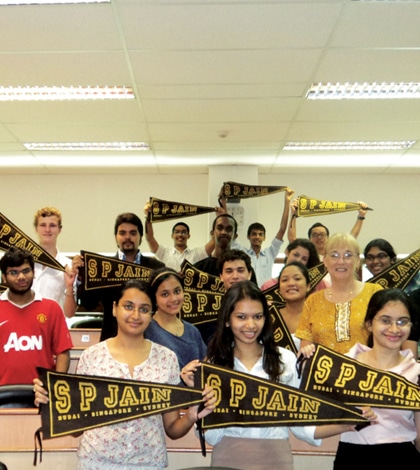
Travel-the-worldWith its presence in Dubai, Singapore and Sydney, the SP Jain School of Global Management gives its BBA students an opportunity to study in all the three campuses while its Master’s programme helps build global leaders

Today, the SP Jain School of Global Management, with its campuses in Dubai, Singapore and Sydney, is best known as an international business school. But what many do not know is that it has roots in India as its history dates back to 1981, when its first campus was established in Mumbai. This was inaugurated by the then Prime Minister of Britain, Margaret Thatcher. While in India, SP Jain has consistently been ranked among the top 10 business schools for its MBA programmes, and now, more than 30 years later, it is equally, if not better, known for its international campuses.
Its first international campus came up in 2004, which was set up with the objective of focussing on global learning. Once this campus had made its mark – it was ranked No. 1 in the UAE in a brand perception audit conducted by Neilsen in 2008 – the focus shifted to Singapore. In 2005, SP Jain was invited by the Singapore government to establish a campus there, which came up in 2006.
The crowning glory came in 2012, when SP Jain launched its third international campus in Sydney, Australia, offering students a global education along with an opportunity to understand and soak in the culture of the city.
Setting international campuses is one thing, but to sustain its vision of being a business school recognised across the world for its innovative, influential and relevant education while putting emphasis on teaching-learning process is not an easy task. For this, SP Jain has appointed several distinguished captains from the industry to serve on its industry advisory board. The board meets regularly and makes suggestions for revamping the curriculum, sharing their knowledge and experience and geting their colleagues to conduct workshops for the students.

Another high point of SP Jain is that it has qualified academicians from top schools across the world as external examiners. These examiners take a fresh look at the curriculum and make suggestions for improving it. They also check the exam papers for the level of toughness, the weightage given to questions and also come up with model papers. The external examiners are from London School of Economics, Oklahoma State University, Kellogg School of Management, etc.
The school also has a multi-national faculty, which comes from a wide range of academic and corporate backgrounds. Rigorous coursework is followed for all the undergraduate and postgraduate courses with the result that the graduates are well prepared with the knowledge and skills that they need to excel as leaders. Among the various methods employed for the teaching process is the interactive style in classrooms equipped with cutting-edge technology. The course material includes textbooks, videos, web resources, international case studies, as well as students’ independent research projects.

The Campuses

The campus is located in central Sydney at the historic Sydney Olympic Park that has exceptional facilities for sports and recreation besides being a newly developing business district. The campus itself is 75,000 sq ft with 12 auditorium style classrooms, breakout rooms, a café with its own kitchen, lounges and other facilities. Housing is available within a 35 minutes’ walk.

Dubai

The high point of this campus is the multinational student community at the Dubai International Academic City (DIAC), a specially-built campus exclusively for colleges and universities. It provides a single location for post secondary education in the Emirate bringing together 30 institutions from 13 different countries, allowing students and faculty coming from different institutions to connect and learn from each other. SP Jain occupies an entire standalone building here covering approximately 60,000 sq ft, spread over three floors. The campus is built in a contemporary fashion with hi-tech learning centres, mock trading rooms, an up-to-date library, video conferencing facility and a Reuters terminal.

Singapore

The sprawling campus is set amidst lush greenery and has a number of renovated heritage buildings. The various buildings on the campus house classrooms, learning centres, library and several other facilities. Classrooms are equipped with state-of- the-art audio and video equipment. There are seven lecture halls and two seminar halls. Extra-curricular facilities include an in-house gym and basketball and table tennis.

Course Details

you-studyThe four-year BBA programme for undergraduate students is conducted on a tri-city model. Students spend the first year in Singapore, the second year in Dubai and the last two years in Sydney. They choose specialisation in marketing or finance in the third year. The programme also includes several liberal arts. Another unique feature of the programme is the industry interface Action Learning Project. Groups of three to four students engage with local companies and submit consultant level reports and analysis to them. They also do internships in breaks between academic years. Students graduate with a BBA degree awarded by the SP Jain School of Global Management, Australia. As students study in Australia for two years, they are entitled to a two year right to work permit in Australia, which entitles them to take up jobs in Australia.
The Global Master of Business Administration (Global MBA or GMBA) is a year-long residential course, which builds business leaders with in-depth cross-functional knowledge and understanding of the theories and practices related to global business. The course also lays special emphasis on the development of global intelligence, cultural agility and important real world business skills, like effective communication, decision-making, leadership, networking and problem-solving skills.

Teaching for the Future Flipping your Classroom with WizIQ

flipped-classroom“Education is really aimed at helping students get to the point where they can learn on their own…” – Noam Chomsky, American Linguist, Philospher

One thing is certain, flipped classroom is not just a buzzword or a trend. It’s a pedagogy that has proved to be highly beneficial for reversing instruction, and making learning more viable. Noam Chomsky likens technology in education to a hammer, one that doesn’t care if it is being used to make something or break something. At WizIQ however, we realize the importance of using technology in the right way. Hence, we have come up with the concept of ‘Flipped Classroom with WizIQ’. Flipped Classrooms are a mode of instruction wherein the instructor can do away with lecture-type instruction and instead introduce previously recorded/ curated media content. These media files (usually videos) can be viewed by learners at home or whenever they have time. The video-viewing is the class-work that goes home. So what happens in the face- to-face classroom?

Learning

When the class time is utilised to experiment, explore and evaluate the ‘teachings’, the classroom becomes more of a playground devoid of boredom and the alleged ‘intent to in doctrine’. What then remains is learning in its purest form. WizIQ has proved to be an ideal way to achieve flipping of the classroom by bringing the homework to the class. With its vast range of teacher-friendly features, WizIQ offers everything you need to flip your classroom.

Online Learning

For online teachers too, flipping the classroom is possible. As strange as it sounds, thousands of educators across the world have experienced a growth in students’ learning curves with flipped classrooms via WizIQ. Online teachers on WizIQ have access to the Content Library, which stores all the media files, documents, presentations, etc, uploaded by the teacher, on the cloud. These can be made available to the learners, for offline viewing and reviewing. This constitutes the classwork of the flipped classroom model. The Virtual Classroom can also be used to make educational videos. These can then be recorded and used as classwork videos. Teachers can then allow the students to download or view recording of the previous classes.

Active Learning

Jason R. Levine, popularly known as Fluency MC, is an English teacher who uses Rap songs to teach English, worldwide. He records his own videos in an interactive format and puts them on the WizIQ content library for his learners to watch before class. He then meets the learners live in an online classroom, and they discuss the video(s) they just watched. He uses the Whiteboard for notes and exercises. He also uses the WizIQ Testing system to create interactive tests and assessments for his learners. Breakout Rooms is one feature that helps him divide his class into various small groups and then carry out small activities.
This activity allows for utilisation of virtual class time for interaction rather than instruction. Jason can’t be present in a face-to-face classroom all the time, yet he loves flipping his classroom using WizIQ.

Student-centred Learning

Flipped classrooms were designed not to benefit the teachers who felt too tired to stand and deliver lectures in the class. Flipped classrooms are solely learner- centred, accommodating fast as well as slow learners. That’s why it is called self- paced learning. The live classroom can then be reconstructed to imitate a laboratory or work-field, where learners discuss and then display their learning in the form of tests, projects, or whatever catches their creative streaks.

If you would like to incorporate flipped classroom with WizIQ into your teaching, or simply looking for ideas, feel free to drop a mail to Kalyan Sarkar, Director, Academic Liaisons, WizIQ.com, at kalyan@ wiziq.com or call +91-9216405405 or +91-9897072888.

Bringing Global Concepts to India

Alok Sinha
Alok Sinha, President & Head, Global Applications & Engineering Services, Country Manager - India, Xchanging
Alok Sinha
Alok Sinha,
President & Head, Global Applications & Engineering Services, Country Manager – India, Xchanging

Xchanging has been providing business processing, technology and procurement services over the years. In conversation with digital Learning, Alok Sinha, President & Head, Global Applications & Engineering Services, Country Manager – India, Xchanging, talks about their plans for India.

What has Xchanging been doing so far? How has been the beginning? What are the various initiatives that you have worked out till now?

Xchanging is close to a billion dollar company, headquartered in London, UK. The company started about 14 years back with a very innovative model termed as Enterprise Partnership. We were able to maximise our returns on investment and that helped us sign long-term contracts. We have a joint venture with Lloyd’s of London, the oldest insurance market in the world. We have built and warrant their entire technology infrastructure. So, every insurance activity done by any Lloyd broker, sub-broker or customer, anywhere in the world, is executed via our system.
In 2008-09, we started focusing on increasing our footprint in the US and India, and acquired India-based Cambridge Solutions Limited to establish presence in both these geographies. In Insurance, we sell our products under the brand of Xuber (acquired by Xchanging), through which we sell business software products for insurance companies. There are around 140-160 companies who are using our software.
Today, with over 4000 employees spread across seven locations in the country, Xchanging provides services within BPS, Technology and Procurement. Approximately 30% of our workforce in India is based out of Tier 3 locations such as Shimoga and Solan, where employees are well equipped to do complex jobs including engineering design, aviation claims, and healthcare processes.

“With over 4000 employees spread across seven locations across the country, Xchanging provides services within BPS, Technology and Procurement”

How does your learning platform model work? What initiatives did you take with the Malaysian government?

1BestariNet, a virtual learning environment (VLE) initiative, was rolled out by Malaysia’s Ministry of Education (MoE) in 2011, in partnership with Xchanging Malaysia, to give shape to a new vision for 2020 that would transform the country’s learning environment, and reduce the urban and rural divide in education.
Xchanging’s cloud-based solution helped create an online education community via a virtual network, linking 5.5 million students, 500,000 teachers, 10,000 schools and 4.5 million parents- giving them access to the same systems and content, regardless of location. 1BestariNet made Malaysia the first country in the world to deliver a single, nation-wide cloud-based learning platform via high-speed 4G internet connectivity. Xchanging also provides a learning management system to deliver educational resources through a software platform from Frog – the ‘Frog Store’ – and collates free content from providers such as YouTube and Discovery Channel. With this project, schools have experienced cost savings through the cloud-based delivery of content.

“We are working on a project related to nation-building and are glad to be part of it. We are working with at least 4-5 states”

What are your plans for India?

We are working on a project that will immensely contribute to the nationbuilding efforts, and we are glad to be part of it. We are evaluating opportunities with at least 4-5 states that have shown keen interest in our work that we have done in Malaysia and are evaluating the potential to make similar implementations. These projects take time to make an impact. We plan to create a customer experience centre at our locations which will happen in 2-3 months’ time. We are going to create one education learning platform and one customer experience centre in Bangalore.

How does the Internet of Things (IoT) sector work?

By 2020, CISCO estimates that 50 billion data devices will be connected. At Xchanging, we see opportunities to particularly improve customers’ lives with IoT solutions in the automotive and real estate sectors. We take a wider perspective-it is not just the Internet of Things, the process of interconnectivity includes people as well. We have customers in real estate, manufacturing, automotive, and retail. We have built our own framework which can enable new technology to work. MachineShop, a horizontal provider of next-generation enterprise middleware, complements Xchanging’s IoT offerings and will enable the company to enter into new industries beyond the existing areas of real estate, utilities, logistics and automotive.

Any plans to work the insurance and finance field in India as well?

Xchanging is a SWIFT (Society for Worldwide Interbank Financial Telecommunication) partner, to 70 banks globally. The entire Dhaka Stock Exchange has been running on our software for the last five years. We are coming out with the third piece of insurance which is called Netsett. The Netsett platform is the result of a partnership between Xchanging and Deutsche Bank. The platform seeks to replicate, on a global basis, the cash liquidity and operational cost-saving benefits from which the London market has long benefited through the Xchanging Inssure Services (XIS) central settlement platform. We want to bring a similar concept in India too.

Intel Transforms Learning into Fun

Intel-TransformsEyeing the vast market in India, tech firms are in a spree to launch innovative proudcts. Intel has now hit the market with a hybrid debut

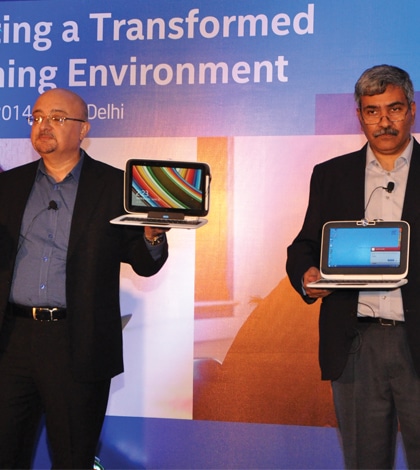
Aimed at enahancing the education aspect for schools across the country, Intel India has unveiled its first ever 2-in-1 reference designed for students. With this move, Intel has joined the league with the likes of MBD, Pearson and others for delivering relevant education content for these devices.
The Intel Education 2-in-1 is powered by a quad-core Intel Atom processor Z3740D, runs Windows 8.1, provides up to 7.8 hours of battery life as a tablet with an optional three additional hours of battery life when docked. Its rugged design can withstand drops from 70 cms and offers IP 51 water and dust resistance. A stylus with a realistic penlike grip is also provided to enhance the functionality.
The Intel Education 2-in-1 has front-facing and rear-facing cameras to promote content creation and scien- tific exploration. The dualdocking mode allows students the option of having the tablet screen face them when using the keyboard or having the tablet screen face their peers to facilitate collaboration.
Together with the Center for Assessment, Evaluation and Research (CAER), Intel India has also launched a white paper titled ‘Creating a trans- formed learning environment’ which highlights the need and importance for integrating technology in school-based assessments.
The chip-maker says that the Intel Education 2-in-1 has the flexibility and mobility of a tablet, along with the per- formance and productivity of a laptop. “As a result of our work with educators around the world, Intel understands the need for engaging, student-centered learning in order to drive student suc- cess in school and beyond,” said Rajiv Bhalla, Director Market Development, Intel South Asia. “With our new Intel Education 2-in-1, students have a tablet when they want it and a laptop when they need it. This gives educators the flexibility to create a more interactive, collaborative learning experience for their students,” he added.
While discussing Intel’s Education initiatives in India, Ashutosh Chadha, Director, Corporate Affairs Group, Intel South Asia and Rajiv Bhalla Director, Market Development, Intel South Asia, said, “In a global economy, creating 21st century success for individual students, communities and nations means giving every student the skills and opportunities to excel. With a vision to advance excellence in education around the world, Intel is directly involved in education programmes, policy advocacy and technology products that enable today’s youth to develop the skills they need to be the innovators of tomorrow.”
The education sector in India is poised for a big leap as several technology firms are eyeing the vast market. According to experts, the total business potential of digital classrooms is expected to cross Rs 4,000 crore in 2014. Currently, the country is looking for some innovation from within the industry and with the likes of Intel now switching their focus towards the future with hybrid personal computers, students can be the biggest beneficiaries. Priced Rs 24,000 onward depending upon the requirement, the Education 2-in-1 reference design tablet is available at select outlets in the country.

‘We prepare students to move into the real world’

Priya Peter
Priya Peter, Principal, Mussoorie International School
Priya Peter
Priya Peter,
Principal, Mussoorie International School

The responsibility of a boarding school goes way beyond normal school hours, believes Priya Peter, Principal, Mussoorie International School. In conversation with Elets News Network, she points out a boarding school has to ensure that students feel safe and confident and get a healthy and progressive environment

How does a boarding school enhance the performance of an average and below average student?

In a boarding school like MIS, personal attention is given to all the children and in addition to academics, emphasis is given on enhancing the basic life skills of students. A boarding school provides children with peer group interaction opportunities both during and after the school along with diverse leisure activities and vocational training opportunities. Since students are taught by highly qualified and exceptionally motivated teachers and are monitored 24 hours with a necessary push to ensure academic success, excellence comes naturally.

How far does psychological counselling play a role in integrating the children with boarding schools?

Residential boarding schools provide education, character-building, and therapy for teenagers with special concerns. Many of the students enrolled in these schools may have social, behavioural or emotional difficulties that require constant psychological assessment. At MIS, we heal them with the aid of medication, yoga and meditation. Psychological counseling also helps the child to adapt and adjust to their surroundings and fill them with positive energy.

Are learning methods different as compared to public schools?

The MIS has a learning environment that unfolds the true potential of every child. Education is not limited to curriculum but also lays equal emphasis on enhancing the overall personality of the children.

What are the challenges of administering a boarding school?

Boarding schools are not mere educational institutions but also home for the children who study and reside here. To that extent, the responsibility of a boarding school goes way beyond the normal school hours. As their teachers and also guardians, the administration of a boarding school has to ensure that students feel secure, safe, and confident in the premises and get a healthy and progressive environment. The children need to be comfortable; feel loved and should develop an attachment with their boarding school. Needless to say, these are the biggest challenges and schools must surmount them to ensure that children transform into fine men and women.

What are the demands placed by parents on the school?

As parents are concerned about their children, they always look out for good faculty, academic as well as all-round development of their child. They prefer a school which can prepare their child to be a responsible and successful individual.

On what parameters does one judge a residential school?

People generally judge a residential school on the basis of the merits and school rating. They also look for the proximity, quality of faculty, quality of education, broad and diverse offerings, extra curricular activities and counselling etc. in the school.

What is the unique about MIS?

An exciting and innovative curriculum, inspiring teachers along with an international mix of students makes MIS the school of choice for girls. The school stands out for not only giving wings but also keeping the children grounded by inculcating morals, ethics, values, and respect for our rich culture.

Does accreditation to the International Education Board matter?

An accreditation to international education board indicates that the school meets the standards of quality set by the accreditation organisation in terms of the faculty, curriculum, administration, financial well-being and student’s services. It symbolises that the school uses the latest pedagogical techniques and caters to children coming from the different parts of the world.

LATEST NEWS