
Home Blog Page 942

School education department ensures implementation of RTE in Chhattisgarh

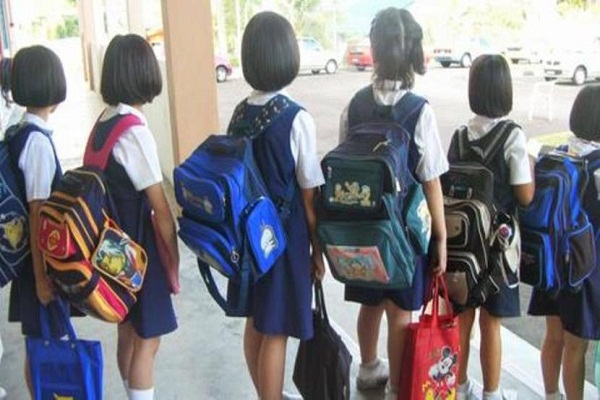
The school education department of Chhattisgarh has taken up the initiative to provide free and compulsory admission to poor children on the 25 per cent seats reserved for them. This step is an initiative to implement Right to Education (RTE) in Chhattisgarh, in which every school is instructed to keep seats vacant under the RTE Act till end of August and for the new session.

Having a population of 3,860 financially poor students, Raipur has recorded the highest number of admission in Chhattisgarh under RTE in 2012-2013. District education officer Ashok Banjara stated that the department has circulated instructions to all private schools to keep seats under the RTE Act vacant till August 24.

All the 170 nodal schools are asked to keep the details ready about reservation of seats for different categories of students like differently abled, poor, SC and ST children, etc in order to avoid confusion among people.

Few private schools tried violating the RTE norms by refusing admissions to poor students stating that the school’s ambience would be affected. But, few cases that reached high court were given admission in preferred schools.

Mixed reaction to DU proposals

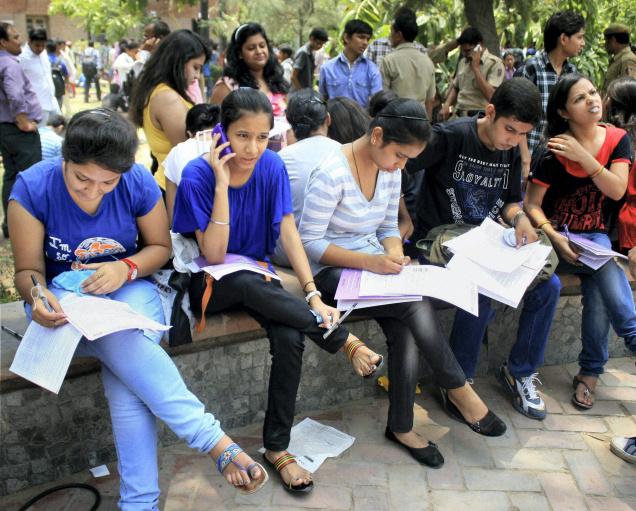
Students have given a mixed response to the changes proposed by the Delhi University admission. While some say that students should have the right to apply to as many colleges/ courses they prefer, others say they welcome the changes.

Those who are questioning the cap on the number of colleges are also asking the university to reverse its earlier decision and allow students to opt for as many courses in as many colleges. In 2013-14 academic session, students were asked to opt for only courses and not colleges in the OMR sheets.

Students are questioning the proposed cap on the number of colleges and the courses one can apply to. Cut-offs, they claim, are unpredictable and it is difficult to make accurate choices. Cutoffs, based on aggregate of best of three, has however been welcomed by many while suggesting that language should not be in the best of three subjects for commerce and science stream. Students also agreed that this will further increase the cut-offs significantly.

Schools asked to make up for poor RTE intake

Tamil Nadu has not even met half its targeted number of admissions in matriculation schools for the 2013-14 academic year under the 25 percent reservation clause of the Right To Free and Compulsory Education Act.

Matriculation schools across the state admitted only 40 percent of the 58,619 students from poor and underprivileged backgrounds that the state wanted to admit at the entry level class in private unaided schools.

And, more than one-fourth of the matriculation schools did not admit even one underprivileged student under the clause.

This admission by the government has come in the form of a warning to private unaided schools this year, just before the expiry of third year deadline of the RTE Act on April 1. A directorate of matriculation schools circular to matriculation schools and chief educational officers in various districts took a strong view of self-financing educational institutions failing to admit students under the Act.

The circular said that this record is not acceptable at any level. After the central government enacted the Act and the state government notified it and issued appropriate government orders, we continue to get complaints about schools not admitting students. Schools will have to make up for this in the coming academic year by filling up all 25 percent seats allocated for underprivileged children in the locality.

Schools have been getting away with not meeting the 25 percent reservation target by claiming that nobody falling under the category had sought admission. The directorate has said it will not take no for an answer this time and has placed the onus on schools to publicise the availability of seats through local media.

Online evaluation of class X answer sheets begins

Online evaluation of CBSE class X answer sheets has begun at three centres in Lucknow. Close to 110 teachers are busy in online evaluation of mathematics answer sheets. While over 40 plus teachers are evaluating answer sheets at RLB Memorial Senior Secondary School and DPS, Indiranagar each, there are around 30 teachers at DPS, Eldeco.

CBSE coordinator, Lucknow, Jawaid Alam Khan said that once evaluation for mathematics ends, Hindi would begin.

CBSE has for the first time introduced digitized marking for class X board students. The on-screen marking, said officials will lead to an error-free evaluation. The biggest benefit of the online marking will be in terms of totaling. The online marking will rule out the possibility as the system will reject the answer sheet in case of wrong totaling. Only after one section would be marked, evaluators can start marking the other section.

CBSE handed the answer books in sealed packets to the service or the software provider after fixing bar-coded stickers by the chief secrecy officer of board examinations. The answer sheets were then scanned and put on screen for evaluation by examiners trained in using the software.

Computer-based evaluation and online marking of the board results will also ensure compliance of RTI provision which makes it mandatory that the answer sheets should be made available for scrutiny to the students, if they wish to see it.

IIT Kharagpur starts short-term courses

IIT Kharagpur is now offering students of other colleges a chance to study at the elite institute under the tutelage of an international faculty.

The International Summer and Winter Term (ISWT) will run each year during May-July and December, IIT Kharagpur officials said.

By bringing together participants and faculty from India and abroad, the programme will not only be academically stimulating, but also offer an opportunity to make new friends and interact with about 30 international experts, they said.

These subjects are designed around current and multi-disciplinary themes of science, engineering, management and law, the officials said, adding, the duration of each course is of two weeks or ten working days with a judicious blend of lectures and tutorials per day.

They said participants can be even from the industry and research organizations.

Students registered for these courses will have the opportunity to obtain additional academic credits based on evaluation and grading process, they added.

CREDAI seeks MoU with TN educational institutions

To develop technical skills of students, CREDAI is seeking to sign a memorandum of understanding with institutions like Anna University, SRM and VIT universities for third and fourth year students.

Just 20 percent of the 2.5 lakh engineering graduates passing out of colleges in Tamil Nadu every year are employable, said Sandeep Mehta, president, Confederation of Real Estate Developers’ Association of India (CREDAI).

He said that the subject knowledge during four years alone is not sufficient, but other skills are also required to make them efficient employers.

He added that nearly 60 fourth year students would be trained as site supervisors by the member developers of CREDAI to improve their skills. We have also recommended Anna University to make onsite training part of the curriculum for the third year students. They would also be trained as site supervisors and site engineers during their fourth year.

Outdoor history classes for CBSE students

To make the history subject more interesting, the Central Board of Secondary Education (CBSE), has asked its affiliated schools to take students on excursions to historical sites.

A CBSE official stated that the subject history is not considered very interesting and if the subject is taught by taking students to historical sites and monuments, it will become interesting. This will also help students to study in an enhanced manner and do their projects well.

Rakesh Sachdeva, principal, DAV Model Senior Secondary School and exam counsellor said that visual contact leaves a lasting impact on the students, which makes study easy and interesting. He also added that expenses do not matter them if students are benefitting from it.

Students and parents are also happy with this move of the CBSE board.

MoU signed for research

The NMIMS University signed an MoU with University of Southampton, UK.

Rajan Saxena, vice-chancellor of the university, welcoming the deputy vice-chancellor of University of Southampton, Adam Wheeler said that University of Southampton, UK has strong presence in engineering area and we can bank on its marine engineering as a specialization with support of so many organizations of Mumbai being a port city. Similarly, our School of Law can work on legal qualification pertaining to marine laws. The first level interaction of Southampton university’s international linkages officials has already taken place with us where roadmap in terms of Joint research, student exchange and combined courses has been discussed as the next stage of this MoU.

Alok Jain, director, international linkages, NMIMS University said that both universities have direct synergies in Schools of Engineering, Business Management, Science, Law, Economics and Commerce which will be converted to quality output in agreed areas before 2014 ends. A proposal to go for masters qualification in Economics after bachelors from our school of Economics is on cards.

NMIMS University already has four existing MoUs with universities of UK.

DU cutoffs may set new records

If excess admissions in undergraduate courses are curtailed, the cutoffs will touch an all-time high across all courses in DU this year. The pattern in Delhi’s second largest university, Guru Gobind Singh Indraprastha University, where admissions are on, is also not encouraging. It has so far received 34,000 applications for just 250 seats in medicine and the application process will continue till April 10. B Tech programmes have seen 39,000 applications already.

The IP university has received 1.2 lakh applications for about 20,000 UG and 9,000 PG seats. DU has 54,000 seats, but more than 60,000 get admission annually as the university policy allows admission to all candidates meeting the cutoff and fulfilling the additional criteria. The city’s universities together have about 82,000 seats, including those in Ambedkar University, Jamia Millia, Delhi Technological University and Indira Gandhi Delhi Technical University. According to CBSE, 2,91,414 students have registered for the Class XII boards, 30,000 more than last year.

The increase in board exam candidates, along with the constant intake capacity, signals higher cutoffs. DU vice-chancellor Dinesh Singh suggested changes in the undergraduate admissions this year. He said that we will streamline UG admissions further to help aspirants in filling forms with minimum difficulty. And excess admissions have to stop. Because you (colleges) have a sanctioned strength, you must stay within that strength. We will also ensure the reserved category seats are filled.

This means there will be no admission beyond the intake. Last year, there was chaos during admissions to BTech and police were called in to manage the large number of students at Maharaja Agrasen College asking for admission. There were instances of colleges admitting nearly 500 students for 60 seats in chemistry. In 2013, the first cutoff had 43 out of 56 colleges offering commerce at 90 percent and above, while 23 colleges recorded 95 percent and above.

98% aspirants fail test for teachers

More than 98 percent of aspiring school teachers fail to pass the Central Teacher Eligibility Test (CTET) 2014. Just 13,428 of 7.50 lakh aspirants passed the test, conducted in January by the Central Board of Secondary Education (CBSE).

In all, 8.26 lakh aspirants registered for the test. About 7.50 lakh finally appeared for the test, of which only 13,428 managed to clear either Paper I or II or both. Clearing Paper I is mandatory for those wishing to teach classes I to V while Paper 2 is for those wishing to teach classes VI to VIII. Aspirants who wish to get certified for classes I to VIII need to clear both the papers.

The papers feature objective questions, which test the aspirants’ knowledge of English, mathematics and environmental science. This year’s results actually mark a marginal improvement over last year, when over 99 percent of the candidates failed to pass. But CBSE sources said the board had worked on the difficulty level as well as extended the duration of the test, keeping in mind dismal results in the past.

The CTET was introduced in 2011 by the human resource development ministry to improve the quality of teaching in schools after the enactment of the Right to Education Act. CTET certification has been made mandatory to become a teacher for classes I to VIII in any central government school, while CBSE-affiliated schools can either recruit teachers based on CTET or the respective test conducted by states.

In fact, the Delhi government too decided to adopt CTET for recruitment of teachers for government-run and aided schools. All CTET applicants need to be BEd graduates.

LATEST NEWS