


Home Blog Page 981

Provides Learning Ladder

Year of inception: 2010
Founder and Chairperson: Ved Prakash Chiripal
COO: Dharmesh Kapasi
Head office: Ahmedabad, Gujarat
Address: 4th Floor, Chiripal House, Shivranjani Cross
Roads, Satellite, Ahmedabad – 380 015
Website: wwww.shantijuniors.com


Shanti Juniors
(SJ) is one of the educational ventures by SEI -Shanti Educational Initiatives (SEI) which is a corporate citizenship initiative by the Chiripal Group – `2500 crores conglomerate involved in textiles and petrochemicals in India. Education is one of the portals which are instrumental in helping the Chiripal family return multi-fold to society, as they themselves received so generously.

SJ came into existence in the year 2010 by inaugurating 6 centres in Ahmedabad in one single day. Since then SJ has grown leaps and bounds every year with its single slogan of “Celebrate Childhood”. The other two ventures of SEI are Shanti Asiatic School, K-12 School and Shanti Business School – B School.

School’s Philosophy
At Shanti Juniors, we have discovered our own teaching philosophy after a lot of research and development, which is based on young minds response and reaction. Our philosophy is I3 Learning Ladder (Inquiry, Interaction and Innovation) synchronized with 4 C’s(Curiosity, Confidence and Creativity and Continuity)

USP
• Age appropriate constructive development of the child.
• Holistic approach towards the child.
• Encouraging their talents by identifying and fulfilling their individual needs for a wholesome growth. This is done through the various programs we offer, which are as follows: Playgroup, Nursery, Junior KG, Senior KG
• I3 Learning Ladder with 4 Cs.
• First ISO 9001:2008 certified Pre School Chain of Gujarat.
• Working towards creating synergy between digital academics and manual academics.

Franchise Process

Business Expansion

Presence across India –  115 + centres in India throughout 13 cities
Franchise Option –  Yes
Number of franchise –  115 Franchises across India
Expansion Plans –  Shanti Juniors looks forward to operate 170+ centres across the country by 31st March
2014 and 300+ centres by 31st March 2015.

Requirement for taking Franchise:
• Investment: Upto `8 to 10 lakhs which includes Franchisee Fees, Material Kit, Furniture and Fittings, Equipments and
Educational Material.
• Space required: 1200 sqft to 2000 sqft area with equal amount of outdoor area. Bungalows and tenements on prominent
road in residential areas are preferable.
Deliverables for franchise owner:
• A well designed curriculum and content based on our basic I3 Learning Ladder Methodology
• Play and learn equipments and furniture
• Latest teaching aids
• Effective teachers and counselors trainings
• System Process, academic and marketing guideline manuals
• Support in Staff-Recruitment.
• Brand building, promotions and advertisements
• Holistic business management consultancy
• Periodic product developments and updates
• Online support
• Orientation and induction programs
• Parental involvement programs
• Opportunity to attend national and regional business partners confluences
• Transparent operational policies.

Contact person for Franchise Enquiry: Rinku Vyas, Zonal Head – Business Developments, +91 90990 79825


Admission Process

Minimum Age for admission: 1.5 years old toddlers
 Admission procedure and fee structure: Parent shall locate the nearest center and fill up the admission   form with due documents of child. Fee Structure varies from centre to centre.
Programmes for student development: PG | Nursery | Jr Kg | Sr Kg, Mother –Toddlers.
Qualifications required for teacher recruitment: ECCE Trained and experienced Teachers.
Training programme for teachers development: Teacher Induction Programme, Refresher Induction Programme, Phonic Workshop, Innovation ways of teaching workshop, etc.
Support to parents: Celebration of “Parents as Partners”, Different informative workshops on Parenting and dealing with PreSchoolers. Also creating an interface to connect parents directly with SJ parents called “E – Juniors”
Contact person for admissions: Counsellors / Centre Heads at the SJ centre
Employment opportunity: If you wish to work with E-mail your profile at hr@shantijuniors.com or career@shantijuniors.com
Enquire for admission: 99796 66660

We must do Justice to Quality Requirement

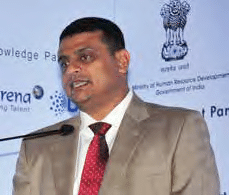
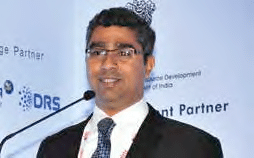
The target of 27 percent GER is not difficult to achieve, but addressing quality is the key issue, says R P Sisodia, Joint Secretary (Higher Education), Ministry of Human Resource Development (MHRD) Government of India. In conversation with Rozelle Laha

From being a District Collector to the Director of Technical Education and Secretary of the Andhra Pradesh Board of Intermediate Education, you have held several responsibilities in the education sector. What are the key issues that plague higher education in India?
The most important thing that plagues education sector is the severe lack of infrastructure and quality resources. Though we can find good quality resources and facilities in the private colleges, it comes with a high cost implication. In the public institutions, sufficient focus on the part of the government is lacking; basic facilities are also not available thus making quality a casualty. Also, a palpable lack of skills and commitment is observed in the people managing the institutes.

There is a major debate around increasing the GDP spending on higher education to six percent. Can this solely play a significant role in enhancement of quality in education?
Whereas, it is not the only answer to ensure quality, it should remain a significant and key goal for us. Against Kothari Commission’s recommendation of spending six percent of GDP on education, we are spending on an average of four percent of our GDP on education. Out of this 4 percent, roughly one percent spending is on higher education and three percent on school education.
In the past, education was essentially driven by public investment or by philanthropy, today you have entrepreneurs, corporate and CSR investments coming. In the present scenario, a lot of private investments are coming in. If we add everything together, time might have come to have a re-look at the six percent spending. Until now, the goal of spending six percent of GDP on education remains a dream. We do need to focus and prioritise our spending on education.

With the entry of both private players and public institutions in the education sector, how can we ensure threshold quality across institutions?
The basic threshold level of quality should be maintained regardless of private or public sector. The threshold quality is basically the basic minimum that needs to be ensured by the regulators be it in the public sector or the private sector. This threshold quality can be determined with reference to accreditation. The basic quality should be in the nature of ensuring minimum standards in parameters like teacher-student ratio, the classroom space available for the students and so on. Such basic things should not be compromised upon and must act as the threshold. Above the basic threshold, every institute should have the flexibility and the ambition to go up higher and higher in terms of quality.
The fact still remains that the investment coming from the private sector are coming into some specific regions, areas and disciplines. It is not coming equally in all areas. For instance, the private investments are not coming in northeastern areas, hilly areas, or backward areas, there are not having any private sector participation. There may be oversaturation of private institutions in the metropolitan and the urban areas where there is demand. This is also distorting the landscape in some way. There is an immense need to highly regulate not only the quality but also the numbers. At times, such a distortion might lead to a very unhealthy kind of competition leading to adoption of unfair practices in order to attract students, or to ensure that you get the maximum out of the revenues that are generated which are not healthy or desirable trends for education.

The Kakodkar Committee report suggests, even the top IITs are producing 1, 000 PhD scholars every year, which is much below the average of 8, 000 to 9, 000 scholars being produced by the USA and China each in technical education. How can we make our national institutes of importance more efficient?
The first priority of our institutions happens to be catering to the learning requirements of the students. If we start comparing ourselves to research universities, then we are somewhere being over- ambitious. However, this is not to undermine the fact that our institutions and students have huge potential to undertake research. These days, students are going abroad to do PG and research work. The question is what makes them go out? Are we not having the facility, capability or necessary guidance that is required for research activities? It is perhaps the combination of all. The number of PhDs being produced by the reputed institutes of the country is less compared to international standards. A proper strategy needs to be put in place. You do not churn out PhDs just for the sake of giving PhDs. It should lead to gainful research dividend and that would come when you try to expand your capacity slowly. The institutional objective needs to be re-defined so as to re-orient ourselves towards encouraging research.

UGC has recently proposed tougher norms for private universities. Do you think that it would be a good step?
It would be a good step. Some of the private universities are operating in a way that is not conducive with good learning. Even in terms of quality, if we really compare public institutions and private institutions, you would find that private institutions lack that core focus on quality as somewhere commercial considerations takes the core position and tends to dilute the focus on quality.

Which are the organisations that would play a major role in improving quality in the education sector in the days to come?
The key role would be played by UGC in time to come. The distance education regulation has gone back to UGC and the technical education regulation is also going to be with them in future. NAAC, NBA would play a key role in addition to some more accreditation agencies that we are planning to set up. We need to have a body which has the capacity and the wherewithal to monitor the quality and you need to empower the universities. We need to de-centralise the quality control by empowering the universities to become a formal accreditation agency so that they ensure the quality of all the affiliated colleges under them.


Universities have to become a formal accreditation agency to ensure quality of  all the affiliated colleges under them”


Will UGC not be over burdened with so many responsibilities?
Yes, UGC is a funding body and now it will also become a regulatory body. Having a limited capacity certainly is an issue which needs to be looked at and we are very seriously looking at it.

How do you envision the country’s education sector at the end of 12th Five year plan period in 2017?
We need to define quality, set the measurable indicators of quality, identify the benchmarks, the thresholds and then plan on how we propose to take it beyond where it stands and most importantly, how we can bridge the huge gap that happens to be there between the top institutes like the IIT Kanpur, Kharagpur, Delhi University, JNU and some of the institutions which are below average. When we talk of quality, we need to bring institutes that are below the standards of the good ones in our country at a level so as to assure minimum quality standard. This is the challenge that we have to grapple with during the 12th and 13th Five Year Plan.
We need to focus on ensuring quality through mandatory accreditation. We also need to ensure that the institutes adhere to the basic minimum standards laid by the regulators and that the regulators properly monitor the quality by putting proper frameworks in place.
The target of 27 percent GER is not difficult to achieve, but addressing quality is the key issue. We have brought ourselves at par with the Asian average in terms of GER, but the key question that needs to be addressed is whether we are comparable to those institutes in terms of quality education. We must do justice to the quality requirement.

Integrating Modern Pedagogies of Teaching

Planet Kids
Year of inception: 2005
Founders: Chandu Jain; Amar Kapasi
Head office: Bangalore
Address: C-7, ‘Unity Buildings’, 1st Floor, J C Road,
Bangalore- 560 002
Website: www.planetkids.in
Email:info@planetkids.in; franchise@planetkids.in
Contact Numbers: +91 80 411-45744/844
Toll Free Line: 1-800-103-6766

SPlanet Kids is a start-up incepted in the year 2005 at Bangalore with an honest attempt to create a difference in the pre-schooling industry by providing an experience of international standards to the children as well as the parents. The company started off with company owned and operated model of preschools and was a pioneer in the field by integrating modern pedagogies of teaching combined with a state-of-the-art infrastructure at an affordable price point. With-in a very short span of time Planet Kids created an indelible impression in the industry at Bangalore for delivering high quality standards as well as pioneering creativity based activities for the children and a wholesome experience for the parents. Till date over 12000 children and thousands of happy parents have been a part of this hugely successful story and are fast growing by the day. Started with one school with three students in 2005 to 15 schools with over 2000 children in 2013, the journey indeed has been exciting and a fulfilling one. And yet we say, ‘we have just begun’ as there is a lot more to achieve and accomplish.

School’s Philosophy
The brand name ‘Planet Kids’ denotes a whole different world for the children to explore, learn and enjoy the process of growing up in a happy atmosphere along with acquiring learning skills ‘the fun way’. A planet of the children, for the children and created keeping in mind the various requirements of young learners. The name is synonymous to quality learning for children along with the endearing and friendly Lion mascot ‘Frizzy’.

USP of your Group
Excellent brand equity, young and creative team, extensive knowledge and know-how of Preschooling Industry, and extremely qualified training personnel

Franchise Process

Business Expansion
Presence across India –  Currently present at Karnataka and Uttar Pradesh
Franchise Option –  Yes
Number of franchise – 10
Expansion Plans –  Expansion Plans pan India

Requirement for taking Franchise:

A Planet Kids preschool centre can be started off in an area which is 2,500 sqft and above carpet area with an investment ranging from `12-20 lakh of rupees, depending on the location and set-up costs. Preferably it should be located on main roads of prime residential localities with ample outdoor play space and also good visibility and accessibility to customers.Deliverables for franchise owner:
Planet Kids will offer the franchisee extensive support to start and operate a centre. Basic guidelines on how to start operations,
the décor, and the materials required et cetera will be shared with the new franchisees. The in-depth Operations manual will
be a ready reckoner to the franchisee to get the framework of policies and procedures to be incorporated. A two day franchisee
induction programme will be conducted to help the new franchisee understand the pre-school industry and also how Planet
Kids functions. The teachers will be trained by academic leaders from Planet Kids at the beginning of the academic year and also
during the year if the need may arise. Constant on-going assistance via phone calls and e-mails will be available to the franchisee to help them settle any issues of concerns. Education coaches will visit the franchise centres and do classroom observations to help teachers perform better. Marketing co-laterals like advertisement designs, banner designs, leaf lets et cetera will also be given based on the needs.


Admission Process

Toddler Programme: 1 year – 1 year 8 months
Play Group: 1year 8 months – 2 years 8 months
Nursery: 2 years 8 months – 3 years 8 months
Lower Kindergarten: 3 years 8 months – 4 years 8 months
Upper Kindergarten: 4 years 8 months – 5 years 8 months
Daycare: 2 years to 8 years
Activity Hub: 2 years to 12 years
Fee Structure: Ranging from 24000 to 60000 per annum for preschool
Programmes for student development: X-SEED curriculum, Kinderdance, E-Blocks & Raise a Reader Programme
Qualifications required for teacher recruitment: Freshers/Qualified (NTT or Montessori Trained)/Exprienced
Training programme for teachers development: Regular Teacher Training & enrichment Programmes
Employment opportunity: : If you wish to work with Planet Kids in Teachers/Centre heads/Academic Head positions, please mail your profile to jobs@planetkids.in

Skilling Kids in a Free and Spirited way

Little Legends
Year of inception: 2005
Founder and Chairperson: M G Vasan
COO: Sumy Vasan
Head office: New Delhi
Address: Shubham Enclave, Paschim Vihar New Delhi-110063
Website: www.littlelegends.in

Little Legends is an inspiring and ultra-modern pre-school and playstation for your child. Your child gets international quality of education with Indian values amid joyous ambience. The amazing blend of Academics, Technology and Infrastructure not only delights but energizes your kids to learn while playing.
Little Legends truly matches the best of playschools globally and presents lively learning and playing. The infrastructure supports your kids to unleash their creativity and innate skills in a free and spirited way. Learning is fun at Little Legends with the concern for overall growth and grooming of the child to transform him into a bettesr citizen.
Little Legends mixes modernity with technology to produce the future citizens. All sorts of facilities have been offered for your child’s growth. At us, IT related aspects, play stations, large amphitheatres and equally charming tools help out the children to learn while playing and sense things differently.

School’s Philosophy: Creating leaders of the future

USP: Grooming, learning and teaching through novel methods and judicious use of technology

Admissions Process

Minimum age for admission: 1.5 years
Admission procedure and fee structure: Rs. 5000-10000 depending on location
Programmes for student development: Technology based teaching, special curriculum, stage exposure, physical exercise, brain teasers
Qualifications required for teacher recruitment: Graduate with Montessori training/ NTT
Training programme for teachers development: Regular and continuous training
Support to parents: Watch them learn-live surveillance system
Contact person for admissions: Sitara, +91 9891816161


Franchise Expansion

Presence across India: 3 schools in Delhi (Paschim Vihar, East Patel Nagar, and Greater Kailash-I)
Franchise Option: Yes
Expansion Plans: Franchisees all over India
Requirements for taking Franchise: 3,500 SqFt area with an investment of approximately `30 Lakh
Deliverables for franchise owner: Franchisee fee
USP: Technology based education
Contact person for Franchise Enquiry: Sabu V Jacob, +91 9891999975

Making Teaching a Joy and Learning a Pleasure

Year of inception: 2004
CEO: Vittal Bhandary
Head office: Bangalore
Address: Learning Edge India Pvt Ltd, # 742, 7th cross, near BDA complex, 3rd block, Koramangala,
Bangalore 560036
Website: www.littleelly.com


Little Elly
is a noble initiative of Learning Edge India Pvt Ltd in association with Glen Tree, UK, the pioneers in serving the learning needs of kids for nearly a decade. The group follows the unique methodology where in every child gets to learn without being made to feel he or she is being taught.

School’s Philosophy
The school’s mission is to facilitate the learning process that makes every child cheerful, independent and successful in the future. The school believes in making “Teaching a Joy” and “Learning a pleasure”.

USP
Little Elly is a concept preschool, which has its own unique approach, using an integrated curriculum as a base for meaningful, experiential and creative learning. The facilities are designed as concept spaces which promote the children’s creativity and autonomy. Children can play, explore, run around, learn, discover and dream in the Early Learning Program (ELP) room, the Music and Movement stage, the Montessori Space, the Creative Corner and in the Play Area.
Providing a high quality education for children in their early growth stage yields significant long term benefits. The group strives to provide quality education opportunity to people from all walks of life. The group has a higher goal – the desire to do something rewarding and make a difference in the lives of children, family and their neighbourhood.

Franchise Process

Business expansion

Presence across India  –  Present throughout South and Western India
Franchise Option –  Yes
Number of franchise  – 90
Expansion Plans  – Expansion plans are mainly focusing now on metros and two tier cities
Requirement for taking franchise
Passion to work with children and be a part of child’s life would be the key attribute to own a preschool.
• For area: 1500 – 2000 sq. ft. of ground floor space (preferably a bungalow)
• Investment capacity: 8 – 10 lakhs
• Breakeven: 6 months – 1 year
Deliverables for franchise owner
Commitment and assistance is ensured by the presence of Little Elly’s dedicated team who contributes to the franchisee’s success with: Pre – Launch Support, Setting up Support, Post launch support, Training support, Ongoing support, Marketing Support, Branding support, and ERP support
Contact person for franchise enquiry:
For Bangalore franchise contact Prajwal,+91 9035065699; For Andhra Pradesh and other places franchise contact Chaitanya : +91 9030064615; For Chennai franchise contact Nehal: +91 9036065699; franchise@littleelly.com


Admission Process

Minimum Age for admission: 1 year
Admission procedure and fee structure: Admissions in the LE centers are open throughout the year. Registration is by having a brief talk with the Centre head, at which time policies and curriculum, parent conferences and procedures, visits and input, children’s records, health and immunization records and emergency and health care policy will be explained. The fee structure of LE differs according to locations.
Programmes for student development: The programmes for overall development of the child includes personal and social development programme, physical development programmes, Cognitive development programme, Creative expression/aesthetic development programme.
Qualifications required for teacher recruitment: The qualification requirements range from minimum qualification of a graduate or a college degree in child development or early childhood education. In addition to these, preschool teachers must have the ability to communicate, inspire trust and confidence, and motivate students, as well as an understanding of the students’ educational and emotional needs.
Training programme for teachers development: Initial Teachers Training Program (ITT)
Support to parents: Little Elly facilities are places where people meet and where families are offered intensive support. LE makes parental involvement positive, practical and personal to enable the parents to guide the child into a wonderful chapter of preschool. Teachers collect samples of each child’s work throughout the year to show growth in conceptual understanding and skills development and PTM’s are conducted three times each year.
Contact person for admissions: Respective LE center heads; help@littleelly.com To Locate the nearest Little Elly centre to you, just SMS “ little elly near ” to +91 9008890088
Employment opportunity: If you wish to work with Little Elly send your profile at careers@littleelly.com

Universities Must Promote National Interest

Education is the key for the development process of an entire nation and can help in taking the country to global heights as a leader in the forefront, says Prof Mahendra P Lama, Pro-Vice Chancellor, Indira Gandhi National Open University (IGNOU), in conversation with Rozelle Laha

From being the founding Vice Chancellor of Sikkim University to Pro-Vice Chancellor of IGNOU, please share your experience as a teacher over the past 21 years.
Our country requires good institutions, primarily because students opting for higher education are very bright, targeted and forward. We need to channelise their creative minds, and their constructive and collective strength. As the founding Vice Chancellor of Sikkim University, my first aim was to build a national institution that would take care of the local youth, their needs, and an institution that would cater to the entire nation. Despite of the immense support from the central government and MHRD, we have failed to give good institutions to the people of the Northeast that are able to cater to the talented crowd there.
India has a huge role to play globally as far as education is concerned. The British, Americans, Chinese, Japanese have been using education as a very strong instrument in their foreign policy. While they are talking of hard powers like about atom bombs and tanks, but at the same time, they also give ample significance to education as a key soft power. Indians have not been able to play much on the soft power game despite of a strong historical background in education. Indian Universities should strive to promote the national interest to the global world.

 What are the major determinants of quality for education?
There is a huge difference between what we produce and what is required. When we think of quality in higher education, we should think of getting access of the same to all communities thus creating the right people to cater to the needs of the nation and transforming India into a major education hub by reaping the benefits of diverse culture, demography and geography available in the country.
The condition of the educational institutes in the country is very poor. The number of higher education institutes is insufficient to cater to a population of more than 100 crore. Availability of a university per thousand of population in India is one of the lowest in the world as compared to China, Japan or America.
On a positive note, despite of the state of Indian institutions, foreign students and faculty do come to our country. So, it is evident that they are willing to be here. We only need to create a strong strategy and ensure quality to attract more such people here.

lama2Sikkim University offers some unique courses unlike other universities. What inspired you to introduce such courses and how have students responded to these courses?
Most of the universities are teaching more or less similar courses these days. In Sikkim University, we did not want to offer courses available in other parts of the country. So, we established the School of Sustainable Development, School of Peace, Conflict and Human Security Studies, School of Indigenous and Folk Studies, School of Global Studies among many others. These courses attracted applicants from countries like China, Sri Lanka, Nepal, Bhutan and India.
Most of our present day conflicts are related to natural resource management (land, water, mineral resources), but very few universities in our country offer any course on natural resource management. Similarly, India is a country that shares borders with China, Nepal, Pakistan, Bangladesh, Bhutan, and coastal border with Sri Lanka, how many universities in the country offer courses on border? We at Sikkim University realised that with new set of courses, we will not only attract students from India but also abroad.

Please throw some light on the scenario of education in the Northeastern states with reference to the Northeast Region Document.
Most people perceive that the Northeast is all about insurgency, violence and terrorism, but the fact is that people resorting to such activities comprise of less than one percent of the population living there. They do not represent the entire population. We must establish institutes in the region that would attract more students from other parts of the country who can then carry the message that Northeast is not only about insurgency. Iis also about people, food, culture, intellectual resources and heritage.
Many institutes in the Northeast that were built by the British continue to remain robust, but post independence not much was done towards building good institutes.
The Northeast Region document (released by Dr Manmohan Singh, Prime Minister of India, in the presence of all the Chief Ministers of the Indian states) lays ample emphasis on improvement of education, health and infrastructure of the region. We also have a Northeastern Council which is equivalent to the Planning Commission of India and Ministry of Development of Northeastern Region, but nothing much happened in terms of improvement. Government of India has a Look East Policy as a part of its main foreign policy plan. But, in the policy, where is the Northeast? When they look towards the east, they talk only of Southeast Asian countries like Malayasia, Singapore, Korea whereas the first thing they should look at is their own Northeast. The Northeast is the gateway to the Southeast Asian countries and the Northeast of the home country should be discussed more seriously.


Higher education should channelise creative minds and collective strength of youngsters


What role can universities like IGNOU play in making education more inclusive in the country and what is your vision?
IGNOU is the only institution in the country which is truly a people’s university, as it has reached to the remotest of remote areas across many communities. We aim to reach out to the millions of students who still don’t have access to higher education; to the unconventional catchment areas within India and play a critical role by imparting education with help of technology. We also aim to spread the concept of open and distance learning system across the globe.

What is your take on teachers’ training programmes in the country?
India needs quality teachers. After the qualification of Bachelors of Education was made compulsory part of school teachers’ training by March 2015, we realised that 80 percent of our teachers are not trained. To add to it, when educational boards like CBSE and the various state governments planned to train the teachers, we gathered that there are no teachers’ training institutes either.
So, with the help of skill training institutes and private institutes, IGNOU plans to train as many teachers as possible in the coming months. However, with such a huge demand in place, our efforts will be able to cater to not more than two to five percent of the need.

Higher education must be made more relevant to the society, community, country and the global world

As an eminent educationist, where do you see India five years from now? Are we headed in the right direction?
Yes. Policy wise, we are heading towards the right direction, but implementation wise, we still have a long way to go. In my opinion, a few good institutes will take the lead in making India an education hub.
There is a major lack of serious debate, discourse and discussion on higher education. The higher education system should not be led by the government. It should be led by the demand of students and aspirants. As of now all higher education related discussions are primarily triggered from the government’s end, which again is a major deviation from our foreign counterparts.

IGNOU’s Plans
• To reach out to the unconventional catchment areas in India
• To create a global mark with its open and distance learning system
• To train as many teachers as possible in the coming months
• To use technology to impart education with the help of skill training institutes and private institutes


• The need of the hour is to create a good set of teachers, so that students need not leave their hometowns to study in institutes like Delhi University, Jawaharlal Nehru University or University of Hyderabad in pursuit of getting trained by the best.

• While migration of students from the Northeast is a sign of national integration, the reverse migration would have justified it better

east is a sign of nationl integration, the reverse migration would have justified it better

What are your future plans for IGNOU?
Prime Minister Manmohan Singh has signed an agreement with the African countries to set up the India- Africa Virtual University. The three partners from India i.e. the Ministry of External Affairs, Ministry of Human Resources Development and IGNOU, together are launching a pilot project early next year. This initiative would help us understand the African countries, renew our relations with them and make a very strong education base there. We also plan to have similar initiatives with our neighbouring countries.

Quality Enhancement Has No Limits

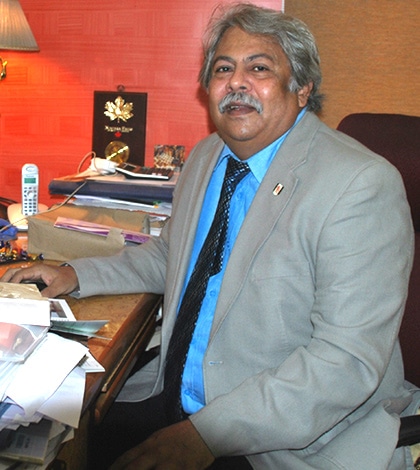
Dr Achyuta Samanta, founder KIIT University and Kalinga Institute of Social Sciences (KISS) in conversation with Rozelle Laha, shares his vision as an education leader in the private sector

What is your vision with KIIT University?
KIIT University was started 16 years back in 1987. The progress made by us over these years with respect to infrastructure, ambience, environment, academia, student performance, student achievement, quality of faculty and the students is laudable. However, we have a long way to go as there is no limit to quality enhancement.
We will focus on quality faculty, quality placements, quality research publications and consultancy in the coming days, We are laying maximum thrust on research publications and consultancy in order to make a mark for KIIT and to raise its level of acceptance among people.

How do you ensure the quality of faculty at KIIT ?
We hire M-Tech graduates and PhD students from different IITs and NITs across the country as faculty at KIIT. We usually visit the old IITs during their campus placements. We also advertise in newspapers for faculty recruitment. We also try to ensure good pay and good working environment and ambience to our faculty members.

Please tell us something about employability of KIIT graduates. How do you attract corporate to your campus?
Despite of locational disadvantages, the employability rate has been consistently commendable at KIIT. We have Q A& been achieving over 92 percent placements almost every year across all the streams, while the remaining eight percent generally opt out of the placements process.
But, we need quality placements oncampus with more multi-national companies to ensure better salary for KIIT graduates. As of now, the highest package is around `17 lakh per annum and the lowest is about `3.5 lakh.
As of now, only seven to eight MNCs visit our campus. Our aim is to attract at least 30 to 40 such companies to our campus every year. We are convinced that our rigorous efforts, quality teaching and well-trained graduates attract the industry to hire from the campus.

What is your strategy of promoting KIIT among aspirants and corporates? Does being located in a non-education hub affect KIIT admissions and placements in any way?
Our acceptance among the students and parents is commendable. Like most private universities, KIIT too conducts KIITEE for admissions to various courses. in the university. As per last year data, 1,60,000 students appeared for KIITEE across the country. Out of these, 42,000 students competed for only 100 medical seats (out of which 15 percent is reserved for management quota) on offer. Surprisingly, 85% of these students are from outside Odisha with maximum student representation from North India. We host foreign students from 15 different countries on our campus.

What is the strategy for yielding better research output at KIIT ?
We have built the advance central research centre at KIIT, wherein we are offer `10 crore as seed money to the advance research centre. We also encourage faculty members already involved in research and consultancy to be more engaged in the same in different ways. At the same time, we are also invite quality scientists as faculty members on our campus. KIIT’s School of Biotechnology is perhaps one of the best in the country with excellent research and laboratories almost at par with any other private or government institution in the country.

What persuaded you to create Kalinga Institute of Social Sciences (KISS)?
KISS is a home to 20, 000 tribal children of Odisha who are educated from KG (kindergarten) to PG (Post-graduation) under one roof. It was started with the vision of eradicating poverty through education. KISS has not only become a beauty of the entire world but is also accepted by the Ministry of Tribal Welfare, Government of India as the most successful model as it is a fully-free, fullyresidential largest institute for the tribal children across the world. Once a child joins KISS, he leaves this place only after completing his higher studies with a good job in hand. We have achieved a zero drop-out rate at KISS.
I consider half education is more harmful than no education. We promote our KISS students to be selected in the IITs, IIMs and NITs. We bear the tuition fee on their behalf to encourage them to pursue higher education.

How did you conceive the idea of opening KISS in different districts and across the country?
After a successful experiment of the model in Bhubaneshwar, I decided to extend it to other parts of the country to reach out to real poor children of the country. This initiative, I believe, can convert children from being liabilities to becoming assets of the society. I have the vision of educating 200, 000 students across different KISS centres of the country in the coming 10 years. I would be establishing at least 100 schools in different states with the help of either the state governments of the respective states or some corporate.


Education is the key to eradicating poverty, lethargy, naxalism and every possible issue that plagues the society


There is an increasing urge among most institutions to open up overseas campuses. Do you have any such plans for KIIT University?
As KIIT policy, we do not establish any regional campuses. We strive to maintain quality only in the Bhubaneswar campus and hold no plans to establish additional campuses across the country. We have adopted such a strategy as we believe that inability to bring in good quality even in one regional campus can affect the overall reputation of the whole brand.

Technical Institutes Push for a Regulator

With the Apex court’s rule rendering AICTE to be an advisory body and not regulator, many technical institutes of the country agree on the need to be regulated

All Indian Council for Technical Education (AICTE) – the apex regulatory authority for technical education in the country is now merely an advisory body. The Supreme Court, on April 25, 2013 ruled that AICTE will not have the authority to control or regulate the university affiliated professional and technical colleges of the country.
The judgment has left most institutes across the country to function without any supervisor and might lead to disarray in their functioning soon.
Most institutes in the country agree that there should be a regulatory body in place to put a framework in place and to ensure that institutes under its supervision adhere to the rules and regulations set by it.
“The decision of restricting the influence of AICTE as a regulator is definitely going to hamper the quality of technical education in the country. Before diluting the regulatory powers of an existing body, the ministry should have put up an alternative option in place. It is very important to have a regulator who can control and decide on fee fixation and quality,” said Prateek Sanghvi, Vice President, Sanghvi Institute of Management and Science, Indore.
As per reports from the ministry,“The Higher Education and Research (HE&R) Bill, 2011 intended to create the National Commission for Higher Education & Research (NCHER) for determination, coordination, maintenance and continued enhancement of standards of higher education and research.”
This commission would comprise of members from existing regulatory bodies like University Grants Commission (UGC) and All India Council for Technical Education (AICTE), setting aside regulatory bodies in the fields of medicine and law, with the power to put in place regulations for medical education and legal education.
A Press Information Bureau report in March 2013 mentioned that despite a general consensus on the need to establish an overarching regulatory body at the top, the setting up of the NCHER was specifically opposed by the State Governments of Bihar, Kerala, Punjab, Tamil Nadu and West Bengal.
As Prateek Sanghvi pointed out, “with the NCHER still on papers, the ministry should not have dissolved AICTE’s power to ensure authenticity of technical education was intact”
AICTE was the affiliating body to nearly 12,000 institutes across the country offering technical education. But, now, with the apex court judgment, around 1, 000 institutes come under the supervision of the council. It also regulated the number of institutes being opened up across the country and approved the number of seats to be offered by these institutes.
“Some regulatory body should be there to supervise. It is good for the institution’s management. Compilation of performance based data should be done timely. A regulator ensures that a goal is set and all institutions work towards that end result. Also, a regulator checks on the number of institutes and the locations in which they are being opened up,” said Dr Rupesh P Vasani, Principal, SAL Institute of Technology & Engineering Research, Ahmedabad.
AICTE ensured a reporting mechanism of an institute’s performance through a format of mandatory disclosures. This procedure of declaring achievements by any institution was applicable to all management and technical institutions in the country.
However, some institutes opine that despite of AICTE being in place, “The mushroom growth of unauthorised Bschools led to price war with absolute dilution of standards. A strict vigil is required in checking them and to ensure their closure both to help gullible students and undeserving faculty,” said Prof Dr V G Chari, Associate Vice President, Siva Sivani Institute of Management, Secunderabad. He added that approved management institutes should be provided more autonomy in terms of their geographical expansion including global affiliations. Joint programs and dual programs in collaboration with foreign B-schools/ universities should be given importance to nurture global ambitions of students. Similarly, Dr Rupesh Vasani also suggests that AICTE may act as a regulator, but fixing the curriculum should be there in the hands of the institutes. “The institutes understand the need of a particular course in their own state. For instance, shipping course is important in Gujarat, but we have not been able to offer it as there is no such AICTE approved course in place.”


Before diluting the regulatory powers of an existing body, the ministry should have put up analternative option in place

Prateek Sanghvi,
Vice President, Sanghvi
Institute of Management, Indore

The Higher Education and Research (HE&R) Bill, 2011 intendes to create the National Commission for Higher Education & Research (NCHER) for determination, coordination, maintenance and continued enhancement of standards of higher education and research


AICTE had done a reasonably good job of spreading higher and technical  education across the country

Chetan S Wakalkar,
Group Director, Indira Group of Institutes, Pune

Despite debates on how much power should be there with the apex regulator, the fact remains that a regulator is needed to ensure that the institutes function in array so as to ensure a basic level of quality education being offered by them. Chetan S Wakalkar, Group Director, Indira Group of Institutes, Pune says that “We are currently not clear as to how the Government would be restructuring education regulation India. Hence, it would be difficult to make an accurate statement on whether removal of AICTE’s regulatory powers is good or bad. But AICTE had done a reasonably good job of spreading higher and technical education across the country. AICTE had mentored private initiative in this space thus at least giving thousands of youth an opportunity to technical education and thus some sort of a career option.”
To justify the role of AICTE in promoting quality in technical education, Prateek Sanghvi marked that “All good work done by AICTE in terms of quality improvement of institutes would go to vein with institutes been given the power to function at their own whims.”


A regulator ensures that a goal is set and all institutions work towards that end result

Dr Rupesh P Vasani,
Principal,
SAL Institute of Technology & Engineering Research, Ahmedabad


The mushroom growth of unauthorised B-schools led to price war with absolute dilution of standards

Prof Dr V G Chari,
Associate Vice President,
Siva Sivani Institute of Management, Secunderabad

No bill has been prepared to amend the existing AICTE Act thus making the council an advisory body and not a regulator for the coming months driving technical education towards a confused road.

“India’s Ascent into the Online Education Sector is Slow but Sure!”

So what makes it different from all other platforms in the online  education arena? How is it changing the ed-tech scenario in India? Pragya Gupta, ENN talks to Harman Singh, the young CEO of WizIQ, and a passionate teacher himself


WizIQ first came into picture in 2007 and has since grown into a popular online education portal, with its virtual classroom technology that is specially tailored to suit the specific needs of 250,000 teachers from over 150 countries

By the end of a regular day at WizIQ, there have been 2160 hours of online teaching, in a total of 1606 public courses, with 567710 uploaded content files, and 11118 enrolments. More than 3 million people learning and teaching on a platform so robust, is a feat in itself


The world is witnessing a mushrooming growth of online education companies. Do you have a magic formula that makes you stand out?
WizIQ’s entire business and product design is based on the underlying belief that good education is driven by teachers – not technology, not content, but teachers. That is a simple thing to overlook but if you think deeply, it can have a profound impact on the industry and that’s what our magic formula is.

How are you helping teachers adopt online education? Do you offer onsite training?
I would not call it adopting. I believe the whole debate over whether or not to adopt technology into education is pointless. The new web is here, and there is no point resisting it. The right thing to do is to embrace it with a disruptive technological innovation that would define and streamline the otherwise haphazard growth of this phenomenon. And that is exactly what we are doing at WizIQ!
We provide teachers with free demos of the product and even help them with the start-up of their online courses. Wiz- IQ Support is 24×7 operational. We have a comprehensive collection of free white papers, ebooks and case studies for teachers to use and implement. WizIQ Blog is another happening portal. We have some very experienced and popular teachers as writers. All our posts are extensively written for the sole benefit of teachers.
We at WizIQ believe that everyone can teach something.

How courses on WizIQ are different from the courses on other platforms?
We identified four components that were crucial for classroom experience:
• Live, video based interaction between the teacher and the students
• Integrated Content – mostly in multimedia format
• Online Assessments
• Teacher-Student asynchronous discussions
While products were available for some of these individual components, there was no product available, which integrated all four components to provide a comprehensive online classroom experience. WizIQ merges the four components seamlessly to recreate the classroom experience online.
WizIQ Virtual Classroom is easy to use – it works from any web browser on PCs, iPad and Android tablets with web-browsers; is available in 19 languages including languages such as Arabic and Hebrew. All one needs is an Internet connection!

How has India accustomed to this new paradigm in education?
The infrastructural growth of a country determines how fast it enters into the digital age. For India, it is slow, but sure. Indian universities, colleges, tutoring companies and individual teachers are openly embracing the concept of online education, even open education! Premier institutes like few IIT’s launched their certificate courses on WizIQ. ISM Dhanbad has a certificate course on International Business Management, also on WizIQ.


“Indian universities, colleges, tutoring companies and individual teachers are openly embracing the concept of online education, even  open education! Premier institutes like few IIT’s launched their certificate courses on WizIQ


Everyone has a social networking presence these days. Then why not a social teaching and learning presence too? And then what is stopping the kids in rural India from being taught by the teachers in Delhi or even New York? Nothing at all!
This is a new dawn for Indian education sector and WizIQ is proud to be a part of this movement.

Do you see Universities in India as potential partners or competitors?
WizIQ is building the online education platform in partnership with Colleges and Universities. WizIQ brings the platform, market knowledge and all the support required to deliver education online but WizIQ does not have the expertise in curriculum and the instructors. What we say to the Universities is, do what you do best, that is, teach and let us take care of everything else!
We want to work with Universities across India to take online education to the whole world. We need to support each other at every step.
Our Academic Liaison team connects with leaders in higher education, provides them with training and support and helps them launch their certified courses online. This is a win-win model for everyone because even the students who earlier did not have access to quality education can now be reached via the online medium.

Can you share some more details about the platform?
WizIQ is an online education platform that offers SaaS based virtual classroom software for teachers, trainers, colleges and universities, high schools, and training and tutoring centres around the world. WizIQ has over 250,000 teachers and 3.5 million students using the platform in more than 150 countries around the world.
WizIQ provides tools for teachers to deliver online education in online or blended learning formats, connect with students, share educational content, deliver live online classes and facilitate highly engaging learning experiences. WizIQ works on PCs, iPad and Android tablets; and is available in 19 languages including Arabic and Hebrew. Universities and colleges can launch distance education programs, again charging if they wish or integrating the programs into existing educational offerings.
On WizIQ, students can learn anytime, anywhere at a pace that is comfortable to them. WizIQ offers learning in new, engaging, unprecedented ways for students regardless of time, location, or socioeconomic status.
(Kalyan Sarkar, Director of Academic Liaison can be reached at +91-9216405405 or +91- 9897072888 or email at kalyan@wiziq.com or academics@wiziq.com)

ICTs for Fostering a Culture of Peace and Non-Violence

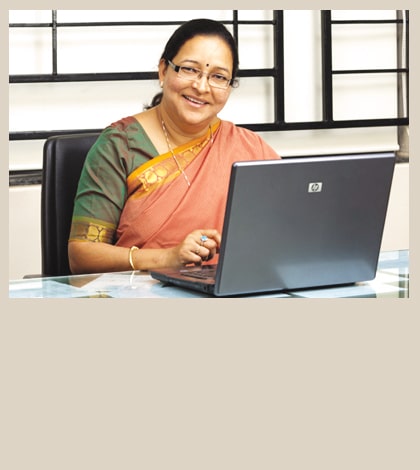
Veena Raizada,
Director- Education, Next Education India

The human society is passing through a crisis. Violence is becoming an everyday occurrence, which is a matter of concern. The inhuman acts of violence, especially against women and children, the brutal killings of innocent people, terrorism, and injustice are the daily bitter pills of a common man. We seem to be in a state of hyper drive. Stress levels have turned human beings into shorttempered impatient devils indulging in road rage, conflicts and arguments, disrupting peace all around. Even educational institutions at the school or higher level are plagued by violence. It is time to reflect, introspect and act towards building a culture of peace and harmony not only within human societies but also with Mother Nature.
The quest for peace that began with the establishment of the UN in 1945 has been followed up by recommendations, declarations and action plans for education for international understanding, human rights and democracy. The General Assembly of the UN designated 2001-2010 as the International Decade for Culture of Peace and Non-Violence for Children of the World, supported by guidelines to implement education for peace in the education curricula. However, the mission for peace is yet to be accomplished.
The effort to evolve a culture of peace and non-violence needs a whole-hearted, participatory and holistic approach to every action plan. Hence, a common platform that connects people and strengthens human bonding across the globe is the utmost need for the success of every agenda for peace and technology has that potential.
The 21st century, the digital era, is an amazing age of remarkable ease of accessibility and connectivity. Technology is all-pervasive with smartphones in our pockets. The present generation is at ease with ever-changing technology. The prospects of the world of tomorrow at peace, therefore, seem to be bright.
Technology by itself cannot create peace, but can definitely be a powerful tool to combat the culture of war and violence. ICTs tools, as such, are neutral.
What makes the difference is the content, imparting strategies and monitoring progression of the action plans.
The root causes of social evils that erode the pathways to peace are mainly poverty and illiteracy. Education is the key to make people self-reliant, and empower them by knowledge to live with respect and dignity in peace and harmony with all, including Mother Earth.
In its constitution, the UNESCO states, “Since wars begin in the minds of men, it is in the minds of men that the defences of peace must be constructed.”
A culture of peace, therefore, needs to be initiated in the curricula from the primary stages, and carried forward till the higher levels. Sensitising human beings to respect life, cultural identity, and the cherished values of love and respect by every religion and culture is of paramount importance. Carefully designed curricula content, meaningful teaching and persistent efforts will pave the path to peace.


The root causes of social evils that erode the pathways to peace are mainly poverty and illiteracy. Education is the key to make people self-reliant, and empower them by knowledge to live with respect and dignity in peace and harmony with all, including Mother Earth”


ICTs for Education for all: Education as a dynamic process that inculcates respect for life, create awareness of human rights and equity, promote understanding of global problems, environmental protection, appreciate cultural diversity, rejects violence and resolve conflicts through dialogue and communication is the ultimate magic mantra for transforming hearts to have peaceful world is education for all. Education of girls needs even more priority as the dropout rate is high.
ICTs in education are already playing a significant role in reaching out to all. Online education, distance education courses, e-Classrooms and mobile educationare some of them. A lot more needs to be done as the millennium goals of education for all are yet to be achieved.

ICTs for awareness of human rights:Youth for Human Rights International maintains that children who do not know their rights are vulnerable and easy prey for unscrupulous elements. The statistics of the loss of dignity and life through child abuse, gang violence, and child labour are staggeringly high. The Child abuse report for 2007 conducted among over 12,000 children indicates that in India,almost two-thirds of children are victims of child abuse. Over 50 percent face some kind of sexual abuse, and half of them suffer emotional abuse. Official figures indicate that there are over 12 million child workers in India.
Hence, education for awareness and understanding of the Universal Declaration of Human Rights will definitely be a big help. The challenge is to develop a thoughtful action plan and know how to execute and promote the relevance for a peace on planet earth.

ICTs for nurturing cultural diversity: Widespread high-speed networks of technology probably brought the world together faster than desired. This lead to inter-cultural connects without human societies getting enough time to understand and appreciate the cultural identity of every individual across the globe. Emerging conflicts and misunderstanding among human societies could be seen as the risks of technologies. Yet, the potential of opportunities cannot be undermined.

ICTs for environmental protection: Rapidly disappearing rain forests, carbon footprints, shattering climate changes, increasing levels of carbon dioxide, mass extinction of species are some of the problems that mankind is facing today.
Overpopulation across the globe is the biggest environmental problem. As per UN statistics, the world population grew by 30 percent – almost1.6 billion people – in the last two decades, with India marking the highest increase of 350 million. It is essential for mankind to address the critical problems now rather than facing the consequences later. Unless every human being pledges to do the right thing at the individual level, nothing will work.

Conclusion: ICTs can be used effectively for collaboration and co-operation to have communities across the globe have meaningful communication to foster a culture of peace and non-violence to save mankind and Mother Earth


LATEST NEWS