

In an increasingly interconnected world, healthcare challenges transcend national boundaries, yet medical education often remains rooted within local systems. The COVID-19 pandemic highlighted the need for a more collaborative and globally connected approach to healthcare training, research, and delivery. Addressing complex issues such as emerging diseases, aging populations, and health inequities requires medical institutions to think beyond borders. The ASHAM model represents one such effort, demonstrating how integrated healthcare and education can create a meaningful impact at both local and global levels.
Located in the heart of Andhra Pradesh, India, the Aluri Sitha Raaraju Academy of Medical Sciences (ASHAM) was founded on the belief that education and healthcare are responsibilities, not businesses. Established by Dr. Gokaraju Gangaraju, the institution was built to address real healthcare challenges in rural communities while creating opportunities for high-quality medical education and research.
At ASHAM, education, healthcare, research, and community engagement function as a single interconnected ecosystem. Students learn in real clinical environments where academic knowledge is directly linked to patient care and community needs. Research initiatives are driven by practical health challenges faced by local populations, creating a learning environment grounded in real-world experience rather than simulation alone.
The institution’s commitment to excellence is reflected in accreditations such as NAAC, NABH, and NABL, positioning it as a strong partner for international collaborations. Through an interdisciplinary approach, ASHAM aligns its efforts with global sustainable development goals while preparing healthcare professionals to address chronic diseases, aging populations, and technology-enabled healthcare systems.
A key aspect of the ASHAM model is its focus on integrating traditional and modern systems of medicine. By combining diverse approaches to treatment and care, the institution seeks to deliver holistic healthcare solutions while contributing to broader conversations on the future of medicine.
Its 1300-bed teaching hospital that provides advanced clinical services and a wide range of super-speciality care. The scale and diversity of patient cases create significant opportunities for medical training, clinical research, and implementation science, making ASHAM a valuable platform for global health education initiatives.
Community engagement remains central to the institution’s mission. Mobile clinics, preventive healthcare programs, and outreach initiatives serve thousands of people across rural and agrarian regions. These efforts not only improve healthcare access but also provide students with practical exposure to public health challenges, health equity issues, and the social dimensions of medicine.
Sustainability is embedded within the institution’s long-term vision. Through clean energy adoption, water recycling initiatives, and ESG-aligned healthcare practices, ASHAM seeks to demonstrate how healthcare institutions can pursue growth while remaining environmentally responsible. The institution is also exploring opportunities for global clinical rotations, faculty development programs, leadership initiatives, collaborative research networks, and health technology innovation.
As healthcare challenges continue to evolve across borders, medical education must become equally global in its outlook. Collaborative models that connect education, research, healthcare delivery, and community engagement will play a crucial role in preparing future healthcare leaders. The ASHAM model reflects this vision by fostering knowledge exchange, practical learning, and partnerships that extend beyond geographical boundaries.
Also Read: Rethinking Assessment in the AI Era: Embracing Technology in Education
From Aluru to Dubai, ASHAM demonstrates how a healthcare institution rooted in local realities can contribute to global conversations on medical education and healthcare transformation. More than a center of excellence, it serves as a platform for collaboration, innovation, and shared learning aimed at addressing the healthcare challenges of the future.
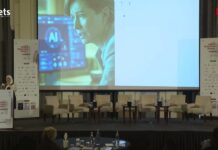
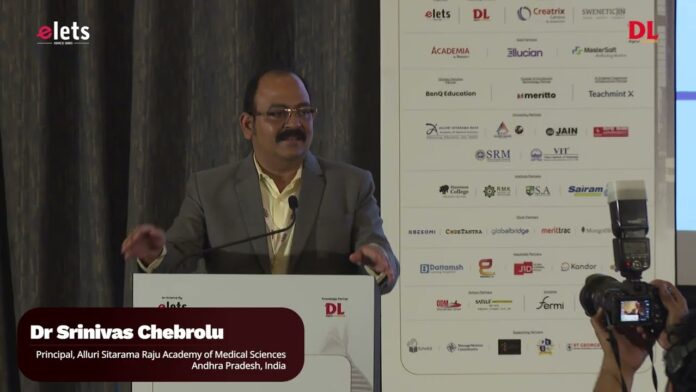
Insights Shared by: Dr. Srinivas Chebrolu, Principal of Alluri Sitarama Raju Academy of Medical Sciences, at the World Education Summit Dubai 2026.