

Home Blog Page 1001

Driving Processes with ERP

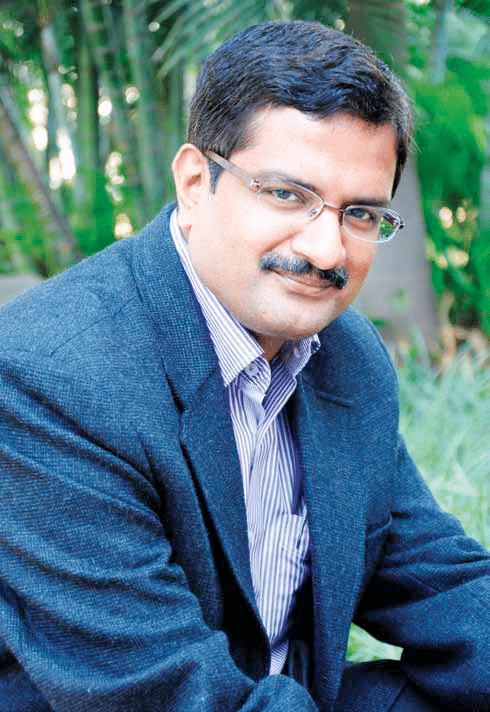
Ecole Solutions offers a wide range of Technology Solutions that influence Teaching and Learning Delivery processes and therefore, result in improved learning outcomes. Venkatesh LS, Co-Founder and Director, Ecole Solutions Pvt Ltd, shares his views on ERP for campus management, challenges, new solutions, and much more… Excerpts:

Give us an overview of learning infrastructure solution with a special focus on Campus ERP.
The learning infrastructure in campuses today needs to cater to multiple needs of institutions. Besides the hard infrastructure of servers, PCs, interactive whiteboards and networks, the soft infrastructure is critical. On the one hand you have the Student Information System as a part of the student life cycle, which will give students, admitted into various programmes, access to their entire academic records including course registrations, timetable, attendance, exams, placements and finally stay in touch with the institution as an alumnus/a upon graduation. Then of course you have administrative processes that need to be streamlined so that process efficiencies can be achieved and decision making is made easier as real-time data will be available. This will also help with regulatory compliance. All this is achieved with an ERP designed using open-source components,tailor-made to suit the needs and pockets of Indian academic institutions. On the other hand, you need technologies to support and manage physical and digital libraries, eLearning course delivery, Tests and Exams and Language Labs. We, as a solution provider, implement all these different technologies to create a robust and sustainable learning infrastructure on Indian Campuses.

According to you what is the rate of acceptance of ERP in the Indian education system?
There is increasing awareness of the advantages of ERP in educational institutions. However, it requires a lot of commitment from the top management to make them successful. In the 80s and 90s institutions used to get applications developed through their Computer Science departments or as student projects. These experiments were short-lived as they created several disparate systems that would not talk to each other. Many new institutions that are coming up are showing interest in implementing ERP systems at an early stage to drive their processes, which is very encouraging.

What are the challenges and policy hiccups in the adoption of educational ERPs?
Because of several failed ERP implementations, institutions tend to be low on confidence. There is a need for evangelization as well as education to make ERP implementations successful. Since ERP implementations span across all departments, it is very important to take everybody on board and this can be achieved only by strong leadership at various levels.


“Because of several failed ERP implementations,institutions tend to be low on confidence. There is a need for evangelisation as well as education to make ERP implementations successful


What are the policy modulations and regulations needed for enabling further adoption of ERPs?
I Am not sure that policies can do much to change things but certainly organisations like UGC, AICTE, NAAC and other central and state government agencies involved in higher education can incentivise ERP implementation in Campuses with a view to bring in transparency and efficiency to the system.

Key features of Ecole Campus ERP Software

. A stable system that integrates all functions and activities of an institute on a single platform, helps reduce overall costs, and more effectively manage resources – financial, physical, and human capital.. A highly parameterised, scalable application that can adapt to changes even in basic institutional statutes, revisions in the curriculum and syllabus as well as fee structure.

. An integrated communication platform for internal and external stakeholders; viz: students, faculty, college administration, alumni and the corporate world.

Which are the leading educational institutes which have adopted your ERP solutions?
CampusLabs, the ERP that Ecole implements, has had many takers. Amongst them are institutions like IIIT (Indraprastha Institute of Information Technology)-Delhi; Kaziranga University, Jorhat; IFIM Business School, Bangalore; K J Somaiya Institute of Management Studies and Research, Mumbai; Indian Institute of Science, Education and Research, Mohali.

Which are the new solutions and services that you are planning to introduce in the learning space?
At Ecole Solutions, our focus will remain on providing quality solutions in the Education and Learning domain, both to academic institutions and businesses. Besides the Learning Infrastructure Solutions that I have talked about earlier, we have partnered with Bibliotheca Library RFID Systems AG, Switzerland to provide State-of-the-art RFID systems for automating Libraries. Besides this we have just announced a slew of services under the PrepMill brand that will focus on providing Prep Tests for students to prepare for campus placements and also offer courses and certification exams in the areas of Cloud Computing, Six Sigma, Business Analysis etc., in partnership with leading global organizations. These certifications will help students in enhancing their job prospects.

Give us an overview of the professional services introduced by ECOLE
Our Professional Services essentially supplement our solutions to make the implementations successful. They include Requirements Study and Gap Analysis, Pre-Implementation Consulting, Customization, Data Migration, Content Development for Learning and Assessments, Training and Managed Services including hosting.

Designed to be a completely modular suite of applications for customers to choose from, based on their needs, priorities and budgets, our Campus ERP automates all core administrative functions and increases student services.

The modules include:

Registration
Fees
Administration
Staff Appraisal
Examinations
Web Portal
Transportation
Placements
Admission
Financial Management
Hr And Payroll
Scheduler
Asset Inventory
Hostel
Alumni

What are your future plans of expansion?
The goal is to scale the operations in terms of acquiring more customers and replicating the success we have achieved with our current customers. Although we are based in Bangalore, we have customers in as many as 15 states across the country. We intend to expand geographically with offices in other parts of the country to support our customers and build partnerships in other countries, especially the Middle East and other Asian countries. Currently, we provide services in the Assessments space to companies in the US and UK and intend to expand that as well.

“Universities should look at tailor-made solution both for subject specific skills and generic skills”

VSN Raju, Chief Executive Officer, Globarena Technologies Private Limited sheds light on how Indian universities can address the various challenges in education

What are the challenges faced by Universities today?
Universities all over world look to be recognised for the quality of education they impart, for their Research and Development activities, innovation, leadership and sustainability, which is aimed at contributing to both social and economical development. But due to the increasing number of universities there are many challenges that they encounter including unavailability of teachers, adaptability with changing technological trends in learning and assessments, unemployability of graduating youth and growing difference between industry expectations from academia. To add to the many challenges, the increase in the student enrolments is exerting a lot of pressure on their available resources both infrastructural and manpower especially in India the above challenges are manifold.

What can the universities do to overcome these challenges in the Indian context?
The government has recognised the current challenges in the education sector and to arrest these trends they have been coming up with much needed changes in policies and procedures through bodies like AICTE, NAAC, NBA, etc, moreover industry bodies like NASSCOM and CII have been suggesting academia on all platforms to evolve an outcome-based curricula. With inputs from all quarters, the universities are doing their bit but much is still undone especially curricula standardisation both for teachers and students that is industry relevant, standardisation of classroom deliveries and tests and examinations conduction; which mean the universities need to look at adapting to change quickly to be relevant and sustainable.

Can you throw some light on Globarena Technologies and its activities?
Our solutions and programmes are comprehensive, affordable, and scalable as they can be deployed both on the LAN or facilitated through the Internet or can be facilitated through Instructors Training. We have partnered with many Universities, educational institutions and government education department in improving faculty effectiveness, student engagement, and helped corporate to get right talent that has helped them to increase their productivity.
We are NASSCOM partners to deliver NAC 2.0 an assessment conducted by them to identify and provide entry level talent for the ITES companies and we also provide our examination management solutions (OnMark) both end-toend that includes onscreen marking solutions and examination conduction solution (OneX) to leading state Indian Universities.

How can the Universities adapt to change?• It is time that the universities adapt to technology in all they do to reach students by promoting learning beyond classroom thorugh ICT based classroom deliveries and using technology in examination conduction or result declaration
Many private companies working in the space of providing education services have evolved innovative products. It will be a good idea for a university to look at tailor-made solution both for subject specific skills and generic skills. It will help them to expedite the process of change
• It will provide the students with innovative learning and assessment possibilities and empower teachers to use technology in delivering sessions that will lead to standardisation and make classroom session interactive
The universities needs to look at collaborating with industry, academicians, experts and Peer universities in India and abroad using ICT while impartinf education
• This way the universities can ensure that they have a scalable model to address to the growing student base and also can ensure quality course deliveries, improve innovation through R&D and contribute to well-rounded professionals to the industries that will help them in improving the socio-economic status of students and contribute to nation building

Carrying the Baton of Innovations

Number of Award Categories: 12
Total Nomination Received: 76

Higher Education
• Industry-Academia Collaboration Initiative
• Green Campus Initiative by HEI/University
• Use of Technology in Teaching-Learning

Government Initiatives in Education

School Education
• Green Campus Initiative by School
• Innovation in Global Collaborative Learning
• School of the Year
• Use of ICT in School Management
• Use of Technology in Teaching-Learning
Private Sector
• Technology Solution for Teaching-Learning
• Solution for Testing & Assessments
• ICT Initiative in Education

The eINDIA 2013 education awards take the pride to celebrate and acknowledge unique and innovative initiatives in education sector across the country. Award nominations have been invited to share best practices that have created difference in the field of education. We have received total 76 nominations under various categories of School, higher education and private sector, Government and NGO. The special feature on eINDIA Award nomination 2013 intents to highlight how various stakeholders are taking initiatives to bring quality, employability, innovation in education and leading towards collaborative learning.
In subsequent pages digitalLEARNING highlights the nominated projects* and initiatives>>>

Industry-Academia Collaboration Initiative

Centre of Relevance & Excellence in Industrial A&R 

Organisation: Ajay Kumar Garg Engineering College, Uttar Pradesh
Website: www.akgec.org
Objective: To develop world-class infrastructure for training and research, especially in the field of Automation & Robotics (A&R) and to train engineers of all disciplines to meet industry expectations.
Description: AKGEC has established Centre of Relevance and Excellence (CORE) in the field of Automation & Robotics. The centre aims at promoting industry relevant training to bridge the industry-academia gap and make students industry ready.
Achievements
• MOU signed with six leading international industries for collaborative training and research
• Establishment of six operational state-of-the-art Centres of Competence in three years duration
• Skill upgradation and comprehensive training in high technology multi-disciplinary area of A&R

3-D Simulation and Virtual Reality Techniques

Organisation: Jaipur Engineering College and Research Centre, Rajasthan
Website: www.jecrcfoundation.com
Objective: Research and engineering education for students using the latest technology of 3D drawings and real-life simulation.
Description: JECRC is working on robotics, simulations, signaling at one edge, data mining, artificial intelligence on the other goal with a blend of cognitive sciences for therapeutics and neuro linguistic languages in a combination not only this the foundation is also busy in searching for novel leads for disabled.
Achievements
• Virtual Laboratory (V-Lab); Texas Instruments (TI) Laboratory
• Microsoft i-Spark Centre |JECRC Innovation Academy
• Robolab; DST Centre with Potentials for Excellence

M A M College of Engineering – WIPRO Mission10x Collaboration

Organisation: M A M College of Engineering, Tamil Nadu
Website: www.mamce.org
Objective: Building conducive learning environment through pedagogy training.To encourage innovations in engineering education through active sharing and by exposing students to industry relevant projects and environment.
Description: WIPRO provided training to faculty for use of technology for teachinglearning process and various technically-advanced methodologies like use of existing video lectures, involving social networking, webinars for teaching to increase the employability of students.
Achievements
• 140 teachers have been trained in pedagogy usage by WIPRO’s Mission10x – 47 advanced level
• TCS ion, the complete campus management solution involving cloud platform, for transparent teaching. The network created for sharing innovations through ULTP by WIPRO’s Mission10X through Webinars

Centre for Research, Innovation & Development

Organisation: Deenbandhu Chhotu Ram University of Sci enceand Technology, Haryana
Website: www.dcrustm.org
Objective: To provide an enabling environment for holistic development of students, faculty and budding entrepreneurs by nurturing innovative ideas for turning them into reality.
Description: Centre for Research Innovation & Development (CRID)is established under the aegis of Deenbandhu Chhotu  Ram University of Science & Technology, Sonipat, Haryana with a vision to collaborate with the industry to undertake cross-functional research and development.
Achievements
Two companies have been selected for establishing a Research and Development Centre under R&D unit of CRID
Entrepreneurship Unit under CRID has organised one-day entrepreneurship camp for the students
The R&D unit has organised one-day workshop for budding researchers
Research profile of the university has been circulated to all leading companies for future R&D tie-ups

Construction Skill Training Institute

Organisation: Construction Skill Training Institute, Abul khurana, Punjab
Website: www.cstiabulkhurana.org
Objective: To fill the gap of training standards among students and requirement of really skilled manpower by construction companies.
Description: This is an international level joint venture of Punjab Government and Larsen & Toubro Limited. It provides 100 percent placement and 100 percent fee reimbursement after successful completion of course from December 2008. The Punjab Government is now going to replicate this experiment all over the state.
Achievements
• 100 percent Placement in various international companies like L&T, Omaxe, DLF, etc
• Quality training as per demand of the industry, under the supervision of reputed experts
• 13 acre well-maintained 100 percent residential campus/ free hostel
• Fully accredited with DGE&T and Director Technical Education & Industrial Training, Punjab

Innovative Steps taken for Placement, Consultancy & Training

Organisation: SAL Institute of Technology Engineering Research, Gujarat
Website: www.sal.edu.in
Objective: To boost the career of students by giving them more opportunity for job, to bridge the gap between industry
and academics, and to encourage students to start their own firm.
Description: Students of final year are offered stipend from the industries for their innovation in industrial ‘Shodh Yatra’. 100 percent industry defined projects are done for all branches so that students can work on some real-life challenges. Encouraging entrepreneurship values in students through Entrepreneur Development Cell (EDP).
Achievements
• Initiative taken for this project has been highlighted & acknowledged by the award from GTU
• Many students have started their own organisations & signed MoU with EDP
• Collaboration with Wroclaw University of Technology, Poland, for higher studies
• Established the students’ chapter ACCE(1)- Ahmedabad Centre, Gujarat

Bridging the Industrial and Academia Divide at Hindustan University

Organisation: Hindustan University, Chennai
Website: www.hindustanuniv.ac.in
Objective: The main objective of this project is to bridge the gap between academia and Industry. Thereby, providing well-groomed, employable students to take up the challenges in the industry.
Description: BIADH (Bridging the industrial and academia divide at Hindustan University) project was started with an aim to bridge the gap between academia and industry and to increase the employability rate and to produce the industry-ready workforce. It also provides better teaching-learning ambience and increase the technical knowledge
of students and staff.
Achievements:
• Campus placement – steady increase in the placement every year
• Increased exposure to the developments in the industry for staff and students
• Reduction in overheads like, cost, space, time and resources
• Better skilled students are produced

ICT Enabled Initiatives by PIMR

Organisation: Prestige Institute of Management and Research
Website: www.pimrindore.ac.in
Objective: To be a leader in professional education, research and development.
Description: PIMR has been imparting professional education & stands among the top-level B-Schools. It has been accorded autonomous status & accredited by NAAC, AICTE, NBA, and IAO. It is having permanent affiliation with DAVV, Indore. PIMR promotes various activities, which serve professional & intellectual interests of students. It has a placement & corporate relations cell.
Achievements:
• Autonomous Institute by UGS in 2006, extended in 2012
• NBA accredited in 2000 for its MBA programme
• Institute is accredited with grade-A by NAAC, UGC
• International Accreditation by IAO
• Research Focus: Currently the institute has 101 research scholars and 21 PhD guides 

Academy Industry Connect

Objective: To connect with industry.
Description: LPU has made an attempt to bridge this chasm, by facilitating closer collaboration of academia and industry in which the industry shares with the University the type of human resource it desires and expects from the higher education sector; and  the University tries to refurbish its curriculum, pedagogy and practical learning in accordance to industry requirements.
Achievements
The University has been able to keep its curriculum in sync with the requirements of the industry
The R&D activities of the University have seen a major increase
The University has been able to enter into a number of alliances in India and abroad
The University has surfaced as a respectable name in consultancy in recent time
The University has also kick-started various short-term courses to groom practicing professional

Skill Enhancement Programme

Organisation: NRI Institute of Information Science and Technology
Website: www.nrigroupindia.com
Objective: To train the students as per industry need.
Description: A four-year integrated programme is implemented for students to enhance skills of students to meet cut-throat competition and make them match the cutting edge technology. This programme enables them to meet PSU as well as modern industry requirements.
Achievements
• Students from six states are taking summer training in the institute for HP
• Students of five colleges are taking summer training in IIT – Resource Centre by Sine IIT
• As a result of vigorous training students have acquired packages of 24 & 10 lakhs
• Almost all students of the 2013 batch are placed with packages ranging two to 24 lakhs
• Students got selected in IES, ISRO, DRDO, BHEL, UPSC and many more PSUs

Highest Industrial Alliances

Organisation: Arya Institute of Engineering and Technology
Website: www.aryacollege.org
Objective: To create a progressive academic environment for the students to achieve quality techno-managerial skills and become innovative and creative professionals who can contribute to the development.
Description: Arya Institute of Engineering & Technology is the TCS iON which is biggest online examination agency in India has Certified Arya Institute as ‘A’ Category Institute possessing best IT Infrastructure and deeply appreciates the contribution of Arya Institute in hosting big prestigious online examinations.
Achievements
• TCS-iON certified best it infrastructure.
• Wipro’s first nodal centre for MTLC Labs
• CISCO certified labs & secured network
• Infosys Campus Connect partner college
• Unisys innovation & learning centre

Minimise Excesses Components in Engine Assembly

Organisation: KCG College of Technology
Objective: Consultancy to automotive industry
Description: The emerging era of science based collaboration between academia and industry offers advantages to both
entities. When academia industry partnerships work well they can facilitate research discoveries. It is an initiative to offer consultancy to BMW.
Achievements
• Knowledge about the automotive spare parts
• Knowledge of dismantling and assembling of an car engine
• Knowledge of world class assembly
• Knowledge of lead time in production
• Knowledge of logistics

Design and Development of Three Wheeler for Physically Challenged

Organisation: Hindustan Institute of Technology and Science
Objective: Intended to make a physically challenged a self reliant (employment)
Description: This project is for the orthopedically handicapped – such a person can use the three wheeler (AUTORICKSHAW) to make a living. The controls are tailor made and are fully operable by hands alone.
Achievements
Smaller and compact customized wheel chair
Easy ingress and egress into Auto
User friendly operations of various switches and control like brake, flip type door, etc.
Simple automatic mechanism to raise the wheel chair
Easy system adoptability of the physically challenged person

Green Campus Initiative by HEI/University

Green Practices in Periyar Maniammai University

Organisation: Periyar Maniammai University
Website: www.pmu.edu
Objective: Green practices in the University towards zero carbon by 2025. Replicating the models in nearby 67 adopted villages under Periyar PURA (Providing Urban Amenities in Rural Areas) project.
Description: The University is involved in many green campus practices like renewable and alternative energy, alternative building materials, rainwater harvesting, LED lights, etc, for achieving green campus since its inception.
Achievements
• Energy Efficiency: 500 m3 capacity biomethanation plant for generating power of 60kW/h per month
• Use of alternate building material saved 36,337 tonnes of wood & 746,980 cft of fertile top soil
• Rain water harvesting and waste water recycling is practiced since 1995
• Green agricultural practices-bamboo garden sequesters 240 tonnes of CO2 & produces 80 tonnes of O2 

To Create an Eco-friendly, Energy Efficient, Pollution-free Campus

Organisation: Central University of Jharkhand
Website: www.cuj.ac.in
Objective: To create an eco-friendly energy-efficient and pollution-free, green campus.
Description: To develop an eco-friendly,energy- efficient, pollution-free, green university campus including classrooms, laboratories, hostels and quarters within a mango orchard with Saal Tree plantation over 50 years or older.
Achievements
Saving time to build the full-fledged functional university campus
Saving of cost in construction and campus infrastructure
Notional rental saved and material surplus assets created
Saving on energy bills
Saving on transport costs with largely residential campus

Green Campus

Organisation: Siddaganga Institute of Technology
Website: www.niitnguru.com
Objective: Quick School has the objective to enable schools to manage information spanning all functional requirements and addresses the needs of all stakeholders within the school domain.
Description: NIIT Nguru Quick School (QS) is an integrated and comprehensive Education Resource Planning software developed specifically for schools. The software is designed to be easy-to-use and developed keeping in mind the  requirements of the school management in maintaining proper control over the functioning of the school, take better
informed decisions and enhance the image of the institution.
Achievements:
• 350+ satisfied customers using this application
• Robust technical and security architecture based on 4-tier architecture
• 24 modules that can be selected by a school to initiate automation in a school
• 25,000 + students and parents enabled on Cloud-based model 5. Reports can be generated
in line with CBSE – CCE formats

e-Suvidha (Digital University)

Organisation: Dr Babasaheb Ambedkar Marathwada
University
Implementing Agency: Maharashtra Knowledge Corporation
Ltd (MKCL)
Website: bamua.digitaluniversity.ac ; www.mkcl.org
Objective: Online management of complete student lifecycle
right from admissions to convocation.
Description: The BAMUA Digital University Framework is a fully web-based software framework to manage student
lifecycle in universities and colleges. This framework offers direct facilitation services to universities, its affiliated colleges and their students at very fast, affordable, high quality and with mass personalisation and configurability.
Achievements:
• Messaging system
• e-File management track system
• Distributed assessment marks entry system
• All UG results declared within 15 days after examination
• All information of students in one click with single PRN

Use of Technology in Teaching-Learning

Skill-based Learning with Collaborative & In-house Activity

Organisation: PSNA College of Engineering and Technology
Website: www.psnacet.edu.in
Objective: To provide world-class engineering education for individuals to become technologically superior, socially conscious and responsible citizens for the welfare of mankind.
Description: In today’s engineering education scenario, the effective means of educating students to meet the global challenges is imperative and to be handled with trade-off between subject knowledge and technical skills. We make students understand the concepts through innovative teaching methods, social activities, in-plant training, industrial visit, internship, research exposure
and consultancy.
Achievements
• Good placements
• Award winning projects
• Best paper publication award
• Journal publication by students
• Consultancy to reputed industry


Human Resource Development in Dairy Processing

Organisation: Sheth Mansukhlal Chhaganlal College of Dairy Science
Website: www.aau.in
Objective: To develop human resource for the Dairy and Food Industry.
Description: Sheth Mansukhlal Chhaganlal College of Dairy Science, Anand is a premier institute in the field of dairy education and research since 1961. It was recognised as ‘Centre of Excellence’ and is a pioneer national centre for dairy education in the country, producing qualified dairy professionals.
Achievements
• Best-in-class UG and PG facilities which includes e-learning, laboratory scale practical
exposure
• Regular practical exposure for milk and milk product manufacturing in model experimental
dairy plant and external training programme for dairy industry personnel

Advancing Academics Through Next Generation Identity Systems

Organisation: JNTU Hyderabad
Website: www.jntuh.ac.in
Objective: To use biometric access control as a means of combating truancy and ensuring
learner safety, convenient and security. To improve both the physical security,
informational security of the students.
Description: The practice of biometrics can create a unique form of identification that cannot be forgotten, lost, or loaned. The implementation of biometrics into an academic environment is beneficial to the institution by improving efficiency, security, and helping to decrease the ramifications of a student’s lack of integrity. Emergency identification as a result of a fire or other disaster is a critical issue.
Achievements
• Accepted as the best technology around the globe which identifies the academic fraud.
• Project framework published in ACM Proceedings 2012.
• AICTE sanctioned the Project based on the recommended proposals from UGC & DST.
• Provides an appropriate balance between the privacy and security of an individual.
• Reduces waste with respect to time and materials; there by increasing quality of education

Process Oriented Guided Inquiry Learning

Organisation: VNR Vignana Jyothi Institute of Engg and Tech
Website: www.vnrvjiet.ac.in
Objective: To encourage group learning among the students.
Description: POGIL, an acronym for Process Oriented Guided Inquiry Learning, is gaining momentum in India. POGIL originated in college chemistry departments in 1994 in the USA and it is now being used in many colleges in a variety of subject
areas around the country. It uses guided inquiry – a version of the Socratic method in which students use carefully designed
materials that guide them to construct new learning.
Achievements
Complexity of a topic is reduced
Activity based learning
Involves exploration, concept invention & application through guided inquiry learning
High critical thinking, problem solving & assessment skills
Research aptitudeamong students


Online Information System

Organisation: National Institute of Science and Technology
Website: www.nist.edu
Objective: To establish a welldefined,optimised, transparent, paperless system that will support organisation in measured and effective decision making through collected information and channelised feedback.
Description: Online Information System is a web-based ERP package specially designed for educational
institution to automate all its academic, administrative and accounting processes and make it paperless and transparent. These modules help us to bring all stakeholders into one platform for sharing information and knowledge.
Achievements
• Quality video and web-based study materials developed by the experts
• Easy access of information
• Able to keep teacher, student and parents happy with transparent information & flawless management
• Accumulation of huge set of historical data is helping in better short and long term decision making
• Parents are able to keep track of their wards while sitting at home

Sanghvi Institute of Management and Science

Organisation: Sanghvi Institute of Management and Science
Website: www.sims-indore.com
Implementing Agency: Pearson
Objective: Digiclass has been created with the objective of improving the quality of education and equipping professors with
skills to manage a 21st century classroom.
Description: Digi class is a complete classroom solution that empowers teachers to transform chalk-and-talk classrooms
into interactive learning centers using multimedia based content. Digiclass comprises modern equipments such as computers, interactive devices, projectors,speakers, stylus and a multimedia computer that accesses a rich repository of relevant digital content from a server.
Achievements
Won prestigious President Award in 2008 and Manthan Award for e-content
Adopted by More than 200 + engineering institutions across the country
Improves the academic result of the institution
Content mapped as per the university syllabus


United College of Engineering & Research

Organisation: United College of Engineering and Research, Greater Noida, Uttar Pradesh
Website: www.united.ac.in
Objective: We aspire to reassert the significance of high quality education by producing competent professionals who can shape the destiny of our nation into a stronger and developed stature.
Description: The United Group, founded by late Shri Shiv Ram Das Gulati in 1951 emerged from a transport business to the giants in the fields of education, services,transportation and journalism. The Group made a mammoth leap in the education arena in the mid 80s by being the pioneers in computer education. This further lead to the establishment of United Institute of Management and United College of Engineering.
Achievements:
• Collaboration with AIT, Bangkok
• Collaboration with Missouri, University California
• Placement of students in companies like Infosys, HCL, Cummins, etc
• Winner of Aaj Tak Awards
• Academic Collaboration with EMC2

Jayoti Vidyapeeth Women’s University

Organisation: Jayoti Vidyapeeth Womens University, Jaipur
Website: www.jvwomensuniv.com
Objective: To provide ‘education for community development’ leading to women empowerment and awareness of women rights and law to all.
Description: The university has amalgamated IT tool all parts of learning- in academics like admission, teaching, mentoring,examination and library to non academics like finance, hostel and security and has enabled 100 percent ERP applicability.
Achievements:
• Awarded for e-Campus Initiative in Higher Education in World Education Summit 2013 organised at New Delhi
• National Award ‘India’s Best Private Women’s University’ on 13th April 2013 at New Delhi
• Recipient of Weal Award -2009 by the Confederation of Indian Universities
• Recipient of B-School Leadership Award-2010 by Dainik Bhaskar
• Received ISO 9001-2008 certificate for Quality Management System

Government Initiative in Education

Scholarship Disbursal System for UGC

Organisation: Canara Bank
Website: www.canarabank.com
Objective: Scholarship Disbursal System for UGC Scholars.
Description: University Grants Commission has designated Canara Bank for the disbursal of its various scholarships/
fellowships to the selected candidates across the country. For the efficient disbursal of scholarships/fellowships,
Canara Bank has developed a web-based scholarship disbursal system wherein the eligible scholarship amounts will be calculated and will be disbursed based on the criteria as specified by UGC.
Target Group: UGC Scholar Students.
Achievements
• Centralised credit of scholarships/fellowships to the candidate’s account on due dates without delay
• Instant and Online MIS reports to the UGC for proper monitoring
• Nodal branches are acting as single point of contact for the students regarding the disbursal of amount
• Established an easy and convenient mechanism to access the data including the scanned images
• Developed an interface with Central Plan Scheme monitoring System (CPSMS)

Digital University Framework

Organisation: Solapur University, Solapur, Maharashtra
Implementing Agency: Maharashtra Knowledge Corporation Limited
Website: www.su.digitaluniversity.ac ; www.mkcl.org
Objective: To provide services to students, all affiliated colleges and University.
Description: Digital University Framework is a fully web-based software framework to manage student lifecycle in Universities and Colleges. This framework offers direct facilitation services to users at very fast, affordable, high quality and with mass personalisation and configurability.
Target Group: Services to students, universities, and colleges.
Achievements
• Personalised services at the doorstep of students
• Reduction in data duplication efforts at various levels due to single-time data entry
• System generated outputs with no errors because of reduction in student cycles to colleges
and University

Online Admissions System for Technical Education

Organisation: Higher and Technical Education Department, Maharashtra
Website: www.maharashtra.gov.in
Objective: To automate end-to-end admission process starting from the notification of admission process.
Description: Online Admissions for Technical Education was first initiated in 2000 – 2001 and since then has been expanded successfully such that the complete admission process for technical education has been automated end-to-end.
Target Group: More than four lakh students apply each year through online admissions into technical institutes.
Achievements
• Students can now fill the application form at comfort of their home or cybercafé
• Greater cost and time saving for both students as well as Directorate of Technical Education
• Greater transparency and reduced errors in the whole the admission process
• Greater productivity of resources: DTE no longer requires personnel for distribution of
forms, etc.
• Customisable real-time reports can be generated in quick;y with help of the system

Tracking Child With Special Needs

Organisation: Directorate of Information Technology,Government of Maharashtra
Website: www.it.maharashtra.gov.in
Implementing Agency: Department of School Education and Sports, Government of Maharashtra
Objective: CWSN application is designed to gather information about children with special needs across Maharashtra.
Description: This application s a web-based form designed to capture child details such as name, age, add, category, etc. It will help in achieving the goal of universalisation of Elementary Education.
Target Group: Around 3.5 lakh children with special needs across Maharashtra.
Achievements
The program has covered around 3.5 lakhs children with special needs across Maharashtra
Details of each child like name, age, address, CWSN category, etc. are captured
Availability of real-time and accurate data has aided the Government to take better decisions
Educational support, medical assistance, etc. can be identified and accurate data helps in proper budget allocation

Innovation in Global Collaborative Learning

ASB Online Academy

Organisation: ASB Online Academy (ASB OA) – The American School of Bombay
Website: www.asbacademy.org Objective: To provide an accessible, anytime and anywhere online learning environment that encourages collaboration, shared passion and a desire to develop 21st century skills that support lifelong learning.
Description: The ASB Online Academy is a platform where adults, students and education professionals can learn new skills, deepen existing skills and explore new areas of interests. Courses are regularly updated to stay in sync with trends and to better equip learners with relevant skills and knowledge. Personalised learning is provided through flexible small group instruction
Achievements
• Online Academy’s Digital Literacy courses have increased the number of parents who access and respond to online info
• The online courses make learning accessible for busy adults juggling work and home commitments

The Waldorf School

Organisation: The Education Renaissance Trust
Website: www.slokawaldorf.org
Objective: To create an alternative, child-friendly holistic system that can be replicated all over the country.
Description: Sloka is Waldorf School based on the pedagogy enunciated by Rudolf Steiner, the Austrian philosopher
and savant. Sloka is part of 1,500 Steiner schools worldwide. This alternative pedagogy puts less pressure on
children and is very age appropriate. The success of Sloka, ranked 14th among all day schools by education world.
Achievements
• Waldorf curriculum brought to India for the first time and teachers are trained in India and abroad
• Foreign mentors coming to Sloka regularly and Waldorf teacher training is given on a sustained basis
• Establishment of a 3.5 acres campus with no corpus to begin with

Green Campus Initiative by School

Shilp Greenergy

Organisation: Vidyashilp Academy
Website: www.vidyashilp.com
Objective: To make clean and green environment.
Description: Vidyashilp Academy is a primary and secondary international school based in North Bangalore in the Indian state of Karnataka. The school is affialied with Cambridge University’s International General Certificate of
Secondary Education(IGCSE) and Indian Certificate of Secondary Education (ICSE) from Grades I to X. The school has taken utmost care for educating students about the importance of green environment and conserving energy resources .
Achievements
• Green campus by reusing organic waste resulting to vermin compost
• Recycled and reuse paper
• Children emerged as young entrepreneurs
• Rainwater replenishing bore wells
• Reduction of LPG in school kitchen using solar panels 

Green School Drive

Organisation: Delhi Public School Bopal, Ahmedabad
Website: www.dpsbopal.calorx.org
Objective: The initiative aims at sharing the environmental projects as well as creating awareness amongst students about local and global environment concerns.
Description: The Green School Drive aims to create a society of motivated citizens, committed to the conservation,  reservation and protection of environment and striving towards a life in perfect harmony with nature for sustainable development.
Achievements
International Exposure: It is organised every year to provide a global platform to children
The school was declared as Nodal School by TERI (The Energy Resource Institute) for its green initiatives
Implementation of school portal, Reduce use of paper as well as Recycle paper
DPS, Bopal has registered with Green Contributor, Canada. The school has adopted various projects under their guidance


Green School Initiative

Organisation: B Kanae School, Modasa, Gujarat
Website: www.b-kanae.edu.in
Objective: Sustainable School Campus.
Description: B- KANAE SCHOOL is first Green School in Gujarat. It is the first school that has introduced Green Curriculum, Green Games and Green Teachers, Green Energy,Green Water and Green Transport. The school is a member of Green School Alliance USA. It has received National School Sanitation Award 2012 from the Ministry
of HRD. The campus has one tree and one teacher against every 10 students.
Achievements
• Enhancement in school result
• Enhancement in participation of parent and community in school activities
• There is 80 percent reduction in electricity bill, water bill and operational cost
• Enhancement in teachers’ proficiency
• There is 100 percent fitness among students. No sick leave application received from
students

Green Campus

Organisation: O P Jindal School Raigarh CG
Website: www.opjsrgh.in
Objective: To develop awareness about environment.
Description: The OP Jindal School, Raigarh(CG) has taken immense initiative to work for environmental sensitisation among people. The school has launched several projects/ campaigns to make the campus green and to retain it.
Achievements
• Our Green Campus has been declared as lush green plastic-free zone
• Its community development programmes in adjoining areas have brought remarkable results
• Students have represented India in ‘Green Youth Exchange program’ at Denmark
• Continuous cleaning drive is making Teepakhol regain its original beauty

Water Conservation

Organisation: Greenwood High International School,Bangalore
Website: www.greenwoodhigh.edu.in
Objective: To conserve water
Description: Water, one of the m o s t p r e c i o u s resources required to sustain life, is depleting, thanks to manifold reasons such as immense population growth, rapid urbanisation, etc. However, it’s an undisputed fact that our apathy and
callousness also contribute to water shortage and the contamination of water bodies. By sensitising tomorrow’s citizens about the need to preserve water, it can be ensured that the precious resource is used judiciously.
Achievements
Reducing water wastage in washrooms; in kitchen water consumption has been reduced by 1/4th; in hostel, consumption of water has been reduced by almost half.
Landscaping- By merely plugging the leaks in the pipes water wastage is reduced.
The overall usage of water in our entire campus has gone down by 30 percent


Planet Earth Transformation, Green Thinking

Organisation: Ryan International School, Mumbai
Website: www.ryaninternational.org
Objective: To sensitise students / teachers to the burning issues of degradation of the Earth
Description: Ryan has joined hands with Tata Power in its endeavour to save energy in the direction of greener and safer abode for its students. School organises and conduct workshops and activities to sensitise students and teachers alike to the burning issues of the ailing planet. Besides the school takes pride in adopting societies for tree plantation.
Achievements
• Reduction in school and home electricity consumption
• Students are sensitise about ecological problems
• The number of trees increased where plantation is done
• Visitors / guests who were given plants helped by planting trees themselves
• Various rewards and appreciation letters received by the school

School of the Year

Excellence Glendale Academy in Education and All-round Development

Organisation: Ryan International School, Mayur Vihar, Delhi
Website: www.ryanmayurvihar.org
Objective: To impart education for the holistic growth of the learners.
Description: With the mission of facilitating the global development of citizens who are able to contribute to community life, the Ryan Group of Institutions was established by Founder Chairman Dr Augustine F Pinto in 1976 by keeping abreast with the changing scenario and the pursuit of providing a positive learning environment. All efforts are channelised for  maximum development.
Achievements
• Ranked 6th in East Delhi in the School’s Survey conducted by Hindustan Times 2012 – 13
• Received the Dabur Inmuno Champ School Award among top 50 schools in India
• Bagged the International School Award accreditation (British Council) 2013-15
• Ranked first in East Delhi Zonals for sports
• Highest scorer in class XII CBSE Board Results in East Delhi 2012-13

Glendale AcademyOrganisation: Glendale Academy
Website: www.glendaleacademy.net
Objective: To help children learn everyday and love every minute. To promote a scientific temperament and inculcate a spirit of inquiry in young minds and to provide learning for life, not just for school
Description: Glendale Academy International was started under the aegis of the Hyderabad Education Academy in the year 2003. The school imparts a blueprint for brilliance to its students with a scientifically designed curriculum and faculty trained to use brain compatible teaching methodology. Art, craft, music, drama and dance are treated as an important part of the curriculum.
Achievements
National Award for ‘The Best New Yi Net School’ at the 6th Yi National Summit
The first school in Hyderabad to have applied to Indian Green Building Council
Primary plus Outstanding Award for Multiple Intelligence in 2006
Girl student got first prize in BSE International Finance Olympiad at National Level ’12
Winners of Bajaj Alliance Football Camp, Hyderabad

Best Practices in School

Organisation: Greenwood High International School
Website: www.greenwoodhigh.edu.in
Objective: To educate young people in ways that prepare them to be active, free thinkers, and socially responsible citizens in a democratic society. Our mission is to develop the intellectual, aesthetic, and moral values
Description: Greenwood High is an international school established in 2004 in Bangalore. It offers IB, IGCSE and ICSE curriculum. We are the only International School in Bangalore to have received the honour of bagging five National awards. It is the only school in India to be ISO 18001:2007 accredited with a ‘Safety and Health Management Systems Certificate’.
Achievements
• It brought Math to homes
• Children relate with beauty of nature by actually being in the environment
• Children were able to make use of information technology
• It made children empathise with orphans and learn about the world beyond boundaries

Miles Bronson Residential School

Organisation: Miles Bronson Residential School
Website: www.mbrsguwahati.edu.in
Objective: The objective of the school is to empower teachers to prepare children as global citizens with deep moral values and sound knowledge of our rich heritage
Description: A new millennium breakthrough in redefining loco parentis ie parenting in absentia, a pioneer school in heralding quality education in India’s remote North East with an impressive track record and superlative established benchmarks in teaching, learning and evaluation strategies, practices and results, a school sparked by the ambition of a humble but dynamic personality and a visionary leader.
Achievements
• From a handful of students to its ever burgeoning numbers the school has become a much sought after
• Superlative academic results, outstanding co-curricular achievements
• Delivered parental expectations for their wards
• Credible social commitment as a responsible learning community
• An impressive alumni with high achievers

LATEST NEWS