

Home Blog Page 1043

Pervesh Project: A Creative Learning Model in Primary Education of Punjab

The sarva Shiksha Abhiyan Punjab has always been actively involved in the improvement of quality of school education in Punjab. Special focus has been on primary schools as qualitative primary education serves as a strong foundation in the academic career of a child. The main objective behind these quality interventions has been to eradicate the difference between actual learning level of the students and class specific goals. In the past years the Sarva Shiksha Abhiyan Punjab has done a commendable job as far as primary education is concerned.

To take the quality of primary education in Punjab to a new level, it was strongly felt that something innovative needs to be done to make this qualitative learning creative and joyful. So, we initiated the PERVESH (Primary VidyaSudhar) project for creative and joyful learning in primary education of Punjab. This programme attempts to build a strong base among children in learning basic language skills, mathematics and desired curriculum through Creative Learning Model (CLM) of education.

In Creative Learning Model, teaching is not merely a traditional classroom process where a teacher speaks and children listen and write but also involves both the teacher and the children as creative and dynamic participants in the process of teaching and learning.

Morning Assembly

Why PERVESH?

Prior to the year 2008, a child was evaluated for all the information he possessed. It was a system of information based evaluation.

Project-Flow-ChartDuring 2008 to 2012, the Focus shifted to Minimum Levels of Learning (MLL) by providing level-oriented targets for pupils. Its aim was to eradicate the difference between the actual learning level of a child and class specific goals. Evaluation was based on targets achievement.

PERVESH focuses more on process of teaching and learning than the out-comes of the same. It is based on the CLM of education. It designs classroom activities as per the main guidelines of RTE and CCE.

PERVESH encourages level appropriate learning instead of class based traditional system of learning. Following the spirit of Continuous and Comprehensive Evaluation (CCE), students’ level of learning is diagnosed at the onset of the academic session through Baseline Test, and appropriate treatment is provided to the children to impart the required level specific skills. In the middle of the session, a Mid-Test is conducted to assess the progress, and at the end of session, a Post-Test is conducted to know the final progress made by the students. A student is promoted to the next learning level, irrespective of the timeframe, as soon as he/she acquires the desired skills of a certain level.

PERVESH aims to bring about large scale improvement in the quality of reading, writing and arithmetic levels of primary school-goers through:

  • Layered teacher training
  • Creation and distribution of colourful and graded curriculum related supplementary reading material among children
  • Learning by doing, discovery and exploration
  • Monitoring of the school activities
  • Sensitising the teachers towards child psychology, creative and play way methodology of teaching, use of audio-visual aids to thrust aside the rote method of learning
  • Holding the teachers accountable for their work

Radio Classroom

Targets
PERVESH aims to achieve that every child in government primary schools should be able to:

Class I-III
• Acquire reading, writing and basic arithmetic skills.

Class IV-V
• Acquire reading, writing and basic arithmetic skills.
• Complete the curriculum without any difficulty.

Management of PERVESH

The State Management Unit (SMU) at the top is the chief governing body comprising State Project Director SSA cum Director General School Education Sh K S Pannu, IAS, Additional State Project Director; Smt Parampal Kaur Sidhu, DPI (EE), Director SCERT , ASPD (Media); Dr Davinder Singh Boha and all DEO (EE) along with other functionaries. The SMU is responsible for chalking out the policy and framework and is responsible for monitoring the project at state level.

The District Management Unit (DMU) is responsible for the implementation of project at the district level. It comprises of the DEO (SE), DEO (EE), Principal DIET, All BPEOs and Pervesh District Coordinators along with other functionaries. At the district level, the DMU plays a major role in making the project’s report card impressive.

Creativity - Sand paper and ColoursOn the pattern of the above committees at the block level, the BPEOs and Pervesh Block Coordinators monitor the project at their respective blocks. The SMU and DMU are scheduled to meet at least once a month to review the progress made and chalk out the future strategies of the project.

The support and strength is provided to the teacher at the grass root level. Pervesh Block Coordinators (PBCs) visit their allotted schools regularly to support and acquaint the teacher with latest innovations in teaching learning process, provide feedback regarding their teaching methodology and render support where required. Along with the dedicated work force of Pervesh Block Coordinators (PBC) at block levels, the Pervesh District Coordinators (PDCs) at district level is the main cog in the system of the state and lower level chain of command.

Cultural ActivitySome innovations under PERVESH

Under PERVESH , some innovations are put in place to make the teaching learning process more participatory.

A mini library called ‘Reading Corner’ has been established in all the schools to develop reading habits in children and hence improving the learning in language. Equipped with an array of books, the reading corner is the main hub of knowledge for the young learners with a variety of class and level specific books to cater to the needs of young developing minds. ‘Pervesh Bal Pustika’ (a quarterly magazine) is a unique endeavor under Pervesh in which the creative and innovative ideas of primary school children are published in the form of poems, stories and concept based paintings.

‘Bal Sabha’ (Pupils’ Gathering) is a regular feature in primary schools every Saturday. Special activities are designed for these Bal Sabhas to develop a child’s potential on various fronts.

Various competitions at the cluster, block, district and state levels are organised in the form of sports, cultural and educational competitions, social and other important issues oriented painting competitions, math tables and handwriting competitions and rhyme competitions, etc. to provide exposure to the hidden talent in primary school children.

Radio Classroom is one of the initiatives undertaken under PERVESH to provide lessons to the children of standard III to V through audio media. It is a state initiative to prepare the radio programs based on the syllabus with the help of concerned teachers and children. Radio lessons are delivered directly to the children in class through local FM radio channels. Selected topics are prepared by experts and artists with children participation. Radio lessons leave a long lasting impression of knowledge and understanding of the delivered topic in the minds of children.

Various competitions like Table competitions, Handwriting competitions, Painting competitions on various social issues like Save Water and Environment are organised at the cluster, district and state levels.

Vision of PERVESH

PERVESH envisages that in next five years, the students of Government primary schools of Punjab will be able to fully assimilate the Creative Learning Model of education not only in a classroom scenario, but also in daily life. A certain theme of the curriculum will be taught to the pupils in more than one ways to strengthen the essential understanding of that specific topic. The teacher will become proficient to impart the required education in a real creative manner. The learner will also be able to inherit the classroom Creative Learning Model in day-to-day life.

Why 2013 is the Most Defining Year for Education

Venguswamy Ramaswamy, Global Head, TCS iON

Smartphones have been in the mainstream for three years. And, according to a global study, 40 percent of the college students carry smartphones today. The number may be a little less in India, considering its demographics, but it is sure to rise. Students are habitually using social media and carry online connections in their pockets. Tweeting and micro-blogging have become a common lifestyle.
For education institutes, this becomes a new channel of communication with students – not to say a different methodology altogether in teaching. No longer would courses be like the classroom “broadcasts” as we have seen in our times. Institutions would leverage the new channels to render courses on demand to the students, and enriched by community. The fine line that ironically existed between teachers and practitioners would get blurred in the new connected classroom, where students and industry experts collaborate.
Classical education would remain a relic if it does not change soon. To understand how far-reaching the changes are, let me pick five trends and trace their impact on education.

The Spell of Facebook
Facebook
is a dominant social medium today. Its popularity and vast membership has prevented other social net-  works from being the media of common  choice. The medium is a monopoly in  the social media class called folksonomy, where friends and folks share messages and events. The failure of some of  the other social networks that sprung  up in recent times tells an important  lesson – Facebook would continue to be the dominant medium as it has crossed  the threshold of ubiquitous member- ship. If any other social media has to survive, it has to find a niche. It hap- pens in any form of monopolistic com- petition. Twitter found niche in being a fanfare broadcasting channel; Linkedin chose to be a purely professional net- work. Others have struggled to find a niche. Soon, there would be bridges connecting many niche networks to compete with Facebook. This lesson has deep implications in the adoption of social media in education.
For an education institute to form a social network through its students and teachers, it has two choices: either carve a social site within Facebook (which provides many options to do that), or build a network by itself and bridge it with Facebook and other networks to gather mass. By ‘mass’, I mean memberships by experts, alumni, and knowledge communities that already exist. These are  crucial to the success and growth of any social media. Else, why would a student or a teacher tweet on a confined social network when he finds the other person more active on Facebook or Linked in? One has to follow the ethnology of social media to use it effectively.
At the same time, the openness of Facebook could be botheration when it is susceptible to the violations of content copyright laws. The social network by an institution would require some moderation to avoid misuse or abuse. Considering this, the choice of a privately held social network seems more prudent.
I advise that every university should not only build its own social network, but also bridge it with public networks like Facebook and Linkedin. It may em- ploy a policy regime over the bridge to govern the exchange. Today, there are technology and standards to do so. The online campus, therefore, knows no boundary. A student can rope in an expert from a public community and find like-minded people in his subject of study. Education then becomes more of a function of curiosity and less of any injected curriculum.

LMS—Now a Learning Moderation System
Even before the advent of social network channels, educational content could be digitised into online content. There are well-accepted standards, Sharable Con- tent Object Reference Model (SCORM) being the foremost, which allows multiple publishers to render content into software used by the campus. The soft- ware is usually called Learning Management Systems or LMS. With it, the faculty can publish curriculum to different batches and reading content within those. An advanced LMS also allows on demand prep test and scheduled examination, which could be assessed online. A feedback too, could be made online for the student to know how he can improve on specific subjects.
Although this sounds exciting to institutes yet to adopt technology, this method of teaching has become obsolete. LMS is now embracing many of the social media concepts and Web2.0 features. This changes the whole method of learning.
One change is in how the course content is rendered. Class notes can now become online in blogs with many students tweeting over it. Debates and refutes are exchanged regularly, which in turn are moderated by teachers, and  sometimes by experts outside the campus. Research can be produced and enriched online like on wiki, and can be put to test by different disciples commenting on it. It is the revival of the age old Socratic Method that would have got lost after mankind commoditised education into universities and colleges.
The nature of content in this new LMS is therefore, very different. There is no definitive source of authenticity of content (other than online plagiarism checks) but only communities who democratically debate and add credence. The nature of interaction is also different. Instead of the traditional broadcast, we now have multiple public and private channels in play to enrich the subject. The definition of curriculum changes as well. One is not taught what is scheduled but what is acceptable to his curious mind. Any statutory propaganda, which is usually a part of regulated education, is moderated into favorable schools of thought.
The key question is not how much the student has learnt, but how much more he can absorb. This even questions the old methods of assessment.

Assess Before Teaching
As a consequence of the modern education system, assessment has become the main method of qualification. Whether a candidate has to be qualified for admission to a course or awarded a degree, assessment is the prime basis. The method of assessment, however, has always remained questionable. There is never ending debate on whether examinations should be objective or subjective, curriculum-bound or idea provoking, open book or by memory, and so on. Ir- respective of each side having its merits, the logistical convenience of the exam has remained the prime deciding factor. Exams scarcely got conducted to be directional to the career of the candidate, rather they have been mere attempts to be deterministic about the student’s knowledge retention, even though the matter may not be strictly so. We have to accept this reality in a world where education is not a matter of indulgence and practice, as it had been when the Greeks started it, but indeed, a matter of one making a career in a competitively hostile world.
However, with technology, we change the very purpose of assessments. Assessments would turn out to be formative – directional to the learning of the student, instead of being some kind of tollgate. Many assessments would happen even before the learning on the subject has stated, to define what should be taught. We already see this trend in the form of prep-tests. However, such services have remained in the domain of commercial publishers selling books to prepare for competitive exams. We would henceforth, see preparation tests happening in schools and universities, which would be followed up with an instructional process. We may also see curricula devised specifically for the student on the basis of his results in the formative assessment.
All this is possible due the recent developments we have seen in assessment technology.

Online Assessment Paradigm
Online assessments have been here for a while in vocational courses. However, for mass exams, like in universities, offline exams are still common. There are a few reasons for this. One is the lack of computer infrastructure. The other is the subjective nature of the exams requiring students to answer in written content instead of selecting from given choices. Also, the exams have to be conducted in a highly secured environment where questions papers are distributed simultaneously avoiding any leakage.
Today, technology allows us to overcome these challenges. Question papers can be digitised and transferred to the exam centers in a secured fashion. The transfer can be in complete control of the examiner. Exams can be taken in computer labs in colleges. The answers can be compiled in minutes to produce results. Different question papers can be produced by parameterising the questions. Exams may not need intensive proctoring—each student can be given different question papers, with measurable difficulty levels. The logistics of the exams are significantly simplified.
Computerised assessments open up new vistas in the education system. Each answer sheet can be digitally processed to pin point areas of improvement. It can detect psychometric patterns to determine the candidate’s behavior during the exam. It can produce reports to improve the candidate both academically and behaviorally.Class exams can be conducted more frequently and made candidate-specific. Each student can have his own education agenda depending on his learning capacity, where classes and exams are taken in tandem with regulated topics and difficulty levels.
We see that the education is becoming more personalised. Each student, with his learning pattern and personality, can follow his own pace of learning. This can be facilitated more closely by using a student information system, which combines his courses and exam records. Such information system may include important stakeholders like mentors, teachers and parents, each providing necessary guidance and supervision. The student pulls knowledge, while the rest facilitate and spur his learning. We are moving into another paradigm that we may call ‘student self-service’.

Student self-service
I generalise that at the initial age, student learning is driven by curiosity and later by a mission. In each of the states of mind, the role of parenting and teaching is subtly different. A child requires provocations to spur creativity, which in turn, would drive his curiosity. For an adolescent, a sense of mission and discipline is fenced by proper values. The values come from society, family, and institution. The job of teaching is then that of regulation and facilitation. As long as a mission is instilled in the student, he can be left on his own to pace his learning, of course within the framework of regulation.
Learning technologies sensitive to student-driven learning on different frameworks of regulation are evolving. It has already influenced campus management practices. Campus ERP is turning into systems where student avail services by themselves. The services are governed by policies set by the campus. For example, a student can opt for an optional course online, pay the fees in installments, book a room in the hostel, subscribe to books in library, and even choose his food menu from the cafeteria – all online. On the academics side, he or his parents can make an appointment with the teacher or even schedule his exams based on his preparation. Here, we are looking at a campus which is managed by policies, and students are empowered to plan their learning and time without the physical intervention of any administrative staff.

Campus 2013 and beyond
We first saw that the campus today is not confined to any boundary. With social media and Web 2.0, much of the student learning and networking happens online. Campuses need to embrace this reality. There would scarcely be a difference between campus education and distance education. Campuses should redefine their learning management system. It should run on a social media platform and not be confined to the campus. Assessment should become formative, with the only purpose to explore the student’s mind and instill what he learns best. It should be used as a method to spur a learning habit. Assessments need to be conducted frequently and may even be personalised to the student. Today, there are assessment technologies to do this scientifically. Students would be empowered to choose their path of learning but with well-designed policies. The student should feel a mission and smoothly walk his way in the campus, without the intervention of any administrative staff. The campus should define a catalogue of services, both in academics and facilities, which the student can choose in a self-service fashion. That is the campus of tomorrow. That is where we are headed, thanks to technology.


India’s Education System – Making a Grade

Dr Ravi GuptaThe Annual Status of Education Report (ASER) 2012, released recently in New Delhi, shows that while the nation has achieved a lot in the field of education, mainly due to the creation of new infrastructure and deployment of digital technologies, a lot more work needs to be done to make the goal of inclusive education a reality. Many states are now distributing free laptops and tablets to students with the intention of promoting digital literacy. Akhilesh Yadav, the Chief Minister of Uttar Pradesh, has announced a scheme to distribute 50 lakh laptops and 25 lakh tablets to all the students who pass out of class X and XII.

In the current issue of digitalLEARNING, we have tried to present an overview of the ways by which the rise of tablets is impacting our system of education. We have interacted with the industry leaders and also with the academia to discover how teaching systems are getting transformed. A lightweight tablet can store a large number of books; it can store every book in a student’s backpack plus every book in the school library, and support new ways of learning and teaching. There is no end to the benefits that we can expect.

In this issue, we have also highlighted the need to bridge the industry-academia gap. The figures released by NASSCOM paint a shocking reality – each year, over three million graduates and post-graduates are added to the Indian workforce. Out of these, only 25 percent of technical graduates and 10-15 percent of other graduates are considered employable by the rapidly growing IT and ITES segments. The country has to take adequate steps towards bridging the gap between the academia and the industry. We have interacted with some of the leading stakeholders in education to develop strategies for addressing this core issue.

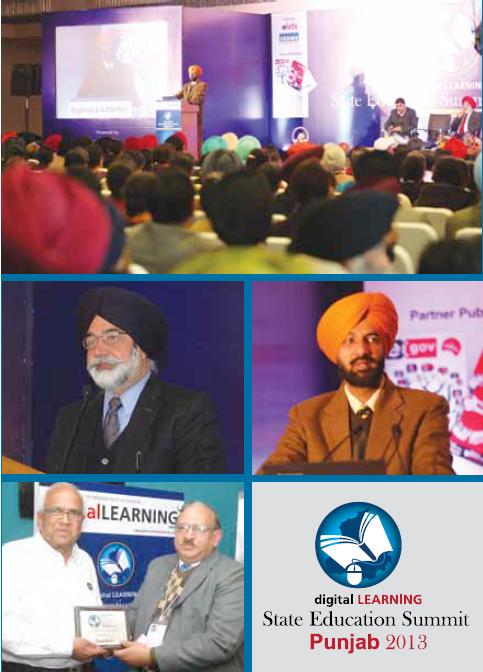
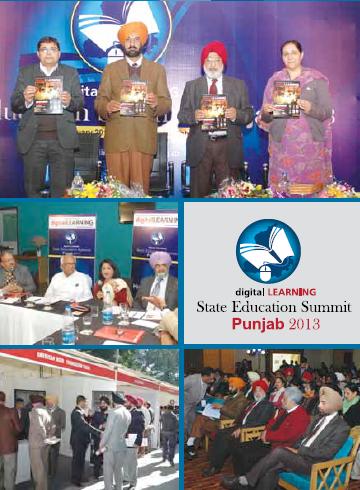
We are holding the State Education Summit 2013 Punjab, in Chandigarh, on February 7 and 8, 2013. The key objective of the summit is to highlight all the achievements made by the state of Punjab in the field of education. Key stakeholders of education from the state and from the rest of the country will be participating in the summit. As education is a universal subject, the outcomes of the summit will be applicable to all parts of the country. We look forward to seeing you at the State Education Summit 2013 Punjab, and participating in the invigorating rounds of discussion on the ways by which the reach and scope of education can be improved in Punjab and the rest of India.

Dr Ravi Gupta
Editor-in-Chief
Ravi.Gupta@elets.in

Academic session at Nalanda Varsity to begin from Sep 2014

The university has decided to kick start the session with two faculties— School of Historical Studies and Archaeology and Environmental Studies and Ecology

Patna: The academic session of the proposed Nalanda University (NU) in Bihar will begin from September next year with two courses, despite procedural delays and yet-to-be decided architectural design of its buildings.

This was decided at the NU’s Board of Governors meeting held here on Monday, which was presided by the Board’s Chairman and NU Chancellor Amartya Sen.

The two faculties with which we will start academic session are School of Historical Studies and Archaeology and Environmental Studies and Ecology, Sen said. The process for selection of faculty for the two courses has started, he said.

Sen said Nalanda should have been given the world heritage site status by the UNESCO. “It is outrageous to see that Nalanda could not get this status so far. We need cooperation at the UNESCO level as well as from the Government of India to make certain proposals. We will make the case and are determined to get Nalanda the world heritage site status.”

The board also decided to finalize the architectural designs for the university in May next. Eight firms from across the world have submitted their designs for selection, Sen said, adding civil work is likely to start from November.

IBM, Lovely Professional University ink deal

Under the deal, the IT major will upgrade the university’s hardware infrastructure to ensure efficient and optimised business performance

DealNew Delhi: IT major IBM has entered into an agreement with Lovely Professional University (LPU) to upgrade its hardware infrastructure and ensure efficient and optimised business performance.

As part of the IT upgrade, the university chose to install the IBM BladeCenter solution which included the IBM Blade Server HX 5 as well as the Blade Center H chassis, according to company release.

Since 2006, the university has been using 30 servers from IBM and HP and was keen on an infrastructure to run the campus ERP application – university management system.

They needed a solution that would ensure efficient and optimized performance at any given point. To meet the university’s need for a reliable and secure hardware infrastructure, IBM installed 14 bays of the BladeCenter solution which includes the IBM Blade Server HX 5 and Blade Center H chassis to ensure optimised performance at all times.

The newly secured hardware infrastructure has now enabled the university to streamline their entire business process for which the University is heavily dependent on their ERP application called university management system.

Tamil Nadu varsities to impart soft skill training

The state government has ordered setting up of soft skill and incubation and technology transfer centres

sdsChennai: Tamil Nadu will soon setup soft skill centres in 30 of its colleges affiliated to five universities and incubation and technology transfer centres in nine universities in the state,  a statement from the state government said.

It said students’ skill sets have to be upgraded and brought at par with the job opportunities in information technology (IT) and human resource development (HRD) sectors.

In the first phase, soft skill centres will be set up in 30 colleges affiliated to five universities: the Madras University, Thiruvalluvar University, Madurai Kamaraj University, Bharathiar University and Bharathidasan University.

The total outlay for these centres is estimated at Rs 13.5 million.

To increase the interaction between the community and the educational institutions, the government will set up incubation and technology transfer centres in Madras University, Alagappa University, Periyar University, Mother Teresa Women’s University, Thiruvalluvar University, Madurai Kamaraj University, Bharathiar University, Manonmaniam Sundaranar University and Bharathidasan University.

Each centre will be set up at an outlay of around Rs 2.9 million, the statement added.

UK Association of Colleges ventures in India

ukThe Association of Colleges in India team will act as a hub for sharing best practice and forging  ties between UK and Indian training providers and employers

New Delhi: UK’s Association of Colleges (AoC) has established a dedicated team in Delhi to help deliver the quality vocational training alongside further education training providers in India in an effort to meet the country’s growing demand for skills.

It represents the largest collective attempt by UK colleges to contribute to India’s ambitious skills strategy.

This initiative is a partnership of 30 UK colleges and AoC in India hopes it will help, both UK educational establishments and businesses, explore opportunities, set up and expand their operations in India.

Minister for Skills, Matthew Hancock MP, officially launched the project on 22 January 22 at the British High Commissioner’s Residence in front of a delegation of Indian and UK skills providers, industrial partners, government ministers and civil servants.

AoC is the membership body for 341 further education colleges in England and has been representing, promoting and supporting colleges since 1996.

This new venture in India is a bold move into the international scene and illustrates the importance of the Indian market to British educational institutions.

Asha Khemka OBE, Chair, Association of Colleges (AoC) India said that she was excited about the launch. “With the emergence of India as a knowledge-based economy its human capital has become India’s biggest strength. Quite rightly the spotlight is now on India to develop its skill base and infrastructure to continue its economic growth. I am really excited following our visit this week and are looking forward to forging new partnerships and building on our mutual strength. I am immensely encouraged to see the energy and drive in India.”

Vocational Skill Development stakeholders and local trade associations in India such as FICCI and CII support and welcome the launch of Association of Colleges (UK) in India

“The National Skill Development Corporation (NSDC) would like to congratulate the 30 FE colleges affiliated to the Association of Colleges, UK, which have decided to come together and form AoC India with the objective of collaborating with local skills training providers and Sector Skill Councils for imparting best-in-class outcome-oriented skills-related education in this country,” National Skill Development Corporation (NSDC)CEO and MD Dilip Chenoy said  at the launch function..

We are confident that AoC India would contribute in a big way to strengthening the strong linkages that already exist between the UK and India in the vocational education and training space and help India attain a position to be able to leverage its favourable demographics for achieving a faster and more inclusive growth.We would be happy to work closely with AOC India to transform the domestic skills landscape,he added.

Confederation of Indian Industry (CII) Deputy Director General Supriya Banerji  said, “The launch of AoC India is at a most opportune time in India, when skill development is being discussed alongside economic prosperity. CII welcomes AoC India and looks forward to a fruitful and meaningful partnership.”

On the occasion of the launch, Centum Learning CEO and Director Sanjeev Duggal  said, “Association of Colleges (AoC) entering India is a step in the right direction. Their presence in the Indian market will open a plethora of opportunities for college students in India who would experience the benefits of UK’s Further Education (FE) Colleges.”

Skills Academy CEO Anju Talwar welcomed the launch of Association of Colleges in India. “The Indian Skills industry will benefit hugely from the quality and experience of UK’s FE colleges via their professional support and solutions in various fields.” Talwar said at the launch.

John Yates, CEO, Manipal City & Guilds welcomed the commitment and setup of Association of Colleges (AoC) in India.

“As CEO of Manipal City & Guilds and a resident of India, I’m delighted that the Association of Colleges is demonstrating its commitment to India by establishing an office here”, Yates said while speaking at the launch event.

The Association of Colleges (AoC) now have a permanent team in Delhi; offering UK training opportunities to Indian partners. The team operates through the ‘LaunchPadTM’ scheme managed by Sannam S4 Consulting Pvt Ltd – a leading marketing entry and business development consultancy.

Sannam S4’s Chief Executive,  Adrian Mutton, said “Sannam S4 is delighted to be the local host partner of the Association of Colleges in India. As I am from a family who have all progressed through the UK FE system, I have a huge respect for the value the sector brings. I am excited about the huge positive contribution we will be able to make to addressing India’s skills needs, with both India and the UK receiving mutual benefit.”

AoC’s International Director, John Mountford, said: “This marks a great opportunity, not only for our member colleges in the UK, but also for a huge variety of education and training providers in India. AoC in India will be a way of sharing educational best practice that has been developed in colleges in the UK over many decades.

IIM-Indore to train educationists

The initiative is a part of the HRD Ministry’s plan and aims at improving the quality of higher education in the country

iimIndore: The Indian Institute of Management-Indore, through its management capacity enhancement programme, will now train deans, heads of departments, and professors from across the country.

The initiative is a part of the Union Ministry of Human Resource Development’s (HRD) plan, funded by the World Bank, and aims at improving the quality of higher education in the country.

A pilot session of the programme was held at the institute from January 16-26 and was attended by selected educationists from higher education institutes (HEIs) in states like Maharashtra, Rajasthan and Madhya Pradesh.

Topics like strategic planning in the country’s HEIs, campus management, innovation in teaching and research, IT, financial planning and budgeting were covered in the programme.

BHU to soon launch women helpline number

The 24 hours helpline service is aimed at instilling confidence among the girl students in the campus

24*7Varanasi: The Banaras Hindu University (BHU) has announced to launch a 24 hours helpline service for the girl students soon to instill the confidence among the girl students.

Apart from the helpline service, a women complaint cell would also be formed to ensure fast disposal of cases.

Making the announcement, Vice-chancellor Lalji Singh warned the university staff and students that nobody would be spared if they commit any kind of misconduct in the premises.

VC also warned the hostellers saying, “Strict action would be taken against unauthorized persons staying in the university hostels. Hostellers sheltering such people would also face action”.

“Girls studying in the library till late hours would get facility of transportation to their hostels or residences,” Singh said.

UP to buy 15 lakh laptops for students from HP India

These laptops would be given to students who will clear class 12 examinations of the UP Board

Lucknow: IT major HP India has bagged the contract to supply 15 lakh laptops to the Uttar Pradesh government at a unit cost of Rs.19, 058.

The cost per unit will include all taxes and duty cost. The purchase cost of the 15 lakh laptops would total about Rs 2,858 crore.

The council of ministers approved the decision in a cabinet meeting after the recommendations made by the evaluation and technical committee of UP Electronics Corporation were reviewed by it.

The distribution of free laptops to all students passing Class 12 was a major promise of the ruling Samajwadi Party (SP) in the run-up to the state assembly polls.

The state government also authorised the UP Electronics Corporation to issue a letter of intent (LOI) to HP India Sales Private Limited for the purchase of laptops.

The party had also promised that free computer tablets would be given to students clearing their Class 10 exams. The process of purchasing computer tablets is underway, an official said.

Earlier, the purchase of laptops was delayed thrice owing to the mammoth scale of the tender.

LATEST NEWS