


Home Blog Page 1163

Making Youth Employable with Language Proficiency

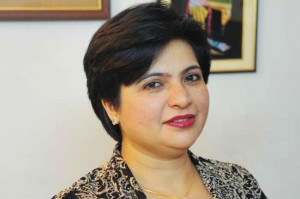
Chitra Bhatia
Country Head
Sanako Corporation

Sanako Corporation specialises in language software. The company is redefining the way to learn languages, enhancing communication through high-end teacher-led Interactive language learning platform. Chitra Bhatia, Country Head, Sanako Corporation, in conversation with Pragya Gupta, talks on importance of English Language and company’s outreach for the Indian market. Excerpts:

Please share details about the genesis of Sanako Corporation?

Sanako is the global leader in developing teacher-led language teaching software and modern language labs. Sanako started in 1961 with the name Tandberg as  a language lab producer. In 1984, Teleste acquired the educational division of Tandberg  and in 1991, Teleste developed the word’s first computer controlled language  lab. In 2003, Divace changed its name and launched the new global brand – Sanako.

We have worked closely with our customers for nearly five decades towards a single goal: to enable better speaking, comprehension and communication  skills for language learners. We have satisfied customers in over 100 countries  and 30,000 classrooms. We already have 1100 class room in India in last one year, which is a significant number for us. We cater to higher education and K-12 segment, with our language lab solutions,  be it Indian or international. For example, we are providing solutions for  Kashmiri and Tamil at CIL and Chinese and English in ERA B- School.

Our solutions can be used for any teaching and learning languages. At Sanako, we give flexibility to teachers to pick and choose their content. We give the basic content with the flexibility to teachers to add the content. They can even pick up content from You Tube or the latest news paper.

What are the key issues in language education in India?

In India, there is a general trend of focusing only on reading and writing, and not the other important skills of language learning, like speaking and listening,  which I see is a major issue. Also we have come across several other issues – like most teachers in India complain that the strength of student is much more as compared to an average class room  size in western countries.

One of the most difficult things to do in a large classroom is trying to get the attention of every single student. It lacks an intimacy in students-teacher level. Teachers do not find time to interact personally with students and weaker students do not get personal attention. Nervous students may hesitate even to clear their doubts in front of such a large number of students.

There is also the problem of inadequate space and lack of language learning equipments in the classroom, which does not encourage any fruitful communicative  activities like role plays, group discussions and oral presentations. Unless there is a proper and systematic plan, it is going to create havoc in the classroom.

The crucial challenges of language learning can be attributed to non availability of good and trained teachers, lack of good technology infrastructure, and content.

What is the need of language learning in India?

In India, only five percent of Indians understand English. As the links between people across the world grows, there is an increasing need for us to communicate in multilingual and multicultural equation. Knowing one of the world languages such as English becomes an increasingly important skill for an individual who wants to  do well in today’s global market.With the IT revolution and most of software and operating system being in English language,  a new utility for written and oral communication  in English language has emerged. English is said to be the world’s most important language having communicative and educative value.

A typical language lab consists of student desks that are equipped with media players, recorders or PC’s that enable activities in which students can practice their language usage by listening to audio and recording their speech.  Every student’s device is connected  to a central console that stays with the teacher. Unlike in a traditional classroom, a student does not have to wait his or her turn to interact with the teacher and several students can establish interaction  with their teacher simultaneously.  This structure facilitates the active participation of students in the learning process and also allows both students and teachers to achieve the maximum  amount of practice and usage time with the language they are learning.

How do you reach your customers in India?

In India, we reach our customers through HCL and Everonn. They are our strategic partners who represent us all across India. Beside this, we have smaller partners and region specific channel partners.

Could you elaborate on your plans in India?

Presently, it has been a mandate by All India Council for Technical Education (AICTE) to have a language lab in all the AICTE approved colleges. However, in schools and colleges, it is still not a  mandate to have a language labs. In five years, Sanako would like to make the Indian  youth more employable by helping them improve their communication skills. We are working towards providing affordable,  flexible interactive language learning technology solutions. Teachers training in  language learning using technology and developing interactive language content suiting Indian market are among prime goals in our five year plan.

We will be launching cloud based language learning solutions for ‘next gen language learning’, which will help students learn and practice language speaking even after the class. Sanako has launched a product called ‘Sanako speak’ which is a cloud based product.

Besides building global community of language teachers, this can help teachers all across the globe learn from each other and share their knowledge back.


Most teachers in India complain that the strength of student is much more as compared to an average class room size in western  countries


Please throw some light on your tie-up with schools and colleges?

We are working with some of the schools and colleges in Delhi, NCR including DPS Vasundara, DPS Ghaziabad, Era Business School, Delhi School of Language and JNU. We have also worked with Indian Institute of Technology (IIT) Indore, Central Hindi Training Institute, Central Institute of Indian Languages (CIIL) Mysore, Maharashtra State of Technical Education, Mumbai, Bundelkhand Institute of Technology, Jhansi, Delhi School of Languages, The Cabinet Secretariat Government of India,  Banaras Hindu University, Tamil Naidu State Board Schools, Amrita Engineering College, Coimbatore, Handa College  of Education, Jammu, International School of Business and Media.

Who are other players in this segment? What are the distinctive features of Sanako?

We see Oreli Technosystems, ETNL – eTail Networks Limited, WordsWorth and Robotel as our competitors. We at Sanako offer Interactive Language Learning Environment. Our solutions are affordable  and licensing system is flexible. Our latest technological solutions enable round table  discussion for advanced learners and offer advanced tools for better results.

Sanako’s solution features – multi-user collaboration, Sanako study examination module, Sanako study video live module, homework automation, subtitling, screen transfer with audio and marker tool, white board, remote access, and control of student  PCs. They also include voting and live feedback, adjustable thumbnails in separate windows, hybrid labs, hardware labs and cloud computing.

Samsung Announces Hope Project to Spread Education to Underprivileged Children

Samsung Electronics Co Ltd has announced the launch of it Samsung HOPE Project, which aims to make a difference in the lives of underprivileged children by providing them quality education. Samsung aims to reach out to children across 100 villages in Tamil Nadu through Aid India, its selected partner and in Delhi /Uttar Pradesh through SMILE Foundation. Consumers too will get an opportunity to participate in this educational initiative and support this movement. For every Galaxy Note sold in the period between February and June 2012, Samsung will contribute Rs 100 towards supporting the selected projects.

“The Samsung HOPE Project that we are launching today is aligned with our Global Hope for Children program that seeks to bring attention to the worldwide need for childhood education and healthcare. Through the Samsung Hope Project, not only do we aim to provide good quality education to under privileged children, but also create an environment which is conducive to their overall growth and development. By using modern teaching methods and available technology, our objective is to ensure that children are encouraged to go to schools and are mainstreamed. We are pleased to partner with Aid India and Smile Foundation and are confident that together we will be able to make a difference”, states B D Park, President and CEO, South West Asia HQ and Managing Director , Samsung India Electronics Pvt Ltd.

Samsung had constituted a high profile jury to evaluate and select partners for this program. The jury was headed by Dr Raghunath A Mashelkar, former Director General of Council of Scientific and Industrial Research (CSIR), and currently the President of Indian National Science Academy (INSA); Arun Kapur , Executive Director of Learn Today, Kishor A Chaukar, Managing Director of Tata Industries Limited (TIL), Anu Aga , Director on Board of Thermax Group and Anand Nayak Executive VP , HR from ITC Ltd. The Jury carefully scrutinized and evaluated all the nominations received and selected AID India and SMILE Foundation as the Partners for this initiative, based on the HOPE Project guidelines.

To strengthen the program and create consumer support for the movement, Samsung will contribute Rs 100 from the sales of every Galaxy Note sold in the period between February – June 2012. “Our objective is to promote the cause of education for children as widely as possible and encourage more people to join this movement. So while Samsung India will support the Project through the sales of its flagship Galaxy Note, consumers can even support our partners directly and make the Program stronger,” states Ranjit Yadav, Country Head-Mobile & IT, Samsung Electronics.

Edexcel, WLCI to Address Skills Gap for Employability among Indian Youth

Edexcel, a Pearson company and United Kingdom’s largest awarding body for academic and vocational qualifications, and WLCI, one of the largest professional training institutions in India, announced a strategic partnership that would provide WLCI students an opportunity to access BTEC Higher National Diploma (BTEC HND) in Fashion, Graphic Design and Advertising, Media and Business Management.

These programmes are expected to create a completely job ready, skilled talent pool that addresses the needs of employers. On completion of BTEC HND Programme, students can opt to pursue careers or further enhance their knowledge by pursuing Advanced Degree Programmes. The other significant advantages of international certification are the global recognition, opening of doors for further education abroad and overseas employment for Indian students.

Ranu Kawatra, President and CEO, Pearson Education said, “We are extremely pleased to be working with WLCI and we believe it will become one of the most high-profile partnerships. Having an Edexcel BTEC certification whether achieved abroad or through quality assured institutions in India always bestows a high standard to a student. It is proof of a level of skill benchmarked to international standards and opens up a lot of avenues for students in India and abroad. There are broad ranges of Edexcel BTEC certification available in a variety of areas and at every level. Students can study for Edexcel BTEC certifications in traditional areas like, Fashion Design, Advertising, Graphic Design, Media etc., now students can choose from all these areas, obtain recognised certification and get ready for a career.

The Principal of Wigan & Leigh College UK, Cath Hurst, OBE, who is presently on a visit to WLCI said “WLCI and Wigan & Leigh College, UK have been academic partners for over 16 years. The industry oriented curriculum, systems and processes used by WLCI for training have enabled WLCI students to excel professionally. The WLCI and Edexcel partnership will help further enhance the quality of our delivery”

Speaking on the occasion, Malobika Sengupta, CEO, WLCI, said “Our alliance with Edexcel would help us benchmark our programmes with the international standards and enable our students to access further education opportunities with international universities.”

Education Initiative to develop Educational Games with ‘Desafio’

Educational Initiatives brings its first ever online competition for college students. ‘Desafio’ in its first year is calling out to youth aspiring to explore the exciting world of developing online or off line games, applications and other interactive tools. These games, applications, tools have to be original creations that will help school students to understand topics, subject concepts or even skills.

” We have taken this initiative with to showcase that edcuation can be a fun. We invited developers to create new innovative education games having fun element in it. The purpose of the game should involve a clarification of any concept which students find difficult to understand to bridge the learning gaps.”

One does not need to be a coding geek to build these games / applications. One only needs to do visualize how students learn any particular concept or skill and how can that learning be made better and fun. The games / applications can be developed on concepts of any subject or topic like Maths, Science, English or Social Studies.

EI feels games, application or other interactive tools can prove to be useful means to help children learn better by engaging them and minimising the learning gaps.

Teams will have to register themselves by February 28. Final version of the game and game supporting document will have to be uploaded on the website by March 5. Shortlisted entries will be announced after which the final voting will take place online. Prizes to be won include tablet PCs, iPhones and paid internships for 4-8 weeks at EI and an opportunity to work with experts in the field.

India Skills to set up Training Centre in Gujarat

IndiaSkills, a joint venture in vocational training from Manipal Global Education Services and City & Guilds, one of the leading providers of work-related assessment and qualifications, has announced partnership with the Adani Foundation to set up a skills training centre in Gujarat.

The Ahmedabad-based centre will offer skill-related courses in retail, hospitality, security, construction and engineering. This affiliation will see IndiaSkills training nearly 1,000 students annually across major industry sectors in India for the next five years. IndiaSkills will train, assess and certify the learners, and conduct Train-the-Trainer program for faculty. The Foundation will source learners and fund them by providing scholarships for the various courses.

Create knowledge systems not learning systems: Prof Ved Prakash, Chairman, UGC

The Indira Gandhi National Open University’s (IGNOU’s) Staff Training and Research Institute of Distance Education (STRIDE) concluded its 21 days Refresher Programme in Distance Education at the university headquarters in the capital. Prof Ved Prakash, Chairman of the University Grants Commission (UGC) delivered the valedictory address.

Prof Prakash in his address expressed that most of the institutions fall in the category of learning systems and not knowledge systems. Harping upon the need to create new knowledge he felt that research and teaching are two distinct activities today and are rarely used together.

Feeling the need to redefine the educational needs he said that it is only the mechanism which separates distance and conventional education. However, if we want to transit from developing to developed nations then the Gross Enrolment Ratio (GER) must be increased.

He brought forward the present educational scenario in the country wherein 20 million learners are pursuing education through conventional system and 4.6 million through distance mode. According to him, IGNOU shares 90% of the figure. “We would like to increase the enrolment from 20 to 30 million in conventional system and 4.6 million to 6.6 million in distance mode of education. It is only then we can say that we have arrived at 30% GER,” he emphatically added.

Realizing that GER is just one of the parameters he said that we have to induct these 36.6 million students to their streams by creating opportunities in cognizance with the accelerated change.

Prof. M. Aslam, Vice Chancellor, IGNOU, in his presidential address brought forward the need to overcome the barriers that have been created between the conventional and distance education system which are in fact complementary to each other. He also announced that the university shall soon be establishing its study center in Zambian Open University for three MBA programmes.

Dr. Leena Singh, one of the participants felt that such kind of training programmes should be made mandatory for all distance educators. “It was not a refreshing exercise but an experience. Whole gamut of topics like mobile learning, online learning multimedia applications etc. were covered with a good interactive session. We learn how to make audio and video programmes for distance learners. Now we can develop our own DVDs with educational content,” she eagerly shared her experience.

Prof C R K Murthy, programme coordinator, IGNOU presented a brief history and report of the programme. Prof. Basanti Pradhan, Director, STRIDE, IGNOU, Prof. Santosh Panda, Professor of Distance Education, STRIDE, IGNOU and Dr. R. Satyanarayana, Programme Coordinator were also present during the valedictory session.

AICTE to Take Every Process Online

Prof S S Mantha has been appointed as Chairman of the All India Council for Technical Education (AICTE). He was the acting Chairman of AICTE since August 2009. Under his leadership he would like to see AICTE facilitating and providing an enabling mechanism to make India one stop destination for Technical Education in five years from now. S S Mantha, Chairman, AICTE shared his vision of taking AICTE into new heights with Pragya Gupta of digitalLEARNING…

Excerpts:

AICTE is one of the foremost e-Governance projects in the country. It is in effect a content and knowledge management portal. The Portal www.aicte-india.org was launched for the public on 7th January 2010. The web portal is a unique experiment to bring in some of the best practices of business and computing into a live application thereby providing utmost transparency and accountability.

The portal is developed on ORACLE-SIEBEL CRM platform. It provides important information through an easily accessible website. The AICTE website also has the facility for conducting intranet transactions for the AICTE internal workflow applications. It also allows internet transactions for the stake holders to access the live database for making online applications for setting up new institutions. It also allows AICTE to monitor and regulate the existing institutions online. Business Intelligence tools (BI) allow various statistics and MIS reports to be generated for efficient decision making.

A research portal will be available shortly to promote research culture amongst the students, faculty and industry. Students can apply for loans / scholarships online. Eventually all processes will be online and every transaction will be processed and tracked online.

The e-governance effort will provide a unique ID to all the students, faculty and the institutions so that the tracking, grievance address and all interactive functions can be facilitated for the growth of technical education in the country.

AICTE is also actively engaged in the skills development, which is an extremely important activity for a growing economy such as ours. Every student who goes through higher education will be well served if he or she has additional skills acquired along with his / her studies. It enhances the employability opportunities. On the other hand skills acquired for a student who does not go through a formal education will provide a means of self employment and also a chance for employment in the formal sector. Focussed skill development, with employability as the maxim is the need of the day.

AICTE this year has also allowed institutions to be set up in a PPP mode to enhance participation by two very important players, who are engaged in mobilising economic growth.

Viable models for growth of higher education need to be explored if we are to come out of the low GER syndrome. AICTE allows credible foreign players to enter into collaborations for setting up good technical education programmes with local partners.

CBSE offers International Curriculum to 50 Indian schools

The Association of Indian Universities has approved the curriculum as equivalent to the present curriculum offered by the Central Board of Secondary Education. CBSE will offer its international curriculum (CBSE-i) to 50 Indian schools from the 2012-13 academic session reported the Times of India.

The international curriculum was launched in 2010-11 across 26 schools in classes I and IX in the United Arab Emirates, Singapore, Japan, Malaysia and other Gulf countries to provide a less expensive and quality-oriented alternative to foreign boards like International Baccalaureate (IB) and International General Certificate of Secondary Education. In 2011-12, the curriculum was extended to Classes II, VI and X, and this year, it will be extended to Classes II, VII and XI.

Prof Asha Kanwar to Head the Commonwealth of Learning

Professor Asha Kanwar, one of the worlds leading advocates for learning for development, and current Vice President of the Commonwealth of Learning (COL), has been appointed President and Chief Executive Officer of the international organisation. She succeeds Sir John Daniel, whose term as COL’s President ends on 31 May.

Dr Kanwar has over 30 years of experience in teaching, research and administration. In addition to the several books, research papers and articles to her credit, she has made significant contributions to gender studies, especially the impact of distance education on the lives of Asian women. These studies have established that better educational opportunities and access to new technologies have made substantial differences to the attitudes, values and concerns of Asian women. She is also a recipient of several awards and fellowships, including the International Council for Distance Education (ICDE) Prize of Excellence.

In making the announcement, the Honourable Burchell Whiteman, O.J., Chair of COL’s Board of Governors and former Jamaican Minister of Education and Culture, noted that “I am delighted by the Board’s appointment of Professor Kanwar as President of our organisation. With her profound knowledge and rich experience of open and distance learning and her vision for the Commonwealth of Learning in the medium term I expect that she will take COL to a new level through a process of significant and sustainable evolutionary change. Her personal attributes and her international profile should prove to be valuable assets.”

Professor Kanwar joined COL in 2003 as Education Specialist, Higher Education, and became Vice President in 2006. Her current role includes specific responsibility for stakeholder engagement and programme direction. Earlier, she was Director of the School of Humanities at the Indira Gandhi National Open University (India) and was Pro-Vice Chancellor of the University from 1999 to 2000. Prior to joining COL, she worked in Africa as a consultant in open and distance learning at UNESCO’s Regional Office for Education in Africa (BREDA) in Dakar, Senegal.

The Commonwealth of Learning, which is based in Vancouver, Canada and New Delhi, India, was created by Commonwealth Heads of Government at their meeting in Vancouver in 1987 to encourage the development and sharing of open learning and distance education knowledge, resources and technologies. The Commonwealth comprises 54 countries – most of which are developing nations – and one-quarter of the world’s population.

“COL is a unique organisation which has the ability to respond to the needs of a wide range of stakeholders,” said Professor Kanwar, “from the Batwa community in the forests of Uganda, the rural women in Malawi, goat herders in India, construction workers in Nauru, out of school youth in Jamaica to ministries and tertiary institutions across the Commonwealth. Being relevant to such a diverse constituency and delivering on results is both a challenge and an opportunity that I look forward to.”

Varkey Group Increases Stake in Everonn Education

GEMS Education, K-12 operator in the world and owned by the Varkey Group and Associates which recently purchased 38.12 percent and management control of Everonn, says the synergies with Everonn will play a critical role in improving the standards of education provided to the children of India.

To consolidate its place GEMS Education has appointed the Chief Executive Officer of GEMS Education – South Asia, Rakesh Sharma and Senior Director with GEMS Education, Dino Varkey on the Everonn Board.

Speaking after the Everonn board meeting, Sharma says the GEMS Education investment in Everonn will only have a positive impact on the Indian education sector, “Our vision is to provide access to quality education to as many children in the world as possible. Investing in Everonn will provide us with a critical operating base within India and give added momentum to our strategic expansion plans. India is a key geographic segment where we have begun to establish ourselves as a leading education provider under the GEMS Education brand. This is an exciting time for our company as we expand our global footprint”.

Sharma added that GEMS Education’s leading position in the school sector coupled with Everonn’s expertise in content creation and technology enabled delivery of content, offer considerable scope for synergy in India which will ultimately help GEMS achieve its vision.

“There are significant potential benefits in bringing together GEMS Education’s vast network of world class educationalists and significant student body with Everonn’s Technological capabilities – Live & Interactive Virtual Platform. As the relevance of distance learning and technology-driven education increases across the world and especially in a country like India with a population of 1.2 billon, acquiring the stake in Everonn demonstrates the group’s aspirations to meet the challenges that will come from this new trend both in India and globally”, Sharma said.

GEMS Education has a long term commitment to education and has owned and operated schools for over 50 years. In addition, through its GEMS Education Solutions business, it advises many governments looking to reform their education sectors.

GEMS Education and Everonn will, over the next few months, be holding detailed discussions to build on the strengths of both companies. He further added that SKIL Infrastructure continues as one of the key stake holders in the company. 

LATEST NEWS