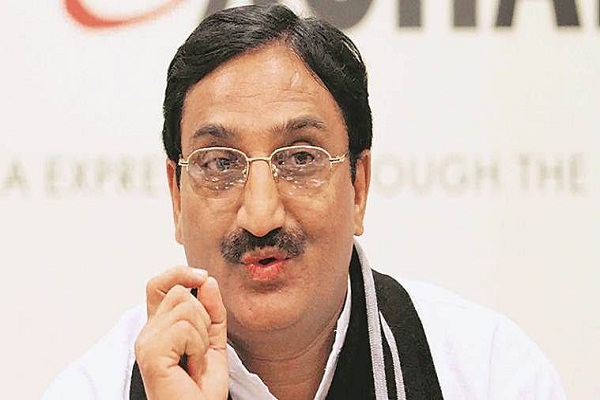


Union Minister for Human Resource Development Kapil Sibal on Thursday inaugurated the 'e-certificate' for the University Grants Commission – National Eligibility Test (UGC-NET) qualified candidates. The minister also released a compendium of UGC schemes. The UGC has initiated steps for online registration of the NET examination so that all the necessary information with regard to the candidates is captured, including their photographs, at the time of registration itself. The information thus captured is proposed to be used for the award of these e-certificates once the results are announced. These e-certificates will cut down the time lag for issuing the certificate from 6-8 months to 6 days. Similarly, whenever an institution writes to UGC for verification of authenticity of the NET Certificate presented by the candidates, the authenticity of the certificate will now be done within a span of 24 hours as against the earlier 4 months. The process of issuing the UGC-NET qualification certificate to successful candidates normally takes around 6-8 months, a cause of concern both to UGC and to the students. Also, institutions wrote to UGC for verifying the authenticity of the NET Certificates being presented by the candidates at the time of admission to Ph.D. or at the time of appointment in a College/University for the teaching assignment. This verification currently takes around 4 months another matter of great concern for all stakeholders. In the compendium, 63 schemes of the UGC have been synoptically profiled, covering the objectives of each scheme, the criteria for becoming eligible to receive financial assistance from the UGC, the operational tenure of the scheme and the process of selection followed in approving the proposals, and finally the quantum of financial assistance that can be provided to execute the scheme. The University Grants Commission conducts the national level test, viz-a-viz the National Eligibility Test (NET) twice in a year; in June and December to determine the eligibility for the recruitment of teachers as Assistant Professors in Institutions of Higher Learning and for the award of Junior Research Fellowships (JRFs). The Test is conducted in 77 subjects at 74 Centres spread across the country. While the examination for the award of JRF is being conducted since 1984, the examination for determining the eligibility for Assistant Professorship is being conducted since 1989. The number of Fellowships under the NET scheme has been increased from 2,000 to 6,400 per annum since 2010. In June, 2010, 10,433 candidates successfully qualified the NET for Assistant Professorship, including JRF.
Global experts at AMU’s conference on chemistry
Hundreds of delegates from India and abroad will gather here for a two-day 'international conference on chemistry' being organized by the Aligarh Muslim University (AMU) on Saturday. The conference is being organized as part of AMU's centenary celebrations. The International Conference on Chemistry: Frontiers and Challenges will see the participation of delegates from the US, Poland, Saudi Arabia and Malaysia. Scientists from India and abroad will also deliver lectures. Around 500 delegates shall present their papers during the conference. The inaugural function will be held at Kennedy auditorium, organizing committee Chairman Syed Ashfaz Nabi said. Padma Vibhushan awardee, former governor and former AMU Chancellor A.R. Kidwai, will be the chief guest.
Prof Pradeep Khosla appointed as Infosys Prize Jury Chair
Professor Pradeep Khosla, Dean of the College of Engineering, and the Philip and Marsha Dowd University Professor at Carnegie Mellon University, USA, has been appointed as the Jury Chair for the Infosys Prize for Engineering and Computer Science. Khosla has taken over the role from from Professor Subra Suresh, who was appointed the Director of the National Science Foundation (NSF) by the US Senate. Professor Khosla was earlier a jury member for the Infosys Prize for Engineering and Computer Science. He will chair the jury for the Prize year 2011 and will soon select a panel of jury members who will help evaluate applications received in the category. Pradeep K. Khosla is an Indian American computer scientist. He did his B.Tech (Hons) from the Indian Institute of Technology, Kharagpur in 1980. After graduating he worked in the area of real-time control with Tata Consulting Engineers and Siemens until 1982.By 1986 he received both an MS and PhD degree from Carnegie Mellon University (CMU) where he continued to work as a professor. Professor Khosla is the recipient of several awards including the SiliconIndia Leadership Award for Excellence in Academics and Technology (2000), the ASME Computers in Engineering Lifetime Achievement Award (2009), and the inaugural Pan IIT American Leadership Award for Academic Excellence (2009). On his appointment as the new Jury Chair, Prof Khosla said, “I am honored to chair the Infosys Prize jury for Engineering and Computer Science. This is a great initiative that has been taken up by the Infosys Science Foundation to elevate the prestige of science and research and inspire young scientists. The Infosys Prize acknowledges outstanding contributions to research and I am pleased to be associated with this initiative.” On the occasion. T.V Mohandas Pai, President – Infosys Science Foundation said, “The Jury Chairs for the Infosys Prize comprise of eminent leaders in each of their fields lending credibility to the stature of the Infosys Prize and the respective prize categories. The Jury Chairs are selected carefully and are responsible for evaluating the achievements of the nominees against the standards of international research. We are pleased to announce the appointment of Professor Pradeep Khosla as the new Jury Chair for the Infosys Prize for Engineering and Computer Science, and look forward to his guidance and experience that he will bring to the jury.” The Infosys Prize competition endeavors to elevate the prestige of scientific research in India and inspire young Indians to choose a vocation in scientific research. The Infosys Science Foundation, a not-for-profit trust, was set up in February 2009 by the management of Infosys. The Foundation instituted the Infosys Prize, an annual award, to honor outstanding achievements of researchers and scientists across five categories : Social Sciences, Physical Sciences, Engineering and Computer Sciences, Mathematical Sciences and Life Sciences, each carrying a prize of rupees 50 Lakh. The award intends to celebrate success in scientific research and stand as a marker of excellence in these fields.
HC: No pension for part-time lecturers
The Bombay High Court has said that part-time lecturers are not entitled for benefits like pension and gratuity as they have the freedom to take up other jobs. The court gave this judgement while hearing a public interest litigation filed by advocate and a part-time lecturer Laxmi Paranjpe. Laxmi who has been associated with ILA Law College Pune for 27 years had challenged the government's decision to not provide pension to part-time faculty members. She was appointed as a part-time lecturer on June 20, 1983. A division bench of Justices P B Majumdar and Amjad Sayed said, “It is required to be noted that Part-time lecturers are not prohibited from taking up other assignments while continuing part-time employment with the college.” Paranjape's petition has touted government's decision was arbitrary, illegal and violated of Articles 14 [equality before law] and 16 [Equality of opportunity in matters of public employment] of the India's Constitution. A division bench of Justice P B Majmudar and Justice Amjad Sayed said in their February 24 order there was a reasonable classification in the matter of pension between regular lecturers and part-time lecturers. Paranjape's lawyer Girish Godbole argued that if part-time lecturers are entitled to additional benefits and promotions, then they should also be given proportionate pension on retirement. Assistant government pleader V S Gokhale argued that the petitioner was entitled to practice as an advocate also, a perk that is denied to a full-time lecturer. “Additional benefits given to part-time lecturers such as benefits of career advancement scheme, selection grade, etc., ipso facto cannot be grounds for concluding that denying pension to such part-time lecturers violates Article 16 of the Constitution of India,” said the judgment. The court said that if an advocate enrolled with the Bar Council of Maharashtra and Goa is appointed as a full time lecturer then, he or she has to surrender the license to practice a profession. “During the tenure of his or her employment with the Law College as a full time lecturer, he or she is not permitted to practice in the Court.”
College teachers likely to get pay hike across states
The Human Resource Development Ministry is preparing to drop the controversial norm under which centre cannot fund state governments in order to implement salary hike under Sixth Pay Commission. The ministry will table the proposal in Cabinet to allow it to pay state governments up to 80% of the additional financial burden imposed by hiked University Grants Commission teacher salaries, informed top government sources. If the proposal gets cabinet nod, it will benefit over 4.5 lakh teachers across India's state universities and affiliated colleges. These teachers will receive a long overdue pay bonanza which was stuck due to fund crisis. The norm that was introduced in the UGC pay package which was notified on December 31, 2008 has taken only central universities in its ambit excluding the state universities. The norm allows the Centre to financially assist only those states that raise the retirement age of their college and university to 65 years. Different states at present have different retirement ages norms. The centre will have to bear an amount of up to Rs. 8, 000 crore a year if it pays 80% of the additional cost for salary hikes to the states. “But this is the same amount we were earlier too preparing to pay
For a change, spotlight on arts at job fair
A job fair at Panjab University starting on Friday will, for a change, provide a platform for students from arts and non-vocational streams – besides those from more sought after courses – to interact with prospective employers. In times when the focus of leading companies and university authorities remains on getting job placements for professional courses like management, engineering and others, Panjab University is all set to change the trend and has invited leading corporates through the Mega Job Fair from March 4-6. The varsity, one of the oldest universities in India which was set up in 1882, will for the first time see all of its 75 teaching and research departments conducting student placements under a common platform. “Students from management and engineering departments always get good placements. But now we want students from other departments like Hindi, Sanskrit and political science to get good jobs too,” vice chancellor R.C. Sobti told the sources. “With giants like IBM, WIPRO, ICICI, Toyota, Ranbaxy and Indigo Airlines confirming participation in the job fair, we are expecting good placements for our 10,000 outgoing students this year,” Panjab University placement coordinator Manu Sharma told the sources. Nearly 50 leading companies are expected for the job fest. Our student organizers from the University Institute of Engineering and Technology (UIET) have made a web-portal to monitor database of large number of students. “Students from different departments have uploaded their resumes on it. The companies have also uploaded their requirements, mode of short-listing, and salaries offered on the same portal,” Sharma said. The UIET has also set up a help desk at the university's Students Centre for taking queries from the students regarding registration for the job fest. “I could not find any suitable job placement for me during the campus placements held in the department last month. I am looking forward to get good opportunities for me at the job fair,” Maneesh Kumar Singh, an eighth semester student from UIET, told the sources. Officials dealing with the job fest say that over 1,500 online registrations have already been made and more are expected in the coming days. But some in the university's student community say that more could have been done to attract more students to the unique job fest. “It is appreciable that the university has come up with this mega job fair for all the departments but the organizers did not publicize it properly,” said Kunal Verma, a final year student from department of economics. “The student organizers could have pulled out promotional rallies around the campus or should have sent letters to the chairpersons of all departments.” “I got to know about the job fair preparations through a friend of mine from UIET. He told me that a group of students in UIET had volunteered for organizing the job fest,” Tejveer Kalra, a second year student from University Business School (UBS), told the sources.
Armed conflicts rob 28 million kids of education
Calling it a 'hidden crisis', a UN report has found that armed conflicts are robbing 28 million children of their right to education while subjecting them to violence. The report, The Hidden Crisis: Armed Conflict and Education, prepared by UNESCO warns that the world is not on track to achieve by 2015 the goal of providing education to all that 160 countries signed in 2000. “In conflict-affected poor countries, 28 million children of primary school age – 42 percent of the world's total – are out of school,” said the report released on Tuesday. It warns that children in conflict-affected poor countries are twice as likely to die before their fifth birthday as children in other poor countries. “Only 79 percent of young people are literate in conflict-affected poor countries, compared with 93 percent in other poor countries,” it said. Over 43 million people are reported to have been displaced mostly by armed conflicts though the actual number is probably far higher. Refugees and internally displaced people face major barriers to education, according to the report. The report calls for a determined international response to tackle the crisis.
Delhi’s slum children to get Australian degrees
Delhi's slum children will now be able to study in Australia under an exchange programme between the University of Melbourne and voluntary organization Asha, officials said here on Tuesday. “This is going to be the first-of-its-kind Asha model as we focus on urban poor, mainly slum children, to give them access to higher education from a country other than India,” Asha founder Kiran Martin said. A new India-Australia partnership to support the needs of Delhi's urban poor will operate in three areas – research, education and community engagement. “This is going to be a unique programme in terms of catering to the needs of the urban poor, who can't even afford the basic education. We also aim at finding solutions to the needs of urban poor as we begin interacting with the students,” said Amitabh Mattoo, director of the University of Melbourne's Australia India Institute. The collaborative programme will fund 40 projects during 2011 across areas such as resource and environment, contemporary India, regional relationships, health, education, economics and business. “A memorandum of understanding (MoU) between the Australia India Institute, University of Melbourne, and Asha community health and development society has also been signed,” added Martin. The programme will be launched by Human Resource and Development Minister Kapil Sibal here on Wednesday.