


Home Blog Page 1253

Reaching out to Peripheries

IGNOU’s intervention in the form of the establishment of Institute for Vocational Education and Training (IIVET) could well be a benchmark for revival (indigenous knowledge) and survival (linking such knowledge with trades) of industry academia alliances

Vocational Education is oft talked about but the expression is replaced, at times euphemistically, by the terms Professional Education. ‘Vocational’ implies training for ‘petty’ manual skills: carpentry, weaving, food processing, work of a mechanic etc. Professional on the other hand signifies a more educational forwardness or cultural sophistication: Business Management, Computers or better still Information Technology.

The challenges in an Open University like ours are many and impinge upon the very mechanisms and methodologies of a Distance Education and Open University such as IGNOU. These are: technology aided instruction, the use of broadcasts, telecasts and the internet for delivery services. However, in vocational education and, training face to face mode of instruction and especially skill based activities have also to be emphasized.

Vocational education has to be viewed from different multi-layered practices. One is of course the hands on training component. The other is employment generation and sustainability, whether the training programmes or courses can lead to employment /self employment. If so there has to be follow up measures to see what the participants in a vocational training programme have achieved and whether there has been a progress in terms of employability and income generation. Also, whether any industry has employed any participant, especially when there has been in plant or in house training. Another perspective of VET is studying a course on vocational education in a college or a university with the hope that the certificate will lead to an acquisition of jobs. The industry-education alliance which is gradually becoming a force in the country, one reckons that this will play a significant role in the future, what with a Skills Development Council being set-up under the aegis of and with the active support of the CII, will also, I hope, shape future events in this regard.

Skill development is one of the components and outcome of VET but training programmes should also concentrate on unskilled workers thereby giving them an opportunity to learn and earn. The unorganised sector is also a catchment resource in areas such as retailing, marketing and micro businesses.

The history of VET is not very sanguine in India especially as EDPs and allied training programmes have not been followed up. Simply leaving a participant with a certificate to fend for himself/herself has added to the plethora of the unemployed. However, with the Govt. of India’s accent on the Public Private Partnership model, one can only hope that such tie-ups will give a prod to the conscience of the industry and corporate houses, especially with Corporate Social Responsibility being such a major issue of debate today internationally, notwithstanding the polemic on ethics and CSR.

Compared to the literacy of the country, the literacy of North East India is fairly better; thanks to the Mizoram boom and this could be a marginal advantage. Yet literacy levels for women are strikingly low in some states and it is here that vocational education training programmes can intervene as basic literacy programmes to earn livelihoods.

Livelihoods have also to do with living in good if not salutary conditions. Floods in Assam every year are cataclysmic but precious little is done to take long standing measures to combat this problem. Flood control management ─ how to live intelligently with floods, could well serve vocational and training needs of the common populace who finally bear the brunt of such disasters.
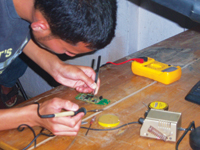
IIVET is initiating a two-month non-credit programme on Citizen Journalism and a certified Credit Programme on Folk Theatre and Performance of North East India

VET in the North East Region can be integrated into a whole, a complex process since we have to trace it to components of agriculture and the current despair of the educated unemployed or even the plumber or the technicians eking out a living. This is of course true of the entire country but in a Region where industrial development is in backwaters then education is strength with the presence of some very good academic institutions in the Region. These institutions should come forward in partnership whether they are general colleges or professional colleges to re-appraise vocational education in the context of the small industries and local habits mentioned above. More than having vocational education courses, short term training programmes will benefit the people keeping in mind the changing order of the ‘world’ market such as repair of mobiles and computer hardware.

IGNOU’s intervention into the area of VET in the form of the establishment of the IGNOU Institute for Vocational Education and Training (IIVET) could well be a benchmark for revival (indigenous knowledge) and survival (linking such knowledge with trades) as well as looking into contemporary realities and needs keeping in mind the training factor. The target group is the youth in particular and the public in general, taking also into cognizance rural women. And of course the oeuvre of distance education technology is always there as a ready support system.

Today the thinking of the younger generation is changing in an ethos which demands results and not only degrees. The degree bias in our educational systems is tapering, at least those in the areas of the Liberal Arts or the Sciences. That is not to say that these degrees are of minimal importance, they are not, neither they can be. But certain dual objectives that of keeping options open and exploring possibilities have entered the domains of our educational system. It is some kind of a systemic drive which declasses the hitherto hierarchical structure of education today. Young boys and girls given an opportunity will prefer to study short term Diplomas in addition to pursuing their traditional degrees. It is often been commented that the motivation here lies in the enticing job-market. The younger generation today is conscious of the realities at hand, the compulsions of being a dilettante in a world which is rushing rapidly towards a technological explosion. So taking advantage of such a situation there are a plethora of correspondence courses and ‘Educational Shops’ are sprouting in every direction. The danger here is of course the quality control as it is called.

There is also a need to train the trainers. India has very large untrained primary school teachers which is sad and does not augur too well for the educational future of the country. It is exactly keeping this in mind that the Indira Gandhi National Open University has initiated a Diploma in Primary Education/for primary school teachers at present. The functions of training the trainer, in turn generates a cybernetically related activity where the training process is ongoing.

The onus is on Universities, Open Universities and Industries. In fact the linkage between the Universities and the Industries should be one such area of emphasis where the two work at tandem: one for the knowledge part, the other for logistics, practicals and hands on training.

IGNOU Institute For Vocational Education & Training (IIVET) Shillong

The IGNOU Institute for Vocational Education & Training (IIVET), Shillong has made interventions in the following areas:

Adopting the Tele Centre model in collaboration with BASIX India (Livelihood Division, B-ABLE) in the Common Services Centres of Meghalaya. Right now a cluster of 50-60 CSCs have been taken up to train the youth in Computer Literacy and Personality Development.

Today the thinking of the younger generation is changing in an ethos which demands results and not only degrees

The IIVET has also collaborated with Central Institute of Plastic Engineering Technology (CIPET) in Guwahati to train young men and women in Machine Operator and Injection Moulding. More than 30 youth have been trained and placed in different parts of India in the plastic industry in the state of Haryana and Maharashtra.
IIVET is also collaborating with Rustomjee Academy for Global Career Mumbai to train school drop outs in Carpentry Shuttering. Around 35 youth from the states of Meghalaya and Manipur have been given free training and some of them are on the verge of coming back so that they are employed or self employed. IIVET has undertaken a one year certificate programme on Valuation in Real Estate Management (CVREM) in collaboration with Institute of Estate Managers & Appraisers Kolkata. Considering a vast demand for the Valuation and Real Estate industries this programme has been taken up. Fourteen students from different parts of the country employed or self employed have been registered. This began in July 2010 and will end in July 2011. It is being implemented through Distance Education mode and on line teaching.

IIVET has signed an MOU with the State Institute of Capacity Building Government of Sikkim, in the areas of certification for trades such as Hospitality, Animal Husbandry, Computer Hardware, Computer Software, Cultural and Traditions Crafts, Paper Bags, Paper Binding, Electrical Repair, and Foreign Languages (Chinese, Japanese, Tibetan etc), Tourist Guide, Eco-Village, Cooking and Catering, Cultural Tourism; House Keeping, Front Office Management and Food and Beverages. IIVET is also collaborating with Institute of Hotel Management, Sikkim for certification in hospitality related courses of a vocational nature. The students will also be certified in the Prior Knowledge scheme of IGNOU. The Indian Welding Society and IIVET have achieved a recent tied up in the profession of Welding. In September 2010 a three day training programme was held for practicing welders who were trained in the latest methods of welding technology. They were also certified under the Prior Knowledge concept of IGNOU. More training programmes are to be held.

IIVET has established vocational training in Nagaland in collaboration with Nagaland Gandhi Ashram and Regional Institute of e-Learning & Information Technology (RIELIT) (A Unit of DOEACC) Government of India, Department of Information Technology in Chuchuyimlang in the Mokochung district of Nagaland. Right now a two month training on Computer Hardware is being organised which is residential. IIVET has also initiated an MSW Programme of IGNOU in Chuchuyimlang through the aegis of the Mahatma Gandhi Institute for Education and Development IGNOU. There are about twenty students enrolled from different parts of North East India.

IIVET has also taken up the role of promoting indigenous crafts such as Kouna and Chungtham crafts of Manipur made out of Water Reeds. A two month training programme to this effect has been conducted in the year 2010 from September to November in collaboration with Kasturba Gandhi Institute for Development, Imphal.

Vocational Education and Training has to be understood at various levels right from Technical Vocational Education to Soft Skills, to Computer Literacy, to Communication Skills, to Aesthetic Skills and Indigenous Practices such as Weaving etc. Only then can we understand the various multi layer dimensions of Vocational Education & Training, keeping in mind the different target groups of our societies enunciated by the National Skills Mission Report. These mainly being: school and college drop-outs, domestic workers, street children, and the educated unemployed. Certification and Assessment is and will continue to remain one of our top priorities.

IGNOU&rsquo:s Finishing School Employability Initiative

The shortage of skilled labour and employable talent pool led to IGNOU's Finishing School Initiative where attempts have been made to address the issue by collaborating with country's best training partners

Aglobally acclaimed fact today is that scientific and technological capability of human resources is the major source of strength for all round economic growth and nation building. Consequently, success of an industry would depend on the quality of its work force. Currently, though India is brimming with employment opportunities across industry domains and verticals, there is a tremendous shortage in terms of skilled manpower. It is also euphoric about its demographic dividend since its working-age population (15-59 years) largely consists of youth (15-34 years) who can contribute as potential economic drivers of our country. As per an ILO report, in the next 20 years, only 19 percent Indians will be above 65yrs compared to 39 percent in the US, 53 percent in Germany and 67 percent in Japan with an estimated manpower increase of 135 million by 2050, according to United Nations; India will enjoy this demographic sweet spot only up to 2035. Hence converting this demographic dividend into a development dividend is inevitable and possible only by linking education to employability, aptly supported by 270 million appropriate jobs and placement opportunities.  

India's rich demographic dividend is as much an opportunity as it is a challenge. By 2026, our country is estimated to harbor a working population of 800 million youth of which, only 30-35 percent is expected to be employed by the agriculture sector with the remaining to be absorbed by other emerging market driven sectors. The direction and pace at which education and formal skills training is imparted to our growing young population, will define whether it is an opportunity or a bane. In other words, 'Education for Employability' will be the key indicator and growth enabler.

Indian economy is going through a growth spurt with several sectors posting large manpower requirements at entry-level and lateral-levels. Supply of employable human resources to certain high growth sectors such as IT,  Banking, Finance and Insurance sectors is happening at a much slower rate resulting in demand-supply challenges to meet recruitment targets due to mismatch between skills acquired by job aspirants and skills required in that sector.

While domain-specific employable skills require continuous upgrading, they differ across industries. Generic employable skills on the other hand are though common to all industries, require continuous practice and refinement. 

One of the major objectives of higher educational institutes of today is therefore to provide learners an enabling environment to mature and transit from learning to workplace scenarios. In other words, education must make available an ecosystem that offers ample opportunities for its learners to practice and transform themselves by translating their knowledge into skills and competencies as per industry demands and expectations. A recent survey among students has shown that 75 percent of students study for employment (that is learning is for earning) without being aware of their aptitude and the need to be skilled in generic and domain specific skills. English communication skills and soft skills for workplace integration are critical yet lacking in most students. Efforts are being made by 17 different government departments and agencies to address this issue in accordance with PM's National Skills Mission that mandates 500 million skilled labors by 2022 through convergence of education world with the job world.

IGNOU is nurturing a talent pool of three million learners, a significant contribution to our workforce. In tune with widely accepted fact that current education system is incapable of equipping its learners with generic skills, IGNOU decided to achieve the 'Dearing Objective' of exposing our learners to key transferable skills during the course of their academic association with us to become a part of the knowledge society and Lifelong Learning.

IGNOU believes that students who understand the difference between Employment and employability have the best chance to succeed in life particularly at their workplace. Lifetime employability means possessing domain knowledge along with soft skills emphasising on an attitude that seeks continuous improvement in personal performance for all round productivity. Companies are ready to dole out performance- linked monitory incentives to a workforce that has a quest for continuous improvement of their skill sets. This scenario coupled with shortage of skilled labor and employable talent pool led to IGNOU's Finishing School Initiative where attempts have been made to address the issue by collaborating with country's best training partners to impart industry endorsed employable skills to our graduating students. The partnership has resulted in adopting a bouquet of eight programmes under the Finishing School Initiative.

Recruiters and employers assess the employable skills of each job aspirant against a template set by the industry, with stated competencies/performance indicators for various job profiles

Out of these eight, two programs offer employable skills in the IT Domain, one in BPO Skills and the remaining five are Generic, Professional and Soft Skills for all types of work places be it Corporate Office, Back office or Customer Facing set ups. The delivery mode is flexible and modular, in- sync with the philosophy of ODL system, but unlike it in terms of transaction of teaching learning process since it is offered in a blended manner with Face to Face (ILT), Print and Computer based. (On-Line).The programs are standalone backed with 100 percent Placement Assistance and can be pursued along with regular under graduate and post Graduate programs. Placement opportunities are available to students who have completed their graduation or any higher degree as per eligibility criteria. Besides instructor-led programmes from NIIT, Finishing School programmes are offered through virtual as well as mobile platforms too.

“The IGNOU-VMock online platform enables candidates to practice for job interviews and improve via feedback. The virtual platform strategy enables learners to know themselves, create their own video persona, answer career specific mock questions and take feedback from friends, alumni and IGNOU mentors already available on Facebook, LinkedIn and other social networks. It is a boon for all job seekers since it effectively takes care of their last-mile to employability”

To sharpen interview skills with effective spoken English communication skills through mobile technology enabled platform we have collaborated with HK Webguru that has pioneered the use of mobile phone and land phone as a medium for live instructor led training for employability enhancement and career counseling. This innovation allows us to cater to the training needs of learners across the country irrespective of their location as long as they have access to a phone. Today the penetration of phone in the country has crossed 50 percent which means that 500 million Indians have easy access to a phone. A vast majority of them use mobile phones as mobile phones have become extremely affordable with India having one of the lowest call charges worldwide and the largest variety of low cost handsets.

Therefore with this understanding of employability and industry demands, IGNOU has made a foray into the country's skills scenario with its Finishing School Initiative where all programmes are designed to improve English language skills, handle job interview with ease coupled with essentials like business etiquette, importance of core corporate values and handling conflict to be offered through intensively planned delivery modes of short durations to enable its learner population get transformed into job ready  candidates for varied industry sectors.

Employability Skills and Vocational Education

India’s transition to a knowledge-based economy requires a new generation of educated and skilled people. The competitive edge will be determined by its people’s ability to create, share, and use knowledge effectively. India requires a knowledge economy to develop workers – knowledge workers and knowledge technologists – who are flexible, analytical and will be the driving force for innovation and growth


It is a well known fact that technical education plays a vital role in human resource development of the country by creating skilled manpower, enhancing industrial productivity and improving the quality of life. To achieve the goals of a knowledge economy, India needs a flexible education system: basic education to provide the foundation for learning; secondary and tertiary education to develop core capabilities and core technical skills; and further means of achieving lifelong learning. This should facilitate quality learning.

With more than 8000 institutes in the degree sector, 2500 in the polytechnic sector, and more than 1.9 million seats at the entry level in the degree stream, 0.5 million in the polytechnic stream, we have one of the largest technical education systems in the world. A host of ITI’s in every State also cater to vocational education and skill building.

Reforming the Education System

Today, a student who wishes to get into a technical education programme can do so. A few problems like finding the finances can be facilitated through a good student loan model. The Government’s model of providing the same through setting up of a finance corporation is laudable in this context.

However the near total inclusivity has also put undue and tremendous pressure on the system to respond to the new expectations like finding a suitable placement for almost 1 million youngsters graduating from our Institutes every year currently and growing to 2.0 million in three years to come. It would also be worthwhile here to note that a student with 50% minimum eligibility at the qualifying examination also gets into this system along with the student at the top of the ladder. A normalisation of the process caters to common denominator and hence a fall in standards.

Our examination systems being what it is will also cater to common denominator that only aids in propagating more mediocrity in a system that is already mediocre.

Hence we have a system that is extremely difficult to be high on quality metrics. The industry would obviously employ the best of the lot. In the absence of an industry profile, the available job market in absolute numbers, and the available graduates, the mapping would always be incongruous.

New institutes, programmes and new courses are all based on perception and whims of a few entrepreneurs, who prefer to set up institutes in the areas they choose with scant regard to the demographic needs. The affiliating universities and the State Governments do not help the cause by not preparing the perspective plans for the regions in their jurisdiction. This results in a highly skewed growth of technical education with no bearing on either industry needs or that of the country’s needs.

The net result of the above understanding is that there are a large number of graduates who are unemployable. Are there enough jobs for every one graduating before raising the bogie of un-employability is a million dollar question which no one wants to answer?

Though many institutes provide quality education comparable to the best in the world, many of our institutes are now fully short of facilities at all levels, be it in infrastructural or faculty both in required numbers and quality.

Need for Skilled Manpower

Two greatest concerns of employers today are finding good workers and training them. The difference between the skills needed on the job and those possessed by applicants, sometimes called the skills-gap, is of real concern to human resource managers and business owners looking to hire competent employees. While employers would prefer to hire people who are trained and ready to go to work, they are usually willing to provide the specialised, job-specific training necessary for those lacking such skills.

Most discussions concerning today’s workforce eventually turn to employability skills. Finding workers who have employability or job readiness skills that help them fit into and remain in the work environment is a real problem. Employers need reliable, responsible workers who can solve problems and who have the social skills and attitudes to work together with other workers.

Employability skills are those basic skills necessary for getting, keeping, and doing well on a job. These are the skills, attitudes and actions that enable workers to get along with their fellow workers and supervisors and to make sound, critical decisions. Unlike occupational or technical skills, employability skills are generic in nature rather than job specific and cut across all industry types, business sizes, and job levels from the entry-level worker to the senior-most position.

Finishing schools are generally expected to build greater self

Scientific Assessment Tools for Measuring Skills Among Workforce


The business environment of today has become exceedingly competitive and the key economic sectors require manpower which is trained and skilled to meet the job requirements. Ascertaining the qualities, skills and attributes of managers becomes all the more imperative in this context. Assessments tools can provide an objective input on the knowledge, skill, and behavior of the individual, thereby minimising subjectivity, and helping organisations focus their efforts, and investments on building and managing their workforces

According to a survey on talent shortage done by Manpower Inc in 2010, it was found out that 31 per cent of employers worldwide are finding it hard to fill up vacant job positions.  The situation is similar in India with the talent shortage figure standing at 16 per cent. The trend reflects a mismatch of talent and potential job positions. Training and skills development are important in this context. It also highlights the need for assessment tools which will help employers ascertain and match skills of the labour force with that of the position.

The labor force can be both skilled and un-skilled. But whatever the case May be in todays market scenario, quality is the buzz word in all levels of works. “Professional assessment tools are required to measure the skill set among the labour force and decide on proper training to be given to overcome any drawbacks found. Also the assessment tools are useful for identifying and appreciating the productivity of every individual”, says Subramanian N, Managing Director, TRS Forms & Services.


“India’s economic growth rate has generated a new demand for skilled workforce that can match the performance benchmarks. Assessment tools reduce the management overhead and provide the confidence in the ability of the labour force”

Aditya Bhalla
Innovation Practice Head, QAI Global


According to Aditya Bhalla, Innovation Practice Head at QAI Global, India’s economic growth rate has generated a new demand for skilled workforce that can match the performance benchmarks set by the customers. Both private and public enterprises are under tremendous pressure to provide better customer service and reduce time to market of innovative services and products. “Professional assessment tools reduce the management overhead and provide the confidence in the ability of the labour force to take up challenges of the new age work environment”, he says.

A major problem with workforce management for organisations today is in attracting, hiring, allocating, engaging, and retaining the right people for the job. From an employer’s perspective, it is critical for her to understand the fitment level of an individual to be hired. There is a direct correlation between skills and productivity. Hence a skilled workforce holds a promise of a more productive business. From an educator’s perspective, the first step in the chain of learning would be assessing the current skill and knowledge sets in the learners to be trained or coached.


“In order to assess an individual’s skills and knowledge levels, observations and generic interactions are not enough. The answer lies in a scientific measurement of knowledge, skill sets and attitudes ”

Sharad Talwar
CEO, IndiaCan


Sharad Talwar, CEO, IndiaCan elaborates that in order to assess an individual’s skills and knowledge levels, especially when it is a large population to be assessed, observations and generic interactions are not enough to credibly pass judgment on an individual’s capabilities. “The answer lies in a scientific measurement of knowledge, skill sets and attitudes to be able to peg an individual at an identified rung of learning or competency.” Here is where a professional assessment tool comes in handy. It helps to systematically document what an individual knows and can do, identify KSA gaps and help devise a learning and career plan for an individual.

Types of Assessment Tools

Several skills assessment tools help managers and their employees to evaluate gap in skills, recognise and expand skill areas in need of development, and develop those areas into a specialised development plan.


“Assessment tools can be broadly categorised into tools for assessing ability and aptitude, personality, and communication skills. These three areas can be used across verticals and industries to hire the right candidate”

Prashant Banerjee
Marketing Head, Pearson Clinical & Talent Assessment


Assessment tools can be broadly categorised into tools for assessing ability and aptitude, personality, and communication skills. Assessments in these three buckets can be used across verticals and industries to hire the right candidate, says Prashant Banerjee, Marketing Head, Pearson Clinical & Talent Assessment.

Individuals and students seeking jobs can make use of the career assessment tools to ascertain the career path they May be aptly suited for. These tests are mostly based on multiple choice questions.

Aptitude or skills test are meant to ascertain the availability of specific skills in an individual that May match the career options that the individual can choose. Questionnaires are designed to understand and highlight skills of individuals in dexterity, hand-eye coordination, and creativity and to understand mechanical aptitudes.
Values assessment tests ascertain the expectation of the job seeker from the particular job. These May involve work environment, monetary expectations, working conditions and other related aspects. Having an understanding of the job seekers’ job priorities can be one of the most important career assessment tools.

Career tests for ascertaining personality types are mostly psychologically based and can be helpful in career assessments. Counselors often use the Meyers Briggs Type Indicator (MBTI) for ascertaining career skills. The MBTI includes questions that relate to personality characteristics such as introversion vs. extroversion and thinking vs. acting on emotion.

The IT industry has been in the forefront in adopting these assessment tools. “Currently there is a lack of awareness of the existence of these assessment tools in non-IT sectors. The adaption rate will grow only with increased awareness”, says Bhalla.

Talwar adds that a well researched assessment tool can help identify and assess both generic as well as sector specific skills of a set of people. Generic skills May include reading, writing, mathematical ability, problem solving, reasoning, attention to details etc. Sector specific skills include functional skills specifically required for the job.

Tools for Measuring Pre-hire and Post-hire Qualities


“Professional assessment tools are required to measure the skills set among the labour force and decide on proper training to be given to overcome any drawbacks found”

Subramanian N
Managing Director, TRS Forms & Services


The assessment tools available for measuring pre-hire and post hire qualities among workforce are designed to assess three dimensions of competency

IGNOU Prepares Media Personnel

Established in 2007 with the mission of providing quality media education, the School of Journalism and New Media Studies caters to the needs of the booming media sector in India
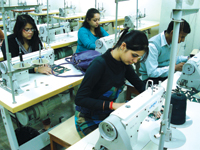
Established in 2007, School of Journalism and New Media Studies (SOJNMS) at IGNOU was set up with the mission of providing quality media education and churning out skilled human resource for the ever expanding media industry. SOJNMS, as it is popularly known as, recruited ten expert faculty from diverse fields of media. It has opted for a judicious blend of on-campus and Open and Distance Learning programmes. This mix enables the School to reach out to all the segments of the society. It also helps to open up a dialogue between the teaching and learner communities, thereby enriching the content of both the modes. Hence, ODL continued along with the Regular Programmes and efforts are on for the launch of Online Programmes.

The School took to on campus teaching in a big way, launching two full time Masters' Degree Programmes.

Collaborative Partners

Deutsche Welle Germany and SOJNMS are in an agreement to host skill development progrmmes in niche areas. The Train the Trainer programme provides trainings on Web 2.0. UNESCO, CEMCA and MAAC are partners ensuring standardised delivery of media education and providing financial aid to marginalised students.

Face to Face Programmes

Two full time Post Graduate Degree Programmes are being run by the School. Imparting practical training to the students chosen through rigorous entrance test and interview is the prime motive. Masters in Journalism (MA JMC) follows the curricula designed by UNESCO adapted to suit the needs and requirements of the Indian media. This degree is certified jointly by UNESCO and IGNOU.

The Masters in Electronic Media Production and Management (MA EMPM) has a syllabus focused on production work. Camera, editing and scripting remain the primary focus areas. Students bring out lab journals, make documentaries and radio programmes. Internships and research dissertations enhance their skills even further.

Open and Distance Learning

All the basic areas of mass communication are dealt with through the well prepared study materials and counselling at the Study Centres.

Post Graduate Diploma in Audio Programme Production (PGDAPP) is offered in both English and Hindi. Prasar Bharti is the collaborative organisation that trains the students during a field

Training Programme included in this Diploma. Productions, writing and editing aspects are covered in the study material painstakingly drafted by the experts and revised from time to time. Assignments and practical training help the students to be prepared for jobs in the field of radio.

 Commonwealth Educational Media Centre for Asia (CEMCA) offers hundred percent scholarships to the students pursuing the Certificate Programme in Community Radio (CCR). Extremely popular among the practitioners of Community Radios and the laymen alike, this Programme has recently been launched in Hindi and will soon be offered in at least four regional languages including Marathi, Kannada, Tamil and Telugu, to reach the pockets of rural India in every direction.

Collaborative Programmes

Certificate in Digital Film Making (CDFM) that can be extended to a Diploma in Computer Generated Imagery (DCGI) and a Degree Programme ie. BA in 3D Animation and Visual Effects as per the needs and demands of the student is being offered through many centers all over India. These programmes are run in association with the Maya Academy of Advanced Cinematics (MAAC). These target the skill enhancement in the demanding arenas of animation and film making.

Post Graduate Diploma in Journalism and Mass Communication (PGJMC) is the most sought after Programme through the ODL mode. Offered though study centers all over India, it gets over a thousand students every year

Programmes under Development

SOJNMS faculty is working towards staring Distance Learning Programmes to capture the expanding industry demands beyond Delhi. All India students from diverse socio economic backgrounds must be trained in varied media areas. Understanding this responsibility the following OLD Programmes are under development:  MA in Journalism on the lines of the UNESCO draft of the syllabus and MA in Broadcast Media to cater to the growing demand of the burgeoning Voice Industry will soon be available to the students. MA in Online Journalism will be first launched on the Web to offer an Internet based study model. 

A Diploma in Television Journalism, PG Diploma in Science Communication, PG Diploma in Advertising, PG Diploma in Community Media are to be soon launched. Need surveys and working out collaborative industry endeavors to give its students the best is what the School is looking at.

It is also being planned and worked out to start on campus Masters in Journalism in all the SAARC countries based upon the UNESCO model curriculum to provide highly standardised skill enhancement to the budding media professionals in these nations. SOJNMS with UNESCO's aid shall be the primary implementing body to ensure smooth running of these Programmes.

Research Activities

SOJNMS has a Doctoral Programme that remains hugely in demand. Only a few are selected from amongst the hundreds of applicants and grilled through a written test and interview. They then go through academic course work before actually launching into the much coveted PhD.

Research and Teaching Assistants (RTAs) have also been chosen to carry on the much demanded research activities in the field.

The School has a Research Officer with rich experience and zeal. Workshops and seminars are regularly organised to offer a common platform to the academic cream from the discipline.  Proposals to start a Research Journal to publish good work being done in the subject will soon be materialised.

Media Mapping

The mission of establishing a well standardised media education scenario in India and abroad is being further taken forward through the Media Mapping Project that is under progress in collaboration with UNESCO.

Based upon well researched and prudently thought over criterion of media education, SOJNMS IGNOU and UNESCO are in the process of monitoring and grading the media study departments of India and the SAARC nations. Surveys, inspections and interviews will lead to a three tier grading of the institutes. Centres of Excellence, Potential Centers of Excellence and Centres of Reference, will be decided based upon the mapping. A lot of media training departments have welcomed this endeavor and are collaborating to give media education the much needed and lacked criterion of standardisation. SOJNMS being the convener of this mapping exercise is presently engaged in setting up the parameters for evaluation.

True to its mission of raising

the standard of media education and providing resources to meet that enhanced standard, the School draws upon an eminent panel of media professionals to expose the learners to the realities of the media world, after a thorough theoretical grounding provided by the faculty members. Working in tandem, the team of in-house faculty, experts and guest faculty provide the learners a rich and hands-on learning experience.

To meet the demands of the industry, SOJNMS networks with market leaders in the industry and offers cutting-edge technology programmes to equip the learners to compete successfully in the profession.

School of Journalism and New Media Studies at Indira Gandhi National Open University May be a new establishment, but with the pace that it is treading forward, it will soon be the name to reckon with in Media Education.

Countering Skills Deficit in Apparel Industry

Less than 3 percent of the 12.8 million population joining the workforce every year have the opportunity for any kind of vocational or skill training. In this context, the “National Skill Deficit” is a reality and the Apparel Sector is one of the worst hit with acute skill shortage affecting the export units eroding fast India's competitiveness in the global apparel geography

The Indian Textile & Clothing (T&C) industry is one of the largest and critical industries in the Indian economy in terms of foreign exchange earnings and employment generation. The industry contributes 4% to the country's GDP and 14% of the country's industrial production. The apparel exports contributed around US$ 11 billion to India's foreign exchange earnings in 2009-10. The Indian T&C industry is also the largest employment generating industry in the manufacturing sector with direct employment of over 35 million people.  It is also estimated that about 45 million are indirectly employed in the entire textile value chain. Apparel being at the end of value chain before the consumer, the value edition is the highest with US dollar 2 of 1 kg cotton becoming 20 dollar US when converted as garments.  Thus, the need of the hour is to integrate the Textile & Apparel sector i.e. the fibre to fashion value chain in a garment-led growth strategy and the skill transferability needs to put in place through the value chain. This requires a comprehensive and pragmatic vocational and skill training strategy in different textile-apparel clusters to fill the knowledge & training gaps so that the industry can move up the value chain with the help of skilled workforce. Elucidating the case of textiles and apparel sector, it can be seen that for the upstream activities of spinning, weaving, knitting and processing, the projected employment requirements are 5.5 lakhs, 1.57 lakhs, 0.92 lakhs and 1.76 lakhs respectively for the period co-terminus with the 11th Five Year Plan. The downstream requirement for apparel sector is estimated to be in the range of 4 million to 7 million in the next 3 years or so. A CITI report has estimated the current work force in the textile and apparel industry to be around 35 million and has reckoned the same to move up to 47 million by 2015 including 5 million skilled workers and 2 million technical and other personnel. A CRISIL study indicates a requirement of 12 million work force by 2010 with 5 million in the core technology production activities and the remaining 7 million in support and auxiliary services. With such opportunities projected for the textiles & apparel sector, how do we train the displaced agricultural labourers, the youth and women to seek gainful employment in the textile-apparel sector which is the largest employment generator after agriculture?  It would seem that the apparel sector has not been factored in sufficiently by the policy makers or HRD ministry in various schemes for education, training and linked employment generation. Ideally, textile and apparel sector in a country like India should have got a prominent place as it has the capacity to generate massive employment, both in urban and rural centres and to offer employment locally, which will reduce the migration to metros.  Nearly 20 years ago in Sri Lanka, the then Government provided attractive incentives of tax holiday for the unit as well as the mother company for setting up units in rural areas which have helped in shaping apparel-led rural economies.  Both the export and the domestic retail industries for fashion and apparel could have and certainly will, benefit from a clearer focus of skill development activities. 

ATDC through the tie-up with IGNOU has set-up 25 Community Colleges and the courses in the Community Colleges will help the students to be able to bridge the employability criteria gap and already there are nearly 2000 students pursuing their studies under the system

The human resources especially skill training and development in this sector has been by and large given a go by until recently. With the advent of fashion education in the late 80s, there has been considerable improvement in the situation though not sufficient. The vocational and skill training education infrastructure have fallen behind the requirements and the industrial engineering / modern technology management, which are of paramount importance to apparel sector are found missing. An industry leader in garment export industry in Bangalore had to train in a span of 11 months 47,000 people to retain 6,000 people in their factories! With increasing competitive pressures on both time and costs, the skill deficit has only further added to the woes affecting the industry.  Studies have clearly indicated the need for 5-7 million additional people have to be identified and trained if the industry has to make rapid progress in the years ahead. The competition from China, Bangladesh, Vietnam, Cambodia and smaller countries like Sri Lanka are sniping away at India's market share.  As Mr. Ashroff Omar, Chairman of Brandix a leading Apparel Export House based in Sri Lanka with over 400 million US$ exports and also having set up a 1000 acre “Apparel City” in Vizag, AP, says “India is  allowing other people to eat their lunch.”  

Collaboration with IGNOU

Given this scenario, it is important to contextualise the tie-up of Apparel Training and Design Centre (ATDC) & Institute of Apparel Management (IAM), the training & education arms of Apparel Export Promotion Council (AEPC) with IGNOU for mainstreaming apparel manufacturing and management related education.  On the one hand, IGNOU's timely initiative of Community Colleges have provided an avenue for advancement of rural youth through vocational education at their door step especially through employment linked courses certified by IGNOU. 

There is an array of 6 months certificate, 1 year diploma and 2 years Associate degree programmes under the system to shape a cadre of junior and middle level workforce to the Apparel Industry. ATDC through the tie-up with IGNOU has set-up 25 Community Colleges and the courses in the Community Colleges will help the students to be able to bridge the employability criteria gap and already there are nearly 2000 students pursuing their studies under the system. The IAM as an education Institute has a significant tie-up with IGNOU for collaborating and certifying the courses both at UG and at PG levels.  IAM operates as a face-to-face College under the IGNOU system. The ATDC students after completing their “Associate Degree” May have opportunities to pursue higher education through lateral entry in the IAM system.  IAM focuses on key areas of export marketing, brand building and retail management.  The export management revolves around courses in design, merchandising and technical subjects like CAD/CAM studio management etc.  The supervisory, junior and middle management positions which are critical to the apparel industry's success have found the IAM students appropriate for the job profiles.  The apparel industry has welcomed the tie-up with the IGNOU and in fact the Ministry of Textiles have sited this as a “significant step” of far reaching importance.  The industry looks at the students certified by IGNOU through both ATDC & IAM as noteworthy human resource development efforts.  The next stage of evolution of Community College certainly involves around more open and distributed learning systems which incorporate other inputs critical to success in the market place as well.  In the case of IAM, there are possibilities of research agenda being taken up to develop the IAM-IGNOU collaboration further.  It is necessary to find new ways of Continuing Education and Special Certificate Programmes in various aspects of the business which will help the existing professional workforce in the small and medium enterprises to upgrade their skills, competencies and technical knowledge.  The apparel industry needs to focus on Human Resource Development now more than never before as competition becomes intense and creativity and innovation assume paramount importance and hence it is clear that the IGNOU-ATDC/IAM tie-up is certainly a trail blazer for the talent & skill deficit affected apparel industry.

Fashion Design Courses at IGNOU

Fashion industry is currently employing around 35 million people and has become a potential employment generating sector in India. In the coming future, Indian fashion industry is heading towards competing globally to be a fashion leader.
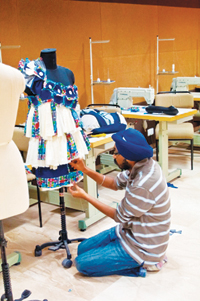
Today Indian designers are using wide range of clothing, fabrics, embroidery, textiles and looking forward to fuse the Indo-western gap in dressing sense. The variety available in costumes and garments had made India fashionable. Depending on the climate and availability of natural fibers, people are slowly giving more priority to their fashion needs and widening their thinking and their imagination towards fine tuning fashion in India. Today fashion is continuously evolving and we need new designers and manpower to redefine fashion in every step of life. No doubt, we are heading towards making International mark in the fashion sector and to create global market for our Indian fashion industry.

This industry is expanding hugely and is expected to occupy a significant position in the Indian as well as global retail market. The designing styles and costumes of different people have changed fashion over the ages. India’s pride lies in the fact that this evolving fashion is also balancing and preserving our self esteemed culture. It is quite unbelievable that our traditional heritage has been greatly deposited through the elegant fashionable mode.

It has been realised that the various areas of design, operations, merchandising, and marketing and retail need immense qualified manpower. The fashion industry has the ability to generate career opportunities for professionals to work with design houses, manufacturing companies, export houses, textile groups, fashion brands, retail chains, costume designers and to networking with entertainment as well as media industry.

The understanding of elements, principals and concepts of fashion and textile design, along with appropriate skills both technical and managerial is important for all the aspiring professionals to train fashion industry professionals and students well for the growth and development of industry. The real challenge before us is to merge right and relevant skills and to create well qualified graduates for the fashion sector in the coming times. With this vision, IGNOU taken steps forward for developing much needed academic programmes with the view to provide proper training with fashion industry through internships and active interactions along with a world class infrastructure experience, time tested leadership and dedicated faculty for the overall development of students and potential professionals.
IGNOU has been making an attempt to disseminate quality education in fashion and design to a larger section of the population. The gradual change from the conventional learning system to the face-to-face classroom teaching with the help of appropriate technological resources has given learner friendly and flexible approach to these programmes.

For the first time in the year 2008, IGNOU has entered into the field of fashion education by starting diversified programmes i.e. B.A in Fashion Design, B.A in Fashion Merchandising and Production and B.A in Textile Design with specialisation in woven and knitwear stream. These are 3 years regular full time programmes offered in collaboration with Pearl Academy of Fashion in Delhi.

IGNOU has taken one step forward for developing much needed academic programmes with the view to provide proper training with fashion industry through internships and active interactions

IGNOU jointly with Pearl Academy of Fashion offers these programmes as 3 years regular full time programmes with an exit option: (a) after successful completion of first year courses of the programme a candidate shall be awarded certificate. (b) after successful completion of 1st and 2nd year courses of the programme a candidate shall be awarded diploma and (c) after successful completion of all the three years courses of the programme a candidate shall be awarded a three-year B.A degree.

Also from July 2010, IGNOU has launched four other graduate and post graduate programmes in Apparel Design and Merchandising; Fashion Communication; Fashion Retail Management and Apparel Production Management, in collaboration with Institute of Apparel Management (IAM) in Gurgaon. These programmes are future-proof and industry relevant with high level of balance between skills and knowledge to create a ‘New Generation’ of fashion professionals especially trained on state-of-art technologies including the “Fashion Innovation Lab” etc. The key objective of IGNOU-IAM Fashion & Design Management Centre is to create ‘industry-ready managerial cadre’ for the very challenging and demanding export and domestic industry as well as for creating new avenues for design and merchandising professionals for the retail industry.

In order to deliver contemporary and industry-oriented education and to adopt innovative, real life experiences and knowledge sharing approach, IGNOU has been supported by India’s most prestigious institutions of higher learning in fashion, design and retail (Pearl Academy of Fashion and Institute of Apparel Management) to help students acquire highly valued skills and competencies. Pearl Academy of Fashion was established in 1993 is an institution of high status and has been providing education and training for the fashion and related sectors. Institute of Apparel Management is India’s first Apparel Multi-varsity (multi-university under one roof), offering Indian and International pathways to students and is promoted by Apparel Export Promotion Council sponsored by Ministry of Textiles, Government of India. IAM was established in 2007 with an intention to create professionals for ‘Business of Fashion’ for Fashion, Textiles and Lifestyle Industry. IAM is instrumental in training designers, design professionals, design managers, designer merchandisers, quality professionals, etc. with a broad base knowledge of applied management skills, competencies and understanding the dynamics of fashion and apparel business in global context. These institutes have a large pool of well qualified faculty members backed by a world-class infrastructure, comprising state-of-the-art machinery, equipment and resource centres to help students acquire highly valued skills and competencies.

The students of IGNOU-IAM programmes have shown remarkable achievement and earn laurels to the university. Recently a team of students from Institute of Apparel Management, Gurgaon, led by Nandita Puri, a second semester student of IGNOU-IAM Programme-B.A. in Apparel Design and Merchandising (BAADM) programme participated in ‘Stylize’ competition (The Fashion Show) at ‘Indiafest’ in Goa on 4th and 5th February 2011 which was an initiative by Channel [V]. Our team held first position in the ‘Stylize’ competition and received a cash prize of Rs. 28,000 and other merchandise.

They were shortlisted for the event based on their initial submissions and were invited to participate in the event being held at Goa and showcase their collection on the ramp on 4th Feb. 2011. It was a team of 10 students which included designers, models, backstage help and choreographer.

When fashion has become an integral part of Indian social and business class, IGNOU has pledged to well train fashion merchandise, marketing executives, textile designer, costume designer, stylist and other apparel design positions.

By:-  Urshla Kant

IndiaSkills Venturing into Vocational Training : Harish Menon, IndiaSkills

IndiaSkills, a joint venture in vocational training formed between a leading training and education service provider in India (Manipal Education) and one of the world’s largest provider of work-related qualifications, assessment and certification. City and Guilds has been specifically created to make an impact on India’s vocational training sector. Sheena Joseph, in conversation with Harish Menon, CEO of IndiaSkills, finds out more about the venture
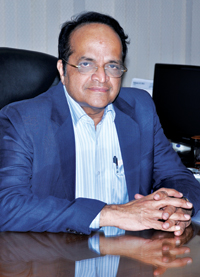
Could you provide us with a background of why the venture was conceptualised?

IndiaSkills is a joint venture in vocational training formed between City and Guilds. It has been specifically created to make an impact on India’s vocational training scenario by upgrading the quality of vocational skills training and benefitting the future of both the individual and the industry. It seeks to bridge the employbality gap across various sectors.

How have the training centres been distributed in India? Can the students avail distance learning facilities as well?

We have 50 vocational training centres in all four regions (North, South, East and West) providing skills training and are expanding our network to 500 centres over the next five years. On-hands traning is a key part in any high quality skilling course and we place a strong emphasis on our practical training sessions. We have also worked with our distance education partners SMU DE to launch a Pro-Degree programme in distance mode which gives job ready graduation in terms of B Com degrees with skills courses built into the same in each semester. This is available in Financial Planning and Supply Chain streams. Students taking our vocational courses at our centers are always better positioned to further their learning through signing up for distance learning programs once they start earning and working.

How is the content for the curriculum developed? Are the certifications recognised by any professional body?

Developed with industry inputs, our courses are innovatively designed to suit the specific job requirements of the industry and our curriculum reflects the requirement of all connected stakeholders – industry, learners and government. All learner support material is developed by IndiaSkills’ Subject Matter Experts (SME’s) who have a high degree of industry exposure either in terms of training, consulting or actual employment. All stages of qualification and learning content development are monitored and approved using the principles and processes of City and Guilds and Manipal Education. This is supported by a robust quality system that ensures vocational training centres have the required infrastructure as well as certified trainers and robust processes resulting in high quality delivery of the qualifications. The best-in-class assessment methodology, perfected over 130 years by City and Guilds to achieve a comprehensive competency based system, certifies that the learner is job ready and productive.

How has IndiaSkills contributed towards skilling the Indian youth in Banking, Financial Services, Insurance (BFSI) sector?

We have developed a specific course for students and BFSI industry employees to enhance their skills and better their career options. It covers essential subjects like Financial Planning, Financial Market, and Depositories and Key Depository Services, Banking and Banking Products, Insurance and Insurance Products, Mutual Funds and Relationship Management. The unit on insurance gives the student in-depth knowledge on the insurance industry and products while the relationship management unit imparts key grooming, selling and customer service skills. The course module is delivered by experienced trainers through a combination of classroom lectures and practical training sessions that ensures the candidate is “ready-to-work” right on successful completion.

The student who successfully completes the course will have a sound knowledge of the financial system, products and services available in banking and insurance principles. The industry experienced trainers also gives practical training for students in relationship and marketing skills

Telecentre Initiative of IGNOU Empowering Regional Youth through ICT : Prof V N Rajasekharan Pillai, Vice Chancellor,Indira Gandhi National Open University, India

Prof V N Rajasekharan Pillai, Vice Chancellor, Indira Gandhi National Open University (IGNOU), in conversation with Dr Rajeshree Dutta Kumar and Ankita Verma, speaks about the Telecentre initiative at IGNOU and its potential impact.

What was the idea behind the decision of bringing in the entire telecentre initiative to IGNOU?

For the grassroot development, Information Communication Technology is going to make a great impact. The National e-Governance Plan is strengthening the grassroot level organisations and technology is the major thrust for it. Department of IT (GoI) is also planning IT Literacy Mission. A committee has been constituted to define what IT literacy is and how ordinary people can become IT literate so that they can avail primarily government to citizen services, and also, how these rural centres can be equipped with broadband connectivity and radio services in the future. Government to citizen services is happening to some extent in a fractured way. Once IT kiosk centres come into place in each and every village of the country, there can also be units for promoting education, knowledge and skills. That led us to the collaboration with the International Telecentre Academy and develop programme for Telecentre Management. For this we had meetings with various telecentre movements which were supported by IDRC.

So with the help of international expert committee we have developed a curriculum for training the telecentre managers who are grassroot level workers and who may not have formal qualification. They may be school dropouts, social activists, representatives of certain civil society organizations or NGOs. Looking at the diversity of such people who could be the potential managers of these telecentres, they would work with the agricultural workers, local traders, and different grassroot level professions in the villages.

We have developed content based on 4 modules with the help of expert committee. We have developed this into our curriculum. These 4 modules look at various issues related to education, healthcare, traditional knowledge system and awareness about the use of technology. Anybody can avail it. For those who do not have formal education of 10th or 12th level we are also providing a bridge course for them.

How do you ensure a concrete shift from informal to formal education through this initiatives?

After receiving a certificate one can get a diploma and then university degree depending upon their capability/worth. This also depends on the mandate of university as we are providing opportunities for large number of school dropouts, college dropouts and people without a formal qualification. Then may be 10% of them can obtain higher qualifications. Thus, we will give opportunities to the people at the base of the pyramid to come up to the top.

What is your opinion about telecentres and how do you see India’s position in the entire telecentre movement in South Asia?

In the name of telecentre movement, there are several organisations like Village Knowledge Centres supported by ISRO, Gyan Abhiyan of M.S. Swaminathan Research Foundation (MSSRF). The purpose is of every movement is the same. There are few organisations providing such capabilities in the different regions. But IGNOU’s telecentres initiative is first of its kind in the country. Under our telecentre management, Common Service Centres and Village Knowledge Centres are there.  Community colleges also provide these telecentre management courses. We are expecting that in all 230,000 blocks in the country at least one telecentre manager can be formally hired. These are all village level knowledge workers.

Prof M S Swaminathan’s Rural Virtual Academy is also trying to identify rural academy students. They are making the knowledge workers and ultimately they can also get formal qualifications through this route.

Can you elaborate little more on the global focus of this initiatives?

This is for providing coordination for all activities. This telecentre programme that we are offering is not only invented for our country but it is meant

for other countries as well. We have signed MoUs with several universities and telecentre academies. Therefore, the content which we have developed is generic in nature. It is 80% common for all developing countries and rest 20% other countries can contextualize and develop according to their requirements.

Will you use the same model as you have for community colleges?

We will not use the same model. Telecentre management is more focused. We can take the example of broadband connectivity and IT kiosks. The government to citizen services is already there like Panchayati Raj functionary’s capacity building, information about Right to Education Act, National Skills Mission. Another area which we have focused on under telecentre management is how this particular activity of capacity building at block/grassroot level can contribute to the skill development. So the types of skill that is required for the youth in the next 10 years and how these skills are to be transferred, needs to be globally competent and acceptable. National Skills Mission objectives are also being propagated through these tele-knowledge centres. According to National Skills Mission initiative, around 500 million youths are to be provided with the necessary skills by 2022.

We are expecting that in all 230,000 blocks in the country, at least one telecentre manager can be formally hired

What is the role that telecentre.org is playing here?

Telecentre have given some logistic support for preparing the contents. So the content development as well as the preparation of modules has been supported by IDRC. Rest of the activities of IGNOU is just like any other grassroot level programme.

11th FYP is coming to an end and 12th plan is getting rolled out. So what are the plans as far as telecentres are concerned and have you set any goals/targets for next few years?

Telecentres are definitely complementary or augmenting to the 12th plan objectives. The major objective of 12th plan will be to connect education with employable skills. Through telecentres we will be providing modular skills to the people. We are also trying to provide, even those who are in the conventional system of education, some sort of specific skill into them. So there will be some sort of merger of fundamental knowledge and the ability to enhance the skills. Then there will be technology integration into all these activities. We are expecting to train around 5000 people as telecentre managers this year.

Bombay HC seeks reply on VC appointments

The Bombay high court has asked the chancellor of universities of Maharashtra (Governor), the state government and the University Grants Commission (UGC) to file their reply to a public interest litigation (PIL) challenging the recent appointments of all vice-chancellors in the state. The division bench of justice DD Sinha and justice AP Bhangale of the Nagpur bench has also directed the 11 universities in the state, including Mumbai, Nagpur, Pune, Nashik, and Aurangabad, to file their replies within four weeks. Earlier, Sunil Mishra, faculty, Central India Institute of Mass Communication, Nagpur, has filed a PIL seeking scrutiny of the appointments of vice-chancellors in various state universities. Mishra argued that the state government has not followed the UGC guidelines in the selecting the vice chancellors. He has pointed out that as oppose to the University Grants Commission Act, 1956 guidelines the state government amended the VC selection criteria in 2009. The concept of keeping a central body on the selection panel is completely removed.

LATEST NEWS