Home Blog Page 15

Redefining Design Thinking: How AI Is Transforming Architectural Education at VESCOA

Anand Achari

In an era where technology evolves faster than the curriculum, architectural education is increasingly influenced by emerging tools and intelligent systems. Among these, AI has emerged as the newest driver shaping this evolution. At VES College of Architecture (VESCOA), Mumbai, this transformation is being embraced to explore how AI can meaningfully enhance the ways future architects conceive, design, and build responsive, sustainable, and socially conscious environments.

For generations, architecture students relied on pen, paper, and physical models to express their ideas. This approach slowly evolved to include digital tools and immersive platforms that expanded design possibilities. VESCOA has always embraced technological advancements, gradually incorporating tools such as 3D modelling, Building Information Modelling (BIM), and immersive visual technologies like virtual and augmented reality into its pedagogy.

AI represents the next frontier of that evolution, one that VESCOA is actively integrating into its studios and curriculum. AI – assisted tools can allow students to generate conceptual layouts, optimize spatial designs, and explore multiple design alternatives with a speed and precision far beyond manual sketching or conventional CAD. By automating repetitive and labor – intensive tasks such as early layout drafting, spatial programming, and schematic massing, AI frees up mental bandwidth for higher – order thinking, enabling students to focus on researching context, exploring sustainability and refining user experience. 

Generative AI has also become an intelligent collaborator within VESCOA’s academic framework. It offers students multiple design options, suggests alternative layouts, and simulates performance metrics such as daylight penetration, ventilation, and energy efficiency. This approach fosters experimentation and iterative refinement, mirroring the dynamics of a team-based studio with AI acting as an intelligent design partner.

When combined with hands-on projects, live industry collaborations, and interdisciplinary labs, AI-enhanced workflows strengthen students’ foundational skills while equipping them with advanced tools to apply design principles more effectively. Academic research supports this: an AI-embedded architectural programming and design course spanning nine weeks and involving students worldwide reported significant improvements in “innovative capability” and “work efficiency.”

AI further supports informed design through data analysis. It can evaluate environmental impact, examine material lifecycles, model energy usage, and assess site constraints in ways previously not possible. With these insights, students develop ecological sensitivity, anticipate real-world limitations, and propose solutions aligned with sustainable, humane habitats.

Also Read: Balancing AI Innovation with Academic Rigor in Global Student Research

All these changes prepare architecture students to excel in a modern professional context that demands far more than traditional drafting or representational skills. Today’s architects must navigate climate change, sustainability imperatives, and other design challenges that require systemic thinking and responsible decision-making. At VESCOA, students are encouraged to embrace these changes by understanding design as a discipline that extends beyond aesthetic composition or structural logic, viewing it instead as a holistic process shaped by technological insight.

While AI offers significant benefits, its integration is not without challenges. Outputs from AI tools can sometimes be unpredictable, requiring careful curation and critical oversight. Over-reliance on AI also risks diminishing a student’s innate creative exploration and understanding of fundamental principles such as form, proportion, and human-centric design.

At VESCOA, this is addressed by harmonizing AI tools with ethical, sustainable, and contextual design values. This includes training faculty, updating curricula, and fostering a culture where AI is always viewed not as a replacement, but as a catalyst that enhances critical thinking and creative rigor. Ultimately, the goal is to prepare students to emerge as architects of the future—equipped to shape built environments that are contextually intelligent, environmentally responsive, and deeply attuned to the human experience.

Views expressed by Dr. Prof. Anand Achari, Principal, VES College of Architecture 

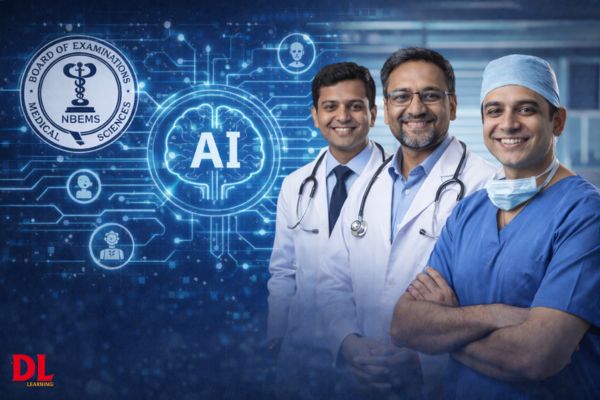
NBEMS Launches Free AI Course for Medical Professionals Nationwide

National Board of Examinations in Medical Sciences

The National Board of Examinations in Medical Sciences has introduced a free six-month online course on Artificial Intelligence in Medical Education, aimed at enhancing digital and AI literacy among medical professionals across India.

Applications are now open through the official website at natboard.edu.in, with the programme set to commence in January 2026. The initiative requires no technical or programming background, and NBEMS will not charge any fee for participation.

The comprehensive programme comprises 20 interactive modules delivered through live online sessions spanning six months. The curriculum addresses AI applications relevant to healthcare and medical education, with emphasis on clinical applicability, ethics, patient safety, and professional accountability.

The course aims to equip medical professionals with critical evaluation skills and knowledge necessary to responsibly integrate AI tools in clinical practice, education, and health systems within the Indian context. Distinguished faculty from prestigious national and international institutions, including Mayo Clinic, Harvard University, University of Oxford, IISc Bengaluru, and IIM Lucknow, will conduct the sessions.

Also Read: Chhattisgarh leads the nation in parental engagement for Pariksha Pe Charcha

Participants who attend at least 75 percent of live classes with attendance marked at both the beginning and conclusion of sessions, and successfully pass the online assessment, will receive a digital course completion certificate.

In an ambitious move, NBEMS plans to apply for a Guinness World Record for providing online AI education to the largest number of doctors in a single session, highlighting the scale and significance of this educational initiative in advancing medical technology adoption across India.

Chhattisgarh leads the nation in parental engagement for Pariksha Pe Charcha

Pariksha Pe Charcha

Chhattisgarh has emerged as a national frontrunner in enhancing parental involvement in education, particularly in reshaping perceptions around examination stress. Parents across the state have shown a keen interest in gaining practical insights and adopting a healthier outlook toward examinations, focusing on ways to support children rather than burden them with pressure.

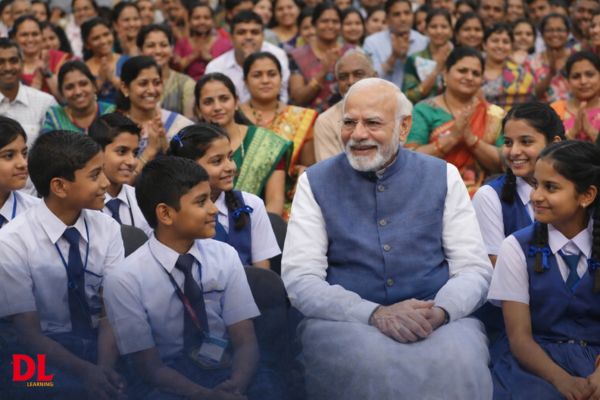
The state has secured the top position in the country for parental participation in Pariksha Pe Charcha, the flagship initiative of Prime Minister Narendra Modi aimed at transforming examinations into a positive, stress-free learning experience. This year alone, 81,533 parents from Chhattisgarh have registered for the programme through the MyGov portal.

Organised annually by the Department of School Education and Literacy under the Ministry of Education, Pariksha Pe Charcha has grown into a much-anticipated national platform that encourages open dialogue among students, teachers, and parents.

According to official figures, a total of 25.16 lakh participants from Chhattisgarh have registered so far, including 22.75 lakh students, 1.55 lakh teachers, and over 81,000 parents. This strong participation reflects the state’s sustained efforts to promote effective exam preparation, better time management, and emotional well-being, while discouraging undue academic pressure on students.

Chief Minister Vishnu Deo Sai attributed this achievement to the collective commitment of students, educators, and parents. He stated that the message shared by Prime Minister Narendra Modi, that examinations should be celebrated like a festival rather than feared has deeply resonated with the people of Chhattisgarh.

“Parents are now more aware and supportive. Instead of pushing children towards unrealistic expectations, they are actively contributing to building their confidence and resilience,” the Chief Minister said, adding that the state will continue to promote this movement with the same enthusiasm.

An official spokesperson highlighted that while Chhattisgarh ranks first nationally in parental registrations for Pariksha Pe Charcha, it stands fourth overall in total participation across all categories.

Also Read: President Droupadi Murmu calls AI a key pillar of India’s future growth and employment

Beyond the impressive numbers, the milestone signals a meaningful shift in societal attitudes toward examinations. The success has been driven by innovative outreach strategies, including district-level review meetings, on-the-spot registration facilities at teacher training centres, and extensive community engagement through youth clubs and the Angna Ma Shiksha initiative.

With registrations open until January 11, 2026, state officials remain optimistic that Chhattisgarh could cross the three-million mark in total registrations, further strengthening its position as a leader in promoting stress-free and inclusive education.

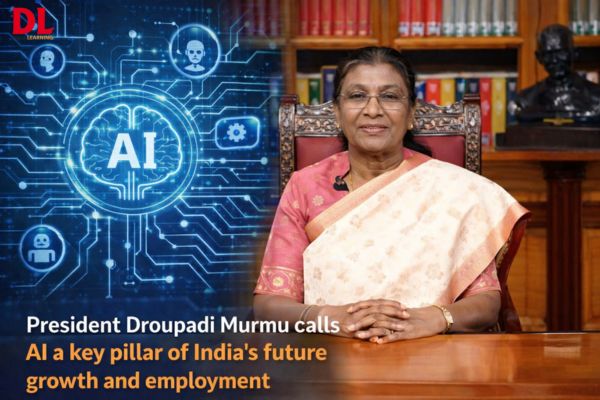
President Droupadi Murmu calls AI a key pillar of India’s future growth and employment

President Droupadi Murmu

President Droupadi Murmu on Thursday highlighted Artificial Intelligence (AI) as a powerful catalyst for India’s economic transformation, stating that the technology is expected to make a substantial contribution to the country’s GDP, job creation, and productivity in the years ahead.

Addressing the audience at the launch of the #SkillTheNation challenge at the Rashtrapati Bhavan Cultural Centre, the President emphasised the growing importance of skills such as data science, AI engineering, and data analytics in building a strong and future-ready talent ecosystem. She noted that the government is actively working with educational institutions, industry stakeholders, and academia to ensure that India does not merely adopt emerging technologies, but also plays a leading role in shaping their responsible and ethical use.

The President urged collective action and dedication to realise the vision of a developed India. She stressed that every citizen has a role to play in transforming the country into a global knowledge hub, in alignment with the National Education Policy, while fostering a technology-driven, inclusive, and prosperous society.

Speaking on the broader impact of AI, President Murmu said the technology is rapidly transforming economies and societies across the world by redefining learning, work, access to services, and solutions to global challenges. For a young and aspirational country like India, she said, AI represents not just a technological advancement but a significant opportunity to drive positive and inclusive change.

She reiterated India’s long-standing philosophy that technology must serve people by promoting inclusion and expanding opportunities. The deployment of AI, she said, should focus on reducing social, economic, and digital divides, ensuring that its benefits reach citizens across all age groups and communities, particularly those from marginalised sections.

Also Read: IIT Delhi Partners with CyberPeace to Host National Cybersecurity Hackathon

Expressing her satisfaction at seeing students preparing for an opportunity-rich future, the President encouraged them to use their technological knowledge and skills for the greater good by solving real-world problems and empowering society at large.

She also commended Members of Parliament who have completed AI learning modules, noting that their efforts demonstrate leadership through continuous learning. The event, organised by the Ministry of Skill Development and Entrepreneurship, reflects the government’s ongoing commitment to equipping India’s workforce for an AI-led future.

IIT Delhi Partners with CyberPeace to Host National Cybersecurity Hackathon

IIT Delhi

The Indian Institute of Technology Delhi’s Entrepreneurship Development Cell has joined forces with cybersecurity think tank CyberPeace to organize E-Raksha Hackathon 2026, a national-level competition focused on cybersecurity, defence AI, and digital safety solutions.

The 36-hour hackathon is scheduled to take place from January 16 to 18 at IIT Delhi campus, forming part of BECon’26, the institute’s annual entrepreneurship conclave, and serving as a pre-summit event to the India AI Impact Summit 2026.

The competition will bring together student innovators from across India to develop deployable solutions addressing emerging digital threats. Participants will tackle challenges across multiple domains including AI and machine learning, threat detection, blockchain technology, and secure software development. Problem statements will focus on critical areas such as agentic AI for securing home IoT devices and detecting deepfakes.

Also Read: IIT Kanpur’s class of 2000 pledges ₹100 crore to launch Millennium School of Technology & Society

Professor Lakshmi Narayan Ramasubramanian, In-charge of the Entrepreneurship Development Cell at IIT Delhi, emphasized that the hackathon aims to develop practical, scalable solutions addressing defence-related challenges and enhancing national security. Major Vineet Kumar, founder of CyberPeace, noted that the event would promote responsible AI, digital trust, and cybersecurity through comprehensive stakeholder engagement.

Winning solutions will be showcased at the India AI Impact Summit 2026 on February 10 at Bharat Mandapam, New Delhi. The competition offers cash prizes worth ₹3 lakh and provides participants with national visibility and opportunities to engage with senior leaders from industry, government, and policymaking circles.

Balancing AI Innovation with Academic Rigor in Global Student Research

Matthew Jaskol

Pioneer Academics stands out as one of the few institutions to establish a comprehensive AI policy framework as early as 2023, addressing the technological shifts reshaping education. This policy empowers professors with structured options: they can prohibit AI entirely, permit it with mandatory student disclosure, or adopt a hybrid model that maintains academic rigor while leveraging AI support. In an exclusive interaction with Kaanchi Chawla of Elets News Network (ENN), Matthew Jaskol, Co-founder of Pioneer Academics, shares his insights on the transformative developments of 2025, the evolving role of artificial intelligence in secondary education, and the institution’s strategic vision for 2026. He discusses the crucial balance between innovation and integrity, the expansion of the Global Problem-Solving Institute (GPSI), and how authentic research remains a vital metric for top-tier college admissions in a rapidly changing landscape. Edited excerpts: 

Looking back at 2025, what do you consider the most transformative developments in global secondary education especially in research-based learning that Pioneer Academics champions?

This past year has shaken education in unexpected ways. Artificial intelligence has moved from the margins to the center of the secondary education conversation. Schools and teachers have been figuring out whether AI is a partner, a challenge or both. They are also working through the practical question of how to integrate it in a way that deepens learning rather than turning into an invisible shortcut.

At Pioneer, we have seen the impact firsthand. Since AI tools have become widely used by teenagers, the number of plagiarism cases identified by the Pioneer Research Institute increased more than threefold. What our investigations show is that many students use AI without realizing that it counts as plagiarism at all. At the same time, many of our professor mentors report real value when students are taught to use AI as an assistant while practicing skills like verification, comparison and critique. When done well, this strengthens critical thinking instead of weakening it.

In the research-based learning space, the picture is split. The positive development is the surge in demand among ambitious high school students who see research as a natural next step in their academic growth and a strong signal to colleges. This interest reflects a wider understanding that research is one of the effective ways to develop logic, inquiry and original thinking.

The challenge comes from the fact that the space is still more or less unregulated. A growing number of commercially driven companies now offer loosely structured research experiences mainly for resume building. But real research has a clear process with standards at every stage, which is why meaningful discoveries happen in labs and universities that follow strict oversight. When high school students are paired with graduate students in settings that lack structure, the quality of the experience can vary widely. Since a student’s first encounter with research often shapes how they understand scholarship, this inconsistency can create long-term misconceptions.

This is why Pioneer continues to put so much emphasis on market education. We work to clarify what authentic research requires and what students should expect from a serious academic experience. Our accredited Pioneer Research Program and Global Problem Solving Program follow state and federal guidelines that ensure a truly high-level academic environment. Our Co-curricular Summit gives students and families a chance to learn from experts and from the strongest research-based learning programs in the field. In a year defined by rapid technological change, this focus on clarity and integrity became more important than ever.

What are the top priorities or innovations Pioneer Academics aims to introduce in 2026 to deepen global student engagement and research authenticity?

In 2026, our top priority is expanding the Global Problem-Solving Institute (GPSI), Pioneer’s newest transformational learning experience. GPSI equips today’s scholars and tomorrow’s leaders with innovative tools to tackle the world’s toughest problems.

GPSI is a virtual innovation lab where outstanding high school students collaborate across borders to address complex global challenges. Each team works with peers from similar regional backgrounds, then connects with parallel teams tackling the same issue in different parts of the world. This structure helps students see how a shared global problem behaves across diverse cultures and contexts and deepens their global engagement.

Students receive a unique blend of systems thinking, multi-disciplinary analysis and design thinking, guided by faculty from multiple universities. They also build both independent and team-based solutions, all while experiencing Pioneer’s signature academic rigor.

In 2026, we plan to expand GPSI beyond the current four problem areas so students can explore a wider range of global challenges. Participants will continue to receive objective evaluations that can be shared with colleges, priority consideration for the Pioneer Research Program and, for those who pass, two college credits from the University of North Carolina at Chapel Hill.

Pioneer has long stood for rigorous academic standards in an age of rapid digitization. How is the institution balancing human mentorship with AI-enabled tools for evaluation, research support, and student experience?

Pioneer has always built its programs around strong academic oversight, and that commitment guides how we integrate AI today. Our priority is to protect research authenticity while recognizing that AI has become part of how students learn. As AI makes plagiarism easier to attempt, we are strengthening our detection technologies and continuing to rely on close audits by professors and teaching assistants who review student work for any irregularities.

We place the learning process ahead of the final product. Both students and faculty receive clear expectations on academic ethics, which helps create a shared standard for integrity in a changing landscape.

Pioneer is also one of the few institutions that developed a full AI policy framework as early as 2023. The policy gives professors structured options. They can prohibit AI entirely, allow AI with required disclosure from students or follow a hybrid model that maintains rigor while permitting certain types of AI support. This flexibility respects each professor’s pedagogical approach while keeping Pioneer’s academic standards intact.

Also Read: Bridging the Research Divide: Building India’s Living AI–Blockchain Collaboration Grid

How do you imagine the role of international research programs evolving as universities rethink admissions criteria and look for deeper evidence of student originality and inquiry?

We need to take a quick look at what top college and university admissions have valued by nature. Admissions criteria may evolve as the environment changes, but their core priorities remain the same: academically capable students who are genuinely driven by their interests and who will perform well once they arrive on campus. 

This is where international research programs should keep their focus. Today’s rapid growth of research opportunities has created a loosely regulated landscape, where students are enticed to buy recommendation letters or publications and there is no oversight.

Pioneer Academics was founded with clear policies and principles that protect our educational focus, which is why we’ve become a trusted name over the past 14 years since 2012. With fast developments in technologies and shifts in the global environment, we foresee even more changes in top college admissions in the year ahead. Pioneer will remain committed to educating the market and helping families stay aligned with the true core of education. 

As global challenges intensify, how does Pioneer plan to support students in pursuing research that contributes meaningfully to society, innovation, and global problem-solving in 2026?

Our focus in 2026 is to strengthen the pathways that connect students’ academic interests with real issues facing the world. Pioneer already gives students the structure and mentorship needed to conduct original research, and we are expanding that model to ensure students can link their work to pressing global challenges in clearer and more practical ways.

We plan to deepen this approach this year by integrating more opportunities for interdisciplinary work, encouraging students to draw insights from multiple fields rather than seeing problems through a single subject lens. Whether students are strengthening or expanding their independent thinking, critical analysis or research ability, they carry those skills with them. These experiences shape how they contribute to their communities and to the world’s ongoing innovation.

For example, Pioneer scholars from Africa who studied water pollution through GPSI later applied their findings to improve water access in their local communities. Another example comes from our U.S. Pioneer researchers who examined food desert challenges. Their analysis helped raise community awareness and encouraged local discussions about access to healthy food.

What Pioneer has accomplished is a shift in how students view the impact of their work. They learn to identify real problems, apply the skills they have developed and make a meaningful difference every day.


IIT Kanpur’s class of 2000 pledges ₹100 crore to launch Millennium School of Technology & Society

IIT Kanpur

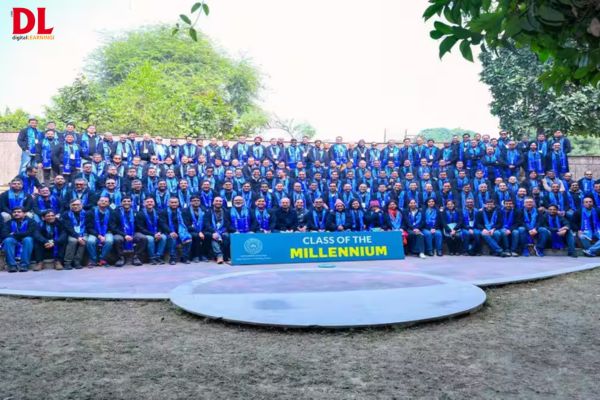
The alumni of IIT Kanpur’s Class of 2000 have announced a landmark contribution of ₹100 crore to set up a new academic entity at the institute, to be known as the Millennium School of Technology and Society (MSTAS). The announcement was made during the batch’s silver jubilee reunion held in Kanpur.

Envisioned as a forward-looking academic unit, MSTAS will explore the convergence of technology with public policy, ethics, and societal impact. The school aims to complement IIT Kanpur’s strong foundation in engineering and sciences by enhancing interdisciplinary thinking and preparing future leaders to address complex, real-world challenges shaped by technological change.

This collective commitment ranks among the largest donations ever made by a single graduating batch to an Indian educational institution.

Popularly called the Millennium Batch, the Class of 2000 has built a strong reputation for entrepreneurship and global leadership in technology. Alumni from the cohort have founded or co-founded prominent ventures such as InMobi and Glance, NoBroker, Yulu, Knowlarity, and Card91, and have been associated with global startups like Cohesity and Martini. Some members of the batch were also among the early team at WhatsApp.

Beyond entrepreneurship, several alumni from the class have held senior leadership positions at leading global organisations, including Nvidia, Microsoft, Amazon, Intel, BCG, Morgan Stanley, and GIC. The batch has produced three unicorns—InMobi, Glance, and NoBroker—the highest number achieved by any IIT Kanpur graduating class to date.

Also Read: NCERT set for major transformation as deemed university status nears approval


As part of the overall pledge, Naveen Tewari, Founder and CEO of InMobi and Glance, has individually committed ₹30 crore towards the initiative. According to IIT Kanpur, MSTAS will focus on interdisciplinary education, leadership development, and building a deeper understanding of the societal consequences of technology-driven transformation, positioning the school as a long-term institution-building effort for generations to come.

NCERT set for major transformation as deemed university status nears approval

NCERT

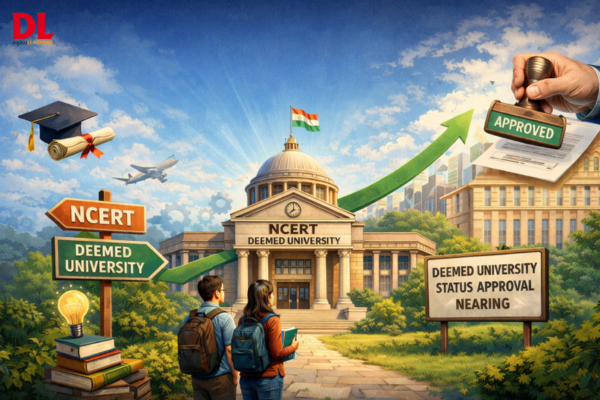
The National Council of Educational Research and Training (NCERT), a cornerstone of India’s school education system, may soon be on the verge of a significant institutional upgrade. According to officials familiar with the matter, the organisation is likely to be granted deemed-to-be-university status before the end of January, pending final approval from the University Grants Commission (UGC).

The proposed transition traces back to 2023, when Union Education Minister Dharmendra Pradhan announced plans to reposition NCERT as a research-focused institution. The vision involves expanding its academic footprint beyond textbook development and embedding it within global research and academic collaborations, thereby strengthening India’s presence in international education networks.

At present, NCERT functions as an autonomous body under the Ministry of Education. Its responsibilities span curriculum development, textbook preparation for central and several state boards, educational research, and teacher training initiatives. However, it does not currently award degrees or run postgraduate or doctoral programmes, functions typically associated with universities.

Sources indicate that all groundwork for the status change has been completed. “The process is nearly finished. The UGC only needs to take a formal decision in its upcoming meeting, after which clarity is expected by month-end,” a senior official said, suggesting the decision is imminent.

If approved, NCERT would gain the authority to function as a full-fledged research university. This would enable it to launch higher education programmes, including master’s and PhD courses, undertake large-scale research projects, and independently award academic degrees. Such a move would mark a shift from NCERT’s traditional advisory role to one with direct influence over academic and research pathways.

Despite the anticipated expansion of academic powers, NCERT’s primary funding is expected to continue coming from the Department of School Education and Literacy under the Ministry of Education. This ensures that its foundational commitment to school-level education remains central, even as its higher education role grows.

Also Read: Pariksha Pe Charcha 2026 sees record-breaking participation, crosses 3 crore registrations

In the Indian higher education framework, deemed-to-be-university status grants institutions substantial academic autonomy. This includes freedom to design courses, determine admission processes, set fee structures, and award degrees. India currently has around 145 such institutions, with the Indian Institute of Science being the first to receive this recognition.

The potential elevation of NCERT aligns closely with the National Education Policy’s emphasis on research-led and multidisciplinary institutions. Subject to approval by the UGC and the Central Government, NCERT would join the league of autonomous higher education bodies, assuming a more expansive role in shaping India’s educational and research landscape.

Pariksha Pe Charcha 2026 sees record-breaking participation, crosses 3 crore registrations

Pariksha Pe Charcha 2026

Registrations for Pariksha Pe Charcha (PPC) 2026, Prime Minister Shri Narendra Modi’s flagship student engagement initiative, have achieved a remarkable milestone, surpassing 3 crore registrations from students, parents, and teachers nationwide as of December 30, 2025.

Sharing the achievement on social media platform X, the Ministry of Education highlighted the unprecedented response, calling it a historic moment for the programme. The massive participation reflects the growing trust and enthusiasm of learners, educators, and parents towards PPC’s mission of promoting stress-free examinations and holistic learning.

According to an official press release issued by the Press Information Bureau (PIB), the initiative has emerged as a powerful Jan Andolan, successfully addressing exam-related anxiety while encouraging confidence, positivity, and mental well-being among students. The wide-scale engagement further underscores PPC’s relevance and impact across diverse sections of society.

Online registrations for PPC 2026 opened on December 1, 2025, through the MyGov portal. The annual interactive programme is organised by the Department of School Education and Literacy under the Ministry of Education and focuses on meaningful discussions around examinations, life skills, and nation-building themes. It also features creative competitions, including essay writing.

Also Read: CarDekho Group Invests $10 Million in EdTech Platform CollegeDekho

As part of the initiative, the top 10 student performers will earn a special opportunity to visit the Prime Minister’s residence. Additionally, nearly 2,500 selected students, teachers, and parents from various MyGov competitions will receive exclusive Pariksha Pe Charcha kits from the Ministry of Education.

The key themes for PPC 2026 include:

  • Make Exams a Celebration
  • Contribution of Our Freedom Fighters
  • Save the Environment
  • Clean India

How to Register for Pariksha Pe Charcha 2026

  1. Visit innovateindia1.mygov.in
  2. Click on “Participate Now” on the homepage
  3. Choose your category:
    • Student (Self Participation)
    • Student (Through Teacher Login)
    • Teacher
    • Parent
  4. Click on “Click to Participate” under the selected category

Register using your name, mobile number, or email ID and submit the form

CarDekho Group Invests $10 Million in EdTech Platform CollegeDekho

CarDekho Group

CarDekho Group has invested $10 million (approximately ₹90 crore) in its edtech subsidiary CollegeDekho, marking a significant follow-on investment to strengthen its presence in non-metro markets.The group currently holds around a 40% stake in the Gurugram-based education platform.

Founded in 2015 by Ruchir Arora, Saurabh Jain, and Rohit Saha, CollegeDekho operates an online platform that helps students discover colleges and courses, prepare for entrance tests, and navigate admissions in India and overseas. The platform has partnered with over 2,000 universities and colleges and enables these institutions to offer skill-based online courses in streams including humanities, management, computer science, and design.

The fresh funding will be used to expand CollegeDekho’s presence in Tier II and III cities and scale its ‘CollegeDekho Assured’ programme, which connects students with industry-aligned degree courses offered by partner universities. The company has achieved profitability and last year recorded nearly 170 million sessions while guiding more than 4 million students through admissions.

Also Read: CBSE revises board exam schedule for classes 10 and 12

Ruchir Arora, Founder and CEO of CollegeDekho, stated that the funding strengthens their commitment to building an inclusive, future-ready education ecosystem that equips India’s youth with the right skills, guidance, and access to meaningful career opportunities.

The investment reinforces CarDekho Group’s strategy of building classified-led digital marketplaces beyond its core automobile business.

LATEST NEWS