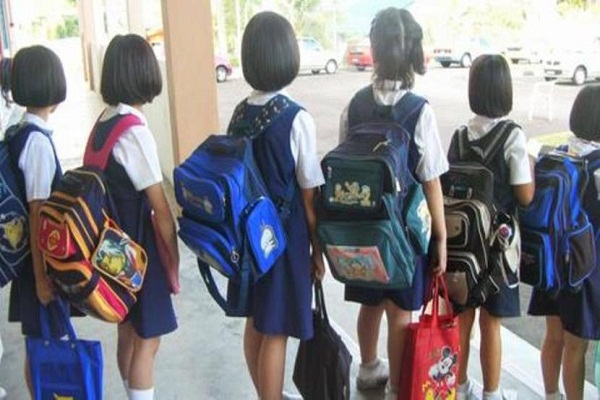




Even as India excels towards the target of elementary education for all, its ICT capabilities, so far as school education is concerned, remains severely challenged by low availability of computers in the schools.
However, according to a report 'Strengthening Education Management Information System in India' , published by the HRD Ministry and the National University of Educational Planning and Administration (NUEPA), the growth in the number of computers in schools since 2004 is truly remarkable. During the period 2003-04 to 2006-07, the number of schools with computers increased substantially, both in percentage and absolute terms.
Since 2004, when just 72,000-odd schools (7.68%) had computers, which has now risen to 1,67,000-plus schools (13.43%) for 2007. The number of schools having provided computers during the year 2005-06 was 120.6 thousand (10.73%), during 2004-05, 93 thousand (8.99%) and in 2003-04, 72 thousand (7.68%). Currently, more than 160,000 primary schools in the country had computers in place.
Rural and urban variations
The percentage of Primary schools having computers is much lower at 6.51% than that of the other school types. It is high at 18.20% in urban areas and low at 5.34% in rural areas. As many as 50,747 Primary schools in 2006-07 are provided with computers of which 75% is in rural areas and only 25% in urban areas.
The percentage of government schools with computer has shown improvement over the previous year (6.57% in 2005-06 to 8.57% in 2006-07). Compared to 8.57% government schools having computers, the percentage in case of schools under private managements is much higher at 34.43%.
This is also true for all other types of schools. About 62% integrated Higher secondary and 59% upper schools under the private managements have computers.
Regional disparities
The report also highlights varying regional access to school computers. Barring Delhi, Maharashtra, southern states, Gujarat and Madhya Pradesh, access to such facilities remains virtually non-existent to most students in the country.
Maharashtra has the highest number of schools – 28,882, which constitutes 33.42% of its total schools – that have computers in schools, followed by 19,154 schools in Andhra Pradesh, 16,064 schools in Madhya Pradesh, 13,336 schools in Rajasthan, 11,603 schools in Tamil Nadu.
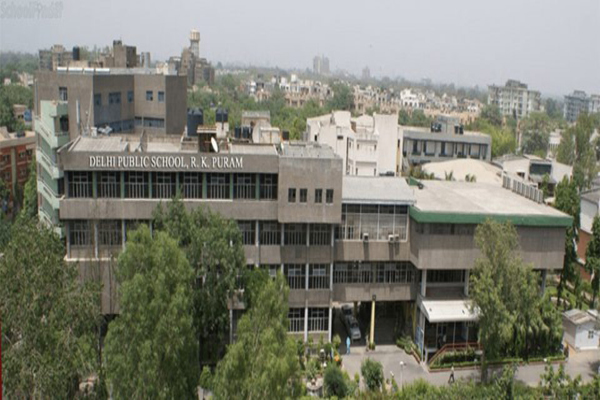
In terms of percentage of schools which have computers in each state, Delhi stands first (68.85), followed by Kerala (60.9), Maharashtra (33.42), Gujarat (24.03) and Tamil Nadu (22.13).
Except for Delhi, Chandigarh, Kerala, Gujarat, Lakshadweep, Maharashtra, Orissa, Puducherry, Sikkim and Tamil Nadu, the percentage of computer penetration in primary schools is below double digit in the rest of India.
The lowest numbers, 12 Schools, of computer facility is in the Dadra & Nagar Haveli, followed 15 schools in Daman & Diu, 22 schools in Lakshadweep, and 119 schools in Andaman & Nicobar Islands. In Bihar too, the percentage of schools with computers was found to be low at 2.62 or 1,436 schools.
However, the spread of computer education has been limited to just 6.51% of all primary schools in the country. And except for Delhi, Chandigarh, Kerala, Gujarat, Lakshadweep, Maharashtra, Orissa, Puducherry, Sikkim and Tamil Nadu, the percentage of computer penetration in primary schools is below double digit in the rest of India.
The NUPEA survey highlights the major strides India has taken in terms of making the very basic tool for ICT delivery available to schools. But it also underscores the huge number of schools that are without it and hence only
on the fringes of the access to online and audio-video content, which is being looked at with such enthusiasm for addressing the issue of distance and infrastructure.
|
State of elementary education in India In yet another proof of the poor state of elementary education in India, latest data shows that school rooms in many states have as many as 100 students to a class, with a single teacher in-charge of 67 or more. The 2006-07 District Information System for Education data, compiled by NUEPA, reveals that Bihar (92), Jharkhand (79) and Uttar Pradesh (53) have one of the highest Student Classroom Ratios (SCRs) in primary schools. Assam is at 45 students per classroom, Madhya Pradesh (43) and West Bengal (50) are also on the higher side. As many as 16.45% schools have SCR of 60 and above. The report lauds Himachal Pradesh and Jammu & Kashmir for their ratios of 15 and 14, respectively. Another key indicator that influences classroom transaction is the pupil-teacher ratio (PTR), and there too the same set of states is at the end of the tally. Against the average of 40:1, Bihar has a ratio of 67:1 in government schools. Interestingly, the case is even worse in privately managed schools. Uttar Pradesh has a ratio as high as 55:1. However, overall the country has shown an improvement in PTR, with the ratio dropping from 36 to 34% from 2005-06 to 2006-07. States like Arunachal Pradesh, Himachal Pradesh, Karnataka, Kerala, Tamil Nadu and Delhi reported ideal PTRs, ranging from 16 to 25. |


 DreamSpark is a software giveaway for students
 The New FX
  It is a rare occurrence in K-12 education when a technology moves from being a useful classroom tool and becomes an education platform upon which an entire teaching philosophy is built. But that is precisely what has happened over the course of the last two decades, as interactive whiteboards from SMART Technologies (Calgary, Alberta, Canada) have become the focal point of the technology-driven, 21st- century classroom. Technology companies like SMART that have created a fundamental shift in education all have one thing in common: they provide an overall solution that is greater than the sum of their product's component parts.
 Promising to improve the quality of Math and Science education through online learning activities,
  When did a teacher know that information would be just one click away? Thanks to technology, the teachers of today are not restricted to the age old chalk and blackboard methods of teaching. Information and Communication Technology has come of age and has permeated in all areas of our lives and is a significant factor in increasing productivity in different fields.
  When dealing with education, across all ages, the basic necessity is to accept that the child is ahead of us in this digital age. We need to make an effort to catch up with youth, periodically, and give them what they need. Parenting and education are both very traditional; they both resist change. There is a common pitfall for both: you and I know 'everything'; we feel that we know exactly what our child needs and set about providing for that need, as we perceive it. We take that perceived need for granted, while dealing with children and rural society.