

Asia’s open source conference and expo, 8-10 February, India Habitat Centre, New Delhi India
Special Focus- India Education Forum It’s the talk of the time, the big discussion, about easy-to-use, virusfree desktops, about high-performance clusters, about data and application migration, about wireless computing, bout scalable storage and virtualization, and about best practices, ollaboration, standards and saving big money. Linux Asia conference and Expo 2006, the place to preview and evaluate the open source latest technologies firsthand, paved the right forum(s)in New Delhi, India from 8-10 February to put out all these talks and discussions for all- from SMEs, ITES and BPOs, large enterprise, banking, financial services, insurance, telecom, media,
government and education. Organised by Technetra, the technology consulting comany in partnership with EFY Group, a India based technology publications
company, LinuxAsia Conference and Expo, the annual event since 2004, became an essential platform for decision makers, managers, technologists and analysts from industry and government to learn, network and interact with global and Indian open source peers and players, in its third year this time. India Education Forum became the focal point for Digital Learning team in Linux Asia 2006 that highlighted several industry sessions, forums, open source panels, projects, awards, and many more with the theme “The Customer Speaks”. India Education Forum on 10 February in the Gulmohar room of India Habitat Centre was started with the keynote ofDr. M.S.Vijay kumar, assistant provost, Director of academic computing, IS&T, MIT, honorary advisor – National Knowledge Commission. The panel comprising Aruna Sundarajan, ountry Programme Director, GESCI, UNICT, Sadhana Bhalla, Principal, Mira Model High School, Delhi, Kushal Mitra, IIIM, West Bengal and Venky ariharan, Red Hat furthered the forum with a very triumphant discussion on Open Source Solutions for Indian Schools. Open Source in Universities, Open Source Educational Tools, Modernising the Education Curriculum and Building a FOSS Education Community for India are the other discussions, which made the forum an illustrious one with panels like Dr. Sanjeev Singh, University of Delhi, Shankar Iyer, Red Hat, Zaheda Bhorat, Google, Narinder Bhatia, CII Shiksha India, Danese Cooper, Intel, HNS Rao, Navodya Vidyalaya, Anand Adkoli, Liqwid Krystal, Prof. CN Krishnan, NRCFOSS and others. The India Habitat Centre, spread over nine acres of beautifully landscaped environs in the heart of the capital city of India, provided an ideal physical environment to LinuxAsia 2006 with a range of facilities that would maximize the effectiveness of the individuals and institutions, in their holistic support of the habitat. Workshops: Apart from the education Forum, workshops at LinuxAsia provided a classroom setting for collaborative learning and an opportunity to experience the power and potential of Linux and open source software. Motivating Open Source Contributors and Building Communities, Linux – Ready for the Enterprise, Open Solutions Workshop by Novell, LinuxFest Workshops by IBM are some of these workshop sessions that retained the high-quality approach in promoting the knowledge of open source. ‘.ORG Mela’- this free and open expo area for all open source community members interested in presenting their open source projects to a FOSSfriendly audience backed up showcasing their work and projects. And it created a platform LFY Reader’s Choice Awards where Linuxfriendly and Open Source products, projects and services in the Indian marketplace got recognized. HP, IBM, Red Hat India, Sony, Lenovo along with a few others shared the Industry Awards, while some others were recognized with Honourary Awards. Venkatesh Hariharan of Red Hat India and Mark huttleworth of Ubuntu became Indian Open Source Personality of the Year and International Open Source Personality of the Year. Lots of cool talks at edora’s FUDCon on February 9, IBM’s LinuxFest on February 10, Linux Developer amp on February 8 and 10, Novell’s workshop on February 9 and many more pen source talks, workshops and tech days- a great experience harvested in
Indian capital. ?
Linux Asia 2006
e-Strategies and k-Strategies for e-ducation
Did we miss knowledge?
Often the modern world is associatedwith rapid change, high speed, fast growth and etc. However, all these factor fallout aside in comparison with today’s development and “electonification/knowledgefication” of the world. Nowadays, we can put “e”/”k” behind everything and find them in the internet or World Wide Web. This change brings a big mass of information to our world. The importance of information decreased in one sense and increased in another. The decline informational importance occurred in sense that you can find dozens of web pages which includes the information which you need. Amplification occurred in sense that only competitive information or competitive knowledge began to create difference. Knowing explicitly what, where and how starts to create difference in modern world. On the other hand, organizations start to look for the new opportunities. One of these became e-nvironment, the place where you have equal conditions to compete. Boom of dotcom; provoke many people to invest heavily in the electronic area.
However, as BCG matrix emphasize heavily investment on stars never means immediate income from them. Actually, one of the problems of that ‘crises’ was high expectations and promises, which means lack of knowledge. (M.Porter, March 2001.) As M.Robert (2000) pointed out in his book, this is an era of denial or paranoia. Paranoids were those who tried to do everything and anything they can think of with the internet and knowledge. Though, as author
continues neither denial nor paranoia is solution. The solution could be to understand the capabilities (knowledge, information, etc.) and how they could be used by the company. However, before attempting to understand the new world, one needs to understand the organizational strategy for e-ducation of the institution. (M. Robert (2000), p 6-7.) In other words, the same content of strategy for e-ducation has to be understood and transformed into the new context of the new world – eworld or k-world. Generally, developing strategy for education (even in “e” or “k” world) with its dimensions means running from the content, through the process, to the context. That means strategy could not be perceived without its dimensions which are not different from each other, rather than complimentary. (de Wit & Meyer (dW&M) (2004), p.5) Therefore, even this paper will focus on the process dimension it will include and emphasize others as well. The desire to understand today’s complexity and confusion encouraged me to try to relate two strategies for education processes in one and create simplicity. Moreover, during the preresearch of the literature I have not found any explicit academic research on that topic. Even these two topics were quite “fresh” for the strategy literature. <!–Ads1–>
The paper begins with a brief overview of “e” and “k” strategy and its current focus on organizational resources and capabilities for education. It links these strategies in the content dimension of the strategy process for e-ducation. Building on this view, it presents an interrelated developing process of strategy transformation to adapt to the gradually/evolutionary changing environment for e-ducation.
e-Strategy
Changes in IT industry and in the whole world force companies to turn to the IT and develop appropriate strategies on the organizational level. E-strategy can be regarded as one of these strategies. (M.Porter, 2001) Therefore organizations focused on estrategy process for e-ducation as on a codified set of steps that first of all “demystifies” the Internet. On one hand, the e-strategy process itself drives you to think about what information processes you have in
place today, how your functions relate to each other and to your teachers/senders and students/ receivers. Then, added to that, is the e-effect of e-ducation, or the impact that the Internet will have on those things. (M.Robert (2000), p. 107) Briefly, e-strategy gives you an opportunity to move your organization to the electronic environment and operate there on the organizational level. Therefore, operations in e-nvironment require organizational level strategy which is the e-strategy for that specific environment.
K-strategy
E-ducation organizations are coming to view knowledge as their most valuable and strategic resource, and bringing that knowledge to bear on problems and opportunities as their most important capability. They are realizing that in order to remain competitive they must explicitly manage their intellectual resources and capabilities. However, many executives still have a problem with managing their capabilities-knowledgethat can help them to link knowledge oriented processes to organization strategies, and are unsure of how to translate the goal of making their organizations more intelligent into a strategic course of action. In other words, they lack of k-strategy (knowledge strategy). (M.Zack, 1999) Knowledge strategy implies a notion of knowledge-based strategy, that is, competitive strategy built around institution’s intellectual resources and capabilities. Knowledge strategy is oriented toward understanding what knowledge is strategic and why. (N. Bontis and C. W. Choo, (2002), p.270-271)
Link between strategies
Concerning the fact that both strategies are based on organizations capabilities and resources to have/ create strategies and to develop them, these strategies in their content can be formulated and understood from resource-based view (RBV). (dW&M (2004), p.284) In the RBV, organization resources gave them competitive advantage to create sustained competitive advantage that will directly mirrored in their strategies. Therefore, here I will try to find links between e-strategy and k-strategy for e-ducation and vice versa. Both strategies have several patterns which can be generalized according to the e-strategy for e-ducation (internet as a process) book of M. Robert, where he states that generally estrategy is intangible, trying to focus on moving, evolving target. (M.Robert (2000), p.19). Those general patterns in broad sense could be applied to every strategy. However, concerning the structure of k- and estrategies that patterns like intangibility and evolvement can be particularly observed in knowledge area/e-ducation where every moment means new person who shares it. And particularly neither knowledge nor electronic e-nvironments are intangible. Consequently, the new world/society becomes more and more dependent on information, this shift lends itself perfectly to the Internet and should be properly managed e-ducation by the right k-strategy which will intersect with the e-strategy on the rapidly and evolving Internet area. (Ibid, p. 29). Since the Internet is primarily a <!–Ads2–>
transporter of information, the more the society becomes dependent on information, the more disruptive the Internet will be to institutions. This is why the institutions most threatened by the Internet today are those with a product or service mostly based on information, which means there comes a new era of e+k–strategy (further estrategy= k-strategy will be used as e+k-strategy model) . As it can be observed from the picture the strategy, which will help organizations to move (process) to the new world or new environment and even in new circumstances (context) have an ability to properly manage its capabilities and resources (content). As an example, at Amazon.com, has information on 17 million of its ustomers. (Ibid, p.32) These databases allow Amazon.com to know exactly the current interests of its customers and their future interests as well. Simply by e-mail address Amazon.com is able to do one-to-one providing of new book/knowledge.
Developing Interrelated Strategies
After the dot-com fallout, surviving companies/organizations needed to sharpen strategy and analyze metrics much better. (M. Epstein, 2004) Since the world entered into the new world, institutions have to reviewtheir strategies and develop a new one. Therefore, I consider the importance of the k-strategy which will provide necessary knowledge to organizations to develop (which also means change in strategy formulation process) e-strategies for the new conditions. In other words, I consider these changes as a ways of encouragement to develop or interrelate these strategies in e+kstrategy model for e-ducation the new e-nvironment, which will form and be part of new world. For that reason, I will mainly refer to the combination ofM.Robert’s book on “E-strategy” and M.Zack’s article on “Developing a Knowledge Strategy: Epilogue”. However, that part will not be limited with these sources only and will provide combination of other publications.Hence, one million of questions come in the mind of most of administrators, what should I do? How should I do it? ho knows the solution? The answer is simple, nobody knows. But, in order to make the picture clearer or eradicate fuzziness I will try to combine the ways of k-strategy development with the e-strategy development in order to create a common picture and prove that strategies for e-ducation in process may be interrelated and similar concerning certain merits and aspects. According to several strategy guru’s the best way to develop e-strategy in the frame of organizational strategy it is better to start with your employee. (M.Robert (2000), p.33) That could be easily supported with the k-strategy development process which focuses on organization/society capabilities and sources on employees. Consequently, we know with whom or who will develop/change our organizational/institutional strategy towards the new model e + k-strategy model in e-ducation world. So, where should we start? That point is very important and may be most of you will have a feeling that this paper repeats the traditional way of strategy formulation. (dW&M (2004), p.7) However, I can argue and say that the process in general always or in most of the cases remains stable. The things, which make/create difference, are tiny pieces of similar/ huge process. Thus, I think that every administrator or person who will start to develop this model should first of all be able to understand new world/Internet and structured process for e-ducation that works. Any strategy must be oriented toward the future. Thus, the first phase in formulating a clear organizational strategy (for education) is to determine what the e-nvironment will look like in a few years down the road. (M.Robert (2000), p.33) As Business Week observed in an article about the future impact of the Internet: “It is difficult to determine how to improve something when you do not know what it is that you want to do. Our experience has shown us that most people in organization do ings right. Unfortunately, they are frequently blamed for doing things wrong.” (A. Slywotzky, 2000) In other words, they are doing things right but doing the wrong things. So, it is important to get people to identify the right things to work on, to help people who do things right to work on the right things. Another way to develop interrelated strategies is the right measurement. For that kind of measurement there should be developed appropriate metrics/e-tools. (Tony Ingram & Alison Hedges, 2004) The selected metrics will likely include a combination of input, processes, output, and outcome metrics to effectively measure performance. There is no rule for the right number of metrics to include in a measurement system; however, including too many tends distract administrators from pursuing a focused strategy. (M. Epstein, 2004). These analyses ensure that each unit is making a contribution to the e-ducation initiative and improving organizational effectiveness. Additionally, these metrics can be used to provide a gap analysis that permits administrators to determine what other inputs or processes are required to meet the organization’s e-ducation project
objectives. Similarly, Zack (1999) points in his article that he observed many organizations whose strategy dictated a move to an e-nvironment model without the requisite knowledge and skills and a knowledge management initiative to address those knowledge gaps. Others were migrating from providing outputs to providing knowledge-based services and solutions for e-ducation, without their first understanding what they knew (or did not know) about being a service provider, or identifying the unique value (if any) to be found in their existing knowledge. So, how to know what I or my organization know? To identify what you know (later part will use Zacks’(1999) suggestions) usually starts with some type of knowledge mapping process. That means to map existing knowledge against what is required to formulate and execute the organization’s strategy for e-ducation. Further, the map can be used to evaluate how an organization’s knowledge about e-ducation compares to its “competitors”. If we think of strategy as defending knowledge positions rather than “market” positions, then competitive knowledge benchmarking is crucial for evaluating the organizations “competitive” position. Where an organization holds a strong strategic knowledge position about e-ducation, it may be prudent to invest to maintain that position. Where it holds a weak knowledge position, it may be prudent to invest to gain strength. These knowledge management decisions must be made within the context of knowledge-based competitive opportunities and threats. It is also crucial to know what “competitors” know. Some organizations try to know that via intelligence or similar scanning function. However, most intelligence functions attempt to identify what “competitors” are doing, not what they know about e-ducation. On the other hand, Zack (2002) suggests that those who want to learn may be become and ultra-aggressive organizations. Those, who proactively transfer their knowledge out of the institution to accelerate the learning cycle via e-strategy that approach is frequently applied in software industry. An example of perhaps the most aggressive strategy is that of the open-source movement used, for example, to develop the Linux computer operating system, which makes public the core source code to take advantage of those innovations others may develop. (E. S. Raymond, 1998) Knowledge is not static and what is innovative knowledge today will ultimately become the core knowledge of tomorrow. The similar trend can be observed in e-nvironment today’s innovative product – e-ducation can became tomorrows’ core knowledge/ competitive advantage.
Discussion
This paper mainly focuses on the interrelation of these two strategies in the context of strategy processing for e-ducation. However, it could be argued that different developments are unique in their occurrence and interrelation may create a catastrophe as Einstein’s atom, which was interrelated to the nuclear weapon. Another contradictory argument may come from knowledge strategist who will argue that this strategic development has nothing to do with the e-strategy, at least because they are applied in different worlds. And even, going deeper they can bring up the argument that these two different strategies have different starting points and different destinations so, their processes could never be interrelated or at least linked. On the other hand, considering these arguments I can emphasize the fact that the world is becoming more global and smaller at the same time; nowadays, the news/information flow all over the world in a second. And there is no possibility to stop it. Those floods are mainly supported by the electronic devices or let us ay e-nvironment. Regarding that fact it is even too late to orry bout its impacts because the process already started and it is impossible to stop it. According to the M. Roberts, technological change takes 25-30 years to find a valuable application and another 50 to 70 years to infiltrate all the nooks and crannies of the society that it will eventually affect. (Ibid, p.40) As an example he gives a microprocessor which was found in 1960 and still applicable, even it had its impacts after 18 years. Later he points that the same is true of the Internet and it was invented in 1968. Therefore it means this new development have not yet applied to all parts of our life. It only starts to affect the e-ducation/ world in late 1990. Therefore, I personally think even these different strategies may have different starting point but, they go in the same destination. All this happens with the aim of increasing organizational “competitiveness”, “uniqueness” and etc. which in new world will mean going “e”. And being there will require resources and capabilities which are basics of k-strategy. For example, (referring back to the picture) the starting point in soccer, volleyball, basketball, etc. is a ball content) and destination point is the basket/gates (context). Here, goal (destination) is to win and process is to play. Therefore, even if it seems to you that this paper tries to predict the future I would call it as another scenario analyze for the nowadays trends.
Conclusion
In the conclusion I would like to come back to M.Porters’ words: Don’t throw the strategy baby out with the Internet bath water. And probably will add there following phrase: Instead wash him/her with the knowledge soap and teach/e-educate him/her how to use this beauty (knowledge) in the slippery Internet bath. It is obvious to all of us that being paranoiac while experiencing a new process will not help us to survive in today’s world. Therefore, we have been more creative and innovative in the process of our strategy fulfillment. In this way we exploit, explore and as was mentioned in this paper interrelate/link different ways/processes to get better results. Even these ways may seem quite strange and fresh (for some even old and musty), the difference which we may create is lying in ourselves, in our knowledge. Here I tried to provide an idea that this uniqueness can be strengthened in combinatory way and help to get advantages in e-ducation. However, that work characterizes only a different outlook which has not been tested yet. But, again using your knowledge you can judge whether that way is appropriate to you or not. ?
A click on progress
For most people in the world this Indian state Kerala is quite little 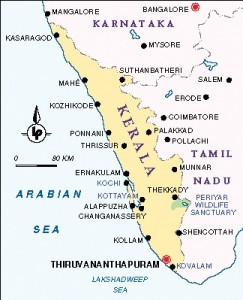 known. But among academics, Kerala has become something of a star, a place to study and to puzzle about. The reason is undoubtedly because of the so-called Kerala Model which generally refers to the high achievements of Kerala’s people on statistical indicators of development. One of the key factors for the substantial human progress in kerala, is the Kerala’s education system, especially for women. Kerala has the best primary education system in India, and a literacy rate of 90% – almost twice the rate for all of India at 52%
The literacy rate for females in Kerala is 82%—one of the highest in all of Asia. Even in the rural areas, more than half the women are literate, compared with 43 per cent for all of India. Kerala was declared a ‘Fully Literate State’ in 1991 and is the only state in India where over 90% of the people can read and write, and credit for this goes to the free and compulsory education provided to all children up to the age of 14 years. Kerala schools possess better physical and basic facilities compared to those in other parts of India. 83% of schools are housed in proper building. The IT @ School Project, launched four years ago, has remodeled conventional teaching methodologies in classrooms through se of Information Technology. The project, in its first stage, is being mplemented in 2,738 High Schools in the State. Over 40,000 teachers were given 90 hours of training on IT skills. Computer labs with 10 to 60 computers are available in all High Schools. DLP projection-enabled classrooms are resent in nearly 400 High Schools. IT @ SCHOOL is a project under the irectorate of Public Instruction of the Government of Kerala, which introduces Information Technology in High School Education for qualitative improvement of the conventional teaching / learning system. The Education Department plans to introduce an elibrary project in the educational institutions in the state, which aims at equipping students to explore the vast potential of the
emerging elearning system. Under the project,each school will be given 150 CD’s containing educational programmes, each with duration of one hour. The
VCDs costing Rs.200 will be given to the schools at a subsidised rate of Rs.40 each. The State Institute of Educational Technology (SIET) is the implementing agency for the project. SIET will also help the students to set up a home CD-library. Of the VCDs, 80 per cent will be based on the SSLC curriculum. The SIET telecasts educational programmes, in association with the Doordarshan, from December 26 to help the students who appear for the SSLC examinations in March 2006. The SIET has also developed a SSLCtop winner audio CD-ROM with possible questions in each topic for the examination. CD, both in English
and Malayalam, with duration of 20 hours is also available. The SIET has also prepared Malayala Kavitha Padanam CDs. The State Government would provide Rs.2 crore for the school library modernization project. EDUSAT program would be implemented to the whole L.P schools in Kerala by June-July by the help of Local Self Government. ?
Challenges of modernising Indian educational system
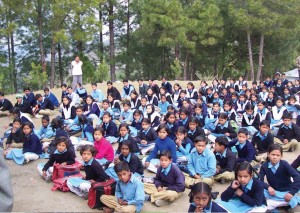 With 179 million students and 888,000 educational institutions, modernizing India’s education system is a huge challenge. The need of the hour is therefore a close collaboration between educationists and technologists; and open source provides the ideal framework for this process
Napoleon once said that, “War is too important to be left to generals alone.” imilarly technology is too important to be left to technologists alone. By the ame token, education is too important to be left to educationists alone. Today,
we are on the cusp of an age that is being defined by the intersection of education and technology, particularly information technology. However, India faces a massive challenge in modernizing its education system. In a country that has 888,000 educational institutions, 179 million students and more than 2.9 million teachers modernizing the system is a task that requires innovative thinking and a radically new approach. In the 2005 budget, the Government of India embarked upon an aggressive plan of spending a bigger chunk of its GDP (approximately six percent) on modernization of education.In many villages and cities across India, millions of children have no access to basic educational facilities. At the same time, the basic structure of our society has changed from an ndustrial economy to one where the importance of knowledge pervades every action of ours. The billion dollar question that affects the lives of these 179 million students and the future of our 888,000 educational institutions therefore is—how do we modernize our education system at a time when we haven’t been able to deliver on the basic onstitutional promise of providing basic primary education to all Indians? The shifting structure of our society from an industrial economy to a knowledge economy offers us both a threat and an opportunity as we seek to modernize our education system. In a world where the creation anddissemination of knowledge are being rapidly digitized, it is inevitable thatIT will play a central role in the education system of the future. Classrooms of the future will not be mere brick and mortar structures imparting instructions but information hubs where knowledge is created and disseminated. This shift is very similar to the shift we see in the media where power is shifting away from “broadcast” media like print and television to the “interactive” medium of the Internet where individuals are not passive consumers of information but also producers of information. In the professional world a similar shift is happening with organizations placing a premium on employees who can think on their feet and execute tasks independently, as against those who merely follow instructions. If we wish to equip the next generation of Indian students for the knowledge economy, our education system needs to make a 180degree shift from a system that emphasizes rote learning and studious adherence to instructions to one that emphasizes creativity and encouragesinnovation and independent thinking. Our 179 million students (and 2.9 million teachers!) must not be passive “downloaders” of information but active participants in the process of creating and disseminating knowledge. If we deliver effectively on this vision of ushering our vast army of students into thedigital age, we lay the foundation for making India one of the superpowers of the 21st century. This is a challenge that should deeply engage India’seducationists and technologists and requires an interdisciplinary collaboration that has ever been seen before. The open source development model provides the ideal framework for this process. In the context of a developing country like India which is rich in talent but lacks the purchasing power of the west, open source offers several sustainable, long-term advantages as we seek to modernize our education system. The term “Open Source” originated in the world of software. At a simplistic level, the term represents software that is distributed along with the source code. Open Sourcesoftware programs are released with a liberal license that allow users to study the code, modify it and freely redistribute it. The philosophical underpinnings of Open Source sound very simple but the tenets on which open source is based—collaboration, community and the shared ownership of intellectualresources—has resulted in tremendous innovation. Moodle (www.moodle.org) an Open Source course management system was developed by an educator who found existing proprietary programs inadequate or expensive. It is now used by thousands of educational institutions to manage their coursework and s supported by an active community that develops and upgrades it. Since t has been developed by an educator himself, it enables a teacher to use Moodle to teach a course fully online or to supplement a course taught in traditional setting. In the world of software, Open Source has lead to the reation of world-class oftware like the Linux operating system, the Apache web rver and thousands of other software programs. Millions of people have contributed to the development of these programs and benefited from using hem. Linux, for instance, was released under the General Public License in 1991 and consisted of 10,000 lines of code. In a mere 14 years, due to the ontributions of open source developers across the world, this code-base has grown to 10 million lines of code. Linux now runs on everything from supercomputers to hand-held computers. It is estimated that if these 10 million lines of code were commercially developed, the cost would run into billions of dollars. Because Linux is available under an open source license, it is a community resource that is freely available to everyone. The Open Source philosophy has proved to be so popular that other disciplines are embracing the tenets of community, collaboration and shared ownership of intellectual resources with powerful results. The Open Source philosophy is catching on in the world of education content. For example, Wikipedia (www.wikipedia.org) has rapidly emerged as one of the largest online dictionaries in the world. In a short span of five years, Wikipedia has attracted five million entries fromacross the world in several languages and is a fantastic educational resource that we should localize to Indian languages. Because it is released under the open source, “Creative Commons” copyright, Indian educators have the freedom to translate Wikipedia into Indian languages and share it with theirstudents. The venerable, Massachusetts Institute of Technology took the radical step of “open sourcing” 1,100 courses online at http://ocw.mit.edu based on their conviction that, “the open dissemination of knowledge andinformation can open new doors to the powerful benefits of education for humanity around the world.” Other eb sites like Planet Math (www.planetmath.org)aim at creating communities of educators focussed on a specific domain to make knowledge more accessible. Many educational institutions themselves are now coming together to leverage the economic benefits of participating in Open Source development. For instance, leading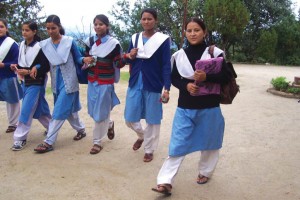
universities like the University of Michigan, Indiana University, MIT and Stanford are investing up to $1 million in staff time to develop producing open source Collaboration and Learning Environment (CLE) software. Even universities that are not members of the Sakai Project can download the software and interest in the Sakai Educational Partner Program (SEPP) is growing at the rate of 1-2 universities per week. Thus it is clear that whether it is for creating educational content, managing coursework and learning,
teaching a specific discipline or administration of an educational institution, the open source model offers tremendous benefits as a model for the creation and dissemination of knowledge. In a country where 888,000 educational institutions need to be modernized and more than 179 million students educated, the community ownership model of open source can help the country save billions of dollars that would be spent on proprietary operating
systems, software and content. Since anything developed under an open source model can be shared freely, it can help in the rapid dissemination of educational materials to India’s vast population of students. From a long-term perspective, it is important that the creation and dissemination of knowledge hould be a collaborative, community driven process rather than one that is
monopolized by a few individuals or companies. In the Indian, intellectual tradition, knowledge has always been considered as a common good treated
as a community resource rather than private property that can be monopolized and enjoyed by a few. The need of the hour is therefore a close collaboration between educationists and technologists. The open source
model provides a framework that can lead to an open source renaissance for Indian education.?
Room for Life Life-long learning for rural Thailand
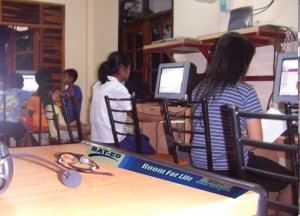 With a passion to bring better education to remote areas in Thailand, Sat-Ed System Co is delivering learning centres in rural Thailand called ‘Room for life’ using the cutting-edge technology of the iPSTAR broadband satellite. Aimed at providing lifelong learning for the rural Thai people, this initiative is providing access to education content in remote rural areas beyond the reach of telephone networks.
Chang is a bright young man who won a full scholarship to a technical university in Thailand. He had to turn it down because, while it would pay for his tuition and fees he had no way to support himself living in Bangkok and his parents were not well enough off to pay for it either. Chang was overjoyed when he learned about the Sat-Ed Room for Life because it will allow him the chance to earn his degree without leaving the village. There are many kids just like Chang; kids who are bright and eager and desperate to learn but time, money and other circumstances keep them in he village. With the Room for Life, Chang and others will not have to make the hard choice because they can study there.
In the sleepy hamlet of Baan Nong Pai, deep in the rural heart of Sakhon Nakorn stands the pilot Room for Life, a unique educational and learning center. For the first time anywhere in the world, a village that has no phone lines has been able to access broadband Internet, IPTV VoD (providing educational video on
demand), web cam, university degrees and a whole host of vocational learning and e-government services. The development of IPTV (Internet Protocol elevision) over the last 3 years has dramatically changed the way pay TV will e seen in the future; and yet these technologies to date have not been used by he educational market even though they offer an unparalleled opportunity for learning as well as access to digital content.
The technology: InternetProtocol Television (IPTV)
First one has to understand the core technology. IPTV differs from normal TV-based delivery systems in that instead of being a passive device that you atch it is now a two-way interactive device. IPTV allows a person to interact ith the content delivered to the TV. To the viewer, it looks exactly like a ormal V screen as the pages are designed for viewing on a TV. Using a simple emote ontrol, a person can navigate through a series of high-quality videos and text pages, take tests using the remote control to answer the on-screen questions and be assessed on their results. In actual fact, these are computer web pages are being delivered through a thin web browser located in the IPTV
set-top box. Using middleware written for this purpose by Sat-Ed it becomes an interactive navigation device. This allows the TV to be used as the device to deliver a traditional LMS (Learning Management System) directly to the end-user’s TV instead of a PC. The thin web browser then takes an HTML or Java page and displays it on a TV screen.
Room for life- delivering education
In the village, the Room for Life has a great many different courses on offer. In addition to High School and University courses, there is a heavy emphasis on vocational training from agricultural practices to silk weaving and everything in-between. This often means that the students are older adults who have never seen a PC much less used one for learning. This is where the PC is a barrier to
learning. In the same way that our parents and grandparents would leave the VCR clock flashing 12:00 while waiting for a grandchild to come over and program it, older adults not trained on PCs look at it as an confronting technology. Contrast that to our experience with children in the Room for Life. In order to be delivered through IPTV, the video has to be converted into an Mpeg 2 transport stream. We were running out of time to make a deadline for
another Room for Life and, in desperation our chief engineer trained two of the village children, ages 11 and 14, to convert the videos to transport streams. To our engineer’s shock and surprise, the children listened carefully and fearlessly
started to convert video files flawlessly. When seasoned pay-TV pros heard about this they were mightily impressed. We have found that the children under 15 in the village are soon learning things on the computer that took other people years to figure out for themselves. The adults are a different story.
Perhaps the most telling story about the differences between the two groups was illustrated by the time I handed my laptop with one hand to one of the adults to hold while I did something else. Their eyes got wide and they backed away, unwilling to take on that kind of responsibility for fear of breaking it. Their child popped up and took it from me without hesitation as the parent barked out warnings to the child to be careful. I was intrigued and tried this over and over with different adults over the course of several weeks and the result was the same. All of them either backed away or grabbed it with both
hands, visibly scared of breaking it. In contrast the children all took it without thinking at all. That is where using IPTV as an educational tool becomes so
important. It allows these adults to access content, often in a group, using the same technology that they se sitting in front of their TV at home… a remote control. With this remote control, they can navigate through a course; stop, fast-forward, rewind or pause to discuss what they have just learned. They can stop a course for the evening and go back and pick it up where they last left off.
Coming soon will be the ability for the student to input their ID number into the system and the middleware will know where they left off so there is no time-consuming backtracking to find the spot. The Sat-Ed LMS will then track their progress and report back nightly by satellite. Another important part of the technology is the use of “Push” technology. Through the use of a next-generation of satellite such as iPSTAR, content is “pushed forward” so it resides on the Sat-Ed digital library. This specially designed VOD server caches the educational content at each site so when a student accesses it using the IPTV STB it plays out the transport stream instantly, in fullscreen, media-rich
video. This greatly enhances the educational experience. The trouble with Internetbased e learning is that your experience is connection dependent. ven with broadband access (a rarity inside Bangkok and unheard in the rural reas) the most you will be able to view is a postagestamp- sized video because the content is created for the lowest common denominator. You also have to wait for the information to come through the Internet pipeline and the content delivery is as slow as the slowest pipe it has to go through to get to the user. This often creates a scenario where, even with a broadband connection, a person is always waiting for the buffering to finish; turning the World Wide Web
into the World Wide Wait. Contrast that to VOD learning with the content residing in the Sat-Ed digital library on-site. It plays out an instantaneous stream in full-screen color. This allows extensive use of video in training and it also gives the students additional video cues for enhanced learning. Studies have shown that people learn in different ways. By delivering as many cues as
possible to learning, you increase dramatically the chances that one of them will be ultimately successful for the viewer. This mirrors the old adage of not just telling someone what to do but also show them what to do. With IPTV-based learning, the video that is elivered can address both of these at once. That brings us to an interesting problem. There are a number of training courses available but there is a paucity of content for IPTV-based learning. nly a few forward-thinking organizations have developed content so far but as the emand rows, the availability will increase dramatically. Already curriculum is being written that ddresses the ability to use IPTV as a teaching tool as an adjunct to traditional face-to-face teaching models. Potential uses for this might be a history class that watches a video of news reports of the period
just studied. Another might be a chemistry class watching a video presentation of a chemical interaction shown in a lab setting instead of just reading about it. Still another might be an anatomy class watching a video of a dissection of a rat while following along with their own specimen to dissect in the classroom.
The first use of the Sat-Ed Digital Library is the caching of educational content for on-demand access. A second use, almost as important in an educational setting, is the caching of web sites. Because education is predicative, we can
assume that there are a number of sites that students will want to access. In a
school settings using the Sat-Ed digital library, the web pages are updated nightly by satellite and stored on the server. When the students go to access it in the classrooms all over the country linked into Sat-Ed digital libraries, instead of having to wait while each person is trying to access the same file over and over, they get it instantly. By multicasting it once to all the sites that are linked to the Sat- Ed network, it saves dramatically on bandwidth costs and greatly reduces the burden on the in-school network.
Room for life- beyond education
There are other uses for the Room for Life in addition to strictly educational uses. Patra had not seen her children since April last year, nearly a year ago.
Patra is not a bad mother. The economic reality of her small village in the Northeast of Thailand means she has to leave to find work in the Deep South in a rubber plantation. On Saturday, she got to see them and talk to them for an hour. It cost her 20 baht (50 US cents). Patra went to an Internet café near
where she works in the South and their grandmother brought the children to the newly opened Sat-Ed “Room for Life”. There her children, Beau and Bee, were able to talk to their mother online using a web cam and VoIP available in the Room for Life. The hour cost the grandmother 20 baht. Many of the illagers have family that are away temporarily in places all over the globe and the
ability to stayed in touch with them through VoIP is priceless. Also there is the opportunity to bring the market to the village. By using Ebay and other sites to sell their goods, villagers can cut out the middleman who marks up the fruits of
their labor and makes a profit simply because the villagers do not have access to the marketplace. With the Sat-Ed Room for Life the global village becomes a reality. Each Room for Life site will be owned by a local IT professional who invests in the franchise. All of the profits generated stay in the community and
there is someone who is able to address the unique needs of each site. Sat-Ed does its part by continually aggregating content and responding to requests from the field. Currently, Thailand has an Internet access penetration of only 11.9%. This number is skewed on the high side with a 29% access rate in
Bangkok. The rural areas are much lower. By using IPTV through the Room for Life Sat-Ed has built a bridge across the digital divide and helped to provide access to education to everyone. The ability for everyone to access knowledge is available through this technology today. With the technology in place in the village, the only limits one has are the limits to their own imagination.?
NSTDA Online Learning Project (NOLP)
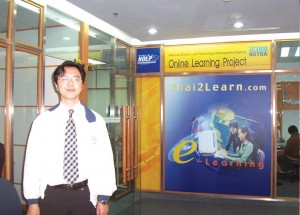 Online Learning Project (NOLP) is a project initiated by the National Science and Technology Development Agency (NSTDA) as part of the Thai government’s information technology and education policy to research, develop and promote the using of e-Learning in Thailand. NOLP provideseducational service and online learning facilities in line with the learner’s interests and aptitudes as mentioned in the National Education Act of Thailand. The project aims to increase the channels of education conveniently and flexibly through comprehensive web-based programmes.
The focus
NOLP primarily focuses on five main activities- • Research and Development of e- Learning Technology Platform (Both Server and Client Software) to meet the basic requirement of Thai’s Education and human resource development. By using open system technology, NOLP e-Learning Platform conforms to International eLearning Standard especially ADL SCORM Standard. • Research and Development of e-Learning tools for content development. NOLP focuses on Web based content authoring and managing tool, that facilitates the sharing of resource for the content developer and Content expert to work together. The
content developed by this tool must conform to SCORM Content Standard too.
• Demonstrate and develop the high-quality e-Learning content using fully interactive multimedia. By using ADDIE (Analysis, Design, Development,
Implementation and Evaluation Model), the content is designed and developed focus for the target learner. • Promote the understanding and use of e-Learning Standard for developer, users and decision makers to utilize such specification for their system • Train developer to have the capability to develop the SCORM
Content Standard NOLP consists of a team of specialists who caters to institutes and corporate partner’s needs through a detailed analysis of their difficulties and problems. NOLP e-Learning Development System (NeDS) enables teams of subject-matter experts (SME) to collaborate with NOLP’s production team on large-scale courseware project over the Internet. Using NOLP’s predefined templates and central content database, NeDS helps to eliminate many imeconsuming variables found in traditional e-course development methodologies and technologies. NOLP Manager, which is a browserbased set of tools that allows organization to manage e-Learning activities and site unctions for their e-Learning site. NOLP provides Courseware Hosting, Delicate e- Campus Servers, Co-locations Services, Back up, Maintenance and Mirroring of e-Campus Server. NOLP ‘s learning infrastructure provides facilities for tudent, teacher and content provider in the main areas of creativity pplication, information access, collaboration and content tools. All NOLP & nfrastructure Ls based on learning standards such as AICC, SIP and LRN for interoperability. Key initiatives
Learning Management System (LMS)
NOLP’s LMS initiative was a flagship initiative that enables student or customers to deploy and manage all aspects of their learning needs and to assess the skills and learning needs of their employees. NOLP has developed the NOLP-LMS version 2.1 that provides an easy and dynamic mechanism for instructor to deliver learning content, manage and monitor student participation, and assess
student performances. NOLPLMSTM also handles administrative functions such as course scheduling, registration, and enrollment.
The NOLP’s LMS supports AICC
compliant interface and content adapter technology, system managed assignment, scoring and tracking of elearning content from any kinds of authoring tools which compliant to AICC. NOLP’s LMS also supports the
delivery of multiple type of learning activities with in an institution or organization including instructor-led learning, training delivered on CD-ROM or e-learning courses delivered over an organization’s intranet or internet.
The technologies incorporated in LMS support integrated management solutions that are designed to scale from one to multiple servers while maintaining centralized administration to support a large number of oncurrent
users.
Content Authoring and Management system ( CAM) NOLP has also developed CAMS
(Content authoring and management), which is the web based software tools
for content authoring and Key features of the LMS
• Deliver and manage blended learning experiences
• User-defined hierarchical content structure
• Flexible learning sequence
• Support multiple learning sequence on single content structure
• Automatic learning evaluation with multiple grading-systems support
• Adaptive learning based on learning and testing score
• Prerequisite checking
• Classroom management with customizable schedule and seat capacity
• Support self-enrollment
• Individual and group registration
• Support bulk registration through batch file
• Support multiple-course registration
• Automatic waiting list management
• Manageable learner status and transferable learning records
• Provide course catalog and scheduling
• Support SCORM Vi .
2 conformant courses management. This software unlike other authoring tools uses Web technology. By this technology the content developer, instructional
designer, multimedia producers and subject matter experts can work together more effectively. NQLP CAMS enables the developer to create, store, assemble, manage and reuse digital learning content. CAMS provides an easy-touse environment with Template-based content creation in WYSIWYG mode. NOLP collaborative efforts NOLP has also worked closely withMinistry of Science and Technology to set up and operate the Science and Technology Knowledge Center (STKC) Project. The aims of this project is to promote Science & Technology for Thai citizen. As a part of the project, the biggest S&T portal in the country http://stkc.go.th has been set up. . The portal consist of 6 subsystems i.e. 1. Virtual Library 2. S&T Knowledge Bank 3. Forumdiscussion 4. Virtual Museum 5. e- Learning 6. eService . NOLP has been the key player to help the setup and operation of the project. For more information on NOLP visit www.Thai2Learn.com The Ministry of Science and Technology of Thailand has signed a MOU with Educational Institute in Canada (Vancouver School Board – VSB and Co-operative Learning Object Exchange -CLOE at University of Waterloo) to develop ‘Learning Objects’ for Science and echnology. ‘Learning Object’ by definition is the small chunk of content that is ‘selfcontained’ i.e each learning object can be taken independently. The first pilot of the Science and technology Learning Object (STLO) Project willdevelop 70 LO in Earth Science in bilingual.
Thai schools principals become facilitators for e- Learning
How can one lead a whole school to positive changes when ICT utilization is a major challenge at both classroom and individual levels? When ICT has brought changes to learning and teaching experiences, each school is the battle field for those changes. In an effort to examine and demonstrate how schools could adjust to change, The Ministry of education, Thailand launched a pilot project in schools that proved that principals of schools essentially become more important in bringing changes to their schools. The emerged “LEARN” Model encompasses learning, evaluating & monitoring, assisting, rewarding, and nurturing functions. Despite the promising roles and responsibilities to challenge changes, neither is the model a panacea for any similar program nor an absolute solution for any school in the kingdom. Dr.Rangsun Wiboonuppatum of the Bureau of ICT of the office of the permanent secretary, the royal Thai Ministry of Education, discusses the Ministry’s initiative and explains the LEARN Model.
Globalization is an interconnected and changed phenomenon in political, cultural, social, and economical spheres. Together with changes in those spheres, information and communication technology is emerged (Mittman, 2001). Although the emerging is not new, it affects social members greatly. In addition, the emergence of information and communication technology (ICT) use in education has already challenged many countries to increase accessibility in both quality and quantity to their citizens. Given the globalization together with rapid hange in technology, ICT is coming to be at the core of preparing students for successful participation in the knowledge economy and learning society (Kozma, 2001). To prepare students for the future, a society need to consider curriculum, instruction, technology, and management. Moreover, professional development is an important strategy focusing on how to equip teachers and principals with proper skills and attitude on ICT in education. During the past three decades, there has been considerable progress in integrating ICT into classroom. Computers have evolved from complex machines. This required sophisticated skills to operate them to simple tools that even young children can operate at ease. Over this same period, access to ICT has become more widespread. As educational software becomes available, and teachers and students have gained confidence and skills in using the technologies, ICT has moved from the computer lab to the classroom, and is now appearing in more and more homes (UNESCO, 2004). In order to improve educational administration and management in educational institutions, the Thai government has initiated an innovative framework in a project called, “Mini-Ministry of Education.” Inside the framework, the “Educational Innovation Committee” was established to supervise the project which will be implemented during the fiscal years 2003-2006 (MOE, 2004). The project, in which students will be regarded as individuals with different capabilities and aptitudes, included five types of model schools in the school year 2003 as follows: the state-supervised schools, bilingual schools, schools for gifted students, Buddhismoriented schools, and ICT Model Schools. This report will focus on ICT Model schools which are schools that apply ICT in developing the body of knowledge as well as integrating ICT into the teaching and learning process and the learners’ development activities. Originally, there were 12 schools and five universities participating in the project. The participating schools have been supervised by one of the following universities: Chulalongkorn University, Kasertsart University, Silapakorn University (Sanamchandra Palace Campus), King Mongkut’s University Technology Thonburi (KMUTT), and King Mongkut’s Insitute of Technology North Bangkok (KMITNB). Two years later, two schools and two universities; Thamasart University and Meafahluang University, joined the project after the establishment of the Bureau of Educational Innovation How has the project been implemented? The ICT Model School project aims toexplore alternative approaches on how to integrate ICT into school and classroom activities. It was to improve teachers’ professional development by asking collaboration from university professors (Wiboonuppatum, 2003). The university professors mainly help school staffs in empowering school teachers and principals to gain knowledge and skills in ICI application and integration in their nstruction as well as school management. The project has five major strategies: school and university collaboration, stakeholder participation, professional development, lesson-learned exchange, and collaborative learning among participating schools. First of all, the project brings university professors and schools teachers including administrators together to promote more effective use of information and communication technology (ICT). The principle also lies on asking more stakeholder participation. It is important for schools to take initiatives in ICT utilization. However, due to the limited funding, schools shall seek any financial support from various stakeholders (parent and community members). During the project implementing, all participating schools regularly meets at each school to take turn hosting the meeting event. The meeting purpose was also to visit and share idea and to exchange lessonlearned from each school to its peers. Within the collaborative framework, the professor universities also supported professional development to school teachers and administrators. The professional development mostly aims to enhance school teachers and administrators’ understanding on ICT utilization. Having ICT as hardware and software in schools does not guarantee the school staffs could integrate ICT for student’s improvement. Therefore, there were number of professional development series initiated by each participating university including Intel teach to the future, IT youth camp, Animation camp, Thik.com workshops, etc to ensure the students can benefit from the program. Moreover, the participating schools are built in the supporting network which school staffs share their expertise among themselves and also encourage each other during the project implementing period. The project has been initiated by the office of permanent secretary (the bureau of information and communication technology) during 2003 and was adopted by the office of basic education commission (the bureau of educational innovation) the following year. It was an interesting pilot project because each university takes its initiative in introducing ICT pedagogy integrated approached in a very limited resource. It was not a full funding project because the MOE needs also to see how the school will cope up with budget constraints and how university could help their partner schools to work in challenge situation both budget aspect and emerging of ICT in education context.
What are questions and data collection methods?
This is a report paper on a pilot project from the Ministry of Education. Although the project primarily aims on collaborative efforts among schools and universities, the report aims to answer one major question: what are school principals’ roles and responsibilities in the project that we can learn from the practical perspectives of school principals. In addition, the report should be able to shed light on how we as educators can prepare ourselves to the digital age in emerging new environment in schools. Moreover, there are few more questions: such as “How can one lead a whole school to positive changes when ICI utilization is a major challenge at both classroom and individual levels?”, “What recommendations from those administrators on deploying ICT integrated approaches in their school improvement plans and school development?” etc. I spent a number of hours talking to participating school principals about their vision and strategies including their participation in launching the project. This is an in-depth attempt to shed light on various related aspects. The method has to rely on the understandings, opinions, and perspective of various stakeholders (Wiboonppatum, 2002). In addition to those long hours meeting were conducted, I also conducted a focus group on how the principals would continue ICT utilization in their school contexts. Ten principals and four school ICT coordinators participated in the focus group. Moreover, ten school ICT coordinators participated in semistructure interviewed to reflect on how their schools’ principal support and manage ICT in school movement in their context. I gather all information and use content analysis technique by sorting out pieces of information in different themes. I then check the divergence and convergence of each theme under a major question posed in this section. Although this is a report, the data collection method has to be flexible enough to allow the process to adequately comprehend principal perspectives, to encourage informants to express their opinions effectively, nd have sensitivity to and curiosityabout what is perceived by various participants (Vidich & Lyman, 1998).
What are school principals’ roles and responsibilities?
The project has launched since 2002 with agreement among volunteering schools and universities. It was interesting that the principals must voluntarily agree to participate in the project. This approach also goes in the university side. Therefore, a crucial aspect of the project started from the participating schools and universities agreement on how to work in concert to make use of ICT in each school context. The principals were challenged by their own efforts. University professors were also challenged by their know how to integrate, help and foster ICT utilization in their responsible schools. The project has been consecutively conducted for three years. The major challenge is still on leaders. Some schools have done a wonderful implementation of ICT utilization in their school environment with assistance of university professors. It was also in concert with teachers’ and community nvolvement. Some chools have gradually improved because there were changed in the principal positions. Despite of different change shown at each school, principals’ roles and responsibilities can be described as the following figure.
Figure 1: ICT Model Schools’ Principal Roles & Responsibilities Model
This “LEARN” model represents how principals in the ICT model school project coping with the challenge happened in their school after their decision making on participating the project. The “LEARN” model is consisted of learning, evaluating & monitoring, assisting, rewarding, and nurturing function. Learning Function First and foremost function is “learning”. By participating in the roject, the school principals are asked by their university professors to put their efforts in studying some basic ICT knowledge. The principals could at least retrieve information prepared by their teachers. This is not only the matter of ICT knowledge gained, but it is also the matter of setting good examples for his or her teachers. In addition, there was the knowledge transferring from one who knows about ICT skills to learners across the different groups. More interaction and gaining respect among one to another naturally occurred. Therefore, the principals must act as “a learner” in order to understand and appreciate the ICT utilization in their schools. As a learner, they also to learn how ICT can be utilized in their schools setting. It was about
broaden perspectives on their ICT skills and uses.
Evaluating and Monitoring Function
In working in the pilot project, the schools have put more and more budget in their initiative. Although the Ministry of Education has provided some budget for running project, it was not enough. The intension from the Ministry was a kind of seed money. Therefore, each participating schools started their raising fund activities; from community members, teachers and parent associations, contribution from private sectors, etc. The role of principals must be extended beyond learning functionality. They must also become evaluators as to gain more understanding in the project and the use of ICT in their school context. The principals start collecting and analyzing relevant incidents on ICT utilization in school. The principals must be able to answer whether their investment in ICT in various forms creates an impact on students’ improvement or whether their ICT in school approach is really needed. This is because each school has been operated on budget constraint phenomena. Therefore, different schools in this pilot project allocated their very limited budget according to the necessary condition. Some schools spend on computers, communication technology, or professional development. However, they have been guided by their
university professors. Assisting Function
Due to the project is dealing with ICT utilization, some principal cannot help to think in terms of technology oriented approached. Therefore, some school principals have put their faith on their assistants. These assistants could be the assistants in line with the school structures or ICT school coordinator who the principal could rely on. In this manner, those principals must be very helpful in assisting their school staffs. It has clearly demonstrated that executive support is one of the best ways to drive awareness and usage (Bersin, 2004). What kind of assistance does a principal provide to their staffs? Based on the observation, there are many forms of assistance. A principal could help their staffs in encouraging other teachers to apply ICT in classrooms because it has to be a whole school approach rather a single effort. A principal could look for ways to help their teachers to integrate ICT in classroom activities. The principal make an explicit attempt in recognizing an ICT school coordinator as a resource person in the school. It was not only about assisting implementing the project, but also about giving a hand in various task required in other related activities. The principals sometime must release the staffs in other school activities to allow them effectively interact and involve in many forms of training occurring during the initial stage of the project.
Rewarding Function
From the project participation, it was clearly noticed that teachers in participating schools must be highly dedicate. They used their weekend for training (with support from their university professors). The teachers also spend sometime after school hours in capacity building. This resulted in having less time for themselves (it was also true for principals). To encourage their fellow teachers to gain strength in working in long hours in schools and a long term project, each principal has different techniques in rewarding their teachers. The teachers are highly appreciated by their principals for the past years. Common form of rewarding was the moral support from the principals. Although there were some cases received special promotion, the effective form was about soft skills of the principals. Working together with their teachers, and being present at each schools activities are regard as forms of rewards. Recognizing each teachers in public and extend their sincere appreciation are also effective.
Nurturing Function
The last observed function which the principals possess is “Nurturing”. It could be both easiest and most difficult role and responsibility for principals. Due to the ICT utilization in school and classroom activities may not show its impact in a short period of time, the principals, therefore must nurture their staff efforts and curiosity in ICT utilization in their schools. The principals then must foster the dedicated group of staffs in a way not creating a conflict in schools. Some schools have demonstrated the principal supports for ICT school coordinators while the principal also invite other teachers to be members of the group. This way was not only fostering and disseminating ICT utilization understanding among their teachers, but also to allow more people in schools to involve in the project. Some principals allow their staffs to fully engage in the project and support their decision when the staff needed. With this nurturing process, it was not only adding the flexibility in project implementation, but empowering
staff as well. ?
Development Gateway brings out Special Report on Online Education
The new Special Report of Development Gateway- 'Online Education: What Can It Deliver?' (http://topics.developmentgateway.org/special/onlineeducation) looks at lessons learned, innovations that work, and the future of ICT in education for developing countries. It coincides with related major international events, notably Digital Learning Asia 2006, Bangkok, Thailand, on April 25-28, and the 1st International Conference on ICT for Development, Education & Training, Addis Ababa, Ethiopia, on May 24-26.
Seven of the world's largest distance education universities, where students and faculty alike all use some form of computer-assisted learning are located in developing countries. For these communities, educational resources available via the Internet can offer cutting-edge applications of cyberspace. Yet, roadblocks
Websites to go user-friendly for disabled people
New guidelines on how to make websites more user-friendly for disabled people have been developed by the British Standards Institution (BSI). The work was sponsored by the Disability Rights Commission (DRC) after an investigation in April 2004.
The DRC's report into web accessibility found that more than 80% of sites posed barriers to disabled people. Called PAS 78, the guidance is intended for any organisation that has a public-facing website. PAS – or Publicly Available Specification – 78 describes itself as a guide to good practice in commissioning accessible websites. It is particularly aimed at the people responsible for commissioning and maintaining public-facing sites.
UK organisations with websites have been legally obliged to make them disabled-friendly since 1999. By following the new guidelines, site owners are likely to be on the right side of the law. The DRC also points out that businesses with accessible websites are in a much better position to tap into the estimated
Science graduates! Go US
Going to the US is set to become much simpler for students pursuing an advanced degree, such as a masters in physical sciences, technology and engineering thanks to the introduction of a new category of student visa, the F-4.
The Senator Arlen Specter's Immigration Reform Bill, currently being discussed by the US Senate Judiciary Committee proposes a new category of student visa (F-4) for students pursuing higher studies in mathematics, physical sciences, engineering and technology. In '04-05, there were 80,466 Indian nationals studying in the US. Of these, 57,976 were at the master's level. Senator Specter has some good news for all foreign students, irrespective of the course of study.
The Bill proposes to allow all students on an F visa to be eligible for off-campus employment unrelated to the field of study if they maintain a good academic standing and the employer attests to the educational institution and the department of labour that it has spent at least 21 days recruiting US citizens to fill the position and will pay the greater part of the actual or prevailing wage. Off-campus employment will be limited to 20 hours per week during the academic term and 40 hours per week during vacation periods and between terms. At present, international students on F visas are not allowed to take on off-campus jobs. While such a move would help international students tide over the college years, the Specter Bill proposes to raise the period of optional practical training from one year to two years.
At present, students graduating from US educational institutions can work for a year, even as they continue to hold a student visa, in a job that is related to their area of study. This would be applicable to all international students on an F category visa. The new category of F-4 visas would be valid for an additional year after the completion of the graduate programme, while the individual seeks full-time employment related to the field of study.