

Home Blog Page 303

J-K Lt Governor inaugurates 607 vocational labs, education portal and GIS portal

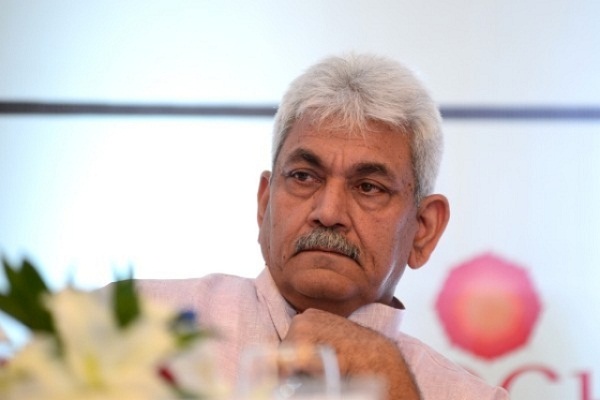
Manoj Sinha

J-K Lieutenant Governor Manoj Sinha launched 607 online vocational training labs, an educational portal and a GIS portal developed by Samagra Shiksha with the aim of strengthening the vocational education ecosystem in Jammu and Kashmir.

Speaking on the occasion, the Lieutenant Governor noted that important elements of the new education policy have been launched in Jammu and Kashmir, which will lay a solid foundation for employment-oriented education for youth.

According to NEP-2020, the focus in vocational education is to allow students to be job providers rather than job seekers, he said, according to an official statement.

“Comprehensive steps are being taken with the goal of improving the quality of education and securing the future of young people by closing the gap between schools and industry while taking into account the skill requirements of modern times,” said the lieutenant governor.

Also read: Education Ministry to rename 1,063 residential schools

Sinha stressed the need to integrate new skill sets, innovative activities and professional training into the school’s curriculum to ensure a better relationship between industry and university.

Highlighting the main benefits of vocational education, the lieutenant governor said that his goal is to reform the entire school education ecosystem and can go a long way in helping young people navigate the changing dynamics and trends of the job market.

Giving a detailed report on the measures taken to promote vocational education to J-K, BK Singh, secretary of school education, said that vocational education had been introduced in 715 public schools with a total enrollment of 44,000.

Vocational education is provided in 14 vocational trades through vocational training partners provided by the National Skills Development Corporation.

He said that the tradition of the teaching and learning process at JK is of supreme quality and even in the time of COVID, a large number of students and teachers have continued their training through online modality and community courses.

In addition, he reported that a special campaign would be launched from March 2021 to increase enrollment in schools.

Dr. Arun Manhas, Project Director, Samagra Shiksha reported that the GIS portal has been developed in collaboration with the National Institute of Electronics and Information Technology, to identify the geographic location of educational institutions and underserved homes.

The portal will be used as a GIS tool to display infrastructure details, enrollment details, ICT facilities, smart classrooms, professional labs, and resource rooms.

Bihar to promote class 1 to 8 students without holding annual exams

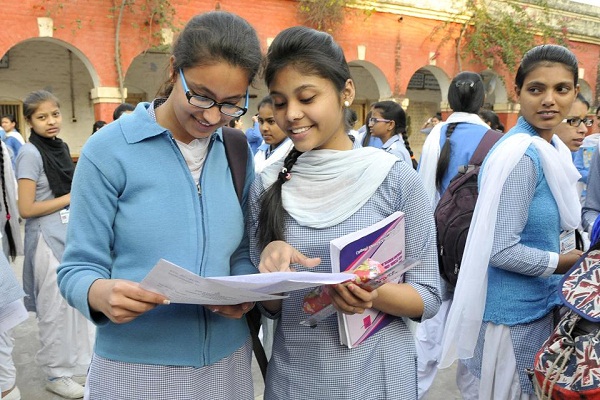
Bihar to promote class 1 to 8 students

According to the latest update, the Bihar Department of Education announced that all primary and elementary school students, grades 1-8 to the next school year without taking tests. The decision to promote Bihar primary school students was made by the state government, taking into account the academic losses that students are experiencing due to the COVID-19 closure and subsequent school closings. The announcement comes as the state prepares to hold annual exams for more than 13 lakh of students enrolled in the ninth grade. Exams for ninth graders are scheduled for February 26 – March 3, 2021.

As a result of this decision, around 1.66 million students in the state of Bihar who are currently studying between grades 1 and 8 will be promoted to the next academic class without having to sit for the final exam. The ruling applies to all public schools in the state. Last April, the education department also promoted students in grades 1-9 and 11 to the next class without taking the final exam because Covid-19 caused the school to close.

Also read: Bihar Board BSEB 12th result 2021 likely by March-end

In view of the academic loss of students, the Bihar state government has decided to hold intermediate classes for students in grades 1-8 for the next three months. The announcement was officially made by Chief Secretary Sanjay Kumar. On his interaction, he commented: “We decided to organize remedial classes for three months to make up for the loss of school. Students learn basic topics from the current curriculum so they won’t have a hard time studying in the next class. “

He added that the Pratham Education Foundation could be involved in organizing remedial classes and introducing the new education policy in the state. Mr. Kumar added: “The bridge course will be of particular benefit to students who have not been able to take classes online due to the lack of television, smart phones and the Internet. Make-up classes are expected to start in mid-March. “

EdTech firm WhiteHat Jr launches ‘Create with Math’ curriculum

whitehat Jr

Edtech WhiteHat Jr platform announced that it has expanded its portfolio with the introduction of the “Create with Math” program. This marks the entry of the company into new subjects, outside of its main line of coding training.

The company, which was acquired by Major Edtech Byju last year in a $ 300 million deal, plans to introduce several new themes in the coming months.

“At WhiteHat Jr, our core philosophy has always been to empower the next generation to be creators, not consumers, by channeling their natural creativity with an engaging curriculum and personalized 1: 1 attention from live teachers,” said Karan Bajaj, founder and CEO, WhiteHat Jr.

He added that WhiteHat Jr is working on launching various themes in line with his vision of establishing the world’s largest live learning platform.

Founded in November 2018, WhiteHat Jr helps kids create online business games, animations and applications using the basics of coding.

Also read: EdTech startup Little Leap raises seed funding

Today, WhiteHat Jr.’s 11,000 female employees teach more than 40,000 live 1: 1 online courses every day on its proprietary platform. To date, he has taught more than 1.75 lakhs to students from all over the world, including India, the US, the UK, Australia, and New Zealand.

Based on the United States Common Core Mathematical Standards, which are among the strictest global standards, the Create with Math curriculum is progressively reaching children in grades 1-8 in India and around the world.

The launch follows a detailed testing phase in hundreds of classes that received exceptional feedback from students, parents, and teachers.

“We have carefully designed the “Create With Math” program so that children can understand the ‘why’ behind math and confidently use it to solve real-world problems in their environment. We design the learning experience as a playground, where the child interacts with math and builds, ”said Balaji Ramanujam, director of learning at WhiteHat Jr.

UGC frames draft regulations for dual, twinning with foreign varsities

foreign varsities

The University Grants Commission (UGC) invited interested parties to draft regulation for “academic collaboration between Indian and foreign higher education institutions to offer joint courses, duplicate courses and twinning programs”. Interested parties can send their suggestions to ugcforeigncollaboration@gmail.com before March 5.

An official UGC statement says: “The announcement of the budget for 2021 proposed a regulatory mechanism to allow double degrees, joint degrees and association agreements.”

As a result, UGC has formed a committee that formulates the relevant licensing provisions. The draft of the UGC Regulation (Academic cooperation between Indian and foreign universities to offer joint degrees, double degrees and twinning), 2021 ”, he added.

Also read: UGC: Exams mandatory for university students

According to the draft guidelines, Indian higher education institutions can work in the top 100 of the university category of the National Institutional Ranking Framework (NIRF) or institutions featured with the 500 best institutes in the ranking of THE or QS World University.

“If an Indian higher education institution publishes an announcement that it offers a degree from a foreign higher education institution and this cooperation has not been approved by the Commission, the Commission will carry out a preliminary investigation on the outcome of its investigation. The Commission will take appropriate sanctions against Indian higher education institutions, ”says the draft directive.

PM Modi asks students to help farmers and artisans

PM Modi advocates

Prime Minister Narendra Modi praised Visva Bharati for her inspiring heritage and on Friday asked his students to help farmers and artisans in villages adopted by the institution find global markets for their products.

He said that Guru Rabindranath Tagore did not see the university as a typical educational institution, but as one that would help Indian culture to reach its full potential.

Addressing the convocation of Visva Bharati, the country’s oldest central university, Modi said that knowledge is not a “silent and static concept, but a dynamic one.” “I urge the students and faculty at this inspiring institution to help farmers and artisans living in the villages adopted by the institution to find global markets for their products. This will be a step towards building a Bharat be ‘Atmanirbhar’ (autonomous). He said. He told the congregation that knowledge comes from responsibility and that the knowledge they acquire is not only theirs, but is a legacy for future generations. “Their knowledge and skills can make society proud, but they can also lead them to the darkness of ruin.

Also read: Nishank : Pariksha Pe Charcha 2021 with PM Modi to be held in March

There are many examples in history and in the present. “Among those who sow terror and violence, you will find highly educated and trained people in the world. On the other hand, some people work day and night to rid the world of an epidemic like that of Corona. The most important thing is the state of Cheer up, ”he said.

The Prime Minister said that the national education policy is an important step in building an independent India as it stimulates research and innovation. India could not become Atmanirbhar without the self-confidence of her daughters. The new national education policy with a fund for gender inclusion is an important step towards building an independent India. He encouraged young people to take risks without fear of failure.

Delhi DoE to CBSE board aspirants: Fill answer sheets with anything

Delhi DoE to CBSE board aspirants

Delhi’s Director of Education Udit Rai stoked controversy after a video surfaced on social media in which he is purportedly asking students at a government school to “fill answer sheets with anything” during exams but not leave them blank.

During his interaction with class 12 students, he said the Central Board of Secondary Education (CBSE) has been asked to give marks to students as long as they write something in their answer sheets.

In the video, Rai is seen instructing class 12 students to “fill the answer sheets”.

Also read: CBSE Board Examination 2020: Class 10 results to be announced on this date

“If you don’t know the answers, write anything. Copy the questions in the answer slots but don’t leave the answer sheet blank. We have spoken to your teachers and they have said that they will mark you provided something is written in the answer sheets. We have also told the CBSE that if a child writes something, they should be marked,” he said.

Despite repeated attempts, Rai did not comment on the video. CBSE officials also declined to comment and said the education department could “give context” to the video. A senior Delhi government official said Rai’s speech had been “taken out of context”. The BJP and the Congress hit out at Rai and the Delhi government over the video.

JEE Main 2021 Exam: NTA issues Fresh COVID-19 guidelines for exam day

JEE Main 2021 exam

The National Testing Agency (NTA) has published the recommendation for JEE applicants regarding COVID-19, as well as the publication of the JEE Main 2021 admission card. The NTA will implement social distancing measures during the JEE Main 2021 exam, according to the Indian government guidelines implemented on the current situation of COVID-19. Exam dates for JEE Main 2021 in February 23-26.

In accordance with the notice issued by the NTA, appropriate steps will be taken to ensure student safety without compromising the high standards, sanctity, and fairness of conduct of JEE Main 2021. Applicants must adhere to all daily guidelines JEE Main 2021 exams to ensure the safety of your own candidates and others.

Standard operating procedures for safety and compliance with the required hygiene standard are implemented prior to the start of the test. Living room is being renovated including keyboard, mouse, webcam, desk and chair. Also, all door handles, handrails, and lift buttons are sanitized.

According to the Indian government guidelines, a space is maintained between two seats.

Also read: JEE Main Admit Card 2021 to be released on Feb 14

Hand sanitizers will be available at the JEE Main 2021 test center. In addition, heat guns are used to monitor body temperature.

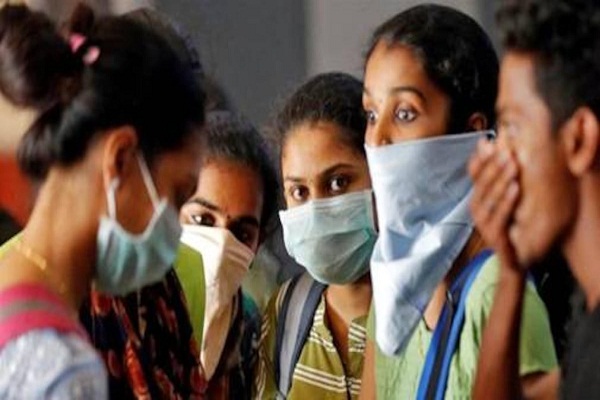
Candidates will be provided with a fresh three-ply mask before entry. Students will have to remove the mask worn by them from home and wear the one provided by the authorities.

For any rough work, A4 size sheets will be kept at each candidate’s desk.

Candidates will be required to sign the attendance sheet only after sanitizing their hands.

After the completion of the JEE Main 2021 exam, candidates will be permitted to leave the centre one by one.

Candidates will have to drop their JEE Main admit card 2021 and rough sheet in the box after displaying it to the invigilator.

CGBSE Class 9, 11 exams 2021 to be conducted offline

CGBSE Class 9, 11 exams 2021

Chhattisgarh private schools have decided to organize the annual exams for students in the ninth and eleventh grade in offline mode this year. According to private schools in the state affiliated with the CBSE or the State Board, students receive a correct grade when exams are taken offline. According to the dates indicated in the official website CGBSE grade 9 and 11 exams will be held in March 2021.

Some schools have reportedly mentioned that the assessment of online exams is not done correctly and that many students also experience technical problems when taking the exams. School authorities believe that online tests cannot contain descriptive questions because downloading too many answer sheets becomes a problem for students taking the tests.

Public schools affiliated with the Chhattisgarh Board of Trustees are also likely to conduct annual exams for students in grades 9 and 11 offline. The exams are conducted by the schools and the questionnaires are provided by the respective schools. Public schools are expected to start teaching 9th and 11th grade students from the first week of April 2021, as the Chhattisgarh Council exams begin on April 15, 2021.

Also read: Chhattisgarh Board declares CG Board 12th result 2020

Many state private school administrations have confirmed that the curriculum for grades 9 and 11 is nearing completion and that the remaining parts of the schools are near completion as they reopened on February 15, 2021.

Schools in Chhattisgarh have reopened to students after being closed for nearly 11 months since March 2020 due to the COVID-19 pandemic and closure. The board also called for schools to reopen to follow state government guidelines and protocols to keep students safe.

Nishank : Pariksha Pe Charcha 2021 with PM Modi to be held in March

Pariksha Pe Charcha 2021

Union Education Minister Ramesh Pokhriyal ‘Nishank’ said Prime Minister Narendra Modi’s annual interaction with students ‘Pariksha Pe Charcha’ will be held online in this year in view of the COVID-19 pandemic.

The interaction with students from classes 9 to 12 ahead of their exams will be held in March, the minister said. “I feel happy to share that the interaction every student was waiting for is back! Get ready to smile your way through exams with PM @narendramodi in #ParikshaPeCharcha2021,” he said in a tweet.

“In view of the COVID-19 pandemic, this year the interaction will be conducted online,” he said in another tweet. The registration for the programme will begin from Thursday and conclude on March 14. Students who will get to ask questions will be selected through a competition.

Also read: Pokhriyal: Mulling to conduct NEET exams more than once

The first edition of the prime minister’s interaction programme with school and college students ‘Pariksha Pe Charcha 1.0’ was held at Talkatora Stadium on February 16, 2018.

Last year, the event was held at Talkatora Stadium in New Delhi and was attended by students, parents, and teachers from respective schools as well. The Ministry of Education had received 2.63 lakh entries from students to participate in ‘Pariksha Pe Charcha’; of which the ministry selected about 1,050 students.

Google brings 50 new distance learning software tools

distance learning software tools

The need to learn and teach everywhere will not stop even after the end of the COVID-19 pandemic, said Google CEO, Sunder Pichai, saying there was an “incredible” opportunity to see him Keep Learning to Reimagine.

Google introduced more than 50 new distance learning software tools on Wednesday as teachers and students continue to meet in virtual classrooms during the COVID-19 pandemic.

“The need to learn and teach from everywhere will not stop even if the pandemic stops. We have an incredible opportunity to redefine learning for the future. That is why we have learned and taught last year. We made education a goal formal” said Pichai, 48. He said the company’s main mission is to organize the world’s information and make it widely accessible and useful. “The two are closely related. Learning makes information useful and enables people to apply the knowledge to make things better for themselves, their families and their communities,” he said.

Also read: Google join hands with CBSE to train 1 million teachers

According to Google, 170 million students and teachers around the world use Google Workspace for Education to create, collaborate and communicate. In June 2020, 140 million people were using G Suite for Education. Today, Google Classroom helps more than 150 million students, teachers, and principals around the world teach and learn, up from 40 million last year. Ben Gomes, Google’s senior vice president of learning and education, said technology is helping provide more tools and resources to support teaching and enable more learning.

Whatever their experience, everyone can and should have access to great learning experiences. The goal is to help people transform and reach their full potential, he said. The COVID-19 pandemic continues to blur the lines between home and classroom and it takes everyone – teachers, parents and extended families – to work together to make it through the school day, Gomes said. This challenge is also compounded by uneven access to devices, poor connectivity, and sometimes the digital skills required to use all the tools, he added.

LATEST NEWS