Home Blog Page 327

CM Gehlot: Rajasthan Teacher Eligibility Test to be conducted on April 25

CM gehlot

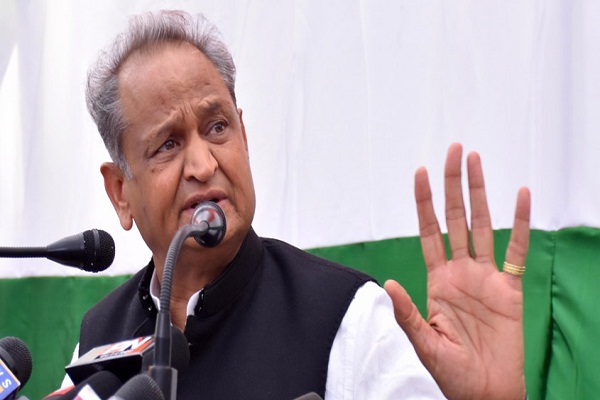
Rajasthan Teacher Eligibility Test or REET would now be conducted for April 25, 2021. Chief Minister Ashok Gehlot announced the exam dates for the recruitment of 31000 teaching posts in the state at the occasion marking two years of the Rajasthan Government.

The examination has been pending for over two years now. Usually to be conducted once or twice every year, Rajasthan TET or REET as normally called, was last conducted in 2018. As many as 9.50 lakh candidates had appeared for the examination. The date for the next examination was not announced.

Announcement was made by Chief Minister as he listed out the many accomplishments of the Rajasthan Government over the past two years. Education minister Govind Singh Dotasra had also tweeted two days ago that the announcement of the REET Exam date would be made soon. Tweeting the date of April 25, 2021 a set for REET, he congratulated the youth of the state.

Also read: NCTE extends certificate of teacher eligibility test validity for a lifetime

Dotasra had also shared the intent of shifting the organizing responsibility to the Board of Secondary Education. Details on REET 2021 would be published on the official website of Rajasthan Government.

Recruitment of 31000 teaching posts has been pending in the state for quite a while now. Many candidates had reached out to Education Minister over the past year, seeking clarity regarding the pending examination. More details regarding REET would be announced soon on rajeduboard.rajasthan.gov.in.

Ed-tech Revolution

Ed-tech Revolution

Education as a field has been massively and positively influenced by technology. And this influence will be even greater by 2030. In recent times, technology has influenced how businesses are operating from last few decades by Pankaj Samantray of Elets News Network.

E ducation technology is already part of our lives when it comes to learning, thanks to Coronavirus pandemic. It is difficult to find a part of our lives that technology hasn’t influenced fundamentally. Educational technology is here for facilitating learning and improving academic performance.

The COVID pandemic has accelerated the usage of technology in education sector.

Education as a field has been massively and positively influenced by technology. And this influence will be even greater by 2030. In recent times, technology has influenced how businesses are operating from last few decades.

Also read: Is Indian Education Sector Ready for Industrial Revolution 4.0?

Education is as old as humanity itself. Our ancestors were educated within the family or tribe on how to farm, use tools, make fire, and hunt. Eventually, education became confined within the various priesthoods of ancient civilisations’ until the Greeks established the likes of philosophical mentorship.

In the last 2,000 years, there have been an array of education options, such as tutorship, apprenticeship, and seminary school, up until the 19th century when the concept of K-12 (publicly-supported school grades prior to tertiary education) took hold, existing alongside private, higher education institutions to this day.

Now, with the advent of sophisticated digital technologies, EdTech is empowering educators to expand their reach, while also empowering students to be able to learn independently via educational software.

There are, also, many online libraries that assist teachers and students with comprehensive reading material. Teachers and lecturers are also given the opportunity to post their teaching material online for their students to study.

With the current rate of growth in the technology sector, future educational technology is likely to advance the quality of education or even the ways we teach and learn.

Digital transformation of many educational functions will happen incredibly fast. This transformation can be managed in-house or by outsourcing it to third-party service providers with expertise in specific industries. It’s already a fact that many educational organizations are adopting cloud-based technologies for marketing and recruiting, as the competition for attracting the best students is increasing.

Multi-channel admissions experiences, where prospective students can interact not only by phone and email but also via social networks, video chat, and other similar technologies, will soon be the norm.

Also, alumni relations will quickly be adopting modern communication tools to improve alumni engagement. Finally, as the number of on-campus students possibly decreases, other critical functions such as college counselling, career services, and tech support will all be moving to a primarily digital delivery system.

The future of technology in education is about adapting to the fast-changing world, giving students an opportunity to choose their own way of learning, combining theory and practice, always considering the current demand on the job market.

Educators, Ed Tech entrepreneurs, as well as people actively involved in education, are trying to make realistic scenarios on what is the future of education technology. All this by taking into consideration the investments that are being made into education and the fact that the global expenditure on education is projected to reach $10 trillion by 2030.

Education will be the most important asset for people and their governments in the future. As global population grows, the education market and its complexity are massively growing too. New skills are entering the picture and as automation is prominent in our every-day lives, kids may be trained for jobs that do not exist right now.

In addition, the number of students will be greatly increased with the major driving forces being Africa and Asia, continents that today have a great number of kids who still do not have access to education.

According a survey, there are five major scenarios of how the education technology landscape could evolve:

Education-as-Usual: This is the scenario that represents education as it is today. Institutions are the main source of education and education technology contribution is present but not a major issue.

Regional Rising: Regional cooperation is the act of enhancing relationships through regional rules and institutions in the same state or region. Regional integration has the objective of better cooperation for political and economic purposes. Global Giants: With the internet playing such a prominent role in our lives nowadays, globalization barriers have been removed when it comes to education technology. And this outcome will be even more prominent in the future. Personalized experiences in education will be created and global giants and multinational companies will most likely invest in education and educational technology. Peer-to-Peer: Online learning will be the new norm. The peer-to-peer economy will dominate the way we live, work and learn. Smartphone ownership shapes learning delivery and students will be able to, literally, carry their learning experience in their pockets. Distributed ledger technology underpins the peer to peer economy and supports skills verification.

Robo revolution: The advancement of artificial intelligence technology will impact global economic growth by 2030. AI applications and algorithms will replace humans in repetitive tasks and teaching will be assisted by technology. At the same time, new jobs will be hopefully created in order to create and upgrade AI algorithms. Technology in 2030 will play a critical role in education as well as in technology-assisted learning processes. It will be focused on information processing, decision making as well as learning. It will help students have a more comprehensive learning experience.

Another exciting possibility that EdTech can bring to the table is to bridge the gap between theory and application by developing experiential learning technology – which is often lacking in a traditional classroom curriculum.

The percentage of jobs requiring AI skills has grown four times since 2013, by 2030 all industries will use AI and robotics especially in the field of marketing and sales. Customer service is a big user of AI technology such as chatbots, product selection and customer classification/routing. That means that traditional jobs in these fields, such as customer service, may disappear.

Mobile devices are already a big part of our lives and this connectivity will certainly shape how learning happens in the classroom. By 2030 half the world’s youth will live in countries with a mobile-first internet connection. Face to face learning will probably be the old way of learning and thus new ways of transferring knowledge through mobile devices will be adopted by teachers and institutions.

Also read: India will be the torchbearer of Industrial Revolution 4.0, says Navin Mittal

Learning management systems dominate online environments in every field of education. However, newer technologies with a focus on interaction rather than file management will take over in the future. But, the most important thing is that the learning management system objective is and will stay the same: making sure everyone in the education field is working towards a better future and all this with the help of technology.

When it comes to higher education, EdTech is still lagging. In order to really encourage students to invest their time in online higher education, the rewards need to be there. Hopefully, as distance learning technologies develop further, high-quality education will become increasingly affordable. Ultimately, the goal of EdTech should be to make superior education accessible to people of all backgrounds. If used correctly, it can be a powerful weapon for social equality. It’s encouraging to see that there is such eager investment into the industry, but only time will tell if the industry lives up to its expectations.

Educational technology is not only a simple upgrade into the educational world but a key to better collaboration in education and thus a better future for us and our children.

The world of education is likely to constantly change and develop in a rapid way over the next few years, not just in the application of new technologies but also when it comes to learning. Educational institutions must not only focus on their day to day operations but also figuring out how they will better use technology for enhancing the learning process.

Punjab CM launches second phase of Smart Connect Scheme

Amarinder-Singh

Punjab Chief Minister Amarinder Singh virtually launched the second phase of the “Punjab Smart Connect Scheme”, marked by the distribution of smartphones to another 80,000 Class-12 students of government schools.

The event witnessed simultaneous distribution of phones in 845 schools by various ministers, MLAs and other dignitaries across the state, an official statement said here.

This will facilitate seamless e-learning in government schools amid the COVID-19 pandemic, it said.

Launching the second phase at the Government Senior Secondary School in Bhelolpur, the chief minister announced that the remaining 45,443 smartphones of the targeted 1,75,443 would be provided to students by the end of this month to fulfil the Congress government’s commitment to further strengthen digital infrastructure in schools.

Also read: Punjab CM virtually inaugurates 1,467 smart schools

He said while his government had tried to distribute these phones urgently to meet the online education challenges amid the pandemic, the closure of the industry had somewhat delayed the process.

In the first phase, 50,000 students had received smartphones. Under the scheme, the state government is spending Rs 87.84 crore for the digital empowerment of 88,059 boys and 87,284 girls, the statement said.

The chief minister said 877 tablet computers were also provided in 22 senior secondary schools on Friday at a cost of Rs one crore. Earlier, 2,625 tablet computers were provided to 372 primary schools at a cost of Rs 2.99 crore.

Addressing the students, Singh said when the Congress had promised that smartphones would be given to students in its manifesto for the last Assembly polls, nobody knew that these phones would become so vital for them due to the pandemic.

Bihar to reopen schools from January 4

Bihar School

In a major move, Bihar government said that all schools and coaching institutes in the state will open from January 4 2021. The government has said in its order that senior sections of all schools will be opened.

Also, the hostel has been ordered to open. In the order issued on the opening of schools in the state (Bihar School Reopen latest date), it has been said that the government will give masks for all schools for free.

Also read: Bihar government to promote students from class I to IX

In all government schools, students will get masks for free. First senior section schools will be opened and then after 15 days, junior class schools will be opened.

This decision was taken at a meeting of the disaster management committee on Friday. This information was given by Chief Secretary Deepak Kumar.

The children will be called in half, so that social distance maintenance can be done. Schools and colleges will also open for the rest of classes from 18 January.

UPSC releases UPSC Civil Services mains admit card

UPSC Civil Services mains admit card 2020

Union Public Service Commission (UPSC) has released the UPSC Civil Services mains admit card 2020. The UPSC mains admit card 2020 will be available for applicants to download till January 17, 2021. Candidates can download the UPSC IAS 2020 mains admit card from the UPSC official website – upsc.gov.in.

Candidates who cleared the UPSC Civil Services prelims exam 2020 held on October 4, 2020, are eligible to appear for UPSC IAS mains exam 2020 to be conducted in January 2021.

Applicants qualifying the UPSC IAS 2020 mains examination will be then eligible for the UPSC IAS 2020 personality test.

Also read: UPSC declares CDS 2 exam results

The UPSC CSE mains exam 2020 is scheduled to be held on January 8, 9, 10, 16 and 17, 2021.

Steps to download UPSC Civil Services mains admit card 2020:

Visit the UPSC website – upsc.gov.in

Search for the UPSC CSE mains admit card 2020 link and click on it

Enter the UPSC CSE 2020 login credentials and press submit

The UPSC IAS admit card 2020 will appear on the screen in PDF format

Download and save the UPSC mains admit card 2020 for future use

AICTE conducts conclave to enhance quality of faculty development Programmes

AICTE

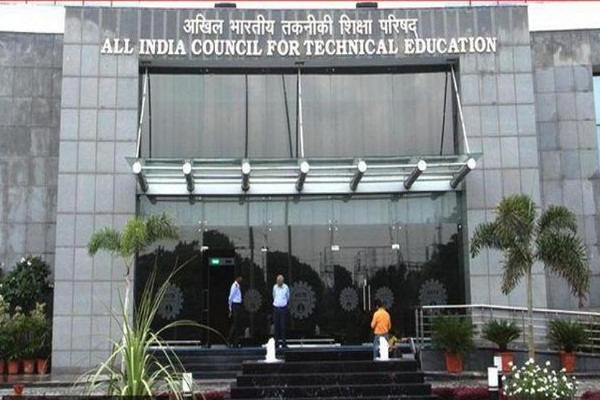
All India Council for Technical Education (AICTE), conducted a national level brainstorming ATAL Conclave, convened to enhance the quality of Faculty Development Programmes (FDPs) for upgrading the skills of teaching staff in emerging areas in technology.

The two-day conclave witnessed the sharing of good practices, valuable feedback and suggestions for future FDPs, by the participants. The conclave was attended by Head of Institutions, Vice Chancellors of various prestigious universities, Directors of premium institutions like IIT, IIIT, NIT, NITTTR, and other dignitaries.

Speaking about the conclave, AICTE Chairman Prof. Anil D. Sahasrabuddhe said, “Constant and life-long learning should be the motto of faculty members as well as students. AICTE bridges this gap by training faculty members who in turn will guide students in new emerging areas.

Also read: Maintenance allowance of Rs 20,000 to be released under PMSSS by AICTE

As most of the faculty members graduated 15-20 years back, their knowledge needs to be updated as per the current times. In these testing times, AICTE provided impetus to conduct online ATAL FDPs so that no faculty members may lose out training due to the pandemic situation.” Prof Sahasrabuddhe added, “What students learn in four years may become outdated the moment they graduate from college.

So, constant updating of curriculum is also required. In the year 2020-21, new thrust areas in the field of Engineering, Management, Life Skills, Design & Media have been incorporated too to make ATAL FDP a wholesome effort to train faculty members coming from every stream. Indian Knowledge System too has been incorporated by AICTE which will instill values among students about our ancient culture and tradition.”

Panel: Exempt IITs from reservation in faculty recruitment

iit

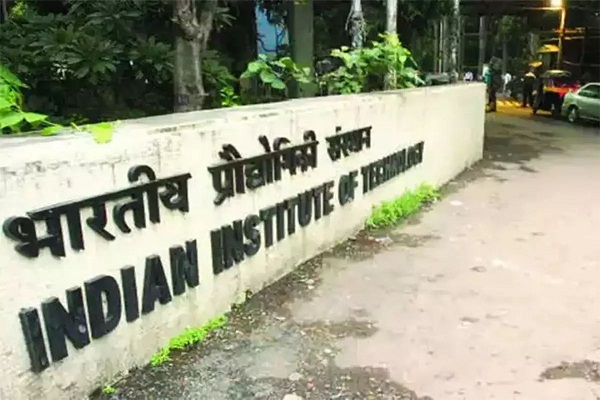
Ministry of Education (MoE) panel has recommended to exempt Indian Institutes of Technology (IITs) from reservations in faculty appointments and rather than specific quotas, diversity issues should be addressed through outreach campaigns and targeted recruitment of faculty.

The eight-member committee comprising IIT directors was asked to suggest measures on effective implementation of reservation policies not only in recruitment, but also for admissions.

“Being established and recognised as institutions of national importance under an Act of Parliament, IITs have ought to be listed under (clause 4) of the CEI (Reservation in Teacher’s Cadre) Act 2019, for exemption from reservations. This must be immediately reconsidered for inclusion of IITs in the Schedule taking into account the nature of these institutions, duties and their activities,” the report sought through RTI by a Lucknow based activist said.

Also read: IIT Delhi tops among Indian institutes in employability

“In order to compete with other top institutions in the world in terms of excellence, output, research and teaching, a system emphasising targeted goals over a period of time, rather than specific quotas, to address diversity issues through outreach campaigns,” it added.

At present, eight institutions are listed under the clause ? the Tata Institute of Fundamental Research in Mumbai, National Brain Research Centre in Gurgaon, North-Eastern Indira Gandhi Regional Institute of Health and Medical Science in Shillong, Jawaharlal Nehru Centre for Advanced Scientific Research in Bengaluru, Physical Research Laboratory in Ahmedabad, Space Physics Laboratory in Thiruvananthapuram, Indian Institute of Remote Sensing in Dehradun and Homi Bhabha National Institute and all its 10 constituent units in Mumbai.

Kasturirangan: NEP aims to touch every citizen’s life

K Kasturirangan

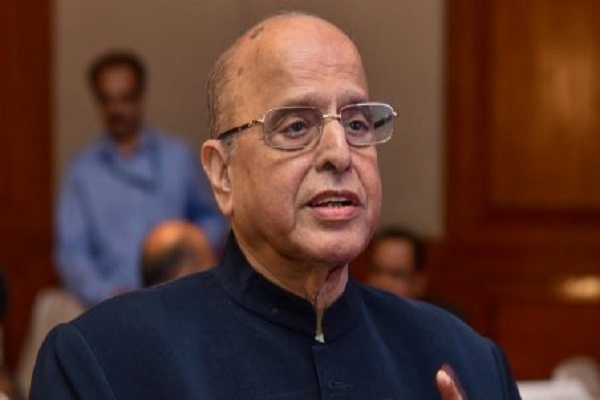
Chairman of the committee that drafted the National Education Policy (NEP) 2020, K Kasturirangan said the vision of India’s new education system is to ensure that it touches each and every citizen’s life and creates a just and equitable society. He was speaking at the 17th convocation ceremony of the Symbiosis International University (SIU).

Kasturirangan said the NEP provides an integrated yet flexible approach towards education and emphasis is given in the policy to the aspect of holistic, multi-disciplinary education as a foundational component at all levels of education. “The vision of India’s new educational system has been crafted to ensure that it touches the life of each and every citizen consistent with their needs and necessities, besides creating a just and equitable society,” he said.

“The approach is to realise a new system aligned with the aspirational goals of the 21st-century education while remaining rooted to India’s value systems and ethos,” said Kasturirangan.

Also read: Kasturirangan: NEP will contribute to 21st century education goals

He added that “liberal education” in the contemporary discussion has its origins in India’s age-old idea of liberal arts dating back to almost 1,400 years. “In the modern-day social and economic landscape, this age-old Indian concept is now finding recognition in a new form.

Liberal education explores the remarkable relationships that exist among the sciences and humanities, mathematics and arts, medicine and physics, etc, and more generally, the surprising unity of all fields of human endeavour,” he added.

DU to introduce four-year UG course

DU

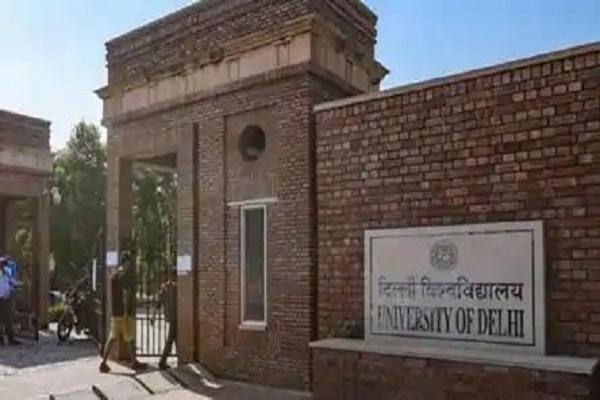
As a part of the implementation of the new National Education Policy, Delhi University will be introducing a four-year undergraduate course. The move is however being opposed by the teachers association. In September 2020 the university formed a committee to formulate the guidelines for implementing the new NEP which was announced in June.

According to an official of the university the committee members last week received an email regarding the curses to add to their guidelines which include four-year undergraduate courses.

The university had earlier introduced the four-year undergraduate programmes in 2014 which was however scrapped by the government after huge protests by students and teachers in 2014.

Also read: Delhi University Vice Chancellor Yogesh Tyagi suspended

Officials have further added that according to the proposed plan honours courses will be recast into majors in four years and the students will not get an honours degree in three years. The language courses and smaller departments are not offering honours courses will close down and the students can choose to exit from the courses after the first and second year and they will get a certificate and diploma respectively. No official decision has however been taken on the matter yet.

Academic Council member – Seema Das while speaking about the four year programme stated that the suggestions are not to reduce the number of core papers up to the third year, considering that in the fourth year and if a student is expected to do research the knowledge of core papers will provide the foundation necessary for conducting the said research.

LATEST NEWS