




Home Blog Page 353

IGNOU allows provisional admissions for July session students

IGNOU allows provisional admissions

In a major development, Indira Gandhi National Open University (IGNOU) will now be allowing students to apply for the ‘provisional admissions’ to the undergraduate, postgraduate, diploma, and certificate programmes offered by the university.

Candidates will be able to apply for the provisional admissions at IGNOU for the July 2020 session without submitting the mark sheets or results at the time of admission.

The students who wish to apply for the higher education programmes are thus not able to produce the results of their qualifying examinations. The university further added that it will grant provisional admissions in order to provide relief to the students and adhering to the guidelines issued by the University Grants Commission.

Also read: IGNOU extends re-registration date for next semester

It must also be noted that in order to apply for the provisional admissions for the July 2020 session students are required to provide the documents and mark sheets along with qualifying the minimum eligibility criteria which is an undergraduate degree.

Candidates who will be granted provisional admissions will be required to submit their documents including the passing certificates and results of the qualifying exams by December 31, 2020. The admissions of the candidates unable to submit the documents will be cancelled and the fee received will be refunded.

Sisodia: Panel to summit curriculum report by next week

Manish Sisodia

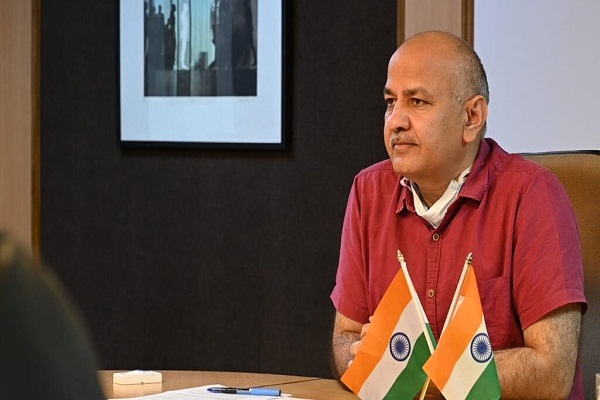
Deputy Chief Minister Manish Sisodia said two panels constituted by the AAP government to work on an education board of Delhi and new school curriculum are expected to submit their reports by next month.

Sisodia reviewed the content of deshbhakti curriculum for Delhi schools and chaired the third joint review meeting of the committees to take stock of the progress so far.

The two committees — Delhi Education Board Committee and Delhi Curriculum Reform Committee — were constituted in July 2020 to recommend new curriculum for children up to the age of 14 years and setting up of an education board.

Also read: Sanskrit should play a role in nation building: Manish Sisodia

According to Sisodia, both panels are expected to submit their reports by next month.

“Assessment would be the basis of deshbhakti curriculum. Understanding of the teacher on where her child stands today and subsequently thereafter on issues like inclusiveness, gender, different forms of discrimination, integrity, care for public property and natural resources, etc. would be the key to enable the child to become true a deshbhakt, Sisodia said.

During the meeting, the new curriculum committee presented the curricular design for enabling children in the age group of 3-8 years with diversity of knowledge, competencies, values and attitudes.

Along the similar lines, the committee will recommend curriculum for children in the age group of 8-11 and 11-14 as well.

Ed-tech start up Winuall raise Rs 14.7 cr fresh funding

Winuall raise Rs 14.7 cr fresh funding

In a major development, online education platform Winuall has raised Rs 14.7 crore from Prime Venture Partners, Beenext, Ramakant Sharma, the founder of LivSpace.  Winuall works with small institutes and coaching centres to digitise the learning experience for students with online classes, live sessions and assessments.

Winuall CEO Ashwini Purohit said “With the ongoing pandemic, this investment is a testament to how newer trends of online learning will emerge in the times to come. Our aim is to enable tutors in India to go digital and improve the quality of learning for students.”

The company will use the funds to enhance its product and also hire across technology, product and business development verticals. It has set a target of adding more than 20,000 coaching institutes and serve more than three million students across the country by the end of 2021.

Also read: Ed-tech firm Stayqrious raises Rs 14.7 crore in seed funding

Founded in 2019 by Purohit and Saurabh Vyas, Winuall offers a SaaS plug-and-play platform on a subscription model for tutors and coaching institutes.

These centres, typically run by a single teacher or a group of tutors, can become fully digitised through this solution. It brings into play tools like live classes, online quizzes, online courses and others.

Winuall has more than 3,700 coaching institutes on board across the country, with over 5000 tutors using the platform.

Suresh Kumar: Karnataka not to reopen schools anytime soon

Suresh Kumar

In a major development, Karnataka Education Minister S Suresh Kumar has informed that the state government has no intention to reopen schools anytime soon in the state. Earlier, CM BS Yediyurappa, had rubbished the speculation about reopening of schools amid the coronavirus scare.

S Suresh Kumar took to his social media account to assert the same. Take a look at his tweet below. The CM of the state also said that there had been debate on the reopening of schools and he was also aware of the media buzz surrounding this.

The chief minister ascertained that before deciding to re-open schools, several meetings would be held with the political leaders, experts and senior officials to arrive at a decision, regarding the pros and cons.

Also read: Karnataka private schools request state govt to reopen schools

“Till then, I appeal to the parents not to heed to the speculations regarding the opening of schools and I appeal to the media to spread awareness about it,” Yediyurappa said.

S Suresh Kumar said, “Neither our government nor the Department of Education is rushing to open schools under any circumstances. The health and safety of our children is very important to us,” he added. He informed the people through his Facebook post that he had heard the opinion of the MLA’s about 9 days ago.

Kumaraswamy said, “ the government should not be adamant on the issue or budge to pressure from some people who want to make money, and play with the lives of the children and parents.”

EIS aims to achieve holistic well being of learners

Dr. Nikhil Wagh

EIS is at an advantage as major reforms suggested in the NEP for school education are already put in practice, Dr. Nikhil Wagh, Chairman, Educon International School in an interview with Elets News Network (ENN).

Educon International School one of the premier schools in the country, how the journey started and what was the idea behind it?

EIS is a outcome of passionate , committed and dedicated educators working together adapting a new paradigm of education through plethora of innovative teaching /learning pedagogies revolving around a simple education philosophy “If the child is not learning the way you teach , teach the way the child learns “.

Also read: Assam Valley School aims to create global citizens

The name EDUCON was derived from the parameters of education ecosystem that need to be experienced and reflected at an institution:

E – Excellence in Education
D – Dedication in imparting Quality Education
U – Unique Innovative Concepts of Teaching Pedagogies
C- Commitment towards Building a Nation
O- Optimistic approach towards Learners
N- Nurturing Young Minds with care and affection

How is EIS preparing to adapt NEP as things will change drastically in coming days?

EIS welcomes NEP and sees it as a much awaited reform in education sector, the NEP envisages a pragmatic approach towards education ecosystem of our country by undertaking major reforms that bring the highest quality, equity and integrity into the system from Early Childhood Care and education through higher education.

EIS is at an advantage as major reforms suggested in the NEP for school education are already put in practice at EIS such as Conceptualization of Learning, flexible assessment modules linked to learning outcomes, Pedagogies to make education more experiential, holistic, integrated, inquiry driven, discovery oriented, learner – centred, discussion based, flexible and enjoyable.

Usage of Technology in school education, how EIS has incorporated in its curriculum?

Technology Integration acts as a lever for systemic change in the design of learning environment, it also impacts T/L processes at micro level by creating powerfully different learning experiences while engaging and motivating the learner. At EIS State of art technological tools are deployed to make learning interactive and learner centric. Innovative Digital Content, 3D learning, Flipped Classroom, Coding and Programming Softwares, tablets, Interfaces like Microsoft Teams, Zoom, Skype. Platforms like kahoot, live worksheets, Quizzes, Gamification softwares are integrated in the curriculum to enhance the academic content delivery and make learning enjoyable and fun filled.

What are future plans of EIS?

EIS plans to spread across our country by setting up centers of excellence in school education K12 segment and collaborate with individuals, organizations aligning with the mission and vision of EIS .To Provide quality Holistic Well being education to all. 21st Century school’s adapting a New Paradigm of Education.

Srikant Datar named Dean of Harvard Business School

Srikant Datar

Srikant Datar, will become the second consecutive dean hailing from India to lead the prestigious 112-year-old institution. Datar will begin his service on January 1, 2021.

Since joining the faculty in 1996, Datar has held a series of key positions, as the School’s senior associate dean responsible for faculty recruiting, faculty development, executive education, research, and currently for University affairs.

“I am equal measures humbled and honored to take on this role,” said Datar. “Harvard Business School is an institution with a remarkable legacy of impact in research, education, and practice. Yet the events of the past year have hastened our passage to an unforeseen future. I look forward to working with colleagues and friends of the School — including throughout Harvard, in our Boston community, and around the world — to realize our mission in what undoubtedly will be an exciting new era.”

Also read: Indian scholar appointed dean of business school at HKUST

Datar will become the 11th dean in the Business School’s 112-year history. He will succeed Nitin Nohria, who last November announced his plans to conclude his deanship at the end of June 2020. Datar received his bachelor’s degree, with distinction, from the University of Bombay in 1973. A chartered accountant, he went on to receive a postgraduate diploma in business management from the Indian Institute of Management, Ahmedabad, before completing a master’s degrees in statistics (1983) and economics (1984) and a PhD in business (1985), all from Stanford University.

Assam Valley School aims to create global citizens

Dr. Vidhukesh Vimal

At AVS, it has been a set approach to look more mindfully at pedagogy and use technology to ensure that students and teachers both, derived the optimum best from the teaching-learning experience, says Dr. Vidhukesh Vimal, Headmaster, The Assam Valley School in an interview with Elets News Network (ENN).

The Assam Valley School is one of the premier boarding schools in the state. How did the journey start and what was the idea behind it?

The Assam Valley School was the vision statement of the Williamson Magor Group and the Khaitan’s, pioneers in tea business and the world’s leading tea exporters with a substantial presence in Assam for over five decades. The School was established over 240 acres of sylvan plains with the keen intent to ensure it became a benchmark not merely in the North-East but was one of the finest educational institutes in the country with a Pan- Indian spirit and a Global perspective.

What are the changes The Assam Valley School is bringing to its curriculum to match the changing dynamics of education?

In its vision statement AVS has laid down its central purpose of creating Global Citizens and in order to meet this objective the School Curriculum had been designed to help develop skill-sets in our students that helped them pursue careers of tomorrow. At AVS, it has been a set approach to look more mindfully at pedagogy and use technology to ensure that students and teachers both, derived the optimum best from the teaching- learning experience. The emphasis from knowledge has shifted to deciphering information.

Also read: Billimoria high school raising responsible global citizens

How does The Assam Valley School plan to inculcate life-skills in students as future for them is changing?

Change is the medium through which students of today are destined to grow. To adapt to this ceaseless constant is the life-skill that AVS strives to instill in our students through every element of School life. The Teacher at AVS has long evolved to become a Facilitator.

How Technology has impacted education in schools and how has The Assam Valley School mapped the journey from physical to online classes?

The pandemic brought immense opportunity to the School community to test in real waters their skills at adaptability. The School’s digital awareness allowed the Teacher and the taught to seamlessly shift overnight from the physical classroom to a digital one. The journey had long been made from the Green-Board to the White-Board like it was made yet again, to a Glass-Board with digital paraphernalia.

These days not only students but parents are also involved in online education, how the Assam Valley School engaged them in school activities?

We have long held the belief at AVS that the education of our students was a tri-polar process which involved parents, along with Teachers and the students. We also believe in transparency hence regular communications are made with Parents through Letters from the Headmaster which not only keep them updated of the workings of the School but also welcome from them their observations of the process.

What are the changes NEP 2020 can bring to the school education and how is The Assam Valley School preparing for it?

At AVS, we are proud that the NEP 2020 resonates with our vision of education that not only necessitates a digital learning but also emphasizes on building skill-sets that develop students as life- long learners. NEP stresses on the necessity of building skill-set that would be market centric and ensure relevancy of individuals to the demands of time.

UPSC announces NDA I and II Results 2020; check details

UPSCNDA I and II Results 2020

In a major development, Union Public Service Commission has declared the UPSC NDA result 2020 on October 9. The result of NDA 2020 (1 & 2) is available in online mode on the official website- www.upsc.gov.in

This year, NDA exam was delayed due to COVID19 outbreak. UPSC conducted the National Defence Academy and Naval Academy Examination (I) & (II) 2020 on September 6, in online mode. Final NDA merit list 2020 will be uploaded on the upsc.nic.in NDA result 2020 after SSB interviews. Finally selected candidates will get admission to Army, Navy and Air Force Wings of the National Defence Academy for the 145th Course and 107th Indian Naval Academy Course (INAC), 146th Course, and 108th Indian Naval Academy Course (INAC) starting from 2021.

Also read: UPSC NDA II 2020 registration begins today

Candidates should have their admit card or roll number to check the NDA 2020 result. Selected candidates have to appear in SSB interviews.

The schedule of the same will be released soon. Below are the steps to check the NDA exam result 2020 online

Steps to Check Online @upsc.nic.in

  • Viist- official website- upsc.nic.in NDA result 2020
  • Click on the link referring to “Written Result- National Defence Academy and Naval Academy Exam 2020”
  • UPSC NDA 2020 result pdf will appear on the screen.

CBSE and CISCE mull to reduce syllabus for Class 10 and 12 exams

CBSE and CISCE

According to reports, Central Board of Secondary Education (CBSE) and Council for Indian School Certificate Examinations (CISCE) are considering reduction of syllabus of Classes 10 and 12 Board Examinations 2021 further.

As the schools remain closed, the boards are reportedly considering reduction of syllabus to 50 per cent or even consider extending the academic year and delaying Board Exams 2021 by 45 – 60 days.

CBSE, CISCE and other State Boards have already reduced the syllabus by 25 to 30 per cent in July 2020. The schools, however, have remained closed and only online classes have been possible.

Though the permission to reopen schools from October 15 has been granted under Unlock 5.0, the attendance remains dismal.

As for the academic year, the CBSE may consider delaying the Board Examinations 2021 to April so as to make room for some physical classes before the exams. In the meanwhile, CBSE has released Sample Papers for Classes 10 and 12 based on the reduced syllabus.

Also read: CBSE announces Class 12 compartment result 2020

The decision however would be taken only after direction from the centre in regards the academic year. CBSE and CISCE both would take the final call on reduction of syllabus or shifting board examinations after assessing the situation.

The disruption of classes due to pandemic has cast a long shadow on the 2020 academic year. While the schools were able to begin the classes online, there is no actual parity and the loss of physical lectures has been acutely felt.

IISc Bangalore to start advanced course in Computational Data Science

IISc Bangalore

In a major development, the Indian Institute of Science Bangalore is starting a new advanced course in Computational Data Science starting next year. The course duration is 10 months and will be offered in the online mode from January 2021 onwards.

The executive program is for data engineers, data analysts, data architects, and data scientists. Candidates who have completed their undergraduate degree and have work experience of 1 year along with programming knowledge are eligible to apply for the course.

The institute is starting the course for 50 professionals from India, the Middle East, and APAC. Students who are accepted and enrolled in the course will be required to undergo live and interactive online classes and mentor participants to solve data science problems.

Also read: IIT Madras partners Northwestern University for research in data science

The Computational Data Science course also comprises of a case study on the analysis of how the industry today uses computational data science in real-world use cases. The broader curriculum of the course includes the mathematics of data science, neural networks, machine learning, data engineering and business analytics.

Sashikumaar Ganesan, Chair, Department of Computational and Data Sciences (CDS) at IISc and programme said that through the programme the participants will practice on a variety of industry case studies and capstones. He said that this also allows the participants the opportunity to bring their own projects for solving which they will be mentored.

LATEST NEWS