




Home Blog Page 371

AICTE ask engineering institutes to allow diploma students for B.Tech courses

AICTE

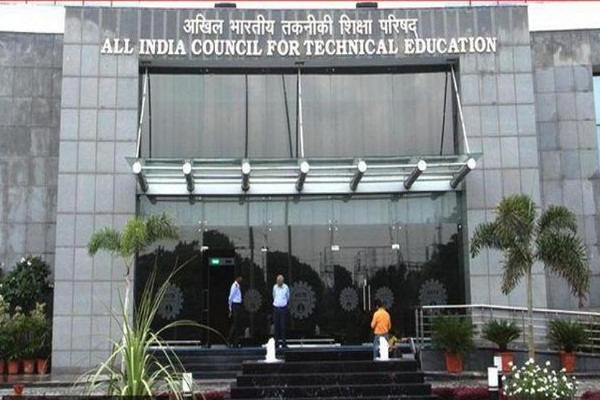
In major move, the technical education regulator, All India Council for Technical Education (AICTE) has asked states to ensure that diploma students are not turned away by engineering institutes from taking admission to B.Tech courses.

The regulatory body after receiving complaints against engineering colleges for refusing admission to diploma-qualified students applying for B.Tech courses under the lateral entry scheme, has also advised institutions to admit such students.

A notice issued by the AICTE says: “It has come to the knowledge of AICTE that some of the AICTE institutions are refusing Diploma qualified students for lateral entry admission under Engineering and Technology courses with restricted discipline only.”

As per the AICTE approval process handbook for the year 2020-21, there is no such restriction in the admission of diploma students to undergraduate engineering and technology courses under lateral entry.

Also read: AICTE revises admission rules for MBA/PDGM courses

Any student who has passed diploma examination with at least 45% marks (40% for reserved category) in any branch of engineering in the second year through lateral entry, depending on vacancies.

The AICTE circular states: “Therefore, all the State Government/ Universities are requested to inform all the institutions falling under their jurisdiction to adhere to the condition mentioned above for the admission of diploma qualified students in undergraduate courses as per the Approval Process Handbook Clause 1.3 for lateral entry admission.”

Lok Sabha passes bill to upgrade Gujarat-based Raksha Shakti University

Lok Sabha nod

In a major move, the Lok Sabha passed a bill which seeks to upgrade the Gujarat-based Raksha Shakti University as an institution of national importance. The bill will also change its name.

According to the proposal, the Raksha Shakti University will be called as Rashtriya Raksha University. The university will be a multi-disciplinary institution to create new knowledge through research and collaboration with different stakeholders.

Also read: Lok Sabha gives nod to Central Educational Institutions Bill

While the Raksha Shakti University is a state university, the Rashtriya Raksha University will be a central institute.

It will also help to fulfil the need for a pool of trained professionals with specialised knowledge and new skill sets in various wings of policing, criminal justice system and correctional administration.

The university will grant degrees and other academic distinctions and will be open to all persons irrespective of gender, race, caste, creed, disability, domicile, ethnicity, social or economic background.

In a brief debate before its passage by a voice vote, Abdul Khaliq of the Congress wondered about the need to upgrade the university.

Schools, colleges to reopen in some parts today

reopen school

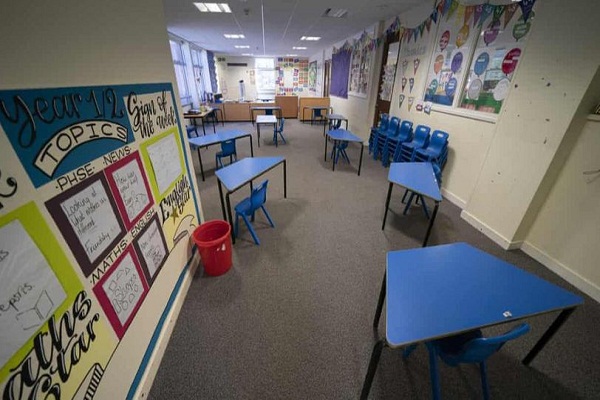
Under Unlock 4.0, the Ministry of Home Affairs has allowed for partial reopening of schools in various states across India from September 21. Due to the pandemic, schools in various states will partially resume from today after a gap of around 6 months for the teaching as well as the non-teaching staff which were closed from mid-March.

The schools only been opened for students from Classes 9 to 12 but their attending the same will strictly be on a voluntary basis.

The MHA has also released a specific set of SOPs for the partial re-opening of schools. Majority of states have abstained from reopening of schools from Sept 21. Many state including Haryana, Himachal Pradesh, Assam, Meghalaya, Tamil Nadu, Madhya Pradesh, Nagaland have allowed the students of classes 9 to 12 to return to classes.

Also read: Reopening of school: States planning to start classes from 21st Sept

According to new SOPs, a maximum 50% staff – both teaching and non-teaching staff is allowed. Students of only classes 9 to 12 have been permitted to go to school to seek guidance from their teachers. This, however, is not mandatory and strictly voluntary and would require written permission from their parents.

The schools are required to follow cleaning protocols as well as ensure proper social distancing of the students before reopening of schools. Teachers and students would be required to wear masks at all times and sanitize their hands.

Higher educational institutes for many states continue to remain closed. Only the institutes for professional courses which require laboratory work have been permitted to re-open. Strict guidelines and SOPs for college reopening have to be followed for them as well.

UP CM instructs to fill 31,661 assistant teachers within a week

Yogi Adityanath

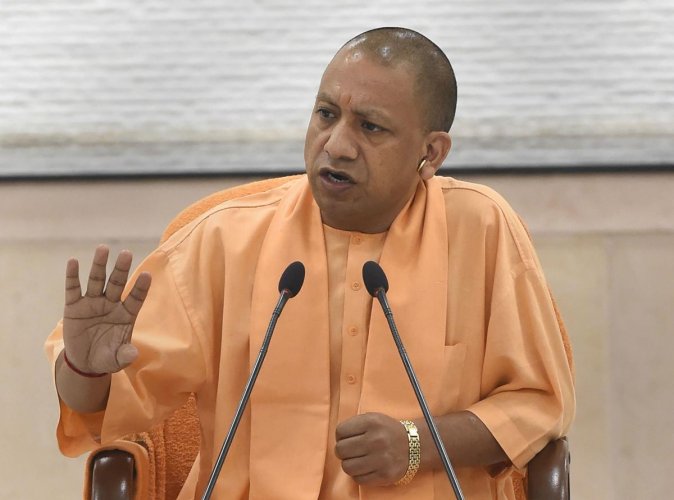
In a major development, Uttar Pradesh Chief Minister Yogi Adityanath on Saturday asked the basic shiksha (basic education) department to recruit 31,661 assistant teachers within a week. The CM said the state government was committed to providing enough jobs and employment opportunities to the youth.

A state government spokesperson said the basic shiksha department had conducted a recruitment examination on January 6, 2019, for filling 69,000 vacant posts of assistant teachers.

According to a government order of January 7, 2019, the state government fixed 65% as the minimum percentage of marks for appointment of general category candidates and 60% for backward and other reserved classes of candidates.

Also Read: UP Assistant Teacher Result 2020 to be declared

After this, some candidates moved the Allahabad high court. Later, the High Court gave its verdict in favour of the state government while hearing the main writ petition ‘Ramsharan Maurya vs state government’.

Earlier, Yogi Adityanath directed the senior officials to start the recruitment drives in the state within the next three months along with the issuance of appointment letters to selected candidates in six months after that.

NTA releases UGC NET Admit Card 2020; check details

UGC NET Admit Card 2020

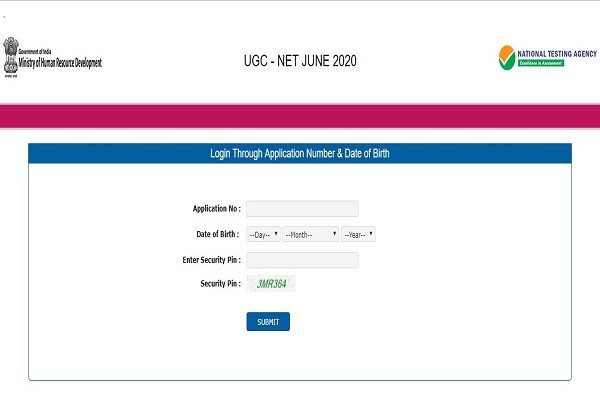
After much deliberation, National Testing Agency (NTA) has released UGC NET Admit Card 2020. The admit card has been released for September 24 and September 25 examinations. Aspirants can download the admit card from its official site- ugcnet.nta.nic.in.

The Agency will follow COVID19 special measures for the exam. The Health Minister has already released the SOPs for conducting exams and like NEET, JEE exams, NTA will follow the guidelines for this exam too. As per the new guidelines, staff and students from containment zones are not allowed to be physically present at the exam centers. Alternative arrangements are to be made for them. They may be allowed to appear in exams at a later stage. The SOPs also have other guidelines that NTA would follow to conduct the exam.

Also Read: National Testing Agency issues text message helpline for candidates

UGC NET examination will comprise of two papers-  Paper I and Paper-II. Paper I would carry 100 marks questions and Paper-II would be carrying 200 marks questions. The exam is to be conducted in two shifts- the first shift from 9.30 am to 12.30 pm and the second shift from 2.30 pm to 5.30 pm.

Steps to down the UGC NET Admit card 2020:

-Visit the official site-ugcnet.nta.nic.in.

-Click on UGC NET Admit Card 2020 link available on the home page.

-Click on submit and your admit card will be displayed on the screen.

-Check the admit card and download it.

President Kovind: NEP sets vision of developing an equitable knowledge society

President Kovind

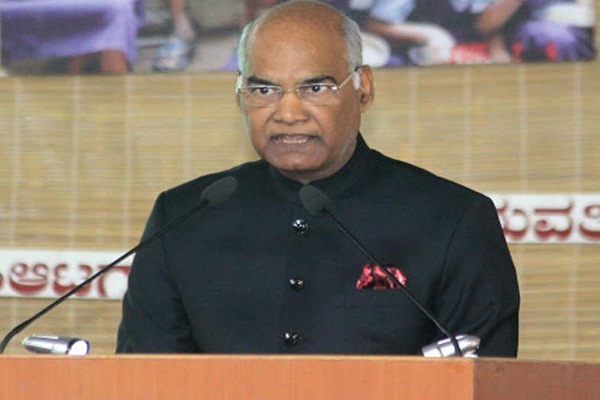
While addressing the Visitor’s Conference on ‘Implementation of National Education Policy 2020: Higher Education, President Ram Nath Kovind  said “The National Education Policy 2020 sets a vision to implement an equitable and vibrant knowledge society by providing quality education that meets the requirement of the 21st century”.

 Kovind also said “The National Education Policy (NEP) aims to reorient our educational system towards meeting the needs of the 21st century. It sets the vision of developing an equitable and vibrant knowledge society by providing quality education to all. It achieves twin objectives of inclusion & excellence.”

He further said that the NEP would discourage the habit of rote learning among the students and overemphasis on marks or grades that causes stress among students.

Also Read: A brief reflection on the new national education policy

While lauding the new education policy, the President said, “More than two lakh suggestions have been taken into consideration. Thus, the policy reflects a ground-level understanding of the challenges, aspirations and solutions of the education system.”

He further said that the role of the Centre should not be limited to ‘setting norms’ through agencies like the University Grants Commission adding that higher education institutions under the centre must set quality benchmarks.

Also Read: Union Education Minister to answer queries on National Education Policy

“The Centre’s role must not be limited to setting norms by the agencies like the University Grants Commission or the proposed Higher Education Commission of India. There should be a clear focus on quality–higher education institutes under the Centre must set quality benchmarks,” he said further.

CISCE Board reduces syllabus for second time

CISCE syllabus

To provide more relief to students, the Council for Indian School Certificate Examination (CISCE) Board has reduced the syllabus for second time for the classes 10th, 12th students. It had earlier reduced the syllabus for the current academic year and the board exams of 2021.

The council had sent a letter to the school heads regarding the syllabus reduction earlier and the chief executive and the secretary has informed that the continuity between the syllabus of the classes would not be broken or compromised with.

As per CEO & Secretary of CISCE Gerry Arathoon, no students’ career would be compromised through the reduction. The students can visit the official website to find out the topics being carried forward and the ones being reduced. The board has decided this on account of learning disruption that students faced as the schools were closed during the nation-wide lockdown.

Also Read: CISCE to reduce syllabus by 25 pc

Earlier Arathoon hinted at an increased reduction in case the situation did not improve. He said, “given the academic loss till July, which is around 45 days we have reduced the syllabus for the students appearing for Class 10 and 12 Boards up to 25 pc. However, that is subject to further review as from July first week our schools are only able to resume online classes. This could have further adverse effects. We may even have to reduce the syllabi further and may even have to go up to 50 per cent reduction.”

CoA announces NATA 2nd exam result 2020

CoA announces NATA 2nd exam result 2020

In a huge relief to lakhs of students, the CoA has released NATA second test result. The result is declared on its official site at nata.in. To check the NATA result 2020 2nd test, candidates have to use their registered email ID and password. NATA second test result is available in the form of score card mentioning details of marks scored by candidate and qualifying status.

Candidates must keep safe the NATA result 2020 2nd test scorecard for admission purposes. Candidates declared qualified through NATA 2nd exam result 2020 can now apply for admission to the institutes. NATA second test 2020 was held on September 12.

A total of 30,999 candidates enrolled for the NATA second test out of which 22,289 candidates appeared for the examination. 8,202 candidates appeared for the NATA 2nd test 2020 from their homes and 14,087 candidates appeared for online examination in 158 designated centres.

Also Read: Delhi HC rejects plea to appear CLAT 2020 exam from home

Steps to check NATA 2nd exam result 2020

-Visit NATA 2020 officiawebsite-nata.in.

-Click on “NATA 2020 registration” link.

-Enter email Id, password and security code.

-Click on Login In and scorecard link to get results.

Rajasthan govt to provide free civil services coaching to students

civil services coaching

In a major boost, the Rajasthan state government will be providing free coaching with the help of reputed institutions for Civil Service Aspirants from the different tribes and the Sahariya Community. The announcement was made by Arjun Bamania Minister of State for Tribal and Regional Development who also added that the Tribal and Region Development Department will soon begin the TAD Super-30 project.

Around 30 aspirants will be selected from which 20 will be men while 10 will be women who will be given online coaching to prepare for the civil services examinations.

The Minister also said that the project to train civil service aspirants commence as per the budget announcement to provide free coaching to the students preparing for competitive examinations conducted by the Union Public Service Commission also known as the UPSC and the Rajasthan Public Service Commission (RPSC).

Also read: Rajasthan govt merges elementary, secondary education boards

In order to take advantage of the scheme, it is necessary for the candidate to pass the graduation exam with a minimum of 60 percent marks. It is also necessary that the required ST certificates and online coaching facilities are available with the student.

The minister also expressed hope that the initiative will not only improve the educational, economic, and social status of the aspirants but also help them play their role in the development process of the country.

Teacher in Chhattisgarh uses unique way to teach students

teachers

A teacher in Chhattisgarh has gone extra mile to impart lessons to students who are missing out on their classes in this pandemic.

A teacher named Rudra Rana, in the Koriya district of Chhattisgarh, is winning hearts on the internet for starting mohalla classes for children in the area. The teacher is trying to bring education to students as they cannot go to schools. Many students don’t have access to online education in the area and its huge help for them.

The teacher teaches the number counting and addition by singing a rhyme as a question. The students reply and cheerful their responses were. Students are enjoying the process the new process of learning.

Also read: Chhattisgarh Board declares CG Board 12th result 2020

Another teacher in the Koriya district’s Phatpani region travels around on his bike with an LED TV strapped to the vehicle, teaching children who do not have access to the internet. Ashok Lodhi, a government school teacher, has been hailed as ‘Cinema Wale Babu’ for his creative way of teaching students from class 1-5.

The coronavirus pandemic has affected the education system all across the world. However, with the help of the internet, some students are able to take classes on applications like zoom and skype. In India, the situation is a bit worrying as many underprivileged children in the country are without smartphones and the internet.

LATEST NEWS