Home Blog Page 378

2nd School Tech Summit: Future Ready Schools: Building Technology Infrastructure for Learning & Connecting

WhatsApp Image 2020-07-31 at 12.02.01 PM

Elets Technomedia and digitalLEARNING Magazine are organizing virtual ‘2nd School Tech Summit’ on 31st July, 2020. It will be the second full day conclave of the series. Eminent speakers from the school industry will take discuss the future of school education in the world of post COVID era. The panelists will enlighten the usage of technology and importance of value-based learning in our schools.

Payal Rajpal, Founder, Hack the Crisis India, South Asia Head Robotex- We believe in blended learning. The NEP advocates the usage of technology in education sector. We use AI in our classes to enhance learning. We use technology in proctoring as it can change the ace of education.

Payal Rajpal – From last three years we are using many new technologies in our workshops to enhance the education sector.

Payal Rajpal – We are trying to develop students from rural areas. We are eyeing to empower teachers with new tools.

Payal Rajpal – The COVID has taught us how to change our education system. We need to focus on human interaction.

Dr Madhav Deo Saraswat, Principal, The Scindia School, Gwalior- We have to adopt and adapt technology due the COVID-19. Technology is a tool used for assisting in learning. The investment must be happen in people.

Dr Madhav Deo Saraswat – Technology will help us in transformation of knowledge. Teachers cannot be replaced in schools. Human touch is must in education as the machines can only assist.

Dr Madhav Deo Saraswat – The purpose of education is not going to change. Future schools must address many things and technology will be the main stake in coming days.

Dr Madhav Deo Saraswat – The NEP is very futuristic. The new changes will bring new revolution. But there are huge challenges to implement the NEP.

Dr Kavita Aggarwal, Chairperson, MISA- Need is the mother of invention. Everyone has changed their parental role. It was unprecedented time for teachers to change their ways. The teachers have evolved in a better way to tackle the crisis.

Dr Kavita Aggarwal – Learning something new is very difficult or many teachers but they have adopted it. The change is very drastic and adaptability of technology was eminent.

Dr Kavita Aggarwal – Technology is not everything. The future is blended learning and we don’t know when will be the schools will be reopened.

Dr Kavita Aggarwal – The NEP has many new things for the sector. The govt has taken strong initiative with brain drain. The cream of the society moves out of the country. The skill based education is the most commendable move.

Dr Kamal Sethia, Chairman, Vardhman Group- We are not future ready. When the COVID started we were struggling. We were not fully equipped to handle the crisis. The technology has given a chance to evolve the education.

Dr Kamal Sethia – Parents and society are expecting new things. The e-learning has came has saver for schools. We took inputs from many stakeholders over the online education. Parents are worried over the usage of technology.

Dr Kamal Sethia – Parents were worried over the usage of devices in education. We need to reach the rural areas and provide them the benefits of e-learning. We need to surge our reach to every part of the country.

Dr Kamal Sethia – Technology is here to stay post COVID-19 crisis. Schools have major roles- education, culture, discipline. The environment of schools can never be replaced. Students need that freedom to play and express themselves.

Dr Kamal Sethia – The govt must prepare solar powered labs for rural areas. The govt must provide new facilities to the schools.

Dr Shalini Advani, School Director, Pathways Schools, Noida- There are certain fundamental of education and it should revolve round people. Our education sector has never delivered on people- centric. The COVID-19 has forced to change. The change is embedded in our world.

Dr Shalini Advani – Leadership is very important to implement the change. As leaders we must ask right questions. Teachers are forced to change; they must develop value -based education. We need to add value-based subjects to our curriculum. Parents are now a part of classes.

Dr Shalini Advani – Schools must also incorporate parents to make our system robust. Technology is individualization learning. This has created way to collaborate with each other. The AR can help students to understand many complex subjects.

Dr Shalini Advani – The NEP has brought many new things to the sector. The whole framework needs to be re looked.

Dr Skand Bali, Principal, The Hyderabad Public School, Begumpet- Technology is here to stay and it cannot replace the human part. Technology can only assist but cannot replace teachers.

Dr Skand Bali – Technology was there but we were not using it. Schools don’t have to be future ready, students have to future ready.

Dr Skand Bali – There are many schools, which are providing critical thinking, skill based learning and many more.

Dr Skand Bali – A lot of people are giving back to the country. The NEP is very futuristic and people-centric. The implementation of the NEP is a challenge.

Dr Skand Bali – The world of education has become closer and time to change the dynamics of it.

Messages from Audiences

Aradhana Pareek: The unique blend of Technology and education has proved the best mode of imparting the education to the students during post COVID 19 era, but it is only the alternate solution to face the particular situation. This unpredicted situation has provided the chance to educators to come with full flesh to use their all corners of caliber.

Vinita Saraswat: I m agree with the views of Dr. SHALINI Advani Ma’am ….that we must adhere to our educational values along with technologies. Technology doesn’t replace our teachers. Instead of Running behind the technology teacher must change the old strategies of teaching.

Trilok Singh Bist: Great statement Mr. Skand Bali as I too believe many of our schools are future ready and one such Group of Schools is Delhi Public School Ghaziabad Schools and I am privileged to be a part of this system

DHIRESH SHARMA : Technology enhances the logic of science and education but we have to be reached on each level of mind through it. Dhiresh Kumar Sharma Mount Litera Zee School Varanasi

Ms.Sangeeta Sehgal: Your words touched a chord, Dr.Madhav Sir…true..we teachers have been left at a backfoot..and receiving end of backlash…we are braving all odds to deliver..afterall we are morally /ethically bound to do so

Prabhat kumar: Great thought sir. “seva tavi achchi lagti hai jab sanman milay” Prabhat Kumar . Gitanjali Devashray,Hyderabad.

2nd School Tech Summit: Redefining Equity to Learning through Technology

WhatsApp Image 2020-07-31 at 11.16.18 AM

Elets Technomedia and digitalLEARNING Magazine are organizing virtual ‘2nd School Tech Summit’ on 31st July, 2020. It will be the second full day conclave of the series. Eminent speakers from the school industry will take discuss the future of school education in the world of post COVID era. The panelists will enlighten the usage of technology and importance of value-based learning in our schools.

Dr MVV Prasada Rao, Director, Central Board of Secondary Education (CBSE)- There was no other substitute other than technology in the COVID world. The COVID has thrown a great challenge. It was growing very slow during initial stages but now it’s compulsory for schools.

Dr MVV Prasada Rao – Now Technology is inseparable from education sector. Without technology what would have happened to education sector in this crisis. We need to address certain things- internet speed and accessibility, gadgets. Now technology is the only option.

Dr MVV Prasada Rao – I am very happy the govt has come up with the NEP in right time. It will enhance the education sector in the country.

Dr MVV Prasada Rao – The BEd colleges are grown immensely but the quality is very bad.

Dr MVV Prasada Rao – The CBSE is training the teachers immensely from last any years.

Dr MVV Prasada Rao – The ATL Labs are doing commendable jobs. We have developed DIKSHA for students. We have e-Pathshala which has audio and videos content for students. We are upgrading and up skilling the teachers.

Dr MVV Prasada Rao – The development of new professional skills within teachers and listening skills for students much needed.

Dr MVV Prasada Rao – The curriculum can be related to life skill values which can provide much needed for our students.

Om Pathak, Founder & Chairman, DPSG Society & Selaqui International School, Dehradun- All the teachers are putting their best to provide quality content to students in this pandemic. From last four, it’s been a very hard for teachers.

Om Pathak – I welcome the New Education Policy, which the govt brought after 34 years. The new policy will address many things which were pending from last three decades. With NEP, the focus is shifted to competency of child. The stress of students will be reduced with NEP.

Om Pathak – There will be a new test for teachers to qualify for teaching. The implementation will be very tough for the govt. It will be a herculean task. It’s very unfortunate the govt and private being discussed across the country. The private schools have done better than govt ones.

Om Pathak – Private and govt schools must collaborate for the good of education. Education must be service not public service.

Om Pathak – Teacher is irreplaceable and cannot be substituted by the technology. Technology can enhance the education sector. Teachers need motivation in this crisis and they can do wonders.

Om Pathak – The COVID fast tracked the usage of technology in education sector. There will be challenges as internet and devices for students. We must find new ways tackle the crisis. The AI is coming in a big way.

Om Pathak – These days a parent goes to 20 schools before finalizing one. If the quality of pedagogy is good then the intake of students will increase.

Om Pathak – Private schools must be addressed to grow but should be watched. We should leverage the private schools to grow.

Om Pathak – Education is the single empowerment tool which can change the face of the country. We need to work on it to become the Global Guru. We need to work the students in rural areas.

Academicians and industry experts welcome New Education Policy

industry experts

With the introduction of New Education Policy (NEP) to the nation, the education system in the country will witness fine changes and development in the coming years. Industry experts and academicians have welcomed the ‘New Education Policy’ and have extended their support and views with the change in policies and addition of some new ones. The new policies and amendments made in some, NEP received positive reviews across the nation. The policies were welcomed by PM Modi, Union Ministers, Academicians, industry experts, teachers, students, and all others. The policies have changed after a time period of 34 years. The new policy is meant for include 21st century education from pre-primary to K12. The new reforms will change the face of education of the country in coming days.

Starting from Vice-Chancellors of Universities to principals of various schools and other industry experts, each have shared their views and concerns over the New Education Policy. Here are some of them to check out:

Prof. Malabika Sarkar, Vice Chancellor, Ashoka University on the New Education Policy 2020 said “The much awaited NEP 2020 is a step in the right direction by the Government of India and will help achieve the mission of Literate India soon. GER of 50% is an important target and all universities must contribute to it. The initiatives announced under NEP 2020 should help achieve this target.”

Also read: National Education Policy advocates use of technology in education

She also said “We are happy that the multidisciplinary approach we have been practicing is recognized as the right way to prepare students for challenges in their careers. We are also happy that continuous assessment will be the way to evaluate students, which is something we believe in.”

She also said “The Government-recognized multiple entry and exit options at the Undergraduate level will give more options to the youth. This, supported by an Academic Bank of Credit to digitally store academic credits, will go a long way in providing a favorable environment to students to plan their education. Ashoka has a unique one-year multidisciplinary Young India Fellowship programme that is crafted to offer students a rich postgraduate experience in one year.”

She also said “The NEP also has made a bold move to resolve the binary of research and teaching and the focus on research will foster a strong culture for innovation. This, along with enhancement of digital infrastructure, will match our education system with the requirements of today’s dynamic business and economic environment.”

Rohit Manglik, CEO, EduGorilla

Rohit Manglik, CEO, EduGorilla said “The draft New Education Policy is a roadmap for ensuring economic development through a robust education system in tune with demands of the industry. The impetus to technology and research and interdisciplinary and multilingual approach is a great enabler to ensure equity in access to education. The elimination of rigid streams in secondary education will ensure that no career option is restricted to students due to subject. The relook at the grading system was the need of the hour to ensure fair and accurate analysis of students’ potential. The revamping of board examination and autonomy to higher educational institutions are welcome measures. While much will hinge on the ground implementation, the draft NEP has made a great start to reform the Indian education system.”

Prof Mahadeo Jaiswal, Director, IIM Sambalpur said “We welcome the move made by the Cabinet to rename the HRD ministry to the Education ministry as the role of the department is to further and provide education. Allowing global institutes to set up campuses in India is also a positive move as it will increase competition because it will open up our education system and it will also help sustain high talent in the country as students don’t have to move out to pursue education. Changing the pedagogical structure from a 10+2 system to a 5+3+3+4 system is in line with international educational standards. Due to the small structure of our IIMs and IITs, despite having ample talent, they were unable to figure in top 100 institutes of the world. Allowing technical institutes to become multi-disciplinary will help IIMs and IITs to start other departments like medical etc and make their size bigger and allow them to admit more students. This will enable them to compete with the elite institutes of the world and become at par with them in the coming years. Diversification makes education more complete and helps increase intellectual outcome. Overall, the changes have been made according to the global system of education. This will also help attract foreign students to India and help the economy as well.”

Dr. Bijaya Kumar Sahoo, Founder at SAI International Education Group and Advisor, Govt. of Odisha said “The much-awaited New Education Policy (NEP) 2020, has got the Cabinet approval today. The document is based on foundational pillars of access, affordability, equity, quality and accountability. With the flexibility for the choice of subject across streams it is aimed at building skills in their subjects of interest. The three language early foundational based learning will improve focus on Indian Classical Languages. Each State is proposed to have a State School Regulatory Authority to monitor the School education.”

Dr.B.Sendilkumar Dean-Faculty of Allied Health Sciences, Vinayaka Missions Research Foundation-Deemed to be University said “New Education Policy is definitely a welcome move in the education sector. This is bound to bring a transformation in the way of teaching and learning for the betterment of the society. Emphasis on critical thinking and more holistic, inquiry-based, discovery-based, discussion-based, and analysis-based learning is the need of the hour in our education system and we would be achieving it by this Policy. The Major reforms of flexibility will turn students to be very skilled and employable. We are moving towards an Education system as said by Socrates “Education is the kindling of a flame, not the filling of a vessel.”

Rishabh Khanna, Cognitive Scientist and Founder of Suraasa said “The new Indian National Education Policy, 2020 looks quite progressive and covers a lot of ground when it comes to 21st century teaching and learning needs. The good part is that the policy has come as a plan and not just promise based statements. The difficult part is to jump from the current system to this system and take along millions of stakeholders, many of whom might need to be completely re-trained. In fact teachers will see the biggest change and will have to transform at both content as well as pedagogy level to survive in this new world order.”

Divya Lal, MD of Fliplearn said “The new education policy is a refreshing shift and a bold corrective action in our approach to education in India and we welcome it whole-heartedly. Technology will now play a much bigger role not just in planning and administration, but pedagogy, content, tutelage and assessment; which is both futuristic and transformative to say the least. The increased focus on technology, digital empowerment of schools will encourage institutions to upgrade their technology infrastructure and offerings to more virtual and seamlessly integrated platforms. The virtual platforms/ labs will also bring learning alive for students with emphasis on visual and experiential components than Rote learning. With reduced insularity and greater freedom in students selecting their subjects of choice, the focus will return to holistic learning of all subjects, rather than a bent towards Maths and Sciences. All-in-all, the new education policy is a great step in the right direction and we look forward to the new face of education in India.”

Sahil Agarwal, Co-Founder and CEO, Rishihood University said “The new education policy has brought much awaited reforms for a long-term overhaul of the system. In higher education: The college affiliation system which prevented curriculum innovations will be phased out. This will allow industry-linked curriculum and faster modifications based on industry’s needs, therefore helping the students in placements. Flexibility of subjects, credit transfer and multiple entry-exit points will ensure that everyone can complete a college education and learn the subjects of their choice. The students will not be restricted to narrow domains. A common aptitude test for undergraduate admissions will ease off the pressure from students to prepare for multiple exams. The CAT will be designed in a way that most universities can identify the student skill set for admissions from the same test.”

Dr Rishi Bhatnagar, President, Aeris Communications, India said “National Education Policy 2020 brings the much-required remodelling in the Indian Education System with requisite emphasis on technology, digitisation and internship driven vocational training, right at the school level. This restructuring will not only help universalizing education, but will also help recreate the Indian innovation driven mindset producing Leaders and Entrepreneurs.”

Manish Naidu, Founder & CEO, Brainwonders said “It is great to see that National Education Policy 2020 focusses on celebrating the child’s potential early on. We at Brainwonders have catered to several parents and teachers who have used our assessments to unlock the child’s interests and abilities even before they start the school and the results have been nothing short of phenomenal. So the latest national education Policy also supports the vision of a happy child concept. With the updates to the curriculum, pedagogy, and the addition of choices- Indian students gain a significant global edge! We are excited to be a part of this….”

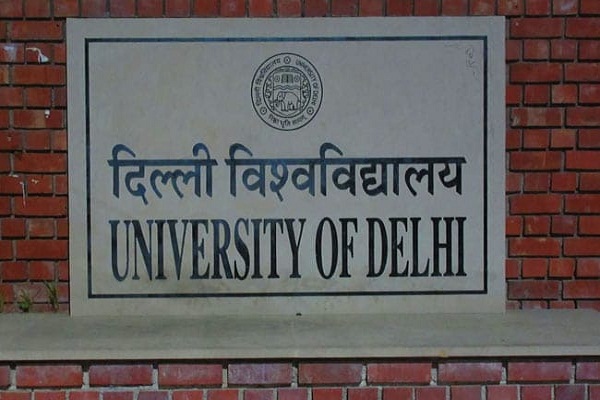
DU to commence online classes from August 10

DU classes

In the light of Coronavirus epidemic, Delhi University will begin the new academic session for the students from August 10, 2020, onwards. According to the university officials, the classes will commence for the existing batch of students who are in the third, fifth and seventh semester of Undergraduate programmes and third semester of postgraduate programmes.

The university has however not yet provided a date for the beginning of the academic session for the new batch of students.

The Delhi University Academic sessions for 2020-21 will commence n august 10,2020 in the online mode for the 3rd, 5th and 7th-semester undergraduate programmes and 3rd-semester postgraduate programmes keeping in mind the prevailing lockdown conditions.

Also read: Delhi University mulls to make admission process online

The decision to begin the academic session was taken keeping in mind the revised set of guidelines issued by the University Grants commissions. The decision to begin the academic session comes as the UGC guidelines are being challenged at the Supreme Court.

Students from across the country have approached the apex court against the UGC guidelines released on July 6, 2020, pointing out safety concerns due to the ongoing COVID-19 pandemic.

The university’s decision to conduct the open book examinations for the final semester students has also come under the scanner as it has been challenged at the Delhi High Court. The court has asked the university to file an affidavit on the mock test, the status of the Common Service Centre and Scribes for the visually challenged students appeared for the exams.

Arvind Kejriwal: Students must learn to be job providers

Arvind Kejriwal

Delhi chief minister Arvind Kejriwal said his government has been working to create an education system where students learn to become job providers, instead of job seekers.

During a live interaction with principals and students of classes 9 to 12 on entrepreneurship mindset the CM said “There is some problem with our education system. The moment we exit from our school, we start looking for jobs. We want to change this mindset,” he said.

 “You don’t have to be a job seeker, but you have to become a job provider. We want to inculcate this in the mindset of children. This cannot be taught in theory. This is the reason, we call small, medium, and big entrepreneurs to take these sessions and inspire students,” he said.

Also read: Will work on improving the educational content: Kejriwal

“The British left the country, but the British system continued. We did not even change the education system. There are few who go against the system and create a unique identity. Otherwise, our system is such that we can only produce clerks,” he said.

Today, a child who knows English has a better chance of landing a good job with global exposure. Therefore, it is not possible to change this system in a day and implement Hindi everywhere, he said. Deputy chief minister Manish Sisodia said learning any language is a skill, but “our mother tongue Hindi is our pride. We should not feel shy to speak in our mother tongue”.

Bhaskar Majumdar, VP Digital, Lamhas Satellite Services Limited: Schools must prepare to function digitally

Bhaskar Majumdar

How is Vu2Learn Learning Management System different from other products in the market?

Vu2Learn offers everything that is mission-critical for the academic fraternity from the perspective of online education delivery such as Live Classroom, White Board, Screen Sharing, Registration Control, Multiple device access, Distributed instructor and student base, Course calendars, Recorded class sessions, Tutorial Videos as VOD, Assessment, and Testing, Grading and Scoring for the overall management of an Institution/University.

Vu2learn has been built ground up keeping the needs of universities, schools, and colleges in mind, and is not an add-on extension of an enterprise video conferencing cum messaging platform as in the case of many competitive products.

The Vu2Learn platform has been designed to be ultra-light on bandwidth for the Indian environment using state of the art WebRTC and peer to peer network distribution technologies and allows students access to the platform through mobile phones or laptops with less than 1 Mbps bandwidth, without having to download any bandwidth-hungry user app.

Amid the concerns of security and intrusion of hackers world over while using some of the popular web/mobile-based apps Vu2Learn is highly secure through its robust architecture. Vu2Learn live classes use TLS v1.2 Certificate and 2048bit RSA Key with SHA-256 Signature Algorithm. Besides, the use of industry-neutral and technologies like LDAP, SAML2, and SAT Authentication are also available for institutions.

Lastly, Vu2Vu India took about three and half years to develop this product from scratch and it is fully developed in India, fulfilling all the criteria of “Make in India.”

How has COVID-19 changed the dynamics of school education in India?

Schools should be ready to be fully functional digitally, it is not just about online classes taken on an ad hoc basis. Student Registration and Fees, Attendance, Course and Virtual Classroom creation, Teacher Allocation, Assessments and Grading, Virtual Library all need to be integrated in a single system seamlessly. It requires a digital transformation in the processes of the school, and solutions like Vu2Learn enable schools to make the transition.

Course planners need to look into student capability for attending online classes and their capacity to comprehend online learning material. If students were attending 6-7 lectures per day in an offline mode, can the same pattern be repeated for online classes? Or do Course Planners need to think differently? How to make students learn on their own, using interesting audiovisual material so that they attend fewer online lectures, which could be for co-ordination and doubt clearance? Course design needs to be looked at keeping in mind the changing learning patterns, and aspects discussed above.

Also read: Measures for pre-schools covid-19

Assessment and Grading is another area where the dynamics are rapidly evolving. In an offline mode, standard textbook questions were sufficient. Now, sitting at home students have access to all resources at their disposal including Google, WhatsApp and their personal friendship networks. How do we conduct meaningful assessments in such an environment. Is technology-driven proctoring going to be sufficient, or do we need to change the way we ask questions and test the student’s lateral thinking so that whatever resources they use, the assessment is meaningful and they are still learning at the end of the day.

Teachers need to be fluent in using digital learning management systems going forward. They need to be trained in the digital delivery of their course content, use of the Learning Management System for taking classes, assessment and grading, including use of devices like digital pens and tablets. Schools need to ensure that teachers have sufficient internet infrastructure at home to be able to teach remotely. If not, then schools need to provide such digital infrastructure at its premises, so that teachers can come to school and teach digitally.

What are the upcoming innovations in the field of digital/online education?

While India embraces digital education, we must bear in mind that we should not create a digital divide, and online classes should not be privileged access for a few.

Learning Management Systems like Vu2Learn are very well developed and can cater to Indian school’s needs. The next challenge for us is distribution into wider India, where broadband penetration is typically restricted to cities, and affluent localities. How do we reach online education to rural areas, how do we provide access to underprivileged children who may not have a broadband internet line at home, that is our next challenge.

What are Lamhas/Vu2VuIndia future plans in digital transformation technologies?

Lamhas/Vu2VuIndia are currently exploring technologies and solutions for wider distribution of online education. So, our platform can provide an inclusive solution for rural areas and underprivileged children.

While we approach this problem, we realize that we are trying to solve a connectivity issue and multiple applications can ride on the platform we create, not just online education. A case in point being telemedicine, which uses broadly similar technology and to use our platform to provide primary healthcare facilities.

NEET Exams: SC seeks response from Central govt over Gulf centres

NEET Exams

The Supreme Court sought a response from the Central government and the Medical Council of India (MCI) on a plea seeking directions to hold National Eligibility Cum Entrance Test (NEET) exam centres in Gulf countries.

The plea, filed by parents of nearly 4,000 NEET (undergraduate) candidates, sought to alternatively postpone the examination until the COVID-19 pandemic normalises.

A bench headed by Justice L Nageswara Rao issued notice to the Centre and the MCI to sought their responses on the pleas.

Also read: HRD Minister: NTA to review exam dates for NEET, JEE

The parents of these candidates, who reside in Doha, Qatar, Oman, and UAE, have approached the apex court challenging the Kerala High Court June 30 order which had dismissed their plea.

In their appeal against the Kerala High Court order, the general secretary of Kerala Muslim Culture Centre in Qatar, Abdul Azeez said that the National Testing Agency (NTA) had the capability and willingness to open exam centres in Gulf countries as they had been doing so for the Joint Entrance Examination (JEE).

The petition contended that the NTA has said it would open examination centres abroad only if the MCI approved the proposal.

The MCI, in its communication dated May 21, informed that the online test for NEET is not possible, the plea in apex court stated.

Measures for pre-schools covid-19

Anu Gupta

For the safety of children, the whole building including furniture, swings, garden area, washroom and all the touch points will be sanitized on daily basis, says Anu Gupta, Parenting proficient | Chairperson, Leaders group of schools in a conversation with Elets News Network (ENN).

The government asked schools to shut down around March 15, 2020 and still under lockdown due to surge in the COVID 19 curve in India. The HRD Ministry planning to open Sr. classes from August 2020 onwards and gradually will start primary classes from September/ October 2020.

Brief Guidelines for Kids & Parents

We have drafted detailed guidelines for the kids & parents, over here we are covering some brief pointers

1. For the safety of children, the whole building including furniture, swings, garden area, washroom and all the touch points will be sanitized on daily basis.

2. All the kids coming via busses or as walkers, thermal screening will be done before entering the vehicle & inside the school premises.

3. Shoes will be sanitized at the gate and once inside the premises near the gate only, washing the hands will be compulsory.

4. Wearing mask will be compulsory, no morning assemblies and any activities which will involve gathering.

5. Parents who come to drop kids to school, will be handed over kids at the gate and not allowed in the premises. In case they want to come at the reception, then thermal screening, mask and proper sanitization of them will be done.

6. Kids will not be allowed to play in groups at the swings, ball pool. If they will play.

7. They will not be allowed to share their food and water bottles. Even after every use of washroom, the toilet seat will be sanitized.

8. The class sitting arrangement will be accordingly to maintain physical distancing among kids inside the class.

9. In DayCare also the sleeping beds will be individual, and all the bedsheets will be washed on daily basis.

10. Busses/Vans seats will be sanitized daily.

Also read: Impact of COVID 19 on Education

Brief Guidelines for Educators & Support Staff

1. Thermal Screening will be compulsory along with mask for all the staff members including drivers

2. They will strictly follow up the social distancing by themselves & will make sure that this should be maintained by visitors & parents

3. Staff will not be allowed to call food or any other item from outside in school hours

4. Before & after taking any child to washroom Didi will sanitized her hands properly

5. BH’s will make sure that while cooking food for DayCare kids, Didi will follow all hygienic measurements

6. No staff will be allowed in the premises if suffering from any flu or infection

Equipment’s in Premises

To make ourselves ready we have all the equipment’s installed well in place

1. Thermal Screening Guns
2. Masks & Gloves
3. Hand free Sanitizer Machine
4. Disinfection sprayer machine
5. Disinfection solution for cleaning all the touch points like toilet seats, taps, swings, doorknobs etc.
6. Face Shields in case of any requirement.

Safety measures for schools post covid-19

Dr Vidhukesh Vimal

One of the main challenges we face as an organization is to meet the fear driven anxiety of parents says Dr Vidhukesh Vimal, Headmaster, The Assam Valley School in a conversation with Elets News Network (ENN).

One of the primary discussions that consumes us today are the changes we stand to face in the mundanity of our lives as we have known it. One of the main challenges we face as an organization is to meet the fear driven anxiety of parents. At The Assam Valley School, with its sprawling campus of 240 acres and a complex residential structure that caters to 800 students, a diverse teaching faculty and support staff, this can be a labyrinthine process.

Academics and Activity Programme:

• The School made a smooth transition to online teaching learning mode in a flipped classroom.

• Students and parents were acclimatized to the rigors of a digital environment with classes and assessments designed to extract the maximum off an online platform.

• AVS’s rich and diverse Activity Programme has been shifted online where teachers plan their sessions to actively engage their students.

• A significant element of a residential school is its Pastoral Care. Tutor-tutee engagement remains prioritized to ensure the mental well-being of the students where they are provided with an outlet to share their apprehensions if any.

Also read: Plan of action for the new normal post covid-19

Infrastructure:

• Provision of a bay has been made at the Main Gate to disinfect vehicles.

• Couriers and other goods received at the Gate are being set aside for the prescribed disinfecting period.

• Thermal scanners for all Boarding Houses and other strategic locations across campus is being acquired.

• Data is being collated for necessary procedures and training of staff on safety protocol has begun.

Medical Provisions and preparations for extreme emergencies:

• The School has a 32 bedded fully equipped infirmary, a Resident Medical Officer with trained staff and an ambulance with life support paraphernalia.

• Sanitizers have been placed on strategic areas across the campus while masks and gloves are made regularly available to all concerned.

• A suitable building has been converted to an Isolation Ward for flu cases and to provide quarantine facilities as and when required.

• The School is in the process of acquiring PPE Kits for our Health Care workers to tackle any unforeseen situations.

Emotional and Mental Readiness of all stakeholders:

• A long term goal, the aim is to ensure the mental health of students, parents and staff.

• The School Management conducts regular interactions with Staff at different levels.

• Online meetings are held with Parents to discuss their concerns.

• A series of Webinars with Parents of different age groups have been designed with the School’s Councilors and the Resident Medical Officer moderated by the Headmaster to address the anxiety quotient faced regularly by Parents and safety protocols that our children must be made aware of and trained in.

Pandemics have marked history in a queer fashion indicating that human evolution has often been hastened by tragedy. The values we teach our children today may just be the faith that sustains us tomorrow.

Home Ministry: Educational Institutions to be closed till August 31

Educational Institutions

Union Home Ministry issued the revised set of guidelines for Unlock 3.0 phase which sets the norms with regards to restrictions that are imposed across the country as part of the COVID-19 precautions. Schools, colleges and coaching institutions will remain closed till August 31, 2020, Ministry of Home Affairs said while it issued the Unlock 3 guidelines.

The guidelines said the decision to not to open the educational institutions has been taken after extensive consultation with states and UTs.

The new guidelines, issued today, are based on feedback received from states and union territories, and extensive consultations held with related Central Ministries and Departments, the Ministry of Home Affairs statement said.

Also read: Home Ministry: No decision taken over reopening school

The new guidelines said Yoga institutes and gymnasiums will be allowed to open from August 5, 2020.

The guidelines said Independence Day functions will be allowed with social distancing and by following other health protocols, e.g., wearing of masks etc and in this regard, instructions issued by the MHA on July 21, 2020 will be followed.

On the occasion of 74th Independence Day, the earlier MHA guidelines had said that debates, quiz, essay writing and poetry competitions in schools and colleges will be held online. It has asked educational institutions to organise the events online on digital platforms.

LATEST NEWS