Home Blog Page 424

Delhi Directorate of Education: Private schools must provide equipments to EWS students

Delhi Directorate of Education

The Delhi Directorate of Education (DoE) has stated that the private unaided schools must provide desktops, laptops, smartphones, or high-speed internet to the Economically Weaker Section students. The Directorate submitted the obligation before the Delhi High Court.

In a counter-affidavit, the directorate submitted in the court stated that it is the duty of the schools to make sure that none of the children are deprived of the online education. The government is also bound to release funds or the reimbursement as prescribed under the Right to Education Act.

The counter-affidavit was filed by the directorate as a response to a plea asking the schools to provide laptops, smartphones, and high-speed internet connections to the students from the EWS category studying in private schools.

Recently the Delhi Court had stated that the schools and government must make sure that even a single child should be deprived of online education due to lack of teaching equipment. The HC has also observed that the schools may collect the equipment for the EWS category and ask for reimbursement from the central government.

According to petition files close to 50,000 students from the EWS category are not able to afford laptops, phones, and other electronic gadgets and so are deprived of attending the online classes conducted by the private schools due to the lockdown.

Higher Ed Leaders: Are Your AI Efforts Enough?

Artifical Intellengence

Machine learning and big data have afforded tremendous improvements to almost every field, including higher education. For example:

  • The publisher Elsevier is using AI to analyze literature reviews, measure plagiarism, and identify forged numerical or statistical features and details. This will ensure that unethical behavior is flagged before any publication goes live.
  • Intelligent chatbots based on natural language programming (NLP) are being already used by universities across the globe. The Technical University of Berlin (TUB), for example, has developed a chatbot system that can guide students around campus and help them choose their courses. Administrators at Spain’s University of Murcia were surprised to learn that its chatbot system answered 91% of 38,708 questions accurately. The chatbot enabled the university to operate outside of working hours and had a positive psychological impact on students—they became more motivated to use the chatbot over time, knowing there would be a tool to communicate directly with the university administration on an ongoing basis.
  • Virtual assistants play a key role at many universities. Carnegie Mellon University, through its Open Learning Initiative (OLI), has developed AI-induced cognitive tutors to engage students. This had positive results in students’ overall performance and dedication levels. Similarly, at Georgia Institute of Technology,  a virtual teaching assistant (TA), using IBM’s Watson Platform, was implemented in order to provide responses to about 40,000 questions during the course ‘Knowledge-Based Artificial Intelligence’. This ensured the prevention of low student retention rates and positive class engagement.

What AI Can Bring to Higher Ed

A New Way to Plan Programs

If we consider curriculum development, AI’s speed, accuracy, and consistency can ensure that an adequate subject selection and distribution will be established based on pre-set parameters by the educator or administrator. This would enhance the institution’s dynamic adaptation to the growing number of students and new programs.

Bias-Free Admissions Management

Machine learning utilizes the incommensurable power of big data to expand the number of options and scenarios of any complex planning in an institution, such as admissions management.

Large-Scale Learning Analysis

The long-term benefits of implementing learning analytics in higher education can be:

  • Improving student retention. For example, at the University of New England, the student attrition was reduced to 12% and the students displayed a growing sense of belonging to the class and learning community in general.
  • Supporting informed decision making. In this case, at the University of Adelaide, educators were able to enhance the design of collaborative activities in based on the data collected. Additionally, learning analysis can provide inputs about the most suitable teaching assistants to be assigned to a particular group of students, as it is applied at the University of Edinburgh.

Scenario Planning and Improved Decision Making

Machine learning automation permits higher education administrators to scout tentative future scenarios by simulating alternative realities at a low cost and without the risks involved in real-life trial and error.

Implementing the Technology: Recommendations

The best way toward a full-fledged implementation is to provide an adjustment time frame period crossing the required stages upon this technological revolution:

  • Implementation: the institution must define its own technological requirements depending on the work methodology, structure, program distribution, and financial investment required.
  • Rejection: confusion and distress will take place as it is required to address the fact that these new technologies will take away several job roles and create unemployment at a certain rate.
  • Adjustment: upon the regular use of this technology, the staff and students will understand the need for implementation and will show interest in understanding the mechanisms involved and long-term impact in the institutional productivity.
  • Acceptance: also known as the Technology Acceptance Model (TAM), which explains  the  acceptance of new technologies by users based on three key elements: the technological usefulness, easiness to operate, and attitudinal approach.
  • Continuous Development: after accepting the need and interactivity of this technology, users will feel the need to take part in future advances that these systems can bring about, acknowledging the durable benefits provided.

Dr. Raul V. Rodriguez is an assistant professor of artificial intelligence, machine learning, and robotics at Woxsen School of Business, India. He is an author, columnist, and registered expert in artificial intelligence, intelligent systems, and multi-agent systems at the European Commission. He is also a nominee for the Forbes 30 Under 30 Europe 2020 list.

Elets Exclusive | Artificial Intelligence can be substitute not solution

Artificial Intelligence

Across the world, the Coronavirus has sparked uncertainties of an unparalleled magnitude. Leaving hundreds of thousands dead in its wake, the virus has ignited global health anxiety. Not only health but there is also economic worries. Several million have already lost jobs, and the world economy is predicted to suffer from a major recession which could be magnitudes greater than the great depression. In India, the lockdown is in its fourth phase, with the economy almost completely opened up and railway services are already underway. Domestic passenger flights services commenced from after a gap of two months amid confusion over what quarantine rules may apply to the travelers, but some states will see limited operations and the resumption delayed by up to three days. People are more worried about the economic crisis than health issues emanating from COVID-19 pandemic.

Elets Technomedia and digitalLEARNING Magazine organized a webinar on “Socio-Economic, Health and Environmental Impacts of COVID 19” with eminent speakers from various sectors.


Padma Shri Pushpesh Pant, Retd. Professor, JNU said “The Covid has affected to every section of society in different ways. Nobody has prepared us for such a pandemic. Covid has large impacts not only on India but globally also. We are living through very unreal times. There is a crisis witnessed in various sectors including hotels and tourism. No one knows what will happen to hotels in the coming days and how will they operate. Will people be ready to go back to offices after working from home for so many days? There are many unanswered questions before the people.”

He also said the short term effect of Covid will be there for at least three years.

He also said people should ask questions to the government over their future as millions of job losses are looming. COVID will create unrest in society. The package declared by the government is not sufficient. Both the Centre and state govts must join hands to tackle the pandemic.

When asked over the education sector, he said is India ready to accept the new kind of education system. We must all change our mindset over the new education system in the country. We need to worry about pedagogy, textbook, and teachers in the crisis.

Over Artificial Intelligence, he said the machine can be a substitute not a replacement. Everything cannot be decided by the machine.

Dr. Anil Kashyap, University of West of England, Bristol said “The COVID crisis is a blessing in disguise. There is an environmental impact of COVID and nobody in the world was prepared to deal with this unprecedented crisis. With lockdown imposed, the air and water pollution have plunged. The supply chain got affected due to the pandemic. These environmental impacts came in the cost of economic activities. This is a blessing in disguise for the environment.”

He also said the policymakers across the globe need to understand the way the environment is changing and need to take significant steps for it.

There are significant changes noticed in the world. It’s a great opportunity for all of us. We need to prepare our society to live with Corona. Social distancing can be the new norm and policymakers must plan according to it. There is a new debate that arises, online vs face to face in many sectors.

There are huge opportunities for digitalization in every sector. We need to calibrate our resources to the best of their usages. Technology can play a major part in our lifestyle, he added.

Over the education sector, he said educational institutions must adopt blended learning. The traditional way of teaching will get hampered. Safety can a huge concern for parents before sending their wards to campuses.

Dr. Kavita, Faculty, School of Business & Management, CHRIST (Deemed to be University) said “The GDP is going down for western countries drastically. The lockdown not only flattened the COVID patients but GDP of many countries also. The digital platforms are growing in this crisis. Remote learning has been a new thing in the education sector. There are consumer sectors are suffering a lot. Over 63 million jobs lost in Covid.”

She also said the crisis can be witnessed in every sector including travel, real estate, hotel and many others. The students will be affected badly due to the crisis.

She hailed the Central government’s move to provide a financial package to the various sectors. The crisis calls for a remedy plan at the macro and micro levels. The govt is trying to handhold the MSMSe with an influx of revival packages. The Centre has provided relief packages to every sector in this pandemic, she added.

Business leaders must focus on the decline in the purchase and most of them might go online. The govt and business leaders must adopt online in this crisis as technology can play an important role, she added.

The govt must focus on availability for rural and affordability and availability for urban and rural areas, she added.

Dr. Sanjeev Sharma, Registrar, Ansal University said “It unprecedented times for the health sector. The new Coronavirus not only damages lungs but medulla oblongata also. There is no medicine for the new pandemic. With lockdown imposed in India on time, it curbed the transmission of the virus. India has taken preventive measures as soon as Covid hits India. The western countries are way more affected than India.”

He said only 30 pc countries have the digital infrastructure for students. Most of the affected countries rely on the traditional method of teaching for their students. Online education is available to very few. We cannot remove the chalk learning as online learning will not provide peer to peer learning. We must adopt blended learning as it is the necessity, he added.

He also lauded the Central govt over the preventive measures, it took to curb the spread of virus in the country.

He also said it’s high time to develop our health infrastructure in both rural and urban areas. We need to develop indigenous resources.

We have faced pandemic earlier also. Life is not going to stop as every problem has a solution.

Over machine learning, he said Artificial Intelligence can be a tool not a solution.

Bihar Board to declare Class 10 Results on May 26

Bihar Board Class 10 Results

It’s been a long wait for Bihar Class 10 students for their results. After 3-month long wait since February 2020, Bihar Class 10 students can finally heave a sigh of relief. According to an official statement, Bihar Board 10th Result 2020 is set to be declared on May 26, 12:30 pm.

The Board will declare its results on official site www.biharboardonline. bihar.gov.in, www.biharboard.ac.in and www.biharboard.online.

There have been speculations over the results of Bihar Board since May 20, 2020.

The official statement says “Tomorrow, on 26.05.2020 at 12:30 pm, the results of the annual secondary examination, 2020 examination will be announced.”

The statement also said “Anand Kishore, Chairman, Bihar School Examination Committee informed that the examination will be announced by Education Department, Shri Krishnanandan Prasad Verma.”

“On this occasion, RK Mahajan, Additional Chief Secretary, Education Department will also be present,” the official statement added about the Bihar Board Matric Result.

Over 15 lakh students are awaiting their Class 10 Results.

NTA: JEE Main 2020 and NEET Admit Card to be released in July

JEE Main 2020

The National Testing Agency, (NTA) informed about the dates of the release of JEE Main and NEET UG Exam 2020 admit cards. The candidates can visit official website nta.ac.in for details. Complete schedule along with guidelines is awaited still.

The NTA has informed that admit cards would be available at least 15 days prior to the respective examinations. The NEET exam is to be conducted from July 26 as per NTA, therefore the admit card is expected at least by July 11, 2020.

For JEE Main admit cards would be available in the first week of July as the exam is to be conducted from July 18 to July 23, 2020. The exam is to be conducted in two shifts from 9 am to 12 pm in the first one and the second shift would be from 3 pm to 6 pm.

The application process for JEE Main 2020 has now ended and would not be extended which must be noted by the candidates. The last date to apply for the application was on May 24, 2020. The candidates were supposed to make all edits in their applications by then. Now that the dates for the admit cards have been released, the changes in the application would be considered final.

CBSE to hold class 10 and 12 exams in 15000 centers

CBSE hold 10 and 12 exams

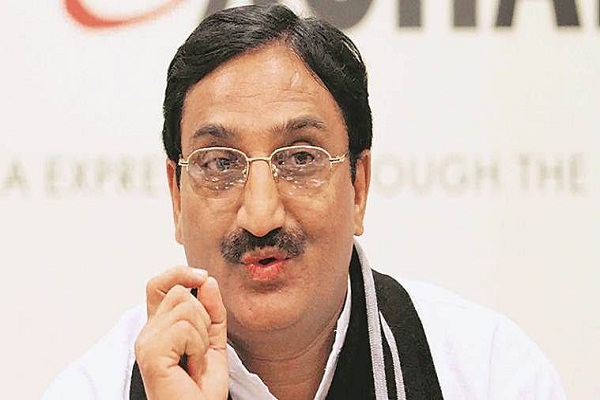
The HRD Ministry has confirmed that CBSE Board has identified over 15000 Exam centers to hold the pending papers for 10th and 12th Class Exams across India. The news was confirmed by HRD Minister via a tweet from his official twitter account. In his tweet, HRD Minister Ramesh Pokhriyal Nishank mentioned that a total of 15000 schools have been identified by the CBSE Board where the pending Board exams for 10th and 12th Class students would take place.

Earlier, the board was slated to hold the exams at only 3000 exam centers; however, the number of exam centres has been increased exponentially, by nearly 12000, considering the COVID-19 situation.

The expansion in the number of CBSE Board Exam 2020 comes after the HRD Minister’s announcement that students will be allowed to appear for the pending board exams at their respective schools, from where they are registered for the exams.

Typically, CBSE Board assigns external exam centers for Board exams to ensure complete transparency and minimise biases and allow external invigilators to evaluate exam papers.

Earlier in the month, CBSE Board notified the revised examination date and the detailed subject-wise schedule for the pending papers of CBSE Board Exam 2020. As notified earlier, the board would be holding the pending exams only for 29 key subjects that are important for 10th and 12th Class students to seek admission for further studies.

Check Bihar Board Class 10 Results on biharboardonline

Bihar Board Class 10 Results

The Bihar Board 10th Result 2020 is now expected to be declared on May 25. Since there is no official declaration by the board regarding the Bihar Board result 2020 date, students are looking up for details every single day. The result has been delayed from last few days.

The Bihar Board will declare its results on biharboardonline.bihar.gov.in, biharboard.online.

The Bihar Board Matric 2020 paper evaluation was completed a few days back, the results are still getting delayed.

As soon as the marks compilation and result preparation are over, BSEB will get the completed Bihar Board 10th Results 2020 in their hand and it would be finally released to the students.

Till the post-paper evaluation work is completed, we would be unable to get a confirmed date for BSEB 10th result.

However, as per our talk with a BSEB official a week earlier, the BSEB Matric Result is sure to be released by May-end even if it isn’t declared by May 25.

Also Read: Bihar Board to declare Class 10 Results today

As per reports doing the rounds, the Bihar Board 10th Result 2020 was supposed to be out sometime between May 18 and May 20, but no official confirmation was received on the same.

Certain reports even suggested that the BSEB 10th Result 2020 would be released on May 25 and this is most likely going to be the final date for result declaration.

JEE Main 2020 online application ends on Sunday

JEE Main 2020 online application

The Joint Entrance Examination (JEE Main 2020) will be closed its online application on Sunday, May 24. Candidates can submit their application forms at nta.ac.in or jeemain.nta.nic.in.

Candidates can edit their application form and chose the city they wish to appear from. This will be available from May 25 to 31.

Over 9 lakh candidates registered to appear for JEE Main that is scheduled to be conducted between July 18 to 23. JEE Advanced will be held on August 23. To appear for JEE-Advanced candidates have to be in top 2.5 lakh of JEE Main.

The JEE Main rank list will be compiled by joining April and July sessions.

From this year onwards, the exam pattern for JEE Main has also been changed. There will be a total of 75 questions, of which each session has 20 MCQs and five long-form questions.

JEE is conducted twice a year. In the January exam, 9,21,261 candidates had registered while 8,69,010 candidates appeared for the same.

Results of MAH CET MBA-MMS 2020 declared

MAH MBA CET Result 2020

In a major development, State Common Entrance Test Cell, Maharashtra has released the result of MAH CET MBA-MMS 2020. The result has been declared on the official website i.e.mahacet.org. The date of Maharashtra CET MBA result 2020 had been revised by State Common Entrance Test Cell.

Earlier the date for the announcement of MAH CET MBA result was on or before March 31. In order to check their result of MAH CET MBA 2020, candidates will have to enter their login credentials. MAH CET MBA result 2020 has been declared in the form of All India Rank (AIR).

Maharashtra MBA Common Entrance Test is a state level entrance exam which is conducted every year to provide admission to candidates in various postgraduate courses in participating institutes across Maharashtra State.

Steps to check MAH CET MBA Result 2020

-Visit the official website i.e. mahacet.org

-Click on MAH MBA CET Result 2020

-MAH CET MBA 2020 result will appear on screen in pdf format

-Check overall score and percentile and download the result

Delhi HC: Private schools on govt lands won’t need approval for fee hike

Delhi HC Private schools

Providing relief to private schools, the Delhi High Court has ruled that private unaided schools set up on government land can hike fees without the permission of the Department of Education (DoE).

Justice C. Hari Shankar also ruled that the DoE can only intervene if it finds that in the light of the existing financial position of the school, the proposed increase in fee would result in profiteering, and, thereby, in commercialisation of education, and not otherwise.

The court was hearing a plea filed by Ramjas School, RK Puram, challenging a July 2017 DoE order rejecting its proposal to increase the fees for the academic year 2016-17.

The DoE had said at the time that the surplus available with the school was sufficient to meet its expenses and it didn’t need to increase the fees.

It had then asked Ramjas School to refund or adjust the hiked fee in case parents had already been charged.

The court said the DoE had exceeded its jurisdiction, which is limited to ensuring education is not commercialised. The 2017 order, it added, did not conclude the school had indulged in commercialising education.

The judge also said the DoE had been less than fair to the petitioner, and… compelled the petitioner to undergo a needless litigative exercise.

LATEST NEWS