Home Blog Page 521

Edtech solution provider Globus Infocom participates at the InfoComm 2019 Exhibition

GLOBAL INFOCOMM

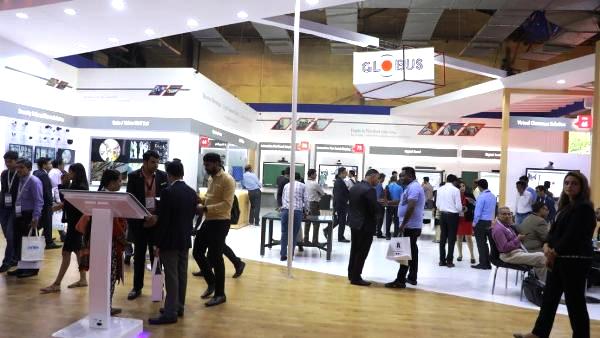
Globus Infocom, a Make in India brand & one of the most innovatory organization that provides advanced technological solutions participated in InfoComm 2019 Exhibition held from 18th to 20th September 2019 in Mumbai. Globus Infocom also introduced it’s newest product offerings at InfoComm 2019 on the biggest display.

Speaking on the occasion, Ms. Kiran Dham, CEO, Globus Infocom said, “We have been an integral part of InfoComm for past several years and this year we are as much delighted as always. We are committed as a responsible citizen to contribute our best to fulfil our objective. Being pioneers in the Education-Technology space and a Make in India brand for over two decades, we are confident that this summit will help us take our business a step ahead.”

Globus Infocom showcased it’s best of the advanced technological solutions this year curated for Education technology, Digital Displays, Digital Signages & Surveillance with an impressive and enormous stall space of 272 sqm, making it one of the biggest exhibitors among all.

Adding to the huge range of products & solutions, visitors got the hands-on experience of some of the newest solutions designed to elevate the learning experience such as 3D Science Lab, Digital Language Lab, Virtual Classroom solution along with content software for preschool, K-12 & Higher Ed classes. Along with this, the visitors also witnessed some of the major technological offering in the conferencing industry from Globus Infocom. Their latest range of quality AV solutions are designed as per the modern industrial requirement designed to optimize the business operations and enhance the productivity.

Into the software domain, Globus also displayed Digital Token system designed to streamline operations for Banks, Hospitals, Railway Stations, Metro stations & Large organizations.

InfoComm India is a dedicated exhibition platform for exceptional technological solutions, Professional AudioVisual (Pro-AV) and Integrated Experience Solutions in India.  Exhibitors & manufacturers from over 20 countries choose InfoComm India as the place to showcase their game changing products & services to thousands of local & international visitors.

CBSE frames water conservation guidelines, schools to become more water efficient in the next 3 years

CBSE schools

The Central Board of Secondary education has framed water conservation guidelines, making it a mandate for its affiliated schools to become water efficient schools in the next three years.

The schools are asked to conserve water by forming a school water management committee, conducting regular water audits and adopting a rigid water management policy.

According to a NITI Aayog report, there will be a severe water crisis and around 21 cities in India including Delhi, Bengaluru, Chennai and Hyderabad, will run out of groundwater by 2020, affecting around 100 million people.

As per the guidelines, the schools will be required to use water proficient models, introduce programmed taps with sensors and twofold flush tanks on need, guaranteeing standard check-ups for leakages.

Talking about the newly framed water guidelines, a senior CBSE official said, “Becoming a water efficient school is hardly a choice anymore. Therefore, it will now be mandatory for all affiliated schools to achieve the goal of becoming a water efficient school within the next three years. The hallmark of a water efficient school would not only be reflected in infrastructure but also majorly in the manner of use of water by school stakeholders and their sensitivity towards water conservation.”

“While schools use a tremendous amount of water every day and require water for drinking purposes, restrooms, canteens, laboratories, outdoor for playing fields, lawns and gardens; it must be understood that conserving water helps to reduce a school’s carbon footprint,” the official added.

Defining being a water efficient school as an “institutional responsibility”, the CBSE has asked schools to constitute “school water management committee” that may include administrators, teachers, students, non-teaching staff, parents and even few members from the community.

“The schools will also be required to conduct water audits which will help to set benchmarks and prepare a water efficiency plan, identify infrastructure improvements and better irrigation practices for green spaces in the school besides monitoring habits, practices and processes of school personnel’s water usage,” the official explained.

Installing rainwater harvesting structures, planting native and drought-tolerant plants and replacing old fixtures, are among suggestions made about adoption of a policy of water management.

Maharashtra Board releases exam time-table for Class 10, Class 12 students

Maharashtra Board releases exam time-table for Class 10, Class 12 students

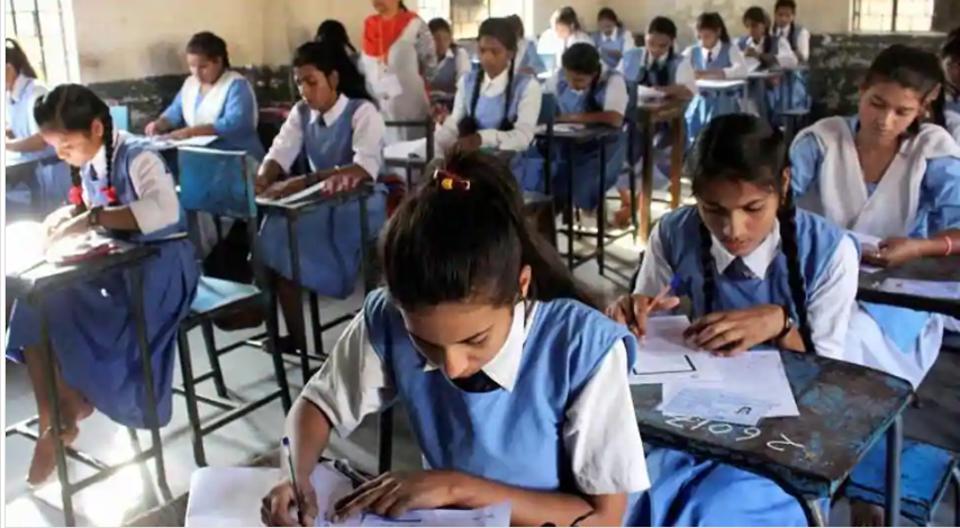
The Maharashtra State Board of Secondary and Higher Secondary Education has released the examination schedule of Class 10 and Class 12 students. As per the time table, the exam for Class 10 will begin on March 3, 2020 whereas Class 12 examination will commence on February 18, 2020.

Notably, for Class 10 students the exam will begin with first language paper and for Class 12 students, English language paper will be the first examination.

Students who are due to appear for Maharashtra Board examinations in 2020 can visit the board’s website to check and download the exam time-table.

For Class 10 students, the first Language paper will be held in the morning session from 11:00 am to 2:00 pm, on March 3, 2020. In the second half, the exam for second or third language paper will be conducted from 3:00 pm to 6:00 pm.

The board exam for SSC students will conclude with exam for Geography on March 23, 2020 in the morning session.

The examination for class 12 will begin on February 18, 2020 with English paper which will be held in the morning session. The examination will conclude on March 17 with exam for Sanskrit paper in the morning session, and for Russian, and Arabic in the afternoon session.

For Vocational students, the Maharashtra Board class 12 exam will end on March 18, 2020.

Interestingly, Maharashtra Board has made some significant changes to the examination pattern for the upcoming board examination. As per the modifications, Class 12 question paper will comprise of 25 per cent objective questions.

No oral or written test for preschool children, NCERT suggests new guidelines

NCERT Guidelines

The National Council for Educational Research and Training (NCERT) has suggested few guidelines for the preschools, where children in the age gathering of 3-6 years should not be made to appear for a test, oral or written.

The guidelines released on Monday also suggested that the assessment for children should not be based on marks rather on the growth of the children. A child’s performance should be evaluated based on their play activities, strengths etc.

“It should focus on child’s strengths rather than deficit and should not term any child ‘pass’ or ‘fail’,” say the guidelines released Monday.

“Rote-based, teacher-directed learning, which is devoid of meaningful context with undue pressure on the child to perform is harmful,” says the curriculum.

The Modi government intends to make pre-school training compulsory from the coming scholarly session, as suggested in the New Education Policy.

The 14th Dalai Lama receives Honorary Doctorate by Chitkara University

Dalai Lama

His Holiness The 14th Dalai Lama arrived at Chitkara University Punjab campus amidst rapturous welcome through a sea of students & staff waving, on October 14, 2019. His Holiness was received by Chitkara University Chancellor Dr. Ashok K Chitkara and Vice-Chancellor Dr. Madhu Chitkara, and offered a traditional welcomed by Tibetan students studying at Chitkara University.

Chitkara University presented His Holiness The 14th Dalai Lama with an Honorary Doctorate, Doctor of Literature (D.Litt.) Honoris Causa, in honour of his unparalleled and invaluable contribution to Humanity, World Peace and Education, and in recognition of his outstanding achievements in promoting peace globally and for inspirational spiritual guidance and leadership.His Holiness also opened Chitkara University’s Global Week 2019, and inaugurated the “Centre for Student Happiness” which will work towards increasing the quality of the students’ experience at Chitkara University.

Dignitaries & senior officials present at the occasionincluded, Ms. Mia Yen, Canada’s Consul General in Chandigarh; Dr. Niyati Chitkara, Principal, Chitkara International School; Mr. Kumar Anil, IAS, DC-Patiala; Ms. Nazuk Kumar, SDM (Central) Chandigarh Administration; International Delegates; and Senior Government Officials from UT & Punjab.

Following a traditional lamp lighting ceremony to open the Global Week 2019, His Holiness addressed the gathering on “The Need for Universal Ethics in Education”. His Holiness stated that “Modern education is oriented towards material goals with little scope for inner values. When modern education began to emerge about 200 years ago religious institutions ensured a sense of inner values, but as the influence of those institutions has declined. We need our education establishments to take responsibility for fostering values like compassion, kindness and concern for others.” His Holiness believes that the shape of the future is in our hands – the 21st century teachers & learners.“You, who belong to the present century, can create a world that will be happier and more peaceful.”

After the insightful talk, His Holiness left the floor open for students & delegates to interact with him, ask questions, and even welcomed suggestions. Taking questions, His Holiness could be easily caught chuckling as he heard some questions and glanced at the expressions on some of the students’ faces and, answered them with a smile. Talking about preserving the mental health for a joyful life, His Holiness said, “Since kindergarten, physical hygiene is commonly encouraged to preserve physical health, but we need a sense of ‘emotional hygiene’ – the means to tackle destructive emotions like anger, jealousy and fear. The ancient Indian culture was replete with knowledge of how to do this, and we must find a way to inculcate this back into the modern education system,” encouraging everyone to delve into further details for insights.“We are social animals; we depend on others for our very survival. Kindness and affection bring us together – anger drives us apart.”

Answering students’ questions on how he deals with challenges, His Holiness told them his mantra.“When faced with a challenge or problem, I try to look at them from a wider perspective.” He recommended that young people pay more attention to inner values and the means to achieve peace of mind.

Following the interaction with students & delegates, His Holiness proceeded for a personal interaction with Hon’ble Dr. Ashok K Chitkara, Chancellor; and Hon’ble Dr. Madhu Chitkara, Vice Chancellor, Chitkara University, where a deep and meaningful discussion ensued.

Describing the visit an absolute privilege anda deeply humbling experience, Hon’ble Dr. Madhu Chitkara said, “We are honoured to have His Holiness The Dalai Lama amidst us today – one of the world’s most revered teacher, thinker and peace messenger. We believe that the values of His Holiness are the same as ours, and we aspire to inculcate and deeply imbibe his teachings not only with our students, but also with our International partners in 34 countries, across 6 continents.”Many in the audience returned his wave as His Holiness left the stage. On his way to take a tour of the University, he stopped to plant a sapling at the campus to commemorate his visit.

Also present at the occasion were 55 International Delegates from 39 Universities in 22 Countries across 6 Continents, who were deeply moved by His Holiness’s words.

Indian-American economist, JNU Alumni Abhijit Banerjee awarded with 2019 Nobel Economics Prize

Abhijit Banerjee awarded with 2019 Noble Economics Prize

It is a proud moment for India as the 2019 Nobel Economics Prize has been awarded to Indian American economist Abhijit Banerjee by the Royal Swedish Academy of Sciences. The award will be shared with Esther Duflo and Michael Kremer for the trio’s innovative approach to eradicate poverty globally.

The award is officially known as the ‘Sveriges Riksbank Prize in Economic Sciences in Memory of Alfred Nobel’.

The laureates will also receive a gold medal, a diploma and 9 million-kronor ($918,000) cash award, which will be equally divided amongst the three.

The committee said that the research conducted by three laureates “considerably improved our ability to fight global poverty. In just two decades, their new experiment-based approach has transformed development economics, which is now a flourishing field of research.”

Born in Mumbai in 1961, Abhijit Banerjee was an alumni of Presidency College and Jawaharlal Nehru University. He received his PhD in 1988. Banerjee is currently the Ford Foundation International Professor of Economics at the Massachusetts Institute of Technology (MIT).

UGC develops life skills programme, social media etiquettes, yoga part of the curriculum

UGC

The University Grants Commission has recently launched a life skills programme, ‘Jeevan Kaushal’ for under-graduate courses wherein etiquettes of social media, yoga, pranayam are a part of the syllabus.

In an attempt to develop the communication skills of the students, the new programme was launched, which also aims at inculcating emotional and intellectual competencies in students.

“Today when we talk about writing skills and communication skills, we cannot ignore writing on social media. The social media websites are a good medium to connect but students must know the advantages and disadvantages. There have to be some ethics and etiquettes of social media and the curriculum will teach them the same. There is also a module on how to use Google search better,” a senior UGC official said.

As per the professional world is concerned, writing a good resume is also a life skill which every student must learn. As the students are unable to differentiate between a curriculum vitae (CV), resume and a bio-data, this life skill will be of much importance before entering the worklife.

“What will learners gain if they practice love and compassion? What will they lose if they don’t? What are the listening skills one must practice as a team member and how different they should be as a team leader? All these skills the students should be trained in,” the official said.

Divided in three modules, the curriculum has integral human being, yoga and pranayama and gratitude as part of the curriculum. Integral human being embraces the obligation to self, parents and society besides a module on living with others with their acceptance, the module on gratitude is about duty versus rights. Similarly, yoga talks about the pranayam and yoga are interrelated.

Further talking about the developed curriculum, the official said, “The curriculum has been developed by an expert committee with an aim to support our graduates to unlock and discover their true potential and making them social responsive citizens.”

Ernst & Young launches STEM Learning education app in Delhi NCR for girls

STEM Learning

In an endeavour to encourage girls to explore STEM as a career choice, multi-national services firm EY has collaborated with Tribal Planet to develop EY STEM Tribe, a technology platform to help over 6,000 teenagers get more acquainted with STEM Learning.

For the first time, this global initiative was launched in India, enabling an entertaining and gamified STEM learning experience to girls of 15-18 years of age. The launch will be followed by EY taking the schools in the United States, starting with Seattle and Atlanta.

The EY STEM Tribe is a digital platform that aims at increasing gender parity in the ed-tech space and reinforcing the organization’s purpose of building a better working world.

Leading educational institutes across the globe are extending hands to develop the STEM curriculum. , The EY STEM Tribe mobile app is also available for free on Andoid and iOS platforms.

Also Read: STEM Education Paving Way for Skilled India

Manish Sisodia, Deputy Chief Minister and Education Minister of Delhi, on the launch of the technology platform said, “In India, only 2 percent of the CEOs are female. And only 1 percent of the CFOs are female. Higher secondary classes of Delhi government schools have 57 percent students as females while only 43 percent are in science stream. This situation and stereotypes like boys for science and girls for humanities need to be broken now. And as part of this vision, we are introducing STEM Education for girls in Delhi Government schools in partnership with EY. Through the EY STEM Tribe platform we want to encourage our girl students to acquire 21st century skills necessary to secure jobs not just in India, but globally. We want more girls to be inspired to pursue science and related subjects.”

According to Rajiv Memani, Chairman and Regional Managing Partner, EY India, “As technology continues to shape the future, it has become imperative to provide equal opportunity for girls to pursue high-growth STEM careers. We are pleased to launch this global initiative in India, that will enable STEM learning for 6000 girls across 45 private and government schools in Delhi NCR, and has the potential to scale rapidly, empowering young girls to learn STEM in a pragmatic and contemporary manner.”

Tribal Planet is a Silicon Valley based company that develops innovative platforms and ecosystems to engage global citizens around social impact priorities, the EY STEM Tribe platform enables girls to choose topics based on their interests.

HRD Ministry rolls out PM Innovative Learning programme ‘Dhruv’ to help outstanding students

HRD Ministry rolls out PM Innovative Learning programme ‘Dhruv’ to help outstanding students

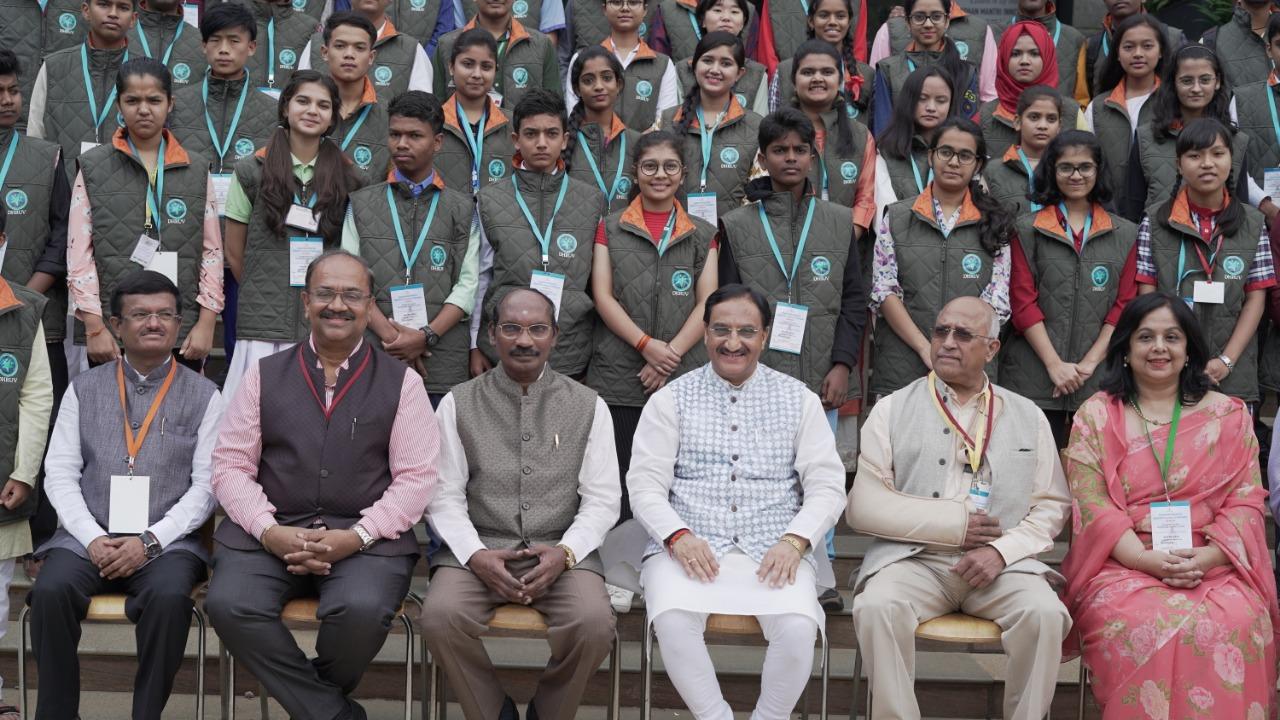
The Ministry of Human Resource Development on Thursday rolled out the Pradhan Mantri Innovative Learning Programme named ‘Dhruv’. The platform is dedicated to help the meritorious students achieve excellence in science, creative writing and performing arts.

As per the official statement, ‘Dhruv’ has been launched to identify and encourage talented children to enrich their skills and knowledge.  Under the programme, gifted children will be mentored and nurtured by experts in the centres of excellence across the country.

Sharing the details about the programme, HRD Minister Ramesh Pokhriyal said that ‘Dhruv’ has included the students of performing arts, since it has the power to stir ideas and people.

The programme kick started with the first batch comprising of 60 outstanding students. To begin with, it will cover science and performing arts.

The students have been broadly chosen from classes IX to XII.

The programme, which will run for 15 days, will have two separate groups for science and performing arts students respectively.

‘Dhruv’ was launched at the Indian Space Research Organisation (ISRO) headquarters in Bengaluru. The event was also attended by ISRO Chairman K Sivan, who recently made it to the headlines during Inda’s Moon Mission.

InfoComm India accomplishes seven-year-high; registers 17% visitor hike in latest edition

InfoComm India

The just-concluded edition of InfoComm India was the most successful in its seven-year history, registering a 17 percent increase in visitors over last year’s show. The premier Professional AudioVisual (Pro-AV) and Integrated Experience technologies exhibition smashed last year’s visitor attendance record, registering a 17 percent increase to 11,532 visitors.

Of these visitors, 2512 attended the Summit, which comprised 74 knowledge-sharing sessions running the gamut from high-level conferences to industry seminars and technical discussions.

Speaking on the latest development, Mr Richard Tan, the Executive Director, InfoCommAsia, said, “In tandem with the growth of India as one of the most exciting emerging economies in the world, InfoComm India has soared in seven years. We are now well-known in India as the platform of choice amongst exhibitors who want to tap into the promising Indian market and amongst business and organizations which want to plug into the latest experiential technologies from the best companies in the world.”

Fifty percent of InfoComm India’s diverse spectrum of visitors hailed from a wide spectrum of end-user verticals, while the rest comprised AV and IT channel representatives. They seem to be delighted with the quality of technologies showcased, especially as 86 new-to-India products were unveiled at the show.

Many pro-actively sought out new technologies, and were curious about the latest innovations in areas like AV over IT technologies, and projection mapping. Reflecting India’s nation-wide push toward digital technologies, numerous government representatives attended the exhibition with huge projects in pocket, to hunt for the latest in experiential communications.

Chandra Prakash Agrawal, the Chief Technical Examiner from the department, added, “What also impressed me was smart classrooms featuring interactive video conference that allow teachers to teach in remote locations where accessibility is an issue and there is a lack of good teachers available.

“Such technology can also be used in the medical field and allow better access for doctors to diagnose and treat patients remotely. I am very impressed by the show and the exhibitor’s showcase. I saw many new technologies for the first time.

Many deals were inked. Ashok GD Datta, AGM of Security at the Bank of India, said, “InfoComm India has allowed us to link-up with manufacturers and attain relevant quotations.”

Based on the enthusiastic response to their products and solutions, the exhibitors noted that the market in India is stronger than ever. Sixty amongst the over 200 exhibiting companies were first-time InfoComm India exhibitors. They hailed from over 20 countries.

“The Indian government has done a good job and the economy is booming. With a large population, we think it is a good time to invest here,” said Wei Wu, the Marketing Director of AOTO, which is based in China.

Exhibitors were delighted to get the opportunity to demonstrate their solutions to potential new clients.

“There was a lot of interest in the use of projection mapping in education and people were asking us how to use projection mapping in real-life applications. We had a very good experience with the crowd,” said Wasat Hussain, the Product Manager – VP at Epson India Pvt Ltd.

InfoComm India will return to Mumbai from 2-4 September, 2020.

LATEST NEWS