Home Blog Page 532

Innovations paving way for quality higher education in Rajasthan

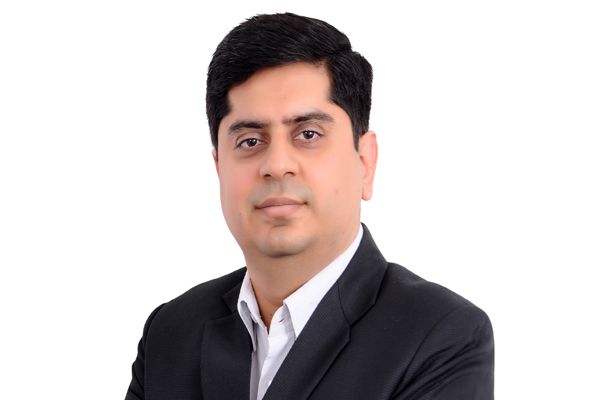
Bhanwar Singh Bhati

Our priority is to make youth employable and to make the college campuses conducive for the holistic development of the students. Keeping this in focus many entrepreneurship and skill development programs are now being started and some of them are underway in colleges, says Bhanwar Singh Bhati, Minister for Higher Education, Government of Rajasthan, in conversation with Kartik Sharma of Elets News Network (ENN).

What has been your top most priority as Minister of Higher Education?

Our priority is the holistic development of the students. We want the State Higher Education to reach the level where it can match the Global standards. We want our students to grow in an environment where they can become job oriented and are capable of getting jobs globally.

The Government is endeavouring in this direction through its scheme and programmes for students so that they can get career and job oriented opportunities as employment is the major challenge for the youth. We do not want to create just graduates or postgraduates; in fact, we want skillful graduates and postgraduates who can sustain in the fast- changing global world and economy.

What policies and new initiatives have been undertaken by the Government in the last 6-7 months?

Our priority is to make youth employable, and to make the environment conducive for the holistic development of the students. Keeping this in focus, many entrepreneurship and skill development programmes are now being started and some of them are in progress in colleges. We aim to make students employable along with learning which can help them in the creative utilisation of their time and money. Our summer camp programme “Kaushal Unnayan” has met with great success which was organised in 163 government colleges of the State in June.

quality higher education in RajasthanWe have initiated the process of making college campuses secure, safe and free for the girl students. Girls mentoring cells and internal complaint committee have been set up so that our daughters feel safe and secure when they are away from home. Many programs are organised by our colleges to train girls in self defence.

To promote education in the State, Government has opened 45 new colleges and now we can boast that not a single subdivision in the state is without a college. This shows our determination towards making education accessible to all.

To encourage physically challenged students, our Chief Minister has announced higher education scholarship which is a valuable contribution and help to the students.

What specific has been done for the betterment of the education ecosystem?

Our Government is dedicated towards improving the quality of higher education, its development and creating a healthy educational environment in the State. In a departure from the protocol, we have decided to decentralise the entire process of brainstorming for development plans and creating them.

For this, CM Ashok Gehlot had announced the Resource Assistance and College with Excellence (RACE) for all the colleges. Under this, one college from each district has been nominated as ‘nodal’ and a total of 33 district resource aid committees have been formulated. Through this initiative, we are promoting the process of resource redistribution in the state education system and kick-starting a new chapter of development of the colleges.

Besides, for the first time, we are going to conduct the annual auditing of all the government colleges under Annual Auditing Programme, which was again announced in the budget speech by the Chief Minister. This initiative would be a great tool in monitoring the performance and development of the colleges.

Technology is taking over education in a grand manner. What are the technological initiatives in pipeline that can empower the weaker section?

We are going to start an online 24*7 Quick Response System (QRS) scheme to answer the queries of the students on a real-time basis. It is specifically been created for the students who belong to the weaker section of the society and cannot afford to attend expensive coaching classes. Besides, an application has been created for the Universities through which helpline facility for students, monitoring the academic & extracurricular activities of universities, the transmission of orders, and overseeing the work of district resource committees.

We are heavily focusing on imparting employment-related training to students while they are still studying. For this, we have collaborated with Rajasthan Skill and Livelihood Development Corporation (RSLDC). Under this, we will be rendering 34 regular courses for skill development in selected government colleges. 25 Language Labs are being planned to be established in the selected government colleges to help students in grasping the requisite language skills for acquiring jobs in the future.

Game Changers in Education :: August 2019

Recognising the Game Changers of Education

Game Changers in Education

Students Lack in Life Skills Nowadays

Innovations Paving Way for Quality Higher Education in Rajasthan

Rajasthan: Transforming Higher Education Through Innovations

Rajasthan Reforming Education Sector Through Innovative Programmes

Billimoria High School Raising Responsible Global Citizens

Impact of Technology in Educating GEN Z: A Global Perspecrtive

AICTE: Revising Curriculum in Tune With Changing Technologies

CBSE: Committed to Excellence in Education

NCERT: Paving Way for One Nation – One Syllabus Concept

AHSEC: Committed to Impart Global Level Education

Bosem Taking Modern Education in its Stride

iCALIBRATOR Improving Education Success Through Technology

Mangalayatan University Innovating Curriculum for Excellence in Education

OP Jindal University, Raigarh (CG): Promoting Education’s Global Perspective

Chitkara University — Re-inventing Education 4.0

EMBIBE: Changing the Face of Education

NIT Meghalaya Contributing to Nation’s Development

Its Engineering College – Imparting Technology-Based Learning

Futuristic Edu Initiatives Providing World-Class Education to Children

OI PLAYSCHOOL Committed to Create Global Leaders

The Infinity School Empowering Future Generations Through Education

M. D International School: A Blend of Tradition and Modernity

Seth M R Jaipuria Schools: Nurturing Children the Futuristic Way

Saint Giri Senior Secondary School – Serving Community Through Quality Education

The Education System is Dynamic Nowadays

LaundroMINT: Organised, Hygienic and Affordable On-Campus Laundry Care

COURSERA – Transforming Lives Through Online Education

Training the Brain Through Experiential Learning

Satluj Group of Schools: Building Leaders of Tomorrow

Safari Kid International Preschools: Nurturing the Overall Development of Kids

GuruQ – Connecting Students with the Best Tutors

TUK Taking Online Education to the World

Fortune World School: Preparing Citizens of Tomorrow

Fun Rangers Making Early Learning Joyful

Quantum Jump Towards Education Reform Movement

Economy and Education are Interconnected

Rajasthan Govt Emhasises on Providing Quality Higher Education

Technology Can’t Replace Teachers

Higher Education Needs to Focus More on National Context

Technology in Hands of Good Teachers, A Boon for Education System

Hands-Onlearning Brings Balance Between Education & Enjoyment


NCTE to consider All India Level Entrance Exam for admission to B.Ed

National Council for Teacher Education (NCTE)

In a recent development, the National Council for Teacher Education (NCTE) is planning an All India Level Entrance Exam for admission to B.Ed to help in the right selection of teachers, as per the official updates.

In order to address the present gaps prevailing in teacher education, NCTE has made these changes, following which these gaps can be overcomed.

“NCTE may also shut down the teacher training institutes that fail to maintain the quality or the ones that fail to improve themselves”, said Satbir Bedi, Chairman, NCTE.

“The closure will be in the same way as the All India Council for Technical Education (AICTE). The teachers may be sent to the foreign countries so that the global needs of teachers can be fulfilled that come with the need of Indian teachers in other countries”, Bedi added.

As the growing number of teacher education institutes are unable to meet the education standards, the steps taken by NCTE will keep a check over the flaws in teacher education.

In order to maintain the pupil-teacher ratio of 28:1, a maximum of 3 lakh teachers are required with an average tenure of 30 years. Every year, the number of teachers to enroll in teacher training institutes is about 19 lakh.

With the quality of education getting compromised, the new changes will help in reviving the quality of teacher education.

Education Ministry’s new online portal ‘Shagun’ will connect 26 crore students and 92 lakh teachers

Shagun

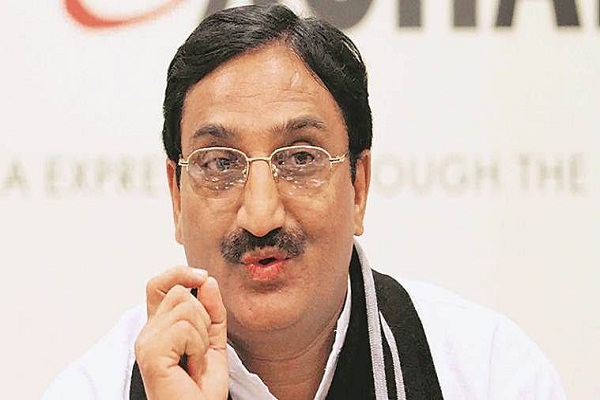
In an attempt to ramp up the school education system, Union Human Resource Development Minister Ramesh Pokhriyal ‘Nishank’ on Wednesday launched ‘Shagun’, one of world’s integrated online junction for all the online portals and websites of school education. The portal aims at connecting approximately 26 crore students and 92 lakh teachers.

According to the Education Ministry, Shagun will find 19000 organisations affiliated with NTCE, 18000 CBSE affiliated schools, 1200 Kendriya Vidyalayas, 600 Navodaya Vidyalayas, and 30 SCERTs among others integrated into one online junction.

“The word Shagun is coined from two different words- ‘Shala’ meaning Schools and ‘Gunvatta’ meaning Quality – and this online junction of different websites and portals into a single platform will enhance the accessibility of information relating to schools and will ensure a holistic approach to transform education sector”, said Pokhriyal.

The Ministry also informed that report cards of 15 lakh schools across the country would also be made available on ‘Shagun’ app and visitors can share their feedback about schools hence boosting the public participation which in turn will maintain transparency and accountability.

“Education is the foundation of a progressive society. Parents can now know all about the schools they are sending their children. They can send feedback as well. I want to congratulate the teachers and students for being linked on this platform,” he said.

Pokhriyal also said that this newly integrated junction will prove to be beneficial to all the stakeholders, viz. the general public, the parents, the teachers, the heads of the schools, the policymakers, the researchers and the officials.

“The website also provides vital information relating to the availability of nearby schools, navigable distance vis-a-vis aerial distance between schools thereby helping the policymakers in making informed decisions”, Pokhriyal added.

Maharashtra State Board of Secondary Education to announce Class 10 Supplementary Exam Results Today

Maharashtra SSC Supplementary result 2019

The Maharashtra State Board of Secondary Education is expected to announce the supplementary exam results for class 10 today, August 28, 2019. Students can access the SSC supplementary results on the official website for the Maharashtra Board post the announcement.

Results for class 10 board exam had been released by Maharashtra Board on June 8, 2019. Class 10 board exam recorded 77.10 percent of students passing the same. As per reports, 20 students scored 100 percent mark in the SSC examination in 2019. The supplementary exam results for class 12 have also been released on May 8, 2019, which recorded 23.17 percent of pass students.

This year, the pass percentage for the SSC board exam in Maharashtra saw a decline. In the year 2018, the Maharashtra SSC exam had registered 89.41 percent students who passed the exam, of which 91.17 percent were girls and 87.27 percent were boys.

According to reports, Konkan region witnessed the highest percentage of students passing the exam setting the record at 88.38 percent.

Students checking their SSC supplementary results for Class 10 from the official website are required to enter their roll number and mother’s name.

Pune University to set up education centre in Kashmir

Post the repeal of Article 370 in the state of Jammu & Kashmir, Savitribai Phule Pune University has decided to set up an educational centre in Kashmir Valley.

On Friday, the proposal was approved by all the members of the administration, said the Vice Chancellor.

The same will be sent to the Maharashtra state government to get the permission to set up the new centre, the university said in a communication.

The meeting of administration of Savitribai Phule Pune University happened today in which Rajesh Pandey, a member, moved a proposal that with changing situation in Kashmir, the university should set up an educational centre in Kashmir and seek permission for same the proposal should be sent to state government, the university’s Vice-Chancellor said.

Till August 5, the state of Jammu & Kashmir was enjoying the special status under Article 370 of the Constitution; thereafter, the central government scraped off Article 370 and divided J&K into two Union Territories namely Jammu & Kashmir, and Ladakh.

Delhi Government to bear ‘hiked’ board exam fees for its schools

Days after the Central Board of Secondary Education (CBSE) hiked the board examination fees; the government of Delhi has announced that it will bear the board examination fees for all the government school students.

The announcement was made by Delhi Education Minister Manish Sisodia in a post on twitter.

“The Delhi government will pay the CBSE examination fees for all the Class 10 and 12 students from Delhi government schools,” he tweeted.

In a circular dated August 23, the Delhi Directorate of Education has asked all city government schools to not collect any examination fee from the board class students for payment to CBSE till further directions.

However, the circular said that the process of making the list of candidates should go on.

Notably, the fee for schedule caste and schedule tribe students under the CBSE was increased from Rs. 50 to Rs. 1,200. On the other hand, for general category students, the fee was hiked from Rs. 750 for five subjects earlier, to Rs. 1,500.

However, after the Delhi government agreed to pay the balance amount, the board reinstated the fee for the SC/ST students of the city government schools.

Don’t only run after jobs after completing degrees: UP CM to students

Yogi Adityanath

Uttar Pradesh Chief Minister Yogi Adityanath on Thursday advised the students to not run for jobs after getting degrees and instead play a proactive role in the development of society.

Adityanath said this while addressing the fourth convocation of Madan Mohan Malaviya University of Technology (MMMUT) here. The chief minister asserted that the convocation ceremony is keeping alive the tradition of ‘gurukuls’ that motivates students to speak the truth, follow the right path and indulge in self-study.

Further, underlining that engineering students can play a major role in various fields, UP CM said that students must come forward for the successful implementation of the ‘Har Ghar Nal’ scheme. This government scheme is aimed at supplying potable water to every household by the year 2024.

Talking about the importance of technology in different fields, Adityanath said, “This has also helped in checking corruption at various levels besides helping the government save crores of rupees. Today, people are able to buy wheat at Rs. 2 per kg and rice at Rs. 3 per kg”.

“Around 50 crore people have been linked to Ayushman Bharat Yojana of Prime Minister Narendra Modi, while over 2.5 crore citizens have been given houses,” he added.

On the occasion, the chief minster extended his congratulatory greetings to Infosys founder NR Narayan Murthy for being conferred with the DSc honorary degree at the convocation ceremony. He also applauded the students who were conferred with graduation and post-graduation degrees.

The event was also graced by MMMUT Vice Chancellor Srinivas and Principal Secretary (Technical Education) Radha Chauhan.

ICAI expected to declare CA Intermediate result today; know the details

Institute of Chartered Accountants of India (ICAI) is expected to release the CA intermediate result today, i.e. August 23, 2019.  The national level Chartered Accountants regulatory body, in an official statement, said that the result will be declared either on Aug 23 or Aug 24.

Candidates who have appeared for the examination will be able to check the result on official websites affiliated with ICAI, icaiexam.icai.org, caresults.icai.org and icai.nic.in.

Notably, the Institute had released the ICAI CA results for Foundation and Final students in the second week of August.

Besides the intermediate result, the ICAI will also announce the all India merit list of the CA Intermediate exams conducted in May this year.

ICAI Intermediate Exam Result 2019: Steps to download

  1. Visit the official ICAI CA result websites; icaiexam.icai.org or caresults.icai.org or icai.nic.in.
  2. On the homepage, look for tab that says ‘CA Intermediate results’.
  3. You will be redirected to new page.
  4. Enter your registration number or PIN number along with roll number
  5. Submit the details.
  6. CA intermediate results will be displayed on the screen.

Apart from publishing results on the official website, ICAI will also send the result to the candidates on their email addresses. However, to avail this service, candidates need to register their requests on the official ICAI website. Besides, the option of receiving results directly on the phone is also available.

In a parallel development, the dates for CA exam have also been announced. The exams for CA foundation, intermediate and final courses under old and new scheme will commence on November 2, whereas registration has already begun for the November exams. To appear in the examination, candidates can apply latest by September 7, 2019.

UGC to increase 30% enrollment in higher education by 2020

UGC

In an attempt to improve the quality of higher education in institutions, the University Grants Commission (UGC) is aiming to increase the Gross Enrollment Ratio (GER) to 30 per cent by 2020, said Prof D P Singh on Wednesday.

Adding further, the UGC has also chalked out certain objectives for improving the quality of education in higher institutions. Currently, the enrollment rate is of 25.4 per cent.

Commenting on this move, Singh said, “The number of students enrolled in higher education system has gone up to about 3.66 crore in 2017-18. The GER rose to 25.4 per cent in 2017-18, while the aim is to increase it to 30 per cent by 2020.”

“The objectives include regular revision of curriculum with clearly specified learning outcomes and soft skills, enabling youth to secure access to employment/self-employment, developing social-industry connect, availability of motivated teachers and accreditation to ensure qualitative self- improvement in HEIs,” he further added.

GER is the ratio of students enrolled in the age group of 18-23 years to the population in that age group.

LATEST NEWS