Home Blog Page 674

Manipal University jaipur: Fostering Academic Excellence

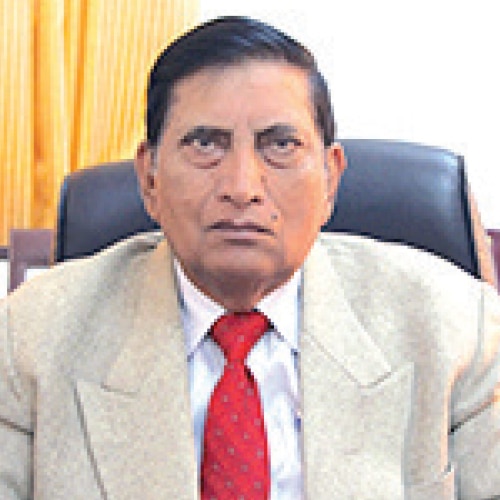
Dr-Sandeep-SanchetiAt Manipal University, Jaipur, qualitative improvement is the watchword of both the management and the faculty. We strive to provide our students with the best learning environment along with impeccable education, says Dr Sandeep Sancheti, President, Manipal University in an interview with Elets News Network (ENN).

Please describe briefly about the professional courses offered at Manipal University?
In Manipal, most of the courses are professional ones whether it is in design or management, or journalism or engineering. All these are four year courses but we do have five year courses in architecture and law streams. In most cases, we prefer four year undergraduate courses and honors courses, as they are well-accepted across the industry as well as for higher studies because their depth and rigor. Such courses are generally better as they also have the components of flexibility in terms of exposure to internships and industry projects.

In the light of latest technologies evolving across the world and the global products are being created from various education institutions itself, do you offer any job-oriented course and make your students job ready?
Yes, most of courses offered are professional and are job oriented. For job orientation, we are fully geared and do our best to prepare students for it by delivering multiple skills and courses beyond conventional schemes. In fact, placement has become the foremost criteria for students and parents to choose an institute before joining it. Unfortunately they are less worried about the main things like quality of programmes offered and how these things will affect their studies and future.
Basically, we try to inculcate the lifelong learning abilities in a student and not necessarily the ability to get a job only. We do very well in terms of our placements. But in my opinion, an ideal institution’s focus should be to make students versatile and enable them to do what they want to do. To offer them better choices, we have recently started new generation programmes like BA Liberal Arts, BPES, BDes, etc.

Which distinct branches of engineering are offered at your university, share their scope as far as career prospect is concerned?
We are dealing with many branches of engineering. In all, we have 10 branches and I personally believe that branches of Chemical, Automobile and Mechatronics Engineering, etc, are distinctly different and advanced at least in the context of Rajasthan. We offer best of the class infrastructure, laboratories and learning environment for these branches in the country and we are striving to make it even better in terms of overall excellence.
We also offer highest standards of learning in conventional streams of engineering such as Computer Science, Information Technology, Computer and Communications, Electronics & Communications, Electrical, Civil and Mechanical Engineering. All of these engineering programmes offer better career prospects, as the students are better equipped with multiple skills of IT, analytical and logical abilities, communication skills, industry exposure, etc, which are generally lacking in other conventional streams.

We have 10 branches and I personally believe that the branch of Chemical Engineering, Automobile Engineering and Mechatronics Engineering, all of them are distinctly different, unique and advanced at least in the context of Rajasthan.

Do you think traditional engineering discipline is being eclipsed by the new engineering ones?
Traditional engineering branches such as Mechanical, Civil, Electrical etc. are discipline oriented and are offered by most of the institutions as well as preferred by the students. In my opinion, our institutions should also support branches like mining, metallurgy etc. as they are very important for our growing economy.
Given a choice, I will be the one to advocate for branchless engineering. I would call it as a general engineering or basic engineering or interdisciplinary engineering. It basically means that right from the day one, a student should not freeze his/her options. Reason is that when a student gets enrolled in a college, they would not know about what branch to choose. Therefore they prefer to follow what their friends are choosing or what their parents are advising them. Through branchless engineering we can allow and help them to identify and choose specialisation of their interest at a later stage when they are more matured and their future directions are better known. Though, this agenda seems difficult and is generally not offered in our country but regulatory agencies and good institutions should lead efforts to make it happen.

Most of the undergraduate engineering students in India readily opt for the first job opportunity during the placement drive. What is your take on this?
Most of the students tend to go for it as there is a pride associated with it both for the students as well as for the institution. Institutions also generally promote and desire good placements as it helps them to improve their profile and performance in ranking through NIRF, NAAC and NBA, etc. The third stakeholder i.e. the industries also take part in campus drives as they know that it is easiest way to get the best talent with the least cost. Generally it is a win-win situation for all stakeholders and hence it is flourishing. Placement is another reason why the family or student blindly opt for engineering while sacrificing other interests.
Industries are sometimes very keen to outdo each other and therefore start early placements which distract students from their normal teaching-learning processes during important phases in pre-final and final years leading to poor quality of graduates. Students also tend to go for jobs providing higher CTC irrespective of the job being of their choice or not due to their social compulsions. We should collectively make efforts to improve on these counts.
In addition to placement activities we also promote entrepreneurship as an option to outgoing students. A number of initiatives have been taken to promote it by providing proper exposure from experts, incubation facilities, technological support, partnerships and equity, etc. in their enterprises. As a special effort we also allow students to take entrepreneurship as their final year project to give them a head start and a better exposure of this domain.

Lots of initiatives are on-going as far as academics, research and betterment of overall performance are concerned. Academically, electronics engineering students will all go through the semi-conductor fabrication exercises where they make devices which generally are not offered at most of the institutions.

What are the latest and upcoming initiatives by the university? Please share the details of some of the prominent ones?
Lots of initiatives are on-going as far as academics, research and betterment of overall performance are concerned. Academically, electronics engineering students will all go through the semi-conductor fabrication exercises where they make devices which generally are not offered at most of the institutions. Computer engineering students would be exposed to Super Computing or High Performance Computing. Majority of students of Mechanical, Mechatronics and Automobile engineering undergo training at BOSCH training centres where they work on different aspects of a vehicle such as designing, drive system, safety, comfort etc. So lots of hands on practices are being offered to improve the learning experience in all specializations. We are also able to place around seventy percent of our final year students for six months projects at the industry to enhance their industry readiness.
In assessments domain, we do follow open evaluation and open book examination system and provide relative grading. This means that even if you have scored 75 and you are highest in the class, you will get a top grade. Similarly if you are at the last position in a class with 75 marks, you will get a poorer grade. This is the beauty of relative grading and these practices are usually not fully followed in most of the institutions as they follow absolute grading. In general, in Manipal University Jaipur, there are no re-evaluations, reexaminations or re-totaling as all answer scripts for all examinations are shown to the students. This practice also helps us declare all our results in time.
Similarly practices such as Tinkering Labs, Virtual Labs, summer internship for students from other colleges, one compulsory MOOC course and one online experiment every year and practicals in industry supported laboratories, faculty internships in industry etc, have been started.
Further, since we have just about completed six years of our existence and graduated one or two batches of most of the programmes, we are now intending to focus more on quality and set even higher benchmarks. In our formative years itself, we have found a rightful place in NIRF ranking and hope to continuously improve it. We are also actively working towards our IQAC, NAAC accreditation, improving research profile and offering more industrially and socially relevant courses.

Dr Sandeep Sancheti is an eminent educationist and has had varied experience as the head of NITs and of School of Planning and Architecture, New delhi. Dr Sancheti is an institution builder and currently is President of Manipal University, Jaipur

Meghalaya CM lays foundation of state’s first engineering college

Meghalaya Chief Minister Mukul Sangma has laid the foundation of first engineering college of the state.

Shillong Government College of Engineering will receive funding under the National Higher Education Mission in collaboration with the state government. The engineering college will run its classes at the Shillong Polytechnic Campus till the construction of proposed campus is completed.

“Education can be a game-changer and bring about huge transformations. The Shillong Government College of Engineering will being a turnaround in the educational sector,” the CM said. “With North Eastern Hill University, National Institute of Technology, Indian Institute of Management and various other premier institutes in the state, Meghalaya is turning into an education hub,” he added.

In order to complete the project within 18 months at the most, the CM urged the officers of various departments to work round-the-clock. Completion of construction within time will result into commencement of classes from the next academic session. The college will offer courses in Civil Engineering, Electrical Engineering and Computer Science.

Harvard University soon to launch course to study Ramayana and Mahabharata

Harvard University is soon going to start a course on Indian epics “Ramayana” and “Mahabharata”.

Anne E Monius, Professor, South Asian Religions at the University, will teach the course “Indian Religions Through Their Narrative Literatures”. Through the course, the students will try to examine the religious traditions and communities of South Asia through the stories told.

Describing about the course, Professor Monius said that the course will study the Indian religion keeping in mind the poetic perception of Valmiki (Author of Ramayana) and Vyasa (Author of Mahabharata) and to modern performances of the epics in urban street theatres and television serials.

Talking about the universality of the two epics, Monius said, “The Indian epics are long and complex narratives that speak to virtually every aspect of human experience. While the Mahabharata is a sobering tale of cataclysmic war and loss, the Ramayana is one of India’s great love stories.”

Though these philosophical and scriptural epics have been studied by the scholars for over a century but the wealth in terms of narrative literature of them is still ignored, professor Monius added .

Along with examining the Sanskrit texts of the two epics, the course will also look into dance performances, shadow puppet plays, modern fictional retellings, and televised renditions of the stories. Monius believes that the two epics easily transcend boundaries of genres ‘both in history and today’.

Taking Cyber Security to Students

E-Jagratha is an internet security awareness programme under the initiation of District Administration and District e-governance Society of Ernakulam, Kerala. Introduced in 2016 for government and aided high school students in collaboration with TCS, the project has now entered its third phase. Elets News Network (ENN) explored the progress and unique features of this project in conversation with K. Mohammed Y Safirulla, District Collector, Ernakulam, under whose guidance the project is being driven.+

K. Mohammed Y SafirullaE -Jagratha programme’s basic objective is to promote Cyber Safety and Internet Awareness among High School Students of both Government and Aided Schools. The targetted students are from High School level (8th, 9th and 10th).
This programme can bring remarkable change in urban as well rural high schools and set as an example for student transformation and teacher empowerment. The structure of e-Jagratha is designed in such a way that it starts from basic orientation of students to school-level awareness and further empowerment of schools as a whole. “Another important innovative way of thinking apart from normal reasons which helped us in brining an IT company is that when the students come to TCS Campus during their training they experience the real features of the cyber world and its ecosystem,” said Safirulla.
It triggers their inquisitiveness to learn wider aspects and verticals of cyber world. Now, nearing its one year of completion of this project, it is in the third phase of a successful implementation.

The Beginning

The first phase of e-Jagratha was launched by Kerala’s Revenue Principal Secretary P.H. Kurian at TCS Center Auditorium, Infopark Cochin on 21st October, 2016. It has focused on 101 government high school students of Ernakulam district spread over four regions. “Major objectives of the Phase-I programme are to disseminate basic internet awareness, use the internet safely and responsibly, identify the opportunities and pitfalls in internet, protection against cyber crimes, dos and don’ts of using cyber space. The programme was designed at three levels – Orientation, Awareness, and Empowerment in each phase,” said K. Mohammed Y Safirulla, District Collector, Ernakulam.
The society has collaborated with TCS Infopark Kochi and it has prepared the complete curriculum and presentation materials. We are also financially supported by State Bank of India. First phase of the program was completed within 3 months by Dec 2016.

Methodology

The beginning of the programme starts with orientation level and each school nominates a student and a teacher sent to the TCS campus for training by the TCS professionals. After first-level orientation, these trained people act as a master trainers in their respective schools to propagate the cyber knowledge.
This is the second-level which creates awareness and benefits the schools. Further, each addition and advancement in topics in next phase acts as empowerment level. Education department provides the shortlisted schedule of schools and TCS gives them training. The training level and qualities are monitored by TCS and District Administration.
School students, covered under this project, are encouraged to take up an internal examination after the awareness level training and are awarded a cash price of Rs 1,000.

Phase III

After successful completion of its phase – II, now e-Jagrtha has entered in Phase 3 from July 2017. As part of phase 3, TCS has given 100 Desktop Computers for select schools, where IT infrastructure and lab facilities are poor and inadequate.
Similar structure and level of training adopted in phase – III schools with addition of advancement courses such as introduction of Robotics, cloud etc.Training programmes have already been started from July 2nd week and should be completed within 31st July 2017 in their schools for 8th Standard students as per the plan.
From November 2017 till January 2018, the school-level awareness of advanced courses with the help of master trainers will be carried out in their respective schools.

Learning from innovations

Innovative aspect of the e-Jagratha project is that it is enabling the students of government schools, who are less exposed to the cyber world, to get a real time exposure on nuances of Cyber World with live videos and examples along with the practical experience.
Major problem relating to syllabus formation was solved with the brainstorming sessions and sharing of ideas and concepts that needed more concentration with the TCS and District team along with Cyber experts.
For this project, a nodal officer was appointed to have a single point of contact with the District administration, TCS, Education Department other stakeholders. From the Education Department a teacher was appointed to coordinate among all the schools with the help of all concerned Divisional Educational Officers.
With the help of all the concerned school head masters we were able to arrange all vehicles also for transportation from a single point.
The visible improvement that is observed is based on the tremendous exposure on the topic with respect to the eagerness and increase level of motivation.
Students are empowered by learning through this kind of special programmes and don’t consider they are lacking anything from their private school counterparts. After this programme, students are excited and anxious to pursue career opportunities available in IT and cyber security.   Even parents are now informed and have started showing interest in knowing some of the useful topics to help their kids in adapting IT knowledge and other aspects of cyber security. This project has the scope and potential for replicability in other Districts/States.
As the programme has ensured an environment of conscious and informed usage of cyber technology, IT and internet in their regular life, it seems knowledge enrichment is a never ending process which can be replicated anywhere, actually helping our future generations.

Naval War College introduces international course

Naval War College, Goa, has launched its second international programme for naval officers from foreign countries such as Bangladesh, Maldives, Myanmar, Oman, Sri Lanka and Indonesia.

According to an official statement, the programme will be of eight week and will impart training to officers from friendly foreign countries. Naval War College, Goa, is one of the three War Colleges of the Indian Armed Forces.

The Goa University vice chancellor Varun Sahni has inaugurated the programme. The curriculum for the programme will include international relations theory, international maritime law, management of ocean resources, concepts of maritime security and strategy, and geopolitics amongst others.

The dynamically changing geo-political scenario demands stronger ties amongst navies in the Indian Ocean Region to develop efficient security architecture in the maritime domain, Sahni said. He also stated that maritime security is important for nation-building.

During the course, participants will be exposed to subject matter experts and eminent speakers and familiarisation visits to the Indian Navy’s operational and training commands. The participants will also put through simulation exercises on regional security scenarios including Humanitarian Assistance and Disaster Relief (HADR).

NITs likely to increase seats for girls

The Ministry of Human Resource Development (MHRD) is likely to introduce 20% supernumerary (extra) seats National Institutes of Technology (NITs) for girl students from next academic session along the lines of IITs.

The decision is expected to be taken by the ministry after a sharp dip in the number of female students taking admission in National Institutes of Technology (NITs).

With the admission of only 13% female candidates in the NITs this year, the premier technical institutions have witnessed a 9% fall in the same from last year. According to officials, Centre’s decision of doing away with the system of allotting 40% weightage to Class 12 marks for determining rankings in the JEE is one of the reasons for this dip. Admission to B Tech courses of IITs, NITS and IIITs are being decided on the basis of candidates, rank in JEE Main.

“This is disadvantageous to female students, who have historically performed better than their male counterparts in Class 12 exams,” a source said.

An HRD official conceded that the decision to not consider the Class 12 marks in preparing the final JEE ranks “could have impacted their (female students’) ranks and the overall admission (number)”. “The issue is being looked into,” the official said.

The increased number of seats for female candidates will not affect the existing seats for male candidates, sources added.

IGNOU signs MoU with NeGD and CSCs for training on e-governance

Indira Gandhi National Open University (IGNOU) has announced to partner with the National e-Governance Division (NeGD) and Common Services Centres (CSCs) of the Ministry of Electronics and Information Technology (MEITY).

“After the MoU, IGNOU will be able to collaborate with NeGD to prepare e-governance training videos. NeGD will be providing all the technical assistance required for the LMS. While partnering with CSCs will be fruitful for IGNOU students,”IGNOU’s Vice Chancellor VC Ravindra Kumar said during university’s Independence Day celebrations.

Referring CSCs as the access points for electronic service delivery, Kumar said that the NeGD and the CSCs will help the university to reach out to villages in India. This will contribute to “a digitally and financially inclusive society”, Kumar added. He also said that IGNOU students can use all CSC centres as CSC wallets.

The three (IGNOU, NeGD, MEITY – CSC) will sign a Memorandum of Understanding in this regard on August 22, 2017.

IGNOU DIGI NEWS – university’s digital news portal was also launched during the event along with the digital version of the Bachelors Preparatory Programme in form of a CD. According to a press release by the university, the CD will be distributed along with the study materials.

Navodaya Vidyalaya Samiti: Reforming Traditional Education System

The objective of Navodaya Vidyalaya Samiti is to provide quality modern education with a strong component of culture inculcation aming the children, says Bishwajit Kumar Singh, Commissioner, Navodaya Vidyalaya Samiti, in an interview with Shivani Tyagi of Elets News Network (ENN).

bishwajit-kumar-singhWhat are the initiatives being taken by Navodaya Vidayalay Samiti to promote education across the country?
Navodaya Vidayalay Samiti (NVS) has its presence across the country. As per the Government’s policy, one Jawahar Navodaya Vidyalaya (JNV) is to be established in each district. According to the budget announcements of 2016, we have to establish 62 JNVs in newly formed districts. Out of 62 schools, 30 schools will be operational from temporary sites by this year only. Along with this, various State governments have offered over 40 sites to setup Navodaya Vidyalayas. This is one part of the expansion.
Second part is to improve quality of education and the results of students. Since last few years, there is shortage of good teachers which is a major problem. To resolve it, we will recruit around 2,300 teachers as PGTs, TGTs and around 100 principals, by end of July this year through direct recruitment drive. So, we are expecting a pool of good school teachers by next year that will result into improved quality of education at the schools.
We are also taking different measures to remove the loopholes in the admission process, especially from 6 – 11 standard. We will be having online application process from next year for admission in Navodaya Vidyalayas. The Central Board of Secondary Education will be the exam conducting authority. The entrance exam will be Aadhaar based to avoid impersonation.
We are also focusing in sports as well. With the collaboration of Sports Authority of India, we will be establishing five centres of excellence for archery, boxing, table tennis, wrestling and athletics.

Globally many schools are adopting innovative practices to improve teaching-learning practices. How the NVS is planning to bring Indian school education system at par with the world?
As far as adoption of latest innovative practices is concerned, we have to take every step very carefully. Navodaya Vidyalayas are fully residential co-educational schools and in case of smart classes, we have to provide smart phones, tablets and I-pads to every student. Though, we have regulated the system of giving lectures through smart classes but it is necessary to take preventive measures to avoid any negative situation.
We have made available the smart classrooms to our students for at least eight – nine hours where they can go there and use all kind of technical devices such as interactive boards, laptops under strict surveillance. Technical devices are not allowed to be used in hostels, dormitory and in their regular classes.
In order to implement Information Technology (IT) related initiatives in teaching-learning process, various experts will train the teacher through a workshop of 10-15 days on different subjects. During the training of a particular subject, whole curriculum will be enriched in a way that students can learn a topic through traditional classes or through presentations or IT based solutions. A topic or a module of any subject will be taught traditionally followed by the digital demonstrations.
The approach followed at Navodaya Vidyalayas is different from the other smart teaching or learning solutions. It is an integrated approach of traditional learning, visuals and digital learning.

With the collaboration of Sports Authority of India, we will be establishing five centres of excellence for archery, boxing, table tennis, wrestling and athletics.

There is a huge gap between schools in rural and urban areas, what initiatives have been taken by the NVS to bridge the gap?
Students from urban area always have an upper hand over the students from rural area in terms of education. Navodaya Vidyalayas are established in such a manner that rural students get the same education facilities as that of urban students.
Most of our schools are located in districts in isolated areas, having 30 acres campus and residential. Secondly as it is isolated, all features like academics, sports, cultural activities etc are available here. In fact the students, teacher ratio in these discipline is far better than any other schools. So our approach is more focused, we are providing better facilities than any other urban school.

What are the initiatives NVS has taken to enhance vocational training in the schools?
We are putting our efforts to start number of vocational courses in JNVs. We have also got principle approval for the schools where we are planning to start vocational courses in vacations. We will conduct vocational courses’ classes for three month in class 11th as well as in class 12th. So, after passing out from schools, the students will have six month training in a particular subject. We have already approached different industries in this regard and are in talks with them to fianlise these training classes. NVS board has agreed in principle for it but exact conceptualisation is under process and we are expected to start the classes by the end of this year.

What are the areas where NVS need to change for good?
We need to work on two things, firstly to ensure better results in board exams from what we have got so far. In order to produce board toppers, academics need to be more robust, particularly in English that is the area where we are lacking. In this regard, we are taking the help of British Council and other agencies and also conducting online courses for the students.
Second area where we are focussing is teachers’ welfare program. (Our exam system is non verbal, where what a student has learnt in his/her previous classes is totally irrelevant.) We must have welfare measures for the teachers. These measures will help the teachers to devote their most of the time in academics instead of devoting their time in other activities.

NCERT: Universalising Elementary Education in India

Since its inception, the National Council of Educational Research and Training (NCERT) has been assisting and advising Central and State Governments on policies and programmes for qualitative improvement in school education, says Major Harsh Kumar, Secretary, NCERT in conversation with Shivani Tyagi of Elets News Network (ENN).

Major-Harsh-KumarGive us an overview of IT related initiatives taken by the NCERT?
NCERT was established in 1961. Since then the council is working on research, training and outreach for the prodigy of school learning. In today’s age of digitisation, our online services are one of the finest examples of it. All NCERT books are available online along with e-Pathshala for every class. To resolve the issue of nonavailability of NCERT books, we are soon going to launch a portal to enable students and others to order any number of books of the required subject.
We have also launched “SWAYAM” to bridge the digital divide among students who have remained untouched by the digital revolution. After a lot of research, we’ve developed learning outcome paper through which parents, kids and teachers, can check what has been taught and what students have learnt. NCERT is also putting its efforts for children with special needs. We’ve started books in Braille for visually challenged students.

How important is teachers’ training programme? What initiatives have been taken by NCERT in this regard?
Teacher training is very important. We have five RIs (regional institutes) in Ajmer, Bhubaneswar, Bhopal, Mysore and Shillong and running various teachers’ training programme through which we will try to recruit skillful teachers. Not only this, for teachers in service, our various departments conduct various training programmes the whole year. These initiatives for teachers are very important as they are the only ones who train students. We’ve such programmes for teachers earlier as well but the present programmes are more improvised as per the changing environment. Earlier, digitisation was not there, everything was done manually, but now things have changed and become easier.

We have five RIs (regional institutes) in Ajmer, Bhubaneswar, Bhopal, Mysore and Shillong and running various teachers’ training programme through which we will try to recruit skillful teachers.

There is a wide gap between facilities available to students in rural and urban India, how NCERT is bridging the gap?
We can reach out rural masses through the State governments. Under Government of India’s initiatives, NCERT helps a State in formulation, implementation and execution of any programme, if required. We are developing programmes and parameters for the States. For example, NTSC examination is conducted in two stages, first at State-level and second at national level. At State-level exam, States are free to frame questions and coordinate for other administrative things. Earlier, these processes run at NCERT headquarters only but now it has been conducted in every state through State Council of Educational Research & Training (SCERT) and the guidelines are issued by head office. Now we are trying to develop a hierarchy in which the process will be conducted at the block-level under the supervision of State councils and NCERT will be the supreme authority. This way it will be an integrated effort where everybody has to participate.

What are the challenges?
Sometimes State Councils of Educational Research and Training (SCERTs) alone are able to resolve those obstacles. Sometimes our involvement is necessary. At the end, with the coordination of various departments, every obstacle is dealt with effectively.

What steps have been taken by the NCERT to upscale vocational studies?
We are planning to start various programmes in our vocational institute – Pt Sunderlal Sharma Vocational Institute, Bhopal. Some new initiatives have also been taken and in some institutes we have added up programmes on vocational training. We might have come up with another institute in Andhra Pradesh.

What are NCERT’s future plans?
We plan to reach the masses. There was fabricated scarcity of books and to avoid that in future, we are developing a portal to be launched shortly where all books will be available. The online portal alongwith increased number of vendors so that books are easily available in every corner of India. In other initiatives, NCERT is coming up with innovative online teachers training courses for teacher and educators and development of e-contents.

Smart Education via Smart Classes: Reaching Out to Bordering Districts

To equip youths of the border areas with jobs, the government is trying to set up coaching centres for competitive exams and run capacity building programmes to enable them to contest in national-level competitive exams, says Dr Sandeep N Mahatme, District Magistrate and Collector, Khowai, Tripura, in an interview with Souvik Goswami of Elets News Network (ENN).

What government initiatives have been undertaken to improve employment status of youths in Tripura?
The State of Tripura, having one of the highest literacy rates in the country, has a significant number of educated unemployed youths. Lack of coaching/training institutes offering facilities to prepare for various Central and State government Departments’ recruitment exams result into less people making it to the Central/State Government jobs.
Border Area Development Programme (BADP) is a centrally sponsored scheme for ensuring balanced development of border areas through development of infrastructure and promotion of well-being and a sense of security among the border population. At the district-level it is implemented by the district administration through various line departments.
One of the important components of BADP is capacity building and skill development. Under this component, the Digital Classroom Coaching programme for Railways and Banking exams for SC/ST and other students is being implemented.

Facilities at the Coaching Centres:

  • A coaching institute, namely, Janakalyan Parishad, Dharmanagar, that tied up with Institute of Career Advancement, Agartala, is engaged through open bid following Quality and Cost Based Selection (QCBS) method.
  • 100 students are selected through screening tests by the coaching institute of which 50 students are enrolled to undergo coaching for banking exams and the remaining 50 for Railways exams.
  • The coaching institute will train 100 students, selected through a test, to make them capable of facing recruitments exams of Railways (Group C and D) and Banks (IBPS Probationary Officers, IBPS Clerk Recruitment etc.)
  • The coaching institute has set up digital classrooms at Dharmanagar and at Kanchanpur.
  • The coaching Institute has supplied books and study materials to students. In addition, it will also supply tablets with access to videos and other information based upon syllabus.
  • The duration of coaching is for a four-month session. The coaching institute is required to conduct at least eight classes a month. The coaching will also conduct at least two tests per month. Attendance of the students is recorded in biometric system.
  • Trainee students will be provided with travelling allowance of `50 on attendance.

What opportunities do Tripura youths have in the government sector?
As per the Indian Institute of Bank Management (IIBM), Guwahati, there is heavy demand for trained professionals to man the branches and to replace those who are retiring in near future. The problem is more acute in the North Eastern region where officers and banks’s staffs is reluctant to be posted. So, there is perennial shortage of skilled manpower in North east.

Also Read: Smart Education

Institute of the Banking Personal Selection (IBPS) quoted that there is acute need of banking professionals. Around 7.5 lakh people were to be recruited in next five years. Every year the trend is almost same.
BFSI (Banking Financial Services and Insurance) sector skill council of India (Under NSDC)- has projected manpower recruitment of the sector by 2022 to be 8.5 million, an increase of 4 to 4.5 million from the present statistics.
As estimated by the NSDC, Tripura requires 3.25 lakh employee workforce by 2022. So, banking sector job opportunity must be grabbed by the youths of North East/Tripura.
North Eastern Frontier Railway Division has its Railway Recruitment Board (RRB) in Guwahati. Opportunities in Rail recruitment lies with Rail Wheel factory Recruitment, Rail coach factory recruitment, IRCTC amongst many others. Recent RRB recruitment shows vacancies of 2,24,656 during 2016-17.

One of the important components of BADP is capacity building and skill development. Under this component, the Digital Classroom Coaching programme for Railways and Banking exams for SC/ ST and other students is being implemented.

Which kind of beneficiaries/people/ departments are affected positively? How?
The programme is targetted for educated unemployed youths of border villages of North Tripura district which lacks competitive edge due to absence of opportunities to prepare for recruitment exams conducted by banks and Railways. Particularly, the focus is on SC and ST students.
This type of coaching would augment, to a great extent, the skills of individuals from remote border villages who are looking for better opportunities but does not have the means to avail quality coaching to prepare themselves for the competitive exams.

What role do nominated departments play in employment and skilling of the youths?
The office of the District Magistrate and Collector North Tripura, invited Expression of Interest (EOI) which was published widely including the official websites of the State Government and District Administration. A good response was received during the second call for EOI. A technical committee evaluated the bid documents and called the shortlisted eligible applicants for a presentation before the committee. The final selection was made based on QCBS method. The District Administration is also monitoring the day to day progress of the programme as well as every other aspects of implementation.

What is anticipated out of the initiative?
The implementation of the programme is still ongoing. By May 2017, around 50 students were trained for Railways and around 50 students were trained for banking recruitment exams.

LATEST NEWS