Home Blog Page 750

HRDM asks UGC to retain Teaching Workloads

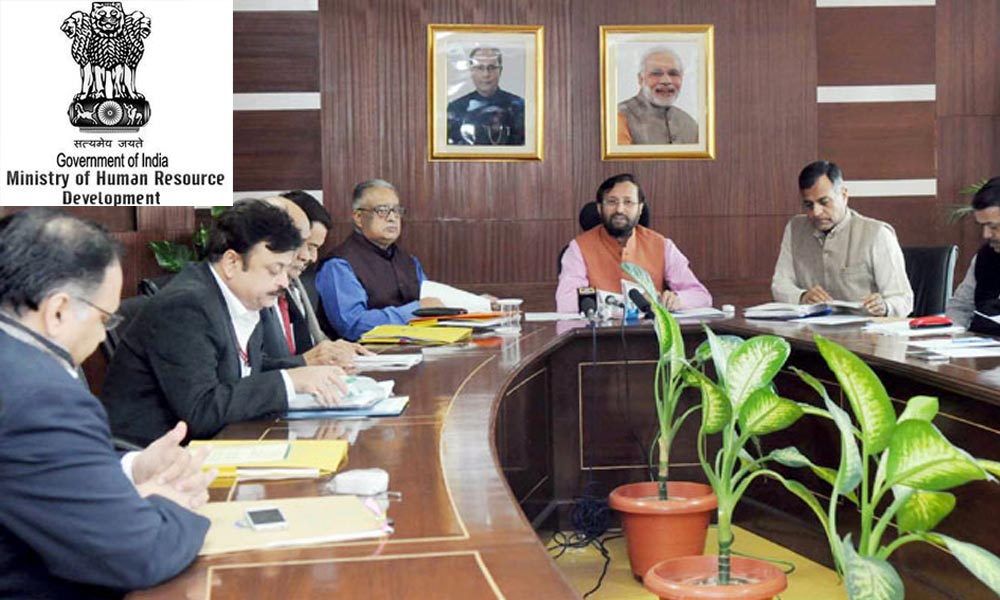
Human Resource Development (HRD) Ministry has asked the University Grants Commission (UGC) not to change the stipulated teaching hours of teachers of colleges and universities, after a UGC notification increased the weekly workload.

These changes are made by the HRDM to appease the teachers, as all Delhi University teachers were on strike against the new UGC regulations.

The workload, including practicals, of Assistant Professors was increased from 16 to 18 hours and that of Associate Professors from 14 to 16 hours in a week. Two hours of practical equal one hour of teaching.

According to the teachers, these changes would lead to many ad hoc teachers losing their jobs. There was opposition to the plan in Maharashtra.

The reforms were based on the Nigavekar Committee’s recommendations.

National Education Policy recommends Creation of All India Education Service

The key recommendation of the committee on National Education Policy, which submitted its report to the HRD ministry recently, is the creation of an All India Education Service. Other changes in the policy may range from pedagogy to structural changes.

It was in the 1980s that an all-India education service was first proposed by the then Education Secretary Anil Bordia. Later, Kapil Sibal, that time HRD Minister, was in favour of the concept but failed to implement it. Thematic consultations were held by HRD ministry, University Grants Commission, All India Council for Technical Education, National Council for Teacher Education, National Council for Educational Research and Training and several centrally-funded universities and institutions, autonomous bodies and attached offices.

This time, the committee consisted of T S R Subramanian, former Cabinet Secretary as the Chairperson and Shailaja Chandra, former Chief Secretary, NCT of Delhi, Sevaram Sharma, former Home Secretary, NCT of Delhi, Sudhir Mankad, former Chief Secretary, Gujarat and J S Rajput, former Director, NCERT.

Intel India introduces three Innovative Initiatives for ‘Digital India’

Intel India has started three innovative initiatives for supporting the Digital India drive, of the Government of India.  Intel launched these projects with an aim to accelerate digital literacy at the grassroots level by reaching out to the population in non-urban India, up-skill citizens in tier II cities and beyond, and encourage innovation from the local level.

The three initiatives are:

  • The Company, taking a step further on the momentum of its ‘Ek Kadam Unnati Ki Aur’ initiative, has e-launched its latest ‘Unnati Kendra at Common Service Centre’ (UK at CSC) in Karnal. This ‘UK at CSC’ will serve as one of the common access digital learning centres for people of the state. Intel India, with help from Government plans to open a network of up to 100 ‘UK at CSC’ facilities across ten states this year. 10  such facilities have already been set up in the state of Telangana.

  • Intel India also announced the Digital Unnati website, being set up in collaboration with the CSC e-Governance Services India Ltd. It will enable Village Level Entrepreneurs (VLEs) to learn how to assemble a PC online and up-skill their technology know-how.

  • Intel India also plans to re-launch ‘Innovate for Digital India Challenge’, inspired by the overwhelming response and the success of it.

Intel India is also actively involved in digital literacy programmes, policy advocacy and facilitating technology-driven inclusive growth. Through programmes such as the National Digital Literacy Mission and the Disha Digital Literacy Programme, Intel India has upskilled 80 lakh citizens in India till date, providing further impetus to the Digital India charter, as well to the Pradhan Mantri Kausal Vikas Yojna, which is focused on skill development in the country.

Amity and Tata Technologies become Partners to nurture Future-Ready Engineers

Amity University and Tata Technologies have formed an alliance in order to set up an industry-led technology institute, with the aim to create world-class institution, in terms of research and training.

This effort by Amity is yet another example as to how it remains committed to its endeavor of fulfilling the dreams and aspirations of  its students, who come to pursue quality education in this ever-evolving and diverse industry ecosystem.

The initiative will cater to the flourishing sectors of Automotive, Aerospace and Industrial Heavy Machinery with qualified and employment ready skilled manpower.

The way the Indian Automotive sector is growing, it is projected that it will require a workforce as much as 35 million by 2022. On the other side, the Aerospace sector which is ninth largest is  projected to be third by 2020.

With the government’s Smart City initiatives the scope of industrial heavy machinery also looks bright.

Some of the major highlights of this alliance are as below:

  • Curriculum will be industry based and designed by Tata Technologies

  • Technological solutions will be used for collaborative learning

  • Simulated environment, state of the art machinery and high-end software will be used for the best experience

  • This will enable the students to pursue internship in top global OEMs in a professional set up thereby equipping them for the future.

Jnana Sangama initiative strengthens Higher Education in Karnataka

Bharat Lal Meena, making a mark as the Managing Director of KPTCL by initiating ICT projects in Karnataka, is now on a new mission of making ICT an efficient tool for Learning, Governance and Academic activities as the Additional Chief Secretary, Department of Education (Higher Education), Government of Karnataka. He shares with T Radhakrishna and Sudheer Goutham of Elets News Network (ENN) about the Department’s mandate, initiatives, action plans, challenges in implementing ICT and more

Describe the Education Department’s mandate and its objectives. Who are your key stakeholders? The mandate is to make quality education affordable and accessible to all sections of students. The department deals with Higher Education i.e., college, universities and technical education. Its objectives are:’

Development of undergraduate and postgraduate education; v Increasing access to Higher Education;
Development of infrastructure in Government colleges;
Maintaining high standards of education in colleges.
The key stakeholders are students, faculty, administration, parents and people in general.

What systems and processes have you used to ensure the effective running of the department’s functions? In which functions, do you use ICT and how?

The history of implementation of ICT in universities/colleges was poor till mid-2015. Basic computing was available in each office or institution, but office automation did not exist. The day-to-day functions of Higher Education were not connected in real-time IT environment. However, the potential for using ICT in the Higher Education is enormous. ICT is very useful tool for Learning, Governance and Academic activities.

In the absence of systems and processes, monitoring is a challenge. So is data sharing. There was low priority for collating and updating data. Cyber security and information overload are some other concerns. Going forward, the Education Department is seeing a massive ICT implementation to bring in digitization in Higher Education.

While office automation is one aspect of it, there are a host of other student-centric initiatives. After I had joined the department about 15 months ago (in February 2015), I studied the situation and in Higher Education to bring in productivity, accountability and transparency in the day-to-day functions. As part of this, I travelled to all the universities and held meetings with officers concerned and later called for presentations on best practices in Higher Education. Data sharing must be linked with critical areas like approval, renewal, grants, etc. Finally, we came out with a roadmap for ICT initiatives after elaborate discussions with internal stakeholders.

Explain your 100-point ICT plan for your Department’s improvement.

The Department has prepared a roadmap for ICT initiatives to facilitate ease of administration and academic reach for students in universities and colleges. The programme aims to provide end to end digital solution from admission to completion of education, covering all functions of the Department and its stakeholders.

The 100-point table is nothing but an action plan for each requirement of the Department’s functions. Of them, 15 ICT initiatives and solutions are related to Administration; 22 exclusively for Universities; six exclusively for Colleges; 15 for Colleges and Polytechnics; 12 for Universities and Colleges; and 30 for Universities, Colleges and Polytechnics. The action plan has mapped the entire functions of key stakeholders – Students, Faculty and Administration, and feedback mechanism to Parents.

There is a need for synergy of data exchange of different portals such as AISHE, UGC, AICTE, NAAC, NBA, DISE, MCA, etc. ICT initiatives in higher education need to be encouraged. Scalable and robust ERP – type ICT solutions could be developed and made available to all states by MHRD, based on the Karnataka model

What is the status on ICT initiatives? What is the main aim of ‘Jnana Sangama’?

We have tested ICT initiatives on a pilot basis with the support of National Informatics Centre (NIC) and adopted most of the initiatives in a holistic manner. All the initiatives are interconnected. Software is freely available to all institutions. The Department has set June 1, 2016 for completing 100 percent ICT implementation.

On November 6, 2015, the department launched ‘Jnana Sangama’ (Convergence of Knowledge), an ICT enabled programme in the presence of TB Jayachandra, Minister of Law, Parliamentary Affairs and Higher Education and Vice Chancellors of Universities. It is aimed at digitization of Higher Education institutions in the State. This ICT initiative is the ‘Smart Karnataka Education Yardstick’ (Smart-KEY), designed for digitizing most of the teaching materials in public and private domain throughout the State.

Through Jnana Sangama, the Higher Education system in Karnataka – 50 Universities, 2992 undergraduate and postgraduate Colleges, 305 Polytechnic Colleges, and 207 Engineering Colleges will get a major boost.

Highlight Student-Centric initiatives.

Major thrust will be given to make the processes of entire pre and post-exam and admission, online. The Department will introduce online application and admission process for undergraduate and postgraduate courses. Digital attendance registration, inter-university information highway, and online affiliation process are on the anvil. While some of these are partially implemented this year, the Department is looking at full-scale implementation from the next academic year. The Department will make the entire admission process online, including the application process. This will be implemented across all Government aided and unaided institutions for undergraduate and postgraduate courses. Not every student can secure admission in top colleges. However, on this account alone, students should not miss out on quality education. This is the principle with which e-content sharing is being implemented. To begin with, 22 top colleges have been selected to record their lectures and share teaching aids with other institutions. The department has signed MoUs with private universities for sharing e-content, including video classes.

The Department of Higher Education, Government of Karnataka has prepared a roadmap for ICT initiatives to facilitate ease of administration and academic reach for students in universities and colleges. The programme aims to provide end to end digital solution from admission to completion of education, covering all functions of the department and its stakeholders

Do you have any suggestions to Ministry of Human Resource Development (MHRD)?

There is a need for the synergy of Data exchange of different portals such as AISHE, UGC, AICTE, NAAC, NBA, DISE, MCA, etc. ICT initiatives in Higher Education need to be encouraged. Scalable and robust ERP type ICT solutions could be developed and made available to all states by MHRD, based on Karnataka model. Quarterly National level workshops in different regions be held for sharing best practices and case studies be undertaken and sponsored. Financial support be extended for reforms-linked activities and annual awards and incentives to innovative initiatives in states should be taken up.

Indian education sector gets richer with 6 new IITs

The year 2016 seems to be a good year for the student community. Recently, the Union Cabinet has given its consent to amend The Institutes of Technology Act, 1961 for incorporation of new IITs at Tirupati (AP), Palakkad (Kerala), Dharwar (Karnataka), Bhilai (Chhattisgarh), Goa, Jammu (Jammu and Kashmir). Moreover, as reported earlier, there has been the conversion of ISM, Dhanbad to an IIT under the law.

Therefore, technically the country gets 6 new IITs, plus one elevation of an already existing veteran to the IIT level. The Cabinet also approved introduction of a bill—the National Institutes of Technology, Science Education and Research (Amendment) Bill, 2016 for inclusion of the NIT, Andhra Pradesh in its first schedule, which was by far registered as a Society under the Andhra Pradesh Societies Registration Act, 2001

The proposed amendments to the NITSER Act, 2007 will ensure a high level of public accountability and increased participation of the stakeholders in the administration and academic activities of the Institute.

HRD Ministry gets New Education Policy, prepared by Subramanian committee

The long awaited Education Policy of India has been submitted to the Human Resource Development (HRD) Ministry by the T.S.R. Subramanian committee, which had been entrusted with preparing a new education policy.

With the new education policy, being released after a gap of almost three decades, it is being hoped that the Indian education system, which has undoubtedly grown in proportion but lacks in quality, would get a new direction.

Till now, the HRD ministry has not revealed the content of the report. However, it is believed to have provided solutions to several challenges in the education sector, like:

  • Quality in both school and Higher Education

  • Employability challenge

  • Regulation of private education

  • Internationalisation of education

  • Restructuring of education regulators like University Grants Commission and All India Council of Technical Education.

The report will be evaluated by the HRD ministry and put for “public views” before a final draft is prepared.

ISM Dhanbad gets much-awaited IIT status

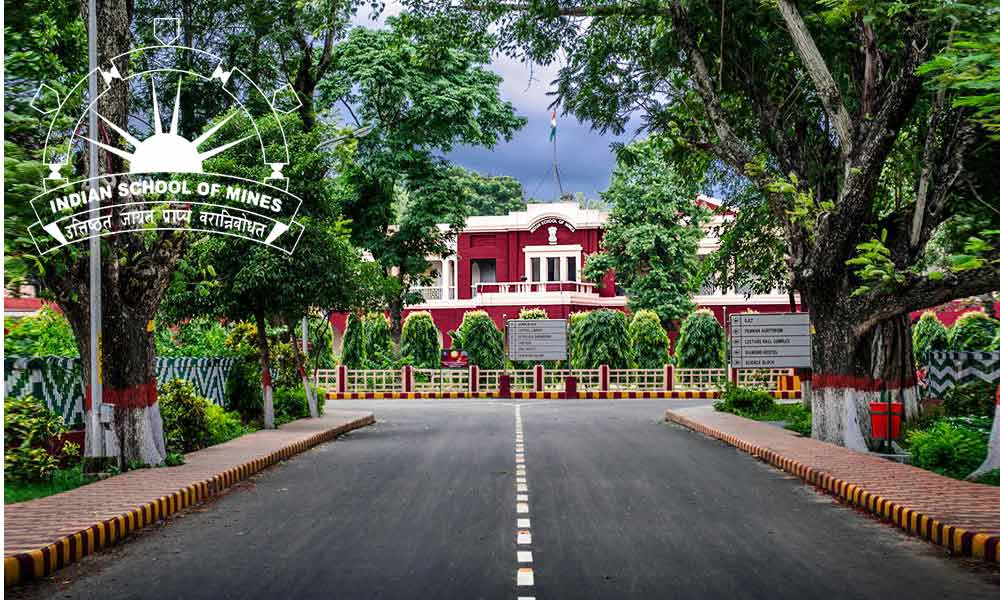
After a long wait, Indian School of Mines (ISM), Dhanbad gets the IIT status. In  a recent development, the Union cabinet nods positively to give IIT status to the institute.

Welcoming the decision of the Central Government and HRD Ministry in particular, ISM Registrar, Col (Retd) MK Singh said that the Prime Minister has fulfilled his election promises of elevating the institution.

ISM had been fighting for an IIT tag since 2013.

The IIT tag was very necessary for this institute in order to get more research funds from the government, better placement and better international collaborations.

A street protest was undertaken by the students last year for the delay in implementation of this decision.

Over one thousand students had demonstrated at Jantar Mantar in New Delhi in 2013 and got huge support from the political leaders, especially MPs across the country.

The institute was formally opened on December 9, 1926, by Lord Irwin, the then Viceroy of India to address the need for trained manpower related to mining activities in the country with disciplines of Mining and Applied Geology.

Earlier on April 8, Union HRD minister Smriti Irani on her visit to ISM had assured students an IIT tag would be announced soon.

Students to get cautious as the Capital City tops the list of fake boards and degrees

With the admission season round the corner,  all students must be under stress. However, Delhi students are sure to get double worried as, according to the National Institute of Open Schooling, it has been concluded that the Capital City has the most number of bogus school education boards and universities in India. Such bogus institutes dish out fake degrees and certificates to hundreds of unsuspecting students each year.

It is well known that every year, thousands of students who fail to get admission in the top colleges of Delhi, start looking for options in other institutes.

The National Institute of Open Schooling, an approved education board under the Union human resource development (HRD) ministry, has come out with a list of 47 fake boards on its website, of which 21 are in Delhi.  Moreover, according to the prospectus of the Indira Gandhi National Open University , out of the 74 fake boards listed in 2016, 44 are in Delhi.

In addition to this, a report by University Grants Commission (UGC) stated Delhi as having the second-highest number of fake universities in the country.

There is worst to come- the HRD ministry doesn’t maintain any data on fake boards. There is no central law or authority to define fake or unrecognised boards, but some boards have not been recognised by State Governments or the Ministry of Human Resource Development. These come under the category of fake board.

So students passing from such boards don’t get admission in colleges and face an uncertain future.


Introducing new age learning in a small town

It is an undeniable fact that children in big cities and those in small towns deserve the same quality of education. But running a new age private school in a small town in India is equivalent to organizing a professional league football match in an ice skating rink where the players would skid and slide more than run or field a goal. These school leaders have taken the initiative to set up schools in the hinterland with a vision to provide new age education to the children there. But in this process these entities face their own set of challenges which they have to circumvent on their own with little help from the state education department.

Education leaders in the hinterland in the process of introducing new age education is pushed to the wall by local politics and society mores that pressurize the school in favour of ‘doing things the way they have always been done’ and that anything new and modern is suspicious and unsuitable. The illogical demands for more home work, zero perception about concept learning, no tolerance for activities writing them off as waste of time, and falling back on the rote memory system of learning keeps coming back much to the disappointment of the school leaders.

These schools are working in an educational environment where there are not enough qualified teachers to provide a true specialist in every subject. Moreover, the loss of one teacher through relocation or government placement can leave a hole that is extremely hard to fill. It is most common that school leaders employ staff that are not optimum for their jobs but instead represent the best available in the locality at that time. Teacher skilling and up-skilling is an issue due to lack of professional resources and therefore the school has to opt for trainers from the cities.

With power outages and erratic internet connectivity these schools which are trying to provide to their students an environment conducive to digital learning are unable to harness the full potential of their intentions for the children. Salient features which are common to all city schools like a wi-fi campus and digital classrooms become a struggle in the small towns.

Geographic remoteness is difficult to cover with internet, Skype of video conferencing and the schools that have set up operations in the remote areas cannot participate in large established inter-school activities and events. These isolated schools and educators simply do not have the opportunity to develop the professional connections and develop relations with larger school groups where there is an opportunity for peer learning and sharing of ideas.

It is also irrefutable that the government schools or the government sponsored schools have not been able to provide quality education to the children. So the author feels that education provided by these new age schools would really help to mainstream the children of the small towns and that these entities could perform miracles with little governmental support. They have already traversed and reached out to the children in smaller towns with high quality education, crossed the barricades of parental disdain of the modern ways of teaching and learning, a little more ironing out and these institutions would be ready to make a difference to the education environment in their areas.

The author of this piece, Rupamala Singh, had given up a corporate job to establish a secondary school, Hayde Heritage Academy, with her husband, Lt Col Kunwar Ajay Singh, a retired army officer in Kotdwara, a foothill town in Uttarakhand.

LATEST NEWS