Home Blog Page 760

Steep hike in IIT fees from 90 K to Two lakh

Students with hopes of getting admission in Indian Institute of Technology (IIT) are sure to get a setback with the new fees structure. According to the latest updates a decision has been taken to double the IIT fee from Rs.90,000 to Rs. 2 lakh a year.

However, according to sources Scheduled caste and Scheduled tribe students, students  with disabilities and from extremely poor families may not have to pay any fees at all.

During the month of March,  the IIT council, which includes directors and senior officials, had recommended raising the fee to three lakhs. All the IITs have said a hike is overdue, given the inflation and the huge cost of running the institution.

The IIT was set up in 1951 as centres of academic excellence by the government of Jawaharlal Nehru. Over the years, 23 IITs have come up across the country. In recently released rankings by the education ministry, IITs dominated the list of top engineering colleges. IIT Madras was ranked first in engineering, followed by IIT Bombay and IIT Kharagpur.

Transnational Skill Standards: New Initiative launched by Union Ministry of Skill Development and Entrepreneurship

Minister of State (Independent Charge) for Skill Development and Entrepreneurship, Shri Rajeev Pratap Rudy has launched the “Transnational Skill Standards” in India. This initiative has been taken to support two important proposals that the Government had started much earlier, which are “Make in India” and Skill India”. These were started to align to skill standards which are recognized globally.
These standards in skill development are benchmarked to United Kingdom across 82 identified job roles. After announcing the new initiative, 2 Memorandums of Understanding (MoUs) were signed between National Skill Development Council (NSDC) and Association of Colleges (UK) and NSDC and UK Awarding Organization City & Guilds and Pearsons Education. These MoUs were signed with the aim to enable sharing of best practices, staff exchange and development of new models to increase employer engagement and investment in skills in India.
The Transnational Standards will highlight the gaps in Indian Standards against the UK standards. To cover the gaps, those intending to migrate, will undergo bridge training. The Further Education Colleges (FE) of the United Kingdom will partner with Indian Training Providers to impart training on bridge courses. FE Colleges to set up Skill Academies of Excellences in the identified sectors in India.

Schoolguru Eduserve looking at foreign and domestic funding

Headquartered at Mumbai, an education tech start-up, Schoolguru Eduserve has plans of raising Rs 30 crore from both domestic and foreign investors.  This education start-up wants to use the funding for technological advancement, creation of content and increasing associations with other universities.
Presently, this company has tie-ups with 14 Indian universities including Tamil Nadu Open University, Netaji Subhash Open University and Acharya Nagarjuna Open University. However, Schoolguru is further looking at tying up with 16 other Indian institutions within the next 18 months.
This start-up was launched in 2012 by three entrepreneurs- Shantanu Rooj, Ravi Rangan and Anil Bhat  with an investment of Rs 2 crore.  The company provides distance education with a revenue-sharing business model under which it partners with universities and leverages their resources. It also helps universities launch online courses.

IITs soon to have Six year MSc Degree

The council of Indian Institute of Technology (IIT) has plans to introduce six-year integrated MSc, M Tech programmes at its selected institutes. With few IITs looking at modifying the course structure, a few others intend to offer this integrated post graduation course in engineering streams as well!
The six year course would be similar to the five-year integrated BTech- MTech programmes already available at most of the IITs across the country. It is believed that IIT Kharagpur was the forerunner in this. It has obtained the approval from its Senate and Board during the recent meetings for implementing six-year course in Petroleum Engineering from the next academic year. However, few IITs, namely Bhubaneswar and Indore have asked their senates to decide and implement on this after further deliberations and modifications.  Same implies for the IITs of  Ropar and Gandhinagar, for which this implementation has been kept pending.
This decision of six year degree comes in the backdrop of the apex regulator body, the University Grants Commission, asking the IITs to change the course duration of dual five-year programmes (BTech, M Tech and BS MS) to six years.

Indian Institution ties up with Chinese University for collaboration on Environmental Research

O. P. Jindal Global University, a NCR-based Institution has entered into a tie up with Peking University, China for a major collaborative research program, wherein students from both sides would discuss on environmental challenges, faced by these fast developing nations.

Being leaders of the developing world, both India and China face enormous environmental challenges in their growth and development. In most cases, the challenges surface due to a benign approach to persistent environmental degradation over the last few years. In such a scenario, the two leading educational institutions of  these countries will launch a large scale program to promote research on environmental issues as well as highlight the humanitarian and climatic challenges being experienced by local communities in both countries.

Environmental issues such as air and water pollution, land degradation, soil fertility, sporadic monsoon patterns and climate change need deeper engagement between stakeholders of the two countries. This engagement must go beyond the deliberation and policy discourse led by the governments. As socially conscious academic institutions, the two Universities want to produce tangible research outcomes that can influence government policy.

The MoUs were inked between O. P Jindal Global University Vice Chancellor Prof (Dr) C Raj Kumar and Prof CAO Heping, Dean School of Economics, Department of Environment, Resources & Development Economics, Peking University on behalf of the institutions.

The joint initiative will involve cross learning exchange programs for students with extensive and diversified joint research within China and India focusing on key environmental challenges facing communities. Students from India will travel to different Chinese provinces while students from China will travel to different Indian states to study first-hand the environmental degradation and related challenges faced by local communities.

Chandigarh all set to upgrade to “Smart” status for its Colleges

The city beautiful, Chandigarh is all set for good news. After being accredited in the Grade A category, the highest, by the National Assessment and Accreditation Council (NAAC) , now three of its colleges are looking to be developed as smart educational institutions.
These three colleges namely, the Post Graduate Government College for Girls, Sector 11; the Post Graduate Government College for Girls, Sector 42; and the Post Graduate Government College, Sector 46, will upgrade their infrastructure and introduce smarter classrooms.
For this, the State Higher Education Council (SHEC) has received a Rs 4 crore grant from the Ministry of Human Resource and Development (MHRD), under the Rashtriya Uchchatar Shiksha Abhiyaan (RUSA). Under RUSA, in the past, the UT Administration had sought Rs 200 crore for improvement of infrastructural facilities at Panjab University and other colleges in the city. However, this year the infrastructural requirements of colleges are on the list of the city’s agenda.
The council will consider construction of ramps, hostels, new buildings and facilities like gymnasium halls after the MHRD allocates the annual budget for each of the city colleges.

Delhi Govt budget 2016-17 aims strengthening the Education system

Ruling party of Delhi, the Aam Aadmi Party (AAP) recently presented the 2016-17 budget, focussing more on the educational development. Out of the total budget of Rs 47,600 crore, a total of  Rs 10,690 crore is earmarked for education only. With this figure, there is a rise of 8.68 percent over last year.

Out of the total Rs 10,690 crore, 23 per cent ( Rs 4,645 crore) has been set aside as planned expenditure, which is highest among all the heads.

This year’s budget also focusses more on teachers’ training programmes, making it 11 times higher from Rs 9.4 crore to Rs 102 crore.

A special budget allocation of Rs 100 crore has been allotted for CCTVs in all govt schools.
This is done, keeping in mind the need for CCTVs to keep an eye, both on the students as well as the teachers of the government schools. The main aim is to regulate the working of teachers in government schools.

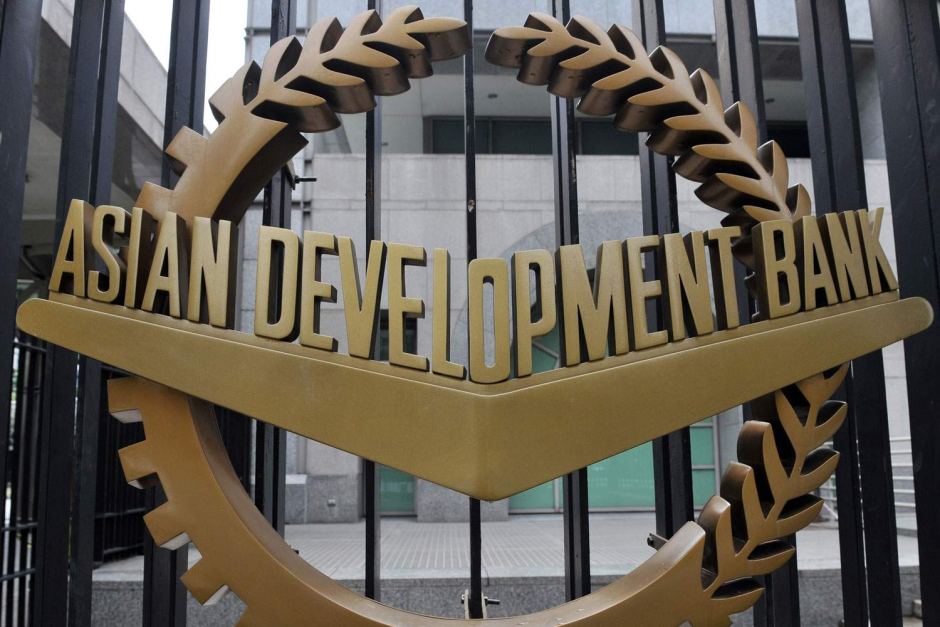
Asian Development Bank funds to develop over 100 Meghalaya schools

The Asian Development Bank (ADB) would be funding more than 100 government-aided private schools in Meghalaya for upgrading them to national standards of education. ADB has recently launched this first of its kind funding project in India by the name of “Supporting Human Capital Development in Meghalaya”.

This funding project by the ADB aims at improving the learning environment for almost 20,000 poor students,out of which 40 per cent would be girls. This programme will also benefit around 3,500 under-qualified teachers by providing them necessary training.

An amount of 100 million US dollars has been approved and sanctioned by the ADB, while the State Government will fund 25 million US dollars of the total project cost.
In addition to that two million US dollars will be given by Japan Fund for Poverty Reduction for capacity building of civil society organisations and government departments and agencies in the State.

Delhi Principals all set to be trained in Top International Universities

The Delhi Government would be sending 30 Principals from 54 Model Schools to the top International universities like Cambridge, Harvard, and Oxford in the coming months. For this global teachers’ training programme, the principals have already been selected.

With a budget of Rs 102 crore,  such training programs are of utmost importance  to raise the standards of our teachers. Many countries across the globe have adopted such education practices for skill enhancement of their teachers. Finland and South Korea, which claim to have adopted the best education practices, send their teachers for training to help improve their skills and teach children in a better way.

After this initial batch of teachers is trained, around 200 teachers will be sent to Cambridge, Harvard and to Singapore University. The trained teachers will then act as “mentor teachers”, who will be given the responsibility to train others. The main idea behind is to multiply knowledge and skills among as many teachers as possible.

Attempting to change the conventional way of learning, the Delhi government is trying to reduce syllabus and include more of skill-based courses. For this, the Government plans to hire excellent resource persons in the near future.

Paytm creates first Cashless Campus at LPU

India’s largest mobile payment and commerce platform, Paytm, has taken its cashless solution to academic campuses with a strategic partnership with Lovely Professional University (LPU), Jalandhar.

As per the statistics, over 60 per cent of the students in the campus are already active users of the Paytm app. The users can now pay university fees and dues, hostel fees, cafeteria bills as well as buy books and merchandise through the Paytm Wallet. By minimising cash, the initiative shall be highly beneficial for the students, teachers, the institution and parents alike.

With making LPU cashless, Paytm aims to create a digital ecosystem, leading to easy transactions within the campuses. A cashless system of payments makes transactions convenient for students and the shopkeepers too get their dues on time. The initiative has been appreciated by the management as a win-win situation for both, their students and vendors.

Kiran Vasireddy, Senior Vice President, Paytm said, “In line with our vision for a cashless economy, we are committed to bring more and more use cases of wallet payments across categories. We have enabled wallets for admission and fee collections in some of the most prominent educational institutions and now students can also pay at canteens, cafeterias, tuck shops and other vendors on campus with their wallets. With this, students can now experience a complete cash free environment at these campuses.”

Ashok Mittal, Chancellor,  Lovely Professional University mentioned that LPU is a state-of-the-art university and we wanted to make the cash transaction in the campus to minimal. After talking to Paytm and implementing their system, all our fees are coming online and even all vendors like hostel canteen, etc, are also accepting money through Paytm solution. This has really helped parents and students to understand their spending pattern.

Upbeat about the cashless campuses concept, the institutes are implementing wallet-based payments in different styles bringing out various offers for the users. These are cashbacks, contests and discounts in association with various brands in the campus.

LATEST NEWS