Home Blog Page 774

Towards Data-Driven School Ranking Framework

Ravi Gupta

When the founder of an emerging start-up introduced me about her latest venture which she told was born out of her frustration when she couldn’t find information about the number of college counselors at a local high school – a basic indicator of student support, I resonated with her passionate belief in the power of education and giving parents high value information and perspective about their local schools.

While she elaborated about the perils of information gathering amidst the American Schooling ecosystem, it clicked to me as to why not initiate a data driven ranking framework in India as another first from the house of Elets Technomedia.

At digitalLEARNING we have been ranking Indian Schools for the past couple of years based on a plethora of heuristics, evaluating the self-declaration forms, doing secondary research and corroborating the claims from all possible dimensions.

This time we thought of graduating towards an entirely data driven framework with no control or influence from any quarter. The deeper recesses of this framework are elaborated in the inner pages.

Just before Diwali, when we pushed India’s most pervasive Social Perception Ranking Survey spanning 73 eduDESTINATIONS across the length and breadth of the country duly involving the shortlisted schools, I had no idea that thousands of parents from across the country would be handed over a communication from the School of their children for ranking them on a host of parameters.

Transparency is honored, if it is earnestly attempted. The digitalLEARNING School Ranking 2015 Survey is a glaring example of the same. The School Progressiveness Index which got created on the basis of this social perception survey and a stringent analysis of objective parameters of Online Presence & Social Footprints, has resulted in an elaborate list of India’s Best Schools for the year 2015.

These schools have been ranked within their very educational ecosystems so as to provide a level playing field to all contenders. The concept of Multiplicity of ranking has been introduced with the explicit realization that not every school can be at the same level of excellence on every single parameter. So you shall find a variance in ranking of school across the various parameters.

In months to come digitalLEARNING shall endeavor towards furthering this exercise by incorporating more facts, analysis and research on schools to create one of the most pervasive index on Indian Schools.

The forthcoming World Education Summit at Dubai and School Leadership Summit at New Delhi would witness an elaborate commentary and conversation on the same.

How we Ranked them?

rankingsIn the extremely crowded and emerging education market of India, performers of various hues are differentiating themselves in myriad ways of which ranking remains a dominant facet.

Most of the prevalent ranking frameworks focus on a linear standalone position in a hierarchy or scale, which at times doesn’t reflect the eclectic diversity across educational ecosystems in varied geographies.

Mapping and Communicating the wide variegated range of institutional parameters and foci again is a daunting task whereby a one-size-fit-all approach just doesn’t fit the bill.

Having been into the segment for quite a while observing the developments of India’s Education System, we at digitalLEARNING thought of expanding this quest for ranking India’s Best Schools across the country.

A new differentiated approach based on the parameters of:

  • Stakeholder perception indexing using social communication tools;
  • Online and social analytics driven parameters; and
  • Segmenting the business of ranking to the granularity of cities, christened as eduDESTINATIONS has been attempted.

A select list of schools were thereby shortlisted from these 73 eduDESTINATIONS based on secondary editorial research and ranking nominations. This created a cogent sample to base social perception ranking on.

Perception-based Social Indexing

The entire attempt of finding out the Best Schools of India for the year 2015 was therefore based on a set of five perception based parameters namely:

  • Goodwill, Legacy & Reputation
  • Academic Ecosystem & Outcomes
  • Future-ready Academic Infrastructure
  • Enrichment of Learning Experience
  • Career Advancement

An elaborate social survey was thereby configured on the basis of aforesaid parameters. The shortlisted schools were communicated to approach the wards of their students so that they can rate and rank them on these parameters.

This was perhaps one of the most unprecedented attempts whereby the service providers invited there service seekers to rank their performance on an open platform where they had no control or influence over the outcomes. You would, therefore, find a significant variance of participation across eduDESTINATIONS on this count. There are cities where schools couldn’t decipher the intent of the same and thereby missed the boat.

S.No. City State Zone
1 Indore Madhya Pradesh Central
2 Dhanbad Jharkhand Central
3 Gwalior Madhya Pradesh Central
4 Muzaffarpur Bihar Central
5 Bokaro Jharkhand Central
6 Bhagalpur Bihar Central
7 Bhopal Madhya Pradesh Central
8 Bilaspur Chhatisgarh Central
9 Jamshedpur Jharkhand Central
10 Patna Bihar Central
11 Ranchi Jharkhand Central
12 Guwahati Assam East
13 Cuttack Odisha East
14 Bhubaneswar Odisha East
15 Asansol West Bengal East
16 Darjeeling West Bengal East
17 Kolkata West Bengal East
18 Chandigarh UT North
19 Ludhiana Punjab North
20 Noida Uttar Pradesh North
21 West Delhi Delhi North
22 South Delhi Delhi North
23 Central Delhi Delhi North
24 Kanpur Uttar Pradesh North
25 Gurgaon Haryana North
26 Allahabad Uttar Pradesh North
27 East Delhi Delhi North
28 Lucknow Uttar Pradesh North
29 North Delhi Delhi North
30 Agra Uttar Pradesh North
31 Ambala Haryana North
32 Amritsar Punjab North
33 Dehradun Uttarakhand North
34 Faridabad Haryana North
35 Ghaziabad Uttar Pradesh North
36 Haridwar Uttarakhand North
37 Hisar Haryana North
38 Jalandhar Punjab North
39 Jammu Jammu & Kashmir North
40 Meerut Uttar Pradesh North
41 Mussoorie Uttarakhand North
42 Nainital uttarakhand North
43 Panchkula Haryana North
44 Patiala Punjab North
45 Shimla Himachal Pradesh North
46 Sonipat Haryana North
47 Varanasi Uttar Pradesh North
48 Hyderabad Telangana South
49 Bengaluru Karnataka South
50 Kochi Kerala South
51 Chennai Tamil Nadu South
52 Vijayawada Andhra Pradesh South
53 Calicut Kerala South
54 Coimbatore Tamil Nadu South
55 Mysore Karnataka South
56 Trivandrum Kerala South
57 Vellore Tamil Nadu South
58 Visakhapatnam Andhra Pradesh South
59 Jaipur Rajasthan West
60 North Mumbai Maharashtra West
61 South Mumbai Maharashtra West
62 West Mumbai Maharashtra West
63 Ajmer Rajasthan West
64 East Mumbai Maharashtra West
65 Alwar Rajasthan West
66 Ahmedabad Gujarat West
67 Kota Rajasthan West
68 Nagpur Maharashtra West
69 Nasik Maharashtra West
70 Pune Maharashtra West
71 Surat Gujarat West
72 Udaipur Rajasthan West
73 Vadodara Gujarat West

Online Presence & Social Media Footprints

In this age of online and social engagement, there are quite a number of analytics tools which present key insights about the online presence and social footprints indices which reveal a lot about the progressiveness of the brand concerned.

For measuring the online presence of the shortlisted schools, we made use of the Domain Authority metric from moz. com. Domain Authority is a score (on a 100-point scale) developed by Moz that predicts how well a website will rank on search engines. To determine Domain Authority, moz employs machine learning against Google’s algorithm to best model how search engine results are generated. Over 40 signals are included in this calculation. This ensures that a website’s domain authority can be used as a competitive metric against other sites.

An elaborate social survey was configured on the basis of aforesaid parameters. The shortlisted schools were communicated to approach the wards of their students so that they can rate and rank them on these parameters

The online presence of all schools has to be computed on the basis of domain authority metric of moz.

Facebook has become the most ubiquitous means of stakeholder engagement. The number of facebook likes on the school page is the simplest metric to compute the social engagement being pursued. This has become the basis of Social Footprints ranking.

End Note

Every school is unique with a differentiated set of foci depending on the view of the management about the end outcomes of learning. The Best Schools of India 2015 is an earnest attempt to unravel the best aspects of each of the participating schools.

digitalLEARNING would build upon this view and approach and shall present further ranking indices on a different set of parameters in times to come. This elaborate inclusive ranking framework shall give an overview to all the stakeholders about the vivid elements of school education in the country.


Best Schools of India – India’s most Comprehensive School Ranking Survey, 2015 :: January 2016

EDITORIAL
Towards Data-Driven School Ranking Framework

COVER STORY
EduTech Redefining Learning Landscape

INTERVIEW
‘Making Higher Education Available 24×7’

Integrating Technology to the Curriculum

Enriching Students with Aesthetic Values

INDUSTRY SPEAK
Why Do Educational Institutions Need Mobile Apps?

RANKING METHODOLOGY
How we Ranked them?

Best Schools Of India 2015

Central Zone
Bihar
Bhagalpur
Patna
Muzaffarpur

Jharkhand
Bokaro
Dhanbad
Jamshedpur
Ranchi

Madhya Pradesh
Indore
Bhopal
Gwalior

Chattisgarh
Bilaspur

East Zone
Assam
Guwahati

Odisha
Bhubaneswar
Cuttack

West Bengal
Asansol
Kolkata
Darjeeling

West Zone
Gujarat
Ahmedabad
Vadodara
Surat

Maharashtra
Nagpur
Nasik
Navi Mumbai
East Mumbai
West Mumbai
North Mumbai
South Mumbai
Pune

Rajasthan
Ajmer
Jaipur
Udaipur
Kota
Alwar

North Zone
Delhi
East Delhi
West Delhi
North Delhi
South Delhi
Central Delhi

UttarPradesh
Varanasi
Kanpur
Agra
Allahabad
Lucknow
Meerut
Noida
Ghaziabad

Haryana
Gurgaon
Sonipat
Panchkula
Hisar
Faridabad

Jammu & Kashmir
Jammu

Punjab
Ludhiana
Patiala
Jalandhar
Amritsar

UT
Chandigarh

Uttarakhand
Mussoorie
Nainital
Haridwar
Dehradun

Himachal Pradesh
Shimla

South Zone
Andhra Pradesh
Vijayawada
Visakhapatnam

Karnataka
Bangalore
Mysore

Kerala
Calicut
Kochi
Trivandrum

Tamil Nadu
Chennai
Vellore
Coimbatore

Telangana
Hyderabad

K-12
Education in the Present Era

PROGRESSIVE INDEX
eduDESTINATION Progressive Index

Robomate+ – Free App for Entrance Exams Preparation

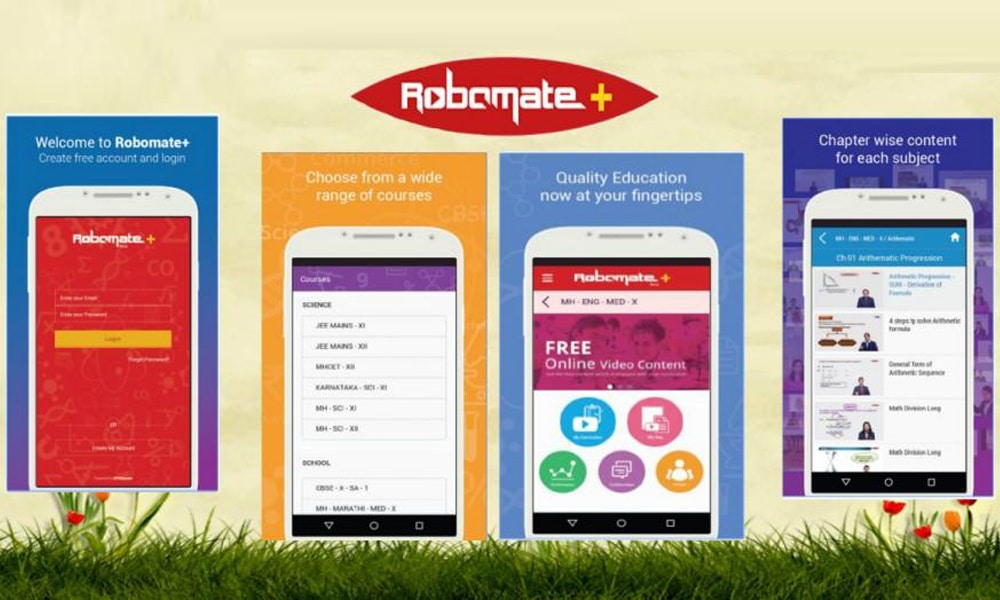
Robomate??The time of the year is back when students across the country go through the final stretch of preparation for important entrance exams. Whether it is IIT, MBA, CA, CBSE, ICSE, SSC and HSC students and parents alike feel a sense of anxiety and anticipation due to the forthcoming exams. In such a high stress environment, the announcement of Global Education Trust (GET) to extend Mahesh Tutorial Educare’s Robomate+ App (consisting of free video lectures of expert faculty), comes as a welcome relief to students and parents across the country.

This is in continuation to the contributions that GET has made over the past few years. In coordination with MT Educare, it has imparted high quality education to thousands of BMC students over the past seven years. As a result of these initiatives, many students have secured 90 per cent plus marks in SSC exams.

Last year GET, in coordination with MT Educare, had shared Robomate with thousands of students for free and made available, result oriented video content of MT Educare. The release of MT Educare’s Robomate+ App is another step in the same direction. Robomate+ can help students revise and sharpen concepts by viewing lectures online, repeatedly to their satisfaction. Students can get full access to some of India’s best faculty in their preparation for entrance exams such as IIT, CA, MBA or Board exams such as CBSE, ICSE, SSC and HSC. They can learn subjects at their own pace and place. In today’s fast moving world, it can help students save precious travel time and study at their own convenience.

The App currently works on all Android platforms. The versions supporting iOS and Windows are expected to be released in the near future.

Seeking inputs from STEM Labs on STEM platforms and how these are catalysing hands-on learning for measurable outcome

[vfb id=’9′]

Seeking views on Emerging Teaching-Learning Pedagogies

[vfb id=’8′]

Tata ClassEdge launches Cosmos with Knewton for Personalised Learning

Tata ClassEdgeTata ClassEdge, a leading provider of innovative technology-based learning solutions for schools, announced a partnership with Knewton, the world’s leading adaptive learning company, and the launch of Cosmos, an integrated suite of products. Pioneering the introduction of personalised learning in India, Tata ClassEdge’s Cosmos and Knewton’s adaptive learning platform, will help schools across India provide individualised learning paths for each student.

Cosmos includes a mobile-based parent app, home access to students via tablets/web and a value education curriculum, in addition to the existing classroom, planning and assessment solutions. Through the use of Knewton’s adaptive learning platform, students will receive specific, real-time recommendations based on how they learn, what they mastered, goals they have set with their teacher, and what works best for similar students. Parents will get a detailed analysis of their child’s academic performance with actionable feedback, instead of just knowing their child’s scores.

At the occasion, Nirav Khambhati, CEO, Tata ClassEdge, said, “The introduction of Tata ClassEdge Cosmos is a turning point in our initiative to improve the effectiveness of education systems in India and to empower teachers, students and parents as well. Our partnership with Knewton, a renowned name in adaptive learning, helps bring global expertise in the personalisation of education for Indian students and will further strengthen their learning experience.”

“It is a comprehensive digital framework with multiple tools for the students, teachers and parents to bridge communications and act as a seamless learning platform between school and after school hours that will benefit all the stakeholders. The intelligent content platform of Cosmos recognises the learning curve of the student and gives them the opportunity to learn at his/her pace and explore new areas of interest,” he added.

Tata ClassEdge Cosmos will extend teaching and learning from school to home and augment the current classroom solution with individualised learning experiences. The technology is currently being run in pilot batches across India and will be made available to schools, enabled with Tata ClassEdge technologies by April 2016.

Startups

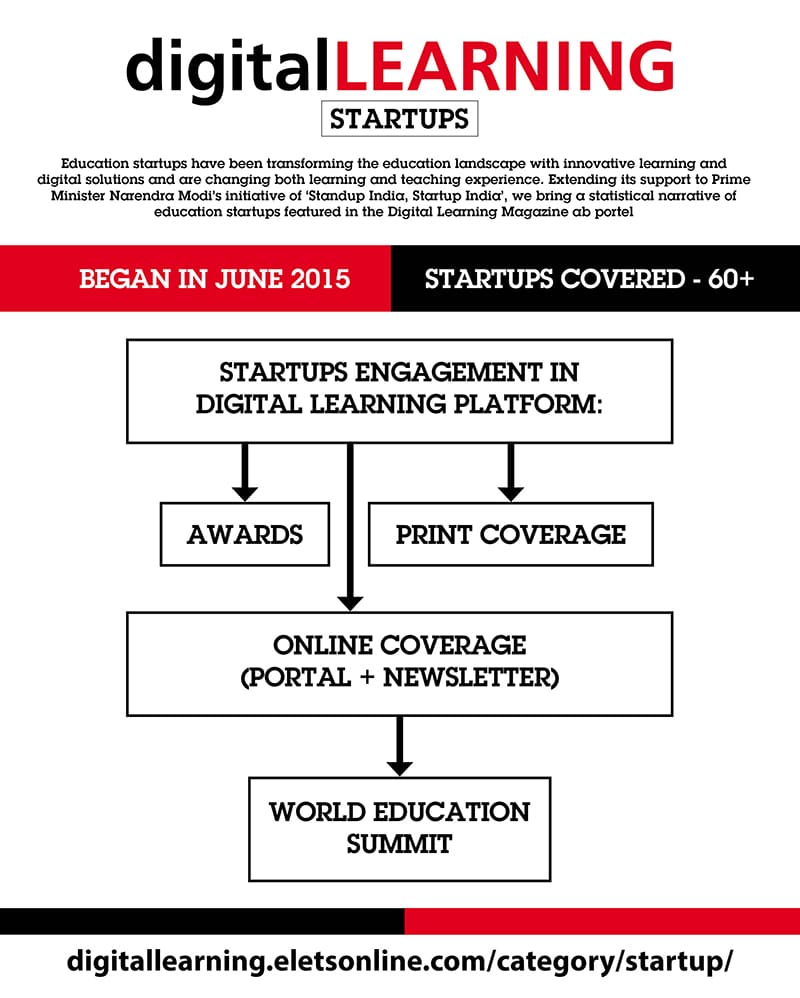
Digital Learning - Startup Infographic

Maharashtra Govt wants School Teachers on WhatsApp

WhatsApp-logoThe education department of Maharashtra has decided to use WhatsApp to ensure faster reach of new policies and information on teaching techniques to teachers in remote areas of the state. The department has asked all government-run schools in Maharashtra to create groups exclusively of teachers for this purpose. The primary education department has issued a circular and asked teachers in each taluka of the state to form a WhatsApp group of 100 members each. The details of these WhatsApp groups will have to be provided to the education officer and the group education officer of respective districts.

Briefing about the initiative, Mahavir Mane, Director, Primary Education, said, “The aim is to ensure that we are able to reach out swiftly to teachers residing in the most remote corners with new policies that the government is formulating. Rather than waiting for days for government circulars to reach schools, we can provide such information directly to teachers through WhatsApp.”

However, Mane informed that joining such groups was not mandatory. “We are not expecting every teacher in the state to join. Those who do not have phones can’t do so. However, the idea is that even if one school teacher from a particular place joins, he can then pass on the information to other members of his school,” he added.

NIIT’s 12th edition of NITAT is on February 13, 2016

NIIT Limited announced country’s largest Aptitude Test – the 12th National Industry Targeted Aptitude Test (NITAT) – to enable students and graduates to access their potential and aptitude for careers across multiple sectors. ‘NITAT 2016’, will be simultaneously conducted by NIIT, in over 150 cities nationwide, on February 13, 2016.

Graduates as well as undergraduates of all streams can apply for this test. Students can learn about the benefits of appearing in the 12th NITAT and can register online by logging on to http://www.niitcloudcampus.com/nitat2016/ or by visiting the nearest NIIT centre. Over the past 10 years, NITAT has reached out to more than one million students with new-age career options.

NITAT aims to assess skills of students for multiple career domains. The test has been designed as an objective test of reasoning, comprehension, data interpretation skills and behavioural traits. Every student will receive a personalised score card that will give his/her Aptitude Ranking (concentric graphical form) on National and Zonal basis. NIIT will also award up to 25 per cent scholarship to the meritorious students.

Flagging off NITAT 2016 nationally, Shivan Bhargava, Group President, Skills and Careers Group, NIIT Ltd said, “We commenced NITAT 11 years ago with an aim to recognise skilled manpower to meet the demands of the IT industry. Today, NITAT has evolved from being just an IT aptitude test to the one that assesses student’s career readiness quotient across multiple domains like IT, Banking and Finance. We exhort students and graduate to come forward and take the test and assess their capabilities for future. National Industry Targeted Aptitude Test is beneficial for both students seeking to identify their aptitude and the industry which is in the lookout for right talent.”

NIIT’s pioneering initiative NITAT was introduced in 2004 to enable graduates and students pursuing their studies in engineering, arts, commerce and science streams to gauge their aptitude for a career in the IT sector, identify skills further required, if any, and thus systematically charter their career into the IT industry. The test is designed scientifically to assess students and provide a relative ranking system, which helps them to identify their position amongst all test takers.

LATEST NEWS