Under the provisions of the Right to education (RTE) Act 2009, the private schools are directed to give free uniform and books to students under the Economically Weaker Section (EWS). Following the mandate, Education Department has issued a strict directions to de-recognise schools whcih do not provide free books and uniforms.
The order directs schools to either comply or face the consequences. The circular sent by the department stated that if the schools are not in compliance with the direction, the process of de-recognition on account of violation of relevant provisions under the RTE Act shall be initiated.
The issue will be brought to the DDA for taking necessary action. Currently, there are 68,951 EWS students in Delhi out which 51,000 are studying in schools that do not provide uniforms and books for free.
Online Video analytics start-up, Vidooly has opened its office in Noida, which looks to foster collaboration and innovation, will also support Vidooly’s hiring plans to double its workforce in the next six months. The company is looking to hire data scientists and analysts and programmers. Vidooly recently received funding from Silicon Valley based investor, Bessemer Venture Partners (BVP).
Video consumptions have been witnessed as the megatrend which comprises an estimated 60 per cent plus of all data traffic on the Web. YouTube is the second largest search engine in the world, next only to Google. More than 300 hours of video is being uploaded on YouTube every minute, out of which 90 per cent of the videos generate less than 10,000 views in the first month. A lot of efforts have been put by content creators to bring good quality content but they find it difficult to target the right audience.
To overcome the challenge Vidooly helps content creators, brands and multi channel networks to maximize their YouTube views, build an audience base and earn more revenues on YouTube.
“Vidooly’s talent pool is largely of young people. To keep energy levels high, our focus is on creating the right culture, which is an environment for creativity where there is collaboration, a free flow of ideas as well as fun, humor and spontaneity. Our physical office space is designed to reflect this culture we wish to create and an expression of who we are as a company.” said Subrat Kar, CEO & Co-founder of Vidooly.
Bihar Governor and Chancellor of universities Keshari Nath Tripathi while awarding the degrees to 159 students of B R Ambedkar Bihar University at Amrapali Auditorium emphasised universities to impart moral education to students and make them realise the import of human values.
All elated to be the part of the event, he expressed on maintaining the glorious past of the university which has produced great patriots and scholars like first President of India Rajendra Prasad, J.B. Kriplani, and Ramdhari Singh. He said it is the responsibility of the new age generations and teachers to maintain the level of the university and take it to new heights on academic front.
He praised the University for organising seond convocation ceremony. Mridula Sinha, Governor of Goa present at the convocation ceremony has asked the students to pledge that they will not send their parents to old age homes and would also never break the bondage of marriage. She has also asked them to protect chastity of women and keep their surroundings clean.
On the decision to introduce Bhagavad Gita in Haryana School curriculum by the BJP government, the opposition hit out on the decision. Haryana BJP run state’s Education Minister Ram Bilas Sharma said that the scripture is not a religious book and that its teaching will be part of the moral education of the students. Hitting out hard to the opposition, he said that Gita is knowledge, science, it is curiosity, solution, Gita is life.
On addressing the meet-the-press programme at Chandigarh, Sharma respond to the charges from the opposition parties that Manohar Lal Khattar-led government in Haryana was pushing saffronisation of the state education system.
Inciting the examples of Nalanda and Takshila, he said the inclusion of Gita in the curriculum will add value to the education system and to the children.
On the occasion of first World Youth Skills Day Prime Minister Narendra Modi has launched the National Skill Development Mission and unveiled the New National Policy for Skill Development and Entrepreneurship 2015.
The framework of the National Mission for Skill Development focuses on the need to scale up skill training efforts to meet the demands of the employers and drive economic growth. India currently faces a severe shortage of well-trained skilled workers. It is estimated that only 2.3 per cent of the workforce in India has undergone formal skill training as compared to 68 per cent in the UK, 75 per cent in Germany, 52 per cent in USA, 80 per cent in Japan and 96 per cent South Korea.
Large sections of the educated workforce have little or no job skills, making them largely unemployable. India’s annual skilling capacity was estimated at approximately 7 million during the period 2013-14. Apart from meeting its own demand, India has the potential to provide a skilled workforce to fill the expected shortfall in the ageing developed world.
Having being one of the youngest nations in the world, 54 per cent of the India’s population is below 25 years of age and over 62 per cent of the population in the working age group is (15-59 years). The country’s population pyramid is expected to bulge across the 15–59 age group over the next decade. This demographic advantage is predicted to last only until 2040. India therefore has a very narrow time frame to harness its demographic dividend and to overcome its skill shortages.
The enormity of India’s skilling challenge is further aggravated by the fact that skill training efforts cut across multiple sectors and require the involvement of diverse stakeholders such as: multiple government departments at the centre and state levels, private training providers, educational and training institutions, employers, industry associations, assessment and certification bodies and trainees. All these stakeholders need to align their work together in order to achieve the target of ‘Skill India’.
The Ministry of Skill Development and Entrepreneurship proposes to launch the National Mission for Skill Development (NMSD – known henceforth as, the Mission), which will provide the overall institutional framework to rapidly implement and scale up skill development efforts across India.
The vision, objectives and design of the Mission, draw on the lessons learnt from the implementation of skill development efforts over the past decade. It seeks to provide the institutional capacity to train a minimum of 300 million skilled people by the year 2022.
Objectives:
Create an end-to-end implementation framework for skill development, which provides opportunities for life-long learning. This includes: incorporation of skilling in the school curriculum, providing opportunities for quality long and short-term skill training, by providing gainful employment and ensuring career progression that meets the aspirations of trainees.
Align employer or industry demand and workforce productivity with trainees’ aspirations for sustainable livelihoods, by creating a framework for outcome-focused training.
Establish and enforce cross-sectoral, nationally and internationally acceptable standards for skill training in the country by creating a sound quality assurance framework for skilling, applicable to all Ministries, States and private training providers.
Build capacity for skill development in critical un-organised sectors (such as the construction sector, where there few opportunities for skill training) and provide pathways for re-skilling and up-skilling workers in these identified sectors, to enable them to transition into formal sector employment.
Ensure sufficient, high quality options for long-term skilling, benchmarked to internationally acceptable qualification standards, which will ultimately contribute to the creation of a highly skilled workforce.
Develop a network of quality instructors or trainers in the skill development ecosystem by establishing high quality teacher training institutions.
Leverage existing public infrastructure and industry facilities for scaling up skill training and capacity building efforts.
Offer a passage for overseas employment through specific programmes mapped to global job requirements and benchmarked to international standards.
Enable pathways for transitioning between the vocational training system and the formal education system, through a credit transfer system.
Promote convergence and co-ordination between skill development efforts of all Central Ministries, Departments, States, implementing agencies.
Support weaker and disadvantaged sections of society through focused outreach programmes and targeted skill development activities.
Propagate aspirational value of skilling among youth, by creating social awareness on value of skill training.
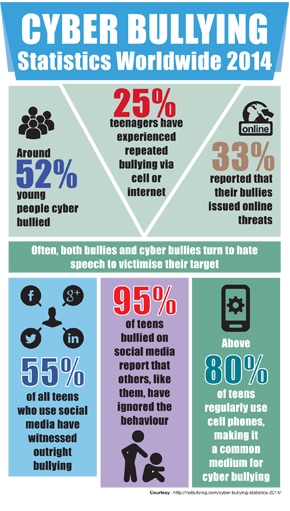
India is ranked third in cyber bullying worldwide and 30 per cent of Indian children accessing the Internet have experienced some kind of cyber harm.Cyber bullying is no less damaging than physical assaults in many ways and can have serious consequences. Nidhi Sharma of Elets News Network (ENN) talks to educationists who believe that students should be trained to handle cyber bullying from early age
The world that is increasingly connected has various other technological platforms for victimising people. Many cyber criminals are refraining from physical assaults and going for round the clock bashing via email, social media, instant messaging and other online platforms. Present times face a lack in cyber hygiene and netiquettes, a major issue with educational institutes across India as youngste are the largest victims as well as perpetrato. Cyber bullying is no less damaging that physical assaults in many ways and can have serious consequences.
Prime Minister Narendra Modi recently made a call at NASSCOM’s silver jubilee in March 2015 to focus on global cyber security challenges. Nasscom stated that the Sector Skill Council, Nasscom and DSCI along with Symantec, will focus on developing five prioritised job roles in cyber security along with a master training programme. In 2014- 15, the Department of IT has set aside `116 crore for cyber security. The country has proposed to set up a national cyber coordination centre (NCCC) with a separate budget of `1,000 crore.
According to a study by telecom operator Uninor, about one-third of school going children surveyed in some states of India have experienced cyber crime including cyber stalking, defamation, hacking and cyber bullying. The Uninor report, which spanned across seven states in India indicates that 30 per cent of Indian children accessing the internet has experienced some kind of cyber harm. This includes cyber bullying, cyber stalking, hacking and defamation.” The findings are part of the survey of the company conducted across 29 schools covering nearly 10,500 children for its Web Wise programme. Unfortunately, 34 per cent of children rarely speak to their parents about their online activities.
According to a recent report by McAfee, part of Intel Security, half of Indian youth have had some experience with cyber bullying. The Tweens, Teens and Technology 2014 report, which examines the online behaviour and social networking habits of Indian tweens and teens, aimed to educate on the impact that risky behaviour has on their privacy, reputation and social media experiences.
According to the research, 50 per cent of the youth in India have had some experience with cyber bullying (been cyber bullied online or witnessed othe being cyber bullied), out of which one-third (36 per cent) have been cyber bullied themselves. This behaviour was perceived to result in anger and embarrassment, showcasing how online behaviour translates into offline impact. The study highlights how risky online activity can possibly make them even more susceptible to cyber bullying, substantiated through some of the following statistics.
An eye-opening trend is that half (52 per cent) of India’s youth even access their social media accounts while at school, with tweens (57 per cent) being more connected during school hou than teens (47 per cent). Even though the minimum age to register on to social networking sites like Facebook, Snapchat, Pinterest, Tinder, Tumblr, and Vine is 13 yea for children, 10-12 yea old children report higher daily access to their teen counterparts.
Psychologists are welcoming initiatives by schools’ to launch awareness programmes for cyber crimes
Earlier in 2013, A Telenor GroupBoston Consulting Group study had said that 134 million Indian children would be active on the Internet by 2017, up from 39.5 million in 2012. This study was done in 12 countries and had showed that Indian children face the wot risk combination of high access and low resilience.
Not long back, India was ranked third in cyber bullying, in youth online behaviour survey, after China and Singapore. According to Microsoft’s ‘Global Youth Online Behaviour Survey’, India ranked third among 25 countries with 53 per cent of respondents (aged 8-17) saying they have been bullied online. India is only behind China (70 per cent) and Singapore (58 per cent). The study found that more than 50 per cent of Indian children, who surf the Internet, get threatened or are harassed online. About 45 per cent of parents (respondents) said they teach their children online manne.
Furthermore, students in the city are taking to cyber crimes just for fun or carrying out small acts of revenge on their teache, girl friends and even colleges in which they study. The fact has come up during an investigation into several such incidents recently, police officials said. Morphing pictures and positioning them on social networking sites to defame othe have landed some such students in trouble recently.
Several schools, NGOs and individuals are working towards educating children and young people about the dange of sharing information online, but often find themselves at a loss when confronted with real situations every day.
Trusting the unknown in VIRTUAL WORLD
Despite a majority (80 per cent) of Indian youth being are aware that their online activity can affect their identity, 92 per cent have done or posted something risky online. An added fact is that of these, 70 per cent have posted their contact details like email, phone and home address. 53per cent have met someone in person that they first met online. 63per cent of youth do not turn off their location or GPS services across apps, leaving their locations visible to strangers. 64per centeven admit to trying to reinvent their online person as making themselves appear older, creating fake profiles or posting photos that are not their own. Moreover, 46 per cent say they would put themselves in danger to see more engagement, activity on their posts (e.g., more likes, comments, shares or retweets).
Pratibha Kohli, Principal, Maharaja Agrasen School, says, “The last decade has seen a spurt in young students becoming a victim of cyber crime. With the information technology boom witnessed in India, accessing the Internet has become plain sailing. But the crux of the matter is, that using the Internet is like two sides of the same coin. While it does provide the students with an ocean of knowledge, it may also make them susceptible and vulnerable to cyber offences. Hence, it is imperative for the schools to make students aware of IT laws and educate them about how to stay protected in the virtual world. Keeping in view the use of Internet by the young generation, the HRD Ministry and the Education Department should make it mandatory to introduce lessons in IT laws and cyber ethics as a part of curriculum in schools.”
Kohli opines “One very important aspect that needs to be addressed is that of plagiarism. Students often copy-paste material from the Internet for their projects and homework, without realising that the act of copying someone else’s work is a serious offence. There is a need to make them aware of copyright laws.”
“Teachers and parents should monitor the activities of their wards on the Internet, especially on social networking sites, and advise children to follow net etiquettes and cyber ethics. In fact, in our school, we hold orientation sessions for the parents where we tell them to keep a watch on the activities of their ward on the Internet. Teachers often have discussions and educate the students about safe Internet practices.”
A study by Wichita in the United States suggested that schools should better educate students about how to engage in online activities without increasing victimisation opportunities
Sudha Goyal, principal, Scottish International School, shares, “The loss incurred through cyber crimes is irreveible as it may even cost a peon’s life. Thus, awareness among teenage is the best remedy to prevent them from such offences.”
On the international front, a new computer science GCSE coue, developed by examining body OCR, looks set to bring cyber-security education to secondary school children in the UK.
A distinctive feature of the coue is that a significant portion of it is dedicated to cyber-security matte, including phishing, malware, firewalls and that old-adage of humans as the weak point in secure systems. Students will also study ethical and legal concerns around computer science technologies, a timely theme in light of FBI claims of a security researcher hacking airplanes.
A study by Wichita in the United States suggested that schools should better educate students about how to engage in online activities without increasing victimisation opportunities. For instance, this study found that participating in online downloading increases fear of computer virus.
So to reduce unnecessary fear students should learn how to carefully choose the source of downloads as well as how to properly scan downloaded files for viruses before activating them on a computer. Commercial websites should ensure consumer safety by showcasing the mechanisms in place to protect online shoppers from scams.
Social media, such as Twitter and Facebook ought to make a better effort to discourage malicious commenting that could amount to cyber bullying. Online publishe, such as Amazon Kindle and YouTube should protect intellectual property more effectively.
Meanwhile, psychologists are welcoming initiatives by schools’ move to launch awareness programmes for students. Experts stress that students should not believe anyone online as their profiles might be fake, explaining further that if someone tries to isolate you from your family and friends, or turn you against your parents or make you keep secrets, these are all warning signs.
With a mission to enable educational institutions to achieve excellence in their field of business, Microsoft has designed varied solutions for education sector, which help the teachers and students to keep pace with the newer technologies. In an exclusive interview with Rajiv Arora, Director-Marketing, Microsoft, and Alok B. Lall, Director-Microsoft Office Division, Microsoft, Bhawna Satsangi of Elets News Network (ENN) finds out the innovative solutions the company has developed to cater to the needs of the education sector.
What are the solutions Microsoft is focusing to provide to education sector?
Rajiv Arora, Director-Marketing, Microsoft
Our mission is to enable every individual or every business on the planet to achieve more. We are looking to enable the technological environment in the education sector. All our solutions designed for the sector leverage students to get hang of technology concepts better, be able to collaborate with other students and teachers on projects they do, get a better understanding between students on concepts they need to clarify and how can parents play a critical role in assessing the students progress and participate along with teacher to make sure that the student is successful. We do that across K-12 and higher education.
For the institutes, we have launched ‘Microsoft Edu cloud’. It helps a teacher or a faculty how to create a content which teachers can deliver to students. Then we have also defined how to deliver that content. Using a productive tool how a teacher can deliver content to a student and how a student can consume that content. We are going to help them through technology to automate the entire institutes so that the students know what assignments they have, what merits are they getting etc.
Fourth pillar what we have on edu cloud is how do we enable the teachers, faculty both in K-12 and higher education. All this is powered by Microsoft platform. We are providing the content to make them ready for the 21st century. Education is not just the ability for a teacher to deliver a course, we also look at how we provide the tools that help teachers create a learning experience that just goes beyond the textbook. A lot of our tools are free and are available for students to download and use it to understand the concept.
Our licensing programme for academy are very attractive so that every institution can actually look at great to get all the students covered with the best of technology that Microsoft provide so that they can have access to the devices that they use. A lot of our technologies will work on windows, android, ios. We are more pervasive in how we believe the access to services should be. In India, we are also focusing on local language computing and we have our operating system MS office available in 14 languages so that they can actually use local language computing to be able to drive that.
For us, the next big wave is powered by the cloud so the edu cloud is about how we enable the access to technology through the data centers that we have globally and in India.
What are the security solutions you off er with edu cloud?
Security is needed in the device that the student carries so that he gets a safe and secure environment. Second is to maintain privacy. Schools don’t want information related to students to be leaked out. Maintaining a security of the content is also another concern. In higher education there are people working on a very critical projects where they may want to patent something, so the security is much required and lastly we have solution for administration. The solution ensures that the environment stays secure and the administrative staff will have a parent login that will be restricted only to them. So, our solutions pan across all of these verticals whether it is protecting the device, whether it is protecting the content through information rights. We also give the platform very stable access control so you may have the ability to read, but cannot write or you may not have access to certain types of folders like mark sheets, exams, content etc. We define the security at varied roles.
What are the innovative solutions Microsoft has developed for students with special needs?
For us, technology should be accessible to a great level and there is no bar to learning for students with special needs. Windows has been designed to keep in mind the accessibility factor for these students. There is very diverse set of settings that people can use depending upon the impairments that they have. The second is around Microsoft Office, which is used by people widely and people don’t realise that since the last 5 years, we have capabilities within the product to have documents that can be created for people with impairment. We have also partnered with JW Micro to provide a screen download of a very powerful screen reader that people with the visual impairments can take because they are a genuine copy of Microsoft office.
Kinect comes as a part of Xbox. We believe that kinect can really measure what movement you are doing, where your hands are rising or feet are moving. On the basis of that we can guide certain types of behaviour and this is specifically being successful among children with autism. We use games which make an autism child excel and has the desire to perform. We are focused on creating an inclusive environment within education whether it is K-12, higher education or whether it is special scenarios.
Are the training required for the teachers before using your solutions?
Alok B. Lall, Director-Microsoft Office Division, Microsoft
For all solutions that we give, we have a programme whereby we train our partners who deliver the solutions to the target institutions. We also have the train the trainer programme for the teachers so they get to understand how they can use the technology. DPS Ghaziabad had been given the devices to use our technology to get students and teachers to work together. We have a great product for students named OneNote, which is used to store all your notes. Each teacher has a section for the student which is protected. So, the student and teacher alignment is about to understand the concept and the technology.
We also have a product called partners in learning, where we ensure that how do we enable the teachers for K-12, which is called a tablet academy. In this programme teachers from various K-12 schools are trained and we make them enable on how to use the technology. We also have Technology Enablement Instruction programme (TEI) for higher education, which work for STEM and non-STEM colleges. Here also we call teachers for two days, give them devices, enable them with technology and how technology can help them in change the way in teaching the children and prepare them for the 21st century. We have trained around 77,000 teachers under partner learning programme across the country. In teacher training programmes, we have identified some expert educators who actually get trained and further train more people.
Are you only targeting private universities and schools with your solutions?
Our solutions are universally applicable. It’s just a function of how the decisionmaking process is. We have a lot of ICT projects running with state governments, and we also work with private institutions on how these stand to excel because they see that as an opportunity from other institutions. We have been involved in many ICT projects in down South.
What are the smart solutions on offer by Microsoft for smarter education in smart cities?
We believe there are 12 scenarios which essentially define what smart city is. Sanitation, citizen safety, education, grievances etc are one of those scenarios. Education plays a pivotal role in smart city. We have many cities across the world where we have cities like Barcelona, a couple of cities in Europe, in India Surat is one such example of a smart city. So, our education solutions are very well fit in as a part of the entire smart city framework.
On one hand, India has a large number of educated unemployed youth and on the other, the industry is in need of skilled workers. The solution to it lies in popularising vocational courses in educational institutes. Nidhi Sharma of Elets News Network (ENN) talks to educationists and digs out the importance of vocational training stressed alongside formal education
India would need over 500 million skilled people by 2022 across various sectors such as auto and auto components, building and construction materials, building and construction, real estate services, electronics and IT hardware, education and skill development services, food processing, gems and jewellery, healthcare, textiles, leather and leather goods, organised retail, tourism and hospitality. Besides courses in these, information technology, fashion designing, animation, clinical nutrition and many other such vocational courses are ruling the list of top favourite.
Vocational courses is a discipline which enables individuals to acquire skills which are traditionally non-academic and totally related to a specific trade, occupation or vocation. They are also known as technical education, carrier and technical education (CTE) or Vocational Education and Training (VET) as they directly develop expertise in a particular group of techniques or technology through manual or practical activities. On one hand, India has a large number of educated unemployed youth and on the other, the industry is in need of skilled workers. The solution to it lies in popularising vocational courses in educational institutes. Just two per cent of India’s youth and only about seven per cent of the whole working age population have received vocational training, a survey by the National Sample Survey Organisation revealed.
If India wants to emulate countries where the vocational education system has succeeded, sweeping reforms are needed. This will require significant commitment on the part of policymakers. Many of these reforms are similar to those being proposed by the 2005 Central Advisory Board for Education (CABE) Committee report on Universalisation of Secondary Education.
700 million Indians will be looking for jobs by the year 2022. What skills will they need to make a living in an economy which is increasingly based on knowledge and services?
In this backdrop, a large number of schools and colleges are encouraging their students to go for vocational training to enhance their skills. Today, a large volume of students are choosing a set of skill sets that they want to gain expertise into. Training in vocational skills is gaining strength across colleges as it prepare students for future challenges and enable to groom them for future leadership. Especially today, more and more students want to go for higher education and not just rely completely on getting skill training through vocational courses. So, there has to be an arrangement where students can get additional skill qualification with vocational course in addition to their formal education.
The Challenges in becoming a skilled nation
Age is signifi cantly higher for introduction to skill development as compared to foreign countries. Some states don’t want students to be exposed to automotive at an early age, but abroad, 12-14 year old go to automotive companies.
Only two-five per cent of skilled population
While South Korea has 95 percent – 96 per cent skilled population. We don’t have a transfer space between the vocational space and the education space.
There is no aspiration
The capacity in the country does not exist. If we have to train 500 million people, or 50 or 20 million, we have to double or triple this capacity.
No industry standard
The industry has to recognise the set standards and give preference to those with certifi cates. The whole thing has to create a whole ecosystem where it will create a pull which will in turn address other three things.
Private and industry participation is lacking
No incentives for private players to enter the field of vocational education. Moreover, the present regulations are very rigid and there is no provision is there for in-service training and continuous skill up-gradation.
Lack of experienced and qualified teachers. Bachelors of Vocational Education (BVE) is often a mandatory qualification for teachers abroad. However, in India, no specific qualifications are being imparted for vocational education teachers.
Just 2 per cent of India’s youth and only about 7 per cent of the whole working age population have received vocational training
Bhartiya Mukt Vidyapeeth, New Delhi , Delhi NCR, City Group of Colleges, Lucknow, City Industrial Training Centre, Karauli, Rajasthan, ASMACS Industrial Training Center, Cuttack , Odisha, Audyogik Tantra Shikshan Santha, Pune, Maharashtra, Azam Industrial Training Centre, Anantnag , Jammu and Kashmir; Bi Bi Raza Vocational Training Centre for Women, Gulbarga, Karnataka, Anand Institute of Business Studies, Anand, Gujarat are some of the top colleges offering the best vocationalBhartiya Mukt Vidyapeeth, New Delhi, Delhi NCR, City Group of Colleges, Lucknow, City Industrial Training Centre, Karauli, Rajasthan, ASMACS Industrial Training Center, Cuttack, Odisha, Audyogik Tantra Shikshan Santha, Pune, Maharashtra, Azam Industrial Training Centre, Anantnag , Jammu and Kashmir; Bi Bi Raza Vocational Training Centre for Women, Gulbarga, Karnataka, Anand Institute of Business Studies, Anand, Gujarat are some of the top colleges offering the best vocational courses across the country.
About 12 million persons are expected to join the workforce every year, and an existing skill development capacity of about 3.4 million, it is thus required to enhance the skilling and technical education capacity to about 15 million (considering that even sections of the existing workforce would have to be trained)
A World Bank Survey says that vocational education courses are offered in schools at grades 11 and 12 (in most states with vocational streams, vocational and general courses are offered by the same institution). These are aimed at preparing students for entry into the labour market. There are 6800 schools, almost all in the public sector, enrolling close to 400,000 students in the vocational education scheme – utilising just 40 per cent of the available student capacity in these institutions. These schools offer a total of over 100 courses in various areas – agriculture, business and commerce, humanities, engineering and technology, home science and health and para medical skills.
MOOCs provide great benefit for Vocational Courses
Massive Open Online Courses (MOOCs) can provide great impetus to institutes providing vocational courses . A FICCI research paper says that they institutes can expand the availability of skilled labour with the help of MOOCs. Released at the FICCI Higher Education Summit, the paper, ‘MOOCs and the future of Indian higher education’, says that the traditional industrial training institutes can also benefit from integrating MOOCs for students and trainers.
The FICCI paper said MOOCs offer a way to gain skills not taught in the format sector, demonstrate them to potential employers and stay abreast of developments at the workplace. These courses are conducted online for students across the world. Over 10 million students globally have enrolled in thousands of such courses offered by just the top three to four providers of MOOCs, the paper said.
It also said MOOCs have garnered investments from institutions and venture capitalists. In this space, Indian students form the second largest pool of students attending MOOC courses.
FICCI said in the formal sector, MOOCs offer an alternative to lecture-mode classroom instruction using digital content that can be downloaded. This is on the back of huge faculty shortage in higher education. However, it said that clarity on completion and certification (drop-out rates are in excess of 90 per cent) and revenue models would have to evolve over time.
Even for branding, publicity and recruitment of foreign students, FICCI said Indian institutions and teachers could use MOOC platforms to create and conduct MOOCs for students all over the world, similar to universities abroad. Since employability of graduates continues to be an issue, FICCI has suggested that there could be language, communication and soft skills MOOCs to bridge the gap.
While the government has recently launched Swayam – an Indian MOOC platform – FICCI has said the government should develop systems to certify competence of people who have taken MOOC-based courses. It added that National Assessment and Accreditation Council (Naac) and the National Board of Accreditation (NBA) can accredit MOOC programmes and courses for use in credit transfer between MOOC providers and formal and non-formal educational institutions.
Apart from having MOOCs to train teachers, FICCI has suggested that employers may encourage their own human resource departments to arrange for continued education of their employees in emerging areas of technology or management. This will also help boost their vocational skills.
The report further says that overwhelmingly, students who get through the vocational stream want to proceed to further education. This is not surprising given the relatively weak labour market outcomes. The few rigorous evaluations of programme impacts that have been undertaken point to low levels of gainful employment of these graduates.
Captain Sandeep Malhotra, Director, Alliance Educare and Research Private Limited says, “At the outset, we all acknowledge that institutions follow very fine academic practices for imparting regular curriculum. However, the country’s employment data shows that 82 per cent students face employment crisis due to the gap between their acquired knowledge and the industry needs. As we know, India is a nation with 65 per cent population below 35 years. It poses a tough challenge of skill training of 500 million people by 2022. However, if achieved, it offers a great opportunity of being a large pool of skilled workforce available to us and, to the world.”
“Existing institutions are faced with new challenges as education can no longer only be conveyed in the classrooms, students and trainers require more and more modern means of communication for knowledge pass. Further, the institutions have limited knowledge resources, whereas, large pool of experts is available outside their boundary wall. This expert pool may be utilised by digitally connecting the institutions with the outside world”, Capt. Malhotra added.
Speaking in this regard, Dilip Chenoy, Managing Director and CEO of the National Skill Development Corporation (NSDC), informed that presently there are three programmes that are running across schools and colleges. “The first is the traditional one in schools – the 10,000 vocational schools that existed when they were introduced in vocational education. Second, is the introduction of vocational courses by CBSE and the other boards. The third, which is actually integrating the other two and is spread across the country is the National Vocational Education Qualifications Framework (NVEQF), now the National Skills Qualifications Framework (NSQF), which is introducing skill development classes between 9 and 12 in the different states.”“There are two models operating. While some states are doing it on their own, in majority states NSDC is partnering with the state governments to introduce training partners and set up labs and get people skill trained. Two very recent examples are in Haryana and Himachal Pradesh where school children who passed out of 12th and not wanting to continue higher education have got jobs upto Rs. 50,000 a month based on their skill certificate. In many cases where they have not even passed 12th but passed their skill certificate, they have got jobs in the market, say for example in the retail sector, where they are earning an average of `12,000- `13,000 per month”, added Chenoy.
“Moving on from the school space to higher education, AICTE has set up community colleges and they have the skill knowledge providers. The University Grants Commission (UGC) has set up community colleges and they have the bvoc programme going on. NSDC is partnering with them. NSDC hopes to double the number of states this year and take the number of schools and colleges to at least three times”, he further informed.
While the school education sector is about 227 million in enrolment, the combined enrolment in higher education and vocational training is about 15.3 million.
It may be mentioned that in the higher education space, institutions such as the Delhi University (DU) and Pune University, students are getting an add on course on the payment of fees where they get assessment certificate from SSC. It helps them with jobs. A very good example is that of Dayal Singh College of DU where a batch completed a banking and financial course. Some of them have got placed in global consulting companies with decent packages.
While Haryana and Himachal Pradesh are very robust states in the field of vocational training and courses, West Bengal, Madhya Pradesh, Chhattisgarh, Maharashtra, Punjab, Rajasthan, Telengana and Andhra Pradesh are also making good progress. The response varies from state to state.
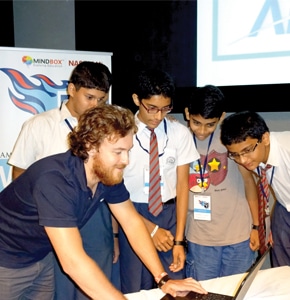
Have you ever wondered, what goes into the making of an ‘Angry Birds’ or a ‘Temple Run’? Well, what if you actually get to make a game yourself! Anyone can make a game, and everyone should. Everyone needs to learn how to program for a game; it’s just a good skill to learn. It teaches you to adopt a creative thinking mindset, a step-by-step way of making things work and solve challenges. It’s also a lot of fun. With some of the game design software out there you don’t even need to know coding as long as you can recognize shapes and put things in order.
MindBox, a Creative Education initiative by ARK Infosolutions, in collaboration with the National Association of Software and Services Companies (NASSCOM) Gaming Forum, is once again providing an opportunity to all school students across India to learn and express their creativity through ‘Game Jam Titans 2015’.
Game Jam Titans provides opportunity to school students to be creative
Game Jam Titans (GJT), India’s only game development competition for school kids is set to be held across six cities in India New Delhi, Chennai, Bengaluru, Hyderabad, Mumbai, and Pune. The competition will begin from 17th August 2015 and will last on 28th September 2015.
Recognizing the growing opportunity, NASSCOM Gaming Forum and MindBox aim to tap the potential of young gaming developers through this competition. Speaking on the initiative, ARK Infosolutions CEO &Director Rishi Khemka said, “As educators, we empower students to ideate, explore, lead, think and collaborate. Such competitions are the perfect platforms not only for students to take their classroom learning to the World outside but also for students to express their individuality in more innovative and creative ways. We are overwhelmed with the encouraging response we have received from schools and their students for our GJT competition. We are pleased to promote the game and app development culture amongst Youth of India.”
NASSCOM Gaming Forum Chair Rajesh Rao added, “The gaming industry in India has proved its capability in terms of delivering quality products and has the potential for acquiring a large domestic as well as international market. The sector is poised to grow at an exponential level in the years to come and will continue to capture the imagination of users and developers alike. Through this competition, we aim to engage with the youth and encourage them to take up game development as a career as it is a growing domain.”
Benetits of Game Design
Improves number and shape recognition, grouping, and counting
Develops sense of visual perception and color recognition
Improves hand-eye coordination
Develops math, color recognition, reading, reasoning, and social skills
Games and Simulations allow students to explore and create materials that they could not work directly with in real life
Promotes creativity and motivate students to explore science & math
Strong toolto teach foundation of software development
Enables students to invent and explore multiple solutions to a problem
Introduces career possibilities in Gaming and App Development industries
The winning teams will be shortlisted from each of these cities will get an opportunity to showcase their game on the sidelines of the NASSCOM Games Developer Conference (GDC) to be held in Pune in November in front of the professionals and experts of the Gaming Industry.Participants will be given a participation certificates and the regional winners from each city will receive exciting prizes.
For more information on Game Jam Titans 2015 log on to: www.gamejamtitans.com.