Home Blog Page 826

Spiritual aspect of education missing: MSU Study

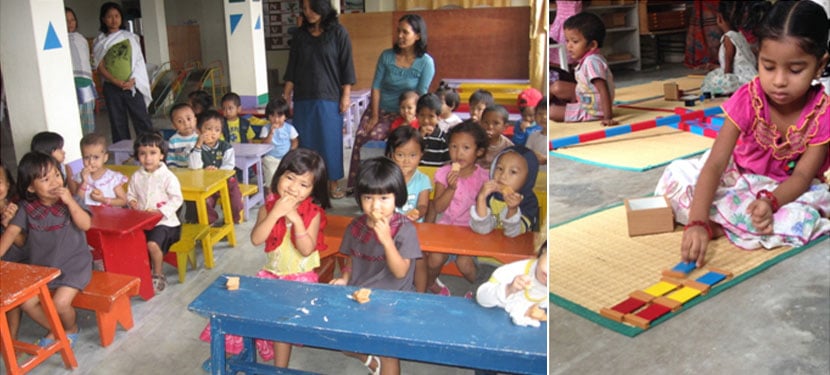
early childhoodA study by MS University researcher indicates that children upto eight years of age are deprived of development during schooling in India. The faculty of community sciences of the university found that the model of western education in pre-schools and primary schools currently lacks the spiritual aspect of education.

The study suggest a curriculum emphasising on the mental, physical and spiritual development of the child. The researcher has designed a curriculum that will act as barometer for measuring complete development of a child.

The university covered early educators, teachers and parents of children to the age group of three to six years and had surveyed nearly 200 people from Vadodra and Bhavnagar.

MICA appoints 3 members in governing council

2 (1)MICA has appointed three new members to its Governing Council. Abhijit Bhaduri, Chief Learning Officer, Wipro, Achal Bakeri, Chairman and Managing Director, Symphony Limited, Dr Tridip Suhrud, Director and Chief Editor, Samabarmati Ashram Preservation and Memorial Trust.

Abhijit Bhaduri is also on the board of a prestigious programme for Chief Learning Officres run by the University of Pennsylvania. Prior to joining Wipro, he has led cross HR teams in India, AsiaPacific and the US at Microsoft, Pepsico and Colgate. His thought pieces are captured in the Wall Street Journal, Forbes, Economic Times and People Matters.

Achal Bakeri, an MBA in Finance and Real Estate Finance from University of Southern California is also a scholar from the London School of Economics on leadership and global governance. Bakeri’s entrepreneurial journey began in 1998 with Symphony Ltd, which is now public listed company with a market capitalisation of Rs.8000 crores. He has been associated with various professional bodies and public charitable institutions and also has been a recipient of several awards in the entrepreneurship and leadership space.

Dr. Tridip Shurud is an active member of the Gandhi Heritage Sites Mission supported bby the Government of India. Over the tenure of his career, Dr. Tridip has gained inclusive knowledge on the life and thoughts of Mahatma Gandhi and has been consistently writing books and essays on it. Some of his recent works include Bapu: The Mirabehn- Gandhi Correspondence, Gandhiji Ni Rojnshi, Hind Swaraj ek Anushilan, Kavi Ni Choki, and a bilingual edition of M.K. Gandhi’s Hind Swaraj.

Dr. Nagesh Rao, President and Director, MICA said, “The greatest insights occur at the intersection of different areas of work, different ways of thinking, different ways of doing and different ways of being. In our new governing council members, Prof. Suhrud, Bakeri and Bhaduri, we have exactly that, expertise in very diverse areas and ways of life adding richly to conversations on how to take MICA forward.”

Mobile classrooms to come in five cities

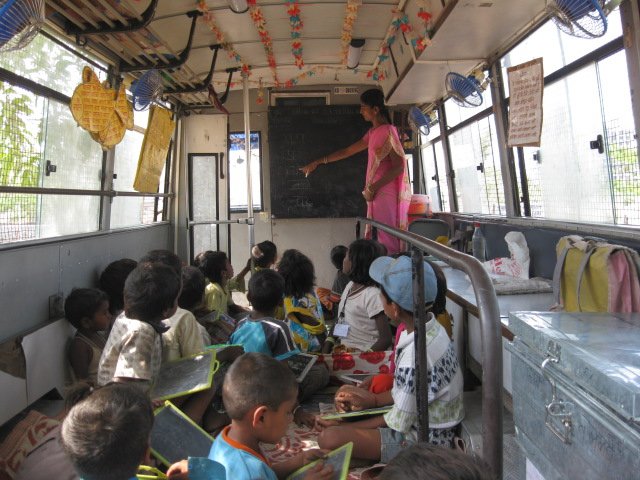
Mobile classroomTo take the government’s National Digital Literacy Mission to the next level, HP and NASSCOM have joined hands to launch mobile classrooms in five cities. The shipping containers are converted into mobile classrooms that will be deployed in Mumbai, Pune, Chennai, Bengaluru and Rajasthan with the capacity to train 6,000 beneficiaries on digital literacy and Hewlett Packard learning initiative for entrepreneur (LIFE).

“With this partnership, we aim to support government’s National Digital Literacy Mission by setting up five centres across India to empower learners with digital literacy, entrepreneurial and vocational skills,” said Neelam Dhawan, Managing Director, HP (India). The cloud enabled and readily deployable shipping container classrooms will be equipped with technology, products, internet and HP LIFE e-learning solutions.

The classroom will be 40 foot x 9 foot and will have host of other benefits. Once the beneficiaries get trained in one particular area, the mobile classroom can be moved to a new location to give benefits to more people.

CABE meeting to be held on July 18

Manish_SisodiaCentral Advisory Board of Education (CABE), one of the advisory body on education in the in the country will be meeting on July 18 to discuss on the New Education Policy and consider on the report of no detention policy up to class VIII. The states have been asked to give their opinion before the finalisation of the agenda report, the last date of which is July 8.

The focus would be on the New Education Policy and the states participation. The reports prepared by the previous body of the CABE will also be the point of discussion in the meeting. The report includes sub-committee report prepared by the then Haryana Education Minister Geeta Bukkal about no detention policy and its impact on learning outcome in classes.

The sub-committee report has favoured doing away the policy introduced under RTE and the CABE would take it over for consideration. Delhi Deputy Chief Minister, Manish Sisodia has asked HRD Minister Smriti Irani for the removal of the policy for which the decision has yet to be taken.

CABE was reconstituted on June 11, with 19 nominated members from varied fields apart from various union ministers and vice chancellors of different universities.

Know your college portal to help students

students-indiaThere is often confusion in the minds of students regarding which colleges to join and the courses to be taken up. To help the students make an informed decision on the choice of college and the courses, the Ministry of Human Resource Development, Government of India has developed a “Know Your College” portal.

This portal covers almost 10,500 colleges which conduct about 14,000 programs in Technical Education and 35000 colleges conducting at least 20,000 programs in Non-Technical education. It is a repository of information pertaining to colleges and information related to its faculty, labs, library, infrastructure, and availability of hostel facilities etc. Students are encouraged to send their complaints on discrepancies of information provided by colleges through this portal.

This portal is being maintained by AICTE and is available to the public at www.knowyourcollege-gov.in. It is a single stop destination for students for making an informed choice.

Govt’s mission possible on skill development

Skill_DevelopmentIn keeping with the commitment on building skill development in the country, the Union Cabinet chaired by the Prime Minister, Narendra Modi, has given its nod for the institutional framework for the National Skill Development Mission.

The National Skill Development Mission, which was a promise made during the Budget Speech for 2015-16, aims to provide a strong institutional framework at the centre and states for implementation of skilling activities in the country.

The mission will have a three-tiered, high-powered decision-making structure. At its apex, the Mission’s Governing Council, chaired by the Prime Minister, will provide overall guidance and policy direction.

The Steering Committee, chaired by Minister in Charge of Skill Development, will review the mission’s activities in line with the direction set by the Governing Council. The Mission Directorate, with Secretary, Skill Development as Mission Director, will ensure implementation, coordination and convergence of skilling activities across Central Ministries/Departments and State Governments.

It will also run select submissions in high priority areas. Further, the National Skill Development Agency (NSDA), the National Skill Development Corporation (NSDC) and the Directorate of Training will function under the overall guidance of the Mission.

The Ministry of Skill Development and Entrepreneurship (MSDE) provides a natural home for the mission, organically linking all three decision-making levels and facilitating linkages to all Central Ministries/Departments and State Governments.

PM Modi earlier had said, “Today the world focuses on trade in goods but in future the core issue will be how to get skilled people. We need to work in this direction.”

The majority of India’s vast population is of working age. An urgent and effective action to Skill India is needed to capture the demographic potential of India’s youth. Based on data from the 68th Round of NSSO, it is estimated that only 4.69 per cent of India’s total workforce has undergone formal skill training, compared with 52 percent in the USA, 68 per cent in the UK, 75 percent in Germany, 80 percent in Japan and 96 percent in South Korea.

Despite efforts to hasten and scale up-skilling through the creation of the National Skill Development Fund (NSDF) in 2009, the launch of the NSDC in the same year, and creation of the NSDA in 2013, progress to date has been sporadic.

India continues to face a skilling challenge of vast proportions. Based on the Census 2011 and NSSO (68th Round) data, it is estimated that 104 million fresh entrants to the workforce will require skill training by 2022, and 298 million of the existing workforce will require additional skill training over the same time period.

Green signal for skill entrepreneurship policy

skill-development-training-255x224In a first to implement skill development, while promoting entrepreneurship, the Union Cabinet chaired by the Prime Minister Narendra Modi, have given its approval for the country’s first integrated National Policy for Skill Development and Entrepreneurship 2015 today.

The policy acknowledges the need for an effective roadmap for promotion of entrepreneurship as the key to a successful skills strategy. The vision of the policy aims “to create an ecosystem of empowerment by skilling on a large scale at speed with high standards and to promote a culture of innovation based entrepreneurship which can generate wealth and employment so as to ensure sustainable livelihoods for all citizens in the country”.

To gain its momentum, the policy has four thrust areas. It addresses key obstacles to skilling, including low aspirational value, lack of integration with formal education, lack of focus on outcomes, low quality of training infrastructure and trainers, among others.

The policy further seeks to align supply and demand for skills by bridging existing skill gaps, promoting industry engagement, operationalising a quality assurance framework, leverage technology and promoting greater opportunities for apprenticeship training.

There is also a focus on Equity, which targets skilling opportunities for socially/geographically marginalised and disadvantaged groups. Skill development and entrepreneurship programmes for women has a specific focus in the policy.

In the aspect of building or generating entrepreneurship for skill-based people, the policy seeks to educate and equip potential entrepreneurs, both within and outside the formal education system. It also plans to connect entrepreneurs to mentors, incubators and credit markets, foster innovation and entrepreneurial culture, improve ease of doing business and promote a focus on social entrepreneurship.

The previous National Policy on Skill Development was formulated by the Ministry of Labour and Employment in 2009 and was reviewed after five years to align the policy framework with emerging national and international trends.

IIM Amritsar to start classes in July

students collegeIIM Amritsar, being mentored by IIM Kozhikode, is likely to have distinct advantages of being in one of the best locations among the 6 new IIMs coming up this year. The new Indian Institute of Management in Punjab is all set to commence its activities from July this year, with site selection committee finalizing land in the city of Amritsar.

IIM Amritsar would launch the most prestigious programme from IIMs – Post Graduate Programme (PGP) in Management for which the institute would be selecting up to 65 best students from those who have appeared in Common Admission Test (CAT) of IIMs and have indicated interest in ‘IIM in Punjab’.

Shortlisted students are now invited to confirm their interest on IIM Amritsar website currently hosted at www.iimk.ac.in/iimamritsar/

The admission process is likely to be completed by July 20, 2015 and the classes would begin from July end.

The fee for two-year Post Graduate Programme at IIM Amritsar has been fixed at Rs.9 lakh which includes hostel accommodation, books and learning material apart from tuition fee. Leading banks would offer financial assistance in the form of educational loans at the terms they generally offer to students admitted in any other IIM.

IIM Amritsar campus is proposed to come up at a site near Manawala on Amritsar-Jalandhar GT Road in 60 acres of flatland. While it may take about 2–3 years before the infrastructure and campus is setup and ready for use, the institute would begin operating from the Punjab Institute of Technology located in the Government Polytechnic College, Amritsar compound till its own campus is ready to use.

IIM Kozhikode would develop the programme and put together systems and process to lay a strong foundation in building of another great institution of professional learning.

Effective Learning

Pramod Ponnaluri, Co-Founder, Kitki started his venture in 2013 with a vision to offer experiential learning modules to aid kids experience the beauty of learning through hands-on workshops and field visits. Today, the company develops board games based on geometry, chemistry and history that drive learning in an effective manner

Could you share the various reasons behind starting Kitki?

I never even thought I would become an entrepreneur. I was part of a fairly standard rat race – do well in school, graduate from a good college (BITS-Pilani), get a well-paying corporate job and climb the hierarchy ladder. Only after 6 years of corporate experience that I started thinking more freely and realised how I ended up doing a lot of stuff only because someone said so or because that was the trend. Life is short. Why should anyone do what they don’t love. But there is not enough encouragement for kids to dig deep and find what really interests them. Learning new things certainly helps but unfortunately, rote learning has taken precedence over true learning. That is where the root of the problem lies and instead of blaming the system, we decided to find a solution and thus started Kitki.

What are the various difficulties encountered in doing business on ground level?

Kitki was started in 2013 with a plan to partner with schools and offer experiential learning modules that can help kids experience the true beauty of learning through hands-on workshops and field visits. What we didn’t realise early enough was that schools take time to make such big changes and we struggled for over an year trying to convince schools to take our modules more seriously. After several pilot programmes at different types of schools, we knew that we could not sustain ourselves with that model. However, during this period we noticed how well game-like mechanics could engage kids and create an interest to learn among them. We took the hint and started developing board games that are a lot of fun but at the same time drive learning in an effective manner.

What is the market size of the services offered by you in India at present?

While the overall toys industry could be around Rs. 10,000 crore, we think educational games are about 20-25 per cent of the board games market in India. But our scope includes an additional segment of schools and further, our board games can cater to an international market.

What are the major benefits for organisations adopting your solutions?

Our games are just like any board game. But at the same time, the games are beautifully set in an educational context and subtly enough for kids to learn. Kids (and even adults) can purchase these from toy stores and online stores and have fun at home, at parties, at picnics, anywhere. Even schools are interested in adding these to their classrooms to enhance the learning experience.

What is the vision of your company for next two years?

We have already designed three board games that are based on concepts from geometry, chemistry and history. We are looking to build a portfolio of similar high quality board games over the next few years and let kids experience how fascinating learning really is and to develop a curiosity to learn.

What are the various methods you are using to increase the visibility of your organisation?

Apart from the traditional options of selling through toy stores and online stores, we are looking at spreading the word through workshops and stalls at offices and residential townships. Instead of focusing on a one time sale, we are looking to build a strong relationship with our potential customers.

How can you differentiate your services from competitors?

Game-based learning in India doesn’t have enough competitors yet. Many of those who are in the space are looking focused on only digital learning. Our physical format board games and the high quality detail in both the concepts and the graphic work differentiate Kitki.

What are the ways of engaging the customers with you? Can you share a case study?

Our board games give us the opportunity of developing different variations of a similar subject. For example, our game on history is based on medieval Indian history and specifically highlights the rise of the Delhi Sultanate. The next version will be on how the Delhi Sultanate’s strength grew into the Central India. We plan to stay alongside a child’s learning experience through new games at different stages.

What are the major stakeholders and sectors you are focusing on?

As of now we are focusing only on game-based learning products through board games. We may enter the digital space as well, once we understand our customers better.

What are the various initiatives taken by your organisation to emerge as a market leader?

As mentioned earlier, we value customer relationships a lot more than absolute sales. We plan to just be honest, let our customers know about our aim and let them be a big part of the revolution. We recently ended one such campaign through which we asked people to help us raise enough funds to manufacture our game on geometry, Three Sticks. The campaign was launched on an international platform called Indiegogo and we received a tremendous response. People pre-ordered the game from all over the world, including teachers and education experts and helped us raise over $11,000! We will continue to work towards building better relationships and not worry about our sales or our market share.

National Safety science quiz for high school students

quiz examNational Council of Science Museums in partnership with UL India a premier safety science company is organising National Safety Science Quiz 2015 for high school students during August-October 2015 to ignite the young minds for a safer India.

This quiz has been designed to instill greater awareness on the need for safety amongst school children and look at spreading the message through safety education across the country.

The theme of the quiz is “Safety in Everyday Life”. The written round for selection of students for the quiz will be held at seven centres – Delhi, Mumbai, Kolkata, Chennai, Guwahati, Ahmedabad and Bangalore. Each participating school will be eligible to send up to a maximum of 20 students from class IX to class XII. The entries shall be overall restricted to 7000 students for the written test.

The written round will be held on Sunday the 23rd August 2015 at 11 A.M simultaneously at all centers. The top four students from each of the seven centers will then participate in further rounds of the quiz to be held at Visvesvaraya Industrial and Technological Museum (VITM), Bangalore during the last week of October 2015.

Registration for the written test will be done online from 25th June 2015 to 31st July 2015.

LATEST NEWS