

Home Blog Page 837

Technology aided education for a smarter future

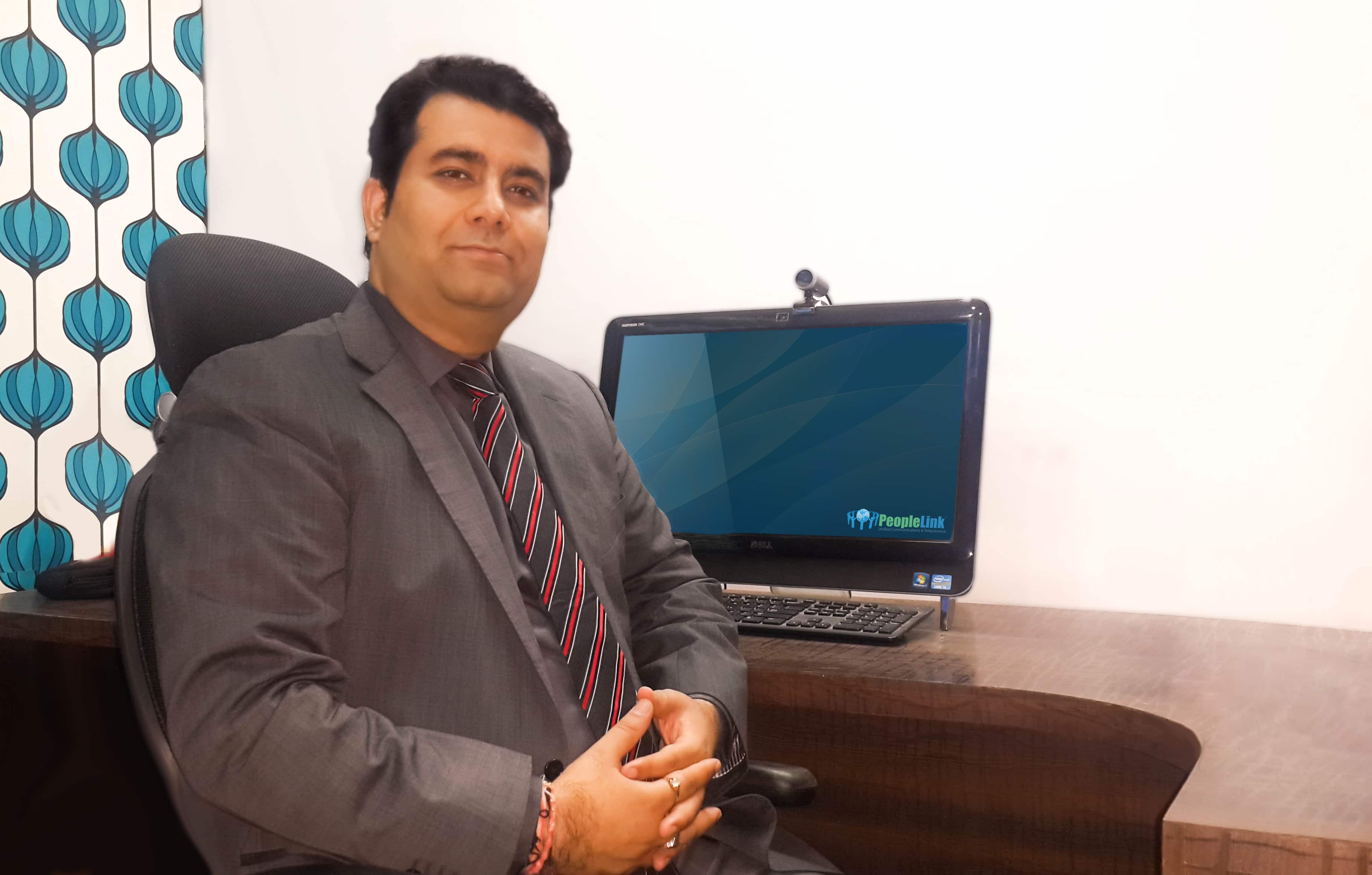
To meet the challenges in technology usage, Amit Chowdry, CEO, PeopleLink informs Elets News Network (ENN) that their solution operates at low and variable bandwidths and on different networks. This helps to video enable the remote and rural parts of the country through a deep networked channel partner network

What makes the Indian education market unique?

India has almost around 439 million students. This is a major task force which needs a delivery mechanism for ensuring that we leave no stone unturned and no community, sector or territory remains under served. On one hand, the uniqueness of this market remains in its exponential growth, while on the other hand there remains a majority section of students who are far apart from the reach of education.

What is the market size in India as far as far as implementation of technologies like video conferencing solutions in education goes?

Indian education vertical has always reported a rapid expansion and the industry is predicted at around Rs. 5.9 trillion according to India Rating & Research and The India Vision 2020 document by the Planning Commission of India. Digital learning too is being viewed to cross around Rs. 1.1 trillion by 2019. The adoption of video collaboration is very quick and the Institutes of higher learning are even considering the option of video enabling their major events and ceremony on adhoc basis to connect with the masses.

Are teachers prepared for the technological upgradation that is happening today?

Teachers and tutors are thrilled to use the technology to reach out to their students. We have seen the teaching community adapt to these technological changes very quickly and effectively. Our technology has been evaluated by various teaching communities and they have found it apt for their teaching curriculum due to its ease in adopting the technology and the options and features it provides to enable them in expanding their reach.

The technology also offers them a comprehensive suite of data collaboration for imparting a rich experience to the students. It also helps in making the sessions interactive with automated attendance.

What are the stumbling blocks in the adoption of new technologies in the education sector?

The major stumbling blocks towards adoption of technology in Education can be pertained towards lack of awareness and readiness towards a change, technological complexity which makes it difficult for its implementation, implementation challenges, and bandwidth scarcity at sub urban and rural areas making them technology deprived.

We have a complete dedicated education suite designed which caters to this sector. We have synchronised our offerings with the government initiatives and implementation of policies to create awareness and create a talent pool which is capable of strengthening India’s economy.

Our solutions offer the ultimate ease of collaboration which has been identified internationally and has also been suggested as a part of the US curriculum for the students of computers and information technology. Our solutions operate at low and variable bandwidths and on different networks to video enable the remote and rural parts of the country through a deep networked channel partner network to ensure no area remains uncovered or unaddressed by our product offering and service network.

How do you see the market growing for new technologies? 

Education sector is a wide sector with exponential growth patterns. This expansion is creating a major need of technological advancements in terms of infrastructure and IT enablement in terms of course delivery mechanisms to cater to the large student base.

To address the need of the market we have a major deployment base in the educational sector which is well received. We offer seamless integration with 3rd party hardware products installed in the classrooms like e-podium, projectors, audio and video devices to extend unparallel features of its extensive e-Learning suite accessible by the masses on any platform.

What are your expansion plans of the company? 

PeopleLink not only integrates well with the multi-brand classroom accessories, we also provide custom e-Learning solutions like PeopleLink ePodium, eLectern and eDesk along with lecturer tracking cameras to make virtual learning experience more real.

In terms of our expansion we look forward towards having a closer synchronisation with the government and corporates to extend our solutions and offerings to the majority. We are currently working on many innovative solutions which shall help students all across the globe collaborate better.

SSUN demands changes in New Education Policy

classroomShiksha Sanskriti Utthan Nyas (SSUN), an RSS outfit, headed by Dinanath Batra has demanded changes in the New Education Policy which will inculcate value education in each subject of study to create integral humanism. SSUN has urged the creation of the All India Autonomous Education Commission which will not have the government interference.

The body will look after the education comprehensively from primary to university level and the government’s role will be limited to funding only. The commission should be managed by technocrats and not bureaucrats. Batra also emphasised to add social service certificate course in class X and XII syllabus. Under this course children will adopt villages and do literacy work, informed villagers about health issues, and convince them to give up caste system. This course will also involve giving vocational training to unemployed youth in villages.

SSUN also proposes to introduce two separate streams in class IX, vocational and academic.  If the student opt for vocational course, he will get 60 per cent weightage while 40 per cent in academic. And if the student opt for academic than weightage will be 60 per cent for academic and 40 per cent for vocational.

According to Ministry of Human Resource and Development, in elementary education, despite improvements in access and retention, the learning outcomes for a majority of children continue to be an area of serious concern. Studies are showing that children are not learning the basic skills during their schooling. Many children who reach grade V cannot read simple texts and cannot do simple arithmetic calculations. The examination results of the children are poor. Concerted efforts are required to ensure that a minimum set of cognitive skills are acquired by all children during eight years of elementary education.

DU cut-offs to remain high

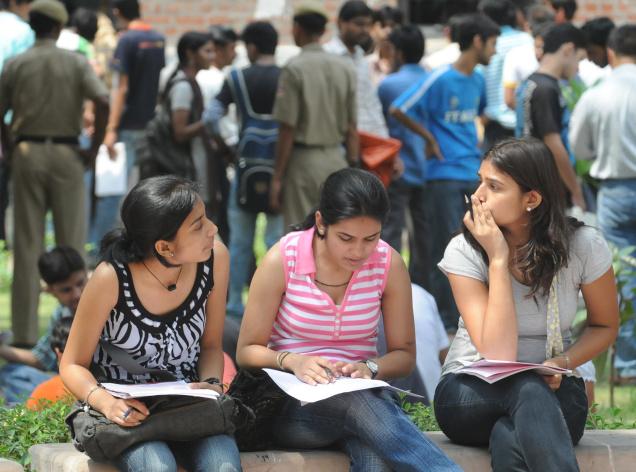
DU Students Considering the results of the two national boards in the country, Central Board of Secondary Education (CBSE) and Indian School Certificate Examination (ISC), where the number of candidates scoring 90 per cent and above has crossed 60,000 this year, the cutoffs in Delhi University’s (DU) undergraduate admission are likely to stay high.

The total number of CBSE students who scored 95 per cent and above has crossed 9,000. Though CBSE has neither released the exact number of candidates scoring 90 per cent and above nor that of merit certificates, the latter, too, has crossed the 12,000 mark, according to Board officials. As the CBSE aggregate is based on five subjects, the best-of-four subject aggregate would be even higher.

It appears that most colleges will set cutoffs on the first list above 95 per cent. Particularly the scores in political science, mathematics, psychology, sociology, geography, business studies, accountancy, physics and biology have shot up this time. The qualifying mark has also incrased besides the number of merit certificates risen. However, the number of seats have not changed.

Meanwhile,  DU has said that maximum queries have been received for its B El Ed course during the pre-admission counselling session open days conducted by it in the run-up to the admission process beginning on May 28. The Bachelor of Elementary Education (B El Ed) is a first-of-its-kind course which is exclusively for women candidates, offered only by DU.

India gets 1st transgender principal

India gets 1st transgender principal When Manabi Bandopadhyay takes charge of Krishnagar Women’s College in West Bengal on June 9, not just India, but probably the world will get its first transgender principal. Presently, Manabi is associate professor in Bengali at Vivekananda Satobarshiki Mahavidyalaya. The move has received a warm welcome from all education fraternity.

State education minister Partha Chatterjee had recently said that the decision was taken by the College Service Commission and he would not interfere in their decisions. He appreciated them for having an open mind and expressed happiness over the decision.

Rattan Lal Hangloo, vice-chancellor of the Kalyani University to which Krishnagar Women’s College is affiliated appreciated Manabi for being a fine human being, a good academician and an able administrator. He was hopeful that her appointment will empower other members of the transgender community.

Meanwhile, leading the way in bringing transgenders into the mainstream, a Bengaluru-based organisation has launched a national portal to provide employment opportunities to sexual minorities.

It may be mentioned that last year, Lt. Governor Najeeb Jung had approved the admission of transgender children under the category of “disadvantaged group” defined by the Right to Education Act, and made their education free in Delhi Schools. It means these kids will be eligible for 25 per cent reservation under the economically weaker section (EWS) and disadvantaged students category for admission.

DU to discuss CBCS at Exec Council Meeting

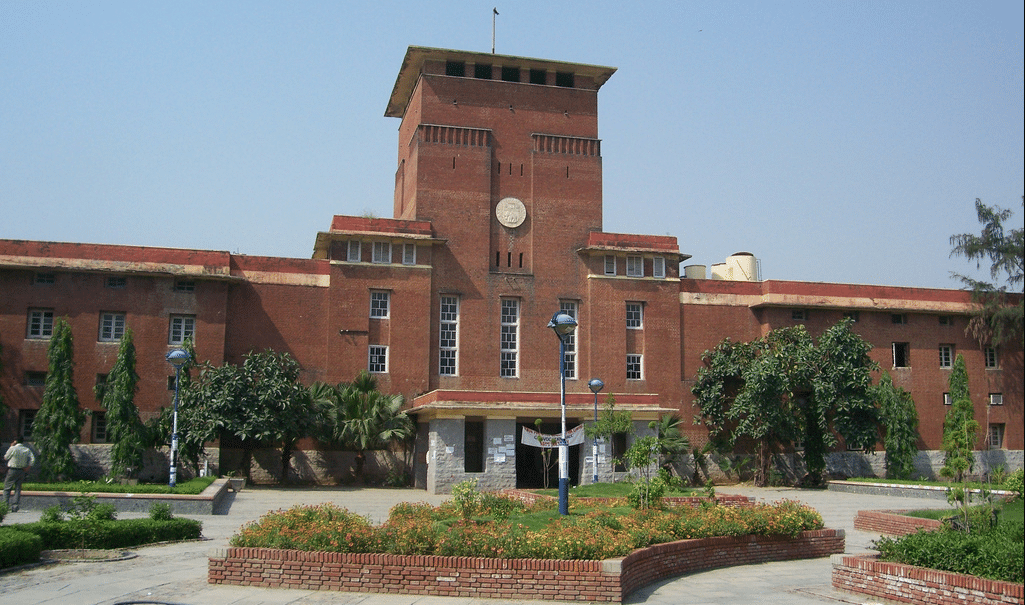
DU Pic On the agenda for Delhi University’s (DU) executive council meeting, scheduled for May 28 – the same day the online registration for admission begins – is the choice-based credit system (CBCS). It is likely that the system may find approval. The University Grants Commission’s documents on course structure and the system for computing ‘credits’ and CGPAs (cumulative grade point averages) will also be discussed. It may be mentioned that absence of clearance from the councils has been holding up implementation and giving hope to detractors—entire departments have resolved against CBCS—that it’s not coming to DU this year.

The renaming of two master’s level courses, the merging of two departments, handing over of UCMS to Delhi government and the establishment of an “Electropreneur Park” at South Campus, are the other issues that will be discussed.

Previously, DU had said that it will not go ahead with the implementation of the CBCS if its Executive Council and Academic Council decide against the same.

DU plans increase of around 2,000 undergraduate seats

Delhi-University (1) Delhi University is considering an increase of around 2,000 undergraduate seats in its various courses. The hike in seats will in all likelihood be introduced from the next academic session and not the upcoming one, admissions for which are set to begin this week.

Speaking in this context, Prof Nachiketa Singh, part of the 14-member Standing Committee on Selection of Courses set up last week by DU Vice Chancellor Dinesh Singh, has informed that here are certain popular courses like Bachelor of Business Studies (BBS) and sociology which are offered at fewer colleges. The panel has approved their introduction in more number of colleges.

Singh also explained that after the standing committee approval, the courses need to be approved by the varsity’s Academic Council (AC) and Executive Council (EC), the statutory bodies, and since there is no time left for getting the proposal approved by these councils ahead of the 2015-16 session, it is likely that they would be offered from the next one.

The step will contribute to an increase of around 2,000 seats.

Another proposal passed today by the committee was for the introduction of a course in Forensic Science. “In a first, DU will be offering B.Sc in Forensic Science, initially at Khalsa College.

The BBS course will also be offered by SGTB Khalsa College, Ramanujan College and Guru Gobind Singh College of Commerce, the sociology course will be offered by Bharti College. Among the other courses in which the varsity is mulling an increase in intake are history, physics and geography. It may be mentioned that although the student intake will increase, that would not affect the recruitment of teaching staff.

DU presently has around 54,000 UG seats in around 70 colleges. The online registration process for admissions to the 2015-16 academic session will be open from May 28 to June 15 while offline forms will be accepted at the registration centres from June 5 to June 15. The first cut-off list will be announced on June 25.

Furthermore, While UGC has already asked all central universities to implement the Choice Based Credit System (CBCS) from the upcoming academic session, Delhi University is yet to direct its colleges, maintaining that it is “awaiting instructions from the Commission”.

Irani proposes consortium of higher educational institutions between India and China

Indo-china The idea of establishing a consortium of higher educational institutions as part of greater collaboration between India and China, besides mutual recognition of academic degrees, was broached by Human Resource Development Minister Smriti Irani, on her maiden visit to China. The minister was in the eastern Chinese city of Qingdao to take part in the ‘International Conference on ICT and Post-2015 Education’ organised by the Chinese Government and UNESCO on a four-day visit. She held talks with top Chinese officials and discussed steps to follow up on agreements signed during Prime Minister Narendra Modi’s recent visit.

An Indian Embassy press release here said that Irani held talks with her Chinese counterpart Yang Guiren on mutual recognition of academic degrees, collaboration in teacher’s training besides establishing a consortium of higher educational institutions. She had also said that The collaboration in teachers training helps both the countries to share their vast experiences in education. Besides Yang, Irani also held talks with Chinese Vice Education Ministers Liu Limin and Du Zhanyuan.

The minister focussed on the implementation of the new Educational Exchange Programme (EEP) signed during Modi’s visit. One MoU dealt with bilateral cooperation in the field of Vocational Education and Skill Development between India and China. Under the framework of the MoU, India and China agreed to work towards capacity development. China will be the key knowledge partner in the Mahatma Gandhi National Institute for Skill Development and Entrepreneurship being set up in Gujarat. Under the MoU, China will provide curriculum in various trade and industry sectors. According to officials, China has trained over 13 million people in skill development in focussed areas for better employment against a million by India.

It may be mentioned that under the documents signed during Modi’s maiden visit to China between May 14 to 16, the two sides had also agreed to set up the Centre for Gandhian and Indian Studies in Fudan University and setting up of a Yoga College in Yunnan University for which India provided the faculty. This is the first time China had a centre for Gandhian studies and the Yoga college will have trained teachers to bring a standard Yoga education.

Today, China has now become the third most favoured nation of international students after the US and UK. According to data put together by the Institute of International Education on international student mobility in 2012, there are many more foreign students in China (3.28 lakh) than in Australia or Germany. South Korea continues to send the maximum number of students to China (21.3%), but a close second is the US (8%). China was not on most students’ radar at the start of the decade; but now it is attracting several thousand foreign students every year. Most of them are studying humanities, followed by medicine.

Online admission tests likely for Presidency

presidency_university_logo Online admission tests likely to be introduced by Presidency University this session. Apart from the Common Admission Test and WBJECA (entrance test for MCA courses), no other admission tests are held online at present in the state. After a proposal from education minister Partha Chatterjee, the Joint Entrance Examinations (JEE) board is gearing up to hold admission tests to all undergraduate courses in Presidency University. The board has, however, agreed to conduct the tests only if they are online.

The board wants one set of question paper for all students applying for a particular subject. It will ensure the same standard of questions for all students. Candidates are not judged on the same aptitude if various sets of question papers are prepared. According to sources, questions will be framed by teachers of the university. There will be multiple choice questions so that they are can be auto-corrected and there is no hassle of physical correction. However, the question pattern for some subjects, like sociology, history, political science and others in humanities may be altered.

The JEE board has asked the university to provide them with information on how many departments are interested in holding ada mission tests and which departments will admit students on the basis of HS results. They have also sought information on the number of candidates likely to appear for admission tests. “The JEE board has also asked Presidency University about how many subjects a candidate can appear for admission tests,” added a senior faculty member of the university.

Meanwhile, Presidency University has tied up with Edward Food Research and Analysis Centre Ltd (Efrac), an integrated testing and research facility for food and drugs, to make students industry-ready and help them land a job right after college. Presidency has decided to start the process with physics, chemistry, biology and mathematics students.

100% pass for blind school students in Madurai

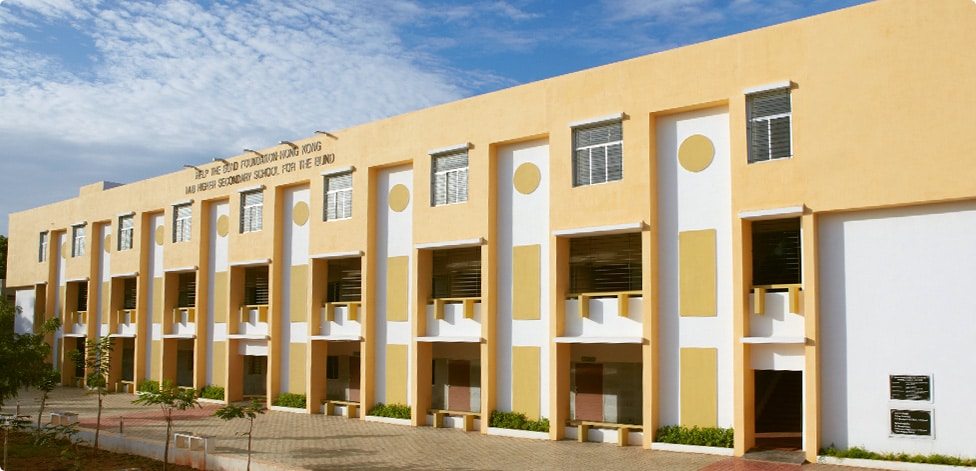
BLIND STUDENTS The students of Indian Association of Blind (IAB) school in Madurai registered a 100 per cent pass. All the 19 students who appeared for the examination passed. Three students scored more than 80 cent pass. At 84 cent pass, S Kannan and V Palanivel scored the top marks in the school, followed by S Vasanth who scored 82%.

Several students scored more than 90 marks even in subjects like science, social science and Tamil which are usually considered difficult to crack. S Kannan scored 93/100 in Tamil and emerged the subject topper, while M Barakathali and K Sangeetha scored 98/100 in social science.

Palanivel was subject topper in English and Maths, scoring 88 and 75 respectively. In science, K Anbalagan scored the top marks, scoring 98/100.

Furthermore, the district registered a slight rise in pass percentage in the SSLC examination results. Compared to last year’s 93.13 per cent, nearly 94.20 per cent of students who appeared for examination passed this year, a difference of 1.07 per cent.

Around 21,584 girls passed in the SSLC exams this year, while the figure was 21,431 among boys. The pass percentages are also higher among girls than boys, as 95.90 per cent of girls passed as against 90.66 per cent among boys.

Sports category registrations start May 28 at DU

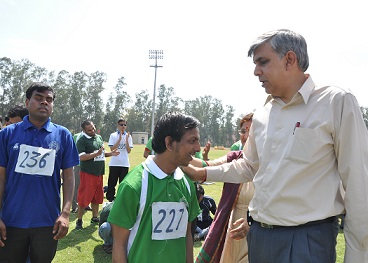
Sports DU May 28 will see the start of registration process for admissions under sports category in the undergraduate courses of Delhi University (DU), along with the centralized online application process. However, candidates will have to apply separately at each college for sports admissions. The registration process will continue till June 15.

There is no change in the major features of the admission policy, including the eligibility criteria. However, the fitness trials will be conducted by the sports council of the university over three days—June 18 to 20—from 9am at the Polo Ground near North Campus. It will be a centralized process. The results will be declared on June 22 and the aspirants will be given fitness certificates.

DU authorities say that the fitness test has been made centralised to help the colleges from the undue pressure. Previously the first college which conducts the fitness test used to get unmanageable number of candidates. The candidates who clear the fitness tests—any two of the three—are eligible for the sports trials to be conducted by the colleges. The fitness certificate will be valid for all sports trials. Aspirants will be tested for strength, endurance and speed. However, for certain sports like chess, candidates will be eligible for the final trials even if they qualify in any one of the three fitness tests.

The sports trials will start on June 23 and colleges will be announcing their individual schedules. The colleges will also announce their requirements, regarding which sport they will enroll students and also the specific position in a particular sport if applicable.

Meanwhile, with the Class XII board exams, especially mathematics, having been unexpectedly difficult for many, DU aspirants are exploring other options besides what they had been planning for. BSc mathematics hopefuls are writing engineering entrance exams and those who can, are banking on ECA or sports quota to get them in.

LATEST NEWS