


Home Blog Page 838

DU may go for one cutoff per course

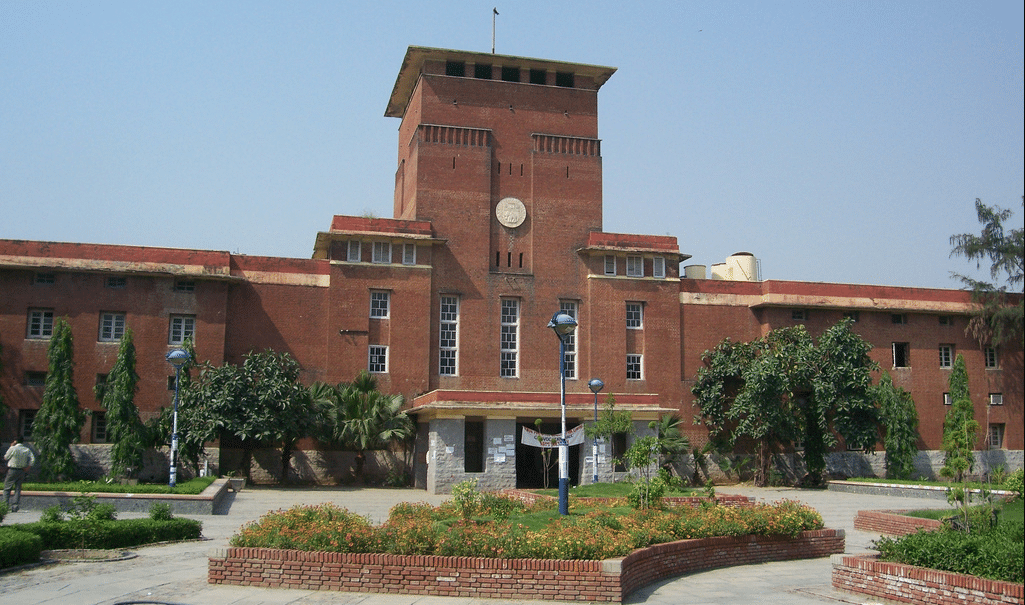
DU Getting admission in Delhi University (DU) may get tougher this year. It is likely that the cutoff ‘ranges’-with multiple minimum scores for the same course, each assigned to a different category of applicants based on subjects included in their best-four aggregates or performance in certain subjects in school-may be replaced by single cutoff scores.

V K Kawatra, principal, Hansraj College, explained that additional eligibility criteria have been used by North Campus colleges as part of a ‘screening process’.

Now, the other criteria have been abolished, and the penalty for not including the subject applied to in best-four or including one that’s not taught in DU or considered vocational has been fixed-2.5 percentage points would be docked from best-four aggregates in all cases.

Reports state that although no  formal directions have been received from the university,  in the ‘formal and informal discussions’ among teachers at Hindu, they have decided to keep cutoffs ‘very stringent’.

It may be mentioned that this year, DU colleges will be mandated to enroll all the students meeting their cut-off criteria and there will be no first-come, first-served policy for undergraduate admissions, which will start from May 28 for the 2015-16 academic session. The offline forms will be accepted at the registration centres from June 5 to June 15 between 9 am to 3 pm. The varsity has set up eight admission centres as against the 18 which were set up last year.

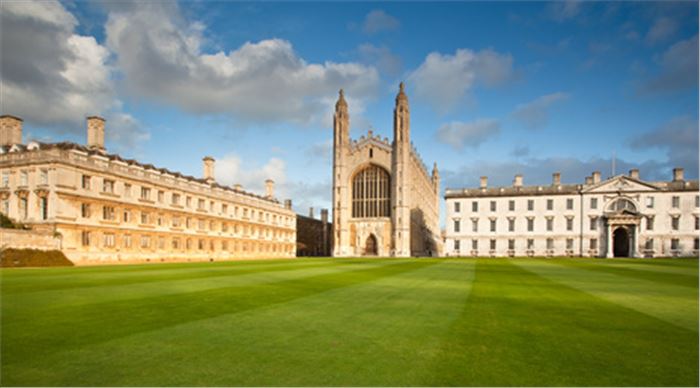
Stop making their exam results public: Cambridge students urge university

Cambridge University

Cambridge University Claiming that the current practice ‘promotes a culture of grade shaming’, as many as 950 students from the Cambridge University have signed an e-petition against the university’s tradition of publicly displaying their end-of-year exam results.

A group of students who call themselves ‘Our Grade Our Choice’ have called on the administration to allow students to decide whether or not their results appear on public university class lists.

According to the students, the current class list system at Cambridge means that “our results are posted online, outside Senate House, in our faculties, and in other publications that we have absolutely no control over. The current system completely ignores the right of privacy for Cambridge students, and their welfare. It removes any autonomy from students over their examinations results — results which students work so hard to achieve”.

It then calls on students saying “If you believe that this system is wrong and needs to be reformed, please sign this petition. The following reasons are just a few of many that show how essential it is to give students agency over their examination results: It promotes a culture of grade shaming. Those with mental health issues may not wish to be present on the class list. Furthermore, they may find the current system of requiring doctor’s notes, liaising with directors of studies and senior tutors to request to have themselves taken off the class list overwhelming.”

The students say that even if a student does not appear to have mental health issues, the public distribution of results could trigger an episode. The other reasons, according to the petitioners are that students may wish to simply have some privacy, which is something that should be a right.

In the past, Cambridge students’ results would be publicly displayed before they received them privately, but this was changed in 2010.

The University of Oxford stopped making exam results public in October 2009 because around 40% of students had previously opted out of having their names published on public exam results lists through the Data Protection Act.

4 marks against wrong questions for GujCET aspirants

Gujarat Secondary and Higher Secondary Education board It has been decided by the Gujarat Secondary and Higher Secondary Education board (GSHSEB) to award four marks against the four wrong questions to the students who wrote their Gujarat Common Entrance Test (GujCET) for admission to medical and para-medical courses. This decision comes in the backdrop where the board found that two questions in physics and two in biology were wrong. Board officials have clarified that those students who wrote GujCET will be given four marks against the four wrong questions. Earlier, the board had announced to give two marks — one each in physics and biology.

Media reports state that GSHSEB had received 405-odd objections to the answer keys for GujCET. After this, the board sought experts’ opinion and decided to give one mark against each of the four wrong questions. While declaring the provisional answer key, the board had said that it would prepare the merit list on the basis of marks scored out of total 117, instead of 120, as it said three questions were wrong. Later, it announced that only two questions were wrong. But finally, it settled with the decision that four questions were wrong and so merit would be calculated on the basis of marks obtained out of 120.

Meanwhile, Gujarat University (GU) has begun online admissions for the 2,800 seats in seven science colleges in the city, barring St Xavier’s College. GU stated that students seeking admission to first year BSc courses will have to apply online, while allotment of seats at these colleges will be offline. GU has decided to call 500 students every day and will allocate seats according to merit from June 20 to June 27.

St.Stephen’s admission procedure announced

St.Stephen's admission procedure The admission procedure for 2015-16 has been announced by St.Stephen’s College. The college does not need to be following Delhi University’s admission policy and uses its own, it is following the same schedule for application. The entirely online process begins on Thursday, May 28, 2015 on the college website, www.ststephens.edu. The last date for submitting applications is June 15, 2015.
candidates will be shortlisted on the basis of best–four–subjects (BFS) aggregates or physics-chemistry-mathematics aggregate (PCM) but there will be “short written aptitude tests” of 30 minutes duration before the interviews. “These tests carry 5% over-all weightage,” says a statement from the college announcing admissions. The college prospectus will be posted online before May 28. The written tests will be conducted at 7:30 am for candidates who’ll be interviewed in the pre-lunch sessions. Those appearing for interviews after lunch will write their tests at 1:30 pm.


“The final selection will be based on composite merit, which comprises Class 12 marks (85% weightage), aptitude test (5% weightage) [and] interview (10% weightage,” says the statement. Explaining the needs for interviews, the statement says, “St. Stephen’s values interviews as a special and important means entrusted to us to assess students in an all-round manner. We are keen to exercise this sacrosanct right with utmost responsibility, transparency and objectivity. Every effort shall be made to put candidates at ease so that they can be assessed at their best, and not at their nervous worst. Most candidates in the past have recognized these interviews as a “surprisingly pleasant” experience, in retrospect”.


It may be mentioned that recently, a resolution was passed by St Stephen’s College’s Supreme Council stating that its alumni have not right to interfere in its internal matters. This development came in the backdrop where a group of former students, Association of Old Stephanians, alleged “rampant illegalities” in the functioning of the college. The college’s Supreme Council, which is the decision making body of the institution, resolved that certain alumni are resorting to “false propaganda” and the college shall not be forced to deviate from “its time-tested traditions, conventions and convictions, nor forego its Constitutional rights, through any tactic or strategy based on it.”

DU decides to not implement CBCS if councils decide against it

DU In a new turn of events, Delhi University (DU) has now said that it will not go ahead with the implementation of the Choice-Based Credit System (CBCS) if its Executive Council and Academic Council decide against the same.

It may be mentined here that some time back, DU had decided to go ahead with the introduction of Choice-Based Credit System (CBCS) from the upcoming academic session, apparently without the “mandate” of the varsity’s Executive Council. In an official communication to deans of all faculties on April 29, DU’s joint registrar (academics) has directed them to start preparations for the implementation of CBCS.
The registrar’s communication came after a meeting between the vice-chancellor, Dinesh Singh, and the deans to discuss its implementation on April 23.

As many as 18 UGC-funded central universities have introduced Choice Based Credit System (CBCS) at both undergraduate and postgraduate levels to bring about qualitative improvement in higher education. Minister of State for HRD Ram Shankar Katheria said in Lok Sabha during Question Hour session that UGC has been constantly persuading the universities to introduce academic reforms like introduction of semester system, CBCS and grading, to bring about qualitative improvement in higher education in the country.

Ten-fold increase in schools with International Baccalaureate

International-Baccalaureate-300x83 In India, the number of schools with IB (International Baccalaureate) has witnessed a nearly ten-fold increase during the last ten years. In 2003, there were a mere 11 schools offering the IB programme. By 2013, this had gone up to 107. Maharashtra leads the way with 41 schools.


Furthermore, other international school programmes have become more popular as well. The study conducted by the National University of Educational Planning & Administration said that as of 2013, there were 478 international schools affiliated to three foreign boards – the Geneva-headquartered IB, Cambridge International Examination (CIE) and Edexcel, both based in the UK. These are spread across 19 Indian states, with the highest number (318 schools) affiliated to CIE, followed by IB (102) and Edexcel (58). Seventy-six schools are affiliated to both CIE and IB. Incidentally, Maharashtra has the highest number of CIE schools as well at 96.


It has been suggested inastudy commissioned by the Human Resource Development ministry that the government initiate a policy framework for the establishment and regulation of international schools by setting up the International Schools Regulatory Authority (ISRA).

The study has asked the government to clearly specify the essential attributes of an international school. For instance, more than 20 per cent international mix of students and faculty could be one way of doing it. It has also been found that many private schools use the nomenclature of ‘international’ without any affiliation. “This needs to be curbed,” the study says.


NUEPA has also said that ISRA should regulate tuition fees and other charges commensurate to the expenses of the school. As for recruitment of foreign/international teachers, the study says there is a need for determining proportion of Indian and foreign teachers. Also, the HRD ministry in collaboration with foreign and labour ministry should evolve a visa policy for these teachers.

In the last five years, 67 IB and 139 CIE schools have taken direct affiliation with international boards without any national or state registration or national and state board affiliation, the study has noted. Then there are 236 schools which have dual affiliation from national (CBSE, CISCE and state boards) and international boards.


It may be mentioned that the IB diploma is awarded by IBO, headquartered in Geneva, Switzerland. Fewer than a hundred IB World schools operate in India resulting in no more than a few thousand certificate holders.

AAP to fund farmer’s child education

MILES-TO-GOTo make education available to all, Aam Aadmi Party is all set to aid education for children of farmers. Party’s Maharashtra unit will set up a seed fund to help children of farmers who committed suicide this year. The party will be sponsoring their education till class XII.

The initial process to collect the fund and has approached common people to contribute to the fund to help this deprived lot. AAP leaders are also exploring alternative solutions to the problems faced by farmers. They are also trying to find out supplementary sources of income for farmers to relieve them from agrarian crisis.

In a move to bring change in the education system, the party has also announced to bring changes to the education curriculum in Delhi. The vision of the party is to introduce quality education through ICT and interactive learning approach.

Uni-Gauge PGTech 2015- single gateway for post graduation

321624-board2In a move to emphasise more on higher education, Education Assessment and Rating (ERA) Foundation, a not-for-profit education body has launched single entrance exam ‘Uni-Gauge PGTech 2015’ for many universities. Students seeking admission in post graduate courses in Technology and Engineering can give this entrance exam. These PG courses include M.Tech (Master of Technology) and M.E (Master of Engineering).

This is a pan-India, computer based test which will be conducted in partnership with TCS iON. ERA will provide a score and it will be used as one of the criteria for admission to participating Universities or Institutions.

Universities which have joined the Uni-GAUGE PGTech 2015 platform are M S Ramaiah University of Applied Sciences (Karnataka), Reva University (Karnataka), Saveetha University (Tamilnadu), SCSVMV University (Tamilnadu), Periyar Maniammai University (Tamilnadu), KL University (Andhra Pradesh), Karpagam University (Tamilnadu).

B N Subramanya, CEO, ERA Foundation said, “We at ERA are trying to provide a single platform for students seeking admission to Postgraduate Technology or Engineering courses in the country and Uni-GAUGE PGTech Exam is a part of it. We have successfully conducted two National Exams, Uni-GAUGE PGMD and EMeD which was highly appreciated by the universities and accepted by the students. More than 20,000 students from across the country applied for these exams.”

The qualifying examination for admission to M.Tech or M.E course is B.E, B.Tech or equivalent examination recognised by State and Central Government. Uni-GAUGE PGTech 2015 will be conducted in about 16 major cities of India.

The last date for submitting online application is 22nd June 2015. Uni-GAUGE PGTech 2015 Exam will be conducted on 4th July 2015. The Fee for Uni-GAUGE PGTech 2015 Entrance Exam is Rs. 1500. Payment of fee can be made online and offline.

DU declares admission schedule

logo_du

Admission to BA Honours in Business Economics, Bachelor of Management Studies (BMS) and Bachelor of Business Administration (Finance and Investment Analysis) will start from May 20, for the undergraduate courses for the year 2015-16. The registration process is till June 5 and from June 8 onwards, registration for non-collegiate Women’s Education Board admissions will start.

The school of open learning admissions will start from first week of June. A joint entrance exam for courses like BA (Hons) in Business Economics, BMS and BBA will be conducted. The weightage of the class 12 score is 30 per cent and the entrance test score is 50 per cent for admission to BMA and BBA.

This year the B.Com programme registration will be made online while the BA programme registration continues to be offline.  This year there will be only eight cut-off lists, and there will be no printed prospectus available. There will be only e-prospectus available on the DU website.

Vocational Training to include in school curriculum

Vocational TrainingTo make students skill ready to take up industry challenge in future, Government of India has announced to include four years of vocational training with formal education from class IX onwards. The move will help in scaling up the skilled people.

Students now have the option of pursuing long term, non-conventional degree courses to acquire skill sets. Following on the lines of Prime Minister Narendra Modi’s Skill India Mission, the move will aid the students to be job ready.

PM’s Skill Development Fellow Scheme is also identifying youngsters who can act as skill evangelists and work closely with State and district administrations. Through this move, the government is hoping that at least 25% of schools will include vocational training from class IX onwards. Not only this, the polytechnic institutes selected by University Grants Commission(UGC) would be converted to community colleges which can offer degrees to students.

Kaushal Vardhan Kendras, also known as skill development centers at village level, and livelihood colleges at district level will offer students option to get additional qualifications, including a new bachelor of vocational studies degree from multi-skilling institutes (MSIs) affiliated to the skills university.

The National Skills University and MSIs will be set up on a public private partnership model. The government also plans to put in place the new labour market system and a national skilling portal- a platform that will inform candidates about choices available to them across sectors, along with the different learning modules and training providers by next year.

The new policy will align all skill development efforts with National Skill Qualification Framework (NSQF) that sets standards of proficiency for different vocations.

With the vision to provide skill education to everyone, the National Policy on Skill Development and Entrepreneurship 2015 is set to meet the challenge of skilling at scale with speed and standard. The national policy will also provide clarity and coherence on how skill development efforts across the country can be aligned within the existing institutional arrangements. This policy will link skills development to improved employability and productivity.

LATEST NEWS