


Home Blog Page 856

Lottery race for RTE seats

321624-board2A draw was conducted for admissions to Pune and Pimpri Chinchwad schools for the 25% seats reserved in schools under the Right to Education (RTE) act. The applicants will receive an SMS about the schools allotted to them on their registered mobile numbers. The parents need to confirm the admissions by April 15.

The regional director of education from Pune received 13,782 applications of the children belonging to economically backward section of society. The lottery was drawn at the Rajiv Gandhi e-learning centre in Sahakarnagar. The schools have received more applications than the allotted seats.

Mahavir Mane, State Director of Education said, “Once parents receive the message, they will have to confirm the admission of their ward with the school allotted to them by submitting the required documents and filling the confirmation form.”

He further informed that the seat allotments will be computerised. Abhinav English Medium School in Kothurd has received nearly 1100 applications.

Dinkar Temkar, Regional Director of Education said, “As many as 499 schools are eligible for RTE admissions in Pune and Pimpri Chinchwad and over 13000 applications were confirmed for admissions before the lottery was undertaken.”

The total seats available in Pune and Pimpri Chinchwad were 13,782.

Admission process begins in Bihar colleges

Chandragupta Institute of ManagementIt is once again time for plus two students to take admissions in the various premier colleges of Bihar, including Central University of South Bihar (CUSB), Chanakya National Law University (CNLU) and Chandragupta Institute of Management (CIMP), which have already announced their admission schedules for the next academic session commencing in July.

Sale of application forms at CUSB began on March 28 and the last date for submission of forms and the entrance examination fee is April 30. “The online entrance test will be held on May 30 and 31 at 35 centres – Ahmedabad, Bangalore, Bhopal, Bhubaneswar, Chandigarh, Chennai, Dehradun, Guwahati, Hyderabad, Jaipur, New Delhi, Pune, Ranchi, Shimla, Thiruvananthapuram, Jammu, Srinagar, Durgapur, Kolkata, Siliguri, Aligarh, Allahabad, Gorakhpur, Lucknow, Ara, Aurangabad, Bhagalpur, Biharsharif, Darbhanga, Gaya, Motihari, Muzaffarpur, Purnia and Patna – across the country,” said CUSB public relations officer Md Mudassir Alam.

CUSB has invited applications for admission to four-year integrated BA/B Sc/B Ed and five-year integrated BA/B Sc/ LLB (Hons) and 16 postgraduate programmes. The university will also conduct entrance test for admission to integrated M Phil-Ph D programmes in bioinformatics, biotechnology, environmental science, life science, statistics, political science, international relations and psychology. Besides, a new three-year course of Bachelor in Vocation (Arts & Crafts) will be launched from the next session that will provide unique opportunities to students in finding job markets.

Chandragupta Institute of Management has already completed its selection process for admission to two-year Post Graduate Diploma in Management (PGDM) programme by conducting essay test, group discussion and personal interview. At least 60 students are to be admitted to the course.

The Chanakya National Law University will admit 120 students to its five-year BA LLB (Hons) and BBA LLB (Hons) courses on the basis of the result of the Common Law Admission Test (CLAT) to be held on May 10 (3 pm to 5 pm). At least 20 additional seats are available for foreign nationals and NRIs, said registrar S P Singh. The minimum qualification for admission to these courses is plus two.

“HRD ministry dwarfing UGC”

Blaming the HRD ministry for “dwarfing the University Grants Commission (UGC) and crippling its role in regulation of higher educational institutions”, senior UGC member M M Ansari has said the regulator suffers from ‘internal inefficiency’.

Although a report in a section of media quoted Ansari as saying that though he is not in favour of scrapping UGC, the “Hari Gautam Committee exceeded its brief”. The panel has suggested scrapping of the body.

Pointing out the ‘systemic ills’ that has led to UGC’s decline, Ansari said there are legal flaws in the composition of the Commission, which have not been rectified by the HRD ministry. “Of all the national commissions in the country, UGC is the only one which is functioning without the support of full-time executive members,” he said pointing out further that the service conditions and the roles of executive members have not been prescribed. He also said a few commission members are serving officials of universities or colleges that are funded and regulated by UGC. The government does not see any ‘conflict of interest’ between the UGC and the heads of such institutions, including senior officials of the government sitting as UGC members, he said. “The full Commission, in effect, is not effectively operationalized, as envisioned in the UGC Act,” he said.

Furthermore, Ansari alleged the collusion between the HRD ministry and the UGC in setting up of the deemed universities, that are 130 in number, now. “Sensing the political preference of the successive governments at the Centre, the UGC has from time to time rendered the desirable advice, whenever sought by the HRD ministry for creating such institutions,” he said, asking why there is no policy on establishment and funding of the deemed universities.

Record 13.53% candidates qualify for CTE Test

CTETThe results of the Central Teacher Eligibility Test (CTET) 2015, which were recently announced, have shown a record improvement compared to previous years. A record 13.53 % of the candidates cleared the central teachers’ test. A total of 6.77 lakh candidates took the test conducted on February 18 across 988 examination centres in 96 cities in the country – in two separate categories — primary and elementary.

It may be mentioned that the CTET was introduced in 2011 by the Human Resource Development ministry to improve the quality of teaching in schools after the enactment of the Right to Education Act. The CTET certification has been made mandatory to become a teacher for classes I to VIII in any central government school, while the CBSE-affiliated schools can either recruit the teachers based on CTET or the respective test conducted by the states. The Delhi government too decided to adopt CTET for recruitment of teachers for the government-run and the aided schools. Unfortunately, the CETE results have been in news since its introduction because just 13,428 of 7.50 lakh aspirants passed the test, conducted in January 2014. The best results recorded so far till this year’s results were declared was in 2013 when an overall 11% of the 9.2 lakh candidates qualified the test.

“India needs autonomous education policy”

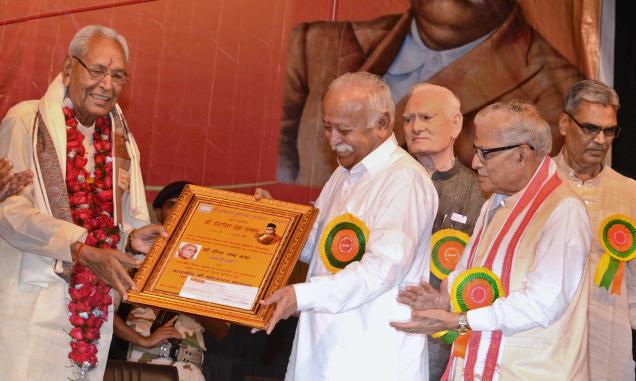
Rashtriya Swayamsevak Sangh (RSS) ideologue and activist Dinanath Batra“There should be an autonomous education policy and an Indian Education Services should be established along the lines of Indian Administrative Service. Nowadays, the subjects are taught in isolation. Teaching a subject should be seen as a contribution to the society and taught in a wholesome manner,” Rashtriya Swayamsevak Sangh (RSS) ideologue and activist Dinanath Batra recently said.

Speaking at a commemorative programme to mark RSS founder Keshav Baliram Hedgewar’s 125th birthday, Batra said that the Indian education system should be in the hands of technocrats instead of autocrats. Stressing that Sanskrit is not a dead language, he added that the language had “opened the flood gates of ancient Hindu knowledge.”

UGC can’t be easily junked: Education secretary

SN MohantyAfter the controversy raised by a panel set up by HRD minister Smriti Z Irani to review the working of the University Grants Commission (UGC), which said that UGC is a failure and therefore must be scrapped; Education Secretary SN Mohanty first said the ministry has not yet examined the report of the panel set up to suggest ways to revamp and restructure the regulator. “We are yet to go through the report much less analyse it,” he said, adding that the UGC cannot be unilaterally scrapped since it was created by an Act of Parliament.

Headed by former UGC chairperson Hari Gautam, the report talks of scrapping UGC and said, “It was felt that there was a necessity to create a new regulatory agency in place of the existing UGC. It seems to be the only alternative to achieve the desired objective rather than get entangled into repairing or re-engineering the present system.”

In page 84, the report highlighted, “It was felt that any reshaping or restructuring of UGC shall be more or less a futile attempt. Likewise any effort to amend the existing UGC Act shall be redundant exercise.” It further said, “Instead, the committee has therefore proposed that another autonomous powerful regulatory body in the name of National Higher Education Authority be created in place of present UGC.”

Furthermore, the report said: “Until such time the new Act of National Higher Education Authority is enacted by Parliament, the committee decided not to leave the present UGC as such but considered it necessary to revamp and remodel it into a changed organization with much improved functions.”

A member of the committee said, “Considering the decline of UGC in the last three years, it is imperative that the change should be immediate.”

Choice-based credit system by BAMU

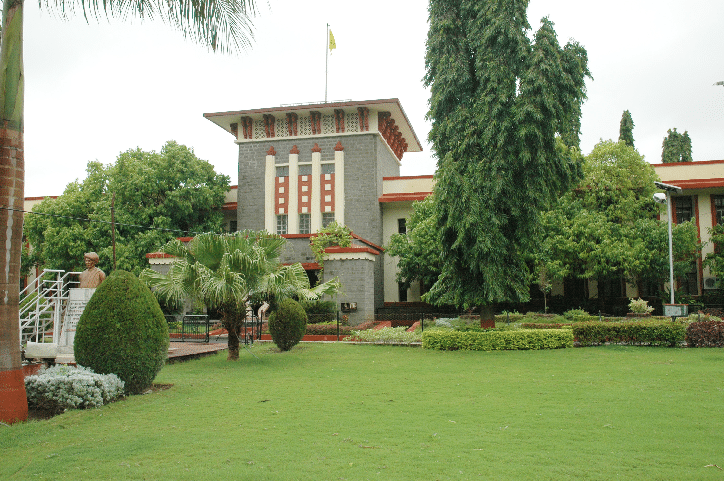
Dr Babasaheb Ambedkar Marathwada UniversityDr Babasaheb Ambedkar Marathwada University (BAMU) has initiated few tough measures like appointment of principals in non-granted affiliated colleges, disaffiliating institutes who do not have staff as per sanctioned number of posts for postgraduate sections. This is part of its resolve for introducing the choice-based credit system (CBCS) from 2015-16.

At a meeting of deans of all faculties and members of board of studies from different steams to discuss the road-map for implementing CBCS, BAMU Vice-Chancellor B A Chopade said that the system is must for preparing the students for competition at the global level. “Teachers will have to play a crucial role in implementation of CBCS. If we aim that our students develop an edge in today’s global completion, teachers should adapt to the system,” he said, highlighting the directives from the University Grants Commission (UGC) for ensuring implementation of the CBCS from 2015-16.

K V Kale, Director of Board of College and University Development (BCUD) of BAMUsaid the initiative would have to focus on admission criteria, overall syllabus, marking scheme and passing criteria. “The teachers and college authorities will have to understand what the CBCS means and respond to the proposed changes positively. Such positive outlook will be key towards successful implementation of the initiative,” he said.

Private schools flouting admission norms: AAP

schoolClaiming that private schools have been flouting admission norms, a delegation of Aam Aadmi Party (AAP) Noida members on Wednesday met officials of the district administration and talked to them regarding the same. They claimed that the schools have been increasing the annual tuition fee without consulting parents and also refusing admission to poor children under the Economic Weaker Section (EWS) category.

It was claimed by Narendra Kumar Yadav, convener of AAP Noida, that last month he took an EWS student to a school but the school management slammed its doors without listening to them. “The Noida Authority allotted land to the schools on the latter’s promise that they will offer 25% seats for students of the EWS category. No school discloses how many students they admit under the EWS category,” Yadav said. Yadav also said that the schools revised the tuition fee annually without consulting parents.

The managements of the schools, however, maintained that the tuition fee increment is an annual exercise done in accordance with the government norms. The fee is increased by up to 10% each academic year which they argue is directly proportional to the dearness allowance (DA) given to the teaching and non-teaching staff.

Meanwhile, parents feel that it is very difficult to get readmission in city schools in the event of migration.

Furthermore, the AAP workers submitted a memorandum in the office of the district magistrate, N P Singh, as he was not available. The officials have assured that a meeting will be convened next week with school officials to discuss the issues.

Mufti Mohammad emphasises on designing education structure

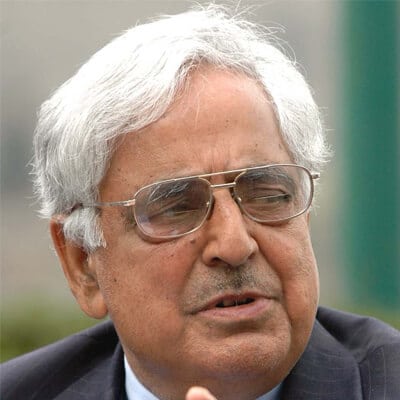
mufti-mohammad-sayeedAt a convocation ceremony held at the University of Jammu and Kashmir to felicitate Bharat Ratna and internationally acclaimed scientific researcher CNR Rao, Chief Minister Mufti Mohammad Sayeed highlighted the need to revamp the education sector in Jammu and Kashmir, which will be more research oriented.

Praising the university in promoting advance research in science Sayeed stressed the need to improve the standards and quality of higher education in the State.

The CM also proposed that the universities and higher education institutes should develop knowledge temper amongst aspiring students and shared his dream of making J&K a knowledge capital of the country.

He emphasised to make the schools attractive for children and parents. He has also urged the teachers to be a part of the knowledge movement that his government is about to launch. He asked the parents and teachers to play their role in meeting the challenges of global benchmarks in education sector.

Education not a priority in Gujarat Tribal areas

CAGIn its latest report of the social sector audit of the Gujarat government, Comptroller and Auditor General of India said that implementation of Right to Education (RTE) and other educational schemes in the tribal areas of Gujarat has been poor.

CAG audited Dahod, Dangs, Panchmahal, Tapi and Valsad districts and observed several loopholes in the funds granted to the State. Though the funds from center and state were released after bifurcation into general and tribal sub-plan (TSP) grants, no separate account of expenditure incurred under the two heads-general and TSP.

The report also highlights that the district project coordinators (DCPs) of Dang and Tapi districts had transferred the fund allocated for (SSA) Sarva Shiksha Abhiyan (INR24.46 Lakh in 2011-14) to Ashramshalas and Eklavya Model Residential schools of tribal development department. The SSA is a central scheme while the two are state sponsored schemes.

The CAG report also said that INR 89.55 crore allotted to the implementing agency under the Rashtriya Madhyamik Shiksha Abhiyan (RMSA) as advance were also shown as expenditure and incorrect expenditure figures were reported to the central government.

The report also noted that 64 schools with strength of 5,698 students had no teachers while 874 schools had only one teacher each. Three schools in Valsad district with strength of 156 students from Scheduled Tribes had no teachers and 111 out of 6163 schools had only one teacher.

The report also found that Kasturba Gandhi Balika Vidyalaya was running from a private rented building and did not have infrastructure facilities.

LATEST NEWS