


Home Blog Page 888

Government eyes innovation labs in all districts

In a move that could go a long way in encouraging research at the school and university levels, the government is in plans to set up innovation labs in every district. The idea is to enable students to think of new ideas which will be funded by the government under the ‘Rashtriya Aavishkar Abhiyaan’ programme.

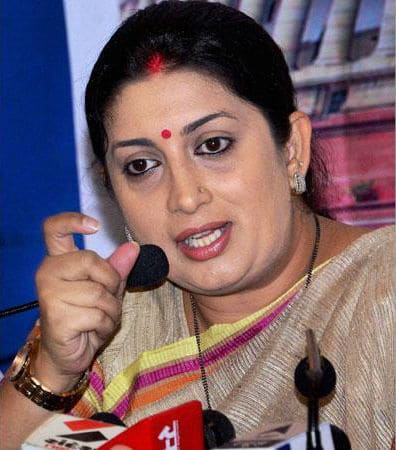
“These labs will be linked to the proposed council of higher education on industry academia collaboration so that innovation that has the potential to turn into great business does not die,” Human Resource Development minister Smriti Irani said in New Delhi. The ministry is also in plans to start a fund which will support such innovations and is expected to be launched by early 2015.

Irani further informed that the government also intends to scale up the employability potential of the youth as they have a lot of expectations from the BJP regime. To realise such objectives, she said her ministry has proposed to set up the council for higher education on industry academia collaboration.

New and improved: MHRD unveils its new website

The Human Resource Development ministry has unveiled a new website that promises to be improved and more interactive. The website was inaugurated by the HRD minister Smriti Irani in New Delhi on Tuesday, September 30.

The website has Swachchh Bharat Shwachchh Vidyalaya as its opening theme with Prime Minister Narendra Modi’s message to pledge for a clean India on the 150th birth anniversary of Mahatma Gandhi. The ministry claims the website will be a tool for empowerment towards ensuring better and speedy delivery of educational facilities to the students.

The newly-developed website also provides links to important government websites and various social media platforms like Facebook, YouTube and Twitter on which the HRD ministry is active. It also provides details regarding important schemes being undertaken by the like the Sarva Shiksha Abhiyaan, Mid Day Meal Scheme and Rashtriya Madhyamik Siksha Abhiyan.

In the coming days, the website is also expected to provide real time details of school infrastructure, staff strength, courses and even details of toilet facilities. Sources stated that the website would have all requisite information regarding facilities at educational institutions located across the country. The interactive website also has a students and a teachers corner through which these two fraternities can interact with the government.

A separate link has also been provided for grievance redressal. The website is expected help ensure in prompt and smooth grievance redressal mechanism in the education sector. It was also felt that this mechanism would ensure a more active and vital participatory role that would be played by the parents of students.

To make this project a success, the HRD Ministry has sought data from all state governments, which would be processed and put on the interactive website. The data collected through the website is expected to also help the Central government in ensuring proper utilisation of funds and better policy preparedness.

Oracle partners with leading universities for Oracle Student Cloud

OracleSoftware giant Oracle has partnered with leading universities to design and develop its Oracle Student Cloud. Oracle had announced the Oracle Student Cloud, a new cloud-based student information system earlier this year for its higher education solutions portfolio. To that end, it has started the Oracle Customer Strategic Design Program with leading educational institutes like Embry-Riddle Aeronautical University, University of Texas System, and University of Wisconsin–Madison. These partners will provide guidance and domain expertise that will help shape the design and development of Oracle Student Cloud.
Oracle also joined Internet2, a not-for-profit organization that fosters collaboration among research and education organizations and industry technology leaders to develop innovative solutions that address today’s higher education technology challenges. Oracle plans to certify and offer its Oracle Higher Education Cloud – including Oracle Student Cloud, infrastructure-as-a-service, and platform-as-a-service—through the Internet2 NET+ service program.
Each university will work with Oracle through significant milestones and releases, providing guidance and expertise to develop an industry-leading product. The growth of nontraditional programs is an important trend for these customers, and the first release of Oracle Student Cloud is expected to include flexible core structures and an extensible architecture to manage a variety of traditional and nontraditional educational offerings.
Oracle Student Cloud will feature a compelling mobile user interface that enables customers to extend, brand, and differentiate the student experience for each institution.
The first phase of Oracle Student Cloud is designed to support the core capabilities of enrollment, payment, and assessment. Oracle Student Cloud will embed CRM-based functionality throughout the solution to promote engagement and collaboration, along with a business intelligence foundation to provide customers with actionable insight into their student operations.
Oracle continues to invest in cloud services for higher education, with products available today that support grants management, budgetary control, encumbrance accounting, talent management, and CRM solutions for student recruiting, retention, and customer service.
Oracle’s higher education solutions provide customers with the flexibility to run student and Oracle Enterprise Resource (Oracle ERP) systems on premises and in the cloud. Oracle Student Cloud will be designed as part of a unified system that integrates with Oracle Human Capital Management Cloud and Oracle Enterprise Resource Planning Cloud for increased institution-wide visibility, efficiency, and performance.

Swachh Bharat Abhiyan: Glimmer of hope or playing it to the gallery?

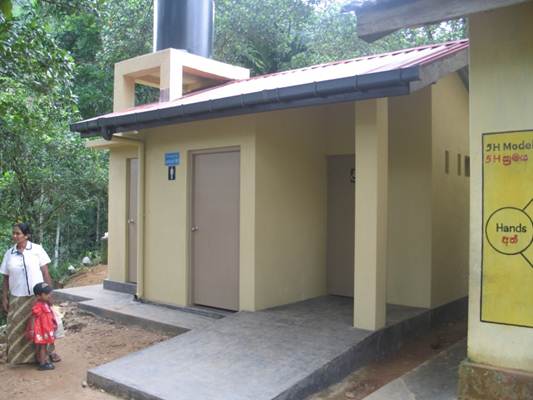
swachh-bharatPrime Minister Narendra Modi called for providing toilets for girls in schools in his first Independence Day speech from the ramparts of the Red Fort. Later, raising the bar, he gave a call for a “Swachh Bharat Abhiyan”, which has prompted a few corporates and PSUs to build toilets in schools across the country. Modi seems to echo the sentiments of India’s first Prime Minister Jawaharlal Nehru, who once said: ‘‘The day every one of us gets a toilet to use, I shall know that our country has reached the pinnacle of progress.” His successors, however, did not perhaps see things in the same light.

As a result, India still practises open defecation.

Let’s consider the following:

• Thanks to open defecation, 21 percent of communicable diseases in India are water-related

• More than 100,000 Indians die every year due to diarrhoea

• About 88 percent of diarrhoea cases are linked to lack of water and sanitation

• India carries the highest burden of mosquito-borne diseases, with 24 million cases

• 14.8 million are affected by dysentery in India

• Rampant worm infestation and repeated diarrhoea episodes result in widespread child malnutrition

• 11 out of 28 states are in the grip of cholera outbreaks for three consecutive years

• Annually, nearly 600,000 children below 18 have lost their lives to diarrhoea and pneumonia

• India is also home to the largest number of stunted children in the world.

According to the 2011 Census, toilets are still a pipe dream in an overwhelming 69.3 percent of rural India and 18.6 percent urban areas, compared to the ownership of mobile phones and television sets; as a result, nearly 50 percent of India’s 122.9 million households practise open defecation.

In his book “Billions of Entrepreneurs: How China And India Are Reshaping Their Futures And Yours”, Tarun Khanna observes the toilet revolution in India is gathering steam but has miles to go before India will become open defecation free.

In this backdrop, does the Prime Minister’s Swachh Bharat Abhiyan come as a glimmer of hope, or just another bid to play it to the gallery? What’s your take? Share it with us…and let people know what you think.

BMC to teach children disaster management

Mumbai’s Brihanmumbai Municipal Corporation (BMC) plans to have miniature disaster management cells in some of the biggest civic schools in the city, depending on their geographical location, size and the kind of calamities and diseases they are prone to. It will then train 5,000 students and 1,000 teachers in its schools in controlling and operating the cells.

Private schools and smaller municipal schools can then avail of the facilities and services of the trained students and teachers.

“In the recent flood thousands of our students were stranded in schools or in buses. Now, we want them to be capable enough to tackle such a situation in the future,” said A Karande, BMC deputy municipal commissioner, education. Drills would be conducted round the year, except during examination months, she added.

The training, set to start next month, will have students performing mock drills, conducted with the help of the BMC’s disaster management cell, fire brigade officials, health officials, and disaster management experts.

The students will also be provided with disaster management manuals in various languages and equipment to help them tackle flood or a landslide.

Many schools have welcomed the BMC initiative. Shobdha Patil,  deputy principal of Prabhadevi Municipal Marathi School, said after the deluge the kids were sacred and needed this kind of move to instill confidence in them. “The BMC should take parents of the kids also into confidence during the programme,” she said.

However, not all are optimistic about the success of the programme. “Why are they closing the gate after the horse has left the stable? There is no serious thinking going behind the programme,” said Ramesh Joshi, general secretary of the Brihanmumbai Mahapalika Shikshak Sabha.

Two years ago the BMC had conducted an earthquake simulation training programme to teach children ways to handle an earthquake. The BMC has nearly 5,30,540 students in its 2,000 schools in the city. It also employs some 13,660 teachers in these schools.

School Education Board Secretary’s degree invalid: Punjab Govt to HC

An affidavit filed before the Punjab and Haryana High Court states has cast a shadow on the educational qualifications of Gurinder Pal Singh Bath, the state’s Secretary of the Punjab School Education Board (PSEB).

According to the affidavit filed by Anjali Bhawra, Principal Secretary, Education, Punjab, the MTech degree of PSEB secretary Gurinder Pal Singh Bath is “not valid and admissible”. The affidavit was filed in response to a petition filed by Malwinder Singh, a social studies master, challenging the appointment of Bath as PSEB secretary, on the grounds that his MTech degree acquired through distance mode was not valid.

Bhawra informed the court that the state government had directed the education board to reconsider Bath’s appointment, and file amended reply before the HC after taking action. In her affidavit, Bhawra stated, “On the basis of correspondence with the All India Council for Technical Education, Punjab Technical Education, and University Grants Commission, the government observed that the MTech degree obtained by Gurinder Pal Singh, as a bonafide student from Aggarwal College, Mohali, through distance education mode from Karnataka State Open University, is not valid and admissible.”

Bhawra submitted, “The state government on August 25 also issued instructions to the PSEB to reconsider his appointment to the post of secretary, PSEB, and to file an amended reply before the HC after taking necessary action.” The petition now comes up for hearing on September 29.

Bar Council of India derecognises DU’s law course

Bar CouncilThe Bar Council of India (BCI) has decided to derecognise the law course run by Delhi University (DU) at its three centres, namely Campus Law Centre, Law Centre-1 and Law Centre-2. According to the decision by the the apex regulatory body for law education and the legal profession in India,  students admitted in these centres from 2011-12 onwards won’t be eligible to be enrolled as advocates and can’t practice.

On Monday, BCI announced its decision through a letter sent to the vice chancellor of DU and to all state bar councils, including that of Delhi. Law graduates from Delhi University (DU) have now been left in the lurch in wake of this unprecedented decision.

“In absence of extension of approval of affiliation of these law centres, the students who were admitted in the sessions 2011-12 onward and passed out from the academic year 2013-14 are not eligible for enrollment as advocates. You are therefore advised to take appropriate action with regard to these law centres and inform BCI about steps taken in this regard immediately,” the BCI letter to DU says.

Sources said that BCI was forced to act after DU failed to respond to repeated reminders on extension of affiliation beyond the academic year 2010-11. A communication on behalf of the BCI was sent to the three centres in July 2010 for the first time that DU must seek approval and throw open its centres for BCI’s inspection.

“In spite of the said communication the law centres have not applied to the council for extension of approval of affiliation,” BCI has added saying Legal Education Rules 2008 have not been followed by DU, inviting de-recognition.

As per the Rules, a law college/law school/institution that has not been inspected for a continuous period of 5 years shall have to apply afresh to the BCI and seek approval of affiliation on or before July 31, 2010. Those colleges which fail to apply lose the right to impart legal degree.

Educationists resist draft NCTE regulations

ncteA section of educationists have put up a stiff resistance to the proposed ruled rules that seek to change the curriculum of the Bachelor of Elementary Education. The draft National Council for Teacher Education (Recognition Norms & Procedure) Regulations, 2014, saw some stiff resistance from some members of the Council at its meeting in New Delhi September 25.

What has particularly upset a section of educationists is the bid to change the curriculum of the Bachelor of Elementary Education (B.El.Ed).

According to some members, the draft circulated a couple of days ahead of the meeting seeks to supersede the 2007 regulations. The draft, according to some academics, was prepared without the approval of the NCTE Council and runs “contrary’’ to the report submitted by the Norms Committee (set up as mandated by the Justice Verma Committee on Teacher Education constituted by the Supreme Court) which had laid down norms for all teacher education courses including B.Ed and M.Ed.

The NCTE meeting that was held to push for its own norms went on for several hours but remained inconclusive and is now likely to reconvene today.

School body serves Maharashtra Government notice over RTE funds

rte_girl_pic_facenfacts_comIn the latest in the ongoing war over the Right to Education (RTE) Act between private schools and the government, the Maharashtra English School Trustees Association (Mesta), a body of English medium schools in the state, has sent a legal notice to the state government on Monday for having failed to pay fees for the past three years.

MESTA has alleged that the state has failed to pay them roughly Rs 100 crore for the education of underprivileged kids mandated in the RTE Act. As a result, schools say that they have been facing difficulties in their daily functioning due to a financial crunch. Schools have now sought a response from the government within seven days, failing which they have threatened to move court.

The Right to Education (RTE) Act, 2009, which allows free and compulsory education for children in the age group of 6-14 years, keeps 25 per cent seats in all private schools reserved for children coming from an underprivileged background. These kids are given free education with the government paying for it.

But, for the past three years, no school has received the promised reimbursement. Private schools, as a result, are finding it difficult to run due to the financial crunch. The legal notice has been sent to the Chief minister, Education minister, Chief secretary, Education secretary, Education commissioner and Director of Primary Education.

The government has decided to reimburse the fixed amount of Rs 14,000 per student per year. Each school has admitted around 50-100 students under RTE. But, none has got any reimbursement for three years, thereby creating a major financial crunch. Roughly calculated, the government owes around Rs 100 crore to all schools across the state.

UGC to get MHRD backing in Symbiosis stand-off

UGC

UGCThe University Grants Commission is likely to get the support of the Ministry of Human Resource Development for its decision to deny permission to Pune-based Symbiosis University to set up an off-campus center in Hyderabad. The UGC decision that came earlier this week is the second time that the education regulator has denied this permission to the deemed university.

Symbiosis had approached the Supreme Court after it was denied permission to set up an off-campus in Telangana earlier this year. Last week, while hearing a petition by Symbiosis, the apex court had pulled up the UGC for allowing the HRD Ministry to be involved in the decision-making process and asked the UGC to take a re-look into the university’s proposal. The UGC, however, stuck to its decision to deny permission.

In a likely turn of events, the HRD ministry is now learnt to have decided to endorse the UGC’s decision, although an official communication to this effect has not been received by the ministry yet.  The UGC had claimed its decision was in view of the ministry’s policy on deemed universities and their expansion. It had also considered reports by the UGC expert committee, the All India Council for Technical Education and the Bar Council of India (BCI).

Symbiosis University has now challenged the UGC’s latest decision in court as well.

LATEST NEWS