Home Blog Page 924

Punjab to check ragging with stringent steps

RAGGING

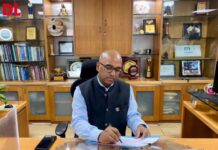
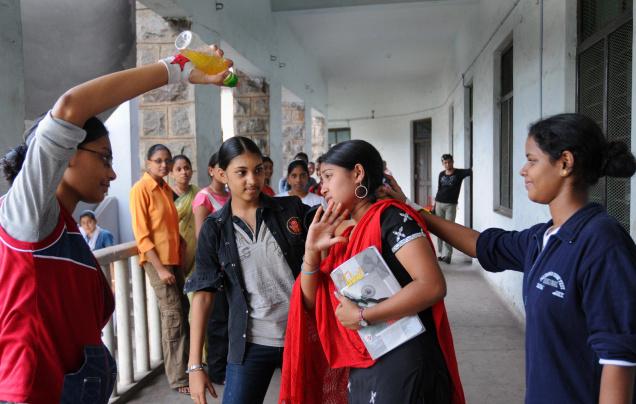
Punjab Higher Education Minister Surjit Singh Rakhra asked the Secretary, Higher Education, to communicate to all educational institutions that for any incident of ragging in any college or university, the institutional head would be held accountable.

The higher education minister directed the administration of colleges as well as universities to make it compulsory for students and their parents to submit the anti-ragging affidavit during the course of admission. Those found guilty will be penalised as per guidelines drawn by the University Grants Commission (UGC). Rakhra also ordered the institutions to start a separate anti-ragging helpline and help desk for students.

MIT’s Sloan to invite PM Modi to deliver keynote address

PM Modi

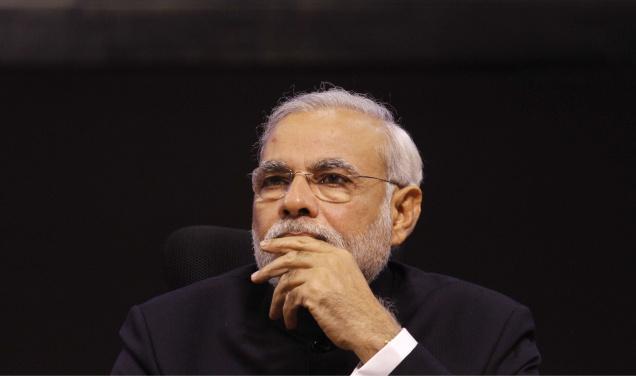
Massachusetts Institute of Technology’s (MIT) Sloan School of Management is planning to invite India’s new Prime Minister Narendra Modi to deliver the keynote address. Potentially it is the first among the top-ranked American business schools to do so after the Wharton Business School’s India Economic Forum unceremoniously cancelled the then Gujarat chief minister’s keynote address last year.

“The process is under way to invite the prime minister this year or the first half of 2015. Ultimately, it will depend on the mutual convenience of the Prime Minister and the MIT president. So, a firm date is hard to forecast right now,” said S P Kothari, deputy dean, Sloan School of Management.

A few other leading US universities have indicated that they may not be averse to inviting Prime Minister Modi for future conferences and events. “Yale frequently and regularly hosts visits and speeches by heads of state, public figures, thought leaders, and others. We have no official policy on who may or may not be invited to campus,” said George Joseph, director for international relations and leadership programmes at Yale University.

“Like people around the world, we at Yale were awed by the exercise of 815 million voters participating in the general elections and we wish the Indian government and the Indian people the very best in meeting the enormous potential that India possesses.”

Buoyed by Modi’s elevation as India’s Prime Minister, organisers of last year’s India Economic Forum at Wharton expect the institution to issue an apology and perhaps extend another invite to Modi. The forum had last year invited Modi to deliver the keynote address via video conference, before cancelling the invitation in the face of protests over his alleged role in 2002 riots in Gujarat. The forum had also invited Aam Aadmi Party leader Arvind Kejriwal at the same time last year. The Adani Group had cancelled its sponsorship of the event following the controversy.

Quota sop for Marathas planned

Narayan Rane

Offering sop for Marathas, the Congress-NCP government in the state has accepted the recommendation that 20 per cent seats in government jobs and educational institutions should be reserved for the Maratha community.

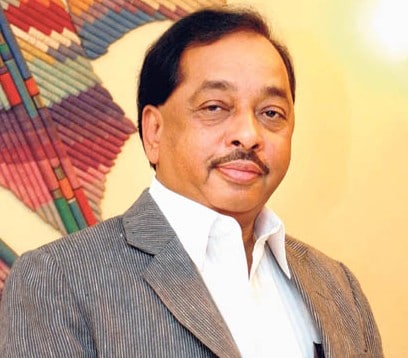
“The government is going to announce the reservation in just a few days. My recommendations have been accepted,” Maharashtra Industries Minister Narayan Rane said.

“The discussion happened in Cabinet and all approved it.” The Narayan Rane Committee’s recommendation on quota for Marathas was discussed in the last session of the state Assembly, before the Lok Sabha polls. Sources said though the Assembly had virtually given consent, the chief minister had decided to seek a legal view on the issue. Announcement was also held up because of the Election Commission’s Model Code of Conduct.

Experts say while there may be some major legal hurdles in the implementation of such a quota, the political leadership wants to make the announcement to show that it has kept its promise. The state government is also mulling whether economically backward sections among Muslims can be included in this quota.

Some leaders, however, see it as a campaign gimmick ahead of Assembly elections.

This is a carrot the Congress and NCP are dangling before the Maratha community only because of Assembly elections. We don’t think it will be actually implemented,” said Vinayak Mete, leader of Maratha organisation Shiv Sangram. Mete was part of the Congress-NCP alliance, but he crossed over to the BJP-Shiv Sena alliance before the Lok Sabha polls.

Analyst Kumar Ketkar said, “The Maratha community got upset with Sharad Pawar ever since he renamed the Aurangabad-based university from Marathwada University to Dr Ambedkar Marathwada University.

The Marathas didn’t like it since the name was changed despite their resistance. Pawar’s NCP and the Congress have been trying to woo them back.

Poor infrastructure irks new IITs, IIMs

IITs poor infrastructure

Infrastructure problems continue to hamper the higher education sector even as the government moves ahead on its ambitious plans of ‘one IIT, one IIM in every state’. Problems and delays with infrastructure — construction of campuses — continues to be an issue for the ‘new’ Central Universities, IITs and IIMs. Some of these institutions have been operational for nearly five years now. The delays will require higher-than-sanctioned outlays, in some cases more than double the initial cost.

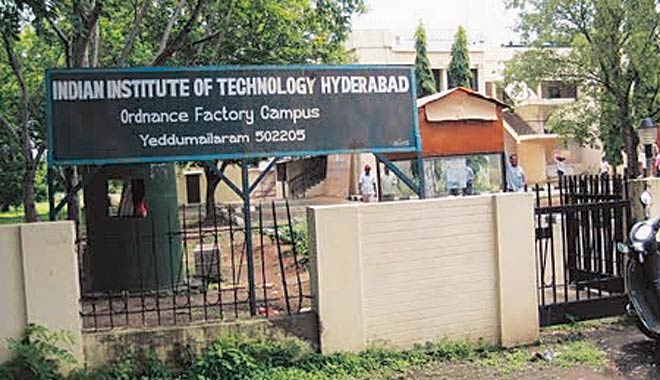
Eight new IITs — that were set up in 2009 — continue to operate out of temporary premises. Construction of permanent campuses for IITs at Hyderabad, Mandi, Bhubaneswar, Patna and Gandhinagar are underway, while construction of campuses for the remaining three IITs at Ropar, Jodhpur and Indore are yet to commence.

Escalation of construction costs is a major issue for the new IITs. The detailed project report for the eight new IITs, prepared in 2008 and approved by the Cabinet in July 2008, put the total cost at Rs 6,080 crore. However, delays in allotment of land, revision of CPWD rates led to major escalation in costs — more than double the original budget — it is now estimated at Rs 15,565 crore.

The revised costs are yet to be approved by the Expenditure Finance Committee. Sources indicate that the new IITs proposed by this government will come at a cost of Rs 1,800 crore each over a five-year period.

Of the seven new IIMs that were set up between 2008-09 and 2011-12, the ministry found that infrastructure-related issues persist with three of the IIMs — at Ranchi, Rohtak and Udaipur. At that time, the Centre decided to expand the IIM network, it was decided that state governments would provide land free of cost and encumbrances to the new IIMs in the respective states. As of now, all barring the IIM at Ranchi have been allocated land.

The Jharkhand government had in July 2013 approved nearly 95 acre for the IIM, Ranchi, however, in order to expedite construction, the state government needs to acquire and transfer 4.22 acre of land. IIM Rohtak, which was sanctioned in 2010-11, was issued a change in land use certificate by the Haryana state government on June 9, 2014, and now needs to fast-track environmental clearance from the state authorities so that construction can begin.

While construction of the permanent campus of IIM Udaipur has hit a legal roadblock over the allotted land. This is something that the state government will have to address. There are residual infrastructure issues with new central universities as well. The central university in Prime Minister Narendra Modi’s home state, which has been in existence for five years now, continues to operate from a temporary campus.

However, in this case, it is not the central government that has been laggard — the Gujarat government had not made land available for the university. Two sites were offered by the states, which were reviewed by the central site selection committee in February and recommendations have been submitted. Other new central universities with outstanding issues include Central University of Himachal Pradesh, for which forest clearance needs to be expedited, rehabilitation and compensation issues for the Central University of Tamil Nadu.


Small states perform well again in education development index

education development index

Small states and Union territories like Puducherry, Lakshadweep, Sikkim and Himachal Pradesh continued to perform well in the latest education development index on learning outcome and quality of teachers, a government study said.

While Puducherry occupied the pole position, Lakshadweep was at the second place and Sikkim occupied the third position in the study based on four constituents such as access, infrastructure, teachers and outcomes.

The flash statistics 2013-14 for elementary education in India, prepared by National University of Educational Planning and Administration, were released by HRD Minister Smriti Irani.

Lakshadweep had occupied the first position in the last report followed by Puducherry while Sikkim was at the fourth place.

The educational development index of the states took into account the progress made both at the primary and upper primary level.

Karnataka, Delhi, Tamil Nadu, Gujarat, Kerala and Punjab also figured in the top 10 list compiled annually. Delhi was ranked sixth.

The report covered 1.45 million schools spread over 662 districts across all states and UTs.

Uttar Pradesh was at the bottom of the education development index at the 35th place while Bihar was ranked 34th, Jharkhand 33rd and West Bengal at the 32nd place.

Among the big states, Madhya Pradesh was ranked 31st, Rajasthan 23rd and Maharashtra 13th place.

UK delegation meets Haryana govt for cooperation in education

OLYMPUS DIGITAL CAMERA

A United Kingdom delegation met Haryana government on Monday for cooperation in various fields like education, health and waste management.

The delegation led by British Deputy High Commissioner (Northwest India) David Lelliott called on Haryana Chief Secretary S C Chaudhary and held a detailed discussion on diverse issues for mutual cooperation, stated an official release.

Lelliott said they had fruitful discussions on diverse issues related to education and skill development, health, waste management and were keen to take forward these initiatives, it said.

According to the release, Corporate Director of Development (Nottingham City Council) David Bishop said Nottingham has an efficient and widespread transport system and state-of-the-art infrastructure facilities. There was tremendous scope for co-operation and partnership with Haryana, he said.

The delegation extended invitation for a visit by the state delegation to the UK, especially Nottingham region, for a detailed information and insight about various projects and infrastructure facilities there.

Haryana Chief Secretary briefed the delegation about the demographic and geographic features of the region, saying the state has a developed economy with growing services and industrial sectors.

“A lot of emphasis has been laid by the state government on healthcare, education and skill development, affordable low-cost housing, renewable energy, water and waste management and agriculture sector,” he said.

Chaudhary said the state would welcome initiatives from the UK, which would benefit it in these and other sectors.

MD of Haryana State Industrial and Infrastructure Development Corporation Tarun Bajaj explained the delegation about the initiatives taken by the state government for industrial and infrastructure development.

Sunstone launches ‘Pay after Placement’ for MBA students

Sunstone

Sunstone Eduversity has launched ‘Pay after Placement’ MBA programme, a revolutionary performance-based MBA programme for deserving candidates. The programme demands fee only after student is able to get placement. Hence, college is taking full responsibility of student’s future.

Currently, this programme is available at Sunstone’s four campuses in Greater Noida and Ghaziabad. The programme is already becoming very popular.

“Within few days of its soft launch, Sunstone has received tremendous response with more than 200 candidates applying in a week. More importantly, these are good candidates, who were not able to take MBA education decision due to financial risks and mistrust. It certainly increases our risks, but at least, we are able to provide the right confidence to our students. We are proud to be the pioneer and would expect more institutions to solve this issue from a student’s perspective,” Nituj Gupta, Managing Director , Sunstone told digitalLEARNING.

A lot of concerns have been raised about the Indian MBA education system primarily due to lower employability of MBA graduates. Approximately four lakh students graduate every year from regular MBA programmes of which around three lakh of these students are not employable today because they lack the skills needed by the industry. Poor performance of MBA colleges has increased the mistrust among students.

It’s tricky to sign up for a Rs 5-6 lakh fee when you aren’t even sure about a job after completion. ‘Pay after placement’ MBA programme by Sunstone Eduversity is improving this ecosystem in multiple ways asserted Gupta, the brain behind the
launch.

First, it reduces the financial risks and encourages right candidates to pursue MBA. An investment or a loan is very easily justifiable when a student can be confident of cash flows in future.

Secondly, it rebuilds the lost trust between MBA colleges and MBA students as they work towards the common goal. This model ensures that a college does not make false promises.

Significantly, this model brings paradigm shift in MBA programme to be industry-relevant. “It’s not that our industry doesn’t create jobs for young management graduates. It’s the skill gap that obstructs their career path. This fee arrangement makes ‘career’ as the final outcome, rather than a paper degree,” noted Rajul Garg, Founder and Director, Sunstone Eduversity.

10 Indian universities in Top 100 Asian university rankings

Punjab University

Japan and China continue their dominance in Times Higher Education (THE) Asia University Rankings 2014 with Panjab University representing India at 32nd place. Last year, India just had 3 educational institutes in top 100 list, but this time 10 institutions have made it to the list. 

After Punjab University, there are six Indian Institutes of Technology, with IIT-Kharagpur placed at 45th. Jadavpur University, new entrant, attained 76th position, while Aligarh Muslim University stood at 80th and Jawaharlal Nehru University at 90th place. Ashok Thakur, India’s secretary for higher education, ministry of human resource development stated that debate on whether or not India should engage with global university rankings has attained positive resolution. 

Thakur added that it has been made possible by Pranab Mukherjee, President of India, who made it clear that as a matter of policy, all institutions across the country have to participate in the ranking process. The collection and sharing of authenticate global performance data is expected to allow Indian universities to reach the global stage.

Muslim enrolment in schools witnesses marginal increase

muslim students

Muslim enrolment in schools witnessed a marginal increase whereas SC/ST community enrolment has slightly declined. However, kids belonging to Other Backward Classes have shown a perceptible increase in school enrolment. 

As per data of 2013-14 released by HRD minister Smriti Irani, Educational Development Index shows Puducherry at number one spot, followed by Lakshadweep, Tamil Nadu, Himachal Pradesh and New Delhi. Surprisingly, more than 60 percent of enrolment has taken place in government schools inspite of increasing privatisation of school education. 35.81 percent enrolment happened in private managements, 27.8 percent in private unaided schools, a little over 8 percent in private aided schools and over 2 percent in unrecognised schools. Government aided schools with private management were popular in states like Goa (63.03 percent), Kerala (42.36 percent) and Maharashtra (37.8 percent). Data revealed that at primary level, Muslim enrolment increased marginally to 14. 35 percent from 14.20 percent in 2012-13. 

At the upper primary level, enrolment increased from 12.11 percent last year to 12.52 percent this year. In states like Gujarat, West Bengal and Uttar Pradesh, there has been a gradual increase in enrolment. However, in Uttarakhand, there has been a marginal decline in Muslim enrolment. Girl enrolment has remained unchanged at 49 percent at both primary and upper primary level. 
OBC enrolment increased to 44.1 percent from 42.9 percent at primary level while enrolment at the upper primary level went up to 44.44 percent from 43.66 percent last year. Significant increase can be witnessed in Kerala, West Bengal and Puducherry. Girls constitute approximately half of enrolment at primary as well as upper primary levels. 

Enrolment of SC children declined to 19.72 percent from 20.24 percent at both primary and upper primary levels. Marginal decline in SC enrolment has been registered in states like Uttar Pradesh, Bihar, Maharashtra and Madhya Pradesh, excluding Himachal Pradesh and West Bengal. The recent data for 2013-14 also revealed that the percentage of teachers involved in non-teaching assignments to total teachers has declined. 2.48 percent of teachers were not involved in teaching assignment that cost 16 working days. Number of days lost remain unchanged, but percentage of teachers involoved in such work has declined substantially from 5.49 percent from last year.

Helpline, portal to gather feedback for education dept

Punjab government launches toll free helpline for public to monitor activities on education dept

Punjab government has decided to launch a 24×7 toll free number and a web portal to get feedback from public regarding the policies and activities of education department.
Education Minister Dr Daljit Singh Cheema said that this toll free number has been conceived in line with the helpline run by the police department. The web portals can also be used by panchayats to post their queries, suggestions and complaints.

The department officials are instructed to have coordination with the welfare department and ensure the reach of scholarship schemes at the grassroot level. 
A committee has also been formed to ensure the timely disposal of court cases, which would help people to save their time, money and would ensure the welfare of the employees.

LATEST NEWS