




Home Blog Page 1011

Cyberfort Technologies Offers Skill-based Employable Courses

Amit Kumar,
President, Cyberfort Technologies

Cyberfort Technologies is a Boutique Training and Consulting Firm specialising in Information Security and financial technology. Cyberfort technologies was inaugurated in World Education Summit held in Le-Meridian, New Delhi,2013 (www.cyberfort.org), in the presence of eminent laureates and educationist from across the world. CYBERFORT Technologies is ISO 9001:2008 and ISO 27001:2005 certified and is an accredited member of IADL, UK and US DLA. Cyberfort Technologies provides niche and hi-tech certification courseware globally via virtual and instructor – led teaching modules. Cyberfort Technologies has strategic alliances with Mahatma Gandhi University, India (UGCAICTE- DEC approved) and EC-Council (world’s largest certification body for Cyber security professionals) for imparting high quality graduate/postgraduate and professional certifications in Information and financial technology.
Information security is a stable and growing profession – Information security professionals are very stable in their employment; more than 80 percent had no change in employer or employment in the past year, and the number of professionals is projected to continuously grow more than 11 percent annually over the next five years.
Certification of knowledge drives salaries higher – the salary gap between certified cyber security professionals and non-certified professionals is widening. Information security professionals in US have average salaries of USD 80,000. In India, a beginner can expect a pay package of up to `6 lakh per annum. Professionals with higher academic qualifications and work experience can draw up to ` 30 lakhs. Salaries are at least 20-30 percent higher than for most other positions at the same level in other fields of IT. Typically, salaries get doubled within two years due to huge demand of skilled manpower in this sector.
Even with past annual growth in the double-digits, workforce shortage persists. The impact of shortage is the greatest on the existing workforce. India alone needs at least five lakh cyber security professionals by the year 2015.

Career in Algo-Trading
Algorithmic trading can be defined as placing a buy or sell order of a defined quantity into a quantitative model that automatically generates the timing of orders and the size of orders based on goals specified by the parameters and constraints of the algorithm. The rules built into the model attempt to determine the optimal time for an order to be placed that will cause the least amount of impact on the price of the financial instrument. Algo trading is a way to codify a trader’s execution strategy. Algo trading or computer-directed trading cuts down transaction costs and allows fund managers to take control of their own trading processes.
Algo trading is an automated facility where trading is carried out by computer driven algorithms designed by traders. Instead of the traders manually doing so, it is these algorithms that determine which orders – to buy or to sell – get booked. The high speed transactions can take as little as 18 microseconds – at which such trading takes place, gives it a competitive advantage over conventional manual trading. While a single trader can manually handle at best a portfolio of around `5 crore, an algo trader, working alone, can cope with `50 crore to `55 crore.
Algo trading started in India in 2005. But it was only in 2008, after the Securities and Exchange Board of India (SEBI) allowed Direct Market Access, or electronic interaction with the order books of exchanges, that this facility started gaining wide acceptance. Today, around 16 to 17 percent of trading on the Bombay Stock Exchange (BSE) and National Stock Exchange is algorithmic, with about 80 to 90 companies engaged in it. But many believe that in the next three to four years, the proportion could rise to 60 to 70 percent.

Content

• CYBERFORT TechnoLab’s programme textbooks and workbooks have been developed by experienced industry professionals to provide insight into the real-life ICT industry. Textbooks have been designed to provide theoretical and practical learning to the learner

• Each book starts by defining the learning objectives and providing sufficient reading material to ensure these objectives are met. Textbooks supplement the workbooks used by learners during classroom learning sessions

• Course material is simplified to ensure that learners with different learning capacities benefit equally from the content. Relevant examples help explain concepts in an easy-to-understand manner. Graphs, pictures and statistics are used extensively to illustrate the rationale for every concept explained

• The combination of instructor-led training + self-study courses and group exercises ensures that learners are elevated to a mindset of a professional

Courses at a glance

• MBA in Cyber Security
• MBA in Investment Banking
• BCA in Cyber Security
• BBA in Investment Banking
• Diploma in Cyber Security
• Diploma in Algo Trading
• Certificate in Cyber Security
• Certificate in Professional Trading

TechnoLab learning centers The Cyberfort TechnoLab learning centers across India are equipped with state-of-the-art technology to facilitate learning. Our industry experts use advanced learning tools to demonstrate real-time trends in advanced ICT to learners. Additionally, all learning centers are managed by dedicated managers who ensure that every need of the learner is met. They aim to create a collaborative learning environment that encourages knowledge creation and absorption. The learning centers provide the perfect blend of content and infrastructure thus enabling the learner to flourish.

Scope of the programme
A tremendous scope is available. Information security is one of the booming industries at the moment. Technologies offered at Cyberfort technologies are in high demand like Information Security & financial technology, Application Programming, Networking and Communication.
Our job-oriented diploma programs increase one’s chances in various domain specific areas, whereas the MBA program in cyber security and Investment Banking respectively gives an edge to enter directly in the mid level position of the industry domain.

Advantage of niche technology course
The entry-level salary is at least 20 percent higher as compared to other areas and the growth within the industry is much faster. Typically, the salary would get doubled within two years itself as there is a huge demand of skilled manpower in this sector.
Cyberfort technologies deliver innovative, leading-edge products, solutions, and services to customers worldwide. We are dedicated to advancing the discipline of cyber security through imagination, technical excellence, and unparalleled passion for our work.

Simplifying Teaching with Digital Content

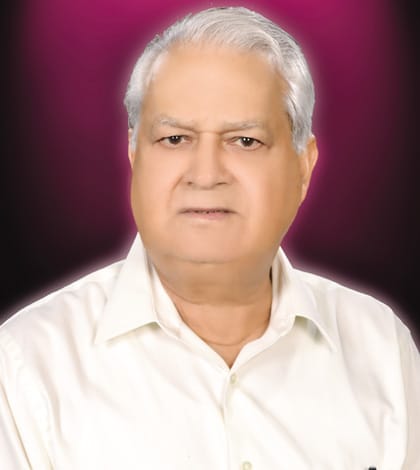
EducoSoft delivers digital content for K-12 students, teachers and self-learners. Dr Manmohan Sharma, Professor Emeritus, Clark Atlanta University (US) and President Educo International, speaks on the need of teachers’ empowerment through digital content that can help teachers make class discussions dynamic and interactive, in conversation with Pragya Gupta, ENN



Please share the genesis of Educo International.
Educo International was founded in 1985 to provide quality education tools, products and services globally. We have the vision to provide quality education solutions accessible anytime, anywhere with or without the availability of Internet access. Now we are delivering solutions through several options for the institution to chose from, including: 1) through Internet; 2) Internet based Lab licenses; 3) without Internet, through Local Area Network, and 4) now through a simple Pen Drive. If any of the first three options are used then it comes with comprehensive Learning Management System (LMS) with all the instructional management tools.
I have been in Education for over 50 years, about 30 years in US, and have held several senior academic and administrative positions in different universities in the USA and India. For the last three decades, I have been focusing on improving the quality of math and Science education by introducing technology solutions in teaching and learning.

How do you empower teachers?
We call ourselves to be academic solution provider. Our focus is on empowering teachers in the classroom as everything revolves around them. There is a scarcity of teachers, not even to talk of good teachers. Whatever we have can be made efficient enough to deliver quality education exploiting the power of digital content.
This is where efficiently delivered digital teaching resources can help improve the situation. We have tried to capture good pedagogy through dynamic graphics, appropriate animations, step-bystep presentations to make class room interactive using heuristics. Our Digital Teaching notes and assessment are seamlessly integrated for each and every concept of the curriculum that teachers are expected to follow.

Do you favour smart classrooms that have entered Indian schools?
Yes, of course. That facilitates integration of teaching and learning through digital media. But its effective integration in actual teaching and learning is still to be seen. However, there are some institutions that can be considered as model for the smart room use and its complete integration in teaching and learning like the five schools in Delhi that I know; two schools of Tagore International group, two schools of Father Angeles, and Rukamni Devi Public school. Almost all teachers of these schools use smart class rooms very effectively.

How do you bring technology into the classroom?
Two things are necessary for the efficient use of technology by teachers in classrooms or for self professional development. It must be easy to use, and digital content must be very effective to make classrooms interactive. Access of digital content to teachers must be seamless, without depending on any downloads and external technology person’s help. Keeping all these consideration in mind, we are now offering our content in USB sticks that require no installations except the Pen drive itself. Powerful content, where teaching notes are presented with dynamic graphics and pedagogically sound animations, and are integrated with assessment for every concept, are likely to make class rooms interactive with good learning environment.

Please shed more light on your USB-based solution for learning.
Educo has launched a new concept of Pen Drive loaded with complete curriculum for teaching, learning, and assessment, all integrated and locked in this Pen Drive. Content is completely aligned with CBSC curriculum. Focus is on Mathematics, Sciences, and English Language Arts. For teachers, we are adding in one Pen Drive all that a teacher needs for the subject for all classes he/she teaches. For students, we are adding in one Pen Drive all the three subject matter; Math, Science, and English of his/ her class. It is being launched in four countries simultaneously: US, Jamaica, India, and Philippines.

Essay contest to mark 40 years of India-Korea ties

India.South Korea.9The first India-Korea friendship essay competition was declared open recently as part of the celebrations marking the 40 years of the establishment of diplomatic ties between New Delhi and Seoul. Over 1,000 schools from 50 cities across India are expected to participate in the national-level essay competition.

Students will be writing on “Korea India friendship – yesterday, today and tomorrow”.

Students between classes IX and XIIcan take part and send in their entries either by post or email to the Korean Cultural Centre. The entries would then be evaluated by experts.

The last day for sending in entries is August 31. The website www.koreaindiaessay.com was also launched for students to get more information.

Pearson, Village Capital partner to fund ‘Eduprenuers’

PearsonPearson has partnered with social investor Village Capital to support and fund education entrepreneurs in India who are focused on serving the bottom-of-the-pyramid market in the country. Select education start-ups will receive up to USD 75,000 (Rs 45 lakh) in funding and will be selected through peer review by fellow entrepreneurs.

Up to 16 start-up companies will participate in workshops this year in which they will be offered mentoring advice from other entrepreneurs, investors and professionals. Of these, top two ranking companies will receive up to USD 75,000 each drawn from USD 100,000 and USD 50,000 of capital committed by the Pearson Affordable Learning Fund and Village Capital, respectively. The start-ups can be in either tech or non-tech ventures.

India aims to achieve 80 percent literacy rate by 2015

int-literacy-dayIndia is to achieve 80 percent literacy rate in the next two years. This was stated by the HRD Minister Dr M M Pallam Raju while inaugurating an International Conference on Achieving Literacy for All. The literacy rate of India is 73 percent at present as per the 2011 Census. He said that more than 20 crore people have become literates since the last Census of 2001 out of which more than half of them are females.

To achieve the goal of 80 per cent literacy by 2015, the Dr Raju said that the HRD Ministry is restructuring the entire adult education system in the country with a paradigm shift to lifelong education. He announced that an appropriate administrative and if required legislative process will be initiated to integrate formal, non-formal and informal learning and to formally recognise forms of education other than formal. He clarified that recognition, validation and accreditation of learning obtained through adult education will be formalized by setting up equivalency framework.

Stressing on the fact that the Government is keen to continuously improve the quality of adult learning, he  added that a Core Curriculum Framework for adult education has been developed and is currently undergoing consultative process. The Framework will address total quality management in adult literacy. Full support will be given to adult education by providing adequate resources including funding, research complemented by knowledge management systems and through other innovative means including use of computer ICT as a medium of instruction, he added.

Speaking on the occasion, the UN Resident Coordinator Ms. Lise Grande complimented India for fighting illiteracy and making achievements in the field of education sector. However, she said that India should continue with its struggle against illiteracy. More than seventy crore people globally do not know reading, writing and arithmetic and most of them are in India, China, Pakistan and Bangladesh.

The three- day International Conference will focus on effective, innovative approaches to scale up literacy, reduce gender disparities and create a literate world. The Conference has been organized by National Literacy Mission Authority (NLMA), India along with UNESCO and UNESCO Institute for Lifelong Learning (UIL).

Singaporean University expands edu partnernerships in India

PartnershipSingapore Management University (SMU) will sign an MoU with IIM-Lucknow as part of its plan to expand executive education programme in the Delhi region.

SMU is now looking to launch a series of higher educational programmes including research partnerships in India this month onwards.

SMU has signed six MoUs with Indian Institute of Management (IIM), Bangalore; Indian Institute of Technology (IIT), Kanpur; Indian Institute of Foreign Trade (IIFT), New Delhi; Bombay Stock Exchange Institute, Mumbai; Birla Institute of Management Technology (BIMTECH), Noida; and Indian Institute of Management, Rohtak.

Through these links with Indian universities SMU plans to strengthen global link-up with a special regional focus on Asia, including China and South East Asia.

(Source: PTI)

Institution Building Takes Years

Manjula Pooja Shroff,
CEO, Calorx, Ahmedabad

“Being a student of Management, I played to my key strengths which are developing and leading a team, creating systems and processes, crisis handling and problem solving, hiring and training, financial planning, budgets and fiscal controls, giving direction and visioning,” says Manjula Pooja Shroff, CEO, Calorx, Ahmedabad

Please share the genesis of Calorx Group and your journey with us.
When we started the Delhi Public School at Ahmedabad, way back in 1996, there was much need for change in schooling in the state of Gujarat. Since then, we have worked up the entire vertical from Pre-school to University and several K-12 schools across Gujarat. There have been several moments of success. Whether it is creating a 35 Cr education brand ‘Calorx’; or creating projects for the economically marginalised through Visamo Kids, for those with special learning needs Prerna – a school for dyslexics; Vocational and Educational Development Institute of Calorx (VEDIC) – teaching  underprivileged children to learn and earn.
With two DPS – one for children residing in affluent Western Ahmedabad and the other for kids in the industrial suburbs of eastern Ahmedabad – Calorx Public Schools at Mundra, Rajula, Bharuch, Ahmedabad and Godhra, franchisees run pre-schools, an International School – Calorx Global and a University for teachers’ training- Calorx teachers University, the Calorx brand of education covers today the entire spectrum of learning from entry point at pre schools to exit point at University, from the underprivileged to the affluent and from national (CBSE) to international (International Baccalaureate). “Being the First Choice among all target groups by providing quality education” is the vision statement for Calorx. This is the guiding force which has helped Calorx grow vertically from preschools to University in a short span of 18 years.

Over the last decade schools have undergone many changes. What are the things you learnt about education and schools?
There has been a tremendous change in schooling over the past decade. First the quality of infrastructure  went through a sea change. Quality infrastructure is not looked upon as a need for high-paying schools alone. The government’s focus on quality education and the recent academic reforms will force school education away from rote learning to building the skill sets required for the 21st century learning. Technological advancement in education is fast changing the look and feel within classrooms.
Passionately devoted to quality education, Calorx is a technology conscious organisation. It was the first to introduce laptops for teachers. We have used AMDs chips for cost constrains way back in the mid 90s. In our classrooms, students have been extensively introduced to modern technologies. We have introduced a number of HR management tools in all schools of Calorx which stand out as innovative and good school management practices and are instrumental in bringing about a lot of dynamic changes in the operations and management of schools. the list of modern technologies and HR practices implemented in the Group projects are e-Learning, school portal, management system, the Mascot, Huddles, Calorx Code and many more.

Expansion Plan
10 Calorx Public School: Owned, Joint Venture & Management Models
(COCO + COFO models)
13 Pre-schools on Franchise Model (COFO model)

Under what model do you operate these schools?
Calrox believes in empowering children and helping them to succeed in all spheres of life. This is the reason why Calorx has added new dimensions to its portfolio ensuring that it covers every segment of the society. Relentless pursuit of growth and innovation has helped us surpass expectations creating new benchmarks in the field of education.  Economic value for education is another parameter the schools are judged by besides the cage old, board result marks. With the advent of international schools, the tuition fees have seen a steep rise. This is only for a small percentage of the school, the larger population still prefers good educational value for money.

 How challenging is it to find skilled management team, especially for the education vertical?
It is not easy to get quality resource;  one has to do the best with what one gets through the recruitment pipeline. Each year we receive over 5,000-6,000 applications for employment. We have put together a good team which is responsible for standardised education across all the schools. Our visionary leaders are defining the future of education. Our experienced leadership team consists of enthusiastic professionals.

Some best practices
• Good school management and HR practices
• Continuous improvement in teaching technologies and methodologies
• Continuous infrastructure and other developments
• Holistic developments of children
• Our commitment and sincerity in defining WORLD, is what sets us apart. Most of us have a background in education, with a deep commitment to learn and teach, to help schools, teachers and students, improve the education scenario by using 2i/2t i.e. Innovation & Interaction through Teachers & Technology

What would be your suggestion for those who are planning to venture into starting a new educational establishment?
The intention of the promoter has to be in sync with the education sector dynamics. If the promoter is clear about a long gestation, high-intensity infrastructure and capital funding, with a lot of statutory regulation and governance needs, then the K-12 sector is worth entering into. Anybody, who is looking for quick returns and is hoping for rapid top line and bottom line growth, may be in for a surprise. Institution building takes years. Both the tangible and intangible has to be constantly nurtured. Moulding students and creating them as National Assets and Global citizens is a task that takes 10-15 years. For those who have a passion for education, it is a very fulfilling, gratifying and enriching experience.

Cabinet nod for setting up of first women’s varsity in UP

Associates-At-Work (1)The Union Cabinet has approved setting up a National University for Women at Raebareli in Uttar Pradesh under the name – “The Indira Gandhi National University for Women”. This will be the first university of the country to be established exclusively for women.

A bill, namely, the Indira Gandhi National University for Women Bill, 2013 will be introduced in the coming monsoon session of Parliament. After the passage of the Bill, steps will be taken to set up the University.

It will include a cost of Rs 500 crore during the 12th Plan period.

This would set the pace for all round growth and development of women in the country and supplement the efforts of the Government for women’s empowerment by giving them an increased access to employment oriented basic courses and high end research.

Of the total population of the country at 121 crore, there are 58.6 crore women of which 9.5 crore are in Uttar Pradesh. The literacy rate among the women is 20% less than that of men and about 25 crore women are still illiterate and out of that 61% are in the northern state alone.

India’s Top 60 Private and Deemed Universities

University The Indian higher education system is one of the largest higher education systems in the world. While we are discussing our need for more universities in the country to cater to  the ever-growing needs of the population, the bigger question that remains is the acute shortage of faculty members in most universities. With this deficiency arises a bigger challenge – taking quality of education to new heights.

Over the past few years, there has been an immense growth in the number of private universities being set up in the country. Today, there are total of 159 private universities according to UGC and 130 deemed universities according to MHRD. With a series of private university bills pending in different states of India, the number is only expected to grow. Can these universities help India make a mark in the Top 100 World Universities soon?

How We Ranked Them?
We have ranked the top private and the deemed universities across the country. To start with, we made a list of universities from the websites of University Grants Commission (UGC), Ministry of Human Resources Development (MHRD) website and National Assessment and Accreditation Council (NAAC). We collected data from the official websites of these institutions based on factors like year of establishment,size of campus, total number of recognitions from regulatory bodies, total number of courses offered and disciplines in the university,number of foreign collaborations, foreign exchange programmes,total number of faculty members and so on. We validated the data by considering NAAC ratings, student reviews on online portals, views of Human Resources (HR) department in several corporate houses and the age of the university.

Based on the above data and reviews, we rated the top 60 private and deemed universities under five broad categories of Infrastructure, Academic Reputation, Academic Excellence, Faculty and International Exposure.

View More:

Top 10 Universities with High-Quality Infrastructure
Top 10 Academically Recognised Universities
Top 10 Universities of Academic Excellence
Top 10 Faculty-Rich Universities
Top 10 Universities with a Global Connect
Top Universities Across Zones
India’s Top 60 Private and Overall Deemed Universities-Ranking

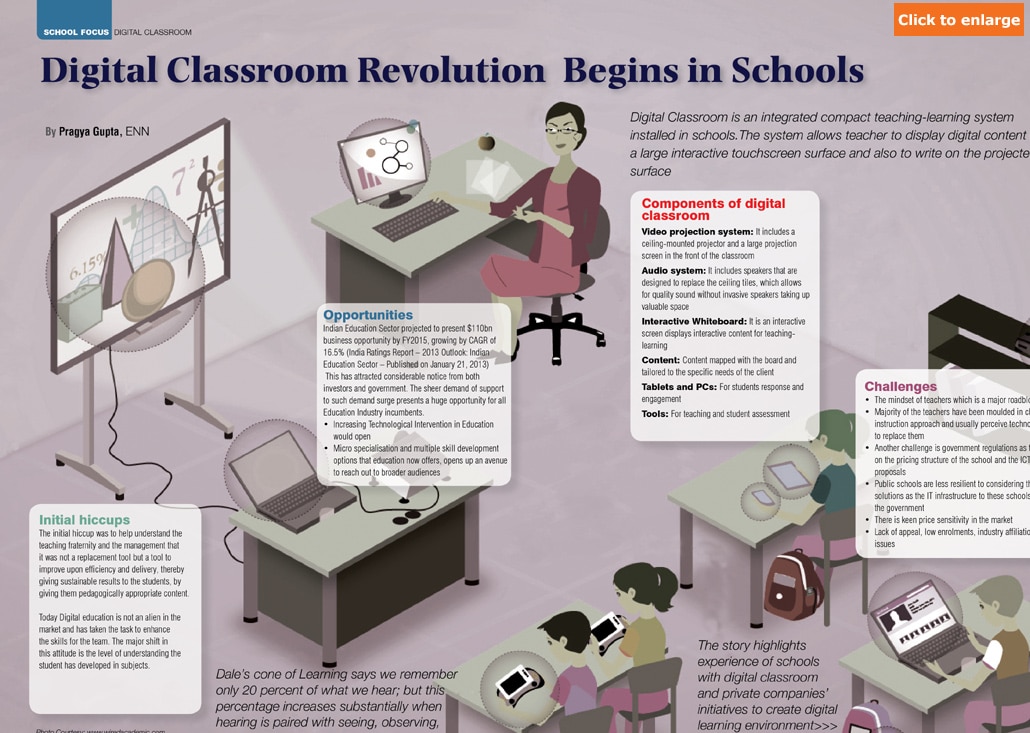
Digital Classroom Revolution Begins in Schools

10-11

LATEST NEWS