

Home Blog Page 1050

The Right to Misinform, an Obligation to Keep Secrets, Frittering Away 10,000 crores, and Other Such Tales!

Manish Upadhyay, Co-Founder & Chief Evangelist, LIQVID; AmitavaMaitra, Independent Ed Tech Consultant

Between us, we have more over 30 years of experience in the field of technology aided and enabled education. Fuelled by the desire to see and evaluate the application of technology in the school and higher education in the government owned and operated schools and institutes in India, we decided to look for data on the efficacy of ICT interventions. Though we searched long and hard, we could find nothing on the MHRD web- sites. To add to our agony, we found many crucial links did not work. We then decided to use the “brahamastra”, an RTI application. We thought that a simple application would do it. Enthused by the idea we looked up the process – it was simple – a `10 postal order and the list of questions to be sent to the Public Information Officer. But that is where things got complex. The MHRD web- site left us clueless as to whom to send the RTI application. There seemed to be a lot of divisions within the MHRD that seemed to be having something to do with school and higher education and ICT interventions. It was not clear as to who exactly did what. We decided to bite the bullet and thus, sent RTIs to all, hoping that our respondents will do their bit.

And thus began the next phase, the wait and the watch game. Some weeks later, we received the first shock. From most of the people, we got answers saying that we had addressed the postal order to the wrong person. It was to be in favour of the Pay and Accounts officer (PAO) and not the PIO. Apart from polite, terse and very official sounding letters, we did not get any relevant information save for the communication about our errant ways.

The world over, educational interventions, ICT or otherwise, are judged by forming two groups – one an experimental group and one control group involving statistically equivalent populations, and then objective measures on student performance as assessed through standard tests are used as key parameters to judge the efficacy of interventions

The notable exception was a PIO who bucked the  trend and actually answered some of our questions (even on an inaccurate postal order). We even had the privilege of receiving a letter from a PIO in the PMO telling us that he was forwarding our RTI application to someone in the MHRD, even though we had not sent any RTI to the PMO. Anyhow, undeterred, we sent postal orders in favour of the PAO and waited with baited breath. However, from all but one PIO we paid glowing tribute to, we got terse messages telling us that ‘no such information exists’ (the only response we got was from a mysterious sounding part of MHRD called “Schools-5 Section, Department of School Education & Literacy”). The PIO stated that evaluation reports for ICT interventions exist for four states in India and that by large these reports indicated the results were satisfactory or good. Intrigued and fascinated, we then sent an RTI report asking for copies of the four evaluation reports. We were then told that the reports did not exist in electronic form and so we would have to pay `292 to get xerox copies of the same. Again, we remained true to the cause and sent the Indian Government the money to photocopy the pages. And finally, six months later, we were in the possession of some relevant, concrete information. Curiosity had landed on Mars and we gave each other high fives.
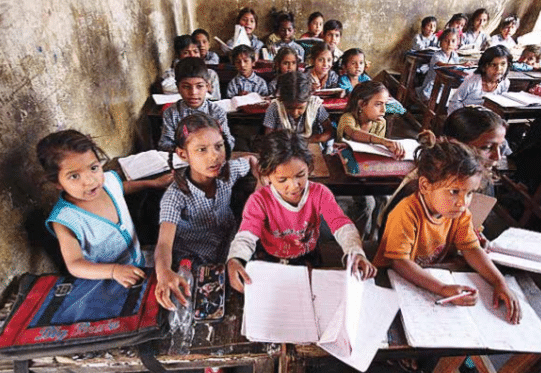
For those of you who are befuddled by the sequence of events here’s the upshot. The Indian Government has planned to spend over 10,000 crores** on ICT in schools and higher education institutes with the belief that this would benefit teachers and students (we presume rightly or wrongly that other people were not the intended beneficiaries of these projects). Now, to verify this conjecture, the government decided to test it doing impact assessment or evaluation studies in four states only across approx 120 odd schools. The evaluation of ICT initiatives in Punjab was conducted by a leading engineering college there and that in Sikkim was conducted by a regional engineering college there. The two reports were essentially hard- ware audits and informed the reader what hardware was procured in contrast with what was ordered and in the various stages of disrepair they were in. * * `5,000 crore is being provided during the Eleventh Plan for providing ICT infrastructure in schools and another provision of `5,000 crore has been made in the Eleventh Five-Year Plan for ‘Education Mission through ICT’ for higher education institutes.

In Europe and many other developed nations, in addition to student performance in standard tests of achievement, ‘inspectors’ observe and evaluate school processes and procedures impartially to determine how a school is performing on parameters such as ICT implementation and integration

The evaluation report of schools in Meghalaya was conducted by a leading government institute in Shillong and was a voluminous one which covered everything from the history and geography of Meghalaya to the tribal nature of the population there. With over 90 percent of this large report (for which we had paid money) devoted to esoteric trivia, the last 10 percent or so declared that all was, by and large, well in the state of Meghalaya with minor points of improvement. Another leading private institute in Manipal conducted the evaluation of ICT interventions in schools in Kerala. This report also relied totally on qualitative opinions based on self-assessment based questionnaires. Overall, the four reports were well below par. While the world over educational interventions, ICT or otherwise, are judged by forming two groups – one an experimental group and one control group involving statistically equivalent populations, and then objective measures on student performance as assessed through standard tests are used as key parameters to judge the efficacy of interventions. In stark contrast, the reports made no such attempt.

In Europe and many other developed nations, in addition to student performance in standard tests of achievement, ‘inspectors’ observe and evaluate school processes and procedures impartially to determine how a school is performing on parameters such as ICT implementation and integration. As opposed to that, the reports looked at self-reportage – answers to questionnaires populated by the very people whose performance was being studied. Very dubious, to say the least

We started off by examining the rigour of evaluation studies in ICT projects in school education. Though we must admit that we were dismayed at the state of affairs, we are far more dis- appointed at the process of finding data and information. From the difficulty in getting information through RTIs, to the fact that though we got photocopies of obviously neatly word processed documents, we could not get hold of electronic versions of the same, the situations looks rather bleak. And even more critical, while all this information could have been proactively put online by the MHRD as part of the ‘Duty to Publish’ charter of the RTI which mandates the Indian Government to proactively publish information on its websites, we had to wage a long battle of sorts to get relevant information (the word relevant is
loosely used here).

Much hue and cry has been made over corruption in the government machinery. But, little attention is given to the colossal inefficiencies in the system as our experience with both the RTI process and the rather inferior quality of evaluation reports indicates. There is obviously a correlation between inefficiency and corruption, but we believe both need to be fought with equal zeal. As ordinary, concerned citizens, we have a duty to keep up the pressure.

MP has an Edge Over Others in RTE

Rashmi Arun ShamiThere will be difficulty in the implementation of the RTE Act initially, but things will streamline and will yield expected result soon, says Rashmi Arun Shami, Commissioner-cum-Director, Rajya Shiksha Kendra (RSK) & Ex-Officio Secretary School Education, Government of Madhya Pradesh, in conversation with Mohd Ujaley

How do you ensure that every child gets value-based education from the elementary level?

We strongly believe that education should not be only learning concepts. Fundamentally, it should be ensuring that the values of the constitution are imparted to all children. Value-based education is very important if we want to have good citizens. Therefore, we try to incorporate it in our curriculum in an interesting way so that the children learn it at every step of their schooling.

Please tell us about the level of implementation of ICT in MP’s schools.

Since most of the schools are in remote areas, we have to adopt technology in order to ensure quality. We are starting smart classes where a good teacher from a school will address students of other schools which will be network connected. We also have a system called head start which is also working very well.

We are also looking at other technologies like satellite-based education for schools so that the shortage of quality teachers and lack of good resources is addressed.

What initiatives are you taking to enhance the quality of education?

Earlier, the government’s priority was enrollment, but now, access is nearly universalised. Therefore, the emphasis now is on quality.  We are making sure that we have more and more training programmes for our teachers’ capacity building. In these programmes, we will first make sure that they understand the curriculum well; second, we will try to build their capacity in terms of interaction in classroom; and lastly, develop leadership quality in our principals and head teachers so that they can run the institutions in a better way.

What was the major initiative your department took last year and what are the future plans for school education in Madhya Pradesh?

A lot of work was done in this regard in 2012. The most interesting was the Chief Minister’s direction to us to ensure quality in education. Therefore, we ensured that all government schools improve their quality. Now, every district is working on its own academic improvement plan based on its needs. We are implementing it from this year onward. They will take initiatives based on their
requirement while also ensuring delivery of results.

We have also started life skills education for adolescent girls. We have started Meena Radio with UNICEF that all adolescent girls listen to in school for 15 minutes and discuss the content of the programme in the next 15 minutes. There are also a lot of programmes for school children that are aimed at keeping up their interest in academics.

Although the Right to Education Act has come into effect, the private schools have not responded the way the government expected. Does that worry you?

Madhya Pradesh can take great pride in RTE because as compared to the rest of the country, our private schools have been very generous. We are the only state in the country which got an enrollment of 1,38,000 last year, and an equal number of students have been enrolled in our private schools too in the current year.

I understand that there are problems in some schools, particularly in English medium schools, because they insist on speaking English in the school and children from disadvantaged backgrounds face problems in integrating in the initial few months. We have made special efforts to ensure that children feel comfortable in the schools and at times, arrange extra classes for them to understand things better.

Cementing Gaps to Make Tomorrow Employable

By Pragya Gupta, Elets News Network (ENN)

When students enter the job market entire reality gets changed for them from what they had studied throughout life. In India there is a major mismatch between the demand and supply of skilled workfore, creates unemployable youth and barriers in the country’s growth. Some of the reasons for this mismatch are said to be curriculum mismatch, and untrained trainers. We have trainers teaching from many years, but they have never had industry experience.
According to NASSCOM, over three million graduates and post-graduates are added to the Indian workforce every year. However, only 25 percent of technical graduates out of these and 10-15 percent of other graduates are considered employable by the rapidly growing IT and ITES segments. These figures reflect the major skill gap that we have across the country. India has the potential to become a global marketplace for the world to provide competent, talented and innovative workforce.

To acheive the objective of skilling India a lot of work and focus has been given by the government, private sector, and academia. The government has formed various alliances with the private sector and devised many policies, framework, and bodies to address the issue. Industries in India and outside are eyeing on India to fulfil the crunch of skilled workforce. This is a complex challenge to convert huge Indian population into skilled professionals with various geographical, economical, and psychological barriers that we have.

To bring industry and academia closer and share ideas on how they can work together for mutual benefits, digitalLEARNING is starting a series on inviting ideas from industry and academia people to bridge the gap. We have people from the industry and academia speaking on solutions to create an employable tomorrow.

Tablets Battling Faculty Shortage in India

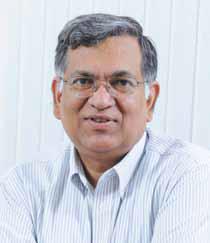
MJ XavierMJ Xavier, Director, IIM Ranchi, tells how tablets are bringing value into India’s education system
Technology in education is not a new phenomenon. Most MBA programmes have made it mandatory for students to carry a laptop to the classrooms. Many institutes use a learning management system (LMS), such as Moodle, Open Class or Blackboard, for posting reading materials, assignments, announcements and grades. LMS is used to collect feedback on courses, and to also administer quizzes and examinations. All good colleges use overhead projectors to screen PPTs and educational films. Some colleges also use smartboards in their classrooms. Others have some form of automation of their academic modules that manage class schedules and provide a 360-degree view of their students. Few others use satellites and broadband facilities to offer courses through e-Learning platforms.

So what is so special about tablets? Is it overhyped or is there really some true value in brining tablets into the education space?

Primarily, people should understand the additional functionality that a tablet brings in as compared to a traditionalPC. Tablet PCs are essentially laptop computers that have the added functionality of touchscreen. This makes it possible to simulate paper and pencil: the user can use a stylus to write directly on the computer screen and create electronic documents. These pictures can be easily edited using traditional computer applications and also shared between the student and the teachers. This functionality to draw diagrams or write mathematical formulae is not available on PCs.

For a country like India, tablets can be a great boon as they can also help us combat the problem of faculty shortage

Providing one tablet each to studentsand the teachers will make it possible to create a collaborative learning environment using networking technology. Though tablets are used in the regular classroom setting, they are also ideal for e-Learning. Students can attend classes from their hostels, homes or offices. What the teacher writes on his tablet’s screen will be visible to all the students who have logged into a particular class session. The teacher can selectively pass on control of his screen to a student and ask him to complete a mathematical derivation he was doing in the class. The modifications made by the student will be visible to the entire class.

Effectiveness of learning can be maximised through tools for conducting immediate and meaningful assessment of student learning, and by providing realtime feedback and assistance. The effectiveness of this model comes from the ability of the instructor to monitor and interact with individual students while they analyse problems on the computer using an input device that allows them to write and manipulate formulas, and make sketches and diagrams. Tablets are handy for taking lecture notes, reading e-Books, conducting surveys and also giving feedback to the teachers.

Additionally, social media platform can also be built on tablets to allow students to engage in debates and discussions about the topics covered in the class. The participation can be enhanced by awarding marks for the posts and starting new threads based on how long they went and what new insights they brought to the class. This is a good way to enhance interaction and collaboration among students.

For a country like India, tablets can be a great boon as it can also help us combat the problem of faculty shortage. Recorded lectures can be delivered to a large number of students as packaged courses. Also, this will enable the best faculty to reach out to a large number of students in the country.

Studies have shown that tablet-enabled teaching leads to better learning and more interest in the subject taught. It also produces a favourable attitude towards the use of technology in learning. However, the mere adoption of technology does not guarantee improved learning outcomes or an enhanced educational experience. The key to successfully adopting tablets is to ensure that the devices are integrated into both the academic and social aspects of the course.

Tablets: Expediting Teaching-Learning

Tablets: Expediting Teaching-Learning

Tablets Expediting Teaching-Learning

Tablets are low-cost and come loaded with different educational suites to offer self-learning opportunities to students. The increased use of tablets can help battle the dearth of faculty in India

By Ruhi Ahuja Dhingra, Elets News Network (ENN)

Worried about dropping too much on textbooks and notes? Or want to switch from smart to the smarter? Yes, we are talking about the revolution in higher education—the advent of tablets.

Youngsters seem to always be at the vanguard when it comes to the adoption of the latest technology: perhaps, the answer to the fast burgeoning tablet adoption in higher education. According to the Pearson Foundation Survey on Students and Tablets 2012 in the US, tablet ownership in college and college-bound students got tripled in just a year. Also, a huge number of students plan to purchase a tab within the next six months.

The Indian market, too, expects a similar growth pattern in the years to come as tablets will cater to the problems of lack of teachers and deflate the burgeoning student dropout ratio, and ensure delivery of rich educational content to the masses.

A touch to navigate

Tablets can be termed as a hybrid of a smartphone and a laptop. The content designed for these devices is more interactive than on a smartphone screen and easier to access than on a laptop. And there’s more: the touchscreen interface allows navigation using taps, swipes and pinch zooms and makes their use as easy as pie.

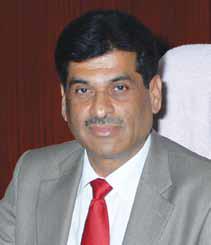
Sudhir Kumar JainAlthough a lot of teachers would have preferred the traditional methods of teaching to tablets when tablets were a new concept, most of them today be-lieve that the advent of computer-aided learning has made the teaching-learning process a no-sweat task as more and more students are adopting technology to make it an indispensable part of their lives. “With ICT, the emphasis is reducing on providing information to the students in the class: they can get information far more easily on their own. As a result, the classroom must focus on fundamentals of the subject, and on training the students on problem analysis and problemsolving,” believes Prof Sudhir Kumar Jain, Director, IIT Gandhinagar. Apart from this, building social media platform on tablets will also make it easy for students to engage in debates and discussions about the topics covered in the class.
More than 200 million tablets will be sold in 2014, and the market will account for 23 percent of the global personal computer market by 2015

Students, too, feel that tablets enhance learning process and help them perform better. The trump card: easy access, storage and retrieval of information along with an interactive user interface.

• Tablets promote an interactive environment, are compact and easy to carry, and act as an e-Notebook
• Their touchscreen interface makes navigation easy. Documents and diagrams can be easily created and edited at any time
• Through the thousands of apps, students can access information on their own and learn at their own pace
• Colleges and universities are adopting tablets for teaching as they promote collaborative learning and better training.
• Tablets also help disseminate information and knowledge on the go
• The capability of tablets to support global and Indian languages makes them the choice of HEIs and students across the world

Dr Rangappa KSTextbooks redefined

Tablet PCs make it possible to simulate paper and pencil: the user can use a stylus to write directly on the computer screen and create electronic documents. These pictures can be easily edited using traditional computer applications and also shared between the student and the teachers. This functionality to draw diagrams or write mathematical formulae is not available on PCs. “Tablets have changed the way students and teachers interact. They add new dimensions to the classroom interaction by providing digital ink and drawing tools for writing, sketching, and drawing, and real-time collaboration,” says Dr Rangappa KS, Vice Chancellor, University of Mysore.

Most of the high school students today prefer to read from a digital book rather than a textbook. In this world of tech geeks, tablets are gaining more popularity also because they facilitate easy group communication, and tools like Google Docs and Dropbox help enhance the way infor-mation is shared between large groups. Applications that come with fully-loaded customised content packages and repositories, grease the wheels.

A lot of games that fit into the education system perfectly – open-ended and challenge-based, are also being developed to allow the students to enhance their learning outside of the game.

Dr Swati MujumdarProviding tablets to the students and the teachers will make it possible to create a collaborative learning environment. Though tablets are used in the classroom, they are also ideal for e-Learning. Students can attend online classes from their hostels, homes or offices. “Tablet PCs bring knowledge and information easily and quickly to the learner giving him the freedom towards self-paced learning anywhere, anytime,” opines Dr Swati Mujumdar, Director, Symbiosis Centre for Distance Learning.
The increasing developments in the field of digital learning have already proved their affordability, flexibility, interactivity and effectiveness as compared to a physical classroom. Indian and international universities are offering online content to help their students learn from the best of the faculty from across the globe.

A spurring market

Although the market of tablets is demonstrating an upward curve, the adoption seems to be in its nascent stage in India. According to Focus.com, a source of technological expertise, more than 200 million tablets will be sold globally in 2014, and the tablet market will account for 23 percent of the global personal computer market by 2015. The growth will impact various sectors including the higher education sector.

Dr Vinay Kumar PathakA promising future in view

Today, technology is one of the catalysts for the growth of any country. And tablets will soon be spearheading the growth of the higher education sector in India. “Technology is still, and will be, the leading driving force of the future global economy,” opines Dr Vinay Kumar Pathak, Vice Chancellor, Uttarakhand Open University.

Osama Manzar, Director, Digital Empowerment Foundation, shares a similar opinion. Tablets are going to be the future medium of education and communication, and not laptops. They will be mobile-like. But, the implementation is yet to come. At the higher education level, it is going to be very consumer-driven. The ownership will also be seen in higher education, he says.

The ticket to better teaching-learning

In India, low-cost tablets like Kloudpad, Aakash, Go Tech Funtab, Beetel Magiq, Micromax Funbook, and Attitude Daksha, and a few of those launched by Zync, Zen, HCL and BSNL are generally used for imparting education by universities and higher education institutes. A lot of these tablets support a number of global and Indian languages. Thus, students can study the subject of their choice in their own regional language. These tabs are low-cost and come loaded with different educational suites to offer self-learning opportunities to the students.

The next version of the low-cost Aakash tablet, Aakash-3, that is being worked upon by the Indian Institute of Technology-Bombay, will have a slot for a SIM card, a faster processor, better memory, and will function on both the Android and Linux. The institute is also in the process of putting out a tender for producing 50 lakh units of the device. The government will also train teachers across the country to enable them to use the device effectively for better teaching learning outcomes.

The increased use of tablets can help battle the dearth of faculty in India. Teachers can record or write their lectures that can be made available to the students across the country as online packaged coures. Therefore, if proper connectivity be ensured in every part of the country, teachers would be able to reach out to the students even in rural and backward areas. As Dr Rangappa assures, “Tablets will transform the Indian education sector because of their reach and delivery”.

digitalLEARNING Announces its March 2013 Issue

Labs in Higher and
School Education
With digital labs, students have the opportunity of visualising abstruse concepts in Maths, Science, Engineering in a virtual medium.

The section will focus on:

  •  Different types of laboratories and multimedia content
  •  Lab market analysis
  •  Product matrix: Maths, Science, English and Robotics
  •  Impact analysis of labs among schools and higher education institutes
  •  Addressing skill deficit among employable youth through English labs
  •  Government initiatives in lab solutions
  •  Case studies and photo features of schools and HEIs
  •  Coverage of more than 50 schools and higher education institutes

Industry Academia Series Part 2

Industries in India and outside are eyeing on India to fulfill the crunch of skilled workforce. There is a complex challenge of converting a huge Indian population into skilled professionals with various geographical, economical, and physiological barriers that we have. To bring industry and academia closer, and share their ideas on how they can work together for mutual benefits, digitalLEARNING has started a series of articles where HRs from different industries and academicians are invited to share their ideas to bridge the gap.

State Focus

digitalLEARNING’s State Focus section aims to highlight different challenges and needs of different states. The March issue will focus on Odisha, highlighting the best practices and challenges hindering the educational growth of the states. The issue will be launched at eOdisha.

And many more…

“Manage Industry-Academic Alliances like an Investment Portfolio,”

Lokesh Mehra, Director-Education Advocacy, Microsoft Corporation (India) Pvt Ltd

India faces two basic educational systemic problems at different levels: achieiving quantity along with quality. About 50 percent of our children at the primary level are at the risk of not entering or not completing secondary education due to lack of access to institutes.

The system expects teachers to “complete the curriculum” regardless of whether students have actually been able to learn. What our examination system actually examines with credibility is prob- ably rote memorisation. Secondly, how do you ensure that a first class student in Andaman and Nicobar has a higher or equivalent competency opposed to his peers in Delhi or Meghalaya. Possibly, the need of the hour is a standardised test for all– which could act as an indicator as the first step to arrive at learning gaps.

Some basic challenges that we are facing today include:

  • Low investment in higher education was a paltry 1.25 per cent of GDP as per the UGC report on Higher Education at a glance.
  • Faculty crunch: With nearly 33,000 colleges and over 600 universities in the country today, it estimated that even the IITs face a 25 percent shortage.
  • Research inclination: Forty percent of Indian researchers are emigrating to pursue their research abroad (Source National Bureau of Economic Research US). In 2011, of the 14.6 lakh people who graduated from the colleges in India, only 12 percent pursued post graduate degrees and an abysmal one percent pursued research in the country. India has 7.8 scientists per 1,000 population compared to 180.66 in Canada, 53.13 in Korea and 21.15 in the US.

Recommendations for bridging the gaps

At government level

  • Set short, mid, and long term outcome oriented goals at the policy level
  • Expansion of research support – government should open up existing CSIR labs, leverage existing resources
  • Public Private Partnerships for capacity building and teachers training – Train teachers on improving pedagogical practices. Corporates like Microsoft, Autodesk, Intel, Cisco, etc. have lesson plans and curriculum. But can the government creates a portal that streamlines all these efforts at a single location?
  • Assessment mechanisms should be modified keeping how and what should be tested account. These mechanism should focus on maintaining quality standards that ensure global acceptance and not India alone

At institution and corporate levels

  • Institute should upgrades laboratories and technology interventions with the assistance of corporate via collaborations, endowments and donations
  • Adopt technology assisted learning in education, joint certifications to improve the efficiency, timeliness and transparency of the system.For example remote delivery of education for scale – Cloud/Continuing education to build material and curriculum repositories in a co-operative fashion
  • Build technology incubators, chairs and have a consensus on patent regulatory perspectives

The government has set a target of achieving 30 percent gross enrollment ratio by 2020, which translates into more than 40 million students in higher education. This challenge requires radical new thought process and innovative solutions.
Surprisingly, in India there are only a handful of institutions, which have a clearly defined mission. Majority of the private institutions are driven by a singular focus on profits or surpluses, which means that they have corporate style leadership with focus on the bot- tom line. Such approach may work well for this segment of profit oriented schools, but will fail miserably for institutions that seek excellence and quality.
If institutions are headed by promoters as leaders, the faculty has almost no say in the governance of these institutions. But in public institutions, the challenge is that faculty lacks business acumen and perceives administration as clerical work. The need is to strike a fine balance between academic perspicacity and business efficiency.
In short manage industry-academic alliances like an investment portfolio–the more you nurture it; the better will be the fruits– this would enable us to bring back the era of Nalanda and Takshila.


“IB programme is practical and application-based”

The focus of the International Baccalaureate (IB) pedagogy is on ‘how to learn’, not ‘what to learn’, says DRS International School PYP Coordinator Monalisa Dash, in conversation with Ruhi Ahuja Dhingra

It is believed that IB prepares a student for the university. Please tell us how?DRS International Principla
IB is a practical and application-based programme. The International Baccalaureate Organisation (IBO) is a recognised leader in international education and encourages students to be active learners, well-rounded individuals and engaged world citizens.

IB standards demonstrate a very high degree of alignment with the Knowledge and Skills for University Success (KSUS) standards in all subjects. In addition, many of the individual IB standards are at a level more advanced than entry-level college courses.

The recent studies on IB Diploma Programme graduates in university say that the students perform well and have significantly higher grade point averages and higher graduation rates than students who did not complete the IB Diploma.

IB assessments are curriculum-based. The depth and breadth of the programme gives students the exposure to an academically-challenging curriculum that emphasises the use of a variety of assessments, including an emphasis on written essays that reflect the students’ ability to write, think critically, and look at issues from all sides and present arguments based on evidence to support their point of view.

The assessment tasks evaluate students’ ability to think and process what they know, rather than assessing rote learning skills.

How is IB different from any other curriculum, for example, CBSE?
The IB programme is practical and application-based. It has a broader spectrum of subjects that lead to all-round development. IB examinations test students’ knowledge, not their memory and speed. There are no externally evaluated examinations till the Middle Years Programme (class 10).

The focus of the IB pedagogy is on ‘how to learn’ rather than ‘what to learn’. The purpose of the programme is to produce global citizens, but it can be well-integrated with the local curriculum.

Hindi is offered as a second language in the IB Diploma Programme. The curriculum is more challenging than educational boards like the CBSE and ICSE. The challenge is in the quality of assignments, and not in the amount of work assigned.

Please share with us your strategies for student assessment.
Student achievement is assessed according to specific performance criteria established by the International Baccalaureate Organisation. Assessments of IB value both content and process, creating a balanced assessment approach that builds on students’ strengths.

There are a variety of assessments used by IB which take different learning styles and cultural diversity into account. Most subjects require both internal and external evaluation. The various types of assessment include research work of the student, written examinations, oral examinations, formative and summative assessments.

Apart from this, report cards are also issued twice a year. The full report contains examples of student work and their reflections, a student profile evaluation, the student’s self-analysis of the attitudes, a description of the units of inquiry, rubrics for stand-alone subjects, goal-setting and comments on progress made towards meeting goals.

Is IB recognised in all the cities of India and across the world?
The rigour and the standards of the IBDP ensure that colleges and universities around the world recognise the IB Diploma as a superior academic programme and a strong university-entry credential.

The Association of Indian Universities (AIU) rates the diploma at par with class 12 CBSE, ICSE, NIOS or state boards. Many educational institutions and colleges have published their policies and entry criteria for IB students on their websites.

For example, the Delhi University has specified its conditions for entry of IB students. Universities in over 110 countries recognise the diploma, which allows entrance to the most competitive universities around the world.

Can a student join an IB school after doing a few years of his schooling from a different board?
Although the PYP, MYP and DP form a continuous sequence, each can be offered independently too. A student can join the IB Diploma Programme after completing the grade 10 level qualifications from CBSE, ICSE or any other state board. The programme is equivalent to 10+2 level qualification through the CBSE.

Please tell us about TOK, EE and CAS.
The Theory of Knowledge, an essay of 1,200-1,600 words, is written on a given title (from a choice of 10), followed by a ten-minute presentation of the essay by the student in the class.

The Extended Essay is an original independent research leading a DP student to produce a comprehensible written piece of 3,500-4,000 words in any chosen subject and title.

Under Creative, Action and Service (CAS), each DP student must complete at least 150 hours of work spread over one-and-a-half years, engaging in some form of creativity, participating in sport or other physical action, and doing social service.

How does the curriculum trigger the creativity of a child?
In DP, CAS (Creativity–Action–Service) is a framework for experiential learning, designed to involve students in new roles. The emphasis is on learning by doing real tasks that have real consequences and then reflecting on these experiences over time.

The most meaningful CAS experience comes from spending time with others to build relationships and develop the self-worth of both the server and the served. Appropriate activities can include:
• Physical assistance to the elderly
• A structured series of visits to a home for orphans
• Helping with rehabilitation at the local hospital
• Teaching-basis literacy
• Establishing and coaching a sports team for disadvantaged youngsters
• Establishing and leading a musical ensemble for the visually-impaired
• Involvement in a theatrical production to which refugee children are invited
• Teaching the use of computers
• Environmental restoration and protection

Creativity: This aspect covers a wide range of arts and other activities outside the normal curriculum which include creative thinking in the design and carrying out service projects. This could involve doing dance, theatre, music and art, for example. Students should be engaged in group activities, and especially in new roles, wherever possible.

Action: This aspect of CAS can include participation in expeditions, individual and team sports, and physical activities outside the normal curriculum. It also includes physical activity involved in carrying out creative and service projects. Action may involve participation in sport or other activities requiring physical exertion, such as expeditions and camping trips, or digging trenches to lay water pipes to bring fresh water to a village.

Service: Service involves interaction, such as building links with individuals or groups in the community. The community may be the school, the local district, or it may exist on national and international levels (such as undertaking projects of assistance in a developing county).

Service activities should not only involve doing things for others but also doing things with others and developing a real commitment with them. The relationship should, therefore, show respect for the dignity and self-respect of others.

We encourage international-mindedness in IB students. For this, we believe that students must first develop an understanding of their own cultural and national identity. All IB students learn a second language and the skills to live and work with others internationally—essential for life in the 21st century.

We also encourage a positive attitude to learning by encouraging students to ask challenging questions, reflect critically, develop research skills, and learn how to learn. Apart from this, we also promote community service because we believe that there is more to learning than academic studies alone. All these target the creativity of the child.

How do you see the role of ICT in reinventing the pedagogy and in administration?
The ever-increasing impact of ICT on teaching and learning is an important consideration in education at all levels. Through ICT, there are greater opportunities for interactive communication and exchange of information through global collaboration, authentic learning, expansion of the learning community and empowerment for all learners.

ICT encompasses the use of a wide range of digital tools, media and learning environments for teaching, learning and assessing. It provides opportunities for the transformation of teaching and learning and enables students to investigate, create, communicate, collaborate, organise and be responsible for their own learning and actions. It also allows students to make connections and reach a deeper understanding of its relevance and applicability to their everyday lives.

Through the use of ICT, learners develop and apply strategies for critical and creative thinking, engage in inquiry, make connections, and apply new understandings and skills in different contexts.

In this constantly evolving digital age, ICT is progressively becoming a ubiquitous part of a learner’s life at school and beyond: for learning, working, innovating, creating, responding, problem-solving, problem-posing, socialising and playing.

The emergence of educational technologies has transformed how IB World Schools achieve this mission. In particular, the Internet, one of the greatest technological innovations in the last 50 years, facilitates the finding and creating of information, as well as building and maintaining relationships and communities.

Today’s students are raised in a connected world and their immersion in wired technologies contributes to the evolution of learning in digital spaces. A new dynamic educational landscape has emerged. It is, therefore, critical that students’ awareness, use and appreciation of different kinds of information, skills and platforms be developed both at the school and at home.

The school community should be engaged in a dialogue to ensure a positive educational experience by understanding how to use the Internet and web-based devices safely, responsibly and smartly.

Please share the expansion plan of the school.
As part of our school expansion plan, we are working on project zero and have designed our own resource material. We are also in the process of developing our own learning management platform to use technology more effectively and make the learning process more effective. We are researching on ways to ‘tabify’ the whole school. This will be a big shift, but an enduring one.

“Quality Education is Punjab’s Focus”

Kahan Singh Pannu

Kahan Singh PannuKahan Singh Pannu,IAS, is currently heading one of the most challenging positions in the state of Punjab – Secretary-cum- Director General School Education. A dynamic officer who served as Special Principal Secretary to the Chief Minister prior to this and recommended himself for his present position to the Honorable Minister, says, “Economically poor parents look up to government schools for educating their wards”. He shares his views on the need to impart quality education in the state. In conversation with Rozelle Laha

What are the challenges and opportunities in the school education sector in Punjab?

A major challenge for the school education department is the skewed pupil- teacher ratio in schools falling in geographically difficult areas. Another issue which impacts the delivery of quality education in government schools is the emotional disconnect between the teacher and the students. As far as opportunities are concerned, government school teachers are well-qualified, wellpaid and have the potential to provide quality education. Most government school teachers are dedicated to teaching. The economically poor parents look up to government schools for educating their wards.

Quality EducationWhat is your vision for education in the state?

Our primary vision is to provide quality education to the students with the aim to promote innovative thinking which would eventually lead to creativity of mind.

Please mention some of the projects taken up by the education department for ensuring delivery of quality education in the state.

The hallmark of quality education in Punjab is the posting of adequate number of teachers in schools coupled with their proper pedagogical training. The Pervesh Project that aims at improving the baseline knowledge of primary class students is helping us better the students’ learning levels.

Tell us some statistics to implicate the success of the Pervesh Project that was initiated to ensure interactive teaching-learning process in the state.

The Pervesh Project was started in 2012. It has helped us increase the baseline knowledge of primary class students from 27.13 percent in August to 48.81 percent in December 2012. Innovative teaching methodology coupled with the play way system of teaching has boosted the creativity of children, thus improving their learning levels.

The education department had created e-Punjab portal to make the administration process transparent. Please share its achievement and visions.

The e-Punjab portal has helped bring in transparency in statistics related to students, teachers and infrastructure in about 19,000 government schools in the state. Apart from this, the portal has also helped map the teachers’ position in various schools leading to the rationalisation of posts.

Are there any similar projects in the pipeline?

There is the proposal to further extend the scope of e-Punjab schools portal to mark teachers’ attendance, monitor the mid-day-meal scheme in a better way, and to take care of the student health programme.

Quality EducationThere are around 20,000 government schools in the state. Do all of them comply with the norms of the Sarva Shiksha Abhiyan?

Yes, all the government schools in the state are complying with the RTE norms. The government is considering merging a few schools which fall in the vicinity of each other with a view to leveraging the resources.

What is your opinion about the implementation of the RTE Act in your state?

The RTE Act has helped improve the physical infrastructure of the schools. It has also helped raise the number of teachers. However, the quality of education being imparted is a major challenge, especially in view of the provision of the RTE Act which says that there shall be no external testing of students till class VIII.

Education Development Index (EDI) has seen a remarkable growth and it figures at number three among all the other UTs and states. Please comment. Although Punjab is placed favourably as far as the EDI is concerned, it needs to do much more in the field of quality education considering that it is a fairly well-developed state.

Tell us some of the steps you plan to take up to ensure better teacher training, address teachers’ absenteeism and impart quality education to the masses.

We plan to strengthen the various components of teachers’ training by building the capacities of the State Council of Educational Research and Training (SCERT) and the District Institute of Education and Training (DIET). Computer aided learning will be the major thrust area of teachers’ training in the future.

Please share your opinion on how technology can revolutionise teaching-learning and overall administration in the department.

Technology is the answer to the majority of the problems in the country, especially those in the education sector. The learning levels get enhanced tremendously with teaching through computer-aided technology as technology helps in better understanding of a subject. ICT-based management information system is a major step to improve the administrative capability of the decision makers.

Edusat Ensures Quality Education in Punjab Government Schools

Edusat Ensures Quality Education in Punjab Government Schools

By Rajeev Sharma, Deputy State Project Director, Punjab Edusat Society

Edusat Ensures Quality Education in Punjab Government Schools

In a move to provide quality education, the state of Punjab, one of the large demographics of the country, was quick to adopt the virtual classroom technology on EDUSAT for its schools. Edusat was launched by ISRO in September 2004 exclusively for the education sector. With approximately, 20,000 government schools in the state, it is not only difficult to find the appropriate number of teachers for each school, but also to ensure that quality education is imparted to the students.

The Department of School Education through the Punjab Edusat Society established Edusat Network across all the senior secondary schools of the state. The Chief Minister of Punjab inaugurated the network in January 2008.

The concept has given access to computer labs and world-class content to students who otherwise would have never dreamt of something similar. The problem of shortage of teachers has somewhat been overcome with the establishment of Edusat.

With the Edusat hub in the premises of the Punjab School Education Board, a total of 1,016 Edusat classroom ends have been established with 516 SITs and 500 ROTs during the first phase, and 2,807 ROTs under the expansion phase have been installed out of total of 2,950. Portable gensets have also been provided at all locations to maintain continuous power supply. There are 2,077 Edusat libraries that have been fully established out of 3,184 in all the government senior secondary and high schools with 24 computers, independent earphones, and viewing screens, where students and subject teachers can view the content lectures for classes 6th to 12th as per their re-quirements and at a convenient time, and 1,107 more are being established.

While the ROTs have only been provided to the senior secondary schools with humanity group, SITs have been allotted to senior secondary schools with science and commerce group, DIETs, in-service training centers, engineering colleges, polytechnic colleges, medical colleges, degree colleges, and ITIs.

Now, students are exposed to ideas which some student in urban institution gets access to, after paying a lump sum amount.

The society has developed 1,610 multimedia episodes for 8th to 12th standard students in Physics, Chemistry, Biology, Mathematics, Commerce and English, with assistance from subject specialists and service providers. The Punjab Edusat Society has also developed 364 multimedia episodes for students in classes 6th to 8th on computer-aided learning for the subjects of Science, English, Mathematics and Social Studies.

These lectures are like revision classes for the students. They learn subjects in the class and can ask questions through the SIT module and get their queries addressed. Special lectures on career counseling, health awareness, and personality development have also been incorporated for the students to make the teaching learning process interesting.

The content is updated on a periodical basis. Registering complaints has become easier.

Teaching-learning process has become a lot easier with the establishment of Edusat

Teaching-learning process has become a lot easier with the establishment of EdusatNodal officers for all user departments have been positioned for better co-ordination with the departmental institutions and the hub.

Teaching-learning process has become a lot easier with the establishment of EdusatNot only are daily lectures and additional lectures in their regular subjects imparted through Edusat, but in view of those students who dream big and want to go for higher studies, special classes from preparation for entrance tests in medical and engineering are also given. Around 1,719 students from the rural areas were selected in engineering and medical colleges.

Teaching-learning process has become a lot easier with the establishment of Edusat. Some students are not able to follow and understand various scientific processes. Previously, students in the rural areas did not have the liberty to see how things work. But, with diagrammatic representations and colorful content, the retention of what is taught has been enhanced in the students.

“Learning-by-Doing and Learning-while-Earning are the Ways to Bridge the Gap,”

Neeti Sharma, Vice President, TeamLease – IIJT

Although India’s higher education system contributes about 350,000 engineers and 2.5 million university graduates annually to our workforce, yet, at any given time, about five million graduates remain unemployed. A survey done by the McKinsey Global Institute shows multinationals find only 25 percent of Indian engineers employable, and according to NASSCOM, there are over three million graduates and post-graduates added every year to the Indian workforce. However, 58 percent of our graduates suffer some degree of unemployability and formal on-the-job- exposure is absent.
Industry, on the other hand, has had its share of challenges in getting its positions filled. Not only has it lowered its hiring standards at the bottom of the pyramid in order to be fully staffed, but it has also established training programmes to make hires productive. But this situation is unsustainable because it wrecks productivity and there is not viable model for employers to ‘manufacture’ their own employees.
This shortage of appropriately skilled labour across industries is being termed as the most significant challenge India will have to find solutions to.
We cannot predict the kind of jobs that would be available in the future, however, there is no stopping us from preparing for them. In the short term, we can create models that would work for job creation in industries such as Healthcare, Education, Hospitality, Sales, IT/ITeS, etc. However, in the long run, we need an ecosystem that effectively blends education, employability and employment frameworks. There are few ways we can develop skilled labour through our education system.

Increase the enrolment ratios in higher education: Part of the skills gap problem is that only a very small percentage of India’s youth go on to higher education. No more than seven percent of Indian youths between the age group of 18-25 go to college. Also, 40 percent of the people over the age of 15 are illiterate. On the other hand, we have universities not being able to keep up to the demand in hand. The best and the most selective universities generate too few graduates, and new private colleges are producing graduates of uneven quality.

“Employers would be happy to contribute to developing a shared model with teaching institutions for jobs and their requirements”

Curriculum to match industry requirements: The current pace of industry and labour market changes mean that some curriculum is outdated much before a student completes his/her education. Besides the domain skills, industry also looks at soft skills, team building, values and attitude of an individual at the time of hiring. Upgrading curriculum and keeping up with the changes is required of the institutes. Also, the curriculum needs to be made in collaboration with the industry, and if possible, joint certifications/degrees between the academic institutes and industry.

Apprentices that give workplace exposure: Students would benefit greatly if higher education faculty either had prior work experience or would be required to spend some time on short-term assignments with employers. But students would also hit the ground running with employers if part of their programme had apprenticeships with employers. Even if these apprenticeships are not in the industry or function where the students find permanent jobs, these stints will give them an appreciation for the realities of the workplace. The lack of organised apprenticeships in India (we have only three lakh apprentices relative to Germany’s six million and Japan’s 10 million) sabotages employability by undermining an effective vehicle of learning-by-doing and learning-while-earning.

LATEST NEWS