Home Blog Page 1060

Delhi Private Schools Can Run Second Shift

The shift can be run after regular school hours, however, it would be a separate entity with no common teachers or other school staff

New Delhi: Private unaided schools in the city can now run a second shift , as per the decision taken by the Delhi School Education Advisory Board (DESAB)) this week.

The shift can be run after regular school hours. However, it would have to be run as a separate entity with no common teachers or other school staff, says the decision.

Private city schools have been asking for a second shift, saying it would put their infrastructure to optimum use and benefit more students. The DSEAB said maximum points would have to be given to the ‘neighbourhood’ criterion for nursery admissions.

The board, which includes the education minister, principal secretary and director, education, also said that for admission into nursery, a child cannot be older than three years, 11 months and 30 days as on March 30 of the academic year in which admission is sought.
The upper limit for KG is exactly a year more than the nursery limit and two years more for class I.

The Board, however, decided that some relaxation in upper age-limit for children with special needs would be worked out. The lower age limit for nursery class is three years. The DSEAB had been asked to give its opinion on double shifts in private schools.

While allowing second shifts, the board also was decided that a committee would be constituted to work out the details.

According to R C Jain, president, Delhi State Public Schools Management Association, who is also a member of the board, “The second shift schools will be a separate entity with a separate set of teachers and there will be no compromise on salaries.

Moreover, there will be no transfer of first shift students to the second shift. The admission criteria in the second shift will be same as that of the first shift with 25% reservation for EWS category under RTE Act.”

Schools which will be following the point system in the new admission season starting from January 1, 2013 have been asked to give maximum weightage to distance from school.

Dr. Amit Kapoor Receives Competitiveness Hall of Fame

The award was given to Dr. Kapoor for his contribution to the study and evolution of the concepts of competitiveness internationally and for India 

New Delhi: Dr. Amit Kapoor, Honorary Chairman, Institute of Competitiveness, India was presented with Competitiveness Hall of Fame award for his exemplary contribution in the field. The award was presented by founder Professor Michael E. Porter, Institute for Strategy and Competitiveness at Harvard Business School, on the occasion of successful completion of 10 years of the institute.

The distinctive honor- Competitiveness Hall of Fame- is awarded to those dignitaries who with their academic and research contributions to the Competitiveness network have made a positive influence on the society. The Competitiveness network comprises of both universities and business schools spread across the globe, which are more than 100.

The award was given to Dr. Kapoor for his contribution to the study and evolution of the concepts of competitiveness internationally and for India specifically. Only 9 people globally have been admitted to this hall of fame.

At a formal ceremony, attended by over 140 academicians from 78 universities worldwide, Professor Porter appreciated Dr. Amit Kapoor’s contribution in setting up the Institute for Competitiveness (India), launching the Journal of Competitiveness and Strategy, and engendering commendable work that has been done in relationship to benchmarking locations in India.

Reading the citation Professor Michael Porter said “Amit has been associated with Institute for Strategy and Competitiveness at Harvard Business School since 2003.  He formed an Institute for Competitiveness, India as an affiliate of Institute for Strategy and Competitiveness at Harvard Business School that has gone on to become very influential and visible in his home country of India.”

Dr. Amit Kapoor is Honorary Chairman at Institute for Competitiveness, studying firms, clusters and economies and is the author of India City Competitiveness Report, India State Competitiveness Report, and India State Sustainability Report amongst others. He is an affiliate faculty for the Microeconomics of Competitiveness & Value Based Health Care Delivery courses of Institute of Strategy and Competitiveness, Harvard Business School.

Indian Youth Can Bring Change in System: Kalam

Dr. Kalam shared his well-founded beliefs on the need for sustainable development of the nation at Penguin Books Lecture Series

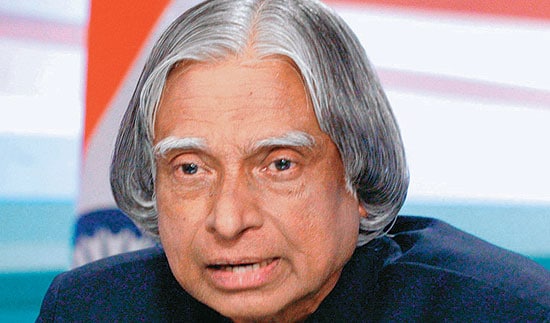
New Delhi: “India also needs sustainability in the value system. The youth of India can bring a change in the value system of our country.” said Dr. APJ Abdul Kalam at Penguin Books Annual Lecture.

Penguin Books India, the largest English language trade publisher in the subcontinent, hosted the most coveted event of year, the Penguin Annual Lecture Series 2012 in the city. Dr. Kalam was speaking at the event on the occasion of Penguin Books India’s 25th Year anniversary.

Speaking on the topic “Beyond 2020: Sustained Development Missions for the Nation”, Dr. Kalam shared his well-founded beliefs on the need for sustainable development of the nation and visualised India as an economically developed nation by the year 2020.

“The job profile of the future was furthering of the technological nature of business and market aspirations for sustainability that would provide continuous income and growth assurance in such a situation,” He said.

Dr. Kalam added that, “The generation user connectivity pyramid should be implemented in order to integrate solutions needed for technologies and applications to be sustainable.”

Building an Institution Par Excellence

Our endeavor is to bring quality and modernisation in the education sector that helps the nation progress, says Sanjeev AgrawalChairman, Sagar Institute of Research & Technology (SIRT), Bhopal

You have carved a niche for yourself in the education sector. How did the journey begin?
During my early years, I went through the work and life of eminent personalities like Swami Vivekanand. They inspired me to get into the higher education sector to serve the society. Sagar Institute of Reseacrh & Technology (SIRT) started its operations in the year 2003 under the patronage of Shri Agrawal Technical & Education Society. Since then, all our efforts are aimed at imparting quality education to our students and encouraging research for the growth and development of the country. At SIRT, we are creating avenues for the corporate world to explore the education sector in India while fostering industry- academia partnership. Apart from imparting education, we believe in providing our students opportunities to showcase their talents in extracurricular and cultural activities.

What challenges did you face in your journey?
The main challenge was to create an atmosphere of commitment and dedication.

What prospects do you see for yourself in the near future as an academic entrepreneur?
We are looking at developing research-oriented institutions in engineering, pharmacy, basic and management sciences. These will work on real-life problems.
We are networking with all the stakeholders in the education sector and encouraging innovation in order to address the challenges confronting technical education in the years to come.

What is your vision for the institute?
Our efforts are dedicated to transform SIRT into a knowledge enterprise capable of:
Production of knowledge: This will comprise of data collection, conversion into information and learning to use and apply the knowledge to specific and useful purposes.
Marketing knowledge: This will be done with the helpof Information Technology. The aim is to enable transfer of knowledge and the capability to use it.
Maintenance of knowledge: The goal is to regularly and consistently update and upgrade knowledge and its applications.
Innovating knowledge: In this, new knowledge and the scope of its application is expanded and extended.

What has been your mantra for success?
Determination, honesty and transparency are the keys to success. Timely planning and consistency are among the other factors that have helped us grow.

What is the role of education in nation building? How are you contributing to it?
General education, and science and technology can help in the development of the society by broadening its vision. Our endeavor in this is to bring quality and modernisation in the education sector that helps the nation progress. We also use the most innovative teaching methodologies and best teaching practices to ensure that our students are equipped with the latest techniques and technologies.

Apart from your work interests, what are the pursuits that help you to unwind?
Aesthetic creativity, spiritualism and social service are my key interests and help me relax.


FICCI Higher Education Summit 2012

The Twin Trend in Private Higher Education: Expansion & Excellence

By 2025, India will have 25 percent of the world’s total workforce, says Shobha Mishra Ghosh, Senior Director, FICCI

The emergence of India as a knowledgebased, service-driven economy has brought human capital development in the country to the centre stage of socio-economic development  planning. Apart from focusing on universalisation of elementary education, the Eleventh Plan saw nine-fold increase in the public spending on higher education which fueled significant inclusive expansion in the public higher education sector. Simultaneously, the demand for quality skilled workforce and an environment for impending policy and regulatory change encouraged greater private sector participation.

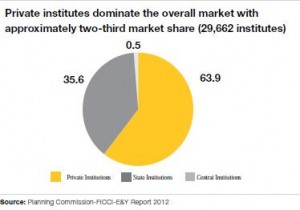
The Indian higher education today boasts of being the second largest higher education system in the world with 659 universities, 46,430 colleges and 25.9 million students. It goes without saying that private sector has been a predominant contributor to this major upsurge of higher education institutions in the country. The private sector now accounts for 64 percent of the total number of institutions and 59 percent of the enrolment in the country as compared to 43 and 33 percent respectively about a decade ago

While India has shown impressive  growth in adding the number of higher education institutions and student enrolments, the demand-supply mismatch would persist in higher  education, given the young population base that our country is bestowed with. India, at present, is recognised as one of the younger nations in the world with over 50 percent of the population in the age group of 18-30 years. It is estimated that by about 2025, India will have 25 percent of the world’s total workforce.

In the last two decades, we have seen significant growth of private sector institutions/universities which have been responsible for addressing the employability needs of our youth. Leading private universities like BITS Pilani, Manipal University, Thapar University, NMIMS University, Symbiosis International University, VIT, etc. have significantly contributed towards this end. In the last decade, one has seen private universities like Amity University, Galgotia University, Lovely Professional University, SRM University, opening up campuses in multiple locations and have helped in massification of higher education.

Although, the country has seen six times increase in the number of universities and twelve times increase in student enrolment in the last four decades, there still is a crying need for developing appropriate skilled manpower, generate indigenous knowledge and develop research capabilities with focused outcomes to retain global competitive ness of Indian businesses. India’s higher education concerns are far broader and have to address enhancing of access, providing relevant and quality, inculcating entrepreneurship, encouraging applied research and also focusing on hard core fundamental research. Hence, India needs layers of higher education institutions doing these tasks in a clubbed approach or as an independent entity. These would need an enabling regulatory framework that will attract substantial investment both from the government and the private sector. Some key  recommendations by FICCI are:

• Private sector now has limited mode of entry with only the State Private University route in few states leading to a skewed growth. Further, the not-for-profit mode restricts the source of revenue creating high dependence of self-financing institutions on student fees. Hence,

• Higher Education should be accorded Infrastructure status to attract private investment

• Allow all types of institutions to be established as Section 25 companies and permission to convert the existing trusts and societies (Currently only technical institutions are only allowed to be set up through this route).

• One of the barriers to generating endowments in an institution is that the trusts that run educational setups can receive the benefit only if they are acknowledged as a Section 25 organisation as per the Income Tax Act or under the Charities Commissioner. This matter needs to be looked into by the government and simplified.

• There are at least 20 to 30 Indian entrepreneurs who can singlehandedly create world-class universities. Expediting the passing of the pending Innovation Universities Bill could help in attracting such credible investments by the Indian industry in the higher education space.

• The past experience has proved that the so called ‘not-for-profit models’ of trusts and societies are opaque and have led to unfair practices. The success story of ‘for-profit’ higher education in countries like USA, Japan and Malaysia provides us with interesting lessons. The need for expansion of higher education in India and dependence on the private sector to meet this necessitates an extensive public debate on the issue to evolve a transparent Indian model to attract investments from the private sector.

• For attracting private sector contributions, government should encourage private institutions to induct independent professional and private philanthropists in the managing boards of the higher educational institutions. This will surely improve the governance of these institutions and also pave the way for attracting donations from the corporate world.

• Further, the Indian companies have been asking for a 100 percent exemption on endowment tax to contribute towards better research in the higher educational sector. Though the government’s last year’s announcement of increasing the weighted deduction from 175 to 200 percent on payments made to national laboratories, universities and institutes of technology for scientific research is a good move forward, however there is a need to seriously look at raising the 50 percent tax exemption to 100 percent on endowments made to educational institutions.

• Distance education is an alternate mode for higher education delivery with reduced investment. But conflicting regulations create an ambiguous environment for private players. It is important to create a harmonised view on the nature of programmes, and do away with arbitrary restrictions on deemed and state private universities.

• Setting up of education hubs can also bring down the overall infrastructure cost by developing common facilities like hostels, staff housing, libraries, auditoriums, research centers etc.
In spite of the impressive expansion of Indian higher education sector, there has been no significant improvement in terms of quality of higher education delivery and research in the country. In order to harness the full demographic dividend, India needs an education system that can deliver quality in terms of skilled and industry -ready workforce, without diluting focus on world-class research and innovation. The Twelfth Plan focus in higher education is to strengthen the quality in the existing universities and institutions. Hence, the Planning Commission-FICCI-Ernst & Young Report examined the levers of quality in higher education that can be implemented by the private sector institutions without waiting for the impending
reforms to be passed by the Parliament. They are:

• Merit-based student financing: This should ensure admissions to meritorious students independent of financial background

• Internationalisation of education: This would entail aligning different aspects of education (curriculum, faculty, etc) to international standards

• Enabling a research environment: This would involve creating adequate means of research funding and practical application of research

• High quality faculty: The need of the hour is to create a conducive environment and provide incentives to attract and retain high quality faculty

• Improved technology for education delivery: Leveraging technology for enhancing the teachinglearning experience will ensure better outcomes

• Employability: Making educationindustry relevant and practical would be the right way to ensure a highly employable talent pool

Industry-academia engagement is critical for effective and efficient implementation of the above identified levers. Government should expedite the establishment of Council for Industry
and Higher Education Collaboration, as a not-for-profit, independent nodal agency proposed by Planning Commission to facilitate industry-institute engagements


Promoting Digital Literacy In Rajasthan

RKCL is not just a business entity; it is a movement for the good of the people, says Dr Aatul Wadegaonkar, Managing Director, Rajasthan Knowledge Corporation Ltd  (RKCL), in conversation with Anoop Verma

Give us an overview of the work that is being done by Rajasthan Knowledge Corporation Limited. What is your vision for the organisation?

Our basic mission is to bridge digital divide, bring the common people closer to ethos and provide opportunities of knowledge society and knowledgeled economy, with a view to bring the real fruits of IT to the masses for survival, development and empowerment. Currently, we are providing quality vocational computer-related education to the masses. The education is being provided in a blended learning mode, in a very structured and evidence-based environment. In our current batch, around 1.5 lakh learners are taking their training in our computer literacy course, RS-CIT. The system of learning has been developed in such a way that it is possible for us to online monitor learning progression of each learner. This helps us to ensure that each learner is able to acquire the necessary skills. Our vision is to create a digitally-literate Rajasthan.

You spoke about monitoring the
learning progression of each learner to assess the quality of their learning. What kind of monitoring is being done and what aspects of education are being monitored?

All aspects of learning are being moni-tored. It is not just the marks that we are focussing on; we are also keen to identify the actual skills that the learner is picking up. In simulated eLearning en- vironment, the learner performs various differential and integral skills related assignments, the details of which get up- loaded. Similarly, learners are enabled to create society useful and productive outputs during their course of learning and a portfolio of what output they create is also uploaded.

Is the main objective of the kind of
learning being offered by RKCL to make the learners job ready?

We are into developing courses that are connected with survival skills. For instance, unless you learn courses like computer literacy, financial literacy, and English language proficiency, you will not be able to survive in the modern competitive environment. It has nothing to do with direct employment but improving your employability skills. Wherever you want to get employed, even as a clerk, you must acquire these skills.

Many private players like Aptech
and NIIT are also providing similar courses in all parts of the country. How is RKCL doing it differently?

The RKCL is a public limited company established in Rajasthan as a joint venture of the Government of Rajasthan; Maharashtra Knowledge Corporation Limited (MKCL), Pune; University of Rajasthan, Jaipur; Maharana Pratap University of Agriculture and Technology, Udaipur; Vardhaman Mahaveer Open University, Kota; Rajcomp Info Services Ltd; and Centre for e-Governance. Today, RKCL has a franchise network of 2,000 centres across the state. No one else has such a huge network. We want to deliver high-tech, high-touch education to the masses. All other players have a district-level presence, whereas  our presence is up to the block level. The fee structure for our courses is also very low; it varies between `2,300 – 3,000. Our courses are evidence-based and our eLearning framework is designed to ensure implementation of high-tech with human touch; appreciation to imitation than from imitation to emulation; from emulation to self-expression; from self- expression to self-confidence; and from self-confidence to self-esteem approach to ensure guaranteed learning. All other frameworks lack on this front and are  instructor-driven, where learners are taught and it is assumed that essential skills are imparted.

Education is about Real Life Experiences

Our job is to provide more experiences and opportunities for students, says Kr Sumer Singh, Principal, The Daly College, Indore, in an interaction with Rozelle Laha


Kr Sumer Singh, Principal,
The Daly College, Indore

Please brief us about the Daly College and its mission.
The Daly College was started as a Chiefs’ college. In the mid 30s, the founding member of the Indian Public Schools Conference realised that independence was not too far and the need of the hour was to educate the masses who would take up leadership. Therefore, admissions were opened to the public, and later on in the mid 60s, The Daly College began admitting girls also. We are members of different associations like the Indian Public Schools Conference, Round Square, AFS and NCC. These memberships are indicators of the the reflexive thinking of the school. Each child is born with certain talents, and we provide our children with every opportunity to discover and nurture their talent. We offer a variety of subjects, sports and a range of cultural activities and social service opportunities so that a child can find his passion.

Please tell us how you are improving the quality of education.
At Daly, our focus is on teachers. Our students can opt either for Cambridge International or CBSE curriculum at the same fees. The CBSE system is a rescribed textbook system. The Cambridge University system emphasises on challenging questions and clarity in concept. A student needs to refer to different sources to be able to attempt an answer. So while the CBSE system focuses on creating a follower, the other aims at making a good leader.

How can we improve the teaching-learning process in our country?
There are two kinds of schools in the country: non-profit schools owned by societies and trusts, and for-profit schools run by businessmen or families looking for income.People should generate money from education, but at the same time, they should also promote more educational institutions. The government should not regulate the fee structure. These days, the schools need to pay different taxes. So if a school has to pay out more and charge lesser fees from students while also accommodating students under RTE for free, the standard of education will obviously fall. We are approaching a situation where all the institutions in the country will be brought down to the same level and there will be no good schools, except the IB and CI schools as the government will not be controlling them. That way, the Indian system of education will disappear and an international educational system will emerge. In such a situation, the villages and the tribal areas will suffer the most as they cannot afford interna-tional schools.

Please comment on the changes in the education system with the advent of IT tools?
The teacher is always the main component in the education system no matter what the system of imparting education is. IT tools might provide more options of explaining and teaching. But, a good teacher can teach without any such tool.

What is your opinion on the quality of teachers’ training programmes in our country?
The teachers’ training programmes in our country are just a surface training. A teacher needs to unlearn whatever he learns during the training process once he enters the teaching world.

What is the vision of The Daly College in the coming years?
Our vision would be to provide an opportunity to students to think and experience. This opportunity can be in the form of good talk, books, teachers, travel, service or adventure. At the end of the day, all your experiences and what you make of these experiences is what we call educa- tion. Education is what you become as a result of all the experiences. Our job is to provide more and more experiences and opportunities for students.

Alternative Assessment Strategies and Innovative Approaches in Evaluation

The session evaluated the current practices in assessment and evaluation used in schools and institutes of higher education in our country. It highlighted next and best practices and provided innovative models that can be replicated in teaching-learning practices
Neti Srinivas,
COO, Ryan Group of Institutions

Children learn at their own pace, and in different ways. We cannot have a uniform testing method for all of them. Over the last few years, the government has also become active. The CCE manual is extremely comprehensive, child- and school-friendly, and if followed properly, it can bring a revolution in the assessment of kids.

Veena Raizada,
Director-Academics, Next Education

Teaching methodologies are important before we assess students. Delivering education content only will not work. We should make students understand and deliver knowledge with the right objective of that content.

S A M V Prasada Rao,
CEO and Principal, DRS International School

Assessment is an integral part of teaching and learning. Its prime objective is to provide feedback on the learning process. Schools are expected to develop assessment procedures and methods that reflect the philosophy and objective of the programmes run by the school. Information that has been put in the brain is like a closed file and gets wiped off as soon as the exam is over.

Son Kuswadi,
Education Attache, The Embassy of the Republic of Indonesia

We have to evolve our secondary education. Higher education too, in Indonesia faces a lot of challenges with the gross enrolment ratio being 26 percent. Yet, we are on a higher side in comparison with India which is around 16 percent. India and Indonesia have signed a memorandum of understanding on education cooperation last year.

V Nanda Kumar,
Principal & CEO, Ecole Mondiale International School

Is it possible for an assessment system or a combination of its parts to fully satisfy our requirements of a reasonably comprehensive assessment?

Accreditation of Higher Education Institutions: Challenges and Opportunities

The session delved upon why some of the universities in the country are not following the National Assessment and Accreditation Council (NAAC). Higher education is evolving and new challenges are coming up. Therefore, there must be a provision in our  accreditation process that offers space for versatility in the institutions

Prof H A Ranganath,

Director,
National Assessment Accreditation Council and Former VC, Bangalore University

Accreditation is the health check-up of an institution. If it is done by the correct diagnostic centre, it gets to now its strengths and weaknesses and other challenges that the body is facing, and accordingly initiate remedial measures.

Prof Furqan Qamar,

VC,
Central University of Himachal Pradesh

Making accreditation compulsory does not serve the purpose. You make it compulsory and the whole process becomes ritualised. Let people realise that accreditation is in their own interests so that they come on a voluntary basis so that higher education catches up with some kind of quality improvement drive.

Prof Bharat Chattoo,

Former VC,
Shri Mata Vaishno Devi University,Jammu

India accounts for just about 3.5 percent of the global research output. China’s output is about 18 percent. When we talk about our quality institutions, even out of those 3.5 percent, not more than 1-2 percent of the research output has international impact. In that kind of a situation, one will really have to ask what constitutes good science.

Prof S Ramesh Babu,

Associate Vice President,
Education & Research,Infosys

We need to connect to the stakeholders and get a lot of insight from them to make our programmes relevant,flexible and useful to our people. Our focus is how we accredit, not from the NAAC perspective, but from the quality assurance perspective. We also need to look at how our services are accredited by the clients, how we provide the services and how we know that they are benchmarked.

Training of Educators: Coping with Rapidly Changing Education Technologies

Technology changes everyday and it is very important for teachers to keep abreast of new technologies to teach the children of today. Hence, training comes as an essential component to keep momentum with time and technology. The session finds out the way forward to cope up with the rapidly changing education technologies and training of educators
Prof Parvin Sinclair,
Director,National Council for Educational Research and Training (NCERT)A teacher’s experience in her pre-service and in service activities should be similar to her experience in the classroom. If she has to bring constructivism in the classroom, her own experiences too should be like that.
Prof (Dr) NB Sudershan Acharya,
Founder and Chairman,Lead India 2020 FoundationThe integration of technology in education will change the face of India. Educators integrate technology in teaching-learning process for strong professional development of students. Creation of user-friendly learning environment for educators will help them grow much beyond.
Mamatha E,
Chairman and Correspondent,Johnson Kids SchoolWe should train our teachers in the new technologies and methodologies that are coming in. But I think, when they do it by their own, it becomes memorable for them forever. The overuse of technology kills a child’s creativity.
T Venu Gopal Rao,
Academic Director & Managing Director,
Fusion International SchoolSkills of in-service teachers should be refreshed by providing internal or external training in the latest educational technology trends. Teachers should be trained to evaluate and integrate available materials into the learning process along with enabling trainee teachers to access sources of knowledge and to create knowledge.

LATEST NEWS