Home Blog Page 1118

Maruti Suzuki to Provide Higher Education to its Workers

Maruti Suzuki India Ltd (MSIL), in collaboration with the Haryana State Board of Technical Education and Haryana IGNOU Society for Community Education and Training, unveiled a higher education scheme to offer for its shop floor technicians on Tuesday.
The programme called Gyanuday will offer a three-year-diploma in engineering and aims at enhancing the skill-sets of employees. Technicians who have served at Maruti’s Gurgaon and Manesar plants for at least three years will be eligible for the programme. It offers a diploma through part-time classes in mechanical, electrical and engineering streams.
Further, 50 per cent of the course fee would be subsidised by the company, while interest-free loan would be offered to some employees on the basis of merit.

Nobel Laureate Amartya Sen Appointed Nalanda University Chancellor

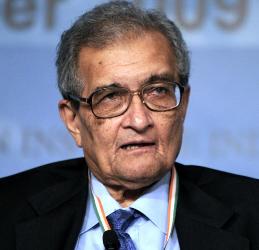
Amartya Sen has been appointed the first chancellor of the proposed Nalanda University (NU). He is also the chairman of the NU governing body. The appointment has been made by the President and it was announced by governing body member and former foreign minister of Singapore, George Yeo, after the daylong meeting.
Sen said the first two schools on ecology & environment and historical studies will start in 2014. After the approval of its architectural design, the construction work and appointment of faculty members will start simultaneously. All the members of the board, except Wang Gungwu of Singapore and Prapod Assavavirulhakarn of Thailand, attended the meeting which discussed in detail the various issues related to the NU. When asked whether he would spend more time in Nalanda as its chancellor, Sen smiled and said, “Sure.”

First Technical University in Pakistan

Underlining the importance of vocational education, the Pakistan government has decided to establish the country’s first “Technical Vocational University” in Hyderabad and to impart technical education to at least 0.1million youths at various industries under an internship programme this year. An approval to this effect was given at the 11th meeting of the Sindh Technical Education and Vocational Training Authority’s (STEVTA) board of governors held on at the Chief Minister’s House.  The meeting decided to present a ‘Provincial Apprenticeship Bill’ before the Sindh Cabinet and Sindh Assembly in its next session. The meeting also gave an approval to an internship programme through which 100,000 youngsters would be imparted training in various industries.  It was decided that the production unit of Swedish College would be reactivated and started, while efforts would be made to ensure provision of official furniture for various government departments, particularly the education and health departments.

NCPCR’s Instruction: Punish Schools Defying RTE Norms

Worried over reports about children admitted under economically weaker section quota being insulted by private schools, the national child rights body has asked states to withhold recognition of institutions found guilty of discriminating against such students.

In a letter to Chief Secretaries of all the states, the National Commission for Protection of Child Rights (NCPCR) also recommended formulation of a code of conduct for private schools and punitive action against them if the provisions are violated.

Under the Right to Education Act, 25 per cent of seats in private schools are reserved for students belonging to economically weaker sections.

“The matter of discrimination in private schools has come to light in recent times. These acts include punishing children for not wearing proper uniforms or being untidy, making them sit separately, seeking to distinguish them from others by cutting their hair and not involving them in co-circular activities.

“In the letters addressed to all State Chief Secretaries and Secretary Education, the Commission has asked to restore the dignity of children who have been guaranteed their right to education in private schools under the RTE Act,” an NCPCR statement said.

Yesterday, the NCPCR had issued a notice to Karnataka Education Secretary asking him to submit a report within a week on allegations that four Class I students of a prominent Bangalore school were humiliated after authorities allegedly cut off tufts of their hair.

The NCPCR has asked the states to formulate state rules and a Code of Conduct that has to be followed stringently by private schools and management.

“Any violation of the Code of Conduct should trigger punitive action against the perpetrator and the school management under the relevant provisions of the law.

“The School Education department to withhold recognition of schools against which the complaints of discrimination and corrective measures are established in expeditious manner,” the NCPCR said.

A Grievance Redressal Cell should also be established at district and state level for effectively addressing the complaints of discrimination in this category. The response to such complaints should not take more than 48 hours, it said.

The state government should also ensure that meetings with school management and principals should be conducted by School Education Department to sensitise them on these matters.

“They should be informed that discrimination of any kind against these children, will not be tolerated, and any violation of their rights will attract punitive measures,” it said.

The Commission has sought the Action Taken Report from the Chief Secretaries within 30 days.

Computer Education Plan to be Launched in Orissa schools

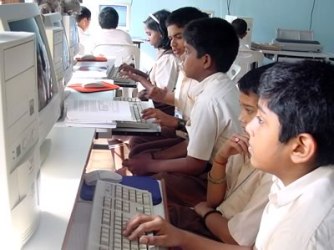
In order to make the children computer literate, the State Government has decided to start imparting computer education in 1,442 Upper Primary schools and 6,000 Government-run high schools from the current academic year.
The School and Mass Education Minister Pratap Jena, said under the Computer Aided Learning Scheme, as many as six computers along with printers would be provided to UP schools to be installed at the specially built Computer Labs. Similarly, ten computers would be provided to each Government high school under the ICT computer education scheme.   He said in order to make the programme functional, during the last two years  two to four teachers in each school were given computer training. Training to the students would be given as per specific syllabus with practical classes, he said.

Bombay HC stays AICTE Order Withdrawing Approval for Eng Courses

The Bombay High Court has granted interim stay on an order issued by All India Council for Technical Education (AICTE), withdrawing approval accorded to Navsahyadri Education Society to run two engineering colleges for degree and diploma courses for the academic year 2011-12.
Chief Justice Mohit Shah and Justice Nitin Jamdar also directed the Director of Technical Education, Maharashtra, to display on the government website the names of colleges of the petitioner-institution for admission to degree and diploma courses in engineering for academic year 2012-13.

Though AICTE granted approval for engineering courses conducted by this institution for academic year 2012-13, almost at the same time, it also withdrew the approval for the courses for the academic year 2011-12.

“If no relief was granted, the petitioner will not be able to admit students during year 2012-13 as per the approval granted in May 2012 to the institution as the online process will close shortly,” the bench said in its order last week.
The court also accepted a statement of the petitioner assuring that it had removed deficiencies in infrastructure pointed out by AICTE for withdrawing approval for engineering courses for academic year 2011-12.
The institution also gave an undertaking to the Court that it would appoint requisite number of qualified Associate Professors and Professors within a period of two months.

The judges, however, clarified that this interim order is confined to the two colleges of the petitioner one running degree engineering course and the other operating diploma engineering course. As far as the other colleges (run by the petitioner) are concerned, it would be open to the petitioner to file separate petitions.

RTE just on Paper; the Poor are Still Turned Away

Even after the implementation of the Right to Education (RTE) Act, access to education has not become any easier for students from the weaker sections of the society.
Parents with an annual income of less than Rs1 lakh are lodging complaints with the education department against schools refusing to admit their wards in the 25% quota.

Abdul Karim Ansari, a parent and a tailor from Agripada, had lodged a complaint with the help of National Students Union of India (NSUI), states that St Joseph School, which falls within one kilometre of Ansari’s residence, rejected his application of admission. Ansari, whose annual income is Rs80,000 per annum, says that the school turned him away when he approached for his four-year-old daughter, Aasna’s admission in the junior KG under the 25% reservation quota.
“The school told me that the preschool section was private and not aided by the government. Hence they could not take my daughter in. I want admission in this school as it is only two minutes away from my residence,” Ansari said.
When contacted, the school authorities told DNA that they have not implemented the 25% quota in the preschool section as it unaided.A school authority said, “Our school is minority aided only from class 1 and hence we do not have 25% reservation for students of the junior and senior KG.”

However, according to officials in the education department, RTE is applicable at entry levels in the schools, even if those sections are unaided.

Schools Upset as CBSE makes Changes to CCE Scheme

While schools are still grapling with the continuous and comprehensive evaluation (CCE) scheme, there are more changes waiting to happen. The governing body of the Central Board of Secondary Education has decided to replace one of the four formative assessments (FA) with a problem solving assessment (PSA) for Classes IX and XI.

The proposal was made during a governing meet in June and the first test will be conducted on January-February 2013 for Class IX, said a CBSE official. However, school principals are questioning the need for such changes.

According to a CBSE official, the pen-paper test will replace one of the FA. The schools under the CCE scheme conduct four FAs in two terms. “The PSA is not a new test but it will replace the already existing pen-paper test in the FA. The only difference will be that PSA will be conducted by the Board in the respective schools and the evaluation will be done by the Board. The exam will be conducted on the same day and the question paper will be provided by the Board,” said chairman of CBSE, Vineet Joshi. According to CBSE sources, the 90-minute test will have nothing from the textbooks. It will comprise of questions from mathematics and an English passage from old essays or contemporary fiction.

School principals, however, are questioning the need for such changes and believe that the test will go against the philosophy of FA. “When the whole understanding of problem-solving is integral to CCE, we will go back to the pencil-paper mode through this test. Though it will not affect grades and students will not need additional preparatory studies, I don’t think there is any requirement when the system (CCE) is settling down. Such changes are undesirable as we need to consolidate now,” said principal of Springdales, Pusa Road, Ameeta Mulla Wattal.

Pearson Adds new Features to DigiClass Pro Solution

Pearson Education Services, part of Pearson Global and an education services provider, has updated and added advanced features to its DigiClass Pro Solution. Pearson’s DigiClass Pro is a multimedia based ICT solution specifically for higher education. Based on the ‘Cognitive Learning Approach’, DigiClass Pro’s multimedia content, ‘DigitALly’ includes graphics, animation, images, PowerPoint slides and several other learning tools that help in making classroom learning more engaging, resulting in better understanding and retention of complex concepts.

The latest version of DigiClass Pro covers over 75 subjects across 5 branches of Engineering. It includes over 5000 presentations, 600 animations, 75 simulations, 8000 images and 700 3D models. The content for DigiClass Pro has been mapped to 6 universities in India. The Engineering students get the benefits of 3 Virtual Labs that can be used across ECE, EEE and CS branches of Engineering. DigiClass Pro has also been introduced for MBA students, containing 7 subjects across 3 branches, with 270 videos.

Srikanth Iyer, COO & Director, Pearson Education Services, said “Our aim for developing the new and improved version of DigiClass Pro is another effort by Pearson Education Services towards creating an environment that is powered by technology, fueled by information and driven by knowledge. The new DigiClass Pro is enriching and its engaging multimedia content ensures an interactive classroom.”

CBSE Wants Teachers’ Comment on Formative Assessment Manuals

The Central Board of Secondary Education ( CBSE) introduced its innovation Comprehensive and Continuous Evaluation (CCE) process a couple of years ago, and is constantly looking to improve upon it. In continuance of its improvement plan the board, has now sought feedback from teachers of Std IX on the Formative Assessment manual.


The CCE’s assessment consists of Formative Assessment (FA) and Summative Assessments (SA) which are conducted throughout the year. The board is seeking feedback on four subjects – English, Mathematics, Social Sciences and Science — and wants to know what difficulties teachers are facing. The feedback form is available on the board’s website and is extremely exhaustive.

The board had sought teachers’ feedback last year for Std X and claims that it received ‘valuable inputs’ and has hence decided to extend the same process for Std IX as well. The CCE scheme refers to a school-based evaluation of students that covers all the aspects of a student’s development. Continuous means regular assessments, frequency of unit testing, analysis of learning gaps, applying corrective measures, retesting and giving feedback to teachers and students for their self-evaluation, etc.

Comprehensive on the other hand attempts to cover both the scholastic and the co-scholastic aspects of a student’s growth and development — with both these aspects of the evaluation process being assessed through Formative and Summative Assessments.

LATEST NEWS