To make the education infrastructure more aligned towards taking care of the best interests of the students, the education institutions have marched an extra mile and adopted Enterprise Resource Planning (ERP). With ERP the game has changed a lot
 Education in today’s world has become highly competitive. In order to be different and ready for action the institutions need a central resource planning that can manage the entire information and operations of the institutions.
How does it work?
ERP brings cohesion to the administrative culture of the education institutes, by creating a system for management of data in a seamless and efficient manner. The information can be stored and retrieved in different ways. Whether it is keeping attendance of student, teacher and administrative staff or informing the student about the date of new session to be started, ERP does it all.
Benefits of Education ERP
The future integration of Internet technologies, Application Service Provider(ASP) hosting services, and expanded ERP systems can help transform the way education institutions operate in the 21st century and move closer to realising the goal of anytime, anywhere computing. Here are some benefits of using the Education ERP solution.
Benefits for Management
• Easy access of all records at one place
• Channel to interact with staff, teachers, parents, students
• Saving man hours and increasing productivity
• Unhindered, smooth management
Benefits for Faculty
• Manage class reports, attendance, and performance
• Making online exams
• Interaction with parents
• Effective planning
• Online projects and forums for students
Benefits for Administration
• Easy access to reports
• Getting accurate and timely data
• Publication & circulation of reports
• Saving man hours for productive work
Benefits for Students
• Platform to interact
• Share knowledge, experience, views
• Access library
• Online exams
• Participate in projects
• Contribute to school in out of school hours
Benefits for Parents
• Reports & Updates regarding ward
• Effective and Timely communication of school activities
• Knowledge Interaction with other guardians
To make our readers aware of the actual scenario of education ERP deployment in India, we contacted some of the ERP solution providers and have noted their excerpts in the following pages.
Smooth Working with ERP
“Sanjeev Phatak, VP, Training and Assessment Solutions Practice of Aptech Computer Education shares his insights on ERP in education infrastructure “
 What benefits do you think education institutes can have in embracing ERP solutions?
These ERP systems are totally automated, they come with inherent benefits such as transparency in operations, seamless integration of discrete processes, database management and archive facilities, admission to alumni management systems, to knowledge management. The single most challenge so far is a mind set of schools from the investment perspective. Hence, services model can be the best fit to start with. Schools are reluctant to invest in systems; infrastructure. Also skilled resources to manage these systems are also a challenge faced by schools.
What is your opinion on the level of ERP adoption in Indian schools?
Currently the penetration is too low. Only few schools with international tie ups have adopted such systems, but in such cases also adoption has not been done across all the modules. Government schools are far away from such systems.
ERP for Better Management
“Ajay Sakhamuri, CEO, MyClassboard Educational Solutions Pvt Ltd feels the country’s education ecosystem has started getting the benefits of utilising ERP”
 Who forms the largest group of ERP adopters in schools?
When it comes to adopting an Educational ERP Software to run the day to day operations, the private schools are way ahead of government schools. From my understanding as on date the usage of ERP is primarily limited to the schools in the urban areas and large chains of schools.
What ERP solution do you give to schools?
MyClassboard Fully Online School Management System is an end to end web-based School Management System that can be deployed for single schools or groups of schools without the need for a great deal of configuration. The application has a vast amount of built-in functionality and can handle everything including student records, elementary and secondary student report cards, fee collections, daily attendance, timetable scheduling, budgeting and accounting needs (Tally integration), admissions, library, learning management, online examinations, transport management and much more.
What is the investment required in deploying the solution in any educational infrastructure?
MyClassboard works on the cloud model, the initial investment on purchasing software or hardware that the client needs invest is absolutely zero. The client needs to pay a monthly subscription charge of ` 5999 and MyClassboard will take care of the rest.
What is your opinion on the level of ERP adoption in Indian schools and higher education institutes?
We feel that until now only less than 5 percent of school and colleges actually use ERP in their organisations. And currently we can observe that the usage of ERP solutions in the India education sector is increasing rapidly. I believe with the next three years Indian education system will see considerable amount of changes and it will become mandatory for every organisation to go for ERP System to manage all their academic and administrative operations.
However, schools generally tend to make wrong choices while picking an ERP solution provider. Before picking an ERP solution the educational institution must do a lot of analysis and then pick the vendor. The primary reason for this could be that there are very few players across India who has the funding, long term vision and passion to work in the education technology space.
ERP Makes You Work Faster
“Lawrence Zacharias, Founder Director of Entab Infotech Pvt Ltd sees that ERP utility in education will grow expediently”
 Who forms the largest group of ERP adopters in schools?
Private schools are the major adopters of ERP. This is because the private schools are more concerned about the systematic accounting of 3Ms(man, money and material) and activities (students, staff, fund, exam and co-curricular, inventory and the library). There is a competition prevailing among the private schools to perform better to bring out best results, hence they are willing to accept technology to automate their day to day activities.
What ERP solution you give to schools?
Our software products name is Campuscare. We provide solution starting from enquiry for admission to arrange transfer certificate of the students. Assessment of the students to preparing report cards, fund accounting, purchase order to material handling to scrap- inventory, taking care of daily transactions as well.
What is the investment involved in deploying the solution in any education infrastructure?
A full-fledged ERP implementation ensuring high level of automation can be achieved by 15-20 lacs expense and recurring expense of leased line to host the web server.
What benefits do you think education institutes can have embracing ERP solutions?
As we all are aware many institutions do not have all the documents properly
maintained, and there is lot of duplicity in admission number. The fees collection never gets tallied, and those who are not authorised for concession some time enjoy concession. The tabulation mistakes are also there in report cards, salary sheet. PF returns are a tedious task and we are depending on external agencies for accuracy, library does not have proper records, library books stock check is a tedious task.
Solution:
ERP software can resolve issues at institutions by:
1. Automating the repeated process by simple steps.
2. Providing provision for verifying the inputs
3. The dependability on staff has reduced for the management for information.
4. Enhances work flow, increases the efficiency, reduce the reliance on
paper.
Institutes Work Better With ERP
“Vinod P John, Senior Director (Sales), Ellucian feels the 21st century education infrastructure must include education ERP in its work management infrastructure “
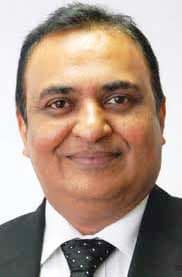 What are the challenges associated with implementing ERP solutions, please tell us from yours and your client’s point of view.
At Ellucian our key forte lies in deploying ICT solutions for higher education. From our point of view, we take pride in the fact that we focus on a solution based approach tailored to suit our customer needs. Our success lies in communicating the value proposition of Ellucian’s ERP solutions enabling our customers to migrate from the paper based legacy systems to the new system. This would be the major challenge for ERP vendors at the beginning of every customer journey. Apart from this familiarizing the staff and student with the new system will be challenging. Establishing a unique set of best practices by leveraging our international and local expertise is what we consider the biggest challenge.
What is your opinion on the level of ERP adoption in Indian higher education institutes?
IT now is considered as a strategic element to make changes & growth in associated policies across all segments in India Inc., and education is not far behind. Earlier, majority of Indian Institutes deployed software solutions on a very small scale but we are witnessing a gradual change in this approach. Indian universities are now open to the idea of adopting ERP for procedures related to admission, teaching, examination, and interaction with students.
Education ERP Streamlines Management
Rajendra CM, MD, APAC and EMEA, Talisma, talks about the ERP solutions they offer
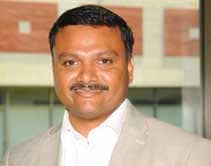 Tell us about the investment involved in deploying the solution in any education infrastructure?
There are two types of investments that will be needed. One is monetary and other is in terms of resource allocation. Institutions need to have a clear idea of their expectations from technology investments and a clear road map defined in association with a consultant or a vendor will help.
What benefits do you think education institutes can have from embracing ERP solutions?
Today, campuses are operating in an immensely competitive environment. In order to attract, retain and nurture talent, universities need to offer flexible and engaging distant education courses, enriching student services, smart classrooms, learning analytics, comprehensive placement service, alumni relation management etc. Talisma can help campuses in all these areas. We are already partnering education institutions in various parts of the globe in their endeavour to become agile campuses that are powered by benchmark student services. In a hyper competitive scenario, our ERP and CRM solutions can help campuses focus on students and the student eco system without worrying about competition. ERP helps reaping the benefits of technology in areas such as revenue growth, brand equity management, student lifecycle management, faculty and administration management and operations.
What is your opinion on the level of ERP adoption in Indian schools/ higher education institutes?
We are seeing plenty of traction in the Indian market. Many institutions have already defined or are in the process of defining an IT roadmap for transforming into agile campuses. The adoption rates are low as of now due to a variety of reasons. But the next few years will see many Indian campuses turning agile and emerging into role models for campuses in the Asia pacific region.
Work Smart with ED-ERP
 “Anil Goyal, Director-Strategy & Business Development, Mexus Education Pvt Ltd offers education ERP for education institutes “
Who form the largest group of ERP adopters in Schools?
Private schools especially tier I city schools are major adopters and active users of ERP solutions because of the easy access to information.
What ERP solution you give to schools?
We offer complete school automation processes from enquiries to staffing and
marksheets with various user access levels.
Our Iken ERP platform connects 8 core school activities. It felicitates inquiries, admissions, student information and records, fees, subject planning, student performance and progress, payrolls and staffing.
Over 150+ schools have adopted Iken ERP across India.
What benefits do you think education institutes can have embracing ERP solutions? What are the challenges associated with it?
Iken ERP is designed to ensure –
• Data Security with pre-defined user access levels
• Grade-wise Subject and Exam Planning
• Synchronize all information for better planning & resource management
• Scalable to match growth of the schools
The concept of ERP is novel to Indian School, thereby, connecting with the schools and educating them on the potential benefits of using technology for organising processes and resources is a roadblock that is holding back the realization of full potential of this demand. Automation of existing physical data is constantly a challenge for deploying the software and the systems. A complete support cycle of training, monitoring and refresher training brings in the necessary understanding and acceptance of the software, at a macro level.
What is your opinion on the level of ERP adoption in Indian Schools?
With the scope of education widening, there is a strong underlying need to align the process and manage resources optimally. Yet the adoption levels of Iken ERP remain abysmal till date.
Offering Seamless ERP
Hemant Sethi, President, School Learning Solutions (SLS), NIIT Ltd says his company has been offering seamless ERP solutions to education institutes over the years
Where do you see the need of Education ERP?
Schools of today are complex organizations with hundreds of people working in tandem to create an ever-evolving institution. One of the keys to the success of a school is in the way it manages the deluge of information amongst other things. Most schools use information management one way or the other, whether it is Excel or function-specific information systems like Library Management System, Fee Receipt Generation etc. These are mostly stop-gap solutions rather than scalable, comprehensive and long term solution. Since most of these systems are outdated, the generic school staff (Teaching and Non-Teaching) waste their time on mundane tasks and the school management lacks a decision support system. The education ERP solution comes handy to address these issues.
Who form the largest group of ERP adopters in schools?
The major adopters of ERP are private schools. Private schools adopt ERP to streamline their functions like fees collection, report card generation, payroll, admissions, inventory management, transportation etc. However, in new IT initiatives all state governments are coming up with requirement for ERP in the state schools.
What ERP solution you offer to schools? So far how many schools/higher education institutes have deployed ERP solution from you?
Quick School is integrated and comprehensive education resource planning software developed for schools to manage information spanning all functional requirements like fees collection, report card generation, payroll, admissions, inventory management, transportation etc. It also has the unique feature of modules that facilitate the implementation of CCE guidelines. It addresses the needs of all stakeholders within the education realm – students, teachers, principals, school management and parents. The product empowers schools to strengthen their services to students and parents, thus enhancing their competitive advantage many fold. NIIT has implemented Quick School in 6000+ government and private schools.
What is the investment involved in deploying the solution in anyeducation infrastructure?
Although it depends on the school requirement, the student strength and what all functions that school wants to automate, the price ranges from `1.5 lakh to ` 7 lakh.
What benefits do you think education institutes can have embracing ERP solutions?
Quick school standardises and streamlines the various processes in the school through the following:
Support For Evaluation
a) Evaluation plan,
b) Multiple evaluation types,
c) Scholastic,
d) Co-scholastic,
e) Formative,
f) Summative
Data Management
a) Students data,
b) Teacher’s data,
c) Examination data,
d) Health Status,
e) Attendance data
Reporting
a) Report card generation,
b) Analysis that can lead to remedial action,
c) Information to parents,
d) Involving parents in the teaching learning process.
ERP on Board
“Forward looking Higher education institutes have adopted ERP solution as it leads to improvement in performance.It brings efficiency and transparency to the sphere of operations. Higher education leaders in India share their ERP experience”
Dr Elizabeth Verghese, Chancellor, Hindustan University
Our ERP solution is an in-house development of the Hindustan Group, and is tailor-made for our purposes. The complete solution is in various stages of development and implementation and we are reaping the benefits of the system. The biggest challenge is user acceptance and change management.
Dr Upinder Dhar, Vice Chancellor of J K Lakshmipat University
The  ERP solution at JKLU c o m p r i s e s of various modules that cater to the needs of academic and administrative staff. The ERP is going through the implementation and customisation phase and the results are satisfactory. The biggest challenge was to strike a balance between customisation and adopting standard industry practices. Balance has been struck with mutual agreement and heavy involvement of all stakeholders. Periodic review meetings have been a great help in the most trying times.
Santanu Mishra, Co founder and Executive Trustee of SMILE foundation
 The current ERP system functions under two broad subjects. The most important one is operation of all the institutes along with their progress. The second area is the recruitment system for all the alumni. This recruitment system helps us to keep a track of all our students and also the students are updated about the recruiters.
Brig Grewal, Vice Chancellor, Chitkara University
We have also developed our own ERP package for the university, where every aspect of the students activities whether it is attendance, his medical sickness, his performance & evaluation, his end term tests etc, everything is put up on this thing. So a father sitting in US, by login user id and password can come to know about the activities of his son or daughter studying in India.
Akhlesh Agarwal, VP – Learning Technologies, NIIT University
 We had been using an industry strength ERP for our accounting and financial functions. In the forth coming academic year, we are going to start using a student information management ERP product also. This ERP will cover complete information in student lifecycle, from admission and registration process to management of academic records, library, hostel, mess, placement and Alumni. We, at NU have very specific processes for several academic functions and we wanted to get an ERP package that could be fully customized and configured to suite our process requirements. This ERP package is being developed and customized by NIIT LTd.






 Boxlight has unveiled its new ProjectoWrite2 series that will meet the diverse requirements of its customers, be it a business executive, an academician, today’s style conscious youth or the diligent learner.

 Global Indian International School (GIIS) was initiated by Global Schools Foundation (GSF) with the aim of providing quality education to the expatriate community in Singapore. IFC, a member of the World Bank Group, has invested 25 million Singapore dollars (equivalent to $19.4 million) in GIIS to increase access to quality primary and secondary education in emerging markets in Asia, including lower-income countries.






 Ashish Kesharwani, Chief Learning Officer, UEI-Global believes, “Future holds great hope and scope for Maths, Science and Engineering background students. Thus the need to create interest amongst the student fraternity to take up this stream is required. It is evident right from school education that these are dreaded subjects and teachers use traditional/ conventional methods to teach them. Being innovative and practical orientation / application will help generate interest in this field. This will increase the creativity and analytical ability, thereby enabling students to use their knowledge in real world environment. There is dearth of technical graduates. Also the graduates that pass-out lack application skills since the current education system lacks practical learning. Thus the IT and Engineering companies need to spend more time and money on training fresh graduates. At the moment it does not cost much since the wages are low and manpower is available in abundance, this will not be the case in future thus, not only from education but from industry and economy point of view STEM education will help in creating interest and upgrading skills”.
 Jaganathan C of Texas Instruments says, “In India, we have been witnessing a significant improvement in the infrastructure in primary, upper primary and secondary schools in the last 10 years and more so with respect to public schools. Though there are some important issues that call for attention both in the infrastructure and professional teaching areas, enrolments in school are on a gradual rise”.
 Vandana Lulla, Principal of Podar International School (IB and CIE) says, “Stem education will empower students and teachers enabling them to address some of the bigger social challenges around the world and in their communities. It will help institutions and students to think out-of-the-box for solutions and ideas that are both collaborative and creative”.
 Amit Rana, Pro-Vice Chairman of DPS-Panipat comments, “The STEM system is a good start. Proper training and continued usage will lead to competence and then to innovative techniques using STEM technology in education. Our education system needs a thorough revamping and technology cannot be ignored”.