



Home Blog Page 134

Digital Transformation swaying the education ecosystem

nathan

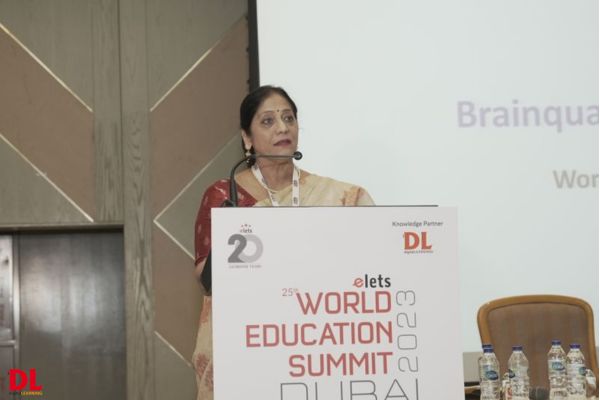
Canvas was founded in 2008 and has since become the fastest-growing LMS in the world. Its client base includes prestigious universities such as Harvard, all Ivy League schools in the US, as well as Oxford and Cambridge. With around 70 million users accessing Canvas concurrently, including instances with up to 7 million users, it is the top-ranked Education website in the world”, said Nathan Thomas, Regional Director, Middle East & Africa, Instructure at the 25th Elets World Education Summit in Dubai.

“It is essential to focus on the transformation itself rather than the specific platform being used. One crucial aspect to consider is the changing expectations of students and teachers over the last three years. The COVID-19 pandemic and other factors have disrupted the status quo, leading to new expectations regarding how students learn and how teachers deliver information”, he added further.

“Context influences device choice, with users selecting the device based on factors such as location, available time, desired outcome, and attitude. For example, some may prefer a passive mode of consumption when they have free time, while others may have a deadline to meet. Statistics show that daily media interactions on PCs account for 24%, while smartphones account for 38%. Users tend to use PCs to accomplish tasks, while smartphones are mainly for communication and entertainment”, said Nathan.

Sharing some statistics on how digital transformation has impacted education, Nathan said, “One of the key changes is that students now have different expectations on how they learn and consume information, compared to just a few years ago. Context, time, and attitude drive device choice, with many people using their phones or laptops depending on the situation. For example, computers are used to accomplish tasks or do research, while smartphones are used for communication and entertainment. To meet these expectations, institutions need to create an ecosystem of interaction between teachers and students, which is best achieved through a mobile app.”

“This is because apps are more effective in creating an interactive and equitable classroom experience for a mobile population. In fact, 95% of adults expect higher education to be hybrid by 2025. Emails are no longer effective in reaching students, with only a small percentage actually reading them. Instead, push notifications via the mobile app are more effective in engaging with students. This shift in student expectations has been expedited due to remote changes brought by the pandemic”, he concluded.

Edtech startup Oneistox raises $1.2 Mn seed funding

Oneistox logo

Oneistox, an edtech firm, has raised $1.2 million in seed funding from Y Combinator, Powerhouse Ventures, and Soma Capital as well as individual investors including Deepak Menon and Amit Ranjan.

The Gurugram-based startup raised an undisclosed sum in its initial seed round in September 2021 from Powerhouse Ventures and Y Combinator. This is the company’s second seed round.

Oneistox, a company founded in 2021 by Harkunwar Singh, Vipanchi Handa, Mehul Kumar, and Chaithanya Murali, provides AEC (Architecture, Engineering, and Construction) professionals with courses and upskilling programmes to assist them create industry-relevant products.

Oneistox seeks to close the knowledge gap between conventional AEC education and the rapidly changing technological environment, enabling students to become professionals who are prepared for the future. The site also provides courses and programmes, including computational design and building information modelling (BIM), among others.

The two-year-old company claims to have held more than 50 workshops for more than 1,000 students and to have grown 30% month over month over the previous twelve months. Oneistox faces competition from companies like Delhi-based Notesgen, Gradeup, etc.

“Education can be the ladder to reach for the pinnacle of success: Chandrakala Sharma, Aurangabad Public School

chadkala

NEP promotes versatile education and intends to provide innovative, vocational and skill-based education to everyone. With this holistic approach, we can instill innovation, entrepreneurship and human values amongst the students shared Chandrakala Sharma, Principal, Aurangabad Public School, Bajaj Nagar, Aurangabad in an exclusive conversation with Sheeba Chauhan of Elets News Network. Edited excerpts:

What are your thoughts on the current education system in India and how do you plan to make positive changes?

At present, the Indian education system is transitioned from traditional to modern as it has been started from the age of ‘Gurukuls’ and now reached to the Digitally-Driven Smart Classes and become a blended learning process where students can mould themselves and get their skills set version.

And being a principal, I witnessed, it is mandatory to continuously upgrade itself to match the pace of the global village. However, it is lacking in execution of spiritual and scientific educational approach that means it lacks in practical subjects, training and value based learning.

NEP promotes versatile education and intends to provide innovative, vocational and skill-based education to everyone. With this holistic approach, we can instill innovation and entrepreneurship and human values amongst the students. I believe, “Rightly educated people can lead the right paths and this can be a ladder to reach for the top. Education makes people understand how to live freely and be the reason of development for themselves.”

How do you approach classroom management and student engagement? What are the innovative practices you are following at your school for the same?

With apt management, we can achieve our intended goals, can improve efficiency and even create a dynamic environment. Therefore, I believe classroom management and students’ engagement is truly essential to make teaching-learning process effective. We appreciate and practice three C’s of classroom management i.e. Connection, Consistency and Compassion to create learning environment in classroom.

Students must feel comfortable and connected with their classroom. And for the same, we maintain cleanliness, discipline, comfortable seating arrangement and most importantly we do segregation of duties among students, it helps us to instill responsible behaviour among them.

How do you incorporate technology and innovative teaching methods in your lessons?

Being a student centric school, we practice blended teaching learning process where students can be familiar with 21st century’s technology and innovative teaching methods. We appreciate e-learning to give them lively experience while teaching practical based subjects such as Science, Mathematics and Social Studies.

How do you plan to become the best school and inculcate confidence in students with value, knowledge, and Skills?

We are bound to provide holistic education to our students. Therefore, they can become responsible youth who can lead the nation in the right direction. We strive to inculcate confidence in students with value, knowledge, and skills. And for the same, we provide them versatile platforms where they can come up with their innovative ideas and opportunities and eventually develop themselves.

Putting India’s higher education on the global map: The 5 pillars of success: Dr. Raul V. Rodriguez, Woxsen University

Dr. Raul V. Rodriguez

India has a rich history of education, dating back thousands of years. However, in recent years, the country’s higher education system has faced challenges in terms of global recognition and competitiveness. To put India’s higher education on the global map, it is important to focus on five key pillars: internationalization, research, sustainability, entrepreneurship, and corporate alignment.

In this article, we will explore each of these pillars in detail and discuss the ways in which they can help to elevate India’s higher education system to the global stage.

1. Internationalisation: India’s higher education system must become more international in order to attract students and faculty from around the world. This can be achieved through partnerships with international universities, exchange programs, and the establishment of international campuses. The concept of internationalization is not new and has been explored by many thinkers and theories, including Knight’s (1994) framework on the internationalization of higher education and De Wit’s (2011) work on the four dimensions of internationalization.

2. Research: High-quality research is crucial for the development of any higher education system. India must invest in research infrastructure, provide funding and incentives for research, and encourage collaboration between universities and industry. The country has already produced many influential thinkers and theories, including the Nobel laureate Amartya Sen, and has the potential to produce many more with a focus on research.

3. Sustainability: Sustainability is a key issue facing the world today, and universities have an important role to play in addressing it. India’s higher education system must incorporate sustainability into its curriculum, research, and campus operations. The United Nations’ Sustainable Development Goals (SDGs) provide a useful framework for universities to incorporate sustainability in their activities.

4. Entrepreneurship: India is known for its entrepreneurial spirit, and this should be reflected in its higher education system. Universities should foster a culture of innovation and entrepreneurship, providing students with the skills and resources they need to start their own businesses. The Global Entrepreneurship Monitor (GEM) report provides useful insights into the state of entrepreneurship in India.

5. Corporate Alignment: Finally, India’s higher education system must be closely aligned with the needs of the industry. This can be achieved through partnerships with companies, internships, and work-integrated learning programs. The theories of alignment and collaboration in higher education, such as the Triple Helix Model (Etzkowitz & Leydesdorff, 2000) and the Engaged University Framework (Van der Meer & Wals, 2014), provide useful insights into how universities can work with industry to achieve common goals.

In conclusion, India’s higher education system has the potential to be a global leader, but it must focus on the five pillars of internationalization, research, sustainability, entrepreneurship, and corporate alignment to achieve this goal. By incorporating these pillars into its policies and practices, India can attract students and faculty from around the world, produce high-quality research, address sustainability challenges, foster entrepreneurship, and align its activities with the needs of industry. With a focus on these five pillars, India’s higher education system can be put on the global map.

Views expressed by Dr. Raul V. Rodriguez, Vice President, Woxsen University, Hyderabad

Unacademy launches AI editor Cohesive

Unacademy launches

The edtech unicorn Unacademy has introduced an artificial intelligence (AI) content editor that enables users to “create, refine, edit, and publish” their work with ease. Cohesive, a former SaaS product that Unacademy had launched as a “experiment” last year, powers the AI editor.

Users of Cohesive AI can modify text, add AI-generated pictures, and translate material into more than 6 different languages using the programme’s user-friendly interface. Additionally, it makes real-time collaboration possible and facilitates teamwork. Cohesive AI has reportedly been tested by more than 20,000 people worldwide, according to Unacademy.

“With Cohesive AI, we are taking a step in the direction of transforming the way content is created, optimized, and shared,” said Hemesh Singh, Co-Founder and CTO of Unacademy. Cohesive AI is a potent, user-friendly AI editor that will create excellent content that incorporates both text and images. We are honoured to be leading the charge to spread generative AI’s ability to improve and streamline content creation throughout the world.

However, when applied, Cohesive AI determined that BYJU’S, the main rival of Unacademy, was the “best edtech start-up in India” and had “revolutionized the way students learn.” The two companies, meanwhile, are said to have had merger discussions as they battled to produce positive cashflows in the severely troubled edtech sector. Following the sluggish demand for online learning as the pandemic impact started to decrease, Bengaluru-based Unacademy has recently moved its focus to offline learning facilities.

Revolutionising payments in education: Haseeb Ahmed, Zenda

Haseeb Ahmed

“Over a period of seven years, we focused on digitizing schools and utilizing advanced analytics and AI to enhance learning outcomes. While working closely with schools, we identified several challenges they faced with financial management, including handling collections, managing finances, and maintaining cash flows. These difficulties were further amplified during the COVID-19 pandemic. To address these issues, we launched Zenda”, shared Haseeb Ahmed, Co-Founder, zenda.

“The most significant challenge we observed was the timely collection of fees. Our research found that only 56% of parents pay within 30 days of the due date, while the rest pay after 60, 90, or 120 days. Conversely, school expenses are typically fixed, with 70-75% needing to be paid in the first week of every month. This discrepancy creates significant stress for school finance teams. Additionally, we have mapped out various collection methods used by schools, including cash, PDC, POS machines, bank transfers, and payment links, and have found that these processes are often complex”, added Haseeb.

“Our goal today is to revolutionize payments in financing and education. We believe that three key actions must be taken to achieve this. Firstly, we should digitize the fee collection process to provide a seamless end-to-end experience for parents. This would allow them to log in, view payment details, and select their preferred payment method, such as Apple Pay, bank transfer, or credit cards. After completing the payment, they should receive an instant confirmation. Secondly, we need to automate fee reconciliation to alleviate the burden on school finance and accounting teams. This process is time-consuming and should be automated for digital payments to be effective. Lastly, we must focus on improving the parent’s experience. Most schools charge fees upfront, which can be stressful for parents, who earn monthly. To mitigate this, we should offer solutions that make their lives easier”, he further added.

“To address these challenges, we launched Zenda in June 2021. Zenda’s mission is to build financial products for families, parents, and schools. We recognize that financial services are generic solutions, but education has unique needs that require tailored products. Therefore, we worked with colleagues across different schools over the past 18 months to develop ground-up products that meet the specific requirements of schools, including last-mile integration and reconciliation. We have launched five products so far, including Pay Now, which allows parents to make payments on the app anytime, anywhere,” concluded Haseeb.

The status and future of vocational education in India: Vishakha Gupta, Beacon High School & Junior College

vishaka

The National Education Policy has redefined education in many ways. With an emphasis on Vocational (Skill) education, CBSE is in the process of devising curricula for vocational subjects. NEP 2020 documented equitable access to the highest-quality education for all learners, regardless of social or economic background.

This will create a skilled workforce, proficient in multidisciplinary learning. It will rationalise content and move towards learning– how to think critically & creatively and also solve problems along with developing 21st-century skills.

Skill education will lead to a reconfiguration and building life skills, and character that enables learners to be ethical, rational, compassionate, and caring. Also, preparing them for gainful, fulfilling employment. Skill development will also lead to a focus on high-quality interdisciplinary research across fields.

Currently, CBSE has started offering around 40 courses (including courses on Artificial Intelligence, Information Technology, and Design Thinking) which work towards imparting an education that is holistic, meaningful, and skill oriented, focussed on developing key 21st-century skills. These initiatives can build a robust pipeline of creative and critical thinkers enabling India in attaining inclusive economic growth and social development.

“The future depends on what we do in the present”. By making informed and intentional policy choices, critically evaluating and learning from the present and the past, and actively investing towards the larger purpose and shared vision of education, the future will be bright and promising.

Views expressed by Vishakha Gupta, Principal, Beacon High School & Junior College, Pune.

Edtech firm Doubtnut lays off 40% workforce

Doubtnut

Edtech platform Doubtnut, reportedly cut its staff amid potential acquisition talks over the last year.

The Co-Founder of Doubtnut, Tanushree Nagori, admitted a reduction in the personnel, although she stated that this was done more than six months ago. She refuted the acquisition rumours.

“There haven’t been no layoffs in the last two quarters,” Nagori said, adding that there haven’t been any acquisition-related discussions either in the previous 6 to 8 months.

The Gurugram-based startup had difficulty securing new capital, has looked into takeover opportunities with several businesses, and has had to downsize its employees by 30–40%. The report also stated that potential acquirers were uninterested in the edtech platform because of high burn and poor revenue.

According to Nagori, Doubtnut’s monthly burn decreased by more than 80% to Rs 2.2 crore in March 2023 from Rs 10.6 crore the year before. According to her, the company reported sales of Rs 27.6 crore in FY23, an increase of almost 50% from the year before.

According to the company’s annual financial accounts filed with the Registrar of Companies, the edtech company had revenues of Rs 15.2 crore and losses of Rs 179.2 crore in FY22. Its overall expenditures for FY22 came to Rs 194.4 crore, which included Rs 72.4 crore in employee benefits—or Rs 6 crore each month.

According to the study, the company’s monthly burn for employee perks has dropped by more than 80% to a little under Rs 1 crore, signaling a fall in the workforce. In the previous six to eight months, the company had also shut down its banking, SSC, and other public commission preparation verticals.

The company hopes to break even in the next 10-12 months and has decided to focus on fewer categories to be profitable, Nagori said. “But on that path to be profitable, we may have decided to take a small break on a few categories.”

Doubtnut has raised a total funding of $49.9 million over six rounds, including $30.8 million in a Series B round in January 2021 from SIG Venture Capital, Sequoia Capital, and others, according to Tracxn. The edtech platform has raised $2.5 million through convertible notes in a funding round from existing investors, Nagori said, adding that the investors are “supporting us for runway that we need until we break even”.

Doubtnut, a company founded in 2016 by IIT Delhi alumni Tanushree Nagori and Aditya Shankar, provides students with immediate access to video answers to their problems. After a time of intense pandemic-driven boom, the edtech industry has been in disarray. The pandemic provided positive development factors, but the return of traditional classroom settings and a funding freeze have severely hurt ed-tech companies.

Empowering STEM Education with Virtual Reality: Dave Dolan, Veative Group

Dave Dolan

We are on the cusp of a new industrial revolution largely driven by scientific, technological, engineering, and mathematical (STEM) innovations. However, STEM subjects have always been a challenge for learners worldwide, owing to abstract and complex concepts which are often very hard to grasp. This is where virtual reality (VR) can bring about a significant impact on education, providing a unique opportunity to bring complex concepts to life in a visual, interactive, and immersive environment.

A hands-on approach to STEM learning with VR

According to research by the National Science Foundation, 80% of the jobs created in the next decade will require some form of math and science skills. This staggering number suggests why utmost importance is being given to STEM education. However, STEM subjects are known to require a certain level of conceptual understanding to comprehend intricate details and nuances of concepts, which are often not fully digested by traditional teaching methods such as lectures, textbooks, and diagrams. This makes learning STEM an uphill task for a majority of learners. While theoretical knowledge is important, what’s even more important is its practical application. Imagine learning about engineering and not being able to use that knowledge in practice! VR provides a hands-on approach to learning, providing interactive scenarios to become more easily immersed in concepts.

Practising lab skills in VR

Limited access to lab facilities and equipment often poses a challenge for learners. This can lead to insufficient time for learners to practice specialized techniques and lab skills. As a result, learners may not feel fully prepared to apply these skills in the real world. In a virtual space, learners can access lab space and equipment at any time. This provides them greater flexibility, ensuring they have ample opportunity to practice specialized techniques and lab skills. Virtual learning through VR can supplement and reinforce real-world learning without the fear of real-world consequences. It allows learners to experiment freely, make mistakes, and learn from those experiences in a safe environment.

Studying anatomy in VR

Learning about anatomy is a crucial part of the curriculum in fields such as medicine, nursing, and biology. However, relying on 2D material for this purpose can be challenging, as it requires learners to make a cognitive leap from 2D images to understanding something 3-dimensional. Similarly, the use of cadavers for the hands-on learning of anatomy raises ethical questions and availability issues. This is where virtual reality (VR) can make a significant difference. VR enables learners to interact with 3D models in a way that is not possible with traditional learning methods. With VR, learners can scale, rotate, and even go inside the human body for a 360° view, making it easier for them to grasp complex concepts. For instance, they can learn about the digestive process by exploring the stomach from the inside, or delve into how the human heart works in real-time, through VR.

Innovation & collaboration

Understanding of STEM subjects is strengthened by collaboration and deliberations. VR can provide opportunities for students to collaborate with each other and experts from around the world, fostering a sense of community and shared learning. A 360 degree interactive view into concepts fosters a culture of creativity and innovation, encouraging learners to think outside the box, take risks, and challenge conventional wisdom. Collaboration is key to creating successful innovations in a VR learning environment; learners can gain a lot through design sprints and collaborative projects.

According to a 2018 study on the effectiveness of VR in education, researchers have found that software engineering students who had access to virtual reality modules scored up to 12% higher as compared to those who didn’t. With VR, learners can explore and manipulate complex systems, interact with scientific simulations, and visualize concepts that are relatively harder to grasp. By creating an engaging and stimulating learning environment, VR has the potential to create a positive difference on how STEM concepts are taught and learned, making them more accessible and enjoyable for learners.

Views expressed by Dave Dolan, Chief Product Officer, Veative Group

Emerging technologies refurbishing Teaching-Learning processes: Nikhil Wagh, Educon International School

wagah

In a Fast Changing and interdependent world, Education must go beyond Academic and cognitive knowledge, learning beyond classrooms will add impetus to reach our full potential as human beings, shared Nikhil Wagh, Chairman, Educon International School in an exclusive conversation with Sheeba Chauhan of Elets News Network. Edited excerpts:

What are your thoughts on the usage of AI tools like chatGPT , Bard etc for creating content and various other uses? Do you think it will hamper the quality of education in the long run?

Technology can be leveraged for unleashing student potential, Integration of technologies can add impetus in creating innovative learning environments. New and emerging technologies are provoking re-conceptualization of Teaching Learning processes while also serving as catalyst for transformation and innovation. The Curriculum framework is one of the essential conditions necessary to effectively leverage technology. Technology is best able to enhance learning when educators use it intentionally interweaving tech tools that match the desired learning outcomes.

It is vital that tech is deployed to complement the learning taking place in the classroom both in regard to textbooks and personal development.

Technology provides specific and alternate learning experiences to the learner and engages them in their own learning bringing richer deeper new learning experiences. Technology is not a prerequisite for deep learning, Tech is just a vehicle but it is a powerful one.

As vehicle tech can not only act as a lever for systemic change in the design of learning environment, but it also impacts T&L at the micro level by creating powerful different learning experiences, therefore the content that is delivered via this vehicle is immensely important. Also known as Digital Learning Resources (DLR), content materials such as simulations, animations, AI, VR, and digital textbooks have made incredible strides in the last several years.

DLRs fall in an intersection between tech pedagogy and must be explored, developed and studied in a voracious way in order to fully realize the potential of digital tech for the very individualized cognitive act of learning. In simplest terms , we live in a digital world, many of our students are connected majority of time and education has not yet caught up, this raises many questions, concerns and unknowns, education should have the responsibility to equip young people with the necessary skills and values that will allow them to cope with challenges that globalized world is posing to them.

The imperative for discussion and exploration around key issues such as learning diversity, digital literacy, the new digital divide, the blurring boundaries between formal and informal learning, and the use of technology for monitoring and assessing learning must take priority in our work to recalibrate and engage our learners on a journey of creating digital tech-rich learning environments which will value add and enhance the quality of education.

There will be a significant impact of AI tools like Chat GPT on school education. It would make it easier for students to cheat and plagiarise on projects and homework. We can beat the same up to some extent with the help of technology itself. i.e., by using plagiarism detection software or other tools to determine if something was written by a human or an AI. Such tools can look for the absence of personal experiences or emotions, check for inconsistency in writing style, and watch for the use of filler words or repetitive phrases. These are generally the signs that the text generated by an AI. However, many other aspects of homework will depend on the sincerity of the students. Tweaking, modifying the traditional evaluation pattern, and incorporating the assessment techniques to gauge students on skills, creativity and knowledge would be the answer to prevent the misuse of AI tools.

Union Budget 2023 focussed on revamping teacher training. How do you support the move and what are your plans for implementing training at your school?

“The NEP 2020 emphasizes adopting a pragmatic approach of redesigning comprehensive curriculum policy aimed to achieve holistic development by integrating Experiential and Project-based learning which adds impetus and strengthens. Conceptual Learning enables a better understanding of a concept and moves away from a rote method of memorization promoting critical, computational thinking and problem-solving skills”, said Nikhil Wagh.

Flexible assessment criteria to analyze and measure learning outcomes met at the end of each development stage, VAK theory approach of addressing different learning styles encouraging and rewarding innovative T/L pedagogies. The whole approach of education should be student-centric and enable each and every student to be a Successful Learner, Confident Individual, Responsible Citizen, and an Effective Contributor to achieve the above aim a new paradigm of Teacher Training is the need of the hour as none of the above is possible without passionate and committed teachers, who take charge of transforming the education system as envisioned, hence teacher education requires an overhaul to understand the purpose of education, and to effectively implement the curriculum leveraging technology to engage motivate and involve the student in their own learning and address the different learning styles of an individual. Teacher education requires updation to reform K12 education. Also, service teacher training and continuous professional development of teachers are to be made mandatory. With the changing Education Ecosystem the role of a teacher is also changing from “Sage on the stage to a guide by the side”, the core role of a teacher is to facilitate learning by creating Innovative Learning Environments. Educon International School wholeheartedly welcomes the focus on revamping Teacher Training across our country,

“Every teacher needs to improve, not because they are not good enough, but because they can be even better “ – Dylan William

At Educon International School, they believe “Teachers Make the Difference”. EIS encourages the professional development of teachers, hence organizing workshops to enhance their teacher’s skills is an incredible part of the school. They strongly believe that CPD (continuous professional development) has the potential to raise the bar and close the gap in pupil attainment. Hence, CPD workshops are regularly organized to keep their teachers updated to the latest trends in teaching pedagogies. They are often delivered by renowned International Facilitators. They hope to provide both support and challenge to their staff as they do in our curriculum; strive for personalization in the CPD programs. All staff has collaborative planning sessions where their core purpose is of enhancing the learning & teaching process. So in short, our CPD is effective for staff development as it is increasingly targeted to build on existing teacher skills and is based not only on what we think effective teaching looks like, but on its impact on student’s learning and collaboration.

Education Minister launched The Yuva Sangam portal which will concentrate on organizing youth-exposure tours for students from North Eastern States to other states and vice versa. How do you think such initiatives are going to develop multicultural education in Indian students?

Education should prepare students for life and active participation in a global multicultural society by developing in their knowledge and understanding of the world while retaining traditional Indian Values.

India is the most ethnically diverse country in the world, there is a great diversity in our manners, habits, tastes and customs, traditions, culture, regional languages, etc working on joint curriculum projects encouraging students to exchange program with partner schools will give students an opportunity to appreciate and value diversity of cultures within our country.

Programs like exposure tours will give an opportunity to young people to interact with their counterparts across various states within India. These Project-based Learning avenues will give them a first-hand experience to appreciate, celebrate and value different cultures within the country and also make them aware of domestic issues and the impact of globalization on various strata of our society and equips them with skill and knowledge to be an Active Global Citizen.

In a fast changing and interdependent world, education must go beyond academic and cognitive knowledge, learning beyond classrooms will add impetus to reach our full potential as human beings.

We are in need of an education that teaches us to be and live together embracing universal values, equal rights and social justice, respect for cultural diversity, international solidarity and share responsibilities and programs like Yuva Sangam will be instrumental in supplementing this cause.

Connecting India is an ambitious project undertaken by EIS through which we seek to partner with schools across our country so as to provide a platform for students to interact and share their culture traditional language, to discuss, deliberate and debate on issues concerning our nation.

According to the economic survey 2022-23, enrollment at the pre-primary level decreased from 1.1 crores in 2021 to 1.0 crores in 2022. Your comments on the same.

Historically EECE in India has remained relatively neglected. Early Childhood care and education (ECCE) is considered a precursor to school education.

The term ECCE also known as preschool or pre-primary education traditionally refers to the education of children aged 3 to 6 years. In India, the current condition of education for this age group lies at two extremes one in urban areas and the other in rural areas, wherein awareness and importance as well as recognition is quintessential challenge and exacerbates inequality.

The preschool years play a significant role in preparing children for the school education ahead. An effective ECCE contributes to enrolment, help reduces dropout in early years, and helps children acquire foundational literacy and numeracy in early years.

NEP 2020 has envisaged an expansion of early childhood education institutions with particular emphasis on the inclusion of economically weaker sections. In the new structure under the NEP for the first time, early childhood care and education have been considered from age 3 onwards.

NCERT would develop a national curriculum and pedagogical framework for ECCE including a guide for parents and institution, the planning and implementation of EECE will need to be carried out jointly by the Ministry of Women and Child Development, Education, Health and Family Welfare.

Awareness and Importance of ECCE have to be propagated amongst parents across all strata of our society, our education ecosystem should recognize ECCE as a fundamental right for children 3-6 years. Though maximum cognitive development happens between 0-6 years the much-required recognition of ECCE which was due for a long time looks to be insight, with the concept of Universalization of preschool education enrolment will go up in years to come.

Schools at all levels showed an improvement in their gross enrolment ratios (GER) for fiscl year 2021-22 , do you think the mere improvement in GER will enhance the quality of education?

The success of a Nation Depends upon the education of its people, education has to be at the core of the National development agenda. School Education is perhaps the most important basic element of the education system as it lays a strong foundation for further learning. The need for quality education with a value system leading to productive employment and hence comprehensive qualitative development of the nation is the need of the hour. Quality of education is characterized by the creation of the capacity of lifelong learning and educators contribute a lion’s share in this. The improvement in GER is a positive sign that we as a country are reaching out to the masses and now we need to step up the quality of education imparted.

There are 3 basic elements of quality in education; Management quality, teacher quality, and student quality. The students gaining entry at primary levels are fresh in mind, open and amenable. It is therefore left to the Management and teacher to create capacity for learning at that stage through the quality instructional and support processes integrated into curriculum. The school Management has to conceptualize the overall curriculum according to local needs covering syllabus, pedagogy, co-curricular activities, mentoring, and evaluation

Quality of education will be enhanced by adopting a pragmatic approach towards education aiming at the holistic well-being of all learners. The increase in GER will encourage a new Paradigm of education in our country.

LATEST NEWS