




Home Blog Page 331

Interactive flat panels powering the emergence of virtual classrooms in India

virtual classrooms

The ongoing pandemic has shaken up not only businesses but our way of life. Be it how we work, how we interact socially and even how we consume information. Taking a leaf out of this, let’s look at the education space. The Covid-19 has ensured that coaching centers and educational institutes remain locked down, the idea of a virtual classroom has never been more central to our education system. Social distancing being the norm for the foreseeable future, the most complex piece on the system is to now determine how one can ensure there is no loss in the quality of education, while finding innovative ways to continue teaching students at their home. This pandemic has put education providers in a tricky spot – there is now a barrier to cross when it comes to providing quality, virtual education, with the similar pace and vigor as providing similar education physically.

Ensuring students continue receiving quality education at home, does seem a bit of stretch to begin with. But on careful analysis and with the help of latest technology, it seems like an obstacle not too difficult to overcome. Institutes are now taking the route of live streaming or recording their classes, with teachers in a studio setup recording their lectures as if the student is right in front of them. One can also go on streaming platforms like YouTube to find a number of videos where teachers are using various gadgets and technologies to ensure students are able to understand concepts without any difficulty.

The new normal is now in full swing, with students going back to the exam centers, in physical and virtual form. This makes it imperative for coaching institutes and educational institutions to ensure that the level of learning in the physical format doesn’t dip in the virtual world of learning. It is in this case, that the need for the right technology plays a vital role in ensuring optimum output – without losing the essence. One such enabler is the Interactive Flat Panel (IFP), a classroom ready solution with a friendly user interface to support educational institutions in the new normal as they build towards an increasing dependence on the virtual world.

Also read: Indigenous app Lauk Classroom to help educators soon

BenQ, as an innovator has always been committed towards providing its customers with the power of Visuality. The IFP, in its efforts to be a classroom ready solution – be it virtual or physical, comes ready with a 4K UHD resolution for stunning image clarity, a Germ-Resistant Screen to ensure the spread of germs is curbed, a Smart Eye-Care solution for protecting one’s eyes amidst the hours spent in front of the screen and instant plug and play.

Products like IFP are also particularly useful when it comes to streaming classes online. Be it live, or recorded, the teacher can use the IFP as a tool which merges seamlessly as a part of the larger studio setup to ensure there is no loss in the overall quality of both – the production of the video and the standard of teaching as compared to a physical class. It has been widely recognized that replicating the quality of physical teaching in the virtual environment is known to be tricky. Therefore, the producer of the content, and the teacher need to be mindful of not only the content, but also the instruments and tools that one can use to ensure ideal results can be achieved by the team in helping students understand the content on the screen.

The larger benefit of using panels and boards like the IFP is that an educational institute can undertake teaching assignments with ease, using the board to illustrate, highlight and explain a particular point to their audience – therefore leaving no compromise in teaching standard, even in a virtual classroom.

As of now, BenQ has helped most of the reputed coaching institutes across India to implement the ideal virtual classroom in such unprecedented times.

Ed tech platform Kyt raises Rs 36.5 crore in funding

36.5 crore in funding

Ed tech platform Kyt has raised Rs 36.5 crore in funding led by Alpha Wave Incubation (AWI), a venture fund managed by Falcon Edge Capital.

“The funds raised will be used for deeper investment in technology and product, to enhance the overall experience of the students and to accelerate global expansion. Kyt already has students from India, UAE and Singapore and is looking to scale its footprint to the US, Canada, UK and Australia,” it added.

As part of this investment from AWI, Kyt will expand its operations to Abu Dhabi and use the Emirate as its regional headquarters for targeting the Gulf Cooperation Council (GCC), Middle East and North Africa (MENA) and other global markets, the statement said.

Also read: Ed tech startup Kyt raises Rs 18.4 crore for expansion

Kyt is also working on building a team of data scientists, product managers and engineers located in Abu Dhabi.

Founded in June 2020, Kyt runs online-only extracurricular courses by combining live classes with video-based revision materials for children from ages 5-15 years, in a full-stack model. It offers one-on-one and small group sessions for courses such as yoga, dance, music, chess and others.

The company is backed by prominent angel investors including Allen Penn, Kunal Bahl, Rohit Bansal, Amrish Rau, Kunal Shah, Jitendra Gupta, Martin Li, Apremeya Radhakrishna, Anand Chandrasekaran and Akhil Paul.

Kyt plans to add more courses, including speech and debate, spelling bees, guitar and keyboard among others, the statement said.

Sisodia: Brainstorming on how early Delhi schools can be reopened

sisodia mla

In a major development, the Delhi government is brainstorming on how early schools here can be reopened and the future strategy to resume classroom studies.  Deputy Chief Minister Manish Sisodia said the reopening of schools will depend on when a COVID-19 vaccine is available to the public after front line workers are inoculated.

“Brainstorming is on for how early schools can be reopened in Delhi, especially for board classes as the dates for exams have already been announced,” Sisodia, who also holds the education portfolio, said. He also said “our future strategy (on reopening schools) will depend on how early a COVID-19 vaccine is available for the public after front line workers are vaccinated”.

Sisodia announced that the Delhi government is organising an international education conference from January 11 to 17 on how should the education sector be in a post-COVID world.

Also read: Sisodia: Students’ loss of education cannot be compensated

“We need to plan about our schools in a post-COVID era, just as we are planning about the COVID-19 vaccination. For this, we are organising an international conference where 22 education experts from India, Finland, England, Germany, Singapore, Canada and Singapore will join panel discussions on different themes of school education,” he said.

The coronavirus pandemic has created an unprecedented situation for children. Therefore, schooling and learning in a post-COVID era cannot be business as usual, Sisodia said, adding that the Delhi government is organising the conference to also brainstorm on future of school education.

Delhi govt asks schools to implement school bag policy

school bag policy

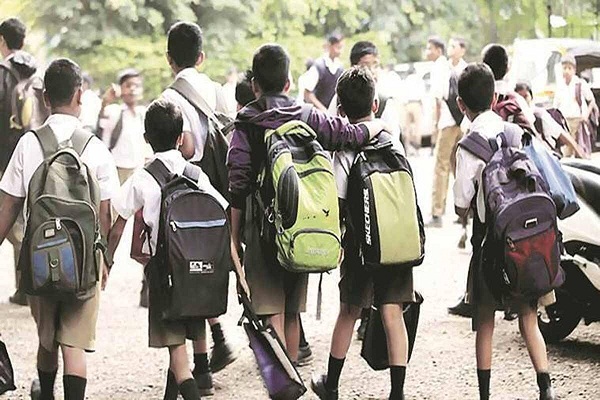
The Delhi government has directed schools in the national capital to implement the new “school bag policy”. The new policy will reduce the weight of school bags and the burden of students.

“Heavy school bags are a serious threat to the health and well-being of school students. These have adverse physical effects on the growing children which can cause damage to their vertebral column and knees.

“Moreover, in the schools which are functioning in double or multi-storey buildings, children have to climb the stairs with heavy school bags which further aggravates the problem,” the Directorate of Education (DoE) said in a letter to school principals.

Also read: Delhi Government to bear ‘hiked’ board exam fees for its schools

From no textbooks for pre-primary classes to single notebook for classes 1 and 2, frequent checks of school bags to ensure students do not carry heavyweight, informing the students and parents regarding appropriate kind of school bags and encouraging students to use both straps of bags, are among the recommendations made by the government.

“The load of school bag is increased by bringing textbooks, guides, homework or classwork notebooks, rough work notebooks, water bottles, lunch box, and sometimes the heavyweight of the school bag itself. The number of textbooks in different classes should not exceed the number prescribed by the statutory bodies.

As per the suggestions, which are in line with the new National Education Policy (NEP), the weight of school bags for students between classes 1-10 should not be more than 10 per cent of their body weight.

Students can fill JEE Main 2021 form till Jan 16

JEE Main 2021 form

National Testing Agency, (NTA) had released the Joint Entrance Examination, JEE Main 2021 form on December 16, 2020. The last date to fill the online application form for students is January 16, 2021. Students interested in appearing for JEE Main 2021 can fill the online application form on jeemain.nta.nic.in before January 16, 2021.

This year, the examination would be conducted in February, March, April and May 2021. Students can choose to appear in either one, two, three or all four examinations, based on the dates that suit them. Also, with many state’s announcing the dates for the board examinations, the students can accordingly choose.

Also read: JEE Main 2021 registration commence at jeemain.nic.in

Students can fill the JEE Main 2021 form for any of the February, March, April or May sessions. The window to fill the form for exams to be conducted from March would reopen briefly after the February 2021 examinations. However, due to the tight schedule, it may be advisable for students to apply at the earliest. Fee Refund can be initiated later to be on the safe side.

Also, students are advised to fill the JEE Main 2021 form at the earliest to avoid last minute delays. The registration process for the examination was delayed due to the pandemic. With the increase in frequency of the examinations, extensions in filling the form may not be available this year.

Ed-Tech startup Practically raises $4M from Siana Capital

Ed-Tech startup

Practically, an ed-tech product of 3rdFlix Visual Effects Pvt Ltd, has raised $4 million in a pre-Series B round.

The round was led by Siana Capital, a deep tech investor, with participation from existing investors YourNest Venture Capital and Exfinity Ventures. The company had previously raised Series A funding of $5 million in 2019.

The funds will be invested in expanding the operations of Practically, the Hyderabad-based start-up announced.

Practically is an intelligent, interactive and immersive learning app for students of classes 6-12 with a focus on STEM learning.

Also read: Ed-tech start up Lead School acquires QuizNext

Our progress so far is in-line with our strategic growth plans and we are very well placed to tap the accelerated growth that the EdTech industry is witnessing today,” said Subbarao Siddabattula, Founder & CEO, Practically.

Practically is an outcome of deep-rooted insights based on several man-years of study around children’s learning and retention modes leading to the innovative use of new-age tech tools such as AR to provide an immersive learning experience for children.

“The recent round of funding will be utilised strategically to expand the market for Practically beyond Telangana and Andhra Pradesh. Our expansion plan includes establishing a footprint pan-India in the next 12 months. We are also aiming to expand operations in the Middle East and set foot into the US market in the near future,” said Charu Noheria, Co-Founder & COO, Practically.

Over 3 lakh students have already benefited from the engaging content on Practically.

JAC 10th and 12th Exam 2021 dates announced; check details

JAC Board

The Jharkhand Academic Council (JAC) has officially announced the JAC Matric Exam 2021 Dates for Class 10 Students and JAC Intermediate Exam 2021 Date for Class 12 students. The Jharkhand Board is expected to release the detailed subject-wise date sheet for the upcoming JAC 10th and 12th Exam 2021 soon on official website i.e. jac.ac.in.

As per the dates notified by the Council, the JAC 10th and 12th Exam 2021 are scheduled to be held in March 2021. The Class 10 and 12 Exams of Jharkhand Board would be held from 9th to 26th March 2021.

Taking into account the prevailing situation with regards to the pandemic, the state government has directed JAC to ensure strict adherence with COVID-19 precautionary guidelines andcomplete compliance with the SOPs notified by the health department.

Also read: Jharkhand board declares JAC Class 10th Results 2020

Although detailed guidelines with regards to conduct of the board exams are yet to be notified, JAC officials hinted at a significant rise in the number of exam centres for the upcoming board exams.

With the pandemic affecting the regular studies of the students, JAC had earlier announced reduction in the syllabus for the board exams. In line with this, as further relief for the students, the Council has also hinted at change in the examination patter as well.

Haryana govt to distribute 8.20 lakh tabs to students

Haryana govt to distribute tabs

The Haryana government will distribute 8.20 lakh electronic tablets to students of state-run schools studying in class eight to 12 before the start of the next academic session, an official said.

These tablets would be preloaded with study material and textbooks so as to enhance the learning of students and help them to study online, he said.

In a meeting of the School Education Department, held to review the preparedness for the distribution of tablets and attended by Chief Minister Manohar Lal Khattar, it was decided that these tabs would be issued to the students on the pattern of library books and students would return those after the class 10 and 12 exams.

Also read: Haryana government to recruit over 5,000 computer teachers

The tablets would have QR-coded NCERT content, Edusat videos, DIKSHA online content, YouTube videos prepared by teachers, question banks, and preparation material for competitive exams like NEET, JEE, NDA, and others, the official said.

All the content would be preloaded on an encrypted data card so that the students can study, give mock exams and solve previous year papers to prepare for the exams.

Republic Day Parade 2021: Parul University student to represent Gujarat

Parul University

Adding feather to the cap of Parul University, Cadet Cpl Dheeraj Singh, an NCC Cadet who is under NO.1 Gujarat Air Squadron NCC, Vadodara and a third year student of Computer Science Engineering has been selected to represent in the 2021 Republic Day Camp.

The Republic Day Camp is a highly esteemed annual parade which is held at the Garrison Parade Ground in New Delhi. For participation in this parade, notable NCC cadets are selected from across the States and Union Territories representing the rich diversities of India.

Also read: Prof. (Dr.) Prafulkumar Udani joins CVM University as Director General

In order to qualify for this Camp, Dheeraj had to undergo a series of screening levels tests which were strategically designed to assess his competencies and skill sets in various aspects. The selection was conducted on various levels which included screening at Unit level, which was held in Vadodara, followed by a Group Level selection with further subdivisions of Pre RDC -1, Pre RDC-2 and Pre RDC-3, which were conducted in Ahmedabad.

“As a University our goal has not only been to focus on preparing students for their careers upon completing their studies, but also to ensure that as they pursue their medical, legal, pharmaceutical and technical studies, they also get to develop within them a strong desire and passion for national service.”, said the University’s Vice Chancellor, Dr. MN Patel.

Pokhriyal: JEE Advanced 2021 exam dates to be announced on Jan 7

JEE advanced exams

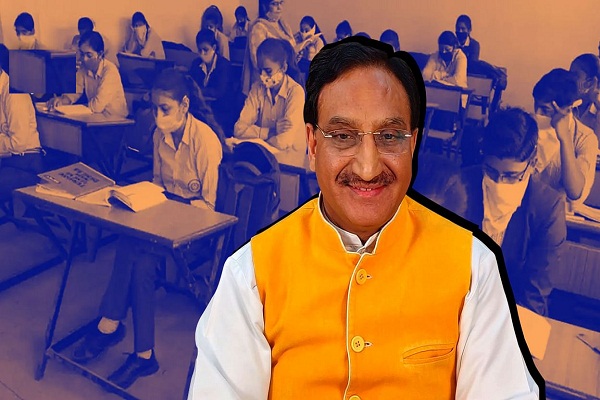
In a major development, Union education minister Ramesh Pokhriyal on Monday said he would announce the eligibility criteria for admission into Indian Institutes of Technology (IITs) and the date of the Joint Entrance Examination (JEE) Advanced 2021 at 6 pm on 7 January.

The first edition of the Joint Entrance Examination (JEE) Mains will be held from 23 February to 26 February, followed by rounds in March, April and May.

Candidates who have qualified for JEE Advanced are allowed to appear for admission process in the IITs. The counselling and seat allotment process is conducted by the Joint Seat Allocation Authority and the counselling process is conducted on the basis of the candidate’s score in JEE Advanced.

Also read: JEE Advanced 2020 admit card released

The education minister had in December stated that the JEE Main 2021 will be conducted in four cycles this year, with the National Testing Agency (NTA) holding the first phase in the aforementioned dates.

The minister had further added that students can appear for the exam as per their convenience, with candidates who have appeared for all four sessions having their best score in JEE Main 2021 being considered final.

The JEE Main 2021 exam paper will have a total of 90 questions of which students will have to answer 75.

For the first time, the JEE Main 2021 will be held in 12 languages including English, Hindi, Bengali, Gujarati, Assamese, Kannada, Marathi, Punjabi, Tamil, Telegu, Urdu, Odia and Malayalam.

LATEST NEWS