

Home Blog Page 342

Gujarat approves new 248 self-financed schools

Gujarat-schools

To provide boost to primary education in the state, the Gujarat Secondary and Higher Secondary Education Board (GSHSEB) has given an in-principle nod for 248 new self-financed schools.

The decision was taken after various proposals were discussed before the executive committee of the board. The approvals were considered over a series of meetings and decision finalized last week. The board has rejected as many as 345 proposals for new schools at the meeting.

Last year, the board’s decision to introduce stricter norms for new school projects resulted in a sharp decline in new schools coming up in the state.

Also read: Gujarat Govt asks private schools to reduce 25 pc fees

Of the 443 applications it received, the board gave its nod only for 10.6% or 47 new schools for 2019-20. Compared to the previous year this is a decline of 80% for as many as 226 new schools had been approved in 2017-18. The board had received 535 applications then.

One of the major reasons cited for the decline was that applicants could not meet the new criteria of school trusts owning a sizeable chunk of land, moving away from earlier norms that allowed leases.

Kasturirangan: NEP will contribute to 21st century education goals

NEP 2020

Eminent scientist K Kasturirangan said, the National Education Policy (NEP) will contribute to a new system aligned with aspirational goals of the 21st century education while remaining rooted to India’s value systems and ethos.

Kasturirangan, who was the chairman of the committee tasked with drafting NEP, made the remarks at the eighth Convocation of Indian Institute of Information Technology, Design and Manufacturing – Kancheepuram.

Also read: Cabinet nods STARS project under NEP

“The vision of India’s new educational system has been crafted to ensure that it touches the life of each and every citizen consistent with their needs and necessities besides creating a just and equitable society. “The NEP’s approach is to realize a new system aligned with aspirational goals of 21st century education while remaining rooted to India’s value systems and ethos. The policy provides an integrated, yet flexible approach to education,” he said.

The former ISRO chief said, “Further it has kept the inter-connectedness of the various phases of education in mind and how the same will enable continuity, coherence and processes to ultimately realize an end-to-end educational road-map for the country.” At the convocation, the institute which has been awarded the ‘Institute of National Importance’ by Ministry of Education, awarded degrees to 306 students.

KVs, NVs, Assam, AP, Himachal Pradesh to reopen schools today

KVs, NVs, Assam, AP

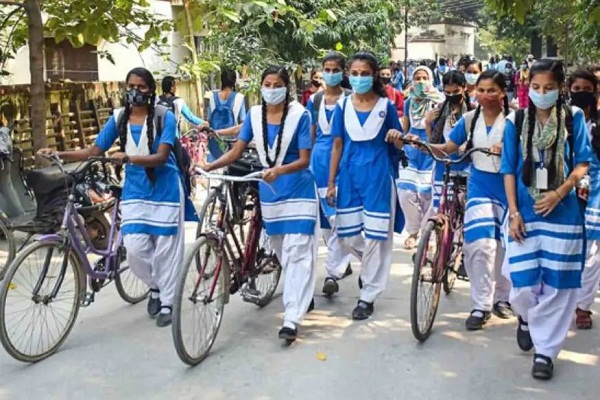
Many states have already reopened the schools for few classes, some other states including Andhra Pradesh, Assam and Uttarakhand have decided to reopen schools from November 2, 2020. Schools and other educational institutes across the country are reopening in various states in a graded manner.

Along with these states, Kendriya Vidyalaya and Navodaya Vidyalaya have also planned to reopen schools across the country for classes 9 to 12 from November 2 onwards. All the states have issued new guidelines for reopening schools.

Andhra Pradesh: The state government is taking all precautions to reopen schools in a phased manner. Schools will conduct classes for students on alternate days and classes would be held till noon. Each classroom will have only 16 students.

Also read: MHA announces guidelines on reopening of schools and colleges

Himachal Pradesh: Classes 9 to 12 will reopen today in the state. Schools have to ensure that COVID19 guidelines are followed that have been issued by the Ministry of Home Affairs.

Assam: Schools reopening today after more than seven months. Classroom teaching would begin from November 2 for the students of class 6 and above.

Uttarakhand: Like Rajasthan, schools in Uttarakhand will reopen today for classes 10 to 12. Parental consent is mandatory for attendance.

Till now, Uttar Pradesh, Punjab, and some other states have already opened the schools. Many states are planning to reopen schools in November. Tamil Nadu has decided to reopen schools from November 16 onwards, while Odisha will reopen schools from November 16 for classes 9 to 12, and for other classes, the school will remain closed till November 30.

Sainik Schools to bring in OBC reservations in admissions

Sainik Schools

In a major development, Sainik Schools across the country will introduce OBC reservations as part of their admission process from academic session 2020-21. Defence Secretary said that reservation for Backward Class (OBC) will be introduced for Sainik Schools starting from next academic year i.e. 2021-22.

As per the information provided by Defence Secretary Ajay Kumar, a total of 27 per cent seats in Sainik schools will be reserved for other backward classes (OBCs) from the academic session of 2021-22. The news was shared by Mr Kumar through a tweet, which read “OBC reservation to be introduced in Sainik Schools from the year 2021-22.”

Also read: Maharashtra Govt launches foreign education scholarship for General & OBC students

As part of the tweet, he also shared images of official notification dated 13th October 2020 which has been sent to principals of all Sainik schools across the country.

Currently, there are around 33 Sainik Schools spread across the country, which work under the Ministry of Defence. All the 33 Sainik Schools, which are residential in nature, will introduce OBC reservation from 2021-22 academic session. The circular read “67 per cent of the seats in a Sainik school are reserved for candidates from the state or the Union Territory in which the school is located and the remaining 33 per cent is reserved for those who come from outside that state or UT. These two lists will be termed List A and List B.”

Punjab CM launches scholarship scheme for students

Amarinder Singh

To provide boost to SC students, Punjab Chief Minister Amarinder Singh launched a post-matric scholarship scheme. The chief minister also laid foundation stones of projects worth Rs 50 crore at Amritsar’s Ram Tirath to mark Valmiki Jayanti.

The CM also inaugurated a new Ram Tirath ITI campus while giving the go-ahead for the establishment of a skill development centre to prepare Dalit students for competitive exams, according to a government statement.

Launching Dr BR Ambedkar Post-Matric SC Scholarship Scheme, the Punjab chief minister said it will ensure that poor students get free higher education, which the Centre unfairly deprived them of with abrupt withdrawal of Rs 800 crore aid to the state.

Also read: Punjab CM announces free girl education up to doctorate level

Stressing that the state government is committed to the welfare of the Scheduled Castes, Amarinder Singh said the scheme being launched without any financial contribution from the Centre will provide 100 per cent fee waiver to SC students.

The scheme, which is likely to benefit over three lakh poor SC students every year, will involve no upfront payment by them to government or private educational institutions.

The institutes will provide free education to SC students under the scheme against direct subsidy from the state government, the CM announced, adding that students will also get a monthly stipend to buy books and uniforms.

In addition to it, he announced an annual holiday under the Negotiable Instruments Act in memory of great personality and said Amaritsar’s Guru Nanak Dev University will organise a seminar on Bhagwan Valmiki on the eve of his birth anniversary every year.

Odisha educational institutions to be closed Nov 30

odisha

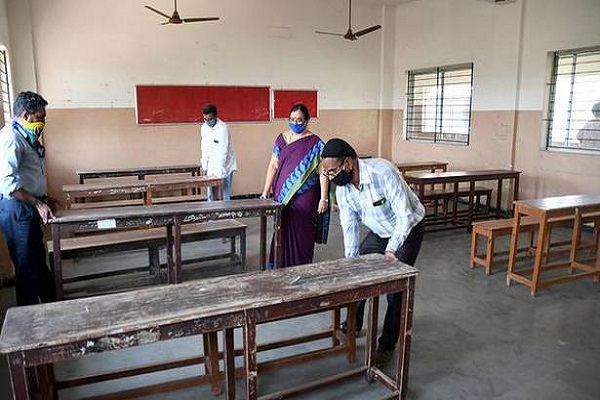
The Odisha govt said all educational institutions will remain closed in Odisha till November 30 and classes for 9th to 12th standards will reopen from November 16.

“In pursuance of the revised guidelines issued by the Ministry of Home Affairs, Government of India (GoI) vide Order dated September 30 to re-open more activities in areas outside Containment Zones and to extend the lockdown in Containment Zones up to October 31 for containment of COVID-19 and read with Order dated October 27, the State Government do hereby direct that guidelines shall be in force in the State of Odisha,” an Order by the state government stated.

Also read: Odisha proposes up to 30 pc fee waiver for private school students

“All academic institutions will remain closed till Nov 30, 2020. However, the classes of 9th and 12th standards in schools under the control/superintendence/ supervision of school and Mass Education Department will open from November 16, 2020, as per guidelines/SOP to be issued by School and Mass Education Department,” the Order further read.

Other guidelines include — lockdown shall be enforced within the Containment Zones.

Regulation of activities in areas outside the Containment Zones: International air travel of passengers, except as permitted by MHA will continue to remain close till November 30.

Large social, political, sports entertainment, academic, cultural, religious functions and other congregations will remain prohibited till November 30, 2020.

West Bengal claims top spot in decline of school dropout rate

west bengal

According to the Annual State of Education Report (ASER) 2020, West Bengal occupies the top position in the decline of dropout rate among school students during 2018-2020. The school dropout rate in the state declined from 3.3 per cent to 1.5 per cent while it went up from four per cent to 5.5 per cent at the national level.

The dropout rate in some bigger states like Karnataka, Telangana and Rajasthan was 11.3 per cent, 14 per cent and 14.9 per cent respectively, the statement said quoting the survey conducted among 52,227 families of 16,974 villages in 584 districts of 26 states.

According to the survey, West Bengal also holds the first position in the country in terms of text books provided to the students with 99.7 per cent coverage, while in bigger states like Uttar Pradesh, Rajasthan, Gujarat, Andhra Pradesh, Maharashtra, the same stands at 79.6 per cent, 60.4 per cent, 95 per cent, 34.6 per cent and 80.8 per cent respectively, the statement said quoting the report.

Also read: West Bengal govt brings portal for transfer procedure in schools

Chairman of the Syllabus Committee Aveek Majumder said the significant decline in the dropout rate was made possible by the continuous efforts of the state to ensure that not a single child, including girls, left studies due to financial reasons.

During the pandemic, the school education department ensured that students were imparted tutorials in the best possible manner as the institutions were closed, Majumder said.

“From tutorials on TV channels to online classes, every possible alternative was adopted in the present situation. In madrasas, parents were given study materials during midday meal distribution on certain dates and the guardians returned the home tasks on designated dates later on,” he said.

Shiv Nadar Foundation launches private university in Chennai

Shiv Nadar Foundation

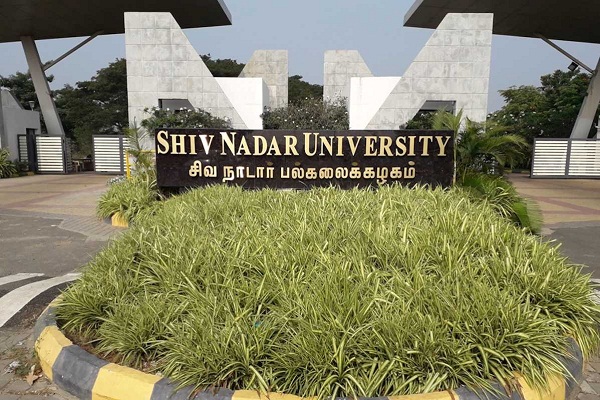
The Shiv Nadar University has been set up near Chennai. It will be the first private varsity to be legislated in Tamil Nadu in nine decades. The University has become the first private university to be legislated in Tamil Nadu after 90 years since Annamalai University Act in 1928.

It was set up by the Shiv Nadar Foundation, formed by Shiv Nadar, founder of HCL, a $9.9 billion enterprise.

R Srinivasan, co-founder of Chennai-based supply chain solutions company Redington India Ltd, would be the Chancellor of the university, set up under the Shiv Nadar University Act 2018.

Kala Vijayakumar, who played a key role in managing the SSN Institutions since its inception in 1996, would be the pro-chancellor of the University.

Also read: AP CM launches Jaganna Vidya Kanuka scheme

The University has also appointed a renowned academician from one of the IITs as the Vice Chancellor who would take over the new role in December 2020. Former RBI Governor C Rangarajan and Turing Award winner Raj Reddy would be distinguished mentors of the university.

The university announced admissions for four programmes under school of engineering, school of commerce and management for the academic session 2021-22.

Set up at Kalavakkam near Chennai, it would house facilities including academic and research blocks, stadium, library, sports centre, hostel for students among many others.

The University would open for admissions in April 2021 with specialised courses in disciplines of engineering and commerce.

It also plans to introduce a four-year undergraduate programme in business management in 2022-23.

Bihar 12th dummy admit card 2021 released

Bihar 12th dummy admit card 2021

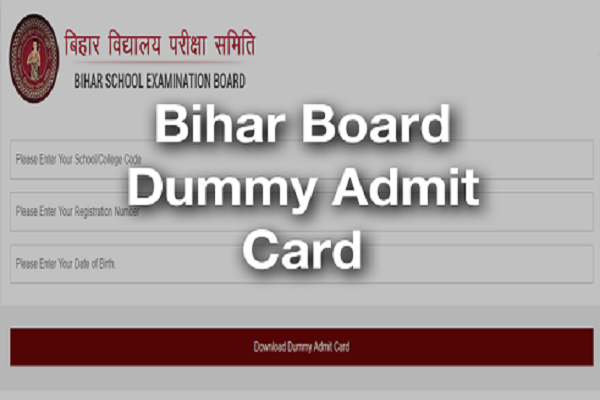
In a major development, the Bihar School Education Board has released Bihar 12th Admit Card 2021 online. Students who had registered to appear for the Bihar Board Class 12 Examination can download their dummy admit card of Bihar 12th 2021 now. To download the admit card/students are required to visit the official website- biharboardonline.bihar.gov.in

BSEB has made the Bihar 12th 2021 admit card available in the online mode only. To download their Bihar 12th dummy admit card 2021, students are required to visit the official website and enter their credentials. For easy access to the Bihar Board Class 12th 2021 dummy admit card, a direct link to the same has also been provided below.

Also read: Check Bihar Board Class 10 Results on biharboardonline

The dummy admit card of Bihar Board Class 12 for 2021 examinations provide a means to the students for rectification of any errors. Students are advised to thoroughly check the BSEB Bihar Board 12th dummy admit card to check if the details mentioned such as their own name, father’s name, etc. Are correct and devoid of any spelling errors. The Bihar Board Class 12 examinations are scheduled to be conducted from 2nd to 13th February 2020.

In the window that opens/students will be required to enter their registered login ID or email address and password. The Bihar 12th admit card 2021 will appear on the screen.

Ed Tech firm Udemy set to raise $100 million in funding

Udemy funding

Online learning platform Udemy is in advanced talks to raise around $100 million in a new private funding round that will value the online learning platform at over $3 billion.

San Francisco-based Udemy has seen a boost in subscriptions this year as more people have stayed at home and opted for online learning due to the COVID-19 pandemic.

The fresh capital would follow the $50 million Udemy raised in a Series E round from Japanese publisher Benesse Holdings at a valuation of $2 billion in February.

Also read: Ed-tech firm Stayqrious raises Rs 14.7 crore in seed funding

Edtech companies have seen faster and wider adoptions as more people switch to remote learning due to restrictions during the pandemic. Private funding in the sector has surpassed 2019 levels, with over $4.8 billion raised by August 2020, according to CB Insights.

In July, Coursera, another major online classes provider, raised $130 million as part of its Series F funding.

Udemy has seen growing demand from its consumer-faced marketplace, as well as its corporate learning service, Udemy for Business, which has achieved $100 million annual recurring revenue, the company said this week. The service counts companies including PayPal, Apple and Unilever as its customers.

Between February and March, Udemy has seen a 425% spike in enrollments for individuals. It is also expanding footprints to fast-growing markets including Brazil, India and Japan.


LATEST NEWS