Home Blog Page 375

Haryana to open over 100 Sanskriti Model Schools

Sanskriti Model Schools

To boost the New Education Policy, the Haryana government has recently decided to open more ‘Sanskriti Model Schools’. The move has been taken to further improve the quality of education.

Cabinet Minister Kanwar Pal said that apart from the 22 schools already functioning the state would be opening more schools.

The decision was taken in a meeting held that also discussed the new National Education Policy (NEP) 2020 along with other issues. A total of 104 Sanskriti Model Schools would be operational once more schools are opened, he added.

“These schools will further improve the quality of education in the state,” he said. The Government of Haryana has also decided to open 1,000 play way schools. These would help in providing quality education and learning in the students aged three to six years.

Also read: Haryana government to recruit over 5,000 computer teachers

Recently officers were directed to upgrade Anganwadi centres, which were currently running inside the premises of primary schools, into smart learning play ways by Chief Minister Manohar Lal Khattar.

The chief minister had said, “ the curriculum of these schools should be designed in the form of animations and audio-visuals to help children enhance their cognitive learning.”

Recently the schools in Haryana had been allowed by the High Court to collect the school fee in lieu of the online classes they were conducting.

Samsung launches industry-academia programme for engineering students

Samsung

Samsung, country’s one of the largest consumer electronics and smartphone brand, has launched a unique industry-academia program – Samsung PRISM (Preparing and Inspiring Student Minds). The new initiative will stimulate the Indian innovation ecosystem, and build capabilities among students that meet industry needs.

The programme, which will be run by Samsung R&D Institute Bangalore (SRI-B), aimed to involve engineering colleges that are in the top positions of the Government of India’s National Institutional Ranking Framework (NIRF) rankings.

The SRI-B has so far signed MoUs with 10 engineering colleges. It will add more colleges over the next few months.

Also read: Engineering students to undergo three mandatory internships

Once the program rolls out, SRI-B will collaborate with students and faculty at these engineering colleges, giving them research as well as development projects to be executed over four to six months. Students will get to work on projects in cutting edge technology areas such as Artificial Intelligence (including vision tech), Machine Learning, Internet of Things & Connected Devices and 5G networks, to solve real world problems.

Dipesh Shah, Managing Director, Samsung R&D Institute Bangalore, said “Samsung PRISM program is a testimony to our mission of transforming people’s lives with meaningful innovations. This program will draw from the strength of our academia and engineering students’ community, which undoubtedly is the best in the world. Giving them an opportunity to work with Samsung, and making them industry-ready will be a step in the right direction towards Atmanirbhar Bharat.”

NIOS declares Class 12th Results; check all the details

NIOS Class 12th Results

NIOS Board has put an end to the long and agonizing wait of nearly 3 lakh students, by declaring NIOS Class 12 Results 2020. According to the official announcement NIOS Class 12 Results 2020 for Senior Secondary Public Exam of March 2020, have been officially announced by the NIOS Board. Following the formal announcement, students can now log onto the official website of the board i.e. nios.ac.in.

Taking the COVID-19 situation into consideration and also to ensure easy access to the NIOS Result 2020 for Senior Secondary students, the board will be making the NIOS Class 12 Results available to them online via official website.

With lakhs of students trying to check and access their NIOS Class 12 Results at the same time, the official website may suffer from technical difficulties.

Also read: SC asks NIOS to declare Class 10 and 12 Results 2020 by August 7

Steps to check the NIOS class 12th Results:

-Visit official website i.e. nios.ac.in

-New page with NIOS Senior Secondary Result Public Examinaiton Result Link

-Enter Exam Roll Number and captcha

-Verify all the details and enter it on the website

-NIOS 12th Result 2020 digital scorecard will be displayed on the screen

Rishi Khemka, CEO – ARK Infosolutions, MindBox hails new education policy

Rishi Khemka

The new National Education Policy (NEP) was approved by the Union Cabinet and it is the first such policy in the last 34 years. The NEP is ambitious and futuristic in every sense.

A panel headed by ISRO chief K Kasturirangan had submitted a draft NEP in December 2018, which was opened for public feedback after the Lok Sabha election in May 2019. The new NEP will introduce a large number of changes such as ensuring free education for all till the age of 18 with more accessibility to reduce dropouts.

The NEP, 2020 has been lauded by many experts for its futuristic approach.

Also read: Academicians and industry experts welcome New Education Policy

Rishi Khemka, CEO – ARK Infosolutions, MindBox said “A new milestone, it’s great that our country has finally got a New Education Policy after 34 years! The emphasis is on a multi-disciplinary & holistic education that will empower our 21st Century learners with conceptual understanding, creativity, problem-solving & life skills. Continuous Professional Development opportunities for educators & Technology Integration in pedagogy, content, & assessment will enhance the learning outcomes of students and upskill them for the digital world.

He also said “Edu Policy has a progressive and pragmatic approach, only key is that the policy should be properly and well implemented. We at MindBox welcomes it with open arms and look forward to a powerful era of education.”

Elets Exclusive: Educators call to bring new innovations in Higher Education

Higher and Technical Education Conclave

It has been just about five months since 11 March 2020 when the World Health Organisation declared COVID-19 to be a pandemic. In some quarters this is already seen as a historical divide, BC (before Corona) and AC (after Corona). Across the globe educational systems at all levels have been seriously impacted even in this short span of time. The virus has affected all schools, colleges and universities. By mid-March mostly, these have all been shut: classes have been suspended, examinations, research work and virtually all laboratory experiments have been forced to hit the “pause button”.

Although many Higher Educational Institutions have quickly decided to conduct classes and examinations online, its implementation in the country is not an easy task. Access to smartphones and the internet is still very limited. At the same time, it is undeniable that technology can play a big role in offering alternatives to regular academic activities, so one effect of this pandemic may well be to bring significant changes in the traditional education sector in regards with the use of technology as a tool for learning.

Elets Technomedia and digitalLEARNING Magazine organized ‘Higher and Technical Education Conclave, North India’ to highlight the new innovations and future of higher education in the country. The conclave was graced by eminent speakers from higher education sector.

The inaugural session was conducted on ‘Conductive Policies & Regulatory Frameworks: Current Scenario & Future’. The welcome address was delivered by Dr Ravi Gupta, Editor-in-chief, digitalLEARNING Magazine and CEO, Elets Technomedia Pvt Ltd.


Col Kailash Bansal, Director, All India Council For Technical Education (AICTE) said “More than life, livelihood has got affected due to Corona. Higher Education is hugely impacted as all the things are halted. All the students are stuck and leveraging the usage of digital education. Education is a service not a product. There is a hidden component in the education sector. There are huge education enablers in the sector and they are overtaken by digital platforms. We are forced to adopt the digital usage due to the pandemic.”

He also said “We are working to leverage the online education. AICTE has opened the NEET platforms for many. The SWAYAM MOOCs platform is offering quality content. Funds have been enhanced for the online classes. The approval process has been done online.”

He even said “From next academic year things will not be the same. The lost time will be covered in coming days. We can extend some more number of credits. The fun part is missing from the campuses which are a great stress buster. “

Collaboration is the need of the hour. Internships can be made mandate for students, he added.

Prof K K Agarwal, Chairman, National Board of Aaccreditation (NBA) said “All the schools and colleges delivered the content during the pandemic. Blended mode of learning is very important. Online education can be used as crisis management. We must prepare for any such crisis. Teachers must be empowered to deliver the content. Exams pattern has to be changed. We need to assess the students. “

He also said “We need to provide interdisciplinary subjects for students. Interdisciplinary will be very important in coming days. We need to convert this COVID crisis to opportunity to improve education sector. Universities must provide credits to everything. AI will be the new thing.”

Also read: Elets Exclusive: Educators call to prioritize skill-based education

He also said we need to make ourselves very flexible. The COVID-19 has given us opportunity to reformat our education system. Things will take time to come back to normal.”

Hemant Sahal, Founder & CEO, CollPoll gave a brief presentation on “Digital Campus on the Cloud for Education” after the inaugural session.

In another panel Lessons from Edu Leaders – Best practices in ensuring seamless education amid Covid-19

Dr Madhu Chitkara, Pro Chancellor, Chitkara University, Punjab said “Admissions is a challenge for private colleges. These days we have started giving virtual tours of our campuses to students. We have started virtual counselling of students. The situation will not to stay long and in coming days there will be new norms. Things will become normal and admission will start soon.”

She also said “Teaching is always a challenge for teachers. The challenge has increased as parents have reached the classrooms. We are waiting students to come back to campuses.”

Blended learning will be the new normal, she added.

Sahil Aggarwal, Co-Founder & CEO, Rishihood University, Haryana said “Most of our processes have shifted to online from counseling to admissions. We are trying to reach students through online mode. Most of the exams will be taken from home to ensure the safety of students. Some of the programmes will rise in coming days and we have some of them. We are in start-up phase and will continue our plans. We have to work according to the situation.”

Sudhanshu Varma, Chief Operating Officer, Bennett University, Greater Noida said “There are two parts firstly the admission side and secondly, the other side of training, exams, infra etc. We have drawn SOPs for everything in the university. When the university is not running the costs shoot up. “

He also said “The COVID is not a crisis, we have seen worst than this. The exams cannot prove a child is good or bad. The biggest challenge is the delay of state university exams. Parent and child will be the only two who will suffer in this pandemic.”

He also said Times have changed and we need to change with it. With changing times teachers are becoming best communicators.

Kunwar Shekhar Vijendra, Chancellor, Shobhit University, Meerut said “Admissions will happen, this year through online. There is a digital divide not only in India but across the globe. The admissions will be an issue for new institutions. Admissions will be slow in coming days. There will be a change in selection of courses.”

He also said “The only solution of this crisis is handholding. An institution is a complete eco-system. The social angle is also temporary. We need to talk to our parents, society members. Things will become normal. This crisis can be used as opportunity for new experimenting.”

Siddharth Chaturvedi, Executive-Vice President, Aisect Group Universities said “This opportunity has given us to re-image and rejuvenate the Higher Education sector. We deal with 80 pc rural students as there was a short-term response. There were classes happening on Zoom, Google Meet and on other platforms. Assessments have gone online and now classes are shifting to LMS platforms. “

He also said “We must upgrade the studio facility to record the lectures. Blended learning will be a new thing for students. Some of things will change permanently in coming days.”

Over placements, he said there are virtual placements going on.

Vibha Mahajan, Vice President-Strategic Growth & Alliances, Ken42 delivered a brief presentation.

Prof Prem Vrat, Pro-Chancellor, NorthCap University, Haryana said “We have adapted the online education way before it all started. The core of teaching is teachers and no technology can replace them. The efficiency of teachers and students have surged a lot during the online classes. With online classes you can have any teacher from any part of the world.”

He also said the blending learning is here to stay for long time.

The online selection is very cost effective. The mind-set for distance education has changed a lot in last few months, he added.

Due to the online classes, institutions in far flung areas can get best teachers from any part of the world he added.

Dr Sunil Rai, Vice Chancellor, UPES, Dehradun said “The issues were with mind-set of parents and students and will teachers deliver the lectures on time. We did online exams and internships. The online learning will be here to stay and more efficient. With technology, the classroom has come home. The whole world is a virtual lab for students.”

Online assessments can be used for learning. It can enhance things in coming days, he added.

Prof Vinod Kumar, Vice Chancellor, Jaypee University of Information Technology said “We started online lectures for most of the subjects. Large number of students connected to online classes. Electricity is an issue with most of the students and to negate it we provided them with PPTs. We make smaller groups of students for online classes. We have also conducted MCQs for students.”

He also said “We are using virtual labs with physical ones. We did video recording of labs and our students shared the computers.”

He also said we have conducted online exams and hired a third party to proctor them.

Payal Rajpal, Founder, Hack the Crisis India, South Asia Head Robotex said “We have already seen a spike in usage of technology. The COVID has created an opportunity for experimenting new things. The usage of technology will surge in coming days. Technology has the capacity to ensure the quality of education. The blended approach is already there and it is preparing students for future ready. “

Aman Mittal, Additional Director, Lovely Professional University, Punjab said “We have conducted the exams successfully and the results will be out soon. We have our own LMS system for our students. A lot of AI has been used during the online classes. We have a huge AI data to monitor the progress of students. Blending is the word not online learning.”

Dr DNS Kumar, Vice Chancellor, Ansal University, Haryana said “We focused on alumni and industry friends during the pandemic. We started collaborations to help our students. Students can learn according to their pace during the online classes. Enough material was available for students online. There is a change of mind-set within students. “

It has given new opportunity for students, he added.

Dr RS Bawa, Pro Chancellor, Chandigarh University said “Punjab Chandigarh University has been using blended learning from the beginning. It was a smooth transition. We have also Procter exams for 7000 students. All the tests have been conducted online. Blending learning will be the new norm. We need to empower faculty members during this pandemic.”

We have also started online placement. We can take advantage from this situation and prepare content beyond the syllabus for students, he added.

Dilip Puri, Founder & CEO, Indian School of Hospitality said “Student adaptability to online classes is the main thing in this pandemic. Usage of technology in education was there from day 1. We used our entire campus as one lab. During online classes it is very difficult to assess the outcomes. This has given us an opportunity to study students.”

The boon of Covid is usage of technology. We are trying new things during this lockdown. Blending learning is here to stay, he added.

Amit Attry, Vice President, Marketing & Corporate Relations, Jaipuria Institute of Management, Delhi said “The education system is bit different in India. There will not be any issue with enrollments with universities. There will be many students who will not willing to travel, so we have to thing new ways. Most of the placements were done before the lockdown and we have also placed some during the pandemic. “

He also said “We have started online classes. The COVID has given us a jump to adapt online classes. The reach of internet will take some time. “

Silky Jain, Executive Director, Tula’s Institute, Dehradun said “We have already upgraded our medical facilities and sanitization is going on in our campuses. We have created a taskforce to educate people. We have created SOPs for the campuses. We are hoping for having a good admission session. “

Students initially had issues but now they have adopted the new norm. The internet connectivity is an issue which needs to be addressed, she added.

Amit Phull, Chief Marketing Officer, Ansal University, Haryana said “The whole admission cycle is divided into two cycles- one is pre-exam results and other one is post exams. From March we have to change our strategy for admission. The challenges remain the same for all institutions. This is a challenge for institutions to try something new.”

He also said “We are getting good number of admissions for creative courses. There are new opportunities in education sector. There is a paradigm shift in education sector. There are 40 million students for admissions and we need to use it. This is a wholesome opportunity to cash on.”

Dr Pankaj Sharma, Director- Admissions & Outreach, SRM University, Haryana said “This will be longest admission cycle for students. The govt is doing a lot of thing to negate the effect of corona. We need to involve everyone and execute our plans to fight the pandemic. We will start our classes from next month through online. We will use the technology for our classes.”

Blended learning is here to stay for a longer period, he added.

Ashu Diwan, Head Outreach, BML Munjal University, Haryana said “Going online was not an issue for us. It’s not easy to plan the first batch during the pandemic. We have to cope up with the Corona pandemic. For a student it’s not easy to cope with the changing format. The digital infra is more important in this crisis. It will be a good time for Indian Universities.”

It’s a blessing in disguise for education sector, he added.

The last panel was conducted on “Delivering learning outcomes among students considering Future job skills & emerging trends in higher education”.

Dr Vikas Singh, Executive Director, ITS Education Group, Greater Noida said “Learning depends on the experience of the learner. Now scale and experience can be made interesting. COVID has become a huge accelerator. Faculty members can act as facilitators. Students will start adapting to blending learning. The future universities will be different and they will be driven by collaborations.”

Vishal Sood, Executive Director, Maharishi Markandeshwar (Deemed To Be University), Haryana said “Higher Education needs to focus on industrious rather than syllabus. We need to create an impact with the quality content. We must prepare students to focus on goals. We offer around 200 programmes. It has accelerated the acceptability of technology in the education sector. We have to improve our technological innovations. But, certain things can only be learned in physical classrooms.”

He also said the regulatory body and corporate world must come together. Peer learning is must to provide complete education, he added.

Karan Kumar, Head-IT, OP Jindal Global University, Haryana said “The crux is how to use digital tool to improve digital skills. Online education needs lot of attention from students. It can be a very good supplement. It is important to under the business impact during the initial part of career. “

Prof Sarit K Das, Director, Indian Institute of Technology, Ropar said “The Covid has accelerated the usage of technology. The quality of content is very important during the online classes. We don’t have the means of brining the best teachers as we don’t have a clear mechanism. We must identify good teachers to prepare quality content. We need to focus on quality of content.”

Raghav Gupta, Managing Director – India and APAC – Coursera said “The Covid has accelerated the need of technology in education sector. In India we have grown by 14 pc. The regulator will play an important role across the globe. Around 1.3 million students have been benefitted from the Coursera platform. Blended learning is here to stay for longer period.”

He also said “We will add more 600 MOOCS to platform.”

Atul Khosla, Founder & Pro Vice Chancellor, Shoolini University, HP said “There is academic inflation across the globe. This is an unsustainable world and we need to change the way of the education sector. This will change a lot in coming. We have to prevent the digital divide and bring more learning.”

Prof M.M.Gore, Dean (Planning and Development), MNNIT Allahabad said “Over 60 pc students know their goals. Because of digital platforms lots of barriers have been broken. The students have adapted the online platform very swiftly. The technology will make students smarter.”

UPSC releases notification for UPSC CDS Exam II; check details

upsc noti

Providing relief to students, Union Public Service Commission (UPSC) has released UPSC CDS Exam II 2020 notification. The notification is available on the official site of UPSC at upsc.gov.in. The last date to apply for the examination is till August 25, 2020. This recruitment drive will fill up 344 posts under Combined Defence Service in the country.

Verification of eligibility conditions with reference to original documents will be taken up only after the candidate has qualified for interview/Personality Test.

Opening date of application will be August 5, 2020 and closing date will be August 25, 2020.

The UPSC has said Indian Military Academy, Dehradun has 100 Posts, Indian Naval Academy, Ezhimala has 26 Posts, Air Force Academy, Hyderabad has 32 Posts, Officers’ Training Academy, Chennai (Men)has 169 Posts, Officers Training Academy, Chennai (Madras) (Women) has 17 Posts

For I.M.A. and Officers’ Training Academy, Chennai: Candidates should have a degree of a recognised University or equivalent.

Also read: Against all odds son of petrol pump worker Pradeep Singh cracks UPSC Civil Services again

For Indian Naval Academy: Candidates should have a degree in Engineering from a recognised University/ Institution.

For Air Force Academy: Candidates should have a degree of a recognised University (with Physics and Mathematics at 10+2 level) or Bachelor of Engineering.

Candidates will have to pay Rs 200/- as application fees. The application fees can be paid either by depositing the money in any Branch of SBI by cash, or by using net banking facility of State Bank of India or by using Visa/Master/Rupay Credit/Debit Card. Female/SC/ST candidates are exempted from payment of fees. For more related details, candidates can visit the official site of UPSC.

Ramesh Pokhriyal lays stone for IIM Sirmaur

IIM Sirmaur

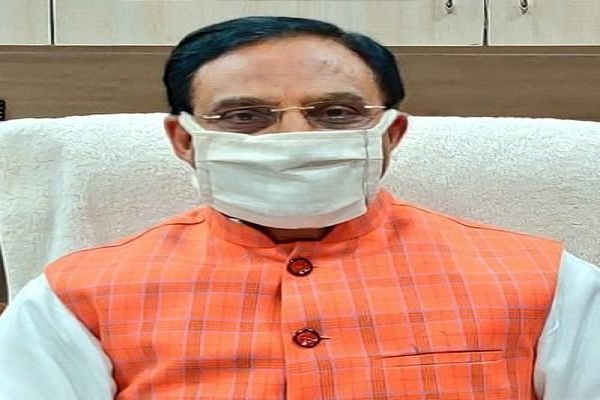
To provide boost to the Higher Education, Union Education Minister Ramesh Pokhriyal, along with Himachal Pradesh Chief minister Anurag Singh Thakur and Minister of State for Education, Sanjay Dhotre has laid the foundation stone for the Indian Institute of Management, Sirmaur.

The foundation stone was laid at a 210 acre land in Dhaula Kuan, Himachal Pradesh in virtual mode. The camps will be constructed by CPWD with the tender cost of civil works of Rs. 285.66 Crores. Phase 1 of the project is expected to be conducted by June 2022.

IIM Lucknow has been operating IIM Sirmaur from August 2015 as the mentor institution with the commencement of the first batch of 20 students from its temporary campus at Paonta Sahib, Sirmaur, Himachal Pradesh.

Also read: HRD Ministry launches report on e-learning initiatives

A permanent campus at Dhaulakuan has been conceived for an approximate student strength of 1170. The union government has also sanctioned an amount of Rs. 531.75 Crore out of the Rs. 392.51 Crore sanctioned for the construction work.

In the online foundation stone laying ceremony, the Education Minister added that the MBA students are future corporate leaders, wealth creators and the responsibility lies on the shoulders of the students to provide the right direction to business and industry to make Atma Nirbhar Bharat according to the vision of the Prime Minister.

The minister further assures the support of the Education Ministry to IIM Sirmaur in establishing its world-class infrastructure, while state education minister Dhotre added that over a period of fewer than five years, IIM Sirmaur has seen the intake of students from 20 to 300 which also points out to the hard work put in by the management, director and the board to steer academic activity in the required direction.

Against all odds son of petrol pump worker Pradeep Singh cracks UPSC Civil Services again

Pradeep Singh

Pradeep Singh is the son of a petrol pump worker who overcame a lot of hardship and limited resources and cracked the IAS exam. The 22-year-old hails from Indore was one of the youngest candidates to appear in UPSC 2018 exams and crack it. His father Manoj Singh originally from the town of Gopalganj in Bihar. Manoj Singh worked as a petrol pump worker and his mother is a housewife.

In the recently released UPSC Civil Services 2019 results, Pradeep shined again, finding a spot at the AIR 26 rank.

Pradeep born in 1996 studied in a CBSE school in Indore and then completed his graduation in B.Com (Hons) from IIPS DAVV. Since a very young age, Pradeep was confident that he wanted to be in administrative service.

Also read: UPSC to conduct personality tests for the Civil Services Exam 2019

He started his UPSC Civil Services preparation and moved to Delhi. To afford his coaching and accommodation, his father had to sell their home and move into rented accommodation. Determined to make the most of his father’s sacrifices and efforts, he focused on cracking the civil services examination. Hard work paid off and he cracked the examination in 2018 and was offered a position in the Indian Revenue Services.

Determined still, he did not give up and continued to strive for a better rank.

AICTE cancels establishment of Centres of Excellence

AICTE cancels establishment

To provide more cyber security, All India Council for Technical Education (AICTE), has cancelled establishment of Centres of Excellence (CoE) in cybersecurity in institutions. These centres were to be established in engineering institutions that were part of the Technical Education Quality Improvement Programme, or TEQIP.

The council has issued a notice, informing of cancellation of the scheme for the establishment of cybersecurity centres.

Earlier, the process of establishment of these centres of excellence was put on hold pending formulation of revised guidelines for procurement, by National Project Implementation Unit (NPIU).

Also read: AICTE issues revised its academic calendar

The recent decision is based on the decision taken by the NPIU, where it has finalised the procurement guidelines. As per the revised guidelines use of GeM (Government e-Marketplace) and also CPP (Central Public Procurement) portal is made mandatory for all types of procurement under TEQIP-III.

Based on this decision, the procedure for establishing centres of excellence has been cancelled.

Minister of Education: Eligibility of NATA criteria relaxed

Eligibility of NATA criteria

The ongoing COVID-19 pandemic, Minister of Education, Ramesh Pokhriyal Nishank has announced that the admission criteria for B.Arch courses has been relaxed. According to his official tweet, since there have been partial cancellations of 12th board exams, the Ministry of Education on the recommendation of Council of Architecture (CoA) have accordingly made the decision.

As per the new relaxation criteria, all candidates who have secured the passing marks in 10+2 level with PCM or 10+3 diploma with Mathematics will be eligible for admissions into the first year of B.Arch 2020-2021.

Also read: CoA postpones NATA first and second test

Previously, for B.Arch admissions, the candidates were expected to have minimum 50% aggregate marks in their qualifying examination along with valid NATA scores for admissions. The relaxation has been introduced to help the students who have faced a crisis in their academics due to the COVID-19 pandemic. Relaxation similar to JEE Main The relaxation of the admission criteria is similar to that of JEE Main, which was announced earlier by Nishank. Therefore, for admissions into B. Arch courses using JEE Main scores, the candidates will not be requiring any other criteria except for passing marks in the qualifying examination.

LATEST NEWS