Home Blog Page 423

Massive fire at Noida school library, books and furniture gutted

fire at Noida school library

A massive fire broke out at a private school at Gautam Buddh Nagar’s JBM Global school’s library gutting books and furniture. Upon receiving the information, the fire department pressed at least six tenders into service. The flame which had engulfed the school was doused after a 3-hour struggle.

The third floor of the school, which is located in Sector 132 of the Expressway, has been completely burnt down.

Confirming the same, Arun Kumar, CFO, Gautam Buddh Nagar said that a mishap was averted as the school is currently shut due to the COVID-19 lockdown. He said that the cause of the fire is being ascertained.

“The fire broke out in the library on the second floor of the private school. Around half-a-dozen fire tenders were rushed to the spot and the blaze was controlled by 10 am,” Noida Chief Fire Safety Officer Arun Kumar Singh said.

“Furniture and books in the library got destroyed in the fire,” Singh told PTI. The cause of the fire was yet to be ascertained, he said.

No activity was going on in the school and there were no children inside the premises due to the lockdown imposed in view of the coronavirus pandemic, the officials said.

The CFO said that fire extinguishing equipment is also being investigated in the school.

HRD Ministry prepares proposal for National Assessment Centre

HRD Ministry

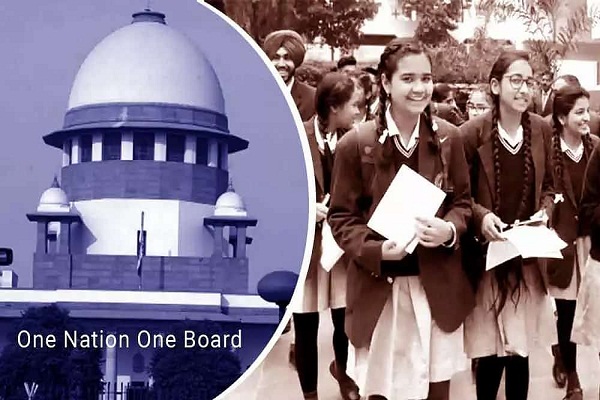
According to reports the Ministry of Human Resource and Development preparing proposal for setting up National Assessment Centre. The Government body under the MHRD is meant to act as a generic body that oversees that various school Boards.

Currently, the 31 school boards in India have their individual system for exam pattern, assessment and evaluation. This is seen as a reason behind the unusually high scores of students in Class 10 and 12 Board examinations.

The NAC to be set up will see that there is uniformity among these Boards and will advise new assessment patterns to school boards. It will also encourage collaborations between different school Boards and will act as a medium via which the different boards can share best practices.

The body will see that inflation of marks as a result of competition among various boards is prevented.

The New Education Policy plan for reforms in the school assessment centre will also see the NAC playing a key role and is expected to transform the same by the academic session 2022-23.

In addition, NAC will also shoulder the responsibility to guide the State Assessment Survey and also undertake the National Assessment Survey, the largest annual school survey which will monitor the achievement of learning outcomes across India.

Elets Exclusive | Higher and Technical Education virtual conclave, Rajasthan : Educators call to create quality e-content for students

Higher and Technical Education

Most governments around the world have temporarily closed educational institutions in an attempt to contain the spread of COVID-19 pandemic. Over 1.5 billion students and youth across the globe are affected by school and university closures. These nationwide closures are impacting over 72% of the world’s student population. Governments around the world are making efforts to mitigate the immediate impact of school closures, particularly for more vulnerable and disadvantaged communities, and to facilitate the continuity of education for all through remote learning.

Once the world opens back up again, educational institutes should keep the value added to the education provided by online tools and work towards developing ‘blended models’ of learning which provide the right balance of both. While only time will tell the lessons the world learned from these truly extraordinary times, digital learning has made it clear it’s here to stay in the mainstream for good, in one form or another.

Elets Technomedia and digitalLEARNING Magazine organized a Higher and Technical Education virtual conclave, Rajasthan which was first of its own kind in the country. The conclave was graced by Dr Shuchi Sharma, Higher and Technical Education secretary, Govt of Rajasthan and many other eminent speakers. In the conclave over representatives of over 20 universities in India and outside presented their views over the ongoing crisis.


The conclave was opened by Elets Technomedia Editor in chief Dr Ravi Gupta, who welcomed all the esteemed speakers. Dr Shuchi Sharma hailed Elets Technomedia for organizing such a conclave in this Corona pandemic. She even said the conclave is first of its own kind. She emphasized the use of technology in the education sector. She also asked faculty members to create quality e-content for students across the globe. She even went on to laud the AICTE for its new curriculum and said it is more focused on employability. The challenges are admissions and conducting exams for students. Ed-Tech firms to be included in the system, she added.

AICTE Chairman Prof. Anil D. Sahasrabudhe said “Everything cannot be taught online. Colleges will have to adopt blended learning after the crisis. Internships can be done online mode. We have an internship portal for students as industries are not allowing students in his pandemic. New curriculum has been introduced for students.”

He also said institutions must try to bridge the digital divide within students.

Hemant Sahal, Founder and CEO, Collpoll emphasized on the blended learning and it’s a solution for institutions in this crisis. He even said Collpoll will provide assistance to educational institutions in every way including assessments, study materials, data and many more. He even said the technology will play an important role in the education sector in the coming days.

Also read: Elets Exclusive | Educators: Technology can bring effective learning

Dr Pankaj Mittal, Secretary-General, Association of Indian Universities said “There will be a new normal in every sector after the Corona crisis. Many of our teachers embraced technology. To tackle the crisis, universities must develop digital infrastructure, training teachers to teach online, choosing a learning platform, assessment and evaluation online tools.”

She also said students must keep in mind, knowledge will be important not a degree in the coming days.

She also said “teachers must learn to develop unique content. Varsities need to improve higher education for students. The Corona crisis has created many opportunities for higher education. “

In the second session was on “Academia to Leverage Technology to Engage Students “was graced by various VC from the state.

Prof (Dr) Arun Patil, Academic Dean, Victorian Institute of Technology, Melbourne, Australia said “The students are missing the campus. The situation has forced us to take up technology so we must focus largely on the engagement of students. The priority is exams and how to assess students but there are many grey areas in assessments. We are working new ways to assess students online.”

He also said “students are going through much stress and they require counselling in this crisis. Students may feel uncomfortable with online exams as it is new for them. “

He also said universities must conduct feedback sessions to understand how students are adapting the online classes.

Rahul Singhi, Co-Founder, Poornima University & Director, Poornima Group said “There is a quick adoption of technology in academia. People who will adopt the change will survive in coming days. There is a huge surge in video sessions in last two months. Survival of the fittest will be the new norm.”

He also said things are going to be changed in the coming days.

RA Gupta, Vice-Chancellor, Rajasthan Technical University said “There is a complete transformation from classroom learning to digital learning. Students have a huge time to adopt the technology. Offline classes cannot be completely substituted by online classes. Rural students cannot connect with colleges due to internet issues.“

He also said “The quality of content is a huge issue. We need to identify good teachers who all can provide quality content. We need to have a panel of teachers who can tap the quality of content.”

He also said “In the month of July, University will conduct the exams. We will increase the weightage in next year.”

H N Verma, Vice-Chancellor, Jaipur National University said “All the teachers have adopted the technology gracefully. There were some issues with students with internet connectivity but most of them adopted very well. We conducted two mock tests online and have hired an agency to conduct exams.”

He also said “The students are having some mental stress so we need to take care of these issues. We need to mentor our students regularly. The online classes and assessments will be the new normal in coming days.”

HD Charan, Vice-Chancellor, Bikaner Technical University said “We were eyeing to complete the pending syllabus and provide summer internships to students in next few days. Online classes cannot be replaced by offline classes. The AICTE has asked to have 20 pc studies through online mode. Our teachers are ready with presentations to provide study materials to students. “

He also said we can also start counseling online on Happiness. We have counselled students for one week in the crisis.

In the third session, the panel discussed “Tackling the Innovation in Admission, Enrolment, Assessment & Accreditation.”

Dr Abhay Kumar, Vice Chancellor, IEC University, Himachal Pradesh said “We have installed online process and targeted the local students. Accreditations can be done through virtual labs. Online exams can be done through a hybrid process. Online teaching is an innovation, which will stay with us. We have arranged metal health wellness classes. We need to reach all the students in rural students.”

Prof (Dr) K P Yadav, President/Vice Chancellor, Sangam University, Bhilwara, Rajasthan said “There must be university app and portal for admission and there must be flexible admission test. Around 30 pc students come from rural areas in our university. We need to apply an alternate way for the admissions of students. We need to embrace technology for teaching. We have to provide education at the doorsteps of students.”

We need to improve the quality of education. The virtual labs can be used in assessments. With govt’s support we can use this crisis to opportunity, he added.

Dr S Srikanta Swamy, Academic Consultant – Research & Analysis Wing, National Assessment and Accreditation Council ( NAAC) said “Our technology has reached the urban areas, not the rural ones. Technology can be used to make admission effectively. We need to focus, how to minimize the time frame and to make transparent our admission process.”

Online teaching cannot be compared to offline teaching and a good teacher cannot be replaced, he added.

He also said the evaluation will be more compressive in coming days. A paradigm shift is witnessed in education.

Technology and innovation must be given more focus, he said.

Dr Ashok Gadiya, Chairperson, Mewar University said “The admission will be huge challenge for many universities. The govt must permit us for online admissions and counseling. Online teaching is an issue in rural areas so govt must allow us to provide study materials through radio also. Every university must build a radio station within its campus. We need to provide study materials to students in rural areas. “

He also said universities must bring new innovations in their way of teaching in coming days.

Prof O P Chhangani, Vice Chancellor, Apex University, Jaipur said “Admissions are done through a digital platform and physical footfall. There is an issue with assessment with students. Assessment is the silent killer of learning. We have to create something for higher level of learning. We need to take the help of technology to capture of data for future usage. “

He also said things will change drastically in coming days for universities and students.

In the next session, the panel discussed on “How Higher & Technical Education Institutes dealing with COVID19 Pandemic.”

Dr. Panckaj Garg, Founder & Adviser, Jayoti Vidyapeeth Women’s University, Jaipur said “The Covid crisis has forced us to think, why we were established. Except Higher Education sector, every other sector is contributing to the govt in this crisis. We need to bring innovative ideas and provide recommendations to the govt in this crisis. We need to identify the needs of the society and provide research-based solutions. We need to support the govt in this pandemic.”

He also said we need to have e-notes for every programme. In the next five years, we need to map the supply and demand in human power. The data is not organized in our country. Trained human resources is the most important for the country, he added.

He also said there is a gap in demand and supply and we need to fill the gap.

Ashish Mathur, Deputy Director – Training & Placement and Public Relations, NIMS University said “Corona is a blessing in disguise. Online classes were the only solution in this crisis. We have also sent PDF and other materials to students. We have tied up with many firms for online internships for our students. The next challenge is conducting exams and we are working on it.”

He also said adopting the new technology was not easy for all of us. Training faculty members to teach online was also a huge challenge.

We must adopt hybrid learning in coming days. Placement is a very dynamic thing and need to start internships every year. We need to add skill sets every year, he added.

Prof. MK Ghadoliya, Vice Chancellor, Shri Khushal Das University said “We started ‘College band hai knowledge nahi’. We started online classes on Facebook live. Initially, we took up spoken English, confidence building, public speaking for students. These sessions were attended by many students. Faculty members were directed to make e-content so that classes can be taken.”

He also said we need to reduce the timings of online classes. Online delivery is a big issue for varsities. There is no readymade solution with the govt and need to coordinate to prepare one. A new definition of distance education will emerge in coming days, he added.

Scott Dahl, Master’s Program Director, Les Roches Global Hospitality Education – Switzerland said “We started online classes when the lockdown announced. The transition was seamless and formed small groups to teach our students. The govt was very clear over its policies. Most of the institutions were not prepared. We will be not bringing students back soon. “

He also said Swiss govt is very supportive and it took many preventive measures to curb the virus.

He also said there is huge opportunity in this crisis. It is important to learn new things in this crisis, which can be a blessing in disguise.

In the second half of the conclave, the panel discussed over “Survival Strategies of Institutions in Covid19 crisis: Emergent Resource & Implementation.”

Dr. Parag Sanghani, Vice Chancellor, P P Savani University said “Higher educational institutions will be impacted due to the Corona. Universities are struggling to provide quality e-content. All the higher education institutions must think to optimize the resources. We need to optimize our resources well to tackle the crisis.”

He also said mobile phones can be the new classroom for students. We need to provide quality e-content to students.

Surja Ram Meel, Chairman, Swami Keshvanand institute of Technology, Management and Gramothan, Jaipur said “There is huge challenge everywhere. We have to accept these challenges and have to deal with it. Students in rural areas are learning through mobile. This crisis I expected till July. There is an opportunity with every challenge.”

He also said a change in mid-set is required and varsities must make all the required changes for future.

Dr Narendra Singh Rathore, Vice-Chancellor, Maharana Pratap University of Agriculture and Technology said “We need new resources in our institutions. Our traditional way of teaching will be affected. There are lots of issues we need to address them all. We need to change our ways as it is the need of the hour. Most of the students will not go for the traditional way of teaching. We need to bring change in the curriculum.”

Dr. Vikas Misra, Campus Director, Geetanjali Institute of Technical Studies, Udaipur said “Corona has affected every sector. We have achieved huge progress in online learning in last two months. Now, the virtual classroom is a reality. We must adopt blended learning. We must develop digital infrastructure.”

He also said firms will have to go for virtual placements.

In the closing session, the panel discussed over “Mental & Social Wellbeing of Students, Teachers & Parents during COVID19 crisis.”

Pradeep Kumar Borad, IAS, Commissioner, College Education, Special Secretary, Sanskrit Education, Government of Rajasthan said “We have been working on how to improve the quality of education. We need to focus on skill training and sessions for students. We have created a new calendar for colleges. We have started College Community programme as PTMs in schools. We have started creating e-content from the month of September.”

He also said people are looking towards govt colleges and will try to improve education in colleges. The govt colleges have set a benchmark in the crisis and progressing well.

Prof PB Sharma, Vice-Chancellor, Amity University Gurugram said “The crisis is a blessing in disguise. It will be a great advantage for industries. We have second-largest Higher Education sector in the world. We must understand the deeper meaning of learning. Digital learning is an interactive one; it’s not just jotting down notes in the class. We need to bring innovativeness and new things to the classroom”.

He also said students’ community need to understand the usage of technology in their studies.

Aakash Chaudhry, Director and CEO, Aakash Educational Services Limited (AESL) said “Teachers are facing huge challenges in delivering content. Teachers need to change their mid-sets. They need to understand the difference between offline and online teaching. Content designing is very important for students. With online classes, parents are more involved.”

He said the crisis will bring lots of benefits for students and must focus on quality content and blended learning.

Pankaj Gupta, President, IIHMR University said “The ‘joy of giving’ must be implemented well. Money to meaning is more important. Teachers have to transform themselves to Gurus. Teachers cannot be replaced. Online learning is the need of the hour. “

While concluding the session Dr Shuchi Sharma said “Over 20 lakh college students will have to mandatorily volunteer for social cause from the coming academic session. Cleaning their campuses or teaching slum children will fetch students’ academic credits under the state higher education department’s programme “Anandam” aiming to sensitize students towards social service. “

She also said this programme will develop a great sense of understanding towards social issues which will remain with them forever.

The panel discussed the opportunities and challenges, the Universities are facing in this pandemic. The discussion was elaborate and many of them provided the solutions for the students and teachers in this crisis. The speakers also emphasized on the new role of technology in the education sector. The panel also discussed the aftermath of the COVID-19 crisis, and potential solutions when the campus will be re-opened.

BSEB Class 10 Results 2020: Girls outshine boys, 80.59 pc pass

Bihar Board BSEB 10th result 2020

The Bihar School Examination Board (BSEB) was announced the Class 10 Results on its official website. According to the officials 80.59% of students have passed.

This year 14,94,071 candidates appeared in the examination, out of which 7,29,213 were boys and 7,64,858 were girls.

Bihar Education Minister Krishna Nandan Prasad Verma on Tuesday announced the results of the Bihar Board class 10 examination 2020. RK Mahajan, Additional Chief Secretary, Bihar Education Department along with the BSEB chairman Anand Kishor were also present when the results of BSEB matric exams was declared .

A total of 12, 04,030 passed the exam in which 5,90,545 are boys and 6,13,485 girls. The girls have outshined the boys again.

The BSEB conducted the class 10 board exam between February 17 to 24, 2020 across 1368 examination centers.

The board had to stop the evaluation of answersheet midway due to the COVID pandemic.

Bihar Board declared the results of the BSEB class 12 exam 2020 on March 24, 2020.

Bihar Board declares BSEB Matric Results 2020, check on biharboardonline.bihar.gov.in

BSEB Matric result 2020

The wait is over for lakhs of students, Bihar School Examination Board (BSEB) has officially declared the Bihar Board 10th result 2020 or BSEB Matric Result 2020. The results have been declared on its official website- biharboardonline.bihar.gov.in.

After days of confusion, the board finally declared the class 10 board exam results today, May 26, 2020. Students who have been waiting for their results can visit the official website of the board i.e. biharboardonline.bihar.gov.in. Students can also visit onlinebseb.in, biharboard.online, and bihardboard.ac.in, indianresults.com to check their results.

The Bihar Board BSEB Class 10 examination 2020 was conducted from February 17 to February 24 at various test centres across the state. Due to Corona pandemic, the results were delayed.

Steps to check Bihar Board 10th result 2020

-Visit the official website of BSEB i.e. biharboardonline.bihar.gov.in

-Click on the link which mentions ‘BSRB Matric Result 2020’

-Enter Bihar Board Class 10 roll number and your date of birth

-Enter the Capche Code and click on the submit option

-Bihar Board 10th result or BSEB Matric result 2020 will appear on the screen

Elets Exclusive | Ashutosh Sharma calls to improve the quality of innovation

Ashutosh Sharma

The Coronavirus has created an unprecedented halt across the globe. Over 190 countries are reeling under the epidemic as it is spreading across the globe. Across the globe, countries are closing borders and asking citizens to stay home in the midst of the Coronavirus outbreak. The third phase of the lockdown in India began with considerable relaxations, but curbs will continue in containment areas so that the gains achieved so far in the fight against COVID-19 are not squandered away. The country has been divided into three zones—Red, Orange, and Green—based on Coronavirus risk-profiling. The extended lockdown is slated to last till May 17. Addressing the topic of “Fighting Corona – Leveraging Scientific Research & Innovation” Prof. Ashutosh Sharma, Secretary, Department of Science & Technology, Government of India presented his views in a webinar organised by Elets Technomedia and hosted by Dr Ravi Gupta, Founder and CEO, Elets Technomedia.

Ashutosh Sharma said “Department of Science & Technology (DST) is a very good experiment by the government of India. DST was established in 1971 to promote new areas of science and technology in the country. The DST has been making policies for science and technology and providing funds to many innovations across the country. It’s been a huge platform for empowering science. In the last 49 years, we have evolved in a dynamic way.


He further said DST is about building capabilities and future-ready and it’s a system for scientists by scientists. We must focus on quality rather than quantity in innovation, he said.

Over new innovations, he said we have started a scheme named NIDHI (National Initiative for Development and Harnessing Innovations), an umbrella program for nurturing ideas and innovations into successful startups.

He also said India is number 3 on tech start-ups and while our quantity of research is adequate, the quality of research can further improve by shifting the research to profound, disruptive were needed, cutting edge and relevant.

Over the COVID-19 crisis, he said there is no cure or vaccine for the virus. The focus is on testing, tracking, and cutting down the transmission of COVID across the country. The govt is focusing to contain the epidemic and curb it from going to the third phase.  We are fighting COVID-19 on 11 different fronts. It’s a multi-dimensional problem so we need new ways to tackle. We need to use scientific modern tools to fight the pandemic.

He also said Industry will have to part of our innovation. We are trying to connect startups with established industries. We are number three in the world in the number of scientific and engineering publications, and also at number three in many cutting edge fields. The government through its policies and support creates an enabling environment for R&D, innovation.

With individual driven science, machine learning, the convergence of technology we could bring new elements to our education system and academic research, he added.

He also said we must empower school children and develop critical thinking within them to produce the best of scientists in the future.

He also lauded the Survey of India which completed its 250 years in the system. Digital maps that are of utmost necessity in the crisis are developed by Survey of India to track the COVID-19 patients, he added.

He also said our globe is moving towards remote technology and we must seize this opportunity to make this count.

Over the future plans, he said, climate change is slow thing and we need to pay attention to it. The world must be ready for intelligent machines.

He also said we must marry the enthusiasm of young and experience of older scientists to get better results.

Lastly, he said we need to focus on –“Jugarad, Dandha, Panga” to resolve things.

Elets Exclusive | Naveen Chandra, Asst Collector calls to implement digital education in rural areas

Naveen Chandra

The Coronavirus epidemic has created an unprecedented halt in the education sector. With the closure of educational institutions, the uses of digital learning platforms have surged. Digital learning in India is going to be the key face of future education.  It is surprising to see how smart technologies are changing the overall educational framework in the country. The penetration of digital education into the rural market is evolving fast. Affordable high-speed internet and direct-to-device technologies are empowering rural students to study courses online and improve their skills and knowledge. The state of education in India is dismal, especially in rural areas. The sector is currently battling with grave challenges such as outdated teaching methods, shortage of teachers, inadequate student-teacher ratio, and insufficient teaching resources. Addressing the topic of “Future of Digital Education in Post COVID Era” Naveen Chandra, Asst. Collector & Asst. Magistrate, Malda, West Bengal presented his views in a webinar organised by Elets Technomedia and hosted by Dr Ravi Gupta, Founder and CEO, Elets Technomedia.

Speaking during the webinar, Naveen Chandra said “In Malda, child marriage is a major issue. We have started a project named “MaGiC- Malda Girls go Coding”. The bigger challenge was from society, we had to convince the girls and parents for the coding classes. This project is running in every government school. The project will provide livelihood opportunities, skill development and empowerment to girls.”


He also said a group of 30 girls consists of 8th and 12th standard, having zero experience of coding embarked on the exciting journey to learn the basics of computer programming.

He also said “Google will provide training to 42 computer teachers and will certify them. They would teach students of classes 4th to 8th, all of whom would also be certified. Most of the govt schools in West Bengal have computer teacher and labs for students and I had to only provide an internet connection to schools.”

There is a huge digitalization in rural areas with the emergence of ed-tech platforms and the usage of smartphones. The computer classes are planned during break times so that students don’t have to stay back after school hours. As there are many self-help women groups in the district, we have to create small self-help groups for coding and apps. Most of the govt schools in West Bengal have computer teachers and labs for students. The administration had to only provide an internet connection to schools, with a minimal expenditure of Rs 1500 for the project, he added.

He also said the govt schools have all the facilities for students and the project will change the image of govt schools across the country. He hailed the teachers and said they played an important role in this project. The facilities in govt schools are growing rapidly and with these trajectories, things will do well for students.

Naveen hailed many corporate houses for proving computers and projectors in schools to develop digitization in rural areas.

Over other implementations, he said there is a model to provide drinking water to every household, ensure education, solar lights and provide every possible govt support to the people. All the development carried in the district is done under the existing schemes.

He also said there are lots of aspirants for govt jobs but without any resources nearby they have to depend on bigger cities. To provide proper education, we have started a coaching center in the district and nearby students. The UPSC cleared officers will teach which can be helpful for aspirants.

He busted the myth over bureaucratic fraternity being pressurized by politicians.  He said politicians always want new ideas so that development can be done in their constitution. There is no political pressure on IAS officers. The political fraternity always helps us and very supportive.

He also lamented the way govt officials images are drawn with the general public. He said every govt official always tries to help the public. In the future, people will get their certificates at the doorstep. The govt will be at your doorstep as it is not feasible to address thousands of people.

Lastly, he said plan for the best but ready for the worst in life.

HRD Minister to address 45,000 colleges on May 28

Minister Ramesh Pokhriyal

Union Human Resource Development Minister Ramesh Pokhriyal will be addressing an online webinar for the 45,000 colleges. The webinar will be conducted on May 28, 2020. The webinar will be conducted at 3 PM by the National Assessment and Accreditation Council (NAAC) for addressing the problems arising due to the COVID-19 lockdown and the grievances faced by the students of the colleges.

The HRD Minister on his official twitter account stated that he along with NAAC to establish a direct dialogue with the 45,000 colleges across the country. He also invoked all the colleges to join the webinar in order to successfully face the COVID-19 crisis and will turn the challenges into opportunities.

Earlier as well, the HRD Minister has used webinars during the lockdown to address the queries of the parents regarding issues faced by the students during the pandemic. The minister has also addressed a webinar meant exclusively for the teachers while in the webinar conducted for the students conducted on May 5, 2020 announced the examination dates for the JEE Main (Joint Entrance Examination Main) and the NEET (National Eligibility cum Entrance Test).

In the webinar, the Minister is also expected to address the issues faced by the colleges including online classes, disruption of the academic calendar, and the delay in the examinations.

BSEB to declare Class 10 Results today

Bihar Board BSEB 10th Results 2020

In a major development, Bihar School Examination Board (BSEB) Class 10 board examination result 2020 will be released today (26 May) at around 12.30 pm. BSEB chairman Anand Kishore has informed that results will be declared on 26 May. Bihar Education Minister Krishana Nandan Prasad Verma will announce the results. The result was supposed to be declared on 25 May but got delayed due to last-minute arrangements.

A total of 1.7 lakh students appeared for the state board examination, out of which 6,83,990 were male students and 6,36,046 were women.

Here’s how to check your result:

-Log in to the official website – biharboardonline.bihar.gov.in

-Click on the ‘Results’ tab on the home page

-Press on Class X Matriculation results

-Select your stream and tap on ‘Result’

-On the new page, enter log-in credentials

-Fill out the captcha text and check BSEB results

Govt plans to re-open schools in July

Minister Ramesh Pokhriyal 'Nishank'

In a major development, the Central government is planning on re-opening schools in a zone-wise manner. The government is planning to reopen schools in the Green and Orange districts first and that too only for older students.  Students of primary classes (1 to 7) will need to wait till schools are operating in full swing before they join.

According to reports, younger children will be kept at home, for now, to make sure they remain safe since very young kids cannot be expected to follow strict rules to ensure their own safety. Teachers would need to be trained to follow and help others follow the guidelines.

This news comes after HRD Minister Ramesh Pokhriyal hinted about similar measures and spoke about the safety guidelines being worked on for both schools and colleges so they can be reopened soon.

HRD Minister Ramesh Pokhriyal had hinted that schools might reopen with just 30% capacity.

While answering a question, he hinted that since social distancing would need to be maintained even when schools reopen, classes might need to be held with just 30% of students.

LATEST NEWS