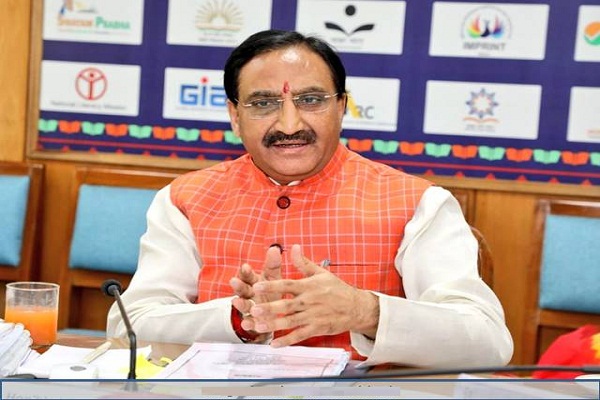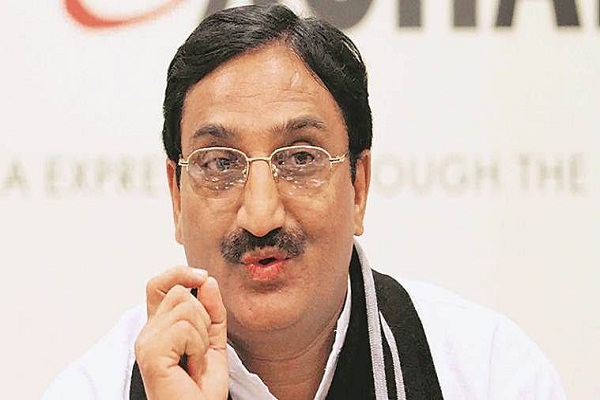




In a huge relief to students, Union HRD Minister Ramesh Pokhriyal Nishank will announce the fresh dates for conducting the JEE and NEET 2020 exams. The exams were postponed due to the Covid- 19 lockdown across the country.
The Umion HRD Minister will announce the fresh date sheet for Joint Entrance Examination April session 2020 and National Eligibility cum Entrance Test (NEET) undergraduate 2020 during the May 5 webinar.
HRD minister will address the students’ queries on Twitter and Facebook through a webinar from 12 noon onwards.
Students have been raising their concerns regarding a lot of things like postponement of exams, promoting students without exam during lockdown, expected dates of examination.
Initially, the NEET UG exam 2020 was scheduled to be conducted on May 3 while the JEE Main April session exam was scheduled to begin from the first week of April.
However, both the examinations were postponed after the Prime Minister Narendra Modi announced a nationwide lockdown due to the coronavirus outbreak.
Amidst Coronavirus outbreak, the Karnataka government has released the result for Pre-University Course (PUC) first year or class 11 level of exam on May 5.
The result has been declared by the Dakshin Kanna Pre University Principals Association (DKPUCPA). The results will be directly sent to students.
S Suresh Kumar, Primary and Secondary Education Minister said “The results of the first year Pre-University Examinations will be announced on May 5. The results will be sent directly to students. Hence, colleges will not be displaying the results.”
Over 6.53 lakh candidates have appeared for the exams of which over 2 lakh are from arts, 2.48 lakh from commerce, and 2.04 lakh from science.
For those who could not clear exams, supplementary tests are held. This year, the exam date is yet to be an announced on the same. Several colleges and universities are contemplating having exams only for the final year students
There is no clarity on supplementary exams yet. Those who clear PUC I will be promoted to PUC II or class 12.
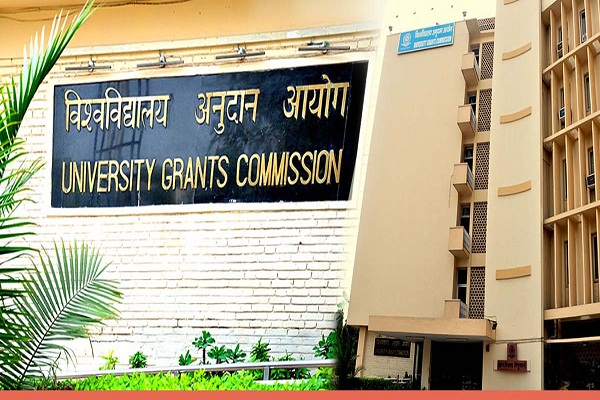
In the wake of Coronavirus outbreak in the country, the University Grants Commission (UGC) has informed the heads of the different universities to make arrangements for students to take up online internships or activities in the digital mode.
The UGC has made it clear that the guidelines issued are advisory in nature and the universities are to plan their activities accordingly keeping in mind the safety and interest of the students.
The circular issued is available on the official website – ugc.ac.in.
The guidelines issued by the UGC provide a framework for the internship and other related initiatives of the UGC.
The Guidelines issued by the UGC have also asked the universities to adopt efficient and innovative methods of conducting examinations by reducing the duration of the examinations from 3 hours to 2 hours.
The Higher Education Authority has also added that the universities and colleges are to take the following measures for the internship and other related activities keeping in mind the present situation of COVID-19 lockdown across the country.
According to the UGC Guidelines issued last week it has been stated that the term examinations will be conducted in July 2020 while the intermediate semester students will be graded based on the internal assessment of the present and previous semesters.
The notification has also added that the college session for the already enrolled students will begin in August 2020 while the fresh batch of students will begin classes from September 2020.
‘Multiple Intelligences’ is the new term that has been buzzing around in the space of education and learning in contemporary times. But this is not a topical concept, in fact it dates back to 1983 and was theorised by Howard Gardner.
According to Gardner, ‘We are all able to know the world through language, logical-mathematical analysis, spatial representation, musical thinking, the use of the body to solve problems or to make things, an understanding of other individuals, and an understanding of ourselves. Where individuals differ is in the strength of these intelligences – the so-called profile of intelligences -and in the ways in which such intelligences are invoked and combined to carry out different tasks, solve diverse problems, and progress in various domains.’
The eight types of multiple intelligences are briefly described below:
Verbal-linguistic intelligence: This refers to an individual’s ability to analyse the given information and to produce work that involves spoken and written language, such as emails, debates, and stories.
Logical-mathematical intelligence: This describes the ability to calculate, analyse and prove equations and formulae, and solve abstract problems.
Visual-spatial intelligence: This allows people to comprehend information presented visually such as maps, signs and symbols, pie charts and the like.
Musical intelligence: This enables individuals to create and make meaning of different types of sound.
Naturalistic intelligence: This refers to the ability to identify and study the natural world such as flora, fauna, geography, climate change.
Bodily-kinaesthetic intelligence: This entails using parts of one’s own body to find solutions to problems or to memorise information.
Interpersonal intelligence: This encompasses the ability to grasp other people’s opinions, thoughts, motivations, and intentions.
Intrapersonal intelligence: This refers to people’s ability to understand the nuances of one’s own personality and to be able to ideate on what one desires.
Fundamentally, this theory proposes that each learner has all eight types of the intelligences listed above at varying levels of aptitude and that all learning experiences do not have to relate to a person’s strongest area of intelligence. The theory of multiple intelligences has disrupted the way we look at traditional educational systems that assume that each student learns in the same way. It challenges pre-supposed notions and challenges the framework which we follow and that lays importance only on linguistic and quantitative modes of teaching and assessment.
The system of measuring one’s Multiple intelligences presents a contrasting set of assumptions that each student is at a different point on the learning spectrum and learns in a way that is identifiably distinctive. Therefore, the process of teaching-learning would highly benefit if disciplines are presented in a variety of ways and if assessments take place through diverse means.
The idea of a singleIQ is questioned by this method which supposes different ways of processing information. But this is not to be confused with the term ‘learning styles’ which is the way that an individual approaches a range of materials. One must keep in mind that learning is fluid and complex, and it is important to provide learners dissimilar contexts for absorbing information. As Gardner states, ‘When one has a thorough understanding of a topic, one can typically think of it in several ways.’
As an educator, it is important to think about innovative ways of presenting and disseminating information instead of pigeonholing students in a certain category of learners and relying on outdated methods of teaching concepts. For instance, one can introduce graphic stories to a student who likes art in order to teach the nuances of writing. Or one can introduce rhymes to a student who prefers music in order to teach mathematical formulae.
As the world is stepping into the second decade of the 21st century it becomes all the more pertinent now than before to think radically and to begin to view the process of teaching from a different lens. We needed to broaden our perspective of what is considered to be ‘intelligent’ and supplement the definition with new and multiple intelligences.
In the wake of COVID-19 outbreak, the Union Public Sevice Commission (UPSC) has decided to postpone the civil services exams until further notice.
The UPSC Prelims exam was scheduled for May 31, 2020, however, now it has been postponed.
Candidates were advised to visit the official site- upsc.gov.in for further information. The commission held a special meeting on May 4, 2020, to review the situation after the second phase of the nation-wide lockdown.
Taking note to the extension of restrictions, the commission decided that it will not be possible to resume examinations and interviews for the present.
The high-level meeting was chaired by Arvid Saxena. A notice has been published on the official website.
The Civil Services (Preliminary) Examination, 2020, scheduled to be held on May 31, 2020, stands deferred. Since this examination also serves as the screening test for the Indian Forest Service Examination, the schedule for the Indian Forest Service Examination is also deferred.
The situation will be reviewed again on May 20, 2020, and fresh dates for these examinations shall be notified on the UPSC website in due course.
The Coronavirus epidemic has created an unprecedented halt across the globe. There is no sector that COVID-19 hasn’t impacted and India’s management institutes are no exception. The lockdown to curb the spread of coronavirus has led many B-schools to cancel their classes, exams, postpone internships, and shift classes to online.
Many B-Schools have opted to teach students through various platforms including Zooms, Microsoft Teams, Google Hangouts, and many more. The B-schools are in limbo over the uncertainty of the situation.
During a webinar organized by Elets Technomedia and digitalLEARNING Magazine, Nitish Jain, President, SP Jain School of Global Management said “ The COVID-19 crisis has both positive and negative effects on the management schools. No one wanted to shift to online classes in the middle of the semester. The crisis is a blessing in disguise for students as students learned lessons- bad things can happen. We have campuses in four countries.”
He said “Online education became popular in 2011 and 12. Over 95 pc students start online courses don’t complete it. We have started cutting edge technology for students. S P Jain developed its own technology platform called Engaged Learning Online (ELO). ELO has become a game-changer. The institute has seamlessly moved classes online without any degradation of quality.
Over ELO Jain said “The new cutting edge technology offers students a virtual but real-time classroom experience. Since the studio is set up with a robotic tracking camera, faculty can stand, move around, and maintain eye contact with students as they do in a class. The faculty can also have one-on-one conversations with a student or speak to the entire class.”
He also said in ELO, each student is live, real size that helps maintain engagement in the class. It also has an alertness meter where you can actually check how alert the student is through the eye movement.
Over internships, he said they have moved it to online and project-based for students. The move is a temporary basis and students can learn something new. Till now we have only focused on campus learning, but in this crisis, online learning can be done simultaneously, he added.
Things will come back to order. New startups will arise and hiring will take place in the next few days. The same thing happened in 2008-09 during the global recession but everything bounced back in 2010, he added.
Pharma firms, online delivery, and agri businesses will be great beneficiaries post COVID crisis.
Over online MBA courses, he said they are providing online management courses that are equivalent to the physical ones. They are even providing short term professional courses for students, which can add value to their resumes. The recruiters ask for skills within a student before they hire.
Lastly, he said the safety of students is a major concern for them and they have delayed the intake of new students till September but are prepared to provide them online classes if things not go as planned.
Providing huge relief to students, All India Institute of Medical Sciences (AIIMS), will conduct AIIMS postgraduate (PG) entrance exams for the July 2020 session from June 6 onwards.
As per the revised schedule announced by AIIMS, the PG entrance examination for medicine programmes for Doctor of Medicine (MD), Master of Surgery (MS) and Master of Dental Surgery (MDS) will be held from June 6 to 12, 2020.
The entrance examination for the M Biotechnology will be held from June 6 to 10, 2020.
Earlier, the AIIMS PG 2020 exams for MD, MS and MDS courses were scheduled to be held from May 3, but had to be postponed due to COVID-19 lockdown.
The practical, clinical, viva-voce examinations for MD, MS, MDS, M Biotechnology and fellowship programme will tentatively be conducted from June 16 to 25, 2020. The department concerned will fix the date, time, and venue for the examination. The notification says that there will be no capturing of data for biometric attendance (MD, MS, MDS, M Biotechnology and Fellowship programme).
The examination fee of Rs 1,500 for general category students and Rs 1,200 for Scheduled Caste (SC) and Scheduled Tribe (ST) category students has to be paid before the last date of registration on May 8.
As COVID-19 spreading across the nation, the government of India has extended the lockdown till May 17, 2020. The govt has asked all the public places to close down including educational institutions till further notice. All the important exams were cancelled or postponed due to the lockdown.
Bishwajit Kumar Singh, commissioner, Navodaya Vidyalaya Samiti has taken over the additional charge of chairman, National Institute of Open Schooling (NIOS).
Singh is an Indian Foreign Service (IFS) officer at the joint secretary level. In 2015, he was transferred by the Central Government and posted as Commissioner, Navodaya Vidyalaya Samiti.
Speaking during a webinar organized by Elets Technomedia and digitalLEARNING Magazine Bishwajit Kumar Singh, commissioner, Navodaya Vidyalaya Samiti said “Navodaya Vidyalayas is a system of schools for talented students predominantly from rural areas in India. It was established in 1985 in two places. Over 2.80 lakh students’ are studying in our schools and over 43 pc are girls. NVS is one of the best residential schools in the country.”
Our focus is to provide better opportunities to talented students from rural areas, he said.
When asked about the admission process he said “We take students through exams which conducted with the help of state education department. We usually take admissions in 6, 9, and 11 classes. For class 6 the test is based on non-academic, for class 9 it’s based on curriculum-based and 11th class admissions are done according to board exam results. All the exams are done online.”
He also said Navodaya Vidyalayas are run by the Navodaya Vidyalaya Samiti (NVS), an autonomous organisation under the MHRD, Department of School Education and Literacy, Govt. of India. The Chairman of the Samiti is the Minister of Human Resource Development.
The subjects are taught in regional languages he confirmed.
Not only academic studies the NVS focuses on physical education. Our students are very robust and healthy as we prepare them for physical education and make them physically fit. We are inspiring students to opt for other career options, he added.
Over the COVID-19 crisis, he said the NVS had shifted their curriculum to online as the lockdown was imposed. They have allocated councilors for the students in this lockdown. The main challenge for them is to provide e-content to students in rural areas. E-content is available on every platform; we need to sequence it wisely. The online classes can be supportive but cannot substitute the physical classes. In online classes peer to peer learning cannot happen, he added.
When asked the difference between KVS and NVS, he said KVS the catchment area is urban areas and we focus on rural parts.
He also added they are providing good promotions to teachers and they hire experts for every section.
He also added NIOS has been broadcasting its educational content on television through the SwayamPrabha channel. This is to aid students in continuing their education remotely while they stay confined to their homes.
In the wake of COVID-19 outbreak across the country, Dr. APJ Abdul Kalam Technical University has further extended the last date to fill UPSEE 2020 application form up to May 15.
The application is available on its official portal upsee.nic.in. The last date to fill application forms has been extended to allow more students fill the application form,.
Uttar Pradesh State Entrance Examination (UPSEE) is the test for shortlisting candidates to offer admission in the first Year of B.Tech/B.Arch/B.Des/B.Pharm/ BHMCT/BFAD/BFA/B.Voc/MBA/MBA(Integrated)/MCA/MCA(Integrated)/M.Tech(Integrated),M. Tech./M. Arch./MURP/M. Pharm/M. Des & second Year of B.Tech/B.Pharm/MCA (lateral entry) course.
Students interested in admission through UPSEE 2020 for any of the listed courses can fill the application form up the extended dates.
The test is conducted by Dr. APJ Abdul Kalam Technical University Lucknow on a single day across various test cities of Uttar Pradesh and some test cities outside the state.
According to reports, National Testing Agency (NTA) will announce revised examination dates for JEE Main 2020 and NEET UG Exam 2020 on Tuesday – 5th May 20020. The revised dates for dates for JEE Main and NEET Exam will be announced on respective websites i.e. jeemain.nta.nic.in and ntaneet.nic.in.
All the aspirants are advised to visit the official website for further notice.
Earlier, JEE Main and NEET 2020 Exams have been postponed due to on-going COVID-19 lockdown across the country. The apex testing agency has extended the application deadlines which ended recently. After the announcement, admit cards for JEE Main Admit Card 2020 and NEET UG 2020 Exam will be released.
With the postponement of the examination, there have been several fake news and rumours about JEE Main 2020 and NEET 2020 Exam doing the rounds. Recently, a fake notification which looks identical to official one was circulated on social media platform, which claimed that the exam would be held in July 2020 due to the postponement due to lockdown. Since then, NTA has asked all the candidates only to refer the official portal to get latest news and updates about the examination.