Home Blog Page 510

Rajasthan Technical University Kota: An Engine for societal Growth

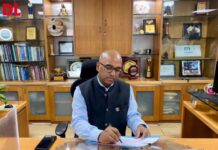
Prof R A Gupta

In an exclusive interview with Prathana Dutta of Elets News Network (ENN), Prof R A Gupta, Vice-Chancellor, Rajasthan Technical University (RTU), Kota, gives his insights on how RTU, Kota is working towards a bright future for the youth of Rajasthan and fostering a culture of high quality research in the institute.

What is the vision of RTU that makes it an engine of societal growth in the state of Rajasthan?

The state’s first technical university, Rajasthan Technical University at Kota has been developed with a vision to provide opportunities to the youth of the state, particularly those from humble village backgrounds. The university endeavours to provide the youth with a platform to groom their personality, improve their technical education, develop their entrepreneurship skills and make them employable. The students are encouraged to face the challenges of the competitive world by taking up projects based on solving social/industrial problems. The university adopts villages for upliftment by spreading education through mentoring and motivation.

What are the initiatives taken by you to foster a culture of the high-quality research at your institution?

Initiative of high quality research: A type of research which is oriented to solve industrial and social problems for the benefit of the society is being promoted. To provide better opportunity and ease of access to the upcoming areas of research, various research centres have been established across the state of Rajasthan. To ensure quality and to establish a firm place in emerging technological fields, examiners are appointed from premier institutes and scholars are encouraged to work with pioneers in the relevant fields. A plagiarism checking software has also been adoptedEducation is evolving rapidly to keep up with the needs of industry and markets. In view of this, are you making regular changes to the curriculum of popular courses like B.Tech?

To incorporate global industrial requirements in the present education system, the syllabus/curriculum has been revised as per the modular curriculum prepared by AICTE with inputs from people in industries, premier institutes and alumni of the institute.

Do you follow a student-centric approach to learning? If so, what are the initiatives taken in  this regard?

Due weightage is given to interdisciplinary courses, elective courses .and open electives to provide flexibility to the students to opt for courses as per their interest and inclination. A six-week industrial  training is ensured for students to familiarise them with the current trends in industries and in areas of their interest. Various innovative teaching methods are being adopted to make the education learning based

Centre For Electronic Governance: Changing The Employment Landscape In Rajasthan

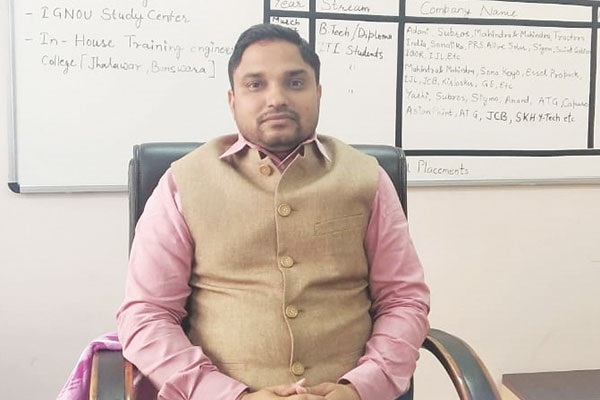
Dr Sandeep Kumar

The objectives of Centre for Electronic Governance (CEG) is to promote interaction between the government, academia and the industry; produce industry ready IT professionals; develop and deploy e-Governance applications in a cost-effective manner, writes Dr. Sandeep Kumar, Director, Center for Electronic Governance (CEG), for Elets News Network (ENN).

Founded in 2006 under the Society Act 1956, the Centre for Electronic Governance (CEG) is an autonomous body of Government of Rajasthan under the Department of Technical Education.

Rajasthan is the second state in the country to be running this kind of a program after the highly acclaimed “Jawahar Knowledge centre” in Andhra Pradesh.

CEG has been established with an aim to create industry employable IT professionals by the way of arranging seminars, lectures, vocational training, and industry relevant software training.

The affairs of the society are carried out by two councils – Governing Council (GC) and Executive Council (EC). The president of GC is the Minister for Technical Education and the chairman of EC is Secretary, Department of Technical Education.

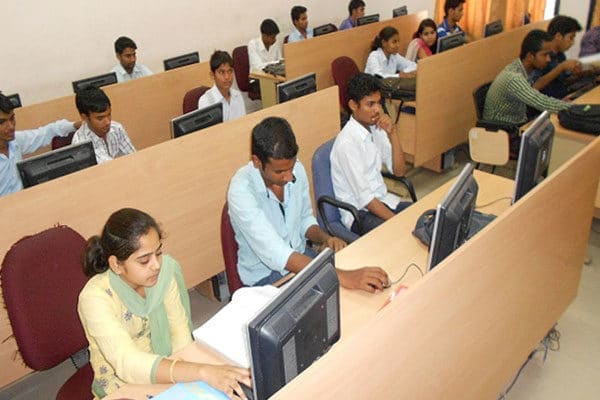
CEG Classroom

Its objectives are to promote interaction between the government, academia and the industry; produce industry ready IT professionals; develop and deploy e-Governance applications in a cost-effective manner; organise engineering seminars and lectures with eminent engineers and scientists; update the curriculum as per the needs of the industry; and empower students living in rural areas to bridge the urban-rural gap.

CEG’s activities include providing trainings and internship programs for engineering, MCA and Diploma students, providing faculty development programs, workshops for skill enhancement using virtual learning, running an IGNOU study centre for BCA, MCA, CIT and PGDIS, among others; providing Rajasthan State Certificate of Information Technology (RS-CIT) training in collaboration with Rajasthan Knowledge Corporation Limited (RKCL); and providing skill development training in collaboration with Rajasthan Skill and Livelihoods Development Corporation (RSLDC). The society also includes a state level central placement cell.

The society has many projects in pipeline, including – an MoU signed with Directorate Local Bodies for skill training on Tally and software development; training on System Analytical Software (SAS) for engineering college faculties; admission process and placement cell web portal development; affiliation with Rajasthan ILD Skill University (RISU); an MoU signed with Start for an incubation centre; MBA and MCA courses.

TRAINING STATISTICS

CEG has many facilities in campus, including – highly committed and experienced faculties for various technical courses; five well furnished AC labs having about 140 computers; AC classrooms having projector facility; and all the labs have internet facility with 20 mbps Wi-Fi connectivity and high speed servers.

The society is presently running around 50 courses on programming languages, design softwares, etc., and has tie-ups with companies like Red Hat, CISCO, Microsoft and Oracle, among others. CEG’s upcoming activities include – working as state coordinator for the establishment of e-Yantra Labs in 15 Engineering /Polytechnic colleges, which are to be established in technical collaboration with IIT Bombay; working as State Coordinator for the establishment of seven incubation centres at all the divisional headquarters, including one centre at CEG as well; and establishment of 3D Printing and Robotics Lab at CEG.

By offering such a large range of training programmes in IT related fields, CEG has set an example for other skilling institutes in the country. And by doing so, the society has made its contribution in reducing the skill gap that exists between academia trained individuals and industry requirements

Employability in the future

EMPLOYABILITY

Interpersonal skills are expected to become more sought after; It may so happen that your employability skills get you your dream job rather than your technical ability, writes Debajyoti Mohanty of Elets News Network (ENN).

With technologies like Artificial Intelligence (AI) and Machine Learning (ML) disrupting the market, the nature of human work is changing and so are the rules of employment. Jobs of the future will require high levels of social and emotional intelligence, critical thinking and problem solving capabilities, also known as employability skills.

Language skills and cross-cultural awareness have become very important as the world is becoming increasingly connected and people coming from different cultures now work towards a common goal. On the other hand, skills like creativity, negotiation and collaborative problem solving can make one flexible enough to adapt to the rapidly changing employment scenario.

Technology can automate routine, rule-based kinds of tasks, but it cannot carry out human functions such as showing empathy, making somebody feel understood, knowing how to define and solve complex, ambiguous problems. Interpersonal skills that can only be performed by humans are expected to become more sought after. It may so happen that your employability skills get you your dream job rather than your technical ability.

In this environment of uncertainty, looking towards universities to produce human resources with the right kind of skills is no longer the norm. Today’s graduates are entering into a fiercely competitive job market which can be characterised by highly disruptive and fast-evolving trends. With rising university fees and shrinking returns, investing in getting a formal degree has also become debatable.

Empirical data seems to suggest that employers are open to recruiting graduates for jobs outside their specialisms. The reason being that these graduates themselves are following their interests instead of sticking with the choices made by them at the ages of 16 and 18. There should be nothing strange in the idea of an engineer doing an administrative job or an art student going into sales and marketing. Except for the medical profession, which involves a strict routine of accountability, most career paths are open to lateral entry.

Employers want graduate freshers to be better prepared for the workplace. Therefore the universities now have a mandate to produce graduates who are responsive, have a good understanding of how the industry functions, and are ready to face constant change.

To measure employability, the emphasis is being put on the university’s ability to get its graduates employed in the discipline of their qualification. Instead, the focus should be more on building career foundations rather than finding jobs. Clarity regarding career paths and the exchange of knowledge between academia and industry would go a long way in addressing this issue.

Skilling programs are one way to achieve this, but building the whole program structure without the intervention of employers would make it redundant. When it comes to improving employability, academia and industry are working in silos, at large. Convergence between the two happens at the end but the collaboration is lacking during the journey. This is why graduates have almost zero industry knowledge at the end of their degree program.

In the current market, employers do not desire changes in higher education as it involves a risk of losing specialists. On the other hand, employers want the educators to focus more on providing skill sets required by the industry including soft communication, problem-solving and analytical skills. According to some studies, more than half of the fresh graduates in management and engineering are considered unemployable by the industry because they lack the skill sets required, despite having specialised knowledge. In such a scenario, the students need better career counselling so that they can work on their strengths and also gain essential skills required for different sectors.

‘Skill gap’ is often a complaint, but graduates have to face an ‘experience gap’ in reality. It is so because most employers prefer to hire young people who have spent a few years in the industry instead of hiring fresh graduates. The need of the hour is for academia to recognise employability as an important objective and make flexible changes to accommodate direct industrial instruction and discovery learning. Integrating life skills in education degrees, facilitating on the job training, internships and apprenticeships are the front-foot steps for improving employability.

We have not yet found the right way of going from education to employment but the parameters involved are becoming increasingly clear. The need of the hour is a collaboration between educators, employers, administration, youth and parents, working together to change the entire ecosystem – perception, attitude, policies, and the approach to education as well as employer’s investment in employees.

Rajasthan bringing innovations for education, employment & entrepreneurship

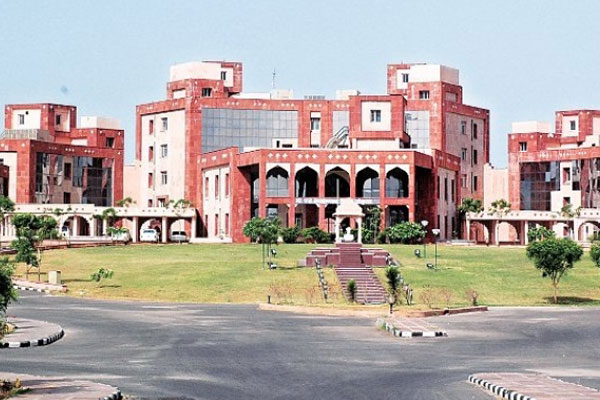
Rajasthan

Rajasthan is proving to be a breeding ground for entrepreneurs and innovative thinkers where millions of young minds with new ideas, and support from the government are ready to take on the future roadmap, writes Reetika Bose of Elets News Network (ENN).

Ranked at the second position in the School Education Quality Index, 2019, the state of Rajasthan has pulled itself from the 26th position to the second spot. All thanks to the reforms, initiatives, merging of schools, teachers- students average in classrooms, availability of subject teachers in schools to be the key drivers of quality education in the state of Rajasthan.

Quality education is the aim and with this objective, the state of Rajasthan has revamped the educational structure with new innovations, programmes and schemes in response to the aspirations of its young population for greater economic and social mobility associated with higher and technical education. The education landscape of Rajasthan reflects that along with quantitative expansion the thrust is on qualitative aspects.

The departments associated with the education in the state are committed to promote holistic learning amongst youths of Rajasthan so as to enable them to lead meaningful lives in the society. Every department is keen to develop the requisite capacity and capability of youngsters that will lead to development of the nation.

THE VISION

The Department of Higher and Technical Education, Government of Rajasthan focuses on nurturing the employable, positive and aspirational generation of lifelong learners. Such traits help the youths of the state to sustain in this competitive and quality conscious era of globalisation.

In order to make the youth employable and to make the college campuses conducive for the holistic development of the students, the Department of Higher and Technical Education in Rajasthan has several key areas of concern that need to be addressed are quality education, accessibility, facilities and employability. These are the key drivers for the enhancement of education in the state.

THE MISSION

The Rajasthan Government’s mission is to develop a higher and technical education system in the state that strives for excellence in quality, easily accessible to every section of the society, and produces skillful human resource that can stand up to the challenges of the changing times.

Easy access to higher education opportunities will enable students to develop knowledge and skills necessary to achieve their professional goals, improve the productivity of their organisations and provide leadership and service to their communities.

The Government, with such a higher education system, wants to ensure that it is open to all and does not discriminate an individual on the basis of religion, caste, gender, physical or financial conditions. An education system that churns out social thinkers, scientists, inventors, innovators, artistes, players, motivators of highest quality is the need of the hour.

The system has its focus on enhancement of quality of teaching and research at par with the global standards through revision of curriculum, syllabus, teaching-learning material, text books, pedagogical processes and ICT in education.

To improve the quality of all Higher Education Institutes (HEIs), benchmarking will be done through The National Assessment and Accreditation Council (NAAC) and through National Board of Accreditation (NBA).

Rajasthan endeavours to put in place such an education system that could support and sustain India’s undeniable status of an emerging economic power.

HIGHER EDUCATION- THE MUCH NEEDED REFORMS

With an aim to make students employable along with learning, many entrepreneurship programmes are now being started and some of them are in progress in colleges, with an which can help them in the creative utilisation of their time and money.Rajasthan university
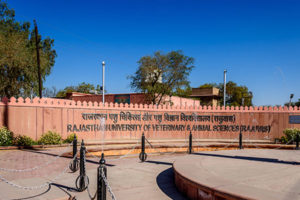
  • The Pratiyogita Dakshta Program is one classic example of how the state of Rajasthan is gradually expanding to add the state’s youth other than the students for providing free coaching for the competitive exams.
  • The talk of the town is the new innovative program which is the ‘Idea Bank’, where ideas are sought from the faculty and other stakeholders in the higher education domain. Eventually, the best idea will be evaluated and implement them in the higher education ecosystem of the state.
  • Resource Assistance and College with Excellence (RACE) – The scheme has been initiated for the colleges and by the colleges. It involves redistribution of resources at local level and it is improving the condition of colleges that lack resources.
  • The summer camp programme “Kaushal Unnayan” has met with great success which was organised in 163 government colleges of the State in June.
  • Student-centric Learning and Capacity Enhancement Programme is helping students to improve their learning (academics) as well as get hands-on experience in industry- relevant skills.
  • Rajasthan State Higher Education Council (RSHEC) formed for planning, monitoring and evaluating quality assurance in higher education.

TECHNICAL EDUCATION- SETTING A BENCHMARK

The state of Rajasthan, with a vision to impart high quality technical education to all the sections of the society is gearing up with new reforms and initiatives to enhance the competitiveness of the state’s technical manpower to global standards.students
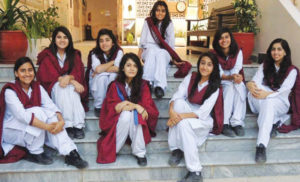
  • For improving the quality of technical education, a committee is formed for National Board Accreditation (NBA) accreditation of at least one branch in each of the Technical Institutes in the State.
  • To enhance the training for the teachers, faculty development programmes are organised by the Rajasthan Government. In Rajasthan Technical University, Kota, about 60 FDP programmes, workshops and trainings, 3 international seminar and state level smart India Hackathon will be organized.
  • A new Collaborative Research Scheme (CRS) was started by AICTE New Delhi in which about 2 to 5 research projects were submitted by the staff of engineering colleges of Rajasthan. Among them 84 projects are sanctioned by AICTE, which is the highest in India. In this scheme, provisions were made of 10 crore for 11 Engineering colleges in Rajasthan, out of which 25% amount has been transferred to Engineering Colleges.
  • For quality improvement, engineering colleges have applied in 49 branches to National Board Accreditation by preparing self-appraisal reports. Training will be organised for students of engineering colleges by using business analytics softwares. Students will be given special training of GATE, on employability skills and summer Internship by prominent IIT/ NIT.
  • The AICTE has prepared guidelines for the recruitment of principals of engineering colleges, strictly adhering and transparency in recruitment process. Similarly guidelines will also be prepared for the recruitment of assistants, associates and professors.
  • The Rajasthan Technical University, Kota is going to set up a modern research hub in which many facilities for modern technology like performance computing facilities, solar energy system, CAD/CAM, 3d printer and other software will be available.
  • TEQIP (The Scheme of MHRD and World Bank) has provided 10 crore to each engineering college of Rajasthan and 20 crore to Rajasthan Technical University, Kota, for enhancement of quality and up gradation of curriculum of technical education.
  • Strengthening the placement of students for which IIICELL (Industry Institute Interaction Cell) has been set up.
  • Choice Based Credit System (CBCS) and semester system has been introduced in all departments of Rajasthan Technical University, Kota. This has been recognised by National Board of Accreditation, New Delhi.

EMPLOYABILITY OPPORTUNITIES FOR STUDENTS

With an aim to provide maximum job opportunities to the students, the department of higher & technical education is striving to do various good practices like conducting job fairs, connecting students with potential buyers, etc. Ensuring job placements to students, on campus or of campus, is one of our major targets.

CENTRE FOR ELECTRONIC GOVERNANCE (CEG)

With an aim to create industry employable IT professionals by arranging seminars lectures, vocational training, and industry relevant software training, the government has appointed Centre for Electronic Governance (CEG) as nodal agency for state level Central Placement Cell (CPC). Rajasthan is the second state in the country to be running this kind of a program after the highly acclaimed ‘Jawahar Knowledge centre’ in Andhra Pradesh.

The main objective of CEG is to provide opportunities of employment to students of Engineering /polytechnic colleges. More than 400 students are placed in various industries to this day. CPC has targeted more than 1000 students for providing employment and training with collaboration of Rajasthan Skill Development Department, RSLDC and Local Administrative Department.

Guidance and careers cell are formed in each of the technical institutes of Rajasthan for students. About 149 lecturers of Engineering / Polytechnic colleges have been trained in robotics and 3D printing under faculty development programme by CEG. Also, students of Polytechnic colleges were trained in AutoCAD and Robotics by TTC and LRDC, Jodhpur.

RUSA EFFORTS AND ACHIEVEMENTS

The Rashtriya Uchchatar Shiksha Abhiyan (RUSA) is a Centrally Sponsored Scheme (CSS). Launched in 2013, it aims to provide strategic funding to eligible state higher educational institutions. The central funding (in the ratio of 60:40 for general category States, 90:10 for special category states and 100% for union territories) would be norm based and outcome dependent.

GOVERNMENT EMPOWERING THE MARGINALISED SECTION

For those who belong to the weaker section of the society and cannot afford to attend expensive coaching classes, the government is going to start an online 24*7 Quick Response System (QRS) scheme to answer the queries of the students on a real-time basis. Besides, an application has been created for the universities through which helpline facility for students, monitoring the academic & extracurricular activities of universities, the transmission of orders, and overseeing the work of district resource committees.school sdudents
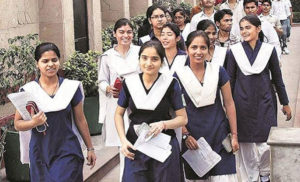
MUKHYMANTRI YUVA KAUSHAL YOJNA – SKILLING THE FUTURE OF TOMORROW

A number of students in colleges are interested in embracing a skill for their future. Likewise, the government is providing employment related training to those who are still studying.

To fulfill their need and in consideration of their job opportunities in the market, the department in collaboration with RSLDC has developed 39 skill training courses. The RSLDC has granted Rs 3 crores from its regular budget to start MYKY for training more than 7,500 regular students from 118 government colleges. The students will be given job oriented training for 200- 350 hours. This will enhance their performance and eventually job opportunities.

Likewise attempts are being made to affiliate all the government colleges with the Rajasthan Skill University in order to have opportunities for all the students of these colleges in getting diploma after being trained. This will definitely benefit a large section of the regular students studying in government colleges. For this, the government has collaborated with Rajasthan Skill and Livelihood Development Corporation (RSLDC). Under this, 34 regular courses for skill development will be rendered in selected government colleges. 25 Language Labs are being planned to be established in the selected government colleges to help students in grasping the requisite language skills for acquiring jobs in the future.

THE FINAL DESTINATION FOR EDUCATION, EMPLOYMENT & ENTREPRENEURSHIP

Addressing the major challenge of unemployment among the Rajasthan’s youth, The state is focused on the various aspects for the betterment of higher and technical education system. The department is planning to help in establishing universities and colleges of global repute and appointment of skilled facilities along with a good support staff.

With innovative strategies and the zeal to develop the institute of excellence, the state of Rajasthan is indeed proving to be a breeding ground for entrepreneurs and innovative thinkers. Millions of young minds with new ideas, and support from the government will make the state ready to take on the startup drive in the future.

Admit Card for NEET MDS 2020 expected to be released today

Admit Card for NEET MDS 2020

Admit card for NEET MDS exam is expected to be released today.

Admit card for National Eligibility cum Entrance Test (NEET) Master of Dental Surgery (MDS) exam is expected to be released today. The National Board of Examinations (NBE) would be releasing the admit card on its official website.

The NEET MDS computer-based test (CBT) is going to be held on December 20 and the results are expected to be out by January 20, 2020. Qualified candidates would be able to take admission in MDS courses for 6,228 seats offered in various dental colleges across the country.

The NEET-PG 2020 examination will include a total of 240 objective type questions to be completed within a time-limit of 3 hours. For every correct answer, four marks will be awarded and for every incorrect answer, one mark will be deducted.

How to download:

  • Go to https://nbe.edu.in.
  • Click on ‘NEET MDS admit card 2020’ (once released)
  • You will be redirected to a new web page.
  • Enter the details and click on submit.
  • The admit card will be displayed on the screen and can be downloaded for future reference.

General Atlantic looks to invest in Unacademy

Bengaluru-based Ed-tech firm Unacademy is going to raise USD 100 million in a Series E funding round which is expected to put its valuation at USD 400 million.

According to reports, New York-based private equity firm General Atlantic (GA) is a potential investor in the round along with Singapore’s sovereign wealth fund GIC, and GGV Capital, a USD 6 billion global venture capital firm. The funding round is expected to close in the next six weeks.

GA is also an investor in Indian Ed-tech giant Byju’s. Globally, it has investments in European online learning platform OpenClassrooms and Brazilian Ed-tech firm SAS. On the other hand, GGV Capital has previously invested in B2B online retailer Udaan. Globally, it has invested in tech giants like Alibaba and ByteDance.

Unacademy was started in 2015 by Gaurav Munjal, Roman Saini, and Hemesh Singh, as a YouTube channel and later started disseminating content from its own website. The company has till date raised a total of USD 88.6 million from investors such as Sequoia India, Blume Ventures, Steadview Capital, SAIF Partners, and Nexus Venture Partners, among others.

As per reports, the investors are bullish about the company because of its subscription prospects. The Unacademy Plus portal is generating revenue from subscriptions and its plans are based upon the number of classes provided on a gross basis. For FY19, most of the company’s operational revenue came in from its subscriptions.

Today, Unacademy has more than 10,000 registered educators and 13 million learners. The company claims to attract more than 100 million monthly views across its different platforms such as Unacademy, Unacademy Plus, Unacademy Studios, The Solutionists, Wifistudy and Chamomile Tea with Toppers.

The company seems to be investing aggressively for expansion and is not shy about taking losses. Its revenue has grown about 3.19 times in FY19 reaching INR 21.89 crore, as against INR 522 crore in FY18. But for FY19, the company’s losses are 4.12 times its total revenue reaching INR 90.27 crore, as against INR 23.58 crore in FY18, as per reports.

Indian Ed-tech segment is a fast-growing market and is expected to reach a valuation of USD 1.96 billion by 2021. As per reports, there were 3500 Ed-tech startups in India in 2018.

Modi govt to reduce the budget for school education by Rs 3000 crore

Modi govt to reduce the budget for school education by Rs 3000 crore due to lack of funds

As per sources in the Human Resource Development (HRD) ministry, due to lack of funds, the Narendra Modi government is likely to slash the school education budget by Rs 3000 crore for 2019-2020.

In the financial year 2019-2020, a sum of Rs 56,536.63 crore was sanctioned to the school education department. “Finance ministry officials said they will have to reduce the budget for school education by Rs 3,000 crore,” said a ministry source.

In order to get the complete fund for school education, HRD minister Ramesh Pokhriyal Nishank, along with other officials, is now trying to track the finance ministry .

The HRD ministry is persuading the finance ministry to release the complete fund because there is no other way out for the school education department to gather funds.

Unlike school education, the higher education department has things like HEFA (Higher Education Finance Agency) through which they can raise money.

The discussion was made between officials of the HRD and finance ministries two weeks ago.

Also Read: HRD Minister stresses on improving educational quality and efficiency

NIOS class 10th and 12th results to be available soon for Oct 2019 exams

NIOS class 10th and 12th results to be available soon for Oct 2019 exams

NIOS class 10th and 12th results to be available soon for October 2019 exams

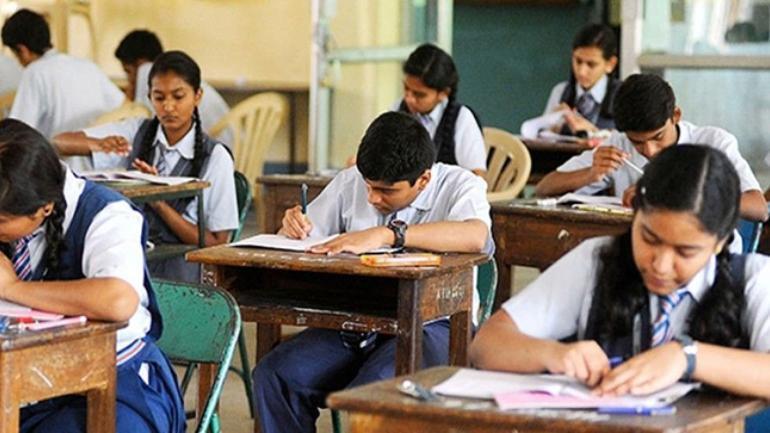
National Institute of Open Schooling (NIOS) is expected to declare shortly, the results for NIOS class 10th and 12th board exams held in October this year.

NIOS exams are held twice a year in April and October. Normally, the results for the exams held in April are released in June while those for the exams held in October are released in December.

The students can access their scores at the official website of NIOS, https://results.nios.ac.in. Along with checking their results, the students can also apply for re-checking and revaluation on the website.

According to reports, around 3.5 lakh class 10th and 12th students appeared for NIOS exams across the country in October.

To check NIOS 10th or 12th class result for October 2019 exams: Go to the NIOS result official website; under Public Examination November 2019 Senior and Senior Secondary section, click on ‘Check Result’ link; enter the required details and click on ‘Submit’ to see the results.

Why School education crucial for child development?

School education crucial for child development
Why School education crucial for child development?

The children of today, having spent most of their precious time in schools is adapting to be the future stars of tomorrow. It is important to build and nurture them with the right piece of information and equip them with tools to be better human beings.

In today’s time, a child should be inculcated with the overall learning process as it is highly beneficial in shaping their personality, their approach towards every situation of life. With the entirely different knowledge process from the past, schools today, are able to deliver an ocean of progress. Students are provided with access to new ideas, including science and language, and are given the opportunity to learn more about world cultures, geography, and personal history.

Why is education important?

Education is no more a means to acquire degrees and make money. It is now a gateway for an overall development that is changing lives for the better. Children education must facilitate the cultivation of a healthy thought process and groom their cognitive abilities. In the present focused world, education is an essential need for individuals after nourishment, garments and safe house.

With the present scenario, it is clearly evident what importance does school education hold in today’s time.

Talking about the overall development of the young minds, here are some of the aspects of school education that contribute in a big way:

Mental Aspect

We all know there is an ongoing crisis with children’s mental health which needs a dire attention. Being the fountain of knowledge, schools educate children on numerous subjects like literature, history, mathematics, politics and other numerous subjects, thus cultivating a new thought process which helps them grow mentally. With such vast knowledge, children are exposed to a more cultural world and similarly, their existence becomes vast.

Social Aspect

School is the first boulevard of socialising for a child. Up till then, parents and immediate family members are the only people the child has human interactions with. With schools, children are exposed not only to new ideas but they also get to engage themselves with their surroundings, with different mindset of other children. With this come the few practices such as empathy, friendship, participation, assistance which turn out to be an essential part in their growing years.

Physical aspect

Unlike schools, home provides a constrained space where it gets difficult for children to steer their energy. In schools, a child is able to engage and channelise into other sociable avenue while undergoing various physical developments. With the presence of activities such as sports, craft help children direct their boundless energy into something productive. Studies say that while in familiar environment, the child is equipped to deal with sudden bursts of energy, the learns to be at his/her best behaviour only when exposed to same-aged individuals.

Overall development

By now, it is pretty evident that schools should move beyond the traditional way of teaching and learning. Earlier, schools were considered as places to just learn and gather knowledge on various subjects like history, mathematics, etc. Today, we can witness a different picture where a child is learning to go beyond the traditional way of learning. Through flexibility in curriculum, a child’s mind is able to grasp different thoughts and ideas which increase their curiosity on the ongoing happenings. Thus the importance of imagination is stressed upon extensively for a well-developed cognitive system.

Education forms the foundation of any society. It is responsible for the economic, social, and political growth and development of society in general. The strand of the growth of society depends upon the quality of education that is being imparted. So, schools play an important role in moulding a nation’s future by facilitating all round development of the future stars of tomorrow. And as rightly said, Life is also about learning, apart from living.

UP Board 2020 exam centres: final list out

UP Board exam

The final list of exam centres for the 10th and 12th standard UP board examinations has been released by the Uttar Pradesh Secondary Education Council. The list can be accessed on the Council’s official website https://upmsp.edu.in.

About 90 districts have been represented in the final list, which has been released in a PDF format and can be downloaded easily without entering any information.

According to the list, the 10th and 12th class UP Board examinations will be held at 7786 centres including 451 state schools, 3401 aided (aided) and 3934 unaided schools. Conversely, 433 schools have not been included in the examination centres and the board has given the reason for not including them.

The examinations will start from 18 February 2020, and run for 15 days till March 6. Presently, 56,11,689 students have registered for the examinations, including 30,25,442 students of 10th and 25,86,247 students of 12th class.

LATEST NEWS