Home Blog Page 610

Pune University’s research park to be on lines of IIT-Madras

The Savitribai Phule Pune University (SPPU) is planning to set up a research and incubation park on the campus, similar to one at IIT-Madras, after receiving autonomy and a grant of Rs 100-crore for infrastructure and innovation under the Rashtriya Ucchatar Shikshan Abhiyan (RUSA) scheme.

The incubation park is likely to help students and faculty members in developing innovative products and bring them into the market.

As per the university’s plan to make it a hub of innovation and startups, senior university officials including Vice-Chancellor Dr Nitin Karmalkar recently visited IIT-Madras Park.  It is the first university-driven research park with a significant number of incubation in rural, social and industrial technologies.

Confirming the development, Karmalkar said, “Since its inception, the incubation cell at IIT-Madras has helped set up 140 startups and investors have raised millions of dollars. We also want to create a model like that where our students and faculty can start developing their ideas into products and work closely with industry.”

According to Karmalkar, a meeting was also convened with some of the most senior university officials, retired scientists, researchers and industry leaders including representatives of top executives from Praj Industries and Persistent Systems. Experts like former director of IIT-Kanpur Dr Sanjay Dhande and representatives from CoEP’s Bhau Institute of Innovation also attended the meeting.

The park will serve three main purposes. First, it will provide incubation facility and mentoring to faculty and students who have created a product and bring it into the market. Second, it will support the industry projects which require university resources for research and development projects through faculty-industry collaborations. Thirdly, it will help faculty or students who might have an idea but need industry support to develop the product or conduct R&D.

IITs to have 291 more seats in 2018

A total of 291 seats are going to be added in Indian Institutes of Technology (IITs) in 2018 with 800 supernumerary seats for female candidates. With this increase, the number of seats in all the IITs is 11,279.

The initiative of supernumerary seats for female candidates is taken to improve the gender balance at IITs as per directives of the Ministry of Human Resource Development (MHRD), Government of India. According to the directive, the total supernumerary seats created cannot exceed 10% of the total seats being offered in the IITs.

IIT Kanpur, the organising institute for JEE Advanced 2018 has recently launched the website of Joint Seat Allocation Authority (JoSAA) 2018 (josaa.nic.in). The results of the JEE Advanced 2018 is scheduled to be declared on Sunday, June 10.

As in earlier years, supernumerary seats will be created to accommodate foreign candidates along with defence services (DS) candidates (with a restriction of maximum 2 DS candidates per IIT) who qualify in JEE (Advanced) 2018.

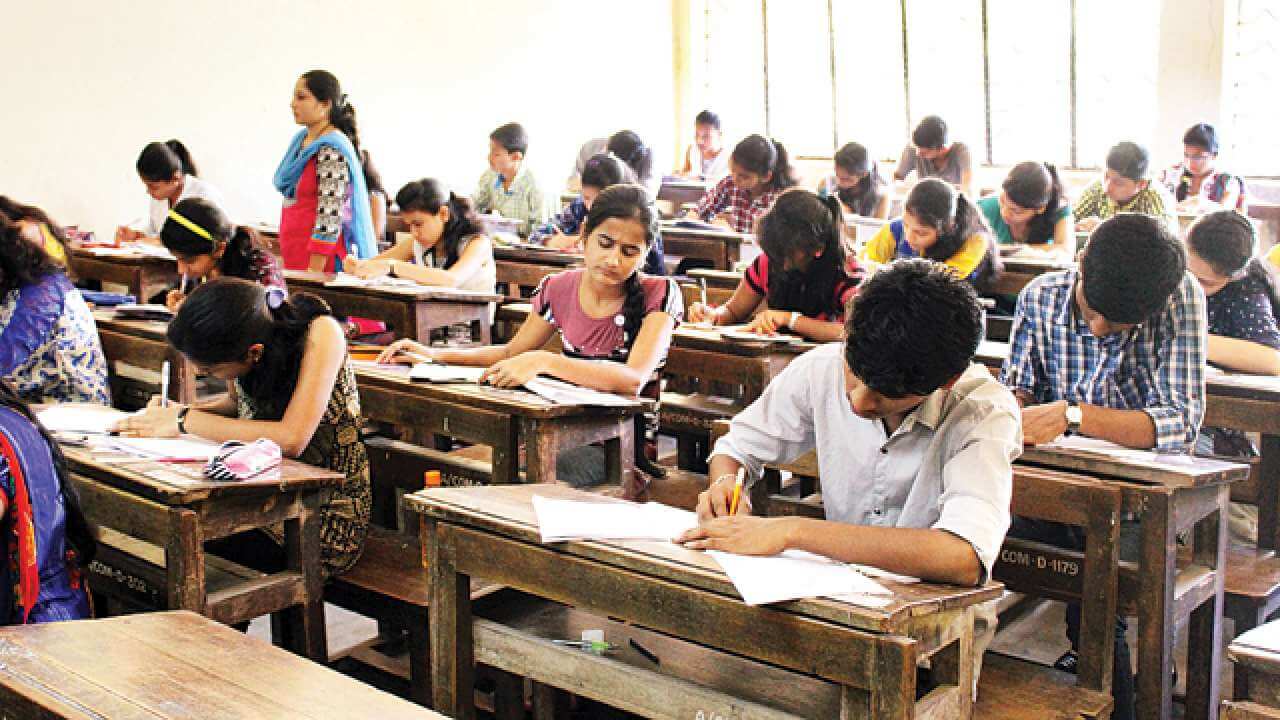
JEE Advanced 2018 exam was held on May 20 for admissions to BTech programmes offered by 23 IITs (Indian Institutes of Technology) across the country. The exam was conducted in two sessions – Paper 1 and Paper 2. While Paper 1 was held from 9 am -12 noon, Paper 2 was conducted from 2 pm to 5 pm. The exam was conducted in online mode for the first time ever this year.

Adjustment vs Variety – 21st century leadership challenge

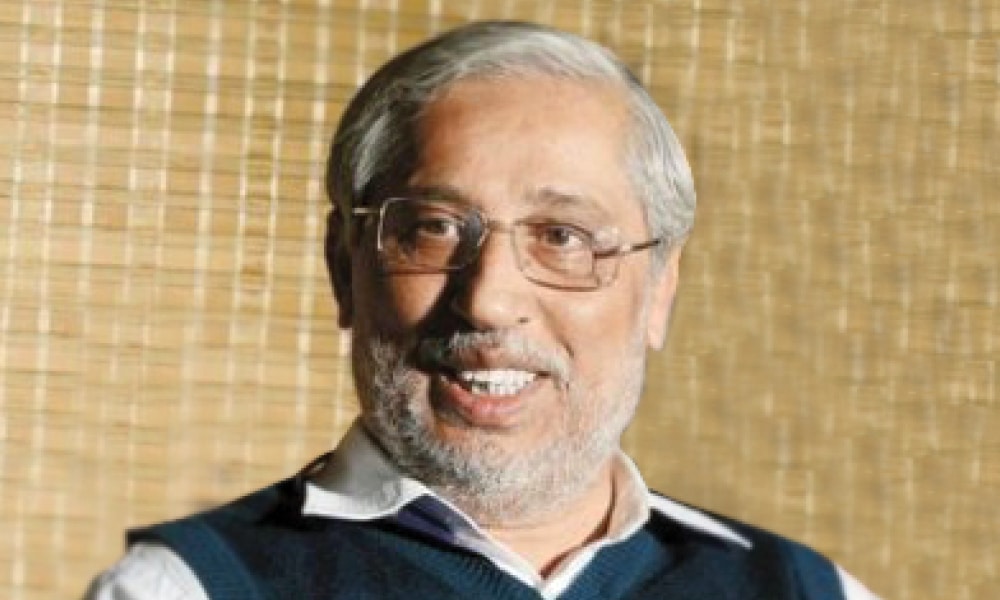
Nowadays, it is important for business leaders to convert challenges into opportunities. Dr Lakshmi Mohan, Director, ITM Business School, Kharghar, observes the traits a business leader should possess to contribute in the growth of his/her organisation for Elets news Network (ENN).

Globalisation, tough competition, technological advancement, speed of communication and many rapid changes at work place have brought in new challenges for leadership. The challenges come in different variety, but it is the leader who can create differentiating factors to change stumbling blocks to stepping stones.

Strategy and size: Business leaders have to be more prepared for external crises, figure out how to adapt strategy that can take the team along. With growing team size and competitive scenario, leaders have to be dynamic in their approach. VUCA world cautions us about volatility in business environment, uncertainty at many times, posing up to challenges and preparing for the unknown which is no mean task for a business leader in the 21st century.

Research and development for modern times: Land, labour and wealth philosophy propagated by Karl Marx or Adam Smith stand feeble in front of science which has superseded and gained importance in business. Ideas have gained more prominence than materials. Be it google, facebook, Ola and many others, the change they have brought to the world is without armies and battle field. To stay up to date and make relevance to the modern world, research and development is the key word. Innovation is life for any business leader.

 Technology for speed and time : Technology has made man lazy I would say, but can we do without technology is an answer we all know. The dependence has grown with time and leaders have to catch up with the latest in technology , lest their team would find them stagnant. From exchange of letters to emails to sms to whatsapp has been a drastic transformation in the way we communicate . Robots have assumed human roles and artificial intelligence is playing key functions in business. Today reporting is on whatsapp group that makes it convenient for the Team to discuss on a virtual mode. Opinions are formed and sought on social media , the virtual space is conquering the hearts and minds of millions, the change is dramatic and drastic for leaders to act and adapt.

TAT in Decision making: The influx of data and information is useful but has added chaos if leaders are unable to cope. Data can burn you out if the leader is unstable in making decisions. Moreover decisions have to be quick keeping pace with the market movements.  Decisions cannot be left waiting for long, swift action is vital for success. At the same time if too many decisions need attention, it can lead to “decision fatigue”, so it is important for business leaders to sequence and prioritize situations.

Match up to needs of Gen X: The speed, the proximity to technology, openness, restlessness, life in virtual space are few ways to define the millennials. The difference between generations looms larger than the difference between nations! Leaders need to articulate and use tact in leading young teams. They need to be updated to not not be treated as outdated by Gen X.

BHAG with finishing lines: A compelling drive for Big, Hairy and Audacious Goals (BHAG) for the team must be the catalyst to pep the team spirit. If leaders are capable to bring the focus of the team , success is inevitable. Working with a vision, design thinking resulting into concrete action is a challenge that every leader should not only walk but inspire the team to follow.

Stay calm in chaos: Empowering is the key to restore calm. Chaos calls for sensing and simplifying. If leaders get chaotic to situations, it is doom for an organization. composure enables wiser decisions. Panic leader can create havoc not only for himself, but his team and organsation as well. Crisis in this new age is known as “new-normal” and calls for a proactive leader rather than a reactive leader.

Communicate and connect: Words are vital connecting thread to leaders and their teams. Communication is no longer paper pen domain, it is twitter, blogs , linkedin and other tools that are of importance.

Change is constant: Leaders evolve because of change and must acknowledge this catalyst for the progress they have made in life and career. Then why should change pose a big challenge? Change must be enjoyable for every leader and a positive ingredient to improve the system. Leader ought to go with” Lead-Learn”. If they fail to embrace new learnings, change will be a constraint.

Creative rather than administrative: Doors to experimentation must be unlocked. From the age old administrative mentality leaders have to choose the creative path. Innovation has be a vital operating principle that the leader has to harp on. Encouraging ideas and developing the innovative potential of the employees is significant for a true leader.

Distribute rather than direct: A leader has enormous potential and this energy form has to be distributed to the team. The distributed strength multiplies unlike directions, that may narrow down the action. Leaders today must fuel the micro generators to create ripple effect of success powered by hundreds and thousands of employees. The power of distribution is immense and leaders have to master this unique ideology.

Adjustment vs Variety is the phenomena leaders in the 21st century are exposed to. If the leader doesn’t adapt to the variety in transformation around , he perishes and will never be forgiven for the downfall of the organization. On one hand leaders are expected to be confident, strong and secure while on the other hand leaders have to be empathetic, transparent and approachable. On one side leaders have to listen while on the other side they have to announce a decision and compel action. Not surprisingly extraordinary physical and mental stamina is demanded out of leaders . Leaders today have to remain cool and strategic even with disruptions in market regulations, heavy competition, every day changing technology and even sometimes gross incapability of senior management to take decisions. Leadership challenges may seem overwhelming but with it comes winning moments that will do wonders for the people and the organization, what can be more rewarding and noble than this?

Jharkhand class 12th result 2018 declared: check details here

The Jharkhand Academic Council (JAC) has declared the Class 12 board results for the students of science and commerce stream.

 Around 3,17,000 candidates who appeared for the examination between March 8 to March 27, 2018 can check their results through the website jac.ac.in,  jharresults.nic.in. The examination was conducted.

Under science stream, 93,781 students registered for the exam of which 92,405 have appeared and a total of 44,677 students have passed. The overall pass percentage in the science stream is 48.34.

Among the passed candidates of Science Stream, 16,618 students secured first division and 26,337 secured second division. 1,711 students have got third division Jharkhand Class 12 science exams.

For Jharkhand Class 12 board exams, 40,925 candidates have registered under commerce stream of which 40,244 have cleared the exams.

Out of these candidates, 6,127 have secured the first division, 18,266 got second division and 2,770 got third division. The overall pass percentage of the commerce stream is 67.49.

Students can check the results through the official websites, jac.ac.in and jharresults.nic.in. The students can check the results through other apps available at the google play store. To get the results via app, candidates have to pre-register their roll number.

Govt to have NCERT syllabus: HRD Minister

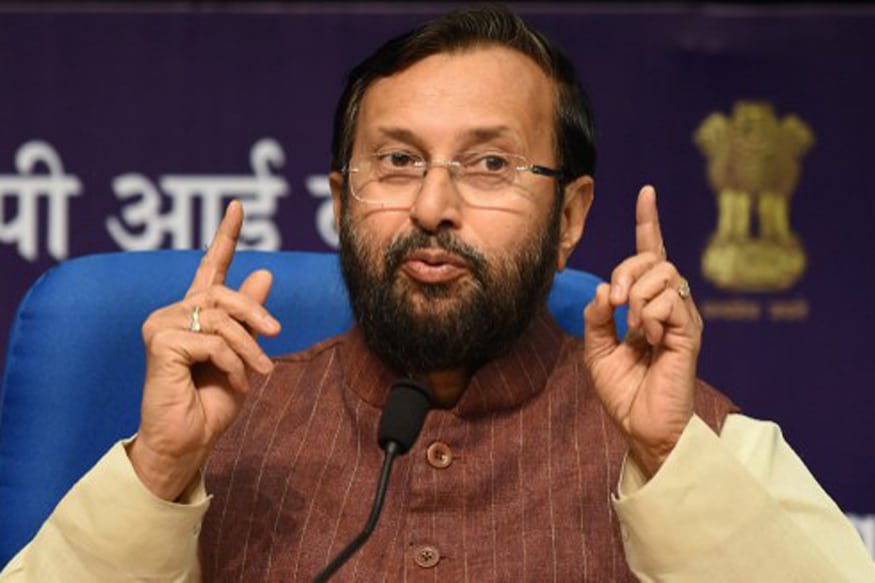
Union Minister for Human Resource Development Prakash Javadekar stated that the Government has decided to reduce the NCERT syllabus by half as the students are getting overburdened and consequently don’t have time for extra-curricular activities.

The union minister announced to cut half of the syllabus last week.

“There is a huge load of books and information, and students have no time. There is no time for physical education, value education and life skills. So, we decided to half the portion (syllabus). There is no need to teach them everything. Students should learn principles and rest of the knowledge they can gain later,” Javadekar said.

Addressing the 10th foundation day of the Foundation for Restoration of National Values (FRNV), Javadekar said that the Ministry of Human Resource Development (MHRD) has received around 37,000 suggestions from parents, teachers and educationists regarding the government’s decision to lessen the burden of books.

The minister said that the values among children can only be inculcated at home and he suggested training for parents in this regard.

Lauding the FRNV’s initiative to integrate value education in the school system in India, he assured that the MHRD will work with it as a “partner”.

FRNV chaired by ‘Metro Man’ E Sreedharan was founded in 2008. On the occasion, he said value education is not being taught at state-run schools and asked the government to take steps for this.

“Value education is the primary step needed by the country. Emphasis on it in government schools is not sufficient. If government schools start it, other schools will also be encouraged to do so,” he said.

A journal based on value-based education was also released at the event organised at the Delhi Metro Rail Corporation’s headquarters at Metro Bhawan.

CATC to set up state-of-art Aviation Skill Academies in Private Universities

National Skill Development Corporation (NSDC), under the aegis of Ministry of Skill Development & Entrepreneurship, Government of India, collaborated with Czech Aviation Training Centre (CATC) to establish skill academies in private universities.

Under the collaboration, aviation related courses will be offered to aspiring students. The training will help aspiring candidates in securing a career in the aviation sector across various job roles i.e. Cabin Crew, ATC pre-training and Aviation Security.

Commenting on the partnership, Mr. Manish Kumar, MD & CEO, NSDC said, “The aviation sector has emerged as one of the fastest growing industry in the country over the last three years. Our collaboration with CATC will help students acquire the right skill required to secure a career in the aviation sector. The successful candidates trained under this partnership will pass the entry screening of an Allied Domestic or International airline.”

The agreement will facilitate short term courses and diploma/degree programmes in Aviation sector for both service and maintenance segment in a phased manner at Universities recommended by NSDC.

The required training will be provided as per the industry defined standards under National Skills Qualification Framework further aligned to the European Aviation Safety Agency (EASA) standards.

Placements will be facilitated for all students who successfully complete their training programme, across both national and international airlines.

To run cabin crew training, CATC is likely to invest approximately EUR 12,000 to set-up a Lab in each of   the university and will provide all the required equipment’s for safety and service within the skill academy at the universities.

Mr. Antonin Jakubse, CEO, CATC said, “CATC is proud to collaborate with NSDC and contribute towards the Skill India Initiative. We are setting up Labs in universities to provide training for Cabin Crew, ATC Pre training and Aviation Security.”

“During the fiscal year, CATC will explore the possibility of installing first of its kind in India, advanced equipment like CEET Simulator for A320 cabin crew training and install it at a University recommended by NSDC with an expected investment of approximately INR 4.5 Crores,” he added.

WBBSE class 10 board results announced: Check details here

West Bengal Board of Secondary Education (WBBSE) has announced the Class 10 board results for 2018. The result was released today morning on board’s official website.

In 2018, 11,02,726 students appeared for WBBSE class 10 board results of which 8,99,564 passed the exams with overall pass percentage of 85.49% this year.

Students can download their mark sheet from the board’s official website wbbse.nic.in. The result is also available on http://wbresults.nic.in/ and westbengalonline.in.

The marks sheets will also be available from 10 am onward at camp offices across the State. Students can also get their results on their mobile phone through SMS or on their email ID by registering themselves on the official website.

WBBSE class 10 board results — Latest updates:

  • Sanjibani Debnath from Coochbihar has secured first rank with 689 marks
  • This year, 56 students are in the top ten list
  • In 2019, the board exams are likely to start from February 12 and end on February 22

List of toppers:

  1. Sanjibani Debnath (First – 689 marks)
  2. Sirshendu Saha (Second – 688 marks)
  3. Mayurakshi Saha (Third – 687 marks)
  4. Nilabja Das (Third – 687 marks)
  5. Mrinmoy Mondal (Third – 687 marks)

How to check result:

  • Go to the official website of WBBSE — wbbse.nic.in
  • Click on the link for WBBSE Class 10th Result
  • Enter your roll number and click on “Get your result”
  • Download or take a print out for future reference

Will work on improving the educational content: Kejriwal

Delhi Chief Minister Arvind Kejriwal stated that his government will work on improving the education system and on changing the content of education.

While interacting with the government school students who qualified for IIT JEE, Kejriwal said, “There is some problem in the content of our education. Soon after we are done with the issues related to the educational system, we will work on improving the content of our education although it will take time.”

“Students after doing BA and B Tech are not getting jobs. It is not that there are no jobs in the society, but the main problem is that what is being taught in the school, college does not have any use in practical life,” he said.

“We are following the same educational system which was imposed by the British on us. The educational system should be one where the students can earn after getting a degree and not have to run for jobs,” he said.

Kejriwal also said that education is one of the most important aspects for the development of a nation and every developed country has 100 per cent literacy rate.

“In every developed country, education is with the government. We also believe that education is the responsibility of the government,” he further said.

Praising the work done by Deputy Chief Minister and Education Minister Manish Sisodia, he said: “Earlier, when I was new as Chief Minister, people used to come to me with requests to help their kids get admission in various private schools. Now I get requests from people to help their kids get admission in government schools,” he added.

Use AI to develop solutions in education, health: Niti Aayog

Artificial Intelligence (AI) should be leveraged to develop quality solutions at large scale in the sectors like education, health, agriculture, infrastructure and mobility in smart cities, said Niti Aayog CEO Amitabh Kant.

According to a paper titled National Strategy for Artificial Intelligence, “AI for All will aim at enhancing and empowering human capabilities to address the challenges of access, affordability, shortage and inconsistency of skilled expertise.”

Aiming to put AI to use for all and across sectors, the Aayog has identified barriers that need to be addressed to achieve success in the use of AI. These barriers include lack of expertise in research and application of AI, absence of enabling data ecosystem, high resource cost and low awareness, privacy and security issues and absence of collaborative approach to adoption and application of AI.

The Aayog has also proposed to establish Centre of Research Excellence (CORE) recognising the importance of research and its commercial adoption in success of AI. The centre will focus on developing better understanding of existing core research.

Besides, it has proposed setting up of International Centres of Transformational AI with a mandate to develop and deploy application-based research in collaboration with private players.

Alankit: Developing Futuristic Solutions

Alankit Group, a conglomerate of 12 companies, is into diversified activities like Financial Services, e-Governance, Insurance and Health Care verticals. The company envisions to be a leading solution provider in the sectors says Ankit Agarwal, Managing Director, Alankit Limited, in conversation with Elets News Network (ENN).

What inspired launching of this company?

Ankit Agarwal, Managing Director, Alankit Limited

Alankit, the leading service provider, is a twodecade old conglomerate operating in sectors like e-Governance, Financial Services, Healthcare and Insurance Broking. The idea behind launching the company was to provide multiple service offerings under one umbrella by making the processes simpler, faster and hassle-free for all. The company was started with the vision of being a unique and quality service provider in the sectors it serve with emphasis on customer satisfaction along with supporting the Government initiatives. The company aims to take its vision forward by supporting the “Digital India” initiative and developing online solutions for different kind of services in these sectors.

Please describe about the innovations by Alankit in last two years to improve its products and remain ahead of its competitors.

In last two years, Alankit has introduced various new product lines and solutions to boost its market penetration and stay ahead of competitors. Some of the ground-breaking innovative softwares, introduced and developed by Alankit to take the digitisation campaign further, are Alankit GST Muneemji – A secure cloud-based solution for all GST compliances; Alankit GST Saarthi – Point-of- Sale (POS) device for small business enterprises; E-Raahi – first-of-its-kind e-Way bill software and various service specific Mobile Apps among others. The idea is to digitise and simplify the procedures for the masses.

What are the major products of the organisation and how they are helpingin improving the education sector?

Being the National Distributor for Entrust Datacard Printers, Alankit facilitates the distribution of millions of corporate ID, health cards, voter ID cards and Aadhaar cards besides accomplishing a tremendous sale of printers in last few years. Printers act as system integrators that can analyse and provide easy customisation to avoid any duplication of ID Cards in schools, limiting the chances of any kind of fraud.

What is your vision for upcoming years? 

Alankit’s vision for upcoming years is to excel as a leading service provider in the verticals it operates in, facilitating convenience for the people as well as the Government. The company is all set to come up with a more refined version in coming months with an aim to increase the turnover to a new record high. For this, we are taking several initiatives to benefit all stakeholders and encouraging our workforce to contribute more towards the overall growth of the organisation.

Which are the futuristic ways that companies like Alankit can look forward to contribute towards education sector?

The education sector is poised to witness a major growth in the coming years and with the rate economy is growing and technology is advancing, there is a lot that can be accomplished by companies like Alankit in future. We can come up with new solutions to simplify the procedures such as form filling and submission for school admissions and many others. Moreover, we are also trying to introduce advanced level tools to ensure safety and security of school kids.

LATEST NEWS