Home Blog Page 685

Govt schools to push for ‘Sabko Shiksha, Acchi Shiksha’

Human Resources and Development Minister Prakash Javadekar said that the Central Government may soon ask the government schools to promote “Sabko Shiksha, Achchi Shiksha”.

The minister was at Mandvi taluka of Surat to attend a Sabka Saath Sabka Vikaas event, organised by the National Thermal Power Corporation (NTPC).

While addressing the people at the event, Javadekar said, “Yesterday (Wednesday), I saw a Bollywood movie, at the end of which the parents put their child in a government school. We are also planning to open Navoday Vidyalaya and Central schools. In the last three years we have given permission to 124 central schools across the country and in coming days, we will increase the numbers.”

He said, “We have come to you in just three years and not five years. This is because we have learnt that your hopes have been fulfilled. After two years we will come again and you will give us vote with full faith,” said the minister.

He also revealed that from 2014 around six crore LPG connections were given whereas only 14 crore were allotted earlier. “Out of them two crore are women beneficiaries under Pradhan Mantri Ujjwala Yojana,” added Javadekar.

Nepotism affecting quality of education: Manohar Parrikar

Goa Chief Minister Manohar Parrikar blamed nepotism prevalent in institutions for continuous deterioration in quality of education.

Adding further to it, he said that the quality of teaching hamper as many colleges hire their relatives or family members as teachers.

While speaking at an event organised by state-run Economic Development Corporation in Panaji, Parrikar said, “If you see the educational institutes in Goa, there is a tradition to employ a person from our own family as a teacher. The result is, the quality of education is impacted.”

He also shared one of his experiences at a teachers’ training centre where he asked few of the participants the reason of becoming teachers but only few could give a satisfactory reply. “…Some could give satisfactory answer, some could not and some did not answer,” he said.

He added, despite their differing interests, people choose to become teachers for sake of good salary coupled with being in a noble profession like teaching.

SAP India to impart digital literacy and improve employment scenario in India

SAP India, to improve employability among Indian youth, has launched a digital literacy and software skills development initiative – “code unnati”.

The initiative is on the similar lines of central government’s Pradhan Mantri Gramin Digital Saksharta Abhiyaan (PMGDSA).

“code unnati” is a result of the multi-year collaboration between SAP India, ITC and Larsen and Toubro Public Charitable Trust. Under the initiative digital literacy will be imparted to the underprivileged and it will also help in driving employment-led software skills in them.

The initiative in its pilot phase will focus on rural areas in Andhra Pradesh, Karnataka, Maharashtra, Telangana, Rajasthan, Gujarat as well as urban disadvantaged demographies in Bengaluru, Mumbai, Delhi-NCR, Kolkata, Ahmedabad, Pune, Vizag and Hyderabad.

“Only 10 percent of India’s population is digitally literate. With technology at the core of everything we do, it is our responsibility to join forces and help create a Digital India,” said Deb Deep Sengupta, President, SAP Indian Subcontinent.

The three companies will share different responsibilities under the initiative. Technology infrastructure, expertise on course curriculum and pedagogy will be provided by SAP. ITC will provide delivery mechanisms and teachers ITC while Larsen and Toubro Public Charitable Trust will help in outreaching in the far-flung, tribal and inaccessible regions. Larsen and Toubro Public Charitable Trust will also assist in adequate monitoring, evaluation and governance support.

It is expected that with its emphasis on developing advanced software skills relevant for employment,  “code unnati” may bridge the gap of 3.5 million technologically skilled citizens.

“ITC’s partnership with SAP will enable the ‘code unnati’ initiative to make a deeper contribution in spreading digital education amongst children in rural Andhra Pradesh, with a special focus on the girl child,” said Ashesh Ambasta, Head of Social Investments at ITC.

Transforming School Education Practices Trough Innovation :: May – June 2017

Editorial
Innovation Transforming Indian Education System
Government Perspective

Unifying Policies to Rehash School Education
Policymakers Perspective
AICTE Mentoring to improve Higher Education
Cover Story
Transforming School Education Practices Through Innovation
Special Story

Ensuring holistic development of Children

ICT in Higher Education Taking Learning Process to the Next Level

Sports – Key to character building of Schoolchildren
School Perspective
Mount Litera Zee School: conforming best global practices
Nurturing 21st century students holistically
Chitkara International School ensuring change with best future practices
Industry Speaks
ExtraaEdge: Digitising Student Acquisition
IFW Offering USER-FRIENDLY ERP Solutions
Higher Education Perspective
AISECT University: Refining Private Education Space
Different Strokes
GOD’S DISCOVERY Helping An IAS to REDEFINE Governance Style

GOD’S discovery helping an IAS to redefine governance style

Haulianlal Guite, an IAS Officer from Manipur

From being an atheist to a person of deep faith in God, the journey of Haulianlal Guite, an IAS Officer from Manipur, has been an odyssey of a man’s exploration of the almighty, which has helped him better understand and serve the most deserving of government schemes with compassion. Having penned a non-fictional novel “Confessions Of A Dying Mind”, Guite, currently posted as the Secretary at Jaipur Development Authority, shares with Kartik Sharma of Elets News Network (ENN) the philosophy behind this novel and its influence enabling him to better serve the society. Excerpts:

What is the “Confessions of A Dying Mind” all about?
‘‘Confessions of A Dying Mind’ is the title of my novel. It is arguably the first philosophical novel to be written on the subject of God. I am hoping that more and more people will be exposed to it, even those who don’t have the philosophical background. The book deals with the most pressing modern-day questions, centered on this: whether modern science has done away with God.

What is the theme of the novel?
There are various themes. The major plotline being followed is that whether one decides to believe in God or not, the evidence is not in favor of either. It all boils down to faith. I am trying to show, therefore, that just as religion is based on faith, so is atheism too. And that atheism has nothing to do with evidence or science.

Philosophy has a lot of abstract applications. It helps you to look at things in a more holistic way, which is essential even for the IAS. You start to look at things from different angles.

What stories does ‘Confessions’ tell?
Confessions presents arguments against atheism that are found nowhere else, and it does this by using the theories and findings of atheists themselves. Case in point, the philosophy of the acclaimed philosopher W.V Quine. All these are dealt in the neardeath experience of the protagonist, Albert Dyers. As for the experience itself, are Mr. Dyers’ experiences with the angel, real? Or are they delusions caused by his accident? Can reality as it is, be really known to us? Is modern science against religion and faith? Is atheism based on evidence?

I have explored these all-important questions by telling various stories woven into the plotline of the novel itself. In doing so, the exploration delves into the nature of science, religion, evidence, even love – including visits to other worlds, to past events, to surreal places, and so on. And it accomplishes all these without using complex or unnecessary jargon, so that the educated lay reader without philosophy background will be able to understand them.

What is closer to your heart? Philosophy or Bureaucracy?
Entering the IAS was never my dream, but that I became one due to my father’s pressuring. It was always my dream to be a philosopher, due to an inborn talent at philosophic speculation that was richly cultivated during my college years in St. Stephen’s. But I never looked back, and never regret becoming an IAS officer.

I often recall how my knowledge of the Indian Administrative Service was most limited and misleading; but that when I actually work as an IAS officer, in learning that the amount of good an officer can do can be quite critical, I realize how great the service is.

Nevertheless I continue pursuing philosophy as a favourite hobby. And the consequence is this! book, “Confessions Of A Dying Mind”

You have served as the executive magistrate of Mount Abu, the municipal commissioner of Ajmer City, the OSD to the State Finance Commission, Rajasthan, and currently the Secretary of Jaipur Development Authority, So how do you find the time to write all these? what inspired you to write this novel?

Like everyone else, every IAS officer develops hobbies, to alleviate the tensions of work and pressures of life. Some choose to play golf or badminton, others learn music or swimming, and still others entertain themselves in various other ways. My hobby is to read and write.

I may state further that philosophy comes naturally to me. I am involved with it right from class XI. I took the subject in my college as a result. After coming to service, it is easy to philosophize about anything including infrastructure, government, religion or anything. So in a sense, it has become my second nature. Writing it down, therefore, is only natural.

Have you inculcated any special practices to improve your writing?
I read a lot about philosophy. The format of the novel is inspired by Jostein Gaarder book called Sophie’s World: A Novel about the History of Philosophy (1991). This book is about philosophy, but written as a novel. My other inspiration is German philosopher Immanuel Kant, from whom I derive much of the book’s thesis; and other is Karl Popper, who is a great philosopher of science again.

I must mention at this point that I was an atheist for a couple of years during my college years, but after reading Immanuel Kant, I return to belief in God.

How do you use this inspiration in your administrative work?
Philosophy has a lot of abstract applications. It helps you to look at things in a more holistic way which is essential even for the IAS. You start to look at things from different angles. For example, I was working as OSD in the Finance Commission. There we have to look at things financially of course, but other elements also, including the issue of allocating funds. It requires critical, often qualitative, thinking. Philosophy can train us to make more judicious choices as it is all about reasoning. UPSC understands that and hence, a lot of reasoning questions come in the civil services. Ethics, which is another branch of philosophy, has become another optional paper in the UPSC now. So for civil services, the philosophical bent of mind is very essential.

About the Author: Haulianlal Guite has already served as the executive magistrate of Jaipur (S) and of Mount Abu, and the Municipal Commissioner of Ajmer. As the SDM of Mount Abu, he is credited with effectively halting illegal construction activities during his tenure; and as Ajmer Municipal Commissioner, he had introduced various smart solutions to city governance. His previous assignment was as Officer on Special Duty (OSD) in the Rajasthan Finance Commission. Currently he is posted as Secretary at Jaipur Development Authority.

AISECT University: Refining Private Education Space

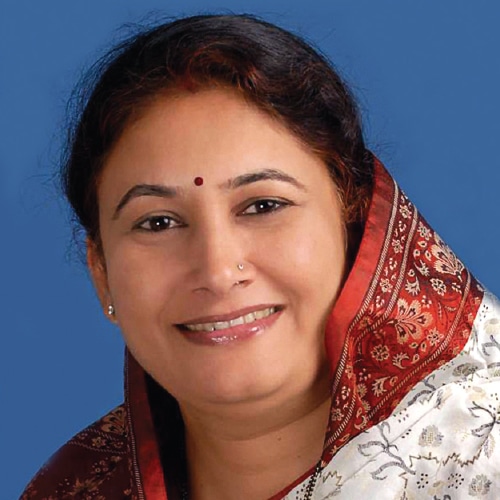
Santosh Kumar Choubey, Chancellor, AISECT University

AISECT, the first private university of Madhya Pradesh, has taken various initiatives on different fronts to provide quality higher education in the State. The University has also made efforts to ease the norms for operating a private university in India, says Santosh Kumar Choubey, Chancellor, AISECT University, in an interview with Arpit Gupta of the Elets News Network (ENN).

With the changing times and maddening race to emulate competitors, what prominent challenges a private university like yours is faced with? The biggest challenge for the university was to change the perception of education stakeholders and build reputation. Earlier, the rules of operating a university were harder, which continues to be the case. Private universities were deprived from the funding benefits and various types of assistance that State and Central Universities enjoy.

To improve the situation, an All India Private University Conference was organised by AISECT University in 2012 where all universities from across the country were invited.

The Central and State Government regulatory bodies discussed about challenges and anomalies faced by the private operators in higher education system at the conference. Almost everyone in the conference agreed to the problems faced by private universities in terms of regulation, multiple commands and operations.

Since then efforts have been made to ease the norms for operating private universities across the country. It is also expected that in coming time all the universities, irrespective of private or government, will be provided a level field to operate.

What are some of the innovations being introduced in AISECT University vis-a-vis State and Central Universities?


Some of the important innovations introduced by AISECT University include:

  • Promoting Skill Development by setting up skill academies, collaborating with the National Skill Development Corporation (NSDC) and making one skill course compulsory for each year at UG and PG level i.e. four skill courses in an undergraduate (UG) course and two at PG level.
  • Establishing Renewable Energy Centre and Energy Park in the University to develop green energy culture, the only campus in Madhya Pradesh and amongst 17 in India to be selected for Green Campus by the Ministry of New and Renewable Energy (MNRE).
  • Adopting three villages and holding week-long camps in the villages at regular intervals for awareness and training of villagers in the areas of health, cleanliness, education, literacy, digital communication, banking etc.
  • Developing an incubation centre to promote the best startup projects and conducting startup competitions at national-level. The centre has also attracted industry mentors who have supported the finest startup projects at AISECT University.

With placement of students becoming a yardstick to evaluate a university’s status, what has been your achievement in this context? How significant innovation is to your university?
Placement is an important mark of credibility for an institution. Our University’s innovative Training and Placement Department serves this aspect. Our emphasis is on producing well educated, skilled and confident professionals who are industry-ready after graduation. More than 50 per cent of our students get placed before completing their respective courses. A strong incubation centre is one of the most important dimensions of our placement. With an abundance of startup competitions, thereby enabling us to produce not only good number of employees but also successful entrepreneurs.

Almost every other university is collaborating with foreign universities and government departments, what initiatives have been taken by your university in this regard?
Right from the beginning, AISECT University has given lot of importance to expand its horizon across the academia, industries and research labs. We have identified organisations in India and abroad for collaboration and to gain from their expertise in specific fields. Some of these collaborations include:

NCTU, Taiwan: We are working together with IIT Delhi to enhance spectral efficiency of solar cell in a project costing about Rs 40 lakh.

ICEWaRM, Australia: This collaboration involves working jointly in the field of water resources and management. In this context, we organised a four-day international conference on Water, Energy and Environment where 350 research papers were presented by 20 countries were being published by Elsevier.

KIEV University, Ukraine: This entails collaboration in the field of space and earth-science.

MoI University Eldoret, Kenya: This is a research project in the pipeline on water resources.

KAIST, South Korea & RPI, USA: It involves collaborative work on Renewable Energy.

PetruMaior University of Targu- Mures, Romania: We are working jointly on environmental science/engineering.

Similarly, there are more than 15 research laboratories, industries and institutes in India, including AMPRI, CIAE, NITTTR, IIT New Delhi, TATA Motors, Reliance, BSNL, etc, with whom AISECT University has a collaboration for skill delivery, research projects and exchange programmes.

What steps your university has been following to ensure the finest faculty delivering in this fast developing world?
Rigorous faculty selection process is undertaken by the university to ensure highly qualified and experienced teachers. Almost 50 per cent of which are PhDs and around 20 per cent are having industry experience. Moreover, collaboration with seven foreign universities, 10 Indian institutes, research laboratories and industries, facilitates exchange programmes for students and renowned experts. We promote a strong culture of national and international academic events, about five every year, where experts expose students to latest development in technology, corporate, industries and academia.

What steps have been undertaken for research-based learning by your university?
Research-driven education is an integral part of our vision and mission. Following initiatives have been taken in this regard:

  • The University has identified four areas to encourage researches – Renewable Energy, Material Science, Environmental Engineering and Water Resources, and Earth and Space Science. Advanced research labs in these four areas have been developed with an investment of more than Rs two crore. An advanced software lab covering these areas is also available. These resources are available from undergraduate to research scholars.
  • The university has been publishing two bi-annual peer reviewed research journals – “Anusandhan” for Science, Management and Technology and “Shodhaytan” for Non Tech discipline from the past five years.
  • A Core Research Group (CRG) has been formed to promote research projects with external and internal funding. CRG has pan India experts in the field as members. In this context, the university has one ongoing Indo- Taiwan project in the field of solar cells, five ongoing internally funded projects marked at Rs one crore each and four projects have been currently put up to various external agencies for funding.
  • The university has an incentive scheme for research activities and writing. This has resulted in publishing of more than 300 research papers in national and international conferences and seminars and more than 20 books. In last three years, more than 15 faculty members and students have gone abroad related to research activities.

IFW Offering User Friendly ERP Solutions

Karan Garg, Founder and CEO, IFW Techno Creations Pvt Ltd,

Campus management solutions and Enterprise Resource Planning (ERP) software are the need of every institution nowadays. IFW Techno Creations Pvt Ltd is providing these software as per the customers’ requirements using latest technologies, says Karan Garg, Founder and CEO, IFW Techno Creations Pvt Ltd, in conversation with Elets News Network (ENN).

What important things are considered while installing campus management solutions in your institute?

Like any other sector, the use of technology in education sector is evolving and growing constantly. A good campus management solution has to be dynamic enough to serve the ever changing needs of an institution. A gap between the institution’s expectations and deliverables of the campus management software will force the institution to change the software. We, at IFW, try to come out with innovative ideas to make the Enterprise resource planning (ERP) solutions more user-friendly and dynamic to cater all the requirements of users.

Campus Management System must be flexible enough to meet the demographical shift, how do you fulfil the requirements of a customer in this regard?
A good campus management solution will have all the features and processes that are needed for its targeted regions and type of institutions. Rules, regulations, policies, sometimes language etc need to be changed in the software as per the demographic changes. A good campus management solution should be able to incorporate all those changes to stay relevant in all its target regions. We at IFW make sure that our solutions primarily should at all times accommodate the needs of Indian institutions from all states.

What tools do you use to develop the software that involves student details, study programmes, faculty workload, scholarships and other administration related activities?
Various platforms such as Net, PHP, JAVA, Oracle etc are available in the market to develop campus management systems. All these platforms are very popular across the world. Irrespective of the technical platform on which an application is made, the load on software can be managed with the help of optimised code for the software that can generate quick results. Understanding client’s requirement before starting software development is also very essential as it helps the developer to understand key needs and objectives of software. Moreover, it’s important to have a robust internet, hardware and networking framework as per the software’s requirement before its implementation.

How important role does Cloud Technology play in the development of a school or college management system?
Cloud is the future of all school and college management systems. After easy access to internet through Mobile/Smart Phones penetration in all parts of the country, it is must to opt for Cloud Technology. The technology has major advantages like easy and quick implementation, secured data backups, no need of local servers, any time anywhere usage etc. We, at IFW, also know this from our experience that Cloud applications take less time in implementation and thus provide a quick Return on Investment (ROI) to the clients.

In order to improve the performance of campus management software, what processes you follow along with the user feedback?
At IFW, we have a dedicated call centre working 24X7 for our clients. The call centre provides online on call, e-mail and remote desktop support to the clients. Dedicated support agents monitor the usage of the clients and provide solutions to their problems accordingly. The agents not only support but also make sure that all the features of the solutions are understood by the clients and they can use the software as soon as possible. The support team also collects feedback and suggestions from the clients and forwards them to the development team, where after the evaluation and in detail discussion, the enhancements are provided to the client in new upcoming versions.

How would you describe corporate and educational institutes you partnered with to incorporate some of the best ideologies and practices into your solutions.
Jayoti Vidyapeeth Women’s University, Jaipur, Rajasthan: We are providing our core ERP named “IFW Campus ERP” to the university. We are also managing the online examination and distance learning processes of the university.

BRCM Group of Colleges and Schools, Bahal, Haryana: We are providing “IFW Campus ERP” software to the university. We are also managing the online examination and distance Learning processes of the university.

St. Francis Institute of Management and Research, SFIMAR, Mumbai: We are providing “IFW Campus ERP” software to the management college for managing all the departments like library, admissions, exams, events, TPO, attendance etc.

Salem Swadeshewari Educational Group, Salem, Tamil Nadu: The campus of the group includes a school and a college. We have provided them IFW Campus ERP for the College and Software as a Service (SaaS) for the School. They are successfully using our solutions since last six years.

GANGA Group of Schools and Colleges, NCR, Delhi: The group has more than 12 institutions in different parts of Delhi-NCR. The group’s school and colleges under are using “IFW Campus ERP” successfully for managing all the processes from admissions to accounts.

What are your upcoming projects and plans for the future?
We are aggressively working on mobile applications for students, parents, staff and campus administrators etc. These apps are in direct integration with our ERP Applications and will work on real time basis. We are also planning to expand our reach to more and more institutions this year. We are also coming up with our ERP Solutions for education sector using latest technologies to provide our clients a solution on the platforms of their choice.


Chitkara International School Ensuring Change with Best Future Practices

Dr Niyati Chitkara, Principal, Chitkara International School

Chitkara International School believes in developing a learningcentered approach with a positive learning environment for every student to ensure success in future, says Dr Niyati Chitkara, Principal, Chitkara International School, in an interview with Elets News Network (ENN).

It is very important for school and parents to be in sync for the holistic development of children, what are the processes you follow for it?
Being the vital stakeholders of a school, parents should know about every activity within the school. It is a responsibility of the school to determine and fulfil parents’ demand by conducting need and expectation analysis at the school. This not only ensures absolute transparency but also gives both the school and parents a chance to work in sync to ensure children’s holistic development. Our processes include:

24/7 Redress Mechanism for Parents: Through a software called “School- Pad”, we have maintained a 24/7 redress mechanism. This redress mechanism of the school provides important feedback to the parents on the school’s working.

Orientation Sessions/ Hand-holding: Orientation sessions help the school to impart its vision, objectives, prospects, working and future initiatives for students to the parents.

School Visits and Polls: The school arranges school visit for each and every parent at the time of admission so that they get to know each and every aspect of the school culture. Apart from this, regular polls are conducted on “SchoolPad” incorporating new initiatives to encourage parent’s opinion.

Evidence of Learning – On Facebook, Instagram and Website: We make sure that every activity in the school is notified to the parents. The social media network helps the school to convey its ethos to parents and keep them updated so as to meet their expectations.

For innovation in school, it is very important to have skilled teachers, what measures have been taken at your school to improve the teaching experience?
With the changing needs of classrooms comes a change in teaching methodology. The landscape of education has changed drastically. Now the teaching methodologies involve smart tools along with chalk and board method for effective delivery.

The teachers at Chitkara International School are the ‘Learning Designers’. Everything at Chitkara has been designed under the tutelage of our teachers along with the matrix of innovation. Some of the measures taken at Chitkara include:

Faculty Development Programmes (FDPs): At Chitkara, teachers get enough exposure with the right training and guidance through international travels, conferences, seminars, workshops and visits. It helps them to know about the latest and the best trends in the education industry.

Faculty Exchange Programmes: Faculty Exchange Programmes provide our teachers an opportunity to come across the best global practices and improve their delivery methods in the classroom.

Digital Environment: Various technological tools in the classroom assist teachers to inculcate innovation among students. Stretching from the digital library to software, the school has fabricated a digital environment so as to provide teachers with the best teaching experience.

Motivation in the form of Green Cards and Appreciation Letters: We feel that a great teaching experience comes with motivation at every step. Appreciation in the form of green cards and letters are given to our teachers to appreciate their contribution and skills, and motivate them to grow in every dimension for their own and the school’s better future.

Research is very important for a school and its teachers to acquaint themselves with the changes taking place in the education industry. We ensure that through extensive research we imbibe innovation in the school’s practices and render the best teaching experience.

It is important to monitor progress, performance and behaviour of every student at school, what initiatives has your school undertaken in this regard?

When it comes to monitor progress, performance and behaviour of every student, the best and concrete practices need to be defined and implemented. Only futuristic initiatives or practices are fruitful and informative. At Chitkara International School (CIS), we make sure that teachers, parents and school management work hand in hand for the holistic development of every student.

Assessment Booklet: Through Assessment Booklet, scholastic and co-scholastic performance and progress of a student are monitored on yearly basis.

Planner Performance: Planner Performance monitors students’ topic-wise performance every month online to know their areas of improvement.

Performance monitoring through RTTs, OBRs, Open Door and Knowledge Polish: Practices like Revision Through Teaching (RTT), Open Book Revision (OBR), Open Door and Knowledge Polish, help the school to evaluate a student’s performance on a monthly and bi-monthly basis

SPOC/Chat Sessions: SPOC (Sole Point of Contact) and Chat sessions are conducted to review and examine students’ performance and help parents with any hassles or query.

Daily Academic Track and Behavioural Track of Students: Daily Academic Track is uploaded on “SchoolPad” daily. It helps parents to know about the classwork and homework given to students. Similarly, to gauge the behavioural patterns of each and every child, Behavioural Track is devised.

What are the practices followed at your school to embed best future practices and innovation with the teaching-learning process?
Everything at CIS falls under the realm of research. Be it ideas, strategies, new methodologies, the curriculum or the infrastructure, everything is research-based and well thought out. The whole idea behind doing extensive research is to adopt the best future practices for students.

Collaborative Learning helps the school to impart quality education on a larger forefront. Various national/international sessions, workshops and expert talks focused on multi-cultural aspect are included in the curriculum to prepare students for future.

School’s academia-industry interface, Change the Game, offers our students a wide range of opportunities and programmes. It allows students to interact with the industry professionals, educationists, leaders, and entrepreneurs and make them industry-ready.

TED Talks: Videos and live speakers combine to spark deep discussion and connection with students. The practice offers the school an exposure to different ideas and inspires to think out-of-the-box.

The Outdoor and Indoor Learning Spaces of the school cater to the present curriculum needs. Every corner of the school talks about its unique pedagogy and offers an experience of learning while walking.

Our academic and co-curricular planners, co-curricular squads, and innovative methods of teaching such as enquirybased learning, flipped learning, blended learning and home learning programmes offer a blend of innovation and research for the improvement of the teachinglearning process.

IL&FS launches K-12 Digital Learning Platform – Geneo

Stack of books and mouse. Online education and business concept.

IL&FS, an infrastructure leasing and financial services has entered into the online education market through its education wing – IL&FS Education & Technology Services Ltd.

The company has launched “Geneo”, a personalized digital learning platform for the K-12 segment. IL&FS has partnered with Google for Education to develop the platform.

Geneo in its initial phase will leverage 10 million students base of the IL&FS Education.

MD & CEO of IL&FS Education and Technology Services Ltd R C M Reddy said, “Geneo is a personalized digital learning platform specially created for K-12 students. Designed in technical collaboration with Google for Education, Geneo uses an app cloud model that provides students curated digital content from multiple sources. Offering round-the-clock remote mentor support, Geneo is conveniently accessible across platforms, including mobile phones, laptops, PCs, tablets and Chromebooks.”

Geneo will organise the digital content provided by its multiple partners and simultaneously will map the digital content with the prescribed textbook syllabus.

Initially, Geneo will help in improving the syllabus of primary and secondary classes of schools. It will enhance the delivery capabilities of the educators and help them to provide seamless quality learning. Later, Geneo platform will be used to develop a lifelong learning pathway for students across the country.

NDMC to revamp schools through “Smart Classrooms”

The New Delhi Municipal Corporation (NDMC) has decided to introduce “smart classrooms” in 444 classrooms at 30 out of 51 schools.

The smart classes will be equipped with CCTV cameras, LEDs and other required infrastructure. It will help the teachers to impart lessons through digital content.

According to officials, the digital version of last 10 years’ examination papers, interactive material, lessons, practice material and question banks is available for the students of the senior secondary wing. NDMC will set up smart classes in that will cover children studying from Classes 6 to 12.

The content will be based on the NCERT syllabus and available in both Hindi and English medium, the official added.

NDMC officials revealed that there is a considerable rise from the academic year 2014-15 to 2016-17 in the number of class 10th students who have passed the examination with distinction.  Similarly in class 12th result, apart from improvement in the overall result, there is a substantial increase in the quality of performance by the students. The number of distinctions in different subjects has increased by about 40 per cent.

LATEST NEWS