Home Blog Page 690

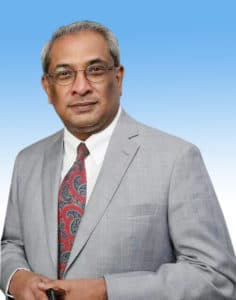
Anurag Tripathy is new CBSE secretary

Department of Personnel and Training (DoPT) has appointed senior bureaucrat Anurag Tripathy as new secretary of the Central Board of Secondary Education (CBSE).

Tripathy has been appointed to the post for a period of five years, revealed an order issued by DoPT He is a 1998 batch officer of Indian Railway personnel Service (IRPS).

The CBSE is government agency to conduct 10th and 12th board exams at national level. It also conducts Joint Entrance Exams (JEE – engineering entrance), National Eligibility cum Entrance Test (NEET – Medical), National Eligibility Test (NET) and other entrance exams nationally.

CBSE with MEA launches online Mechanism to verify students’ records

The Central Board of Secondary Education (CBSE) along with the Ministry of External Affairs has launched an online mechanism for students planning to go abroad for studies.

The mechanism will help the students not to run around colleges and universities or approach “touts” for verification of their documents.

“A centralised CBSE digital repository of academic records was launched in September last year. Employers and educational institutions can use this repository to verify academic records of students online,” Union HRD Minister Prakash Javadekar said at the launch.

External Affairs Minister Sushma Swaraj said that the new system will help in reducing the role of “touts” who were running a “racket” so far.

Explaining the mechanism, CBSE Chairmanm RK Chaturvedi said, for the verification, verifier needs to register on the portal, after which the CBSE will approve their request.

After due approval, they can verify students’ result data by making payment online. After verification, data will be emailed to the verifier and the corresponding student will also be notified.

The touts were charging around Rs 10,000 to 15,000 to get the verification done.

“It was a big racket which was functioning which was not only putting the applicants through financial stress but also they were required to go through a tedious process,” Swaraj added.

Punjab government directed varsities to close unauthorized centres

The Punjab government directed state’s private universities to close their unauthorised distance education study centres.

The State government issued a letter to vice-chancellors of 16 private asking them to close such centres or to face strict action, an official said.

As per the provisions of the University Grants Commission Act, private universities are not allowed to run distance education study centres outside their campus without permission, he said.

He added that the copy of the order has also been sent to the deputy commissioners.

They deputy commissioners have been asked to conduct checks and closed any such centres in their respective districts, the official said.

‘Indian institutes soon to have NRIs, foreign scientists’

The Government of India is soon going to launch a first-of-its-kind programme to allow foreign and NRI scientists to work in the country’s scientific institutions for a period of one to three months.

The programme titled as ‘Visiting Advanced Joint Research’ (VAJRA) is aimed to encourage top scientists across the world to work in India and to guide doctorate and post-doctorate students. The programme will also expose the students to research culture worldwide.

The scientists selected under this programme will be a cut above the rest in their respective fields.

“The faculty will be physically available for 13 months in the Indian institutions, but maintain an adjunct faculty status round the year,” said Ashutosh Sharma, Secretary, Ministry of Science and Technology.

The secretary was speaking at an event organised to publicise the ministry’s achievements since the current government came into power.

Union Minister of Science and Technology Harsh Vardhan was also present at the event. He said that since the current government’s inception, thousands of Indian-origin scientists working abroad have come back to India.

Under the VAJRA programme, number of scientists has been capped at 1,000 and draw a salary of $ 15,000 in the first month and $ 10,000 each in the remaining months.

The government currently runs a programme under ‘Ramanujan Fellowship’. However, it is aimed at attracting Indian students and doctors working abroad. The period of the fellowship is for five years.

Dell EMC partners Benett University for research on data analytics and machine learning

Business workplace

Dell EMC has signed a memorandum of understanding (MoU) with Bennett University to research jointly on data analytics and machine learning.

Under the partnership, a research laboratory will be set up by the Dell EMC to perform the research work and to develop key skills of Bennett University faculty members and students in areas of data science and cloud infrastructure.

The MoU leads Bennett University to become a member of Dell EMC’s External Research and Academic Alliance Program. According to a statement by Bennett University, the alliance will primarily involve coordination of information and expertise dissemination for education and training in the field of information storage and management (ISM), cloud infrastructure services (CIS), data science and big data analytics (DSBDA) and data protection and management (DPM),.

As part of the agreement, Dell EMC is likely to train the staff of Bennett University’s computer science engineering department in some of the leading technological areas. The training will be further extended to students with major focus on practical application. It will also provide a scope for around 120 students every year to opt for a course in the fields data science, cloud and information infrastructure.

“Bennett University’s main goals are driven by the larger aim of enhancing India’s higher education sector, by providing the students a premium Ivy League learning experience,” said Bennett University vice chancellor Yaj Medury. “Our USP lies in the courses we offer in partnership with prestigious global institutions such as Georgia Tech, Cornell University, Babson, edX.”

This will help advance different facets of the university ecosystem, he said. “We plan to move forward in machine learning and artificial intelligence with specific emphasis on health domain and the area of video analytics,” he added.

Krishna Kant, head, Dell EMC Academic Alliance, said, “The partnership with Bennett University is a step towards bridging the knowledge gap as a part of Dell EMC’s External Research and Academic Alliance Program in the upcoming digital era of IT and workforce transformation. Our goal is to ensure that the students and faculty alike, are well equipped to evolve digitally and to be better prepared when it comes to employability, with the help of training in the correct skill-set.”

Deloitte launches e-learning programme for businesses to understand GST regime

For companies and businesses, to understand the Goods and Services Tax (GST) regime, the tax consultancy firm Deloitte has recently launched an e-Learning programme.

The e-Learning programme will be of 18 hours in length. According to a statement released by the firm, the programme will help organisations in smooth transitions according to the new regime. The consultancy firm will educate internal teams, customers and vendors through a structured programme on what GST means for them.

Partner of Deloitte Haskins & Sells LLP, Prashant Deshpande, said that there will be four specific e-Learning modules for stakeholders – business leaders, procurement team, sales and distribution team, and internal teams. Accounting, finance, legal and tax departments of a company will come under internal teams.

It will help companies leverage and benefit from the practical experience of the network of Deloitte’s global indirect tax specialists. “These modules offer technical and practical training for various roles, interactive learning experience, simulated scenarios and assessments to ensure user engagement combined with flexible learning pace,” Deshpande said.

University of Hyderabad to boost e-learning

The University of Hyderabad (UoH), to help develop discipline-wise e-learning materials, is soon going to collaborate with several universities within the country and abroad.

The university is nearing completion of the India-European Union project- Enhancing Quality, Access and Governance of Undergraduate Education in India (E-QUAL). The “E-QUAL” is a collaborative project funded by European Union with a funding commitment of over one million Euros till May 2017.

Under the project, various activities are being implemented under disciplines like critical thinking, cultural studies, human ecology, natural resource management and sustainable development. The idea behind the project was to improve the quality of education in India.

e-learning“While the aim of e-learning is to implement e-courses and provide training for teachers on developing e-content, UoH became the first central university to develop and adopt an online education policy. An e-learning centre was set up as per the policy,” said Prof J Prabhakar Rao, faculty coordinator for the project.

“The project has also helped expose students to organising academic conference and presenting papers on online education. The study modules expose them to diverse disciplinary perspectives and basic concepts for a holistic understanding on the subject,” added Rao.

IIT Kharagpur to measure happiness index in Madhya Pradesh

Girl drawing smiley face on to a wall

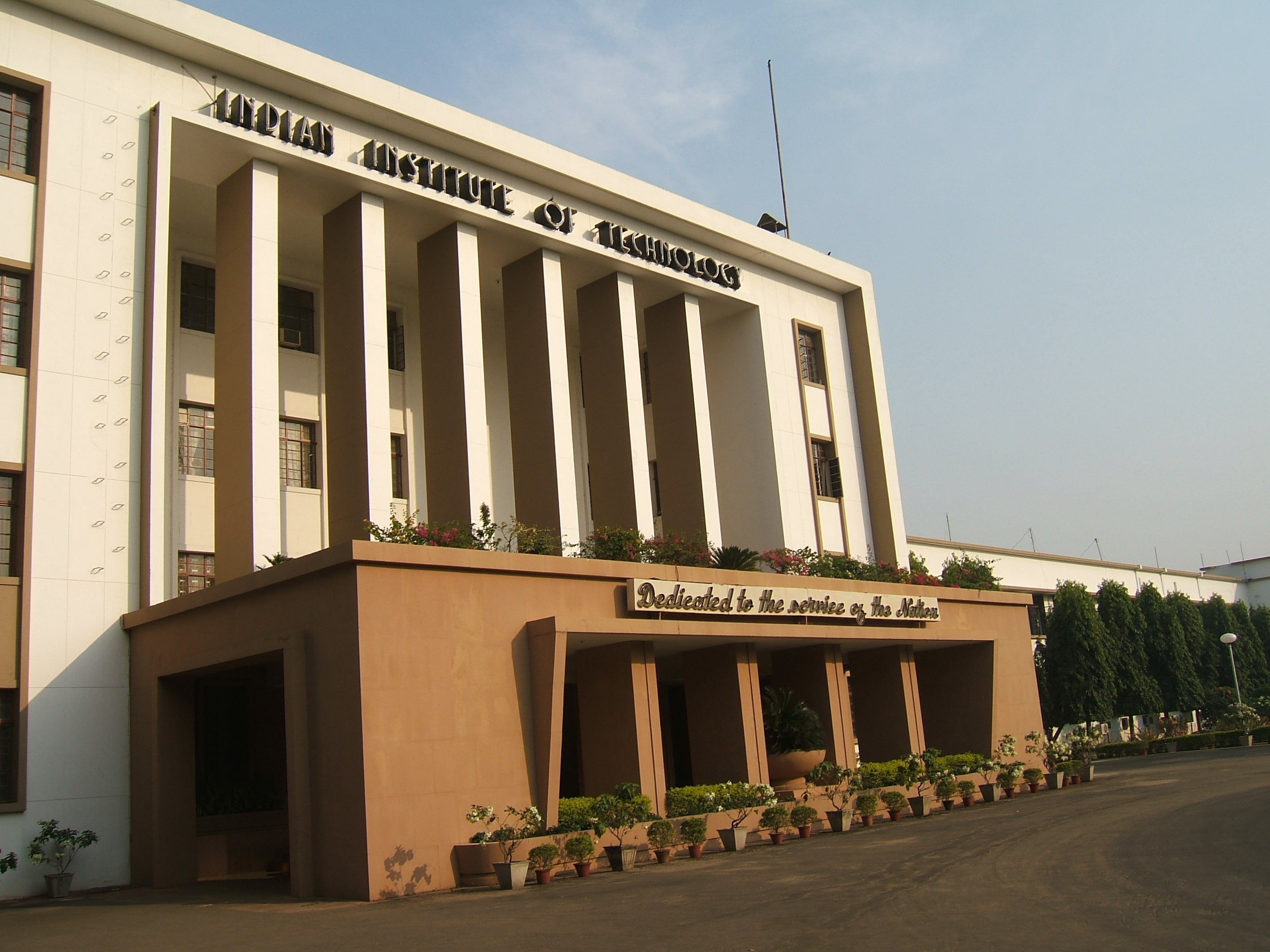
IIT Kharagpur (IIT-KGP) has signed a Memorandum of Understanding (MoU) with the Government of Madhya Pradesh for measuring the well-being of the people of the state.

The MoU was signed between MP government’s ‘Rajya Anandam Sansthan’ (Department of Happiness) and IIT-KGP’s Rekhi Centre of Excellence for the Science of Happiness. According to an official communiqué from IIT-KGP, the MoU was signed in the presence of Chief Minister of Madhya Pradesh Shivraj Singh Chouhan and Director of IIT-KGP Prof P P Chakrabarti.

IIT-KGP will analyse the data collected by the State government to develop the index and assess the level of happiness in the State. The institute will also chalk out recommendations to enhance happiness, the statement added.

The institute, through an online screening and assessment system, will identify suitable volunteers from the database of more than 30,000 people who have offered to be part of the collaborative exercise.

“Very good experience with the state and its leadership team, especially the volunteers who do this work without any payment in addition to their normal duties. Looking forward to some very interesting collaboration,” the release quoting Prof Chakrabarti said.

Satinder Rekhi, the patron of Rekhi Centre of Happiness at IIT Kharagpur, was also present at the MoU sign.

Microsoft to empower Indian NGOs through its Cloud Services

Laptop Isolated on Black Background. Vector Illustration.

Microsoft India has recently announced that its Azure Cloud service is available to non-profit organisations (NGOs) under its “Public Cloud for Good” initiative.

Qualified NGOs can avail free Azure credits worth $5,000 for a year with benefits such as insight, agility and operational efficiency. The software giant, between 2016 and 2018, is donating around $ 1 billion in Cloud Computing Resources to 70,000 NGOs worldwide, including India.

Microsoft has a long-standing commitment to contribute in new and more impactful ways to a societal ecosystem that connects the benefits of technology to those who need it most and work harder to drive inclusion,” said Madhu Khatri, Associate General Counsel, Microsoft India.

To highlight how NGOs were using the platform to drive greater impact, Microsoft India partnered the National Association of Software and Services Companies (NASSCOM) Foundation to organise “Azure for Good” workshop. The workshop was attended by 22 representatives from 12 local non-profits.

“We are glad to partner with Microsoft in offering the Azure services worth $5,000 for a year free of cost to the eligible NGOs and are confident that this grant will more than suffice their cloud platform needs,” said Shrikant Sinha, CEO, NASSCOM Foundation.

Sandip University gets autonomous status in Bihar

Sandip University has launched 1st self-financed university in Bihar. The university has bestowed upon by the Government of Bihar to commence various educational courses.

The university has its campuses in Mumbai and also in Nashik. This university was recently named as “Top 10 emerging educational institute of India”. Last year, Sandip University, Nashik, Maharashtra, got autonomous status under the regulations of the University Grants Commission (UGC)).

Dr Sandip Jha, Chairman, Sandip University, Nashik said, “With the growing awareness & diversity of youths from Bihar, there is always a need to bridge a gap between the knowledge & enhancement of skills, with this initiative we will mitigate the collaborative approach of a students,  to acquire a balance proportional mix of knowledge & hand on experience.”

“As a native of Bihar, I have always seen that there are lot of difficulties a person from Bihar needs to undergo; whether in terms of job, global exposure, understanding, cross disciplinary efforts, etc.  But, I am quite confident that Sandip University, Madhubani (Sijoul), will spark a new revolution in Bihar. People of Bihar need education to foster and polish their entrepreneurial zeal with the adoption of new cutting edge technologies and advanced teaching techniques,” he added

The university will focus on curriculum and teaching methods that entrails the students to demonstrate and deliver impeccable solutions to contribute to the country’s economy.

Dr Jha further said, “Bihar is one of the fastest growing state in India with Compound Annual Growth Rate (CAGR) of 13.4%. It implies delivering a high output value is must. I am sure that Sandip University will push crucial frontiers among the aspirants, who wants to expand their abilities to advanced level. I look forward and quite delighted to see the hope of enlightenment in Bihar.”

LATEST NEWS