Home Blog Page 709

Government introduces bill to amend Right to Education Act

The Central Government has introduced a bill, seeking to amend the Right to Education Act, in the Lok Sabha. The new amendment will allow elementary teachers to get minimum qualifications as mandated in the act till 2019.

According to the existing Act that came into effect from April 1, 2010, teachers were to acquire minimum qualifications within five years by March 31, 2015. Minister of Human Resource Development Prakash Javadekar introduced the ‘The Right of Children to Free and Compulsory Education (Amendment) Bill, 2017’.

The new bill has been brought to enable the state governments to continue the training process for in-service untrained teachers.

Subsequently, the state governments had requested for extending the period for “training untrained teachers so as to enable them to initiate and complete the said the training process”, according to the Statement of Objects and Reasons of the bill.

The new amendment will also insert a new provision in the Act to provide free and compulsory education to all children of 6 to 14 years of age, reported The Economic Times.

Under the new provision, “every teacher appointed or in position as on March 31, 2015, who does not possess minimum qualifications… shall acquire such minimum qualifications within a period of four years on and from the date of commencement of the proposed legislation”.

The expenditure for training of untrained teachers would come from the approved allocation under Sarva Shiksha Abhiyan programme and shared between the Centre and the State governments.

“It is estimated that a nonrecurring expenditure of Rs 453.62 crore involved would be carried over to subsequent years to complete the training of untrained teachers by March 31, 2019,” the government said in the financial memorandum of the bill.

AICTE to take action against colleges flouting student-faculty ratio

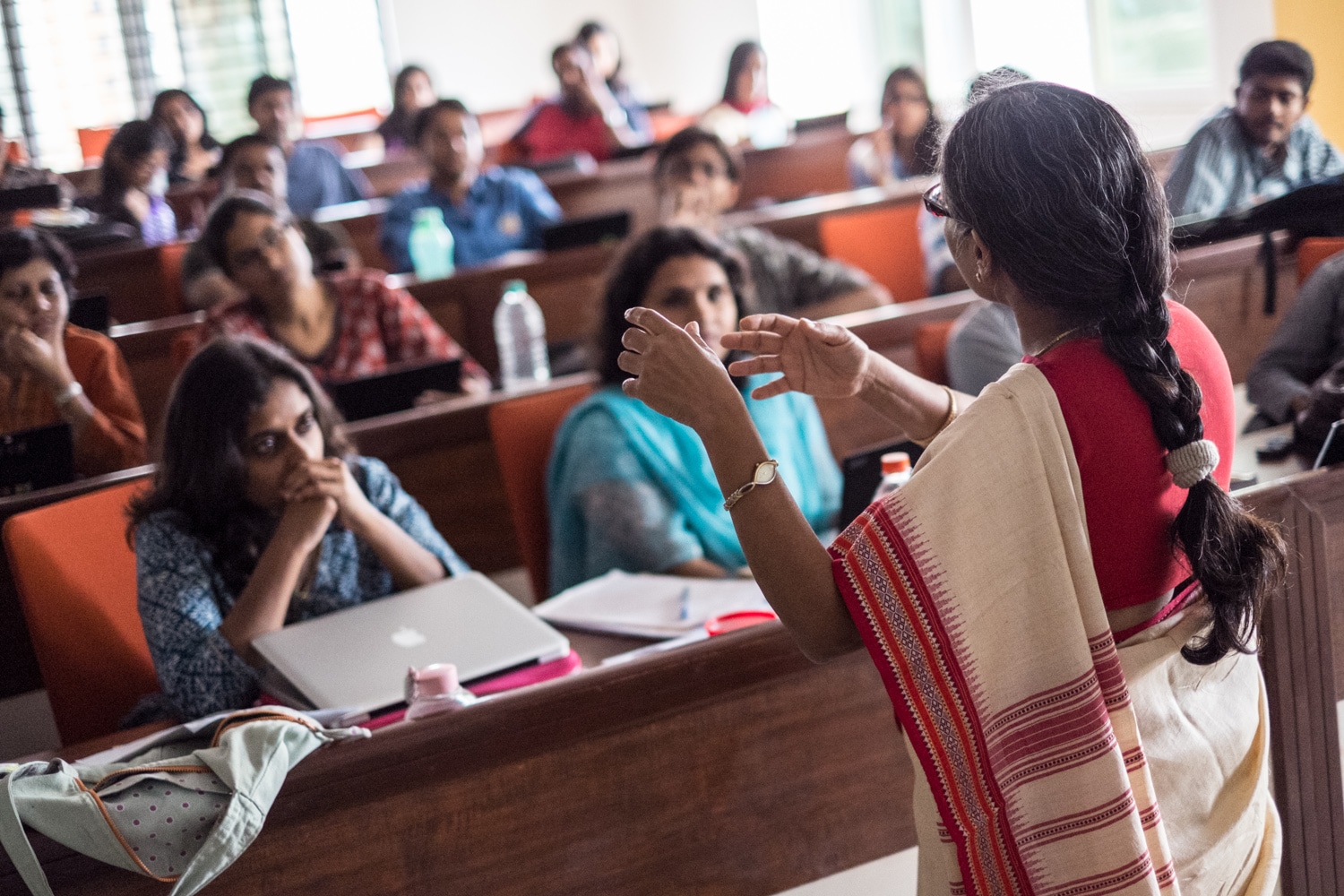
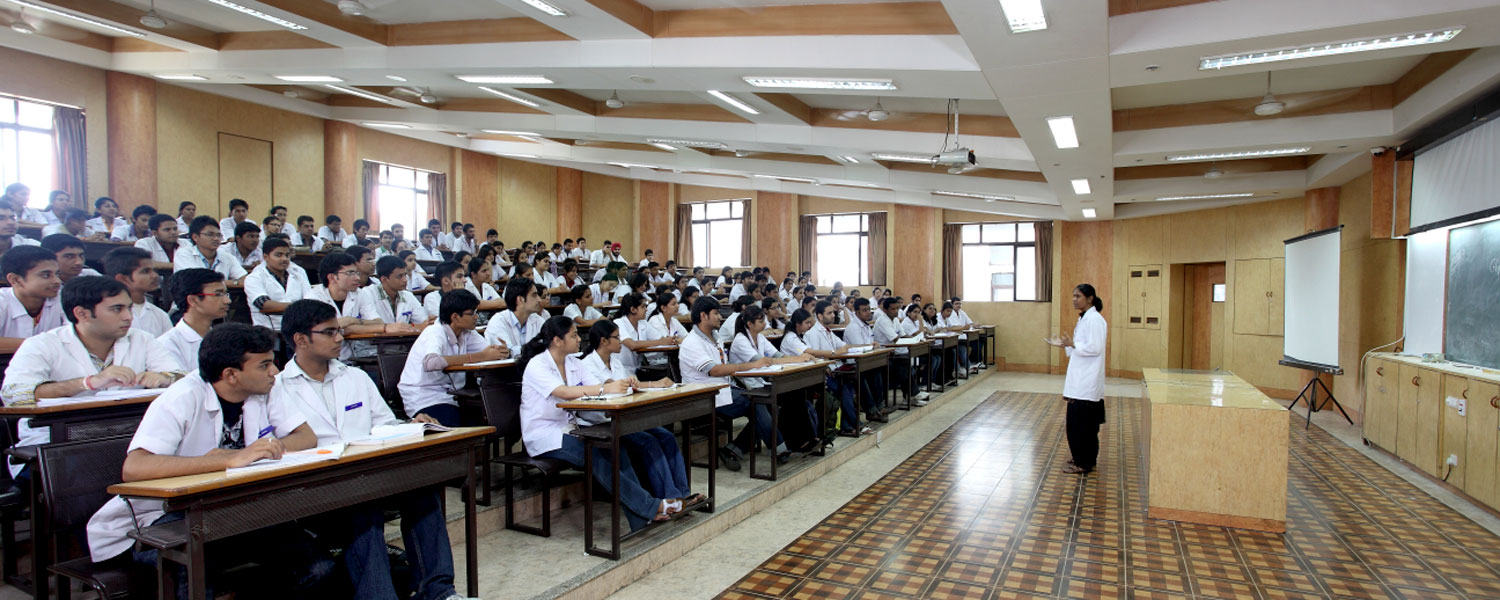
A professor at Azim Premji University, in Bangalore, India, lectures to a classroom full of students.

All India Council for Technical Education (AICTE) will take action against all the engineering colleges that are not maintaining the prescribed student-faculty ratio.

“Colleges not maintaining prescribed faculty-student ratio shall be liable to punitive actions including suspension of approval for supernumerary seats and reduction in approved intake,” a senior AICTE official said.

“Penal action can also be initiated against technical institutions for not disbursing the salary of the faculty and other staffers regularly and not adhering to timings for the colleges that operate in two shifts.

“Besides these, non-adherence to prescribed pay scales or qualifications prescribed for teaching staff for more than 12 months will also attract penalty,” the official added.

The council will also cross check the pay scales and qualification of faculties and if any discrepancy then it may lead to the suspension of admission process or reduction in intake in technical institutions, reported Hindustan Times.

The AICTE has approved new norms to grant approvals to the technical institutions in a recent meeting. According to the guidelines, suspension of admission in the respective course for one academic year and withdrawing approval of the course or of the institution altogether are the possible actions for the defaulting institutions.

Arunachal Pradesh’s medical college to be functional by 2019-20

The proposed Tomo Riba Institute of Health & Medical Sciences (TRIHMS) at Naharlagun in Arunachal Pradesh is expected to start functioning from 2019-20.

According to the Health & Family Welfare Minister of Arunachal Pradesh, Jomde Ken, initially the institute will have 50 seats and recruitment of faculty would begin in the financial year 2018-19. The reservation for outstation candidates will be decided by the TRIHMS Society would decide about seat reservation for outsiders, reported NDTV.

Deputy Chief Minister of the state, Chowna Mein inaugurated a digital X-ray unit and a high-end 4D colour doppler ultrasound machine at Tertiary Cancer Centre (TCC) in Tomo Riba State Hospital (TRSH) at Naharlagun near here.

Mein thanked Samsung for donating a digital X-ray unit and a high-end ultra sonogram worth approximately Rs two crore under its Corporate Social Responsibility (CSR) scheme.

Centre plans to link higher educational institutes to rural development processes

Central Government is planning to link all Higher Education Institutes (HEIs) with rural development processes under Unnat Bharat Abhiyan (UBA). The Ministry of Human Resource Development (MHRD), Ministry of Rural Development and Ministry of Panchayati Raj have already signed a tripartite agreement earlier this year in this regard. Through the agreement, the three ministries will try improve the formulation and delivery of developmental schemes in the rural areas.

Replying to a question in the Parliament, Dr Mahendra Nath Pandey, Minister of State (HRD) said that the representatives from Higher Education Institutions will interact with local bodies and community in selected village clusters to provide inputs and knowledge about the Gram Panchayat Development Plans, reported NDTV.

The scheme has been formulated by the Department of Higher Education, MHRD and the first phase of it is under implementation in several parts of the country. Indian Institute of Technology (IIT) Delhi has been designated as the Coordinating Institute.

All the institutions, including Central/State Government funded technical institutions, are advised by the MHRD to adopt clusters of backward Gram Panchayats/villages in their vicinity. The ministry has also asked institutions to apply their knowledge and expertise to improve the infrastructure in the Gram Panchayats.

Along with the Rural Development and Gram Panchayat, higher educational institutions are expected to carry out detailed field study. The institutes are also likely to participate in conceptualising and preparing the community-level development plans by providing technical, managerial inputs and by suggesting innovative solutions.

The institutions have been advised to continue their engagement with chosen Panchayats and offer assistance to the Rural Development and Panchayat Raj personnel. The programme is to be implemented over the next two years, with additional clusters.

MHRD asks NAAC to overhaul the accreditation process

In order to curb the corruption in assessment and grading of higher education institutions, the Ministry of Human Resource Development (MHRD) has asked the National Assessment and Accreditation Council (NAAC) to of the accreditation process completely from July 2017.

Following complaints of corruption by the council’s peer team, the ministry asked NAAC to work towards bringing transparency, objectivity and technology into the grading system, reported NDTV.

Under the proposed methodology, the peer team assessment of institutions, for deciding the grade of an institution will be given 20% weightage instead of the present 100%. Moreover, no institution will know in advance which team will visit them and the accommodation and travel plans of the peer team visit will be outsourced.

Major (80%) weightage of the grade will be decided based on technical and objective inputs via use of Information Communication and Technology (ICT).Officials revealed that many more changes regarding the accreditation process of higher education institutions are also in pipeline to bring transparent and technology based grading system.

“There have been complaints from institutions against the conduct of the assessors who are part of the peer team. Therefore, union HRD minister Prakash Javadekar has taken personal interest in qualitative improvement of the grading system,” said a senior official.

GL Education: FINER METHODS for Enhanced Learning

Schools around the globe are using innovative methods effectively to support teaching and to ensure better learning among students, writes James Neill, International Director, GL Education for Elets News Network (ENN). His association with various schools in last few months revealed that effective use of data and assessments is catering to better teaching and learning.

Various schools in India and abroad are using and exchanging technologies, methodologies and pedagogies to nurture global leaders. James Neill has surveyed various schools around the world and tried to find out the best schools in terms of teaching methodologies.

Ashoka Universal School (AUS), Nashik, India
In India, it has been traditional for schools to emphasise children’s learning by rote, a one-size-fits-all approach. But education systems elsewhere focus on the understanding and development of an individual’s abilities and attitudes to allow each student to reach their full potential.

Ashoka Universal School (AUS) in Nashik has decided to take this more personalised approach to the education it offers to its students. Shallu Sethi, Vice Principal, explains: “Children are often taught to succeed in exams by remembering and reproducing data, but we felt our students had deeper capabilities. Over 4,000 children of 3 to 18 years attend our school. They come from a diverse range of backgrounds, nationalities and religions. We wanted a way to explore their individual abilities.”

The school now tests their students with the Cognitive Abilities Test (CAT4), which measures reasoning ability across four areas: verbal, non-verbal, quantitative and spatial ability. It gives valuable insight into students’ strengths and weaknesses, and enables teachers to adapt the teaching methods suitable to the needs of the students.

“For example, there was one eight year old boy in Grade three who didn’t excel in class, yet it turned out his spatial ability was the highest in the class – an important indicator for success in Science, Technology, Engineering and Mathematics (STEM) subjects. We observed that his low verbal reasoning was holding him back. Now we focus on his verbal reasoning to help him realise his potential within science and maths.”

By analysing whole school data, AUS has been able to clearly identify two weaker areas affecting their students.

“The first was the verbal battery where our scores were comparatively low,” Sethi explains. “We’ve realised that some children are not working at the level their abilities suggest. Low literacy among these children is holding them back. We are now taking steps to increase our literacy interventions so that the children are able to realise their potential across science, maths and social sciences”, she said.

“The second was quantitative reasoning. The results from two different classes were comparatively low, indicating the need for greater support. Identifying these areas has given us the chance to work on ways to enhance clarity around topics and give additional training to teachers on how to meet learning requirements if appropriate”, she added.

Ensuring that teaching staff are supported through this change, the school has shared results with parents so that they can talk about it during open days and effectively enhance their children’s learning.

This is only the start of the journey, but with careful planning and providing strong support to the teaching staff, the school is already seeing the benefits. As Shallu Sethi concludes, “I have learnt a lot from CAT4 – it helps in ensuring that we are on the right track for a world class education”.

GEMS Wellington Primary School, Dubai, UAE
Alongside ability, the other key driver of student attainment is attitude.

Several studies, with focus on Programme for International Student Assessment (PISA) of Organisation for Economic Co-operation and Development (OECD), have found that “students can only achieve the highest levels, when they believe that they are in control of their success”. When the OECD looked specifically at the issue of student confidence or self-efficacy on performance in maths, it discovered a definite correlation. “On average, across OECD countries, greater mathematical anxiety is associated with a 34 point lower score in mathematics – equivalent to almost one year of school.”

Young people’s attitude towards learning and school therefore matter enormously. Yet educators have not, with some notable exceptions, given them the weight they deserve or identified when attitudes start to change

At GEMS Wellington Primary School in Dubai, the school’s guiding principle is the belief that children need to be happy in order to learn successfully. The school decided to introduce GL Education’s Pupil Attitudes to Self and School (PASS), a robust survey that measures students’ attitudes as learners towards themselves and their school. It helps teachers drill down into any negative mind-sets that may not be obvious in the classroom.

In January 2016, the school screened students belonging to grades 2 to 6, across nine factors proven to be linked to key educational goals, such as feelings about school, self-regard and confidence in learning. This led to a target group of 56 children who were identified as at risk of low attainment due to their negative attitudes towards themselves and school.

The school’s Senior Leader for Standards, Rosemary Elmes, says: “The results were surprising, as the ‘at risk’ list included children we really didn’t expect. In fact, when we put together a photo gallery of these children, one senior leadership team member expressed surprise that a particular girl was bubbly and confident in lessons. Yet she didn’t ever do as well at tests as we expected, so it was important to delve further and explore why that might be.”

Armed with this information, various programmes of intervention were introduced. The school then re-assessed these children four months later to see what had changed. They were delighted with the results.

A 33 per cent improvement across the target group was achieved, which placed all but three children into the top percentile for high satisfaction level in terms of their school experience.

A huge change has also been seen among specific children. For example, one boy in Year three had achieved an 80 per cent improvement across the nine factors. His confidence in himself as a learner had been extremely low, but with targeted encouragement and partner work focusing on how other children achieve, he was able to take those risks and experienced success. His teacher couldn’t believe it was the same child!

St George’s British International School, Rome, Italy
Can this focus on assessment have an impact on student’s achievement? Yes, when it’s part of a clear strategy supported by strong leadership and high quality teaching, according to Adam Oliver, Vice Principal & Head of Senior School at St George’s British International School in Italy.

The school introduced CAT4 in 2010 alongside a redesign of their internal reporting and assessment system. At the same time than also considering value-added.

Has it been worth it? Unquestionably yes, says Adam.

“At a whole-school level, our improvement has been significant, and has been fully ratified both by examination results and by external inspection processes:

  • Delivery of our best IB 5-Year Review
  • Our best-ever ISI Inspection Report. Graded ‘Excellent’ in all areas within the school’s remit
  • Three consecutive years of our bestever IB Average Points Score, reaching 35.5 in 2015
  • Likewise consecutive best-ever years for our IB Average grade per entry: 5.6 in 2015
  • A rising trend across 4 years at IB Grades 6 & 7
  • IGCSE: Three of our best years of A*-A performance; IGCSE best-ever A*-C pass rate
  • The evidence seems clear: knowing our students better has helped us, and them,

  John Elwa

IIT Kharagpur to introduce MBBS course by 2020-21

IIT-Kharagpur (IIT-KGP) is expected to introduce the MBBS course in its medical college by 2020-21. In the first phase of its construction, the hospital and ancillary building were getting ready, while in the second phase, residential towers for doctors, students and support staff will be undertaken, an official said.

“The first phase of construction of Dr B C Roy Institute of Medical Science & Research will get over by June this year and we are working towards making the hospital operational from 2018,” IIT-KGP Deputy Director and incharge of setting up the Medical College, Prof Sriman Kumar Bhattacharyya, said.

“Then, as per regulation, we can start offering MBBS programme in another three-year time in 2020-21,” said Bhattacharyya,.

The Ministry of Human Resource and Development has allowed to setup Dr B C Roy Institute of Medical Science & Research on 18 acre land in Balarampur, the area adjoining IIT-KGP campus. The ministry has sanctioned 150 crore for the 400 beds’ hospital would later have 750 beds costing around 230 crores. Rest of the funds are expected to be raised by the donations.

About healthcare facilities, Bhattacharyya said, “We will be collating details of the patients by videographing and with their permission can disseminate it to a doctor abroad. So if a patient wants to seek the opinion of a doctor in the US, he/she can easily do it.”

“As per rule, IITs cannot offer medical courses. So this project will work as a special purpose vehicle. We will not run it directly but create a registered society. IITKGP will sign an MoU with the society so that functioning of the hospital can be in sync with IIT system,” he said.

IIEST and IPA to conduct Masters Programme in Coating Sciences & Technology jointly

Indian Institute of Engineering Science and Technology (IIEST), Shibpur, has signed a Memorandum of Understanding (MoU) with Indian Paint Association (IPA). Under the MoU IIEST will conduct a masters programme in Coating Sciences and Technology from the academic session starting in July 2017.

Mr Subir Bose, former president, IPA, and Prof Kalyan Kumar Bhar, Dean, Research & Development, IIEST, signed the MoU in the presence of Prof Ajoy Kumar Ray, Director, IIEST, and some leading members of IPA.

As per the MoU, IIEST will develop industry-specific curriculum and innovative technology solutions in respective areas with the help of IPA.  Various development programmes for faculty members will also be organised by IPA to help them in getting greater exposures to industrial problems. The association and the institute will also conduct joint academic activities such as short term courses, seminars, workshops and conferences and undertake joint research projects.

Internship and placements of students are the two likely major outcomes from this partnership. Under the MoU, IPA and IIEST will jointly explore means to provide internships and jobs to students during and after completion of the Masters Programme in Coating Sciences & Technology, reported The Economic Times.

“This collaborative education and research programme will go a long way in creating appropriate manpower who will be able to serve the coating industry – an extremely important segment of the manufacturing industry. Our collaboration will be based on development of advanced technology in the area of corrosion and coating,” Prof Ajoy Kumar Ray, Director, IIEST, said.

Mr Subir Bose, former president, IPA, said, “India is progressing towards rapid industrialisation and the requirement for technical persons is increasing on a regular basis. This collaboration is an excellent example of effective and meaningful partnership between an Industry Association and a leading Educational Institution. The programme would be structured to provide students with specialized courses in various aspects of Paint Technology during the 2 year duration so as to make them eligible for employment by members of the Paint Industry and also by the Paint User Industry. We are confident that this programme would specialise technical persons who will be able to find gainful employment.”

Prof Kalyan Kumar Bhar, Dean, Research and Development, IIEST, Shibpur said, “Synergic partnership between industry and academia is now a necessity, where academic brilliance is aptly assisted by industrial expertise helps in scaling up research prototype being developed at the institute to the level of the industry. The partnership between IIEST and IPA will usher a new era in cutting-edge research in paint technology and provide excellent opportunities for graduate students to embrace themselves with the latest technology and will enhance their employability.”

IIT Kanpur to setup cyber-security centre

Department of Science and Technology has granted a fund of Rs 14.43 crore to Indian Institute of Technology (IIT) Kanpur to set up an interdisciplinary centre for cyber-security and cyber defence.

The department has sanctioned the grant for five years that will include the expenditure for setting up the infrastructure, equipment etc, for the centre, said the institute’s deputy director Manindra Agrawal.

The centre will work closely with researchers from IIT Bombay, IIT Kharagpur, ISI Kolkata, IIIT Delhi and MNIT Jaipur, Agrawal told The Economic Times. Agrawal and Sandeep Shukla of IIT Kanpur’s Computer Science and Engineering department will head the centre.

“This centre will engage faculty in cutting edge research in the domain of cyber-security of critical infrastructures (water treatment plants, nuclear power plants, power distribution infrastructure),” said Agrawal. The centre would also provide training to the students of other institutes along with government and industry executives through its cyber-security courses.

The facility is likely to come up within a year. At the centre, research on cyber vulnerabilities of critical industrial systems such as power systems, industrial automation systems, transportation systems etc will be carried out.

Digital Citizenship Program at Mount Litera Zee Schools to promote Digital Literacy !!!!!

If students are  found “glued” 24/7 /365 days to their mobile devices, why is it necessary for schools to teach digital literacy? Who should teach it?  … what does it even mean to be “digitally literate”?

Many of us educators struggle to understand their evolving role in teaching and using technology in their classrooms. Most importantly, many of us struggle with how technology is shifting the way our children  learn. Digital literacy skill is also considered as critical 21st-century learning skill however  before teachers and students dive into using technology in class, we should discuss what/why a digital literacy curriculum is necessary.

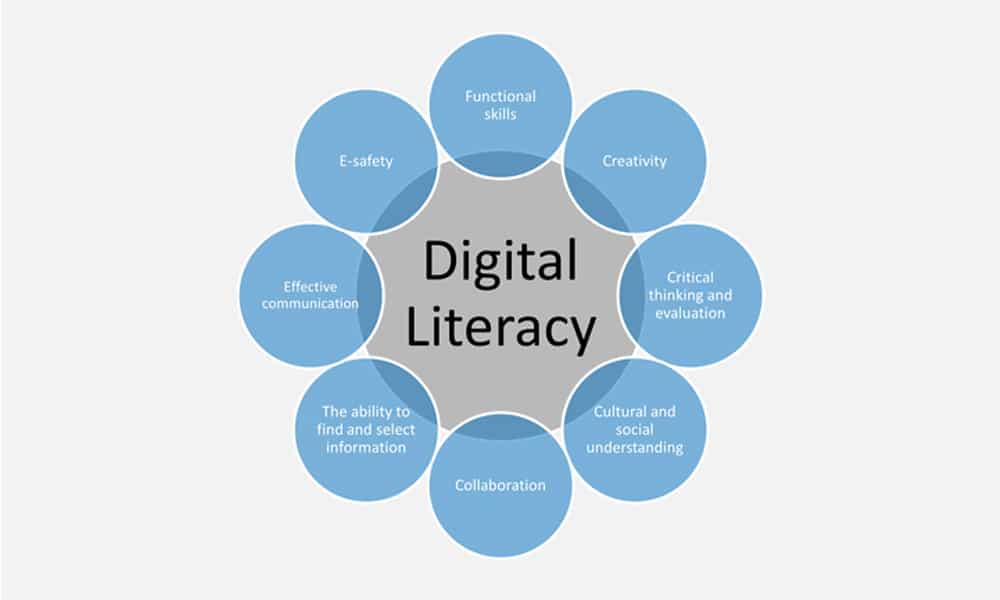
The New York Department of Education defines Digital Literacy as…..To be digitally literate is to have access to a broad range of practices and cultural resources that you are able to apply to digital tools. It is the ability to make and share meaning in different modes and formats; to create, collaborate and communicate effectively and to understand how and when digital technologies can best be used to support these processes.

Digital Literacy augments effective learning at schools and help the students with deep learning augmented with communication and collaborative skills.

At Mount Litera Zee Schools all Over India we had introduced a set of activities under the aegis of Digital Citizenship Program where in our students were sensitized with all eight parmaters of digital literacy given by  Doug Belshaw  Cultural, Cognitive, Constructive, Communicative, Confidence, Creative,Critical and Civic. Our students surfed on all these factors by organizing activities such as Slogan writing, songs on Digital literacy  and parents workshop and preparing videos.

Our teachers at MLZS are trained to influx technology in classrooms with prezi , piktocharts, infographics and mind maps which has enhanced the teaching learning process to a far greater extent.

I firmly believe the Digital Literacy is essential today as given  the scaffolding and responsibility to complete these tasks, pupils will be engaged to learn. These tasks require planning and thought, which shall polish critical skills.

As with traditional literacy, digital skills should help children to consume, comprehend and create content. This is key, and has clear benefits – not least that the future jobs for many of today’s children lie in content creation.

Digital literacy in this context is still new territory for many, but as a teacher ,teacher educator and advisor, I continue to push this holistic view. If we fail to give digital skills the same weight as traditional literacy, we are doing our children a disservice.

But by mastering these skills early, children have a powerful foundation to build upon in secondary school and beyond.

Satwant Palekar, Regional School Director, Zee Learn Limited, Mount Litera Zee Schools, West India


LATEST NEWS