Home Blog Page 725

1.34 per cent of GDP spent on education: HRD Minister

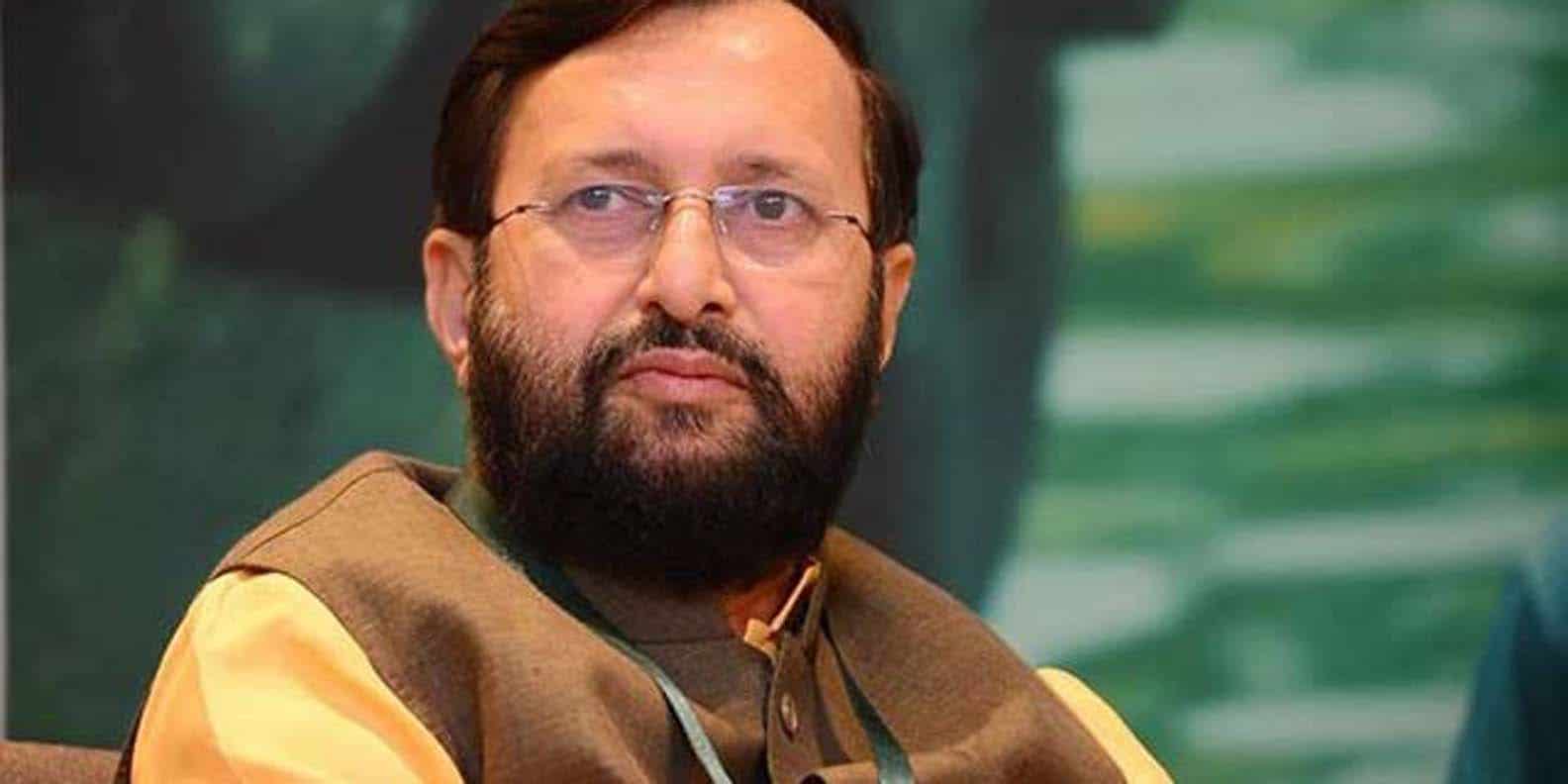
The Central Government has spent 1.34 per cent of Gross Domestic Product (GDP) on higher education during 2013-14, the Union HRD Minister Prakash Javadekar has informed the Lok Sabha.

During the question hour on last Monday, the HRD Minister revealed the information about expenditure on higher education for the year 2013-14.

According to him, aforementioned data was as per the publication of the ministry, ‘Analysis of Budgeted Expenditure on Education 2015’.

Planned outlay for the department of higher education was Rs 1,10,700 crore during 12th five year plan whereas the actual expenditure for higher education in 11th five year plan was of Rs 39,646.82 crore. This is an increase of about 2.79 times.

Delhi Police imparting lessons on cyber security in schools

The special unit for women and children of Delhi Police has been conducting special sessions in city schools to educate students about cyber crime.
The ‘Go To School Initiative- Protecting Children On the Internet’ seeks to educate students about do’s and don’ts while using the internet.
“A majority of cyber cases go unreported as children fear telling it to others while some fail to understand that someone is misuing their profiles on social media. Due to this a significant number of children end up being a vulnerable target,” said Varsha Sharma, DCP Special Police Unit for Women and Children (SPUWAC).
During the sessions, a 20 minute audio-visual presentation that include lessons on cyber safety while using Facebook, WhatsApp and downloading applications from the internet, is shown to the children.
The students are also provided with information about different helpline numbers that they can dial when in trouble. The sessions also helped in creating a bond between children and police officials.
In a month, the special unit of police made presentations in 290 schools — both government and private. The programme began on November 2, and more than 1,80,000 students were part of this
initiative.

HRD Ministry calls for cashless campuses

The Human Resourse Ministry has appealed to various higher educational institutes in the country to develop cashless campuses in order to support the government’s digital initiative.

Stressing on digital literacy at the launch of Vittiya Saksharata Abhiyan (VISAKA), Human Resource Development Minister Prakash Javadekar urged faculties of the institutes to encourage people to use online platforms for transferring funds.

He also urged the higher educational institutes not to receive fees or make any payments in cash.

“The huge digital transformation that India is undergoing at the moment will bring greater transparency, in eradication of black money and corruption. You will work hard but someone tomorrow may get a job through corruption,” the minister said.

The VISAKA campaign will involve institutions like the IITs, NITs, IIITs, and central universities and colleges to promote cashless economy.

IIM Kashipur announces three online courses

Indian Institute of Management-Kashipur has announced three new executive certificate programmes in digital marketing, marketing analytics and customer valuation and entrepreneurship.

Talking about the association, Dr Gautam Sinha, Director, IIM Kashipur, said, “IIM Kashipur has a shared vision of imparting quality education that is relevant in today’s day and age. Through these online courses, we want to prepare young leaders with aspirations to excel in their respective roles. Through our partnership with Talentedge, we are confident that we will be able to extend knowledge par excellence to a large audience seeking it.”

Eminent faculties of IIM Kashipur will deliver their lectures in these programmes using “Direct-to-Device” technology. Live and interactive lectures of the faculties are aimed at meeting the growing demand for customer-centric marketing, digital marketing and entrepreneurial success.

During the live classes, students can chat with the professors in real time and post all other programme-related queries offline, on the cloud campus.

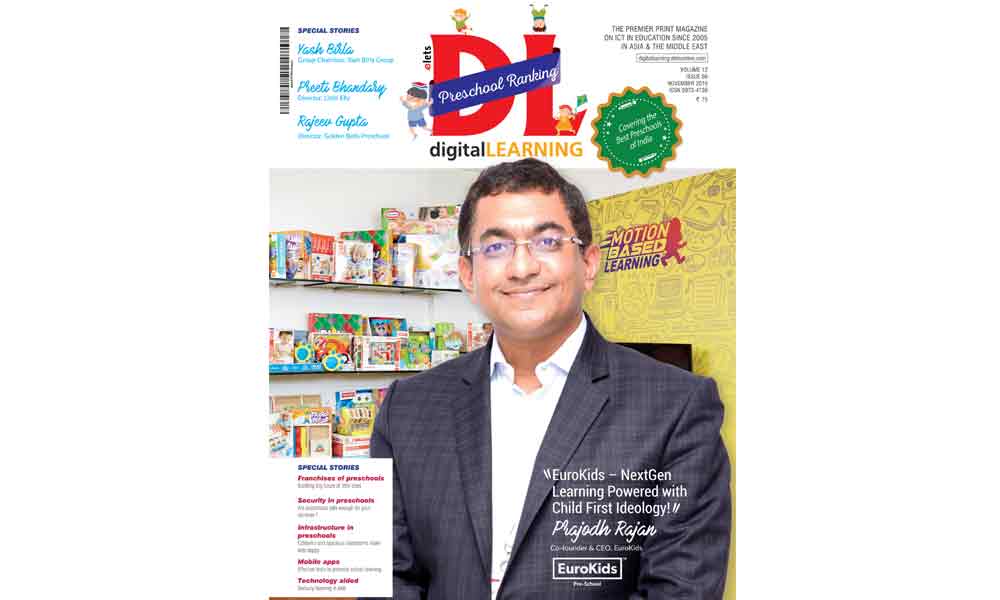
digitalLEARNING Preschool Ranking :: November 2016

Editorial
Preschools – The Defining Factor in Your Child’s Life
Cover Story
EuroKids Creating Waves IN THE WORLD OF PRESCHOOLS
Corporate Profile
EuroKids International: NURTURING TOMORROW
Corporate Interview
Little Elly, Shaping KIDS FOR A BETTER TOMORROW
Preschools Offer WIDE ARRAY OF OPPORTUNITIES
Golden Bells and De Indian Public School EDUCATE WITH A DIFFERENCE
Special Story
Preschool: BUILDING BIG FUTURE OF LITTLE ONES
Feature Story
ARE PRESCHOOLS SAFE ENOUGH FOR YOUR KIDS?
Mobile Apps: EFFECTIVE TOOLS TO PROMOTE SCHOOL LEARNING
Technology aided Sensory LEARNING IN KIDS
COLOURFUL AND SPACIOUS CLASSROOMS TO MAKE KIDS HAPPY
Preschool Ranking
Ranking Preschools Defining the Finest in India
Youth Speak
Improving Rural Education THROUGH INNOVATION
Technology
REDEFINING EDUCATION THROUGH AUGMENTED AND VIRTUAL REALITY

REDEFINING EDUCATION THROUGH AUGMENTED AND VIRTUAL REALITY

Augmented reality can bring down the walls that constrain learning inside classrooms by opening a world of self exploration and discovery for the child, while virtual reality leads to higher levels of engagement,leading to enhanced learning experience, says Yuvraj Krishan Sharma, Co-founder & Director of Kompanions, a company which designs highly researched educational games for 2-7 years old, in an exclusive interview with Elets News Network (ENN).

What is the overview of your organisation?

Kompanions is an ‘ed-tech-sci organisation that aims to build a cognitively heal thier and an intellectually smarter planet by revisualising education. Kompanions is continuously working towards developing cutting-edge technology driven learning products and solutions. Our offerings are aimed at building knowledge and thinking skills in children to make them future ready.

What do you think of augmented reality?

Simply put, augmented reality is combining the real and simulated world by modifying a view of reality by a computer generated image, which is highly empowering,engaging and interactive experience for the user.

It can be of special relevance to the education space. Augmented reality can bring down the walls that constrain learning inside classrooms by opening a world of self exploration and discovery for the child – taking away the dullness from the age old method of learning from books.

How much scope do you see for augmented reality in the Indian education sector?

The traditional system of education prevails in most schools of India. Although its importance cannot be over emphasised, its static and unengaging nature can not be overlooked either. In this day and age of technological revolution, technology adoption through digital learning is a necessity for the Indian education system.

Can the concept of virtual reality transform the way education is imparted?
The current education system is a passive and non-interactive learning environment where many of the learners are disengaged. Learning through virtual reality leads to higher levels of engagement,leading to enhanced learning experience and consequently better learning outcomes. It is the most effective way to reach out to all types of learners, each having a unique pace of learning and understanding.

Will it make education accessible and affordable to masses?

Virtual reality is facilitated through VR glasses and an app. VR is a technology that is not just very cutting- edge but canalso be made extremely affordable and accessible for masses. Kompanions has developed a cardboard VR kit (on the lines on Google VR glasses) and an app, both of which are suitably priced for the masses.The idea is to impact as many learners through this powerful learning experience and reach out to every child.

How distinct is virtual reality from augmented reality?
VR is a completely immersive experience where the learner becomes a part of the learning environment. User almost becomes a protagonist and is transported to a uniquely realistic recreation of a setting or time period or location that may or may not exist.

Augmented reality is when one or few elements of the current environment are interactive. It is like a blend of virtual reality and real life. Images are created within applications that are not part of the real environment.

Improving Rural Education THROUGH INNOVATION

India has been maintaining an impressive growthin the education sector for the last two decadesirrespective of global circumstances. There is,however, scope for improvement always, writesRaj Bagaria, a student at The LawrencevilleSchool in New Jersey, US, based on his research.

Since 1990s, poverty reduction and economic growth in India have been spectacular. Maintaining an average economic growth rate of 6.7%, India has lifted millions of people out of poverty. However,education sector still needs major reforms. The India Socioeconomic and Caste Census recently showed that only 3.5% of rural students are college graduates, whereas 35.7% of residents are illiterate.

In the last three years, my personal research and community service project involved conducting a comprehensive survey of a public charity school — Ved Vignan Maha VidyaPeeth (VVMVP) in Bangalore — to grasp the state of rural education in India.

The VVMVP school network, one of the biggest educational organisations in India, has over 400 schools educating over 40,000 students across 20 states.However, one of the major areas of education in which these schools can improve is enhanced collaboration between students and teachers.

In rural areas, free schools almost universally employ rote learning that does not encourage students to utilise their knowledge creatively outside the classroom. Financial constraints prohibit these schools to meaningfully innovate their educational system. Therefore, a emphasised the Harkness method of learning. In this style of education,students often sit in a circle and debate and unravel certain topics amongst themselves, while the teacher serves as a guide through the discussion. The practical benefits of this teaching style include greater communication and articulation skills, greater interpersonal skills, stronger grasp of the material, and a wider perspective on any topic or issue.

Since the students never had any prior exposure to anything similar to Harkness, the project introduced activities in order of progressing difficulty.During the beginning of school, only as lightly moderated curriculum that the students were accustomed to was used.Then, for understanding of students and to enhance their abilities, oral poetry recitations speaking method was introduced.Immediately, the levels of anxiety amongst the students were observed.However, as with the first step, the students eventually grew comfortable with the new teaching style.

Once the students felt at ease with this activity, another step was taken toward Harkness by playing different collaborative games that forced the students to both analyse other students as well as speak loudly. Soon, as the students began to open up, harder debate activities and class discussions were introduced. These exercises immensely boosted students’ confidence and their ability to clearly express their thoughts and ideas. Teachers started witnessing that, students were more eager to attend classes and were definitely speaking English more fluently and effortlessly.

Harkness learning is a wonderful solution to the problem of rote learning in India that does not entail any additional costs. The Harkness learning can help rural students develop important life skills that would enable success beyond the classroom.

Golden Bells and De Indian Public School EDUCATE WITH A DIFFERENCE

Away from the crowd of various schools springing up across the country, Golden Bells play school and De Indian Public School have created a niche in the preschool segment.

Claimed to be India’s first multiple intelligence based preschool, Golden Bells is anchored around the philosophy of innovation in teaching and the school work towards unleashing the latent genius in every child.

Since old strategies to ensure finest education for present-day wards are failing to deliver impressive results in the holistic development of kids, it is believed a robust academic foundation can empower today’s children to tackle academic challenges in future with ease.

Reinvention, the phrase holds immense substance in a changing educational environment.

Right from the preschool, high school to university – a student learns whatever is inculcated in his mind.

Thus, a curriculum has been shaped here around innovation and reinvention, incorporating latest trends, to facilitate bringing about an inner change in every student. It also helps in ensuring dexterity and an aptitude to achieve success in this fast globalising educational environment. It empowers the student to ‘think out of the box’.

Golden Bells preschool and De Indian Public School, a senior secondary school, have been anchored around this very philosophy.

Golden Bells preschool happens to be the first school in India to incorporate Dermatoglyphics Multiple Intelligence Analysis (DMIA) concept. DMIA involves analysing the potential of a child, learning styles, acquiring styles, brain dominance and distribution of intelligences through the fingerprints.

It identifies various hidden points of intelligence, providing information about strengths and weaknesses of a child including emotional, creative, adversity, spiritual and intelligent quotients. Accordingly, development of the child’s career is well-shaped.

“We lay emphasis on hands on learning wherein students learn and express the same in simple activities. We help the children connect their learning to real life and encourage them to innovate,” says H R Gupta, Chairman, Golden Bells preschool and De Indian Public School.

“Project and play-based learning holds equal significance at our campuses. Problem solving, decision making, and investigative activities in groups appended with play activities enable the students learn from their own experinces,” he adds.

Today, smart schooling technology marks the existence of Golden Bells preschool and De Indian Public School.

Students are tracked and monitored in the campus and while commuting in school cabs, parents or guardians get updated about the same, thus feeling relaxed about their security and attendance and enjoy such a special convenience like never before.

“The teaching-learning at both of our schools happens at digital podiums. All classes are equipped with 3D technol- ogy; virtual electronic blocks add to the convenience factor. We offer a supportive environment,” says Rajeev Gupta, Director of Golden Bells preschool and De Indian Public School.

“We are the only preschool that have adopted so many extracurricular activities for kids, like swimming, horse riding, yoga, meditation, taekwondo, kho-kho, hockey, kabaddi and the list goes on,” he adds.

“Our target three years down the line is opening up of at least 50 preschools across the country,” says Gupta who also looks forward towards helping children and adults relieve stress via stress relieving exercises through his “Remake Yourself ” workshops.n

COLOURFUL AND SPACIOUS CLASSROOMS TO MAKE KIDS HAPPY

Nursery schools are baby steps of a child to education. Preschools influence a child’s personality development and build a strong foundation for the future. Therefore it is important for parents to choose a nursery school where the child can learn and grow in a healthy atmosphere, and infrastructure plays an important role in building such an atmosphere, observes Priyanka Sharma of Elets News Network (ENN).

Apreschool should have an environment that is calm, engaging and responsive to each individual child at all stages of his or her development. Entrepreneurs planning to open a preschool need to concentrate on infrastructure development, which includes constructing a building which has spacious and colourful classrooms, a nicely maintained playing area which offers interactive learning environment and furniture that has been designed keeping safety of children in mind.

For the success of a preschool, significant investment is required in infrastructure.

“An important element which is counted among the quality of a pre-school is the infrastructure. Many unbranded pre-schools don’t give much thought on the building infrastructure. As we deal with small kids, we have to make sure that the whole building should be very neat and clean, colourful and there should not be sharp edges on furniture or anywhere,” says Anu Gupta, Director, Little Leaders Play School.

The number of children enrolled in a school depends entirely on the space available. According to the common procedure followed, 20-25 square feet of space is provided for every child. So, if the school has a classroom of size 20 feet x 10 feet, 10 kids can be accommodated easily. The room size is usually considered a benchmark to decide on the number of kids that can be enrolled.
sangeeta-basuWhile building a preschool classroom, some important safety features should also be incorporated to child-proof it.

“We use baby-proofing products like door jammer stopper, door guard, toddler-sized tables and chairs with no sharp edges. We also ensure to keep space for movement in the classroom and not make it crowded with furniture as toddlers need space to explore and move around,” says Raj Singhal, CEO, Foot- prints Preschool.

Toddlers learn more when they play and observe things around them. Therefore, it is important to equip the pre-school with good quality colourful furniture also.

“The furniture should be stable, well- designed, and securely attached to the wall where necessary. Disorder in the environment can result in chaos, mate- rials or furniture falling, dangerous cuts or splinters from sharp furniture edges, or other avoidable accidents. Since children are spending good time in school, so school furniture should be cozy and have home-like touches in the environment which increases the comfort of the child (e.g., pillows, baskets, curtains, and cushions),” says the Director of Little Leaders Play School.

amar-kapasiAmong other features that need to be considered while developing infrastructure for a preschool include fixing all electrical points higher so that they are out of the reach of children and covering gaps in the railings of balconies so that kids do not slip through.

Also, fire safety measures should be adequate so that kids can be quickly evicted if disaster strikes.

According to Deven Khullar, Chairman, Brats and Cuties Basic, infrastructure should have proper fire exit plans, ramps for the specially-abled children, proper electric load, proper transport, etc.

“Safety can be ensured with usage of natural wood against particle board or MDF quality furniture. Also, furniture should not have sharp edges, is ergonomically designed to seat the children and also have interesting design themes to create curiosity in the minds of kids,” says Amar Kapasi , Co-founder , Planet Kids.

Toddlers learn more when they play and observe things around. Therefore, it is important to equip the preschool with good quality furniture.

While renovating classrooms, bright colours, posters and stickers on the walls should be used. The classroom can also be decorated with children’s original artwork.

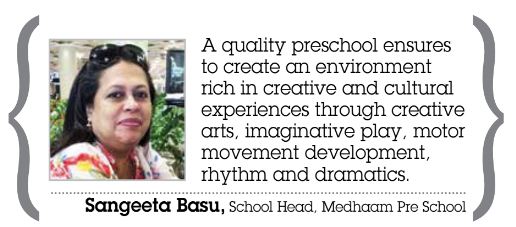
“A quality preschool ensures to create an environment rich in creative and cultural experiences through creative arts, imaginative play, motor movement development, rhythm and dramatics,” says Sangeeta Basu, School Head, Medhaam Pre School.

Also, outdoor playing equipment needs to be properly arranged so that kids get adequate amount of physical activity. However, one needs to ensure that the area is safe. Using balconies and terraces as play areas should be avoided unless they are perfectly safe.

“Build up area and outdoor space available for free play of kids is one of the major parameters of a quality pre- school. All the other amenities revolve around that. Safe furniture for security and hygiene of the kids are important as they are very vulnerable to infections. Multimedia educational tools and toys, well ventilated classrooms are some other common parameters that can be adopted to qualify for a quality preschool,” says Ajit Kumar Singh, Managing Partner, Kids Aura.

A good number of toys and games which are not harmful for kids is an integral part of the learning experience for the kids. Children spend most of their time playing and working with materials or other children. So assorted building blocks, construction materials, props for pretend play, picture books, paints and other art materials besides table toys like matching games, peg- boards and puzzles should be made available to the kids.


Technology aided Sensory LEARNING IN KIDS

Preschools nowadays are increasingly focusing on mobile applications as learning tools. The popularity of smart phones apps is on the rise among the new generation. Akash Tomer of Elets News Network (ENN) explores usages and key reasons behind the popularity of apps among children, parents and and preschools.

According to a recent survey conducted in Britain, interactive educational apps are immensely popular among kids aged between 3 and 6 years. Parents as well as elementary teachers are encouraging children to start using mobile learning apps. In the last few years, the internet is flooded with such learning applications to complement classroom lessons in pre- schools. The availability of such apps has gone up tremendously over the last few years, with the Apple iTunes store alone having more than 65,200 educational apps. So, why is mobile learning being taken up in such a big way? Let’s take a look.

Systematic learning
Be it a mobile storytelling app for kids or a subject-specific learning app, all educational applications help kids in systematic learning. These learning applications have built-in databases to store the education or teaching based stories and completed assignments that can be saved for later re- views. Soft or digital copies of these texts and references can be accessed later. With traditional studying methods, a toddler on his/her own can become a bit haphazard but mobile apps for learning or study minimises that risk.

Staying connected with teachers and guides
There is no substitute for classroom teaching, but educational apps ensure better connectivity between kids and teachers. Today, a student can easily get in touch with the teacher via SMS, emails, chats, calls and video calls to resolve his or her queries and doubts instantaneously. Most of the learning apps are embedded with such facilities to make the tasks easy for kids.
“The idea behind developing the (MT Educare) app was to make available quality education, i.e., quality teachers and content to each child of this country, no matter where the child resides. Also en- able users to learn at their own pace and comfort,” said Dr Chhaya Shastri, Direc- tor, MT Educare.

Round-the-clock availability
One of the best features of education apps is their round-the-clock availability. Unlike schools, there is no fixed time schedule for kids to access a mobile application. All that is required is a smart phone or computer tablet, and with a tap on the screen little ones can operate them as most of the mobile applications come with child-friendly controls.

Fun and informal
Complaints of kids about ‘tough’ homework and ‘boring’ class lectures may disappear as soon as a child is acquainted with learning mobile applications. These apps present concepts with colourful graphics and imaginative illustrations to take away the boredom. As there is no teacher around, the entire virtual class- room learning environment is relaxed and informal. Learning with fun is one of the reasons why children use mobile learning applications for hours at a stretch.

One of the best features of education apps is their round-the-clock availability. Unlike schools, there is no fixed time schedule for kids to access a mobile application. All that is required is a smart phone or computer tablet.

Portability
Going on a vacation and worrying about their kids’ studies trouble some parents a lot. Learning apps have made such parents’ lives easier. Now, they don’t need to carry loads of books with them. A smart phone or tablet is all they need. Kids can use these electronic gadgets during long train or flight journeys to learn. Students need not to stay away from learning re- sources at any time.

Help in classroom performance
Mobile applications help little learners prepare their routine tests and daily assignments in a better way. These apps help kids visualise important concepts for precise implementation during tests and assignments. Moreover, apps of schools help children access the curriculum in advance and if a child knows what is going to be taught the next day, he or she can easily look it up on any good mobile application. Preparation in advance helps kids build self-confidence in class.

Alternative modes of learning
There is wide range of applications available to choose from depending on kids’ needs. There are text-based learning applications, subject specific learning applications, applications for test or assessments, applications to help in homework, etc. These applications have animated graphics, videos, info-graphics, audio- narration features, and a whole lot more that enable children to have ample scope of learning. Mobile learning is always dynamic – one can find numerous solutions for a single problem.

Explaining the importance of content in apps, Gaurav Mundra, CEO, Myly app, said, “We are content agnostic. We are the enablers for sharing any kind of content on the platform – text, images, audio and video. We allow bi-directional multimedia communication so that learning doesn’t become a monologue from the teachers’ side.”

Although most of the preschools use apps as a tool to help in the learning and development of a child, they do not completely rely on technology for the holistic development of a child. They focus more on “Learning through Senses” or on “Sensory Learning”.

The process of sensory learning starts even before the birth. Babies learn everything about the world by observing, listening, and putting everything within reach into their mouths. In order to know about any object, toddlers try to touch or grab everything they see. The same concept is being used by many preschools to make a kid understand about objects like fruits, flowers, plants, toys, etc.

Technology can aid sensory learning. Creative videos, audios on tablets or smart phone applications help kids understand their surroundings.

All mobile application developers claim to have built the best mobile apps for kids, but are these apps have appropriate parental control features? It should also be looked into that the apps satisfy the parents about the content their children are accessing.

“Giving kids access to educational and fun learning content with parents having control over the viewing time and a comfortable feeling about the safe online space happens through apps like ours. Safe Kids Apps can help you have that control which youtube or other ad-enabled content online cannot,” said Naveen Chintamaneni, Chief Revenue Officer, Bulbul Apps.

In present day world of fiercely competitive education, a complete dependence on classroom teaching is not enough for kids. Mobile applications have proved to be beneficial for kids and give them an edge over their peers. It’s likely that popularity of mobile applications will increase even more over time.

LATEST NEWS