Home Blog Page 758

Boosting the Enterprise of Education

Ravi Gupta
Dr. Ravi Gupta
Editor-in-Chief

At a time when a number of path breaking decisions are being heralded on the Indian horizon, the focus and emphasis on the enterprise of education is somehow eluding the attention of one and all.

The very fact that education at all levels is still considered a social good with tightly held regulatory mechanisms which have been largely ineffective to ensure the quality delivery, need to be amply reviewed in the light of major national initiatives to boost Indian economy. The unavailability of duly trained and oriented manpower across the skill spectrum would scuttle the prospects of these well meaning campaigns of short to medium term.

The dismal state of baseline data across educational institutions of all hues came out in the open in the opening remarks of the report on INDIA RANKINGS 2016. Even after having a plethora of regulators, canvassing for credible data across the fi nest national institutions still remains a challenge. We do provide a candid commentary on NIRF outcomes which in a way give a breather that the data driven eduGOVERNANCE has somewhere taken off

Creating a credible brand, and that too in the domain of education remains an ordeal. Engineering Institutions across the country are experimenting on one paradigm or the other to usher excellence in their teaching-learning processes and create employable graduates. We do present in this issue a compilation of key constituents of some of the leading brands in Engineering Education. This shall be followed by an elaborate issue on Engineering Education Brands, next month.

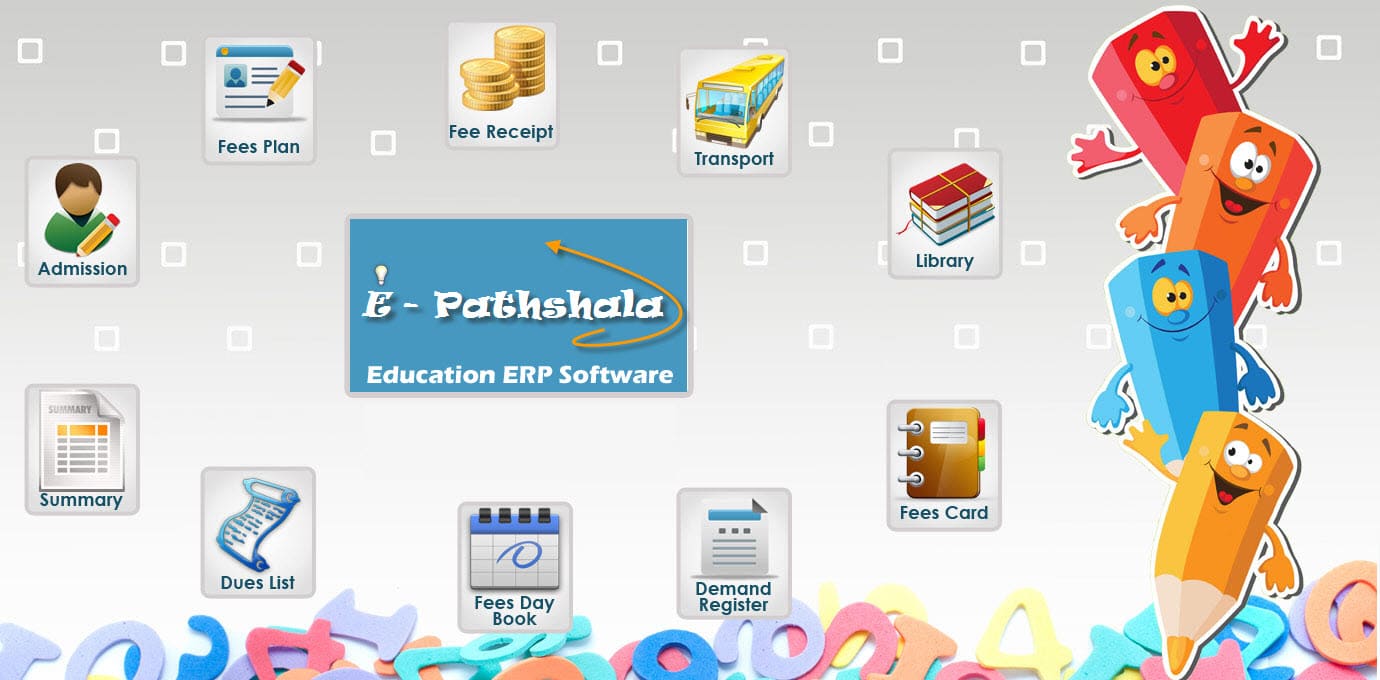
Technological advancements in the domain of eduPAYMENTS are eating away the ineffi ciencies on educational campuses. The entire burden of fee collection, corroboration etc has been duly addressed by some of the fi nest, off the shelf technological solutions. You shall fi nd a fi ne story on this emerging narrative.

digitalLEARNING.in has witnessed a major overhaul in these months. Do visit the same and enroll yourself in one or the other forums out there.

With a view to summon and share the best practices and transformational initiatives in the domain of Higher Education, we are organizing a National Convention at Bengaluru on 27th-28th of May in collaboration with Government of Karnataka. This is to extend a hearty invitation for the same.

We do seek your sustained patronage and support in boosting the enterprise of education.

CBSE propounds for a monopoly over Government Publications

The Central Board of Secondary Education (CBSE) has issued circulars to private schools, not to encourage parents to buy non- NCERT/ CBSE books. As per norms, CBSE-affiliated private and government schools are required to only prescribe the books that have been approved by the board. It has been observed that some of the private schools sell books within the school premises, which is against the CBSE norms.

Interestingly, the UT education department, Chandigarh has issued a Whatsapp complaint number for parents, to lodge a complaint against private schools for forcing parents to purchase books, uniforms etc from specific shops. With parents gearing their kids for the next academic session at city schools, several instances of private schools forcing parents to buy books and uniforms from specific shops only have been reported to the education department.

digitalLearning View: 
Well, neither the schools nor the education regulator should retort to mandating a peculiar set of books. The preference or choice should be left over with the respective institutions themselves, though any malpractice or vested interest should be checked.

There are much better products in the market by private players which are well in consonance with the prescribed curriculum. Why should their adoption be restricted by CBSE? Wouldn’t it be a censor on knowledge and the ways of disseminating the same?

VR, Robotics, IoT, Cloud Stack & Big Data to dominate the training deck at NIIT

Future technologies like Virtual Reality, robotics, Internet of Things (IoT), Mean Stack, Java Stack, Cloud Stack, Big Data and Data Sciences would constitute the core of training programme by NIIT. These future technological courses would be of 12-14 weeks and would be launched across 150 NIIT centres pan India.
As the world is moving ahead in the digital space, skilled manpower in these technologies are becoming much sought after. India’s software bellwether, Infosys’ CEO Vishal Sikka among other tech leaders have enunciated this upcoming shift quite emphatically.

digitalLearning View:
It’s a welcome move on the part of NIIT which has been a pioneer in IT Training across the country. This technological mix falls well within the entire spectrum of national missions of Smart Cities, Digital India, Make in India etc.

With over 1.5 million seats in engineering spread across 400 districts of the country, this digital makeover has the potential to transform the employability & innovation quotient of India’s Engineering Graduates. The catch lies in the fact that India’s eduLEADERS have to start seeing what NIIT could envisage and deploy well in time.

Synthesising Knowledge through BIG HISTORY

Macquarie University pioneered the Big History project to support the teachers and students in acquiring critical skills and to meet the challenges of today. In an interview with Elets News Network (ENN), Professor Andrew McKenna, Director, Big History Institute at Macquarie University, Australia, shares about the initiative, its benefits for students & teachers, expansion plans in India and much more

Please share the concept and vision behind Big History initiative. Macquarie University is the birthplace of Big History.
Professor David Christian coined the term ‘Big History’ and taught the first Big History course at Macquarie University in 1989. Big History is the attempt to understand, in a unified and interdisciplinary way, the history of the Cosmos, Earth, Life and Humanity. Big History is a universal history for the modern era, a science-based origin story for humanity that links human history to the history of the earth and the universe. It synthesises knowledge across the two main cultures, and many disciplines of the sciences and humanities providing a framework to think in fundamentally new ways. In a time of increasing innovation and change, Big History provides perspective on our current and future trajectory.

What was the focus of your recent visit to India?
The recent visit to India was focused on informing Indian teachers and schools about two separate initiatives, pioneered by Macquarie University to provide Indian students with the opportunity to experience the benefits of engaging with Big History. These initiatives are:

International Student Scholarship: Macquarie University has announced the Big History International Student Undergraduate Scholarship, which is available to all international students who apply for any undergraduate course at Macquarie University and have verified completion of the Big History: Connecting Knowledge MOOC available through the COURSERA® platform.
The scholarships, depending on the programme of study, will cover all tuition fees up to AUD 50,000 per year for an undergraduate degree of 3-4 years duration. This represents a value of `2.5 million (`25 lakhs) per year, potentially over 4 years, for a total value of `10 million (`1 crore). The first ever Big History International Student Scholarship will be awarded in mid-2016. Indian students who enrol in the MOOC and finish the six-week course will be eligible for selection.

SynthesisingProject Indian Pilot Schools Programme: In 2012, Macquarie University partnered with Bill Gates private company bgC3 to develop an online school-based course in Big History for high school students. Based on the work of Professor David Christian, this collaboration produced the Big History Project website https://school.bighistoryproject.com/bhplive. Five schools in Mumbai have been piloting the Big History Project website materials in their classrooms (mostly in Grade VIII), in the 2015-16 school year. Based on the overwhelmingly positive feedback from these schools, Macquarie University is now working to expand the Big History Project Indian Schools Programme across Mumbai.

What is unique about Big History Project? How is it beneficial for students as well as educators?
The unique thing about Big History Project website is the specific skills set it provides students to successfully meet the challenges of today. The website provides a wealth of resources that support teachers and students in acquiring these skills.
The website is designed to develop student’s critical thinking, critical literacy and problem solving skills, enabling them to be innovative global citizens. It provides teachers and students access to resources anytime, anywhere for use in the classroom, including detailed instructional guides, lesson plans, studentbased activities and supporting resources for teachers.

What methodology do you follow to make the students future-ready as well as industry-ready, through the project?
Students today live in a world of increasing innovation and change. To be industry-ready and equipped for future, students are required to be innovative, problem-solvers and flexible thinkers. Big History gives students a framework to think and solve problems in fundamentally new ways. This is hugely relevant to the many challenges faced by CEOs, scientific researchers, politicians, and entrepreneurs. Real-world problems are complex, complicated and connected. Big History provides students with multi-domain knowledge, crossdisciplinary critical thinking, and innovative synthesis and problem-solving skills required to meet the complex challenges of today’s world.

What are your expansion plans and the steps you are taking to promote Big History in India? Macquarie University is committed to bringing Big History to every student, school and country. As India is a global hub for innovation, empowering Indian students with the knowledge and skills that come from studying Big History is one of our key priorities.
At the ‘in-school’ grade VIII level, Macquarie University is running a pilot programme with Indian teachers and schools in implementing Big History Project website materials. The pilot programme will be expanding from an initial group of five pioneering Indian schools in 2015-16 to a group of 30 Indian schools in 2016-17. Feedback from our work with this core group of Indian schools will ensure the optimisation of Big History Project website and course materials for Indian students and teachers to facilitate implementation in classrooms across India. A key factor in this process will be ensuring the Big History Project website and resources align with the different curriculums implemented in schools across India.

Real-world problems are complex, complicated and connected. Big History provides students with multidomain knowledge, cross-disciplinary critical thinking, and innovative synthesis and problem solving skills required to meet the complex challenges of today’s world

Finally, what are your achievements of the project and what priorities you set for the future?
The Big History Project website is currently used in over 3000 classrooms across the world. Macquarie University is committed to bringing Big History to students across India as a global priority. Empowering innovative minds of the future, many of whom will come from India, is our main objective. Ensuring that the talented minds that come from India are equipped with Big History skills to innovatively approach complex problems will make a profound contribution to meeting the challenges of the 21st century for humanity as a whole.n

Helping to unravel & unfurl your inner voice

Helping to unravel & unfurl your inner voice, the Careerline.com way….

Envisioned as an integrated suite of solutions in the domain of Human Resource Development, CareerLine.com is the flagship tool that is designed to enable individuals to take ownership of their career journey

The interesting part is the process fl ow whereby the individual is at the center of the narrative taking charge of his/her career choices.

What happens when a Royal Navy Engineer turns into a passionate HR professional, wearing on his sleeves a typing speed of 120 WPM having global stints with companies like British Aerospace, DHL, Coco-Cola, Kimberly Clark and Tetra Pak? Probably, it’s a WorkAmmo !!!

Richard Cowley, the Founder, WorkAmmo claims it to be a tool which unravels & unfurls the inner voice, which is quite central to epic success in today’s diversifi ed work arena.

You defi ne your goals as to where you intend to go; you document your career history; you develop your capabilities in sync with your career goals and you deliver your aspirations with best-fi t jobs.

Careerline emerges out to be a personalized mentor echo-system which guides and goads you, to achieve what the deepest confi nes of your conscience had ever aspired for. Your inner voice gets echoed & empowered within the system which is available closer to you on android and iOS apps.

The paradigm shift which the product makes is the absolute ownership of the career journey which has been transferred to the individual, starting as early as the advent of the teen-age and as late as senior leadership.

In an increasingly mechanical world, this ubiquitous product somewhere facilitates career decisions that are informed, objective and result-oriented across the entire careerline of an individual.

CareerLine.com allows individuals to plot out their career journey – their history, present, and their future goals – all in one place, allowing them to refl ect on where they have been and where they want to go.

A private space for life, a place to document your career, receive help to develop your career, and fi nally help you deliver your career by pushing jobs to you based on your profi le and preferences.

Seems like a worthwhile try…Mariners are known to be sticklers for performance.

Workshop conducted on Improving early student learning, via toolkits

In collaboration with Catalyst Management Services, Bangalore, Centre for Education Innovation(CEI) has unveiled its Early Learning Toolkit in India.

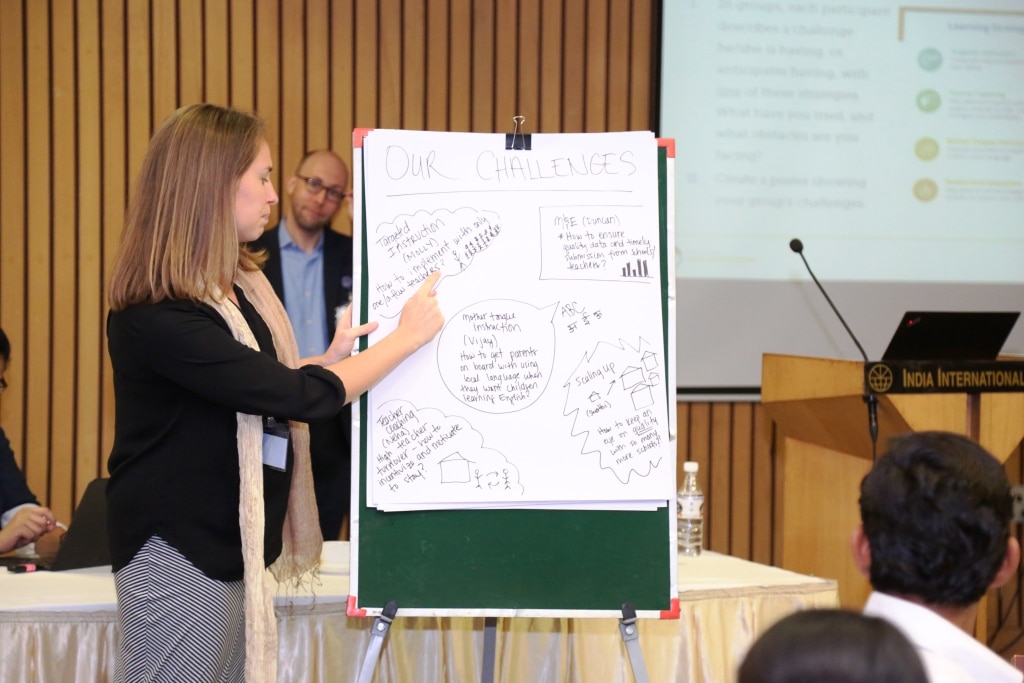
Molly J Eberhardt and Duncan McCollough, educational specialist, facilitated sessions on early learning challenges in education in the Indian context, in a hands-on workshop titled “Evidence-based Strategies to Improve Student Learning”.Both the facilitators discussed teacher coaching, mother-tongue instruction, targeted instruction and parent-child interaction to mitigate problems that plague primary education setups. This session was conducted by presenting evidence-based approaches from their toolkit. They also discussed scaling up, cost-effectiveness, monitoring and evaluation as part of program management strategies.The Early Learning Toolkit is based on rigorous evidence collected from Hewlett funded evaluations of innovative education interventions, as well as direct input from wide cross-sections of programs, that CEI is involved in.

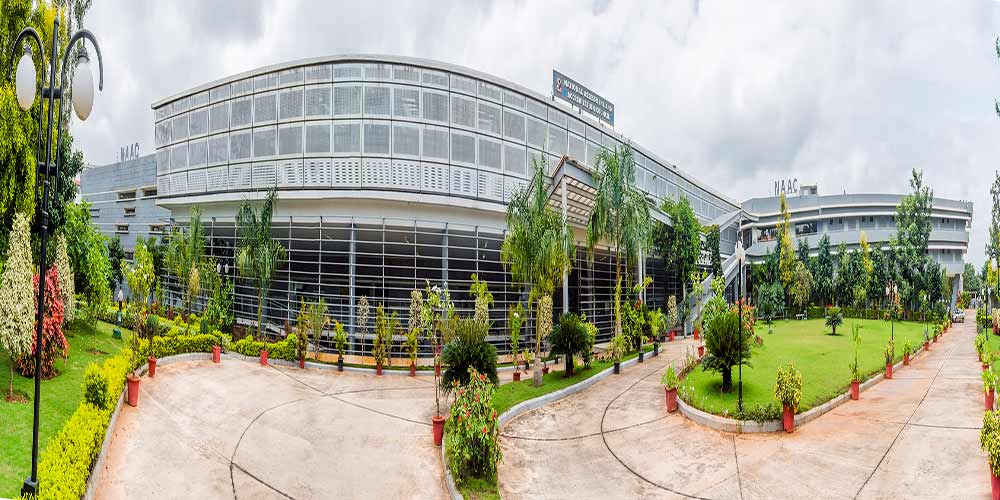
High NAAC graders to enjoy Autonomy of Operations

In a major enabling move linking up NAAC grades to that of the sought after status of Autonomy, UGC recently announced that autonomy would be granted to colleges which get highest grades in the three assessment cycles, of the National Assessment and Accreditation Council (NAAC). The on-the-spot inspection by an expert committee has been done away with, which was mired with significant controversies and lack of objectivity.

The latest procedure envisages, a college to be accredited with the highest grade in two consecutive cycles. In addition, it should secure the highest accreditation grade in the third NAAC assessment cycle in order qualify for an autonomous status. The college would however have to obtain a no-objection certificate from the university, it is affiliated to.

Autonomy is considered to be a major milestone in an institution’s progress. Autonomy allows institutions to incorporate suggestions from students, industry experts as well as the alumni in their teaching learning processes. It also enables the institution to design the syllabus for different courses. Autonomy opens up the avenues for UGC funding under various heads as well.

digitalLEARNING View::
Linking the subsequent NAAC grades to a tangible milestone as autonomy is a substantial reform in a sector which was largely influenced and governed by subjective commentaries which were allegedly influenced at times. It would be difficult to do so with Consecutive expert committees year on year and would open up the vistas for objective data driven governance. These baseline reforms would certainly help bridge the innumerable fault lines existing in our higher education system refraining it from soaring high to its intended levels of quality and empowerment.

Niti Aayog prescribes a three pronged strategy to get Foreign Univs in India

Niti Aayog has submitted its report to the Prime Minister’s Office (PMO) and Ministry of Human Resource Development (HRD), suggesting three routes to permit entry of foreign education providers in India:

  • a new law to regulate the operation of such universities in the country;
  • an amendment to the UGC Act of 1956 and deemed university regulations to let them in as deemed universities;
  • facilitating their entry by tweaking UGC and AICTE regulations on twinning arrangements between Indian and foreign institutions to permit joint ventures.

    NITI Aayog is of the view that, foreign universities will help meet the demand for higher education in the country, increase competition and subsequently improve standards of higher education in India.

    India stands to gain from setting up of foreign universities in terms of availability of resources both human and financial, state-of-the-art teaching methodology, research and innovation.

    The matter was referred to Niti Aayog when few political parties had advised against foreign universities setting up base in India.
    Their key contention was that the coming in of the foreign universities would raise the cost of education, making it out of reach for a large part of the population.
    The Aayog was thereby asked to study all reports regarding the setting up of foreign universities. The Prime Minister had called a meeting of senior bureaucrats last year, to discuss the feasibility of encouraging top foreign education providers. The proposal was backed by ten state governments,  including Haryana, Maharashtra, Punjab and Jammu & Kashmir.

digitalLEARNING View ::
Considering the large amount of outward remittances for supporting education in foreign universities, it would be a worthwhile idea to facilitate the opening of some of them on the Indian soil itself. This shall galvanize the entire space of higher education and shall boost health competition enabling some of the homegrown brands to catapult to global standards. Nonetheless, a level playing field would have to be provided by enabling regulations with due riders so that the foreign entities don’t advance their interests at the cost of homegrown ones.

NCERT textbooks now on ‘e-paathshala’

Seeing the trend of mobile apps and website portals, NCERT textbooks can now be read online, without having to purchase them. This is made possible via ‘e-paathshala’, a mobile app as well as a website portal, launched recently by Smriti Irani, minister for Human resource Department (HRD).
This has been done keeping in mind many factors. NCERT textbooks have been accepted throughout the entire country. Many students preparing for the UPSC civil services examinations refer to the NCERT books. Moreover, there has been a shortage of NCERT books in the market (as per news reports) and school students are finding it tough to buy these textbooks.
With the latest development, NCERT has also given rights to 8 state governments to print books as they believe fit to accomplish the requirements of their students.  This would be for the first time, that all NCERT books of class 1st to 12th , would be available in both English and Hindi on web based application ‘e-paathshala’. In addition, it would be put in publicly that NCERT has its own sales counter in Ajmer, Bhopal, Shillong, Ahmedabad, Bhubaneswar, Bengaluru, Mysore, Kolkata, Guwahati and New Delhi from where schools can buy books in bulk.

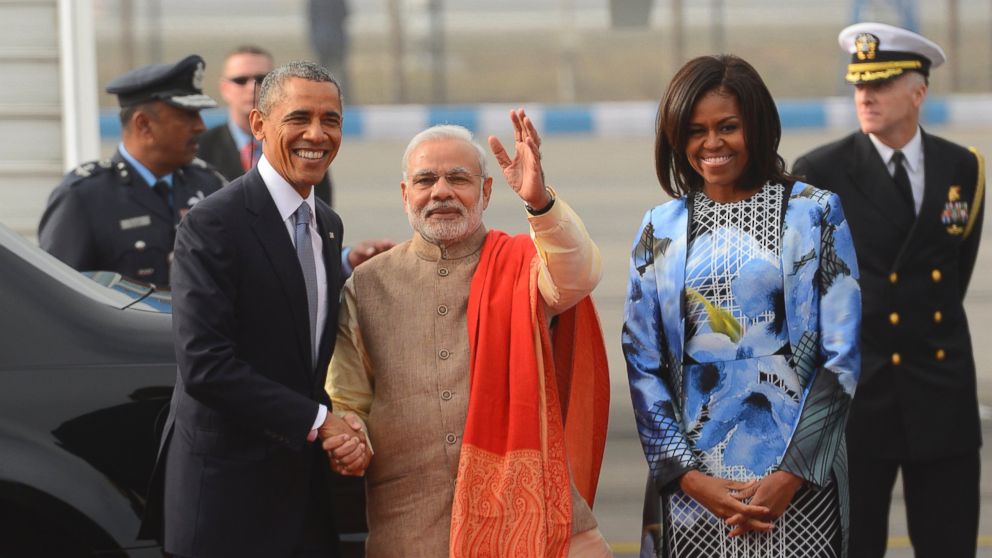
Michelle Obama cheers India for uprise in Female Education

The progressive steps taken by the Indian Government for the betterment of Indian education, especially for female education, have been acknowledged universally now! Recently, while speaking at a Special Event at the World Bank, Michelle Obama, the first lady of the United States of America has praised the steps taken by India to educate and empower girl students through various programmes that break down the cultural barriers.
During the event, the World Bank announced $ 2.5 billion in support of adolescent girls’ education over the next five years.

The Indian Government has initiated many steps including “Beti Bachao, Beti Padhao” towards education and empowerment of girls in the country. India’s National Campaign for Secondary Education aims to make quality education for adolescent girls accessible and affordable, by:

  • Enhancing enrolment by providing a secondary school within a reasonable distance
  • Improving quality of education by ensuring compliance to prescribed norms and removal of gender, social-economic and disability barriers
  • National incentive scheme that gifts money to young women from disadvantaged backgrounds, when they turn 18 and have passed their 10th grade exams.As a result of these steps, enrollment of girls has improved from 58.70% to 78.94% , in the last 5 years. The Indian Government further aims to achieve 90% enrollment of girls, by 2017, and universal retention by 2020.

LATEST NEWS