Home Blog Page 783

Yet Another Roadmap to Solve Engineering and Technology Challenges

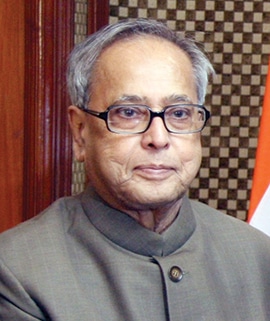
Pranab Mukherjee, President of India

technological challangesIn its bid to catch up with the other unfurling national drives like Make in India, et al, MHRD has come up with a set of 10 technological domains whereby high-powered research groups could be set up under IMPRINT. Elets News Network (ENN) brings you a close encounter as to what lies underneath

“If the institutes of higher learning come together, they can make a great difference in a short span of time to higher education sector in our country. IMPRINT India is synergising platform for institutions, academia, industry that encourages research and innovation, making it socially more relevant.”

The successful adoption of technology is becoming increasingly vital to functional independence of a society. Technology, broadly defined as the application of scientific knowledge such as tools, techniques, processes, methods and products, to practical tasks is universal in most societal contexts. The use of technology has become a significant part of work, communication and education.

Pranab Mukherjee, President of India

In the modern era, innovative research, engineering and technological developments that evolve from societal demands and make far reaching impact on humanity, warrant for more sound foundation in scientific principles and ethical values than earlier. They pose a huge challenge to develop a strategy and roadmap to achieve the desired goals. Therefore, there is a need to create and implement an education system that can inclusively and participatively evolve to transform the country and cater to the needs and aspirations of the people.

In order to adopt engineering and technology as the vehicle to address the societal needs and achieving national prosperity, the Ministry of Human Resource Development (MHRD) has drafted a new and catalytic scheme called IMPacting Research INnovation and Technology (IMPRINT). The IMPRINT India is a Pan-IIT and IISc joint initiative to develop a roadmap for research to solve major engineering and technology challenges in 10 technology domains relevant to India.

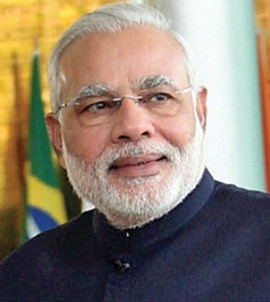
Narendra Modi, Prime Minister of India

“Society is becoming technology driven. Important to understand the importance of this and look towards affordable technology. We have to think about how our institutions can set up their own incubation centres. It is an Initiative to develop roadmap to solve technological challenges. The biggest strength of makein– India is human capital. Skill development is extremely vital as I believe that science is universal but technology has to be local.”

The Framework

A first of its kind initiative, IMPRINT is launched to address the major science and engineering challenges that India needs to address and champion to enable, empower and embolden the country for inclusive growth and selfreliance. The initiatives provides the overarching vision that guides research into areas that are predominantly socially relevant. This novel initiative with a two-fold mandate is aimed at:

  • Developing new engineering education policy;
  • Creating a road map to pursue engineering challenges.

Under the initiative, 10 goal posts have been identified and research groups on each of eminent experts are being set up to formulate time-bound plans of action for each. The task of the Research Group is to identify the needs of the nation in terms of its research and technology requirements and to enable proper planning for manpower, research infrastructure and resources. Leading academic institutions have been identified to set the process in motion.

Each technology domain of IMPRINT along with the underlying themes, targets and topics embedded in them represent the immediate goals before the nation for engineering innovation and intervention. Since IMPRINT is a national programme, initially steered by the IITs and IISc, ultimately the entire engineering fraternity of the country including IITs, NITs, national academies, governmental ministries and departments, research organisations, strategic sectors, policy agencies and industry must join hands and own the collective responsibility.

Smriti Irani, Union Human Resource Development Minister
Smriti Irani, Union Human Resource
Development Minister

“IMPRINT provides an overarching vision that guides research into areas that are predominantly socially relevant.”

The domains and coordinators of IMPRINT, steered by IIT Kanpur as the national coordinator are as follows:

1. Health-care: IIT Kharagpur
2. Computer Science and ICT: IIT Kharagpur
3. Energy : IIT Bombay
4. Sustainable Urban Design: IIT Roorkee
5. Nano-technology Hardware: IIT Bombay
6. Water Resources and River Systems: IIT Kanpur
7. Advance Materials: IIT Kanpur
8. Manufacturing: IIT Madras
9. Defence: IIT Madras 10. Environment Science and Climate Change: IISC, Bangalore

IMPRINT comes out to be yet another initiative under the aegis of MHRD carrying the age-old homilies. It is surprising that even after decades of existence, there exist a seamless research and development ecosystem encompassing academia, research institutions and industrial stakeholders.

The success and eventual outcome of this well meaning ambitious exercise would emanate out of the redressal of the classic criticism of person-based research vis-a-vis product-based are duly integrated with national priorities.

IMPRINT is a policy developing initiative covering pedagogy, teaching, curriculum, technology-benchmarking and infrastructure readiness. It is a national movement providing an opportunity for the higher education institutes in India to integrate with all grassroot level institutes, industry and organisations, mutually complement and deliver what the country demands and aspires.

NEP Consultations: Taking Cognizance of the Existing Educational Superstructure in the Private Sector

superstructureThe Government of India would like to bring out a National Education Policy to meet the changing dynamics of the population’s requirement with regard to quality education, innovation and research, aiming to make India a knowledge superpower by equipping its students with the necessary skills and knowledge. Elets News Network (ENN) peeks into the NEP consultations and how public and private sectors can have meaningful partnerships for transforming higher education

The ongoing consultations on the New Education Policy (NEP) vis-a-vis higher education has included an all pervasive set of subjects: Governance reforms for quality; Ranking of institutions and accreditations; Improving the quality of regulation; Pace setting roles of central institutions; Improving State public universities; Integrating skill development in higher education; Promoting open and distance learning and online courses; Opportunities for technology-enabled learning; Addressing regional disparity; Bridging gender and social gaps; Linking higher education to society; Developing the best teachers; Sustaining student support systems; Promote cultural integration through language; Meaningful partnership with the private sector; Financing higher education; Internationalisation of higher education; Engagement with industry to link education to employability; Promoting research and innovation; New knowledge.

Interestingly, none of these points take into cognizance the existing superstructure of higher education established over the past one and half decade and tends to address none of their key concerns. The articles which seem to be somewhat associated contained in Meaningful Partnership with the Private Sector and Financing Higher Education seem to be entirely oblivious to the existing state of affairs. The article on Meaningful Partnership with Private Sector simply exhorts the long established understanding that

higher education cannot sustain only through public funding and envisages PPP as the sole redressal for meeting the wide resource gaps, instrument for resource-use efficiency, improvement in service delivery and promotion of excellence. The peans to PPP don’t end here. It goes on, besides supplementing public investments and reducing dependence on public exchequer for provisioning of quality public services, for bringing about:

  • Cost-effectiveness through risk sharing and efficient use of resources leading to higher productivity and optimal risk allocation;
  • Access to modern technology leading to better project design, implementation, operations and management;
  • Accountability through clear customer focus, which, in turn, results in accelerated and improved delivery of quality public service;
  • Institutional autonomy by reducing dependence on public funds and in the process significantly reducing external interference in decision making, as it empowers public institutions by making then financially self-sustaining and independent.

So far so good. The usual visionary and aspirational content contained in any policy discourse. However, the innate intent and directionality of the emerging policy doctrine vis-a-vis the existing higher education superstructure in the private domain seems gruesome when the consultation paper reads partnership with private sector does not mean privatisation, commercialisation and debasement of education, somewhere suggesting the same for the existing spectrum of over 4000+ institutions established over the last decade or so with substantial private investments catering to the bulk of Indian Students.

It’s interesting that even after having such a sizable higher education institutional base dotting over 400 districts of the country, the aforesaid consultation document is oblivious to the same. It still intends to explore possibilities of attracting private investment and participation in decision making within the overall framework of education being merit good, while government continues to be responsible for ensuring quality higher and technical education to all as if nothing to this effect has happened in the country so far.

The key questions posed for discussion are all modeled around the guiding beacon of PPP and CSR aimed at bestowing higher education into the hands of large corporations. The success of private universities set up by some of the largest corporate houses is far from dismal. They are finding due heat from the edupreneurs who have diversified from their conventional enterprises in the MSME space and have invested a significant chunk to give rise to an impressive Higher Education Establishment in the country.

The NEP Consultation should have recognised the due existence of this vast segment of private investors in education and taken on board their experiments and learnings to formulate a much more relevant policy discourse

Creating Affordability of Higher Technical Education: Central to Indian Economy

Central to Indian EconomyAs India moves onto a knowledge age, the country’s higher technical education has thereby assumed an inflection point whereby there is a potent demand of duly trained and oriented techno-managerial manpower. However, a significant set of seats are lying vacant in the technical institutions, despite a large number of potential candidates. The reasons quoted for the same are lack of quality and affordability. Elets News Network (ENN) presents a viewpoint on this overdue issues and how to boost up the higher education system of India

While India has embarked upon an ambitious objective of economic growth through a slew of aspirational national campaigns, governance fixes and a whole lot of other policy level interventions, one of the key points missing from the otherwise duly integrated narrative is the role and importance of higher education in economic growth of the nation. The negative stereotypes have somewhere taken over and crippled not only the actions but the aspirations as well. This is somewhat alarming and concerning as higher education and higher technical education in particular sustains and catapults the economic destinies of any nation state.

While the Government is undergoing a mammoth consultation on a New Education Policy, which is being seen as a one size fit all redressal of Indian Education System, taking on one element at a time and impressing upon its due importance would not be a wasteful exercise at all. A large number of institutions would be getting established at the tertiary level with generous grants from the Central Government, the state of affairs of those established through private investments is quite dismal. Emanating out of a major educational reform in NDA-I, a significant lot of private edupreneurs entered into the fray of establishing technical institutions across which are administered by their respective State Technical Universities (STUs) and regulated by the All India Council for Technical Education (AICTE), which interestingly depends on State Perspectives to project for India’s demand.

As per trends and non-formal reports, a significant set of seats are lying vacant in these technical institutions despite a large number of potential candidates. One of the most repeated reason quoted for the same is “lack of quality”. But interestingly, nobody has ventured into the question of “affordability”, despite the manageable quality. India’s higher technical education has thereby assumed an inflection point whereby there is a potent demand of duly trained and oriented techno-managerial manpower, as the country moves onto a knowledge age; there is a decent higher technical education establishment to cater to the same; but due to sheer negative stereotypes as well as nonredressal of the “affordability” problem, the system is developing cracks.

These institutions have come in the fray from limited private investments and have built up over the years. In order for them to flourish, they need a constant influx of students to meet out the regular operational costs as well as meeting out the key quality interventions. In the advent of declining student enrollment, they get into a negative whirlpool ending up into closure. Quality of Education is thereby somewhere duly related to the affordability issue.

The limited meritorious chunk gets accommodated in the 125 odd centrally-funded technical institutions, and the 500 technical institutions owned in the Government domain or aided from Public Exchequer. Those who are at top of the economic spectrum of the country, some 4,50,000 of them go abroad spending Forex to the tune of `90,000 crores annually as per ASSOCHAM estimates to get quality foreign education. It’s this segment, which is benefited from the educational loan regime of the country. The remaining lot has to succumb to the wide spread of STUs affiliated institutions, who eventually provide armies of techno-managerial manpower to the India Inc. They are all owned, governed and operated by private players having limited capital to their access.

The average default rate of US Fed Student Loans is a mere seven per cent which is a bit higher on the Indian side ranging 16-17 per cent. Interestingly, the repayment plan of US Federal Loans in spread over 10-30 years while that in India it is limited to 2-7 years

US Fed StudentIt’s for the students of these institutions, education loan is a major problem. As per a Parthenon Group report, bank officials find these loans extremely risky. They are only able to cater to their higher-end customers. Apart from the aforesaid selection problem on the part of banks, there are significant issues with the current student financing system in India. Awareness, complexity of the application process and loan terms are the significant hurdles in India as per experts. Lack of standardisation makes the loan application process complex, long and difficult. A quick analysis done by this magazine revealed that even amidst the nationalised banks, the loan granting procedures are different and quite cumbersome despite the marketing claims. Excessive paperwork, loan processing time and lack of coordination between parties is the trouble trinity oft repeated by applicants, as per the aforesaid report.

The current terms make student loans inaccessible to low-income students and less valuable to any student. The rate of default on education loans concern the banking officials quite much. However, taking cue from the US experiment, the same can be lowered by making educational institutions partly responsible for the repayment behaviour of their students. The average default rate of US Fed Student Loans is a mere seven per cent which is a bit higher on the Indian side ranging 16-17 per cent. Interestingly, the repayment plan of US Federal Loans in spread over 10-30 years while that in India it is limited to 2-7 years.

Given the low tertiary gross enrollment ratio (GER) in India and low income levels, there is a great need for student financing. However, student loans account only for a small share of banks’ loan portfolios. It, thereby, become imperative on the part of the Government to look into this important aspect of creating affordability of higher technical education in the country, which is so very vital for national programmes. When one of the most ambitious financial inclusion programmes has been duly created and championed, the need of the hour is for a similar such eduCLUSION programmes whereby deserving students don’t stop aspiring for higher technical education for want of finances. At a time when we are collaborating with world’s oldest democracy on a whole lot of thematics, learning from their well-refined and duly defined Student Financing System would boost up a quality higher education system in the country.

Tethering Medical Education to Technology Achieving the 1: 1000 ratio

healthWhile shortages of doctors and paramedical staff are perennial, the need to inculcate adequate skills in the faculty of medical colleges and the field doctors is acute. The current estimated doctor population ratio in India is 1:1700 as compared to a world average of 1.5:1000. The MCI has set a target of 1:1000 by the year 2031. For achieving this target and considering the number of existing medical colleges in the country, it was noted that the present intake by medical colleges in India and the critical mass of doctors have to be rationally enhanced. Aamir H Kaki of Elets News Network (ENN) looks into the reforms needed in medical education in India and how technology can serve as a significant tool in transforming the sector

Despite being the highest number of medical colleges in the world, the doctor to patients ratio in India is abysmally low, pegged at 1:1000. However, the immense growth has occurred in the past two decades in response to increasing health needs of the country. The major challenge for regulatory bodies like the Medical Council of India (MCI) has been to balance the need for more medical colleges as well as maintaining and improving the quality standards. The globalisation of education and health care and the country’s potential as a destination of choice for quality education and health care has brought the issue into sharper focus.

The MCI’s Vision 2015 draft committee has proposed wide-ranging reforms. It cites three main reasons for India’s healthcare woes:

  • Shortage of physicians (both generalists and specialists);
  • Inequitable distribution of resources and manpower; and,
  • Deficiencies in the quality of medical education.

The report has proposed reforms such as curricular reform, emphasis on primary healthcare and family medicine, and strengthening medical institutions by investing in technology.

To systematically address the issues and develop strategies to strengthen the medical education and health care system, curricular reforms are needed so that Indian Medical Graduates match or better the international standards.

Under the draft, there will be a Curriculum Implementation Support Programme, which will assist the teaching faculty of the medical colleges to implement these changes at their own medical colleges. It is also envisaged that the tools of information and communication technology will be harnessed to enhance teaching and learning.

health11:1000 by 2031

While shortages of doctors and paramedical staff are perennial, the need to inculcate adequate skills in the faculty of medical colleges and the field doctors is acute. The current estimated doctor population ratio in India is 1:1700 as compared to a world average of 1.5:1000. The MCI has set a target of 1:1000 by the year 2031. For achieving this target and considering the number of existing medical colleges in the country, it was noted that the present intake by medical colleges in India and the critical mass of doctors have to be rationally enhanced. While improving the numbers will be important, maintenance and improvement in the quality of the doctors with humane content is paramount. Increasing the numbers of doctors alone, without proper and adequate knowledge and skill will not prove beneficial to the healthcare system.

To meet the set target will take a long time, however, experts believe that the technology can serve as a tool to bridge the gap. As Rahul Narang, Chief Technology Officer, Lybrate puts in, “Most of the countries in Asia-Pacific region are grappling with the issue of shortage of doctors. In India specifically, the doctor-patient ratio is skewed with one doctor available for every 1700 people, unlike in European countries.

Use of IT in the healthcare domain can help bridge the shortage of doctors in the country and spread their reach beyond their local area of practice.”

Technology: Transforming the Medical System

The application of IT and computerbased technology in healthcare and medical education system is both rewarding and challenging. The introduction of different material based learning aides including computer-based softwares, cloud computing, internet and telecommunications has the potential of changing the face of medical education and healthcare delivery system.

The introduction of different material based learning aides including computerbased softwares, cloud computing, internet and telecommunications has the potential of changing the face of medical education and healthcare delivery system

health3In recent years, extensive development and growth of IT has made vast changes in medical education system in India at both the teaching level as well as research level. The availability of internet services across every corner of India made data transfer easy, time saving and convenient.

As Dr Harish Pillai, CEO, Aster Medcity & Cluster Head Kerala stated, “India is on the cutting edge when it comes to healthcare technology. We can do more in the area of research and development. Typically, most of the hospitals in our country focus more on clinical excellence that is not how a good institution works. A good institution need to have a fair balance of clinical excellence, academics and research, which is needed to retain the talent. We, all in the private sector in India, need the right ecosystem.”

The use of IT is slowly progressing in Indian medical education system and is on the rise. It is projected to grow by leaps and bounds in the coming years. Several health and medical experts feel that the new mobile and cloud-enabled applications imply a lot of backend infrastructure readiness from IT – right from secured access, wireless connectivity, proper bandwidth utilisation, to providing security to devices and data.

Abhijit Gupta, Founder and CEO, Praxify Technologies informed, “From struggling to get decent broadband bandwidth to set up heavy resource driven server infrastructures, India has come a long way in the past two decades. With the advent of cloud and mobility, and the growing demand of ubiquitous access, IT has started playing a strong role of an enabler in the medical infrastructure today.”

Technology will be a game changer in the manner in which medical education, training and healthcare services will be delivered in India. The private sector will be the major driving force behind technology adoption in this vital segment. Due to the increasing convergence of technology and healthcare, there is a huge opportunity for providers to improve the experience and operate more efficiently due to augmented association and information sharing among providers. There are lot of players in the market providing innovative technological solutions to ease the medical education, research, healthcare services and overall health outcomes.

The innovative digital solution such as Ovid – a research platform which enables healthcare institutions to access world renowned journals, eBooks, databases and many other resources electronically – by Wolters Kluwer, is transforming the healthcare and medical education system. Shireesh Sahai, CEO – India, Wolters Kluwer said, “In a hospital setup, professionals need multiple solutions to enhance their knowledge and give best possible treatment to their patients. Our solutions enable healthcare professionals from any tier such as specialist, primary care physicians, nurses, pharmacists, researchers and medical students to deliver better health outcomes. Our leading innovative digital solutions which are used by healthcare professionals across the globe are UpToDate, Ovid, Lexicomp, Provation, 5 minute consult, Nursing solutions, Healthcare Communication and many more.”

In MCI’s Vision 2015, the following modifications have been made in the existing curricula to accommodate the aspirations of the defined goals and competencies:

  • Newer learning experiences through introduction of foundation courses placed at crucial junctures, clerkships/student doctor clinical mode of teaching and electives;
  • Early clinical exposure starting from the first year of the MBBS course; ? Alignment and integration (horizontal and vertical) of instruction;
  • Integration of principles of Family Medicine;
  • Emphasis on clinical exposure at secondary care level;
  • Competency based learning;
  • Greater emphasis on self-directed learning;
  • Integration of ethics, attitudes and professionalism into all phases of learning;
  • Encouragement of learner centric approaches; ? Ensure confidence in core competencies so as to practice independently;
  • Assessment of newer learning experiences, competencies, integrated learning and subject specific content;
  • Acquisition and certification of essential skills.

The ever-changing scenario of technology in every sphere is forcing the stakeholders to keep abreast of the changes and to take proper measure to upgrade themselves. Even the healthcare and medical education is not untouched with it. Several developed countries around the world are taking several measures to make the medical experts abreast of the latest trends and developments. There is a real need for governments across India to adopt the continuing medical education model, and make it mandatory for doctors to take regular tests to keep themselves updated.

Robin Raina, CEO Ebix Inc said, “Globally, some governments have made it mandatory for doctors to obtain continuing education credits. This means if you are a practicing doctor, it is mandatory for you to keep abreast of the latest trends in your field. Ebix offers continuing medical education solutions to practicing doctors to help them obtain credits. Typically, these are three hour online tests approved by top medical bodies like Harvard Medical School and Johns Hopkins, which can be taken thrice a year. In India too, a few states like Jammu and Kashmir have started adopting this model.”

The innovative digital solution such as Ovid – a research platform which enables healthcare institutions to access world renowned journals, eBooks, databases and many other resources electronically – by Wolters Kluwer, is transforming the healthcare and medical education system

health4The Path Ahead

There is a need to set up faculty development institutes that will equip and empower teachers in medical education for discharging their professional responsibilities. The objective of a good medical education should be to produce general practitioners, specialists, teachers and research workers. The factors governing this are the curriculum, medium of instruction, duration of course, admission qualifications, the examination system, teachersstudents relationship, prospects of teachers and students, etc. Besides, it may be mentioned that the medical education should fit in with the needs of the country and the conditions prevailing there.

The dependence on technology in the medical education and healthcare industry cannot be overstated, and as a result of the recent development of brilliant innovations, medical experts and healthcare practitioners can continue to find ways to improve their learning and practice – from imparting education and training to better diagnosis, surgical procedures, and improved patient care.

Whatever the final shape of the mechanism, it owes it to the citizens to create some basic changes in medical education and healthcare system. Policy makers, physicians and those who teach physicians have to open their eyes to the opportunities, realities, and responsibilities available in the vital segment of medical education and healthcare. We need a holistic, radical surgery to restructure the entire medical education system in India.

Gaining Competitive Advantage through Analytics

Noshin Kagalwalla, Managing Director, SAS Institute (India) Pvt Ltd
Noshin Kagalwalla, Managing Director,
SAS Institute (India) Pvt Ltd

Noshin Kagalwalla, Managing Director, SAS Institute (India) Pvt Ltd, talks to Elets News Network (ENN), about data analytics, its demand as a career option, role of education in bridging the skill gap and more

What is business analytics? Why has there been a demand for business analysts in the recent past?

Business analytics is the broad use of data analysis and quantitative techniques that empower organisations to transform their data into actionable intelligence, helping them drive better decisions and ultimately, better business outcomes.

As compared to earlier days, adoption of analytics in Indian industries has rapidly moved-up the maturity curve. Today’s highly competitive and fastmoving global economy demands organisations to take decisions in realtime. Organisations across sectors have realised that these decisions can no longer be made based on gut feeling or hunches and the fact that by embracing an analytical culture, they stand to gain a competitive advantage. Consequently, we are seeing a very high demand for data scientists and data analysts who are equipped with great problem-solving skills and can identify creative ways of incorporating analytics into the DNA of a business or the very product or service which the organisation has to offer to the clients.

Is there a skill gap today? If yes, how is education sector trying to bridge the same?

According to IDC, in the US alone, there will be 181,000 deep analytics positions in 2018 and five times that many positions requiring related skills in data management and interpretation. In India too, there is a serious deficit of analytical skills and data-literate managers. The education sector has already recognised the fact that analytics has gained prominence as one of the most sought after career options today. The top institutes in the country have, in fact, embarked on the journey towards bridging the demand-skill gap by partnering with industry leaders like SAS to launch tailored programmes and courses to nurture the talent in business analytics.

Please share any joint programmes that SAS has along with universities and educational institutes.

SAS has primarily offered joint programmes on analytics with leading schools in India, including IIM Bangalore, ISB, NMIMS, IIM Lucknow and recently with WeSchool and Vivekananda Education Society Institute of Management Studies & Research (VESIM).

Some of the case studies are:

ISB, Hyderabad

ISB Biocon Certificate Programme in Business Analytics (CBA): Some of the best minds in management education have been involved in creating a curriculum that is global in scope. This particular programme is designed in partnership with SAS on a schedule that minimises disruption of work and personal pursuits. It is a combination of classroom and technology-aided learning platforms where participants will typically be on campus for a five-day schedule of classroom learning every alternate month for a span of 12 months.

IIM, Bangalore

Business Analytics & Intelligence (BAI): The course in partnership with SAS is designed to provide in-depth knowledge of handling data and Business Analytics tools that can be used for problem-solving and decision-making using real-time case studies. At the end of the course, the participants are able to:

  • Understand the emergence of business analytics as a competitive advantage;
  • Understand the foundations of data science; the role of descriptive, predictive and prescriptive analytics in firms;
  • Analyse data using statistical and data mining techniques and understand relationships between the underlying business processes of an organisation;
  • Learn data visualisation and the art of storytelling through data;
  • Analyse and solve problems from different industries such as manufacturing, service, retail, software, banking and finance, sports, pharmaceutical, aerospace, etc;
  • Get a hands on experience with software such as SAS.

‘Holistic Education from my Vantage Point’

Darpan VasudevHolistic education takes place with the contribution of the parents and the schools. There is a need to understand the children’s emotional needs and capabilities before challenging their learning quotient. Darpan Vasudev, VP, Next Education shares with Elets News Network (ENN) on how parents can achieve their desired expectations with regards to their child education

career, one might be in a quandary to understand how it is possible to have a common framework for all, despite being cognizant of the fact that all of us are born with unique abilities, talents, competencies and aptitudes.

Furthermore, even if we assume that the calibration of education patterns is done keeping in mind the various types of apprentices’ basic needs, what happens to the conditioning at home and society because of prejudices, cultural belief systems and pressures that causes a variation in the child’s comprehension?

Now, what I have mentioned here could be a well-known fact to many. However, the expectations of parents in terms of the outcome seem more or less the same. They all want their children to have the best of domino effect, irrespective of what potentially overbearing cost it brings along.

These expectations sometimes become obsessions and parents turn towards schools with high anticipations. Some even end up disparaging the institutions – who are in more ways than one helpless, because they have to fit in to the norm set by their governing bodies.

While those coming from highly learned and placed backgrounds have a firm reasoning on what they want to achieve. It is time, the others wake up and smell the coffee. We make our moves, model our behavioural patterns and alter our mindsets based on what we want to achieve.

We make our moves, model our behavioural patterns and alter our mindsets based on what we want to achieve

So, how do we know what we want to achieve with respect to our child? Follow the points mentioned:

  • If you think your child doesn’t listen to you, evaluate how many times you listen to the child? Maybe you are missing out on some unique quality that he/she possesses, only because YOU don’t listen;
  • Expose rather than impose – the various turfs vs the ones you are familiar with;
  • Determinedly substitute – job, career and future to pleasure, passion and present. Words have enormous power.

The quintessential holistic education takes place when the contribution of the parents is proportionally higher, without the expectations and predispositions of schools. You must seek first to understand your child’s emotional needs, then the capabilities, and finally challenge their cerebral, intellectual, spiritual and reasoning quotients. Attempt to make a person of values, who is giving in his/her intrinsic core first, all the other achievements will follow for sure.

Offering Co-Scholastic Learning

Gaurava YadavGaurava Yadav, CEO & Founder Director and Aparna Mishra, Co-Founder & COO, of EduAce Services – Co-Scholastic Learning Partner for Schools, talk with Elets News Network (ENN) about EduAce Services’ unique proposition, solutions, initiatives, future plans and more

Please brief about reasons behind starting the venture.

There was always this thought of starting our own venture. Even though, we have worked with corporates for long but always had this dream to start our own enterprise.

Education is something which interest us as there is lot of scope to work in this sector and so much to do.

What are the challenges encountered in doing business on ground level?

Initially, being a new brand, it was a little difficult to convince schools that our proposition was really unique and useful for students. But once we were able to give POC’s (Proof of Concept), it was no looking back since then.

What is the market size of the services offered by you in India at present?

Currently, we are offering services in the states of Uttar Pradesh, Madhya Pradesh, Uttarakhand and Delhi & NCR.

What are the major benefits for organisations/individuals adopting your solutions?

EduAce Services is north-central India’s leading educational co-scholastic learning company, working with schools and students on their co-scholastic learning needs.

We have created various strategic IP products, which are aimed at the vast schooling community complimented by its fast growing reach to various Indian states, pan-India.

Please share the vision of your company for next two years.

Currently, we are working very closely with around 1500 schools. Our target is to reach around 3000 schools by 2017 end.

Aparna Mishra, Co-Founder & COO

What methods you are using to increase the visibility of your organisation?

Among other branding activities, we focus more on word of mouth publicity and social media branding. In addition, we have tied up with various industry bodies, educators’ forums, CSR activities etc, which take us to a different platform.

How your services are different from your competitors?

One of our flagship brand – School Quiz League, is India’s first General Knowledge based programme for Class VI to Class XII students, which is in itself a unique programme. There are various other services and products which keep us stand ahead of our competitors.

Which are the major stakeholders and sectors you are focusing on?

Our main focus is on the schooling community and the major stakeholders are the schools and their owners, principals, teachers and students.

What are the various initiatives taken by your organisation to emerge as a market leader?

In December 2014, the Grand Finale of our IP brand (Quiz Show) School Quiz League – Pratibha Ki Khoj, India’s first general knowledgebased quiz programme, came on NDTV Prime. The programme was hosted by Charu Sharma, the famous Cricket Commentator.

We have come up with the GK book -“Classroom GK”, for Class VI to XII students.

m-Learning: New-age education mantra

Dr Ashvini Jakhar, Founder, Prozo

A marketplace for educational resources, Prozo showcases various offerings through m-learning or mobile learning, shares Dr Ashvini Jakhar, Founder, Prozo with Elets News Network (ENN)

What does mobile learning offer?

m-learning or mobile learning offers learning across multiple contexts, through social and content interactions. It provides an aid to the delivery of learning, education or learning support on mobile phones, PDAs or tablets. It allows virtual learning anywhere, anytime. It is proving beneficial, especially for students who may want to learn outside classrooms at their own pace and as per the convenient time and location. m-learning focuses on the mobility of learner, interacting with portable technologies. Sharing is almost instantaneous when using the same content leading to instant feedback and reviews. m-learning has brought portability by replacing books and notes with small devices, filled with tailored learning contents.

What are the benefits of m-learning in education?

The biggest benefit of m-learning is the use of mobile devices to deliver and access education anytime anywhere. It could prove beneficial for India’s education sector where the tertiary or brick and mortar infrastructure is limited. Our current education system, if too adopts more and more of m-learning concept, may create smarter education systems for posterity. Mobile devices are easily available and even accessible to the remotest corners in India. People can use mobile devices to access educational resources; connect with experts, or access content other than what is discussed in classrooms.

Prozo is developing Android and iOS-based mobile applications that will provide instant access to quality and relevant educational material for students of all ages, helping them in all sorts of exam preparations. It is a comprehensive platform that provides m-learning aids like tablets and PDAs other than books, digital content and mentors who are toppers and specialists in their respective field. The telementorship programmes will not only provide timely guidance and counseling, but also coach young minds to handle the stress of changing exam patterns and syllabus year-on-year.

How will it help students understand the concept of learning?

m-learning complements the traditional form of education. At Prozo, we not only offer traditional resources of learning viz, books, mock exams, personal notes and coaching material but there is also digital content comprising all kinds of mobile devices like tablets, PDAs, PCs or laptops. Even information about various e-learning courses is made available, along with free resources like blogs, tips on specific exams, etc. Now, it may not be possible for a student located some 40–50 kms away from a resource hub to travel and get study material every time the need occurs. Our platform is extending its technology to provide the same information and help on mobile devices.

Are there any initiatives government has undertaken in m-learning under Digital India campaign?

So far, it is known that the Government of India (GoI) has been actively supporting the e-learning drive to strengthen accessibility. Other than funding the National Rural Internet and Technology Mission, distribution of Aakash tablets to college students was also a step towards e-learning. It has launched two schemes – National Mission on Education through Information and Communication Technology (NMEICT) and National Program on Technology Enhanced Learning (NPTEL) – to leverage the potential of ICT in the dissemination of video and web-based course content. The GoI also extensively uses the PPP route in collaboration with ICT providers through the Sarva Shiksha Abhiyan and ICT@Schools projects. Now, m-learning can be an alternative to e-learning depending upon choice of users.

Do you think government schools should incorporate m-learning? Why?

I think it will take its due course of time and may happen naturally when the factors contributing to the overall growth of m-learning may start to evidently influence the users.

Easing Learning via Technology

Piyush Agrawal, Founder & CEO, SuperProfs

Technology is used today to dissipate quality education to every nook and corner of our country, says Piyush Agrawal, Founder & CEO, SuperProfs, in an interaction with Elets News Network (ENN)

Please brief about the reasons behind starting the venture.

I was pursuing PhD at Stanford University (USA) when a brainwave hit me – Technology can and should be used to dissipate quality education to every nook and corner of our country. I dropped out of my course and returned back home with a vision – to make quality education accessible to masses. Firstly, I worked with Sujeet Kumar (CTO and co-founder of SuperProfs) on a video compression algorithm, to make videos streamed at low internet bandwidth (even as low as 100 Kbps). We initially offered this technology to universities and worked with them to improve our solution.

In 2014, we decided to take it to students directly– and that is how SuperProfs was born. Thereafter, we tied up with some of India’s top professors offering coaching for competitive exams and helped them bring their courses online. We have so far launched 1000+ courses for CA, CS, CMA, GATE, JEE, UPSC (IAS/IPS/IFS), etc.

What are the challenges faced in doing business on ground level?

Being a B2C company, it is always a challenge to manage the details of logistics involved. We have to make sure that there are no slip ups and the entire process of recording lectures, streaming it to students, providing study material, doubt clearing, etc., is done seamlessly. Our operations and customer-facing teams work round the clock to ensure full customer satisfaction.

What is the market size of services offered by you?

Coaching for preparation of competitive exams in India is a $8 billion industry and concentrated only in a few hubs or cities. As no sincere efforts have been so far made to aggregate and streamline the coaching process, SuperProfs is attempting to do this exact thing. However, this requires a change in the mindset of all players involved in the coaching industry. SuperProfs is striving hard to win the trust of all stakeholders with the help of superior technology and excellent quality of services.

How your solutions are beneficial for organisations/individuals?

In India, nearly one crore students appear for various competitive exams every year. However, only a small fraction have access to good quality coaching. There are geographical and financial constraints that prevent students, especially those who are not from metro cities. We believe that technology can bridge the gap between teachers and students. Now, students from remote areas can access coaching classes by top professors on their mobile phones with just 2G internet connectivity, at less than 50 per cent cost compared to a face-toface coaching class.

Please share the vision of your company for next two years.

For next two years, our key focus will remain on helping students, so that they do well in competitive exams, tie ups with more top professors and adding more courses in regional languages. We will focus on providing the professors with required tools to conduct mock tests, interactive sessions, etc. We are also planning to launch courses for TOEFL, IELTS and GMAT.

What methods are you using to increase the visibility of your organisation?

We are trying to spread brand awareness among students by conducting various activities in colleges across India. We are very active on social media as well. SuperProfs is also getting a lot of attention in media – print and online. All these together help in increasing our reach over our customers.

What are the major stakeholders and sectors you are focusing on?

Our major stakeholders are professors and students. We make sure that the professors are provided with all necessary technology that allows them to share their knowledge with students from any corner of the country, and students get what they are promised – best online coaching classes. The only sector that we are focusing on is Edu-Tech (Education Technology).

What are the initiatives taken by your organisation to emerge as a market leader?

We believe that there are no shortcuts to the top. We will become the market leader, if we offer the best services to customers. We have promised to make competitive exam preparation easy for students and intend to deliver on that. We also want to make sure that the professors, tied up with SuperProfs, are facilitated with everything required so that they can communicate with students with ease.

Making Education Fun Online

Harish Malladi, CEO, EdVIE

Harish Malladi, CEO, EdVIE talks to Elets News Network (ENN) about how concepts of STEM subjects can be instilled through innovative learning online

What are the primary reasons behind starting the venture?

EdVIE is a product of Enlume Technologies Pvt Ltd, an IT services company. It is the fruition of a longstanding dream of a group of engineers who knew first hand the importance of a strong foundation in science, technology, engineering and math (STEM) subjects for a successful career.

Our journey from small towns of Andhra to Silicon Valley, is credited to the education we received in our schools and colleges. As is the case with most lower and middle class families in India, we also got success primarily because of education.

We started EdVIE, because of our passion for and emotional bonding with education. By leveraging power of Internet and technology, we want to bring effectiveness and efficiency in the field of education.

What is the market size of the services offered by you in India at present?

The market size of online education in India is $20 billion which is expected to touch $40 billion in 2017. Families, especially in tier II cities have high propensity to spend on education, as it is believed to hold the passport for a successful future and good life. A major driver for online education is penetration of Internet and increasing network speeds. In coming years, the market will grow at a much faster rate.

How your solutions are beneficial for organisations/individuals?

Most of us might have heard about students who did exceedingly well upto 10th grade but started scoring low in 11th and 12th grades, resulting in increased stress and low confidence. This is because of the disparity between the difficulty level in lower grades and in 11th and 12th grades. The difficulty level and bandwidth of the syllabus covered in higher grades increase upto 10-15 times, creating a situation of shock and stress for students.

When students join EdVIE courses, we equip them to handle the increased difficulty with the help of our curriculum, live classes, online testing and mentorship. Our online live classes are conducted by experienced, qualified and well-trained teachers, who take students from basic to advanced level in a gradual way.

Within short period of time, students start feeling confident and start scoring better in their school exams. In the long run, our students achieve highest success in competitive exams.

What are your plans for the next two years?

We want to establish ourselves as a dominant player in online STEM education in India. We will be expanding our course offerings in STEM subjects and will enter into different markets and market segments. We are working on making our courses available on multiple devices and platforms. We want to do all that but our prime focus will remain on making students fall in love with Math and Science so that they handle the future competition and challenges better and go on to solve world’s problems.

What are the various methods you are using to increase the visibility of your organisation?

Apart from usual online and offline marketing activities, we extensively conduct educational events in housing societies, corporates and schools, which provide learning opportunity to participating students and parents.

All our educational events create huge brand equity and word-ofmouth for us.

How you can differentiate your services from your competitors?

Our core of strong, well-researched and comprehensive content and course structures differentiate us from others. We understand the importance of live exchange between students and teachers. Hence, all our classes are conducted live so that students can actively engage for a permanent learning. Our classes are conducted in a group creating an atmosphere of collaborative learning. Further, small batch sizes enable us to give personalised attention to each student.

Our students go on a journey of holistic learning through live classes, structured online tests, performance insights, mentorship and peer exchange.

What are the major stakeholders and sectors you are focusing on?

We focus on STEM Subjects in online education sector. For us, students, parents and schools are the major stakeholders.

LATEST NEWS